Some mothers do ‘ave ’em

Like Mother, Like Daughter – Complicite Creative Learning and Why Not Theatre @ Battersea Arts Centre, until 06 June 2015 (Returns only)

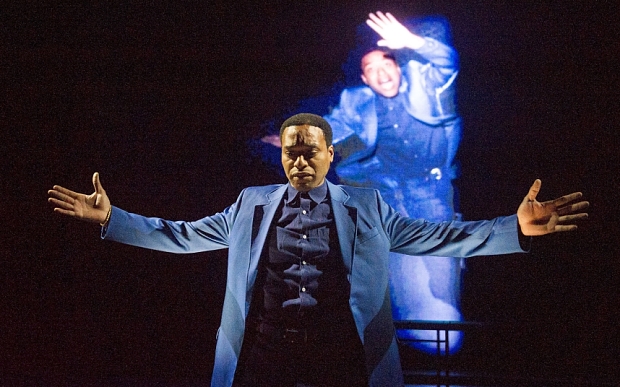
Occasionally the hectic nature of theatre booking throws up some delightfully apposite pairings. A fallow period has meant that, by chance rather by design, Everyman at the National has been wpid-wp-1432982917946.jpgfollowed by Like Mother, Like Daughter at the Battersea Arts Centre. It would be difficult to find two plays that better juxtapose the potential of theatre. Everyman was theatre as spectacle. Vast and impressive; the video and sound design had a forceful muscularity that carried through the choreography and into Chiwetel Ejiofor’s powerful central performance. Like Mother, Like Daughter was theatre as communal activity. All theatre is staged and performed but here there is no interest in bombast or special effects. It has confidence in the minimalism of its approach, and in the power of the stories it has to tell.
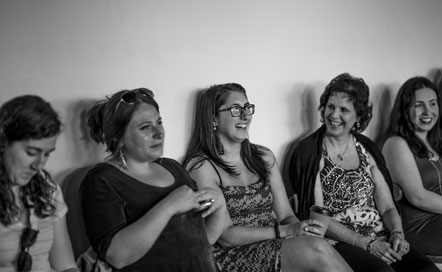
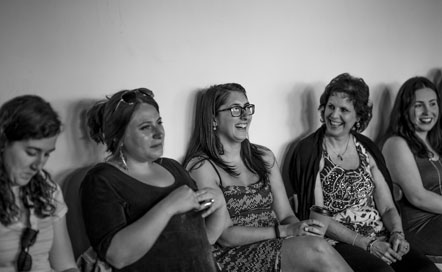
For all of Everyman’s impressive showmanship, Like Mother, Like Daughter is the more radical. It asks question of the form that a theatrical experience should take, and of the functional purpose of the medium. It opens with an informal gallery containing a series of mood boards identifying the performers, their shared lives and the rehearsal process. The audience are encouraged to browse the profiles and to learn more about the background to the relationships between the mother/daughter pairings. It is theatre that puts the viewer in control. We choose how much information we want to hold about those taking part rather than having their stories hidden behind the paywall of a programme, or delivered directly to us during the performance process.

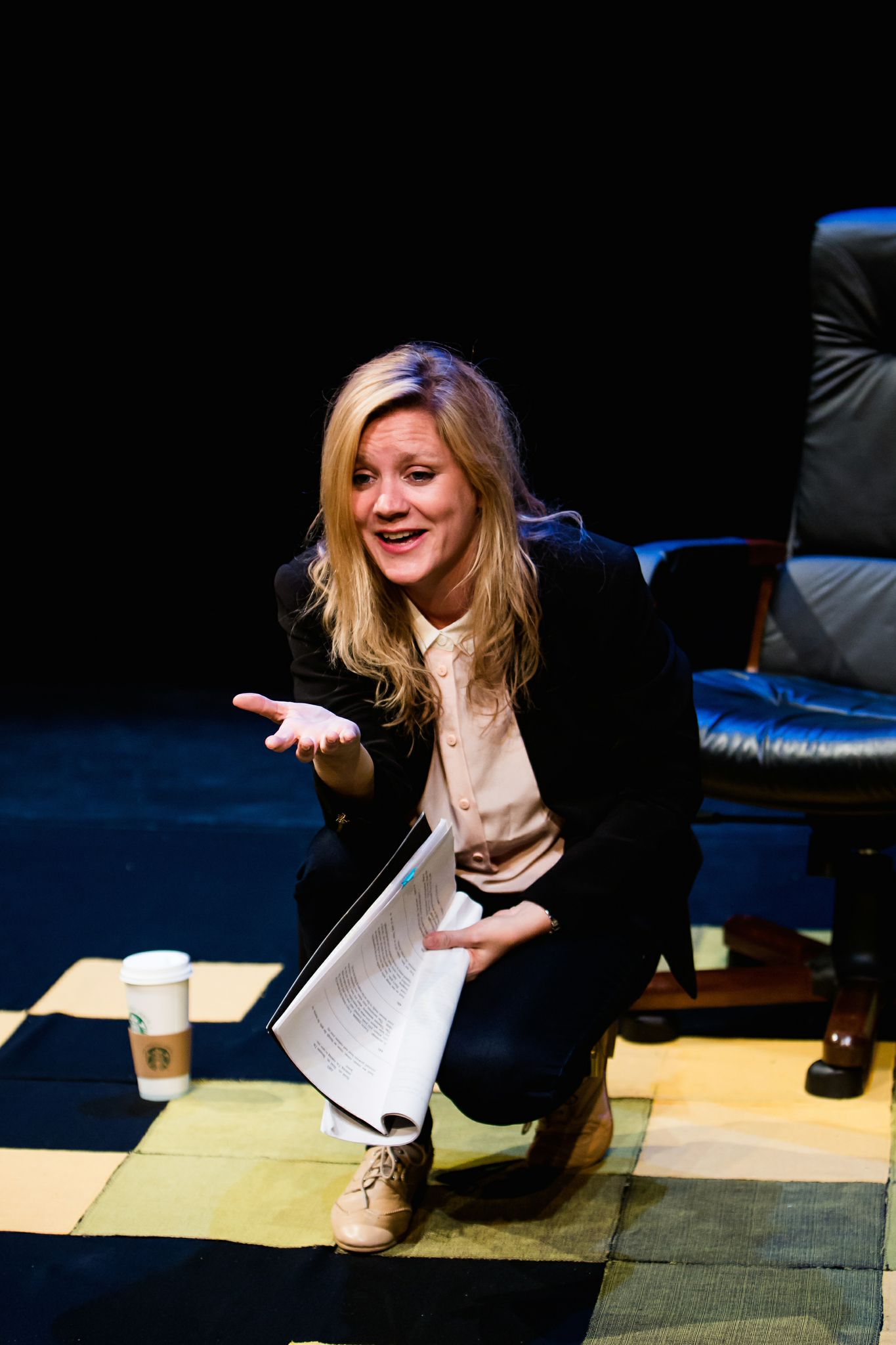
We then watch the non-actors, real-life mother/daughter pairings, answer randomly assigned questions. Is this theatre or just voyeurism? Is it therapy or is it drama? Watching it, the answer is both. The reactions to hearing the question, the revealing nature of the answers – for the audience this is pure theatre, for the performer it must surely be a form of therapy.

The setting is minimal. During the show, the participants sit round a dining table and the audience around them. It feels intrusive – like an ad executive watching a focus group – but it does not faze those taking part, who react with good humour and a complete openness to questions thrown at them. The age dynamics, and how they shape responses and how they interact with the audience are fascinating. It covers teenagers through to those old enough to remember wartime Britain – some are used to sharing their lives on social media whilst others come from more a more closed era

It ends with a communal meal. Audience members join with participants. It is an opportunity for reflection and to ask further questions of those taking part. The understated simplicity, the lack of pretence and the emotional honesty that comes from non-actors sharing their real lives helps lower the barriers between viewer and performer, creates a discussion and makes it a genuinely participatory experience.
<<Continue to full review and to watch a trailer>>

And in the beginning there was the play. And the play was Everyman…

Everyman – Olivier Theatre @ National Theatre, until August 30 2015 (tickets)

As a statement of intent of what Norris intends to bring to the National Theatre during his tenure as Artistic Director, Everyman – his first directing role since taking over- could hardly have been more purposeful.

The bravura opening sequence that stretches from the studied simplicity of Kate Duchêne’s God to Chiwetel Ejiofor’s spectacular initial entrance marries energetic vitality to a clear eye for using the wpid-wp-1431261893128.jpgOlivier’s vast space to compose striking images. It is a breathless and hugely ambitious piece of staging that successfully draws the audience into the action from the off.

It feels like a mark of how the National Theatre stagnated towards the end of Nicolas Hytner’s tenure that one has to go back to Danny Boyle’s Frankenstein in 2011 (or, tellingly, Norris’ own direction of London Road in 2012) to find another play that so successfully combined powerful story-telling with making full use of the Olivier’s unique performance area to create a truly theatrical experience.

London Road – now a film – may well have done more than anything else to secure Norris the most coveted role in British theatre. The critically acclaimed production created a beautiful harmonisation between a visually spectacular design and a highly original approach to verbatim story-telling. The play took universal themes and pulled them inside out, seeking to give voice to those ignored by traditional genre plotting but who still have to live their lives at the epicentre of tragedy. Between Alecky Blythe’s dramatisation and Norris’ direction, the voices of regular people from a small corner of Britain were given as much weight as importance as Peter Morgan gave to the Queen in The Audience. London Road was not just a play but a thoughtful articulation on what a national theatre’s mandate could be.

<<Continue to full review>>

Lights! Camera! Acting!

Product – Inside Intelligence @ Arcola Theatre, until 23 May 2015 (tickets)

One could criticise Product for setting its sights too low. Hollywood – in all its gaudy, crass self-centeredness – is just too easy a target for a playwright as good as Mark Ravenhill; a writer whose wpid-wp-1430939978876.jpgdialogue is best delivered with a rapier’s thrust rather than a cudgel’s blow. But then, Hollywood being Hollywood, a complete shitball of a film like The Interview gets made (a film whose pointlessness is only equalled by its charmless offensiveness). Next thing a chain of events is set in motion that ends with news broadcasts dominated by the threat of North Korea going to war.

Whether we like it or not Hollywood matters. Cultural imperialism is one of the strongest weapons in America’s arsenal. Democracy may be won on the battleground but those beloved ‘western values’ are secured elsewhere. It is in the malls, the bootleg CDs and – for many – in the cinemas, where citizens are shown worlds of freedom, choice and (of course) sweet, sweet capitalism. Increasingly as the wheel continues to turn towards the East and the world welcomes China to the consumers club, we have seen the money men of Hollywood willingly kowtow to the emerging markets as American cinema spending flatlines. As a result major blockbusters, think Mission Impossible or James Bond, have whole sequences set in Macau and Shanghai shoehorned into the action.

wpid-wp-1430939985949.jpgThese strands of Hollywood venality and its relationship with the rest of the world were not the issues concerning Ravenhill when he wrote Product back in 2005. Then the focus was on the media’s response to terrorist events (9/11 is the shadow that looms large in the background) and the need for easily explainable narratives to sell to the public. The problem when trying to view the play in this light is that – and it may be a question of 10 years remove – these wider themes are never really brought into the light. It seems more obviously an often witty, always filthy, satire on the self-obsession of those working in the film industry. The play wonderfully breaks down a universal tragedy and places it entirely within the context of the individual – what does it mean to the character? What does it mean to the actress playing the character and to the person pitching them the role?

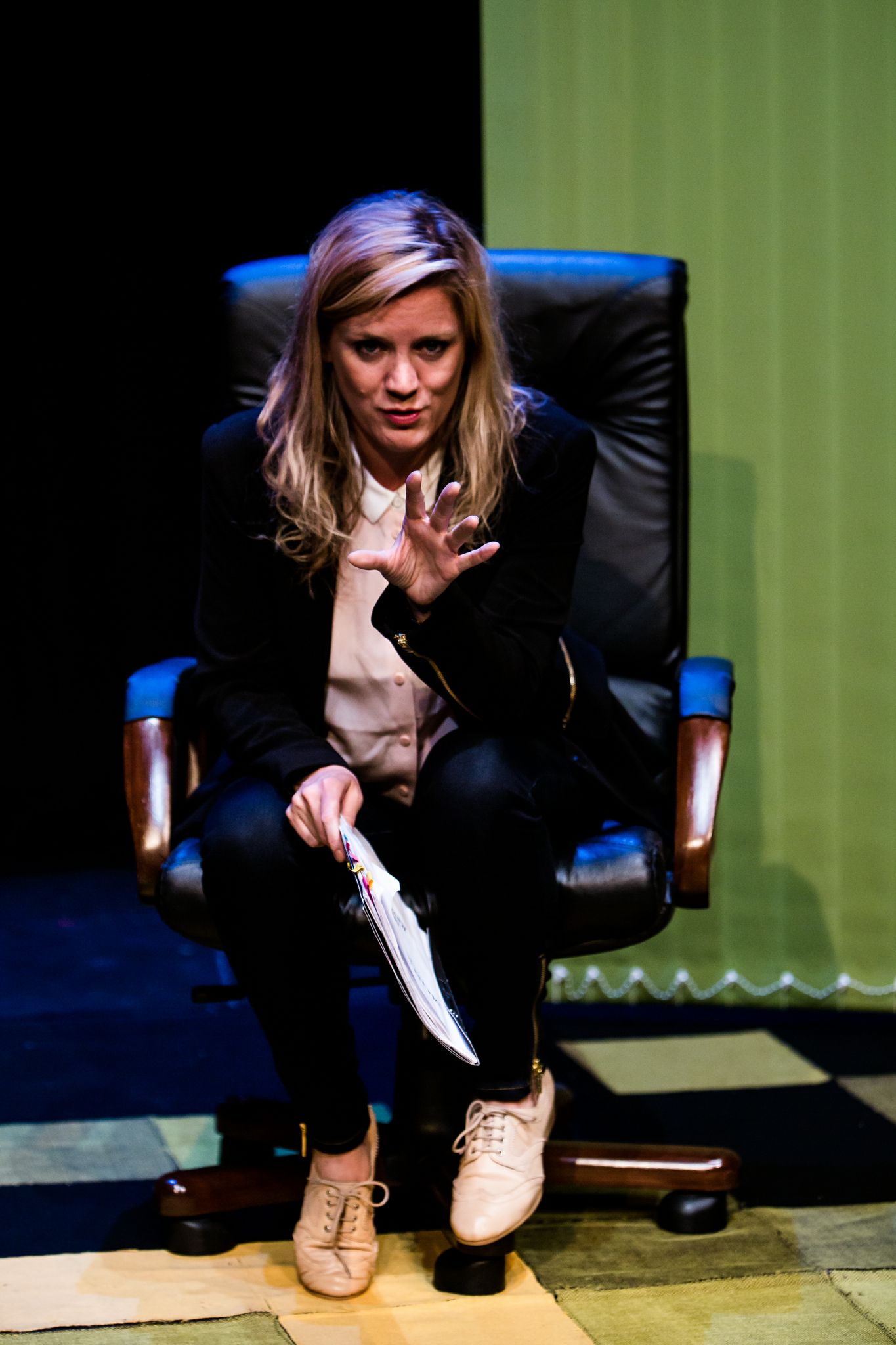
The play is strengthened immeasurably by the assured performance by Olivia Poulet. Always the character with not quite enough screen time on The Thick of It, Poulet is given room and time to develop the role. The script is so funny, and Poulet such an engaging and lively performer, that at times it has the air of a character comic rather than theatre piece. This is enhanced due to the fact that the audience effectively takes on the role of the actress being pitched to, and so Poulet talks straight to us. She is very good at flicking between the world of the film, and the abstracted commentator on the script she is describing, and by the end of the play she has conjured an entire film that the audience can believe it has really seen.

<<Continue to full review>>

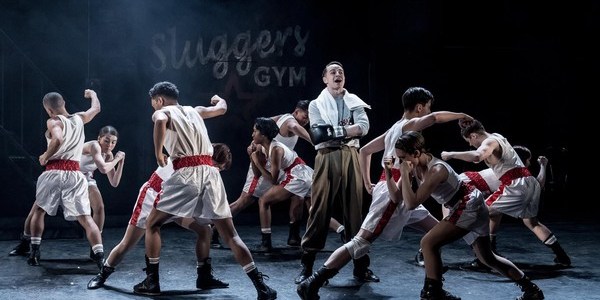
'So you wanna be a boxer' Bugsy Malone. Photograph: Manuel Harlan

New generation muscles in as Bugsy Malone takes over Hammersmith

Bugsy Malone – Lyric Hammersmith, until 01 August 2015 (tickets)

Michael Billington (or as I imagine him – the Sage of Shaftesbury Avenue) described the Lyric’s production of Alan Parker’s sublime 1975 musical as “having nothing new to say about the gangster-movie”.

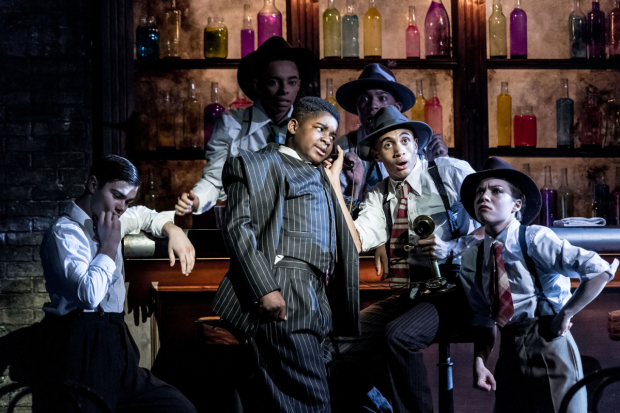
Whilst being factually correct, it also totally misses the point. Bugsy Malone is to musicals what an 18th century folly is to architecture. It has no purpose other than to be enjoyed for what it is. Bugsy Malone is pure sugar-rush pleasure. It enthrals children by showing people their own age James Okulaja-as-fat-sam-and-company. Photo credit: Manuel Harlanplaying at adults, whilst grown-ups are drawn in by the infectious enthusiasm and energy of the cast.

Bringing it all together is a highly effective team. Phil Bateman’s careful musical direction ensures songs stay within the cast’s natural ranges and Drew McOnie’s choreography has a highly physical comic style that adds vim to some terrific numbers, whilst Sean Holmes’ fluid but precise direction keeps everything humming along.

Eleanor Worthington-Cox already has one Olivier award for Matilda; she could get another for her Blousie Brown. It was a spectacular assured performance and her rendition of I’m feeling fine was exceptional. However it is James Okulaja’s Fat Sam that steals the show. Vibrantly energetic, full of confidence but still able to deliver a sparkling comedy pratfall – Okulaja shows who the true star of Bugsy Malone is.

Beatboxing meets Brecht: Political theatre for 2015

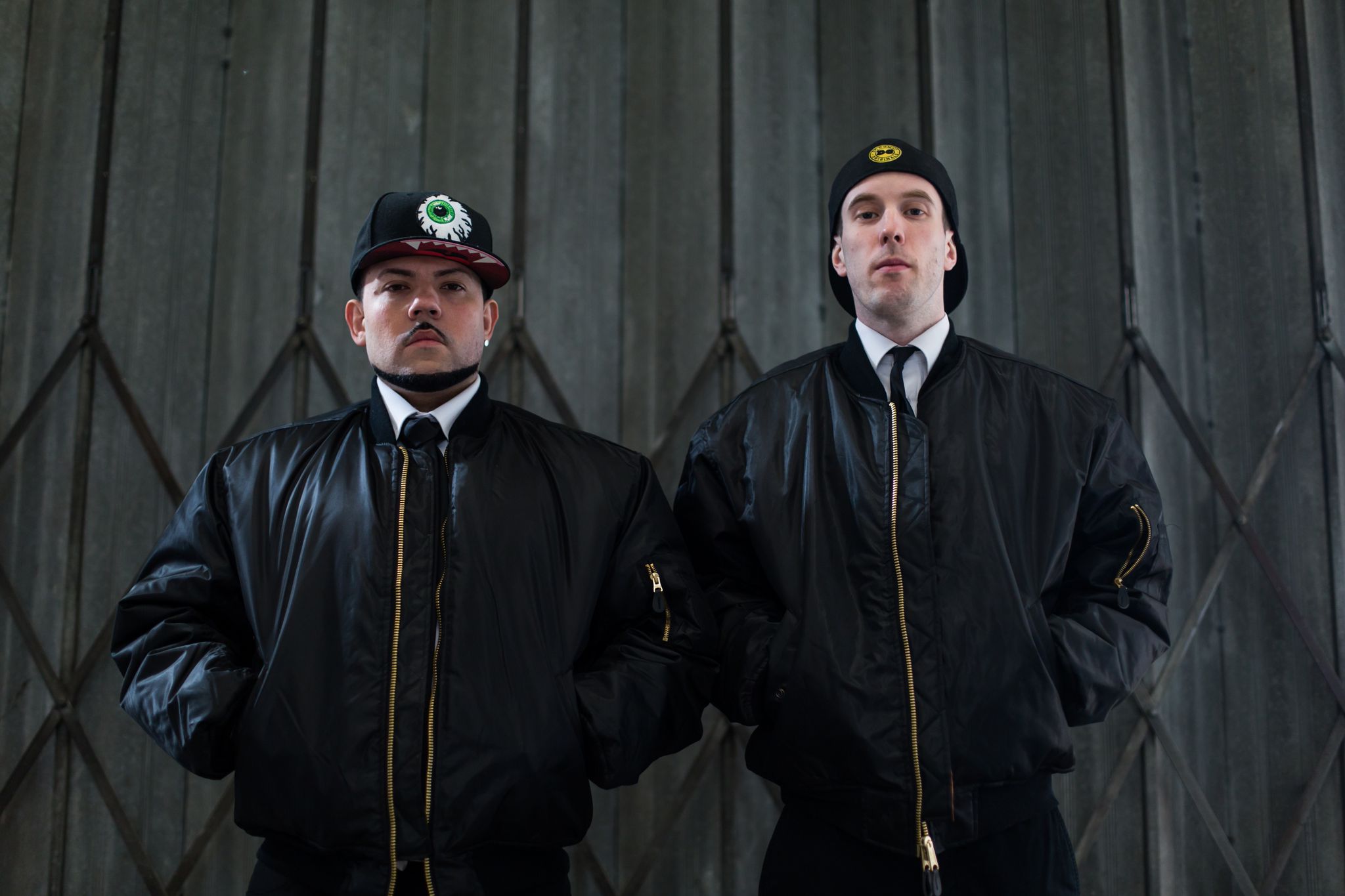
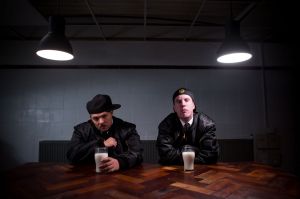
No Milk For Foxes – Camden’s People Theatre, until 09 May 2015 (tickets)wpid-wp-1430563981332.jpg

In case you missed it, there is a little thing called the ‘general election’ happening in a couple of weeks. Across England the electorate appears gripped by apathy. Not for us the forceful, passionate women leading vibrant nationalist campaigns capable of instilling a sense of self-determinative belief in voters. For those sandwiched between Wales and Scotland the choice is between three different shades of beige – one shiny as a Christmas ham, one an amalgamation of several sock-puppets and one that leaves no discernible impression at all – or, how could we forget, everyone’s favourite part-man, part-pub sound bite generator.

wpid-wp-1430563988725.jpgVoter turn-out has been declining since the 1950 election when almost 84% of people cast their ballot and by 2010 had sunk to 65% of the electorate (amazingly this is still higher than the nadir in 2001 which saw less than six out of ten eligible voters bothering to have an opinion on who they wanted to control their lives). In the intervening years mass political movements have come and gone but the institutions of Westminster have remained as hierarchal as they have ever been, and – based on a simplistic metric of ‘private education and Oxbridge’ – may have gone backwards to Victorian levels of patrician governance, with few MPs from across the political spectrum able to claim a background that even Tony Blair’s favoured ‘Mondeo Man’ could identify with.

The question of how to get people back to the ballot box may not be solved by the London fringe theatre scene but at least they are trying. At present you can barely make it into any black-box space without being assailed by the sound of discontent with the political system. Camden’s People Theatre is no different and No Milk For Foxes finds itself at the centre of three weeks of drama drawn together under the appropriately-titled banner of The State We’re In.

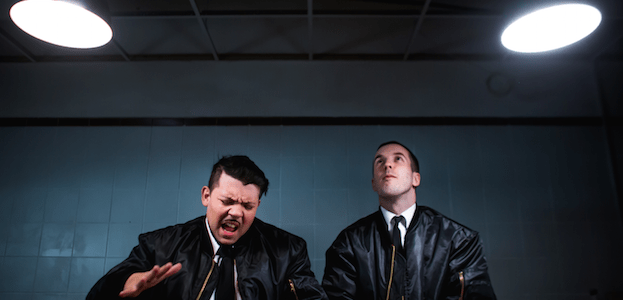
The most refreshing thing about No Milk For Foxes is that it does not lecture its audience. There is little overt politicisation in the narrative and no attempt to indoctrinate those watching with a finale that involves a rousing rendition of The Internationale. Instead it seeks to engage with political issues by shining light onto the mundane everyday pressures of living in a 21st century economy where ‘flexible working’ refers to the terrifying prospect of zero hours contracts and no money in next week’s paycheck rather than the ability to work from home on Friday afternoons.

<<Continue to full review>>