Something for the weekend sir?

Sitting around on a Saturday night? Reconciling yourself to an evening spent watching manic depressive Irish twins and a faded noughties boyband systematically deconstruct the meaning of what music has to be? Well this glimpse of what’s on the London stage may encourage you to put on your gladrags and discover some theatre that you never even knew existed.

I AM THE WIND

Who? A bit of a high-culture European super-group; acclaimed French director Patrice Chereau (La Reine Margot) works with Simon Stephens (Wastewater, Punk Rock) and Jon Fosse (by all accounts Europe’s most performed playwright – who knew?).  It’s basically a bit like when John Lennon formed a band with Keith Richards, Eric Clapton and Mitch Mitchell but probably a lot less cool.
What? Two nameless characters are alone on a boat, they drift into the ocean and into the world of the unknown. They are entering a world of metaphor, allusion and philosophical questions about man’s relationship with itself and with nature.How much you enjoy this play probably rests on whether you got to the end of the previous sentences without raising your eyebrows at the pretentiousness of it all.
Why? With such a strong British tradition and the constant influx of big names from America, this is a chance to see how they do it on the continent. A legendary director meeting a prolific playwright (over 900 productions in 40 languages) would be cause for celebration across Europe but here it has received a decidedly mixed reception. Fosse is seen by many as a sub-Ibsen or Beckett but you do not get translated that many times without being able to tap into certain universality.
Where? The Young Vic
When? Until 21st May (and then on an international tour)
How much? £10 – £27.50
Tedious deconstruction of the play to one sentance:An existentialist play directed by a Frenchman where there are two characters called ‘the one’ and ‘the other’; you can’t argue you didn’t know what you were letting yourself in for when you bought the tickets.

TENDER NAPALM

Who? Tender Napalm is the first play in three years by Phillip Ridley, winner of Time Out, Evening Standard and Critics’ Circle awards and includes Jack Gordon (Fish Tank, War Horse) who won the Screen International Star of Tomorrow award.
What? Taking its influences from a number of playwrights, including Pinter & Coward and with nods towards Shakespeare and the ancient Greeks, Tender Napalm is more than a string of cultural reference points. It presents an intelligent study of the lines (in reality, in language and in metaphor) that pull a relationship through love and hate. A stripped back stage and fully committed performances by the actors draw the audience into the action.
Why? Ridley’s ear for language draws you into the hidden depths and finds ways of vocalising those places in the mind that in real life remain unsaid, this leads to a play that has a vitality and a rawness that is too often missing from similar plays. Rather than clunky realist plotting, Ridly manages to draw the life out the play out of the emotion and imagination of his characters.
Where? Southwark Playhouse
When? Until 14th May
How much? £8 – £18
Tedious deconstruction of the play to one sentence

A brutal, excoriating but often very funny examination of a relationship and the fine lines drawn between love and hate; stellar performances and intelligent staging underpin a play by one of Britain’s most exciting writers.

Spotlight On: Adam Curtis

Ok the first in a new series of Spotlight On. These will look at people who, for whatever reason, have caught my interest. First up the inexplicable and inexplicably brilliant Adam Curtis.

Adam Curtis returns to the BBC on the 23 May with his new series, ‘All Watched Over By Machines Of Loving Grace’. For anyone reading who doesn’t know who Adam Curtis or why a documentary maker is featuring on a theatre blog then the good ol’ folks at the BBC have put the whole of ‘It Felt Like A Kiss’ on the website (http://www.bbc.co.uk/blogs/adamcurtis/it_felt_like_a_kiss/). This sublime montage work was created in collaboration with Punchdrunk as part of the Manchester Festival.

It Felt Like A Kiss marks a more explicitly artistic approach to serious documentary film making than Curtis has subsequently produced and ‘All Watched Over…’ appears to be a continuation of this approach (a short taster can be seen here: http://www.guardian.co.uk/tv-and-radio/2011/may/06/adam-curtis-computers-documentary). In the clip Curtis seems to be continuing with his experimentations in montage and discordant sounds rather than delivering a straight narrative (in the style of Dispatches or Panorama). The ongoing use of film clips, archive news footage and interview in juxtaposition may be regarded as pretentious by some but this underestimates the scale of what Curtis is attempting.

Curtis’ documentaries are… continue reading here

Getting down with Shakespeare

Funk It Up About Nothing – Theatre Royal Stratford East, 07 May 2011

It comes as little surprise to learn that the The Q Brothers, the group behind ‘Funk it up about nothin’, have previous when it comes to adapting Shakespeare for a modern audience. The show had been a hit at the Edinburgh festival and it’s clear that the cast are much more versatile than the slightly ramshackle approach might initially suggest.

Hidden below the surface is an awful lot of hard graft. Cutting Shakespeare in half and rewriting 95% of the dialogue should not be a task that anyone takes lightly, for no better evidence I point people towards Gnomeo and Juliet. Creating a tightly-written musical score that fits 75-minutes of continuous and fast-paced verse adds a whole another level of difficulty. And a third problem is that by placing it within the context of urban music means the audience you are aiming for will tell instantly whether we are talking genuine Prada or a Rada knock-off.

The choice of Much Ado About Nothing is extremely well-judged. It is very well suited to a hip-hop reimagining. The four leads are all too imaginable in the modern world – the pretty but vapid match of Claudio and Hero undermined all too easily by accusations of ‘being a ho’, while the quick-fire, pithy verbal sparring of Beatrice and Benedict seem a natural fit to a world of hip-hop battles and zinging one-line assaults, as thrown out by our nimble MC’s. Updating the play but remaining in verse creates a vivid sense of old and new combining – deep down we know this isn’t Shakespeare but the continually rhymes blended with the odd-line taken from the original works to disorient the audience until we are no longer entirely sure which play a reference to ‘licking the honeypot’ comes from. Continue Reading Here

Spotting a summer celebrity – 2011

 Five to watch

It’s that time of year again when those celebrities, or those unfortunate to have missed out on the chance to spend the next four months sitting in hotel lobbies desperately promoting a $200 million turkey to  hacks still willing to buy into the illusion that Pirates of the Caribbean represents a significant addition to cinema’s canon, remember that theatre represents their true calling along’.  We can forget for the moment that most will have disappeared back State-side, ready to add a new-found gravitas to an already embarrassingly padded C.V, just in time for the festival circuit and instead enjoy gawping at people we normally see in while chowing down on a bucket of popcorn the size of a small child.

5) Rupert Everett & Diana Rigg

Pygmalion – Garrick  Theatre, from the  25 May 2011

First off, sadly Diana Rigg is not due to play Eliza Doolittle, although that would be an officially awesome reworking of George Bernard’s Shaw classic. Instead she is down to play Mrs Higgins, while Rupert Everett reprises the role of Henry Higgins that he first played as part of the Chichester Festival.

GBS is having a slightly revival of late, with recent major productions of St Joan and Mrs Warren’s Profession gracing Londdon, after a long period of having been pushed into the shadows. I am sure the imperious Diana Rigg will be splendid but Everett is the more interesting choice; he, after all, is a man who never quite made it onto the Hollywood A-list (for reasons that may or may not have to do with him being openly gay) who will be playing a character who works to fundamentally change Eliza so that she is more socially acceptable. One wonders what Freud would have to say about that?

Celebrity enjoyment factor: C

4) Jude Law

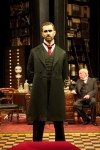
Anna Christie – Donmar Warehouse, 04 August – 08 October 2011

Jude Law loses out in the battle of the Hamlets (see 2. below) but this is partly down to the fact that I don’t really know as much as I should about Eugene O’Neill and his plays. Wikipedia tells me that this one the Pulitzer Prize back in 1922 so I am guess it is going to be pretty good and Long Day’s Journey into the Night is generally regarded as an American classic.

The Donmar rarely puts on poor productions and Jude Law, even before Hamlet, is no mug on stage. Just as he was starting out in Hollywood (way, way before the Jude Law overload of 2004, which saw him opening 6 films in one year and the public getting more and more sick of the sight of him – the nadir probably being the execrable remake of Alfie) he left an indelible impression in the Young Vic’s production of ‘Tis Pity She’s a Whore. If this production is half as good as that then, following a reasonably strong Hamlet, we may be seeing the moulding of Law as a strong presence on the British stage.

Celebrity enjoyment factor: B-

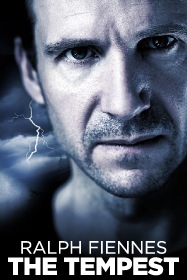
3) Ralph Fiennes

The Tempest – Theatre Royal  Haymarket, 27 August – 29 October 2011 

Coming as part of Trevor Nunn’s impressive first season as artistic director of the Theatre Royal Haymarket (we have already seen a well reviewed, and star-heavy, Rattigan revival in Flare Path and we can look forward to Rosencrantz and Guildernstern are Dead in early summer), The Tempest has drawn one of the few actors who seems at ease on stage as he is on camera. Ralph Fiennes, who has previously excelled as Julius Caesar and has been busy with his directoral debut, a modern-day version of Coriolanus, so is clearly no stranger to Shakepeare (even if many of his younger fans may recognise him more clearly as Voldemort in Harry Potter).

The only question-mark is his age. Not yet 50, Fiennes would seem to be a very young Prospero (even if Miranda is only supposed to 16); traditionally a part that actors take as they approach the end of their careers. The question is whether Fiennes has the gravitas of a man who was cast adrift when his daughter was just a baby. In lesser hands it may be more of a concern but looking at some of his career highlights to date – Quiz Show, Schindler’s List, The English Patient, The Reader – it is clear this is a man who understands and enjoys complex roles, and this should be an exciting proposition.

Celebrity enjoyment factor: B

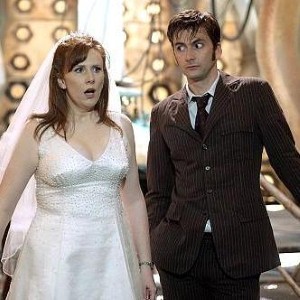
2) David Tennant & Catherine Tate

Much Ado About Nothing – Wyndhams  Theatre, from May 16 2011

Admittedly this isn’t exactly Hollywood but this is about as close as we get in the UK. The Doctor and one of the most left-field choices of companion turning it around and going head to head in one of Shakespeare’s most ferocious and ferociously funny comedies. Tennant showed in Hamlet that he has a quick-silver tongue and Tate has demonstrated a motor-mouth on numerous occasions; even without the pre-history of Doctor Who behind them, this would be a Benedict and Beatrice worthy of note. 

My only gripe is the outrageously expensive ticket prices, god only knows whether they plan to somehow incorporate time travel into the show but with Stalls seats running at £61 and the Circle for £51 there had better be something splendid to justify the price. While it would be naive to expect reasonably priced tickets in the West End, it is profoundly depressing when a show which will clearly appeal to children and those who don’t always go to the theatre will cost a family of four over £200 for seats that are not right up in the gods (spending over 2 hours with that little leg room is enough to put people off Shakespeare for life). If people complain about the sustainability of theatre then productions like this, which seem to exclude new audiences through price alone, should take a large part of the blame.

Celebrity enjoyment factor: A-

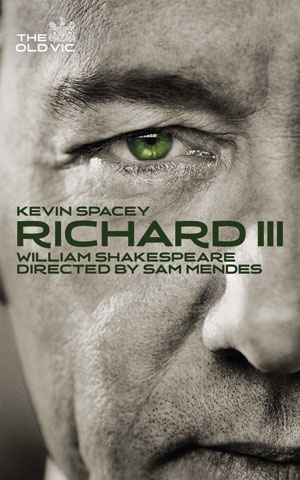
1) Kevin Spacey

Richard III – Old Vic Theatre, from 18 June 2011 before an international tour

If you, like me, has been more than a little underwhelmed by Kevin Spacey’s period as artistic director for the Old Vic then hopefully here is the big project you have been waiting for.  It seems that there have been too many small scale American plays that haven’t resonated with audiences this side of the Atlantic and when Spacey has been on stage we have seen nothing of the tour de force performance that brought him international acclaim in The Iceman Cometh.

Well if anything calls for a tour de force then it must be Richard III. One of the great ‘acting’ roles, Richard III must leave actors salivating. A great plot of intrigue and murder, one of the first anti-heroes; a king who is both crippled in mind and body. From the off… ‘Now is the winter of our discontent…’ this is a play crammed full of memorable lines and set-pieces. It can only be hoped that Spacey, under the direction of the reliable Mendes, who clearly knows how to work with film actors, really lets himself go and retakes the stage by storm.

Celebrity enjoyment factor: A

A thoroughly modern monarchy

Hamlet – National Theatre, 23 April 2011

Approaching a play with as much weight and complexity as Hamlet there are numerous decisions that have to be made. It is too big, too vast in subject matter and character to tackle every angle in one production. Recent productions of Hamlet in London, as good as they were, have been driven in part by the celebrity of the actors and as a result we have had productions that are unashamedly an “actor’s” Hamlet. We have had David Tennant; quick-witted and verbally nimble, playfully engaging with the comedic nature of Hamlet’s flurries of stage-managed madness (pushed on by an excellent rapport with Oliver Ford Davies’ masterful Polonius). Hot on his heels was Jude Law; here Hamlet is emotionally angry, powerful yet filled with an engaging vulnerability. There is clearly nothing wrong with productions where Hamlet is front and centre but watching Patrick Stewart as Claudius in the RSC version, it felt a little unfortunate that such a versatile actor was left playing such a complex and interesting part in the shadows of Tennant’s performance. It seemed as if an instruction had been given to rein in the performance to allow Tennant the room to perform.

From the off Nicholas Hytner’s Hamlet steps back and places the play in context. As the house lights fade to black, the audience are met with the sound of an aeroplane cutting through the stillness as it flies by overhead. The soldiers actually look like they are patrolling and the entrance of the ghost is met with an alertness that suggests infiltrators and enemies hovering in the shadows. The spectre of Fortinbras and war loom larger over this version of Hamlet than any other I have seen. As a result this is a play about paranoia, fear and surveillance. We are reminded continually that, whether or not something is rotten in the state of Denmark, this is a Claudius unwilling to anything to chance. Outside every door are ear-piece wearing security guards, however as the play continues it becomes increasingly evident that their presence is less to protect and more to provide Claudius with additional eyes and ears. Hamlet, Ophelia and Rosencrantz & Guildenstern are monitored throughout and each entrance and exit is swiftly followed by their ‘security’. This gives Hamlet’s ‘Now I am alone’ (ii.ii) a sense of real power as the audience realises that, for the first time in the play, Hamlet can talk freely, and in doing so can give full attention to his plan to use the play to trap Claudius…Continue Reading Here

Whose Frankenstein is it anyway?

Frankenstein : National Theatre, 14 April 2011

Danny Boyle’s Frankenstein…or is it Jonny Lee Miller and Benedict Cumberbatch’s Frankenstein, wait a minute isn’t it Mary Shelley’s Frankenstein? How about Nick Dear? He adapted the book after all. These questions are at the heart of what is essentially a solid, spectacular if slightly emotionally cold reworking of the classic ‘monster’ novel. This is a production overwhelmed at times by its celebrity. There can be few directors as hot in Hollywood right now as Danny Boyle. His versatility and formal inventiveness can be seen driving his work, from making a filmable version of Trainspotting through turning a story set in the Indian slums into a Hollywood smash (certainly no mean feat) before giving a true-life tale about a man who gets stuck by himself for 127 Hours a kaleidoscopic and hallucinatory shot in the arm (pun only marginally intended). Like many British film directors he has a strong grounding in the theatre and his return was always likely to be an ‘event’.

Could Boyle have returned to any other theatre but the Olivier? Where else could possibly have contained his whirlwind imagination? That vast, empty stage has stumped many previous directors. It is comically large, the actors appearing almost as matchstick men; sets that look as if they could have been pulled out of a Victorian dolls house. But part of the joy of the Olivier is seeing how they tackle the challenge. In the case of Frankenstein, having a soundtrack created by Underworld (another tick in the celebrity box) certainly helps. Their pulsing score drives much of the action and from the opening moment seems to be in tune with the heartbeat of the Monster (in this production, Jonny Lee Miller). It tones down but does not remove the darker beats of their best albums, and fills the theatre with a mechanical baroqueness. This is cathedral music as reinvented by the Futurists; it is thrillingly industrial and works in harmony with a set that seems to half an eye on the ever fertile steam punk market (how else to explain the emergence of a train seemingly assembled from cogs and random pieces of metal – a superb piece of theatre that is only let down by the questionably need for it in the plot.

The set makes full use of the Olivier’s malleability – the stage lifts and recedes as needed; to form cliffs, houses and a suitably windswept and remote Scottish island where Frankenstein retreats to build the Monster his mate. There seems little doubt that Boyle relishes the challenge of making an epic story work on an epic space. It also seems likely that, unlike some directors returning to theatre, Boyle is of that rare breed that has learnt from his work in film and seeks to apply that to the stage.

And in this lies the crux of the problem…<<Full Review continues here>>.