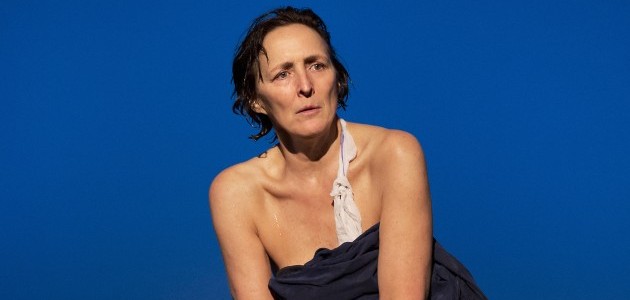
Breathing life into a statue: Fiona Shaw as Mary, Mother of God
The Testament of Mary – Barbican Theatre, until 25 May 2014
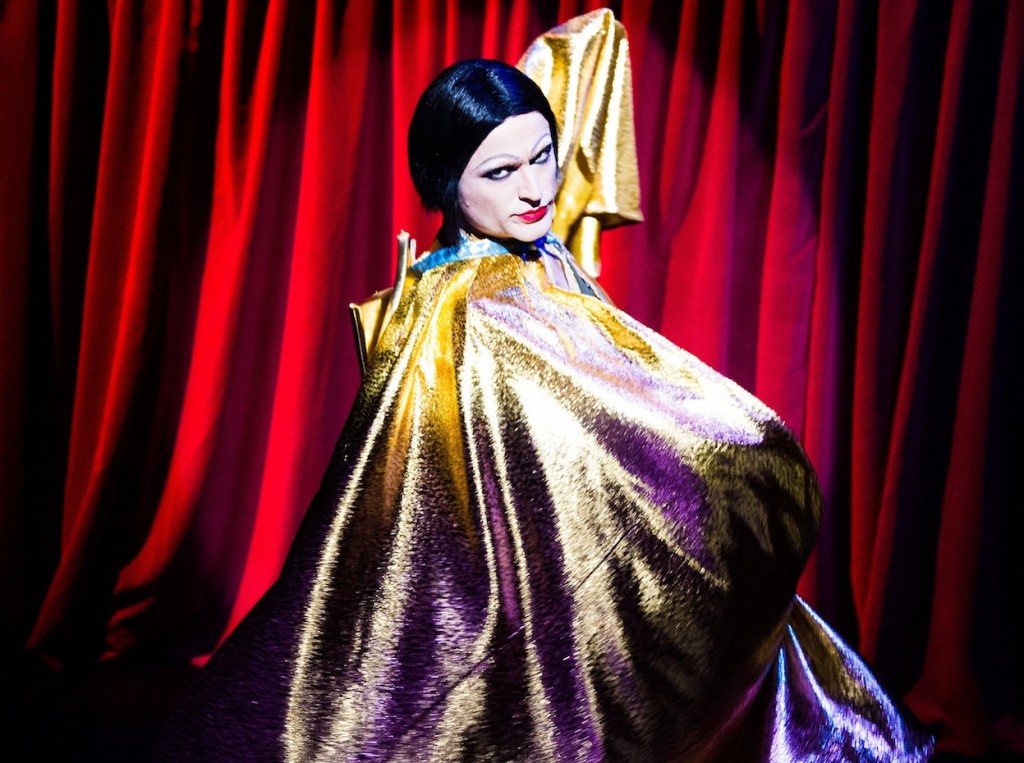
The Testament of Mary opens with a quite remarkable image that captures in tableau the vision of the director, Deborah Warner, the mesmeric focus of Fiona Shaw and the inspiration of set-designer Tom Pye; Fiona Shaw’s Mary is in her most recognisable garb, portrayed as a Raphaelite Madonna, but the seemingly tranquil pose is undercut a furious muttering, is it a liturgy or is it something more, which suggests that all may not be as it seems.
Shaw’s Mary presented in a Perspex box with the audience invited on stage to gawp at the figure within; this image hints not just towards Mary as one of art’s most famous faces but also towards the public spectacle of  Mary as a carnival attraction, the figure of endless fascination.
There is something grotesque about the scene and it is hard not to think of visitors to P.T Barnum’s famous circus. The voyeuristic aspect is brought home by the vulture that sits and watches proceedings and reflects both on the way that the acolytes would feast upon Jesus’ legacy after his death and the role that we continue to play as audience members.
So begins this brilliant adaptation of Colm Tóibín’s novella that consists of a monologue from Mary reflecting upon her son and the events leading up to his death. Tóibín gives voice to Mary and presents a human relationship that deftly prizes open the centuries old fallacy presented by the Christian church of Mary as a form of virginal purity; this Mary is a mother, not just in name but also in deed.
 Shaw embodies this earthy, human Mary. She is raw, alive and mourning the loss of Jesus as only a mother can. There is a humour amid her grief, thick and black, as she considers the impact her son had on others. Her Mary is Irish, this is both important and unimportant; what nationality should she be? She could be from anywhere but in making her Irish Shaw finds a folksy grounding and enables access to a natural informality in dialogue that can both raise the everyday to the state of the miraculous whilst grounding the miraculous in the everyday.
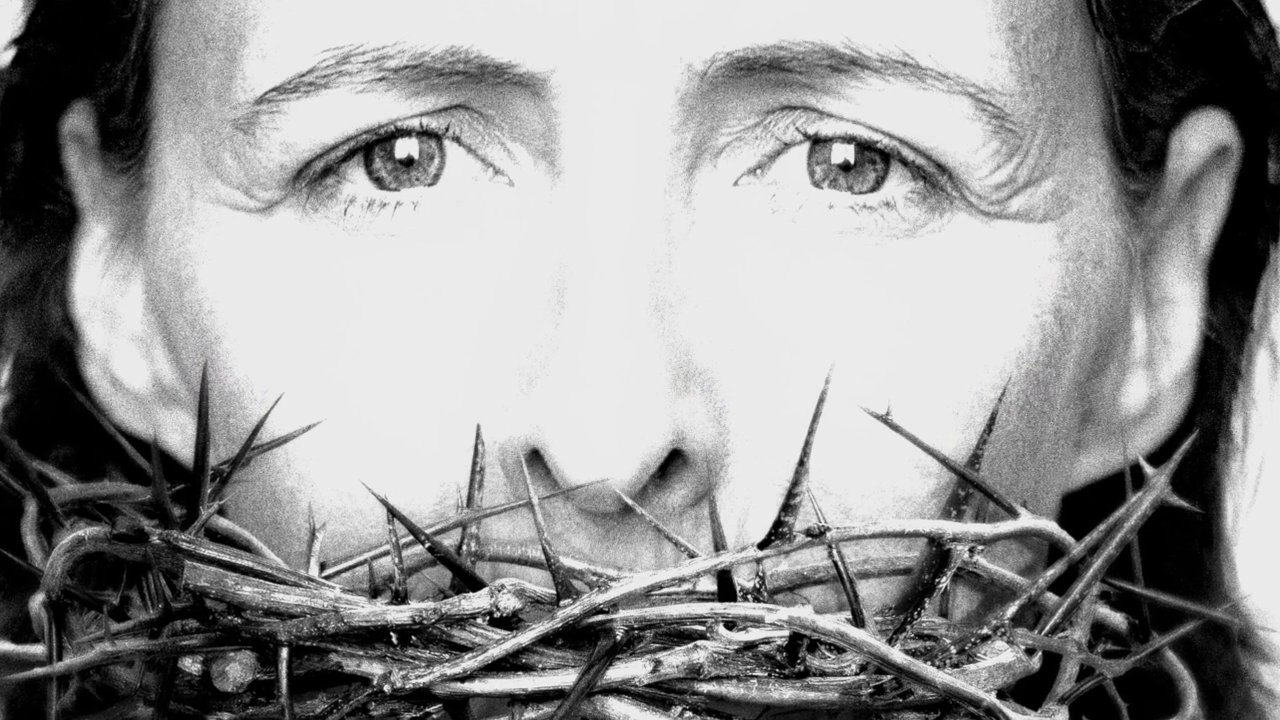
Running through the play is a strong feminist undercurrent that gives voice and power to the women in Jesus’ life. Advertising the play is an image of Mary gagged by a crown of thorns. It is a heavily symbolic image and suggests the fact that Mary, as woman and mother, is isolated in the aftermath of the crucifixion by those creating the mythology. One could argue that Shaw’s Mary is outlandishly modern but this critique seems misplaced, this is not being presented as history but as fable. Mary’s modernity is only as misplaced as the existence of miracles that she is so sceptical of.
Shaw’s Mary is no true believer – time and again we are pulled back to the central mother-son dynamic and, like many mothers, she cannot bring herself to trust her son’s friends and the actions that the ascribe to him. Her outsider status gives her an angle on to the famous miracles. The Lazarus myth is skewered quite brilliantly and demonstrates the horror that might accompany bringing someone back from dead. She is able to delve into the darkness of the story and the Lazarus that returns is closer to a zombie, reduced to wandering in a near-fugue state or sitting alone halfway between one world and the next.
Watch the trailer
<p><a href=”http://vimeo.com/92254717″>The Testament of Mary – Trailer</a> from <a href=”http://vimeo.com/barbicancentre”>Barbican Centre</a> on <a href=”https://vimeo.com”>Vimeo</a>.</p>
Read more


 Like so many writers who never quite achieve the status they deserve, Arden proved to be too radical for mainstream consumption. Radical in his politics – he was a Marxist intellectual who used his plays to challenge the established order and was an ardent pacifist- he was also a radical in his writing. Arden’s plays are a rich and vivid affairs that blend prose, poetry and songs. He had a remarkable talent for dialect that allowed his characters to spring fully-shaped from the page. He also offered the audience no obvious direction as to whether their moral sympathies should be directed – characters that would normally be signposted as ‘bad’ and ‘good’ remain equally vibrant and engaging, leaving critics unsure as to what the message of his play were supposed to be
 Reading his plays (because you won’t find many on stage) leaves an impression of a writer who had managed to distill the spirit of Brechtian theatre into the British landscape. There are hints of the stringent criticism of the political order that blend with an understanding of the changing social pressures of 1950′s England and the sense of the pastoral you find in the English folk traditions. Whereas Osborne and Delagny delivered critiques from the level of the domestic, Arden works on a more panoramic scale and sets his plays in a Britain that is both immediately recognisable and entirely alien.


 Civilian Theatre