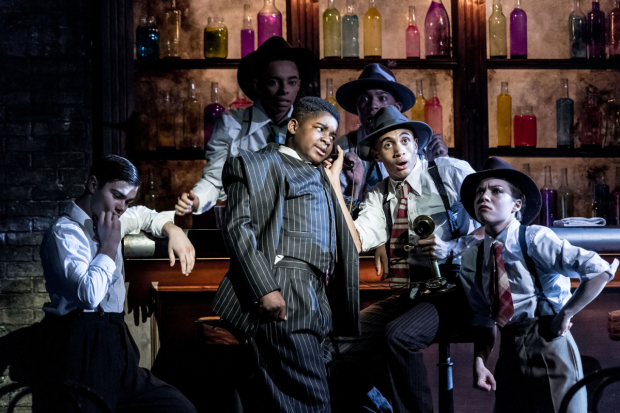
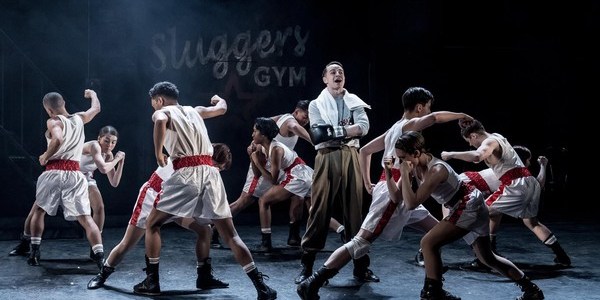
'So you wanna be a boxer' Bugsy Malone. Photograph: Manuel Harlan

New generation muscles in as Bugsy Malone takes over Hammersmith

Bugsy Malone – Lyric Hammersmith, until 01 August 2015 (tickets)

Michael Billington (or as I imagine him – the Sage of Shaftesbury Avenue) described the Lyric’s production of Alan Parker’s sublime 1975 musical as “having nothing new to say about the gangster-movie”.

Whilst being factually correct, it also totally misses the point. Bugsy Malone is to musicals what an 18th century folly is to architecture. It has no purpose other than to be enjoyed for what it is. Bugsy Malone is pure sugar-rush pleasure. It enthrals children by showing people their own age James Okulaja-as-fat-sam-and-company. Photo credit: Manuel Harlanplaying at adults, whilst grown-ups are drawn in by the infectious enthusiasm and energy of the cast.

Bringing it all together is a highly effective team. Phil Bateman’s careful musical direction ensures songs stay within the cast’s natural ranges and Drew McOnie’s choreography has a highly physical comic style that adds vim to some terrific numbers, whilst Sean Holmes’ fluid but precise direction keeps everything humming along.

Eleanor Worthington-Cox already has one Olivier award for Matilda; she could get another for her Blousie Brown. It was a spectacular assured performance and her rendition of I’m feeling fine was exceptional. However it is James Okulaja’s Fat Sam that steals the show. Vibrantly energetic, full of confidence but still able to deliver a sparkling comedy pratfall – Okulaja shows who the true star of Bugsy Malone is.

Beatboxing meets Brecht: Political theatre for 2015

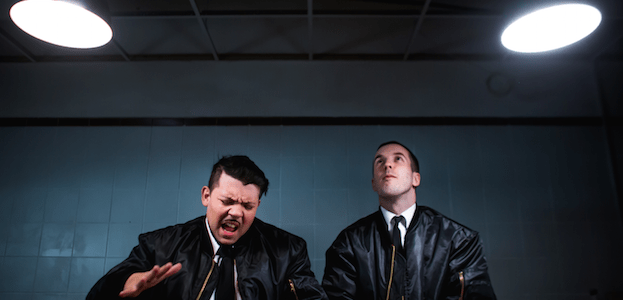
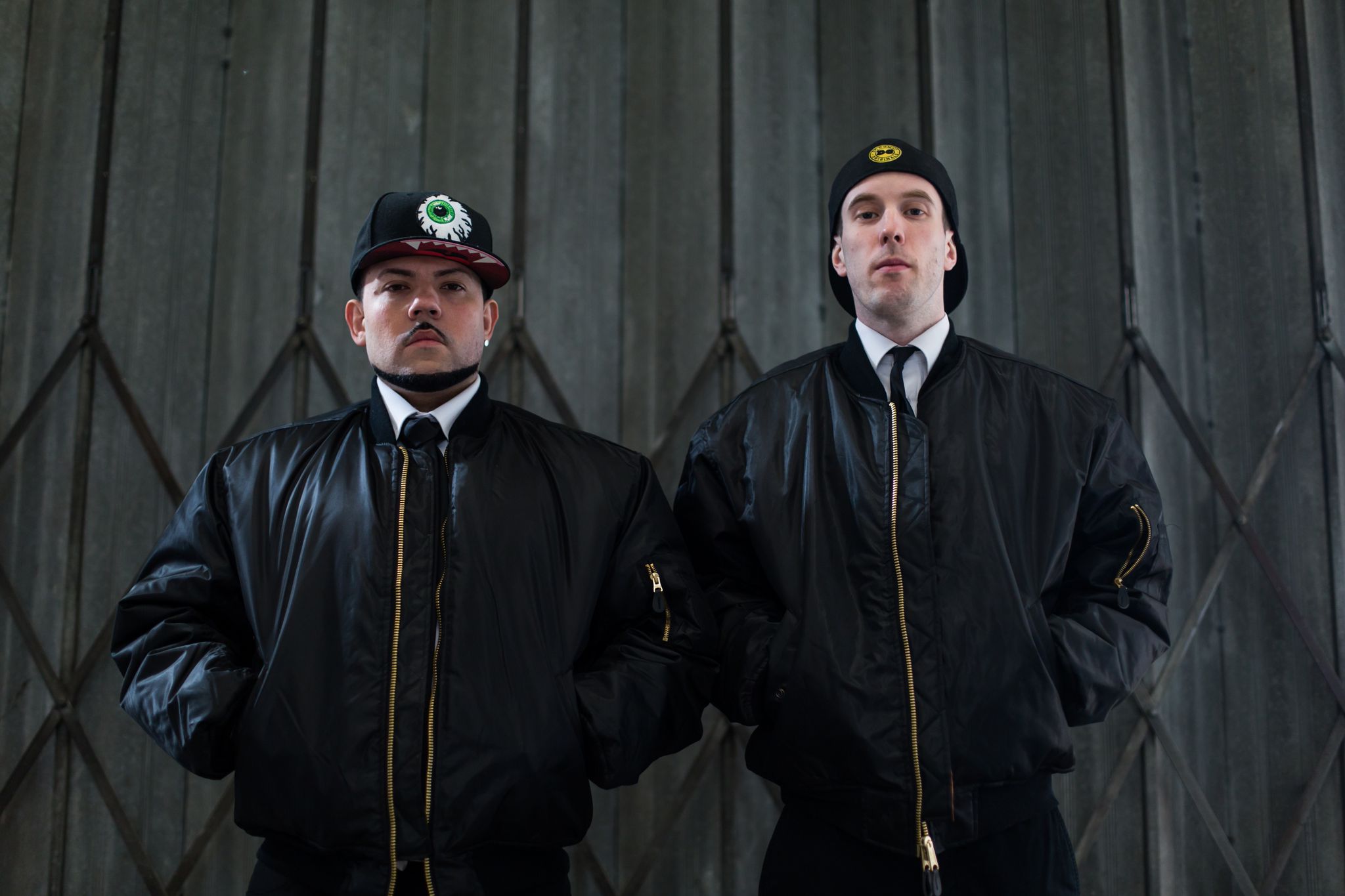
No Milk For Foxes – Camden’s People Theatre, until 09 May 2015 (tickets)wpid-wp-1430563981332.jpg

In case you missed it, there is a little thing called the ‘general election’ happening in a couple of weeks. Across England the electorate appears gripped by apathy. Not for us the forceful, passionate women leading vibrant nationalist campaigns capable of instilling a sense of self-determinative belief in voters. For those sandwiched between Wales and Scotland the choice is between three different shades of beige – one shiny as a Christmas ham, one an amalgamation of several sock-puppets and one that leaves no discernible impression at all – or, how could we forget, everyone’s favourite part-man, part-pub sound bite generator.

wpid-wp-1430563988725.jpgVoter turn-out has been declining since the 1950 election when almost 84% of people cast their ballot and by 2010 had sunk to 65% of the electorate (amazingly this is still higher than the nadir in 2001 which saw less than six out of ten eligible voters bothering to have an opinion on who they wanted to control their lives). In the intervening years mass political movements have come and gone but the institutions of Westminster have remained as hierarchal as they have ever been, and – based on a simplistic metric of ‘private education and Oxbridge’ – may have gone backwards to Victorian levels of patrician governance, with few MPs from across the political spectrum able to claim a background that even Tony Blair’s favoured ‘Mondeo Man’ could identify with.

The question of how to get people back to the ballot box may not be solved by the London fringe theatre scene but at least they are trying. At present you can barely make it into any black-box space without being assailed by the sound of discontent with the political system. Camden’s People Theatre is no different and No Milk For Foxes finds itself at the centre of three weeks of drama drawn together under the appropriately-titled banner of The State We’re In.

The most refreshing thing about No Milk For Foxes is that it does not lecture its audience. There is little overt politicisation in the narrative and no attempt to indoctrinate those watching with a finale that involves a rousing rendition of The Internationale. Instead it seeks to engage with political issues by shining light onto the mundane everyday pressures of living in a 21st century economy where ‘flexible working’ refers to the terrifying prospect of zero hours contracts and no money in next week’s paycheck rather than the ability to work from home on Friday afternoons.

<<Continue to full review>>

Exclusive: Tabloid editor mined for comedic gold

Clarion – Arcola Theatre, until 16 May 2015 (tickets)

The last few years haven’t been kind to journalists. The decline in print journalism has led to the decimation to the 20th century model of news creation whilst their standing in the public’s eyes has wpid-wp-1429963568067.jpgfallen to levels usually reserved for MPs and lawyers as phone-hacking revelations continue to destroy the industry’s slender claims to ethical credibility.

However they continue to soldier on, harbouring a dewy-eyed nostalgia for behaviour of the sort that would not be acceptable in other line of employment. Against it all journalists continue to cling to the iconic image of the noble, incorruptible news reporter – immortalised many times on screen and in print – and try to square it with the reality of a culture of bullying and humiliation that – to outsiders – seems endemic to the profession.

These tensions are evident in Mark Jagasia’s scabrous satire Clarion.  Jagasia, who worked for the Evening Standard and the Daily Express, has written a play fuelled with an intimate knowledge of its subject that is brutally scathing about the news industry, gut-wrenchingly funny in parts, but that can also be seen as a love letter to a dying friend.

Technology has left the medium wobbling on its last legs. It is likely there will be people watching this play that have never paid for a newspaper. Even the idea of a front page splash is fading as people see news as a series of equally sized tiles on mobile phones. The profession survives but it is a shadow of what it was, and it is hard not to feel that Clarion carries with it the faint note of a eulogy.

For as much as this is a comedy, it is impossible to ignore the artful nods towards Greek tragedy. It broadly adheres to the unities of time, action and place – taking place across a single day in a newsroom that is coming under increasing siege – and we see characters undone by their own hubris, whilst the modern day god of Mammon sows destruction among the just and unjust alike. Jagasia even skilfully incorporates a Tiresias-like seer in the form of a prescient horoscope writer.

That these allusions work and don’t come off as pretentious is due to Jagasia’s skill as playwright. It is a very impressive debut and, by taking time to reveal its true depth, leaves a final impression of a play that displays a far greater degree of complexity than Richard Bean’s Great Britain.

Where Great Britain was a very broad satire, and incredibly funny at times, it never scratched the surface of the issues it portrayed. It preferred caricatures to characters and one never got the sense that in reality these cartoons are actual human beings. Clarion may appear to cleave to similar stereotypes but, by limiting the cast to six core roles, Jagasia has time to add extra elements that give humanity to his creations.

<Continue to full review>

Distant Voices, Still Bloggers

It has been a quiet few weeks for Civilian Theatre as the rigours of work and the first signs of Spring have being jostling theatre for my attention; providing a distraction from the questionable pleasures of spending precious free time sitting in darkened rooms with strangers having a shared experience (in a way distinctly less kinky than that may sound).

What it has done is allow time to catch up on the rest of the blogosphere. As I have mentioned previously the rather wonderful, and supremely energetic, Rebecca at Official Theatre has circled the wagons around #LDNTheatreBloggers and an increasing number of bloggers are gathering around the Twitter campfire

It is quite depressing how talented – and young – most of them are but (deep breath) it’s about collaboration not competition. Although I am sure that the desire to rewatch Theatre of Blood (96% on the Tomatometer people!) is purely coincidental.

This being the Internet there is naturally a blog for every niche interest imaginable and below are just a few of my favourites.

Making money from being brainy

For a long time Matt Trueman has been writing comment and criticism that has been the model for Civilian Theatre’s own output. Quite regularly a review will be uploaded, only to discover that Matt Trueman has written a far more perceptive and challenging article that gets to the heart of matter with half as much pseudo-intellectualism. Read him and weep – no wonder he is actually making proper money from this. The new Michael Billington (with all due respect to the existing Michael Billington). http://matttrueman.co.uk/  

Victoria Sadler, writing at The Huffington Post, is one of these infuriating bloggers who have demonstrated themselves as a master of all trades, jack of none. As articulate and interesting writing about art exhibitions as she is about theatre, if you are looking for another regular weekly columnist then Victoria Sadler’s articles for The Huffington Post a well worth a look-in. http://www.huffingtonpost.com/victoria-sadler/

Thinking about theatre

James Waygood – the self-styled Grumpy Gay Critic – is somewhat less churlish in person than his Twitter handle may suggest. Luckily his critical faculties are, if anything, all the more potent as a result and he is always willing to give the plays he watches the write-ups they deserve. If you prefer in-depth commentary about what makes a production work to a 400 word plot synopsis and the casual awarding of 4 stars then Grumpy Gay Critic may be the blog for you. And now with added videos! http://grumpygaycritic.co.uk/

Laura Peatman is part of the aforementioned brigade of young and talented bloggers. However I try to keep my jealously intact and not to hold it against her as we have a tendency to swim in the same waters and Laura is always good value for a refreshing, perceptive and informed take on anything from ancient Greeks onwards. https://laurapeatman.wordpress.com/page/2/

I am sure that neither would thank me for mentioning it but Webcowgirl and There Ought To Be Clowns are relative veterans of the theatre blogging scene. There Ought To Be Clown’s first review dates back to 2003 – Trevor Nunn’s magical production of Anything Goes, which happens to be still the only musical production that Civilian Theatre has been to more than once – whilst Webcowgirl was in full flow by 2006. Early adopters indeed. Both blogs were key to encouraging Civilian Theatre dipping his toes into the murky world of internet blogging. Still the original and still often the best.

There are a number of multi-reviewer sites and these are often a mixed-bag. Views from the Gods is worthy of mention due to its impressive commitment to reviewing plays from the fringes of London’s theatre scene. The array of reviews at Views from the Gods acts as an important reminder that you can barely swing a cat in London without someone labelling it as site-specific theatre and charging £16 a ticket, and they offer a valuable service in telling you whether that would be a good investment of your precious time and money.

…And they just keep coming

There are obviously loads of other great sites. Exeunt is good for pretentious elitism, Everything Theatre is good for bite-sized reviews and A Younger Theatre is good for my developing Dorian Gray fantasies.

As part of the single-blogger army I am always happy to see others confidently carving their own individualistic furrow and so the final three recommends go to Mingled Yarns, The Bardette and Hello Emma Kay.

Happy reading folks.
Get your fix of immersive theatre and be hooked

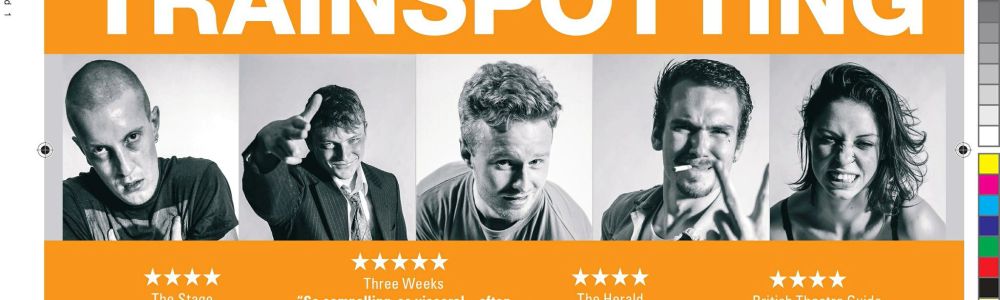
Trainspotting – In Your Face Theatre @ King’s Head Theatre, until 11 April 2015 (tickets)

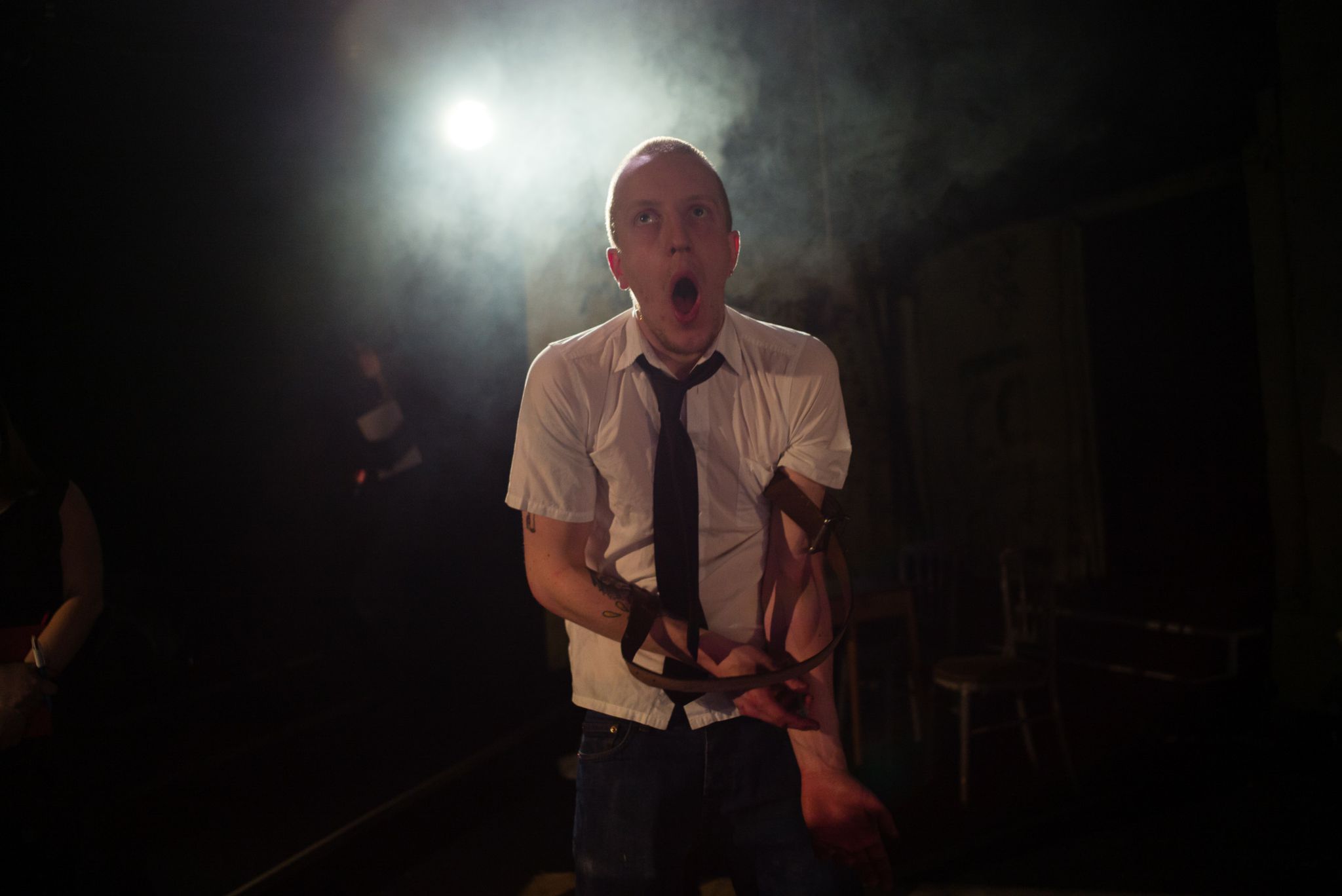
Irvine Welsh’s Trainspotting has proved to be a surprisingly durable and versatile work. In its original incarnation as a novel it stands comparison with the neglected masterpiece Last Exit To Gavin Ross as Mark Renton (credit: Christopher Tribble)Brooklyn, and it does so because Welsh matches Hubert Selby Jr’s ability to capture the vernacular of the community it speaks for so from amidst the grotesque surrealism of the imagary a harrowing realism emerges.

Its vitality has made it the perfect fodder for stage and screen. With Danny Boyle at the helm, the film exploded off the screen, underpinned by a pulsating soundtrack and electric performances that encapsulated hedonistic spirit of people that knew change was in the air after almost two decades of Conservative rule.

Perhaps unsurprisingly, and certainly appropriately, In Your Face’s production began life at the Edinburgh Festival and the constraints of performing there might explain the 65 minute running time, which is really only just enough time to do justice to the world Welsh created. However Harry Gibson has done an exemplary job in adapting Trainspotting.

Rather than force the whole plot into an hour, Gibson has tightly focused the work around Renton’s journey towards ditching the skag. Other characters interweave in this story and the main beneficiary is in lifting Tommy Laurence so he becomes a central character; in this world, where scales play such a critical role, there must always be balance and so with Renton’s emancipation must come Tommy’s enslavement.

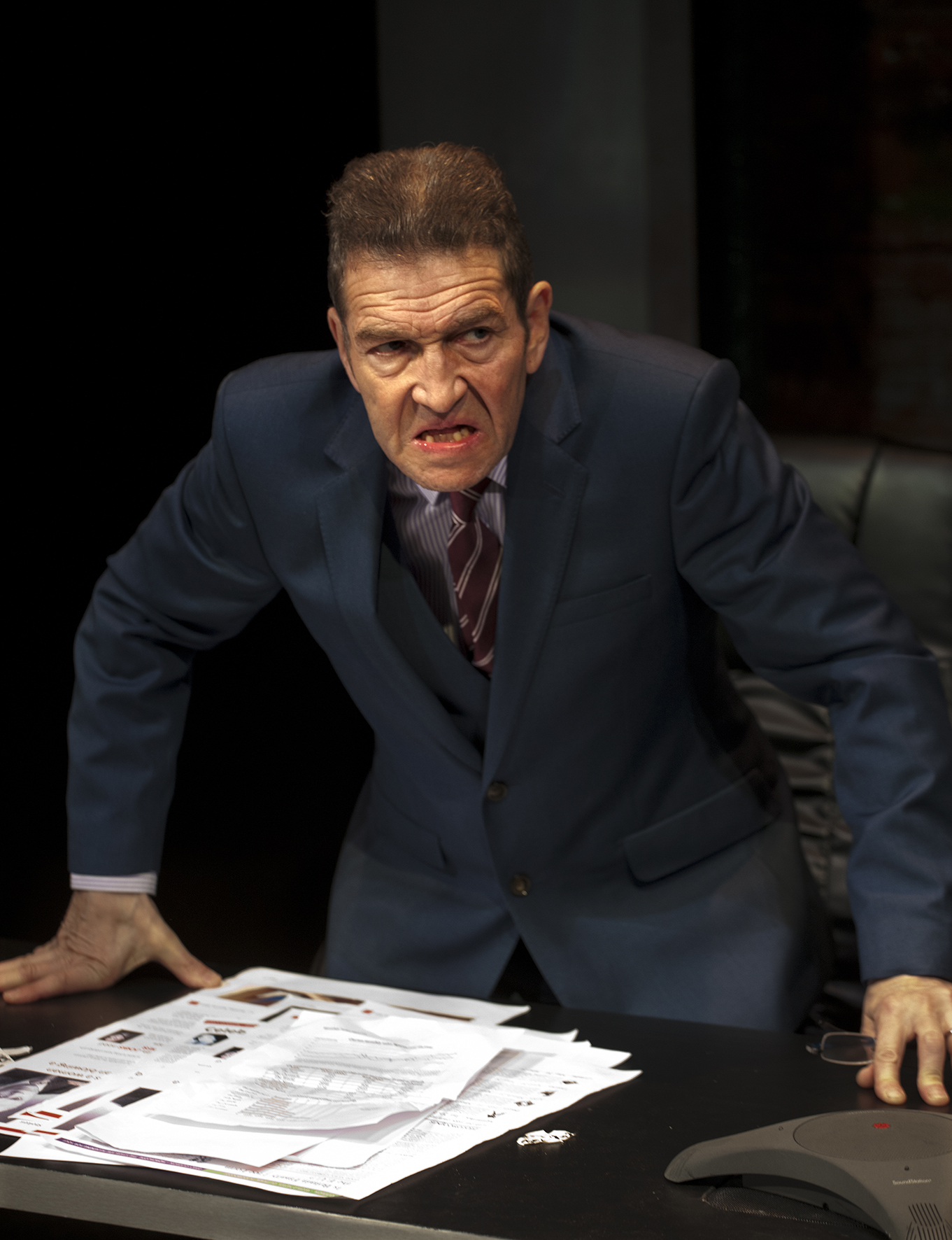
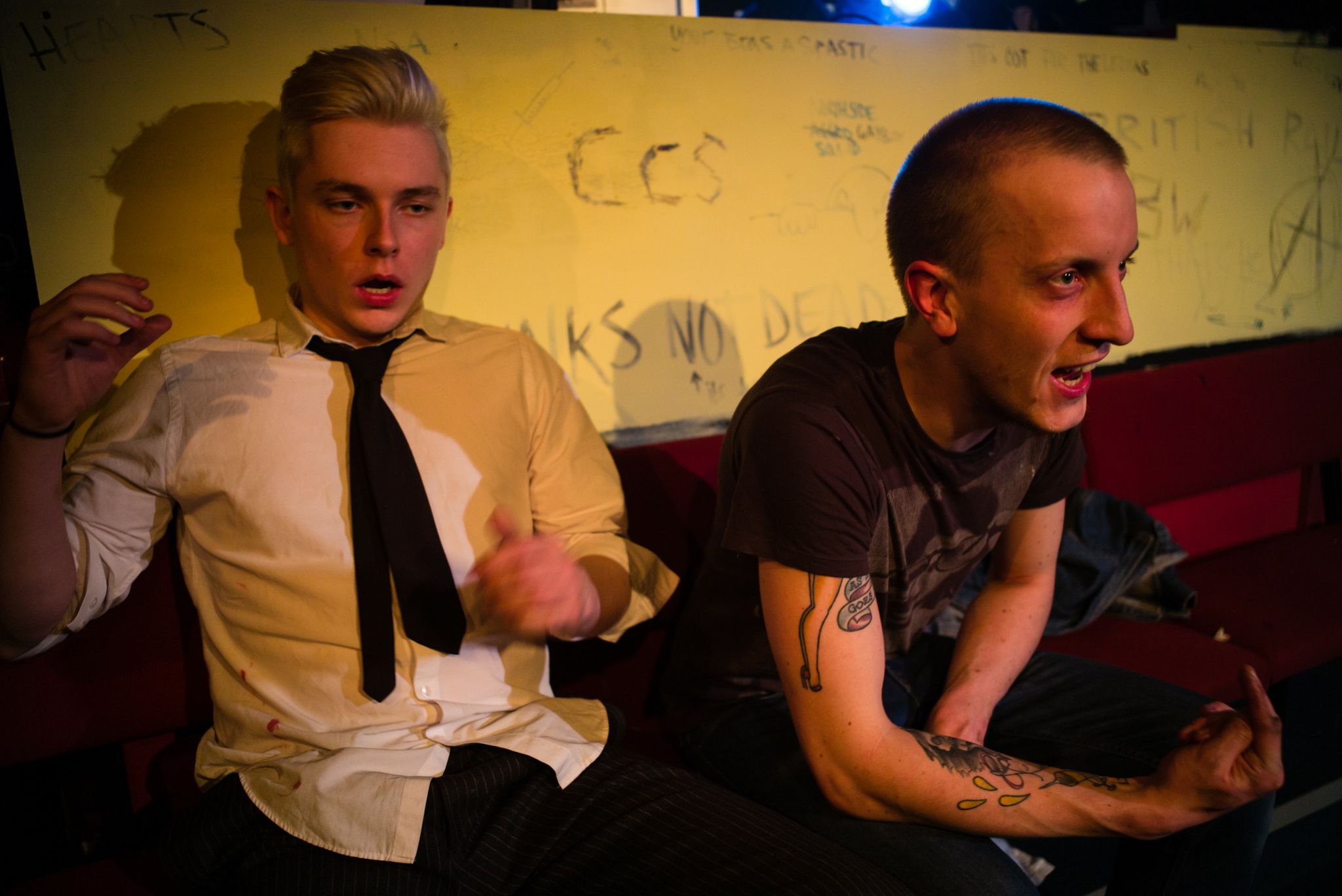
Sickboy (Neil Pendlenton) and Renton (Credit: Christopher Tribble)Fans of the film may complain that Begbie is sidelined by these changes but in this immersive staging a little of Chris Dennis’ Begbie goes an awfully long way. It is hard to believe that anyone could get close to Robert Carlyle’s psychopathic creation but Dennis has an added advantage – audience members at which to channel his malice. Even understanding the rules and structure of theatre there were moments when Begbie broke the fourth wall and became a terrifyingly real manifestation in a manner Boyle’s film could never have achieved.

In Your Face have produced an immersive experience that puts to shame many theatre companies working in a similar field; they have not found it necessary to scope out abandoned factories, railway tunnels or old department stores to create their world, rather they have transformed the King’s Head into the down-at-heel world of early 90’s Leith and trusted in their ability to take the audience with them.

We know we are in a theatre and the set is just a representation of a location – we don’t need elaborate sensory experiences to make us believe we are somewhere else, that is what we use our imaginations for – but from the moment we enter to a glowstick-raving cast gurning maniacally to Born Slippy.Nuxx, Ebenezer Goode and Right on Time through to the heartbreaking candlelit ending we are completely immersed in the world they have created.

<<Continue to full review>>

Austere Agony in Antigone

Antigone – Barbican, until 28 March 2015 (tickets – returns only)

It seems that London theatres cannot get enough of the ancient Greeks. Last year we were treated to a contemporary Medea at the National and a relatively classical Electra at the Old Vic. The Credit Jan Versweyweld Almeida have announced a season containing The Bakkhai, Oresteia and, tantalisingly, a chance to watch Rupert Goold direct his wife, Kate Fleetwood, in another Medea (and one would love to have Freud’s opinion on that choice!).

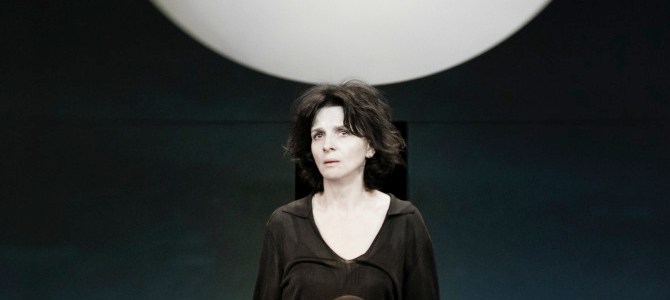
Sandwiched between them, but certainly not squeezed out, is what can only be described as a major theatre event; Ivo van Hove – fresh off the universally acclaimed A View From The Bridge – directing Juliette Binoche in Sophocles’ Antigone.

Of all the Greek tragedies it is Antigone that appears the most timeless. The moral dilemma at its heart is as immediately relevant today as it was when it was written 2500 years ago. It is a staggering achievement of simplicity and a constant reminder of the universal nature of human experience. Whilst society is broadly unrecognisable from the small slave-owning city-states of Greece in 5th century BC, the central compelling issue – of whether a person can hold a moral law above that of the state – remains at the heart of many contemporary debates.

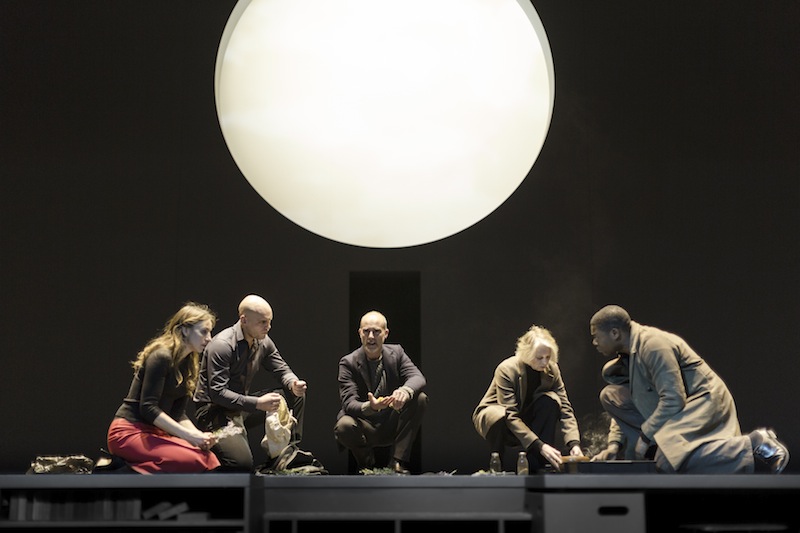
Ivo van Hove works with a minimalist’s clarity and sense of purpose to bridge a gap between the ancient and the modern. He is supported through Jan Versweyweld’s set design that splits the large Barbican space into two distinct areas. The downstage is kitted out in a sleek, functional contemporary urban style, whilst the upstage is starkly bare. Both locations give no hint to place to emphasise the universalism of the narrative.

Van Hove further stresses the ageless, placeless nature of Antigone’s dilemma by projecting huge, abstract scenes onto the back wall. A huge circular cut-out at the start of the play gives the impression of a solar eclipse – a traditional signifier of the intervention of the gods – before slowly rolling aside to let light stream in and bath the stage in a clinical brightness. It is a production where everyone’s actions will come under the microscope and be subjected to judgement; by the gods, by the playwright and by the audience.

<<Continue to full review>>