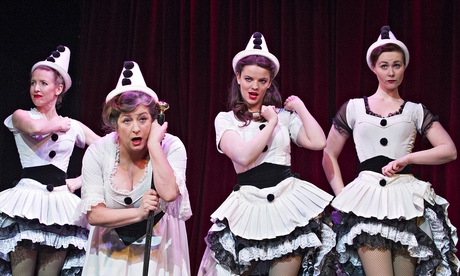
Rebecca Howell, Caroline Quentin, Alice Bailey Johnson and Zoe Rainey in Oh What A Lovely War

Michael Gove: A donkey in lions clothing

Oh What A Lovely War, Theatre Royal Stratford East

There can’t be many productions playing in London that begin with an announcement that the evening’s entertainment will be dedicated to Tony Benn – a statement followed by an unprompted and hearty ovation. With top oh what a lovely warprice tickets for the revival of Noel Coward’s Blithe Spirit with, soon to be Dame, Angela Lansbury clocking in at £92.50 (plus booking fee, naturally) one can’t begin to imagine why the trend hasn’t caught on.
Somewhere Michael Gove would be pursing his lips at the news and busying himself with the retrieval of the hatchet he had carefully placed in Boris Johnson’s back before steadying himself for another swing at the leftist establishment. This is the combined massed ranks of the cultural elite and academia who have the temerity, if his recent diatribe is to be believed, to suggest that Britain is not necessarily as ‘great’ as Mr Gove thinks it is.

Mr Gove is one of those unfortunate politicians that have managed to hold onto the illusion of the Edwardian gentleman that saw Britain truly as the empire on which the sun never sets and, unlike those pesky Europeans from across the channel, a country that left behind a colonial legacy of democracy, fair play and cricket. No matter that there are those in Kenya and Malaysia who may choose to disagree with this assessment.

That people still express these opinions in the 21st century points to the continuing necessity of productions like Oh What A Lovely War. 50 years from its debut, 100 years from the start of World War One, it is clear that proximity to power still seems to blind our political leaders to some painful home truths about our nation’s history. Indeed the myopia of Mr Gove is not a million miles from the delusions of Field Marshall Haig that allowed him to happily order men to walk into the field of fire whilst declaring there must be ‘no squeamishness over losses’.

There is no-one who can seriously engage in the content of Oh What A Lovely War and see a show that reflects at best an ambiguous attitude to this country  and, at worst, an unhappy compulsion on the part of some to denigrate virtues such as patriotism, honour and courage’.

Rebecca Howell, Caroline Quentin, Alice Bailey Johnson and Zoe Rainey in Oh What A Lovely WarIt may be true that Littlewood’s original production could have at least mentioned that the sense of traditional values of a large part of the embedded aristocracy meant that they were among the first to volunteer for the front and as a result suffered absolutely catastrophic losses, and far disproportionate to any other social class.

However this is a straw man argument and deliberately ignores the fact that the show quite clearly shows a deep and abiding love of Britain, and most particularly the men and women of Britain. It shows only compassion for the hapless men who were destined to be pinned between German machine gun fire and the equally lethal artillery of their own lines. It demonstrates every virtue that Mr Gove accuses it of undermining. There is never any doubting that Littlewood believes in the courage and virtue of the men who signed up to go to war, even when the lies and insanity of decision-making of their superiors, far from the front, must have been clear to them.

Has the show lost its power? Part of what made the original a revelation was that these attitudes were genuinely radical. They were telling stories that felt totally anti-establishment, that did not fit with the myth of the just and true war, of heroic stands and grand plans. However the seismic shift in history scholarship, away from the ‘great man’ theory of leadership and towards the narratives of everyday men and women has meant that World War One has been mined from every conceivable angle.

We now know ‘Tommy’s story’ inside-out; we recognise the deprivations of the trenches and the incompetence of the commanders. Increasingly the pendulum has begun to swing towards the middle-ground and new arguments highlight the complexity of the war and go further than the cheap jibes and easy solution found on both sides of the debate. This then begs the question of whether there is still a purpose for Littlewood’s production or has its iconic status turned it into the very thing that it probably most wants to avoid – something co-opted by the establishment as one of the official narratives for understanding the war?
<<Continue to full review>>

Le Docteur Miracle - Pop-up Opera

Violently assaulted by tambourines

Le Docteur Miracle – Pop-Up Opera at Drink Shop & Do then touring (tickets)

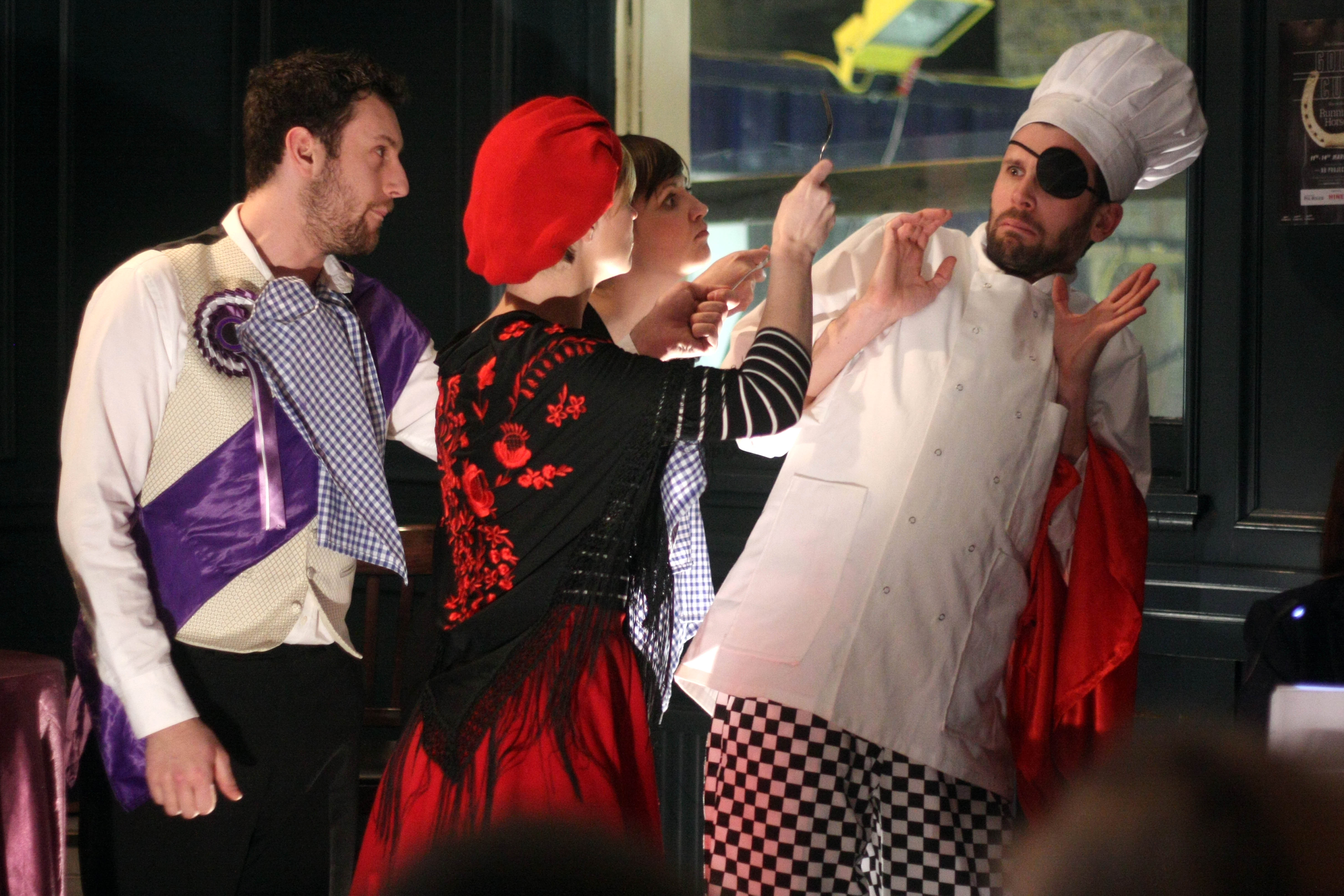
Being entirely unequipped to comment on the musical quality of Pop-up Opera’s Le Docteur Miracle, Civilian Theatre found itself both perplexed and perspiring in hipster paradise Drink Shop & Do  – a location Pop-up Opera Spring 2014, Le Docteur Miracle 1 (courtesy Jenny Dale)that clearly thinks that what it lacks in circulating air can be made up for in aggressively twee interior design.

The production can be seen as part of the continuing rise of the small-scale opera; a surprisingly niche success story even by the standards of a city that has managed to revitalise shops that specialise solely in knitting, cupcakes and inept service. The movement has being gaining ground since 2009 and the great success of OperaUpClose’s genuinely fantastic La Boheme, which lead to the company gaining a residency at The King’s Head Theatre in Islington where they went on to produce programmes that combined interesting work with variable quality.

Rather than establishing a permanent base, Pop-up Opera appear to have taken the form of the travelling players that have decided their form would be comic operas rather than morality plays. Le Docteur Miracle hearteningly plays for one-night-only in locations where London is merely a distant blight on an OS map; for every Hackney Wick and Dalston there is an evening performing to the good people of Herefordshire, Cornwall and Sussex.

492492_0_pop-up-opera-uk-presents-bizets-le-docteur-miracle_400

A travelling production brings with it logistical challenges. Each venue is likely to be prepped only hours before the show and so a slightly rough-and-ready approach to the proceedings is only to be expected, and in this case forms part of the production’s immense charm. The cast work hard to actively draw the audience into proceedings and there is an undeniable pantomime feel to some of the evening, which may offend the purists but arguably puts at ease those less comfortable with the whole concept of opera.

That is not to say that it all works; the short get-in combined with the unraked seating leads to some major issues with audience sight-lines. There were some moments that were probably lovely but as they had been staged at the same level as the seated audience it meant all that could be seen was a sea of trendy haircuts.

However the story-telling was impeccable. Not being able to follow librettos when they are in English, it would certainly have been challenging to follow Bizet’s French. However the artful staging of the surtitles was an excellent touch. Eschewing the classic libretto of the original, there is a real verve to how Pop-up Opera have taken it forward.

Bizet’s classic story has been updated to the 21st century; it blends internet-era visuals and memes with witty takes on current affairs to create a plot that even opera philistines – like this reviewer – could follow without resorting to the programme synopsis.

<<Continue to full review>>

Life is a cabaret, old chum

Ballad of the Burning Star – Theatre Ad Infinitum @ the Battersea Arts Centre then touring (details)

Or, in homage to the style of the evening, how do you solve a problem like the occupied territories?

There is no doubt that Theatre Ad Infinitum’s new production, first seen at Edinburgh and subsequently taking the old-fashioned route of touring the country before pitching up for an extended stay at the Battersea Arts Centre, takes on contentious subject matter.

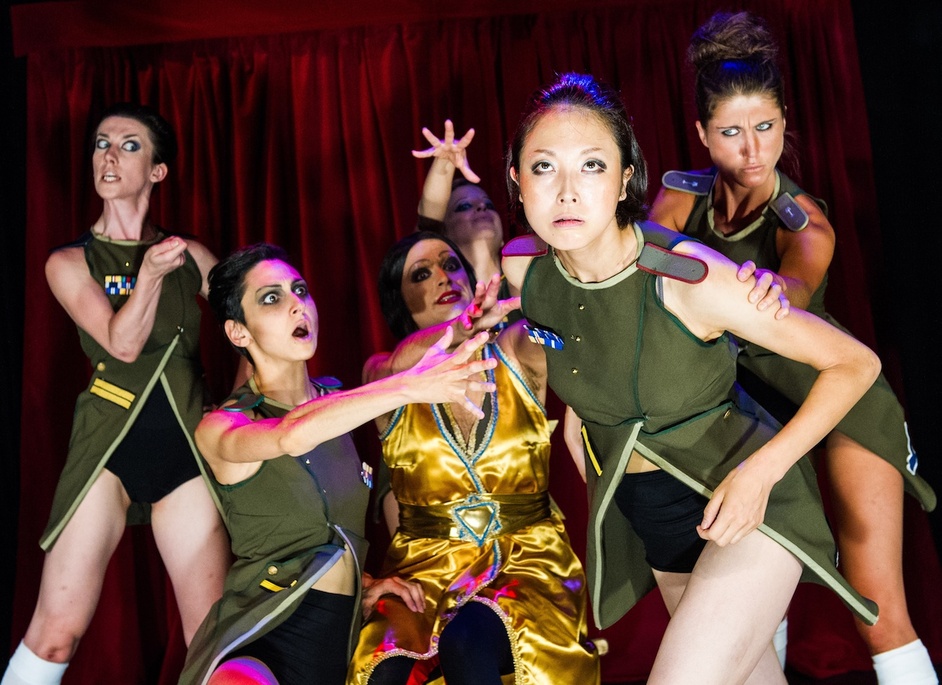
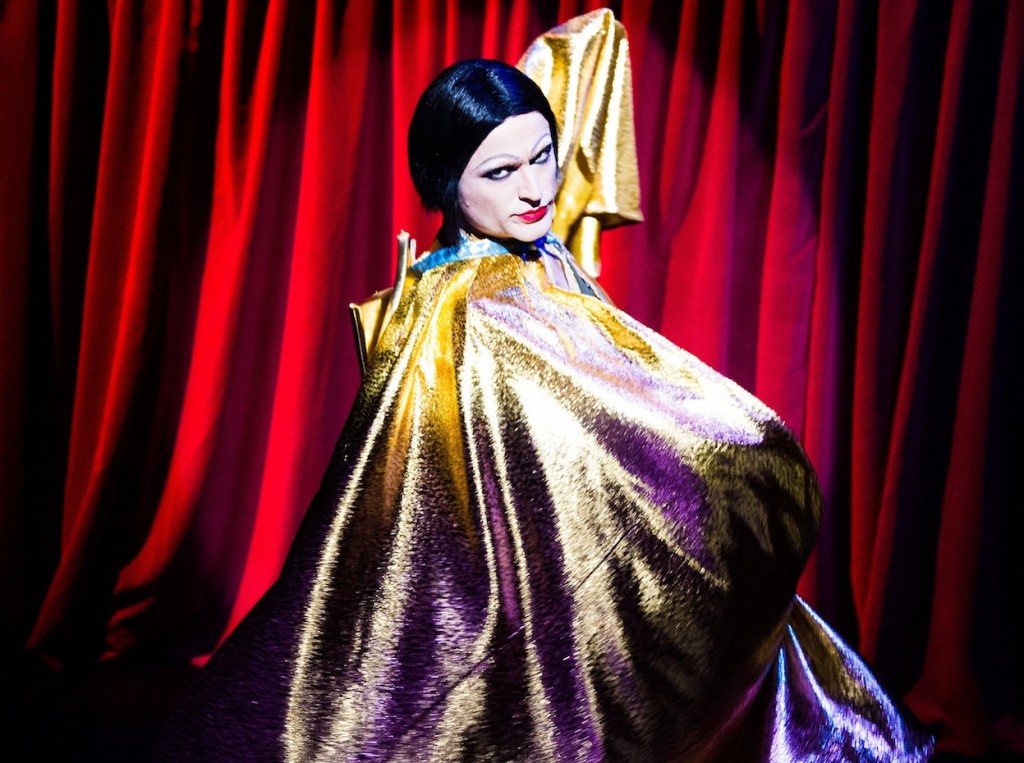
That the story is told through a drag queen and her cabaret troupe is a fun but rather unsurprising mechanism. Once a radical device, these days it does serve as a useful alienation device and, in the case of Ballad ofThe Starlets in Ballad of the Burning Starthe Burning Star, the issues remain so sensitive that it is critical for depoliticising the very act of storytelling.

The events we hear are shocking but if told as straight narrative then perspectives of the characters would be caught in the surrounding context and events discarded as being irrevocably biased. Or alternatively the play would try so hard to capture both positions that the value of the final product is fundamentally undermined.

We are told this story by MC Star and her Starlets, and through this prism the story is seen to unfold in a Brechtian manner. At no point is there any expectation that what is being seen are to be understood as real Israelis or Palestinians, the audience is reminded throughout that they are being shown representations of a family, and representations of real events.

Theatre-Ad-Infinitum-Ballad-of-the-Burning-Star-∏-Alex-Brenner-please-credit-_DSC82911-1024x763This allows certain latitude to extract humour from the story, characters are able to step outside of their roles and comment on proceedings and it allows the development of a duality and tension between the increasingly autocratic Star and the actions of Israel in the occupied lands.

That Star is played by writer and director Nir Paldi hints of a biographical nature to the story, and throughout this feels like a passion project that has developed a life of its own. It is also embeds a sense of truth that often only comes from a person with first-hand experience and, in this case, has been at the sharp-end of the consequences of forty years of regional foreign policy.

Any story must be understood within the context of its creation. The story of Israel, the lead character in the show, like so many narratives around the state of Israel, must be understood within the context and implication of the wider story of Jewish history.

Israel, the character, and Israel, the state, are separate individuals but share such a common history that the two must constantly struggle to be separated. The state and the individual share the collective memory of the Holocaust and the legacy of the historical persecution of the Jews through Europe and the Middle East is reinforced to create a state of mind of defensiveness. Both individual and state cannot be understood without understanding this context.

<<Continue to full review>>

The Fat Man's Wife, Canal Cafe Theatre, February 2014 - courtesy Simon Annand 12

Exclusive: Tennessee Williams in restrained play shocker

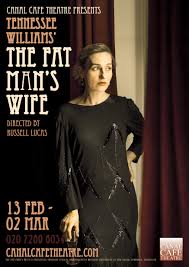
The Fat Man’s Wife – Canal Café Theatre, selected days until 02 March 2014

The Fat Man's Wife, Canal Cafe Theatre, February 2014 - courtesy Simon Annand 1

Tennessee Williams’ has always been a playwright that I find easier to admire than to enjoy. His heady blend of American naturalism and fevered southern gothic melodrama sounds such an appealing combination that it is hard to pin down why I find his work such a struggle. Yet time after time after time, be it Baby Doll, Night of the Iguana, Suddenly, Last Summer, Sweet Bird of Youth and, yes, even you, Streetcar (with or without Brando) guaranteed I will find my brain slowly turning to molasses as sure as if I was right there in the evening heat of the Mississippi Delta.

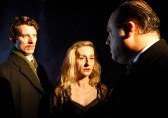
However the Canal Café Theatre’s production of The Fat Man’s Wife, previously unstaged in the UK and never seen anywhere before 2004, perhaps provides a clue to my troubles; length. Many of Williams’ plays are just Fat Mans wifetoo long. The Fat Man’s Wife, although far from a classic, comes in at a trim fifty-five minutes and could be nearer fifty if some of the pauses in this generally solid production were not quite so pregnant.

The shorter running time see Williams present something more akin to a light mood piece than the cloying richness of his more baroque work,  whilst the metropolitan setting with its urbane characters means everything stays just about the north side of the Mason-Dixon line and avoids falling into Williams’ favourite Southern state: grotesque.

The sense of Williams’ work being closer to an examination of mood than a fully developed play suits an evening that is not dissimilar to seeing a seasoned jazz trio perform some improvisations on a Sunday afternoon; you realise that whilst the surface of The Fat Man’s Wife is fresh and new, underneath there is the emergence of motifs that will repeat again and again through his work or an idea will spark and you can see how later it will be bent and refracted in a new way to power a later, more mature drama. This recycling of themes and ideas in later works is hardly something limited to Williams but rarely can it be seen so clearly.

There is the older female character flirting with the idea of a relationship with a younger man, the fear of age and growing old alone is present, the gap between the optimism of youth and the realism of age and the tear between the grim truth of reality and unobtainable fantasy; these are all ideas that even at this early stage Williams was clearly playing around with and would later return to and develop into his best known work.

<<Continue to full review>>

Big Brother: Doubleplusgood?

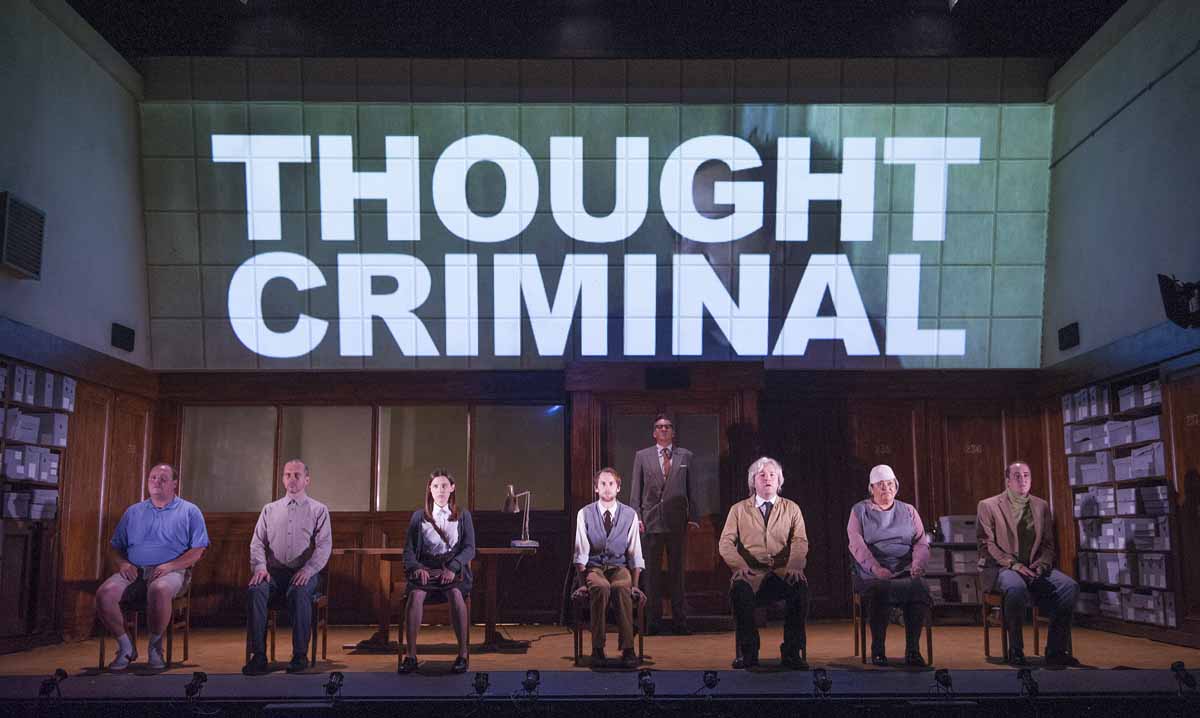
1984 – Headlong @ Almeida Theatre, until 29 March 2014 (Tickets)

In the accompanying text to Headlong’s adaptation of 1984, they state that ‘Robert Icke and Duncan Macmillan […] explore how Orwell’s novel is as applicable to the here and now as it ever was’ whilst the online trailer (below) draws on quotes from Bradley Manning and The Telegraph to make a clear link between the book and the current debate over surveillance culture.

In light of this the most surprising, and indeed pleasing, thing about Headlong’s production is how little it explicitly aligns itself with a modern world environment. Whilst Icke and MacMillan have played with form and function to add to a richer audience experience than would be allowed from a book that channels itself through the perspective of just one character, it is set within a world that far more closely resembles that imagined by Orwell than our current technology driven present.

This comes as a relief, as the idea of merging Orwell with modern society seems wholly too obvious and more than a little trite for a company who have carved out a reputation for purposefully innovative takes on 1984_Image_Headlong at the Almeida heavyweight texts. Orwell’s book may have something to say about the dangers of allowing any one party to exert control over society but to try and parallel this with the use of modern surveillance techniques in democracies is facile and only serves to undermine the potency of his argument.

Indeed if the examples that Runciman highlights in his review of The Snowdon Files is an accurate picture then it may be possible for governments to gather information on pretty much anyone but the idea that they have any sort of competence to use it to manage history and through it control society comes across as laughable. The reality is that our general contempt for politicians is so great that the only way that they could get us to believe that 2 + 2 = 5 is to insist upon us that 2 + 2 = 4.

Headlong 1984The entire existence of the internet – and with it websites like Wikileaks – serves to undermine the notion that Orwell’s book could become reality in a society as it currently exists. The world is too globally networked to allow a political organisation to control the flow of information in the way that Orwell envisioned; even in countries that use firewalls it is still relatively easy to get around censored sites. Big Brother may well be watching us but that does not mean that Big Brother is controlling us.

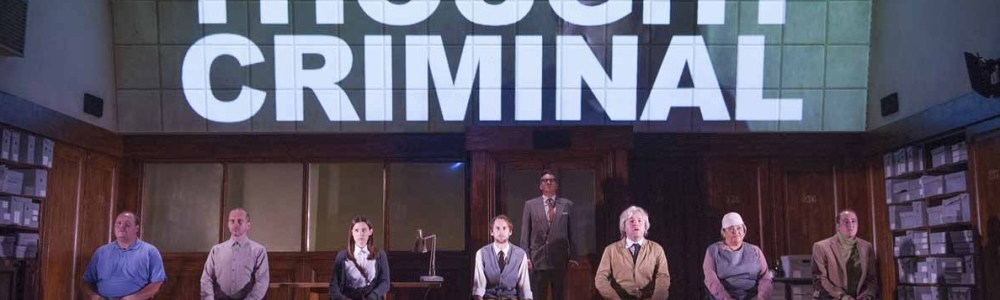
So it comes as a relief to discover that the computer on which Winston toils away to reshape history is an item that seems strangely out-of-kilter within Chloe Lamford’s set design, which evokes that late-Communist feel of a country industrially advanced but only holding its infrastructure together with threads. The communal canteen at the Ministry could be from any 1970’s public sector building whilst the grainy feel of the video through which we watch Winston and Julia’s secret trysts, and the voyeuristic overtones it brings with it,  inevitably recalls The Conversation and the paranoia that runs through Alan J.Pakula’s The Parallax View and Klute.

That we may be reminded of the likes of Warren Beatty and Jane Fonda brings home a deliberate and brutal reality about the lives of Winston and Julia; that ordinary people, the archetypal Party drones, are rather bland and uninteresting, that desires and thoughts are mostly mundane and not the unique, world-changing inspiration that we like to believe. They may yearn for change but they will make do with chocolate and real coffee.

As we rail isolated against the system and plot great change from within who would want to admit to being more like Winston, with his ill-fitting vest tops and sweaty lank hair nervily considering whether or not to write a diary, rather than Beatty’s journalist, immaculately coiffured and square-jawed, uncovering conspiracies that go all the way to the top.

All of this is brilliantly exposed by O’Brien (Tim Dutton) who shows Winston the sad truth about his grand love affair; its furtive and grubby nature feeding a narrative that saw their radicalism only leading as far as their own desires. O’Brien levels the charge of solipsism at Winston, and the real terror of Headlong’s production is the struggle to disagree with the accusation. Their love, so important and all-consuming moments before, now seems so small; the world may have moved for them but they did not move the world even an inch.

<<Continue to full review>>

Watch the trailer

A wintery tale

In Skagway – Arcola Theatre, until March 01 2014

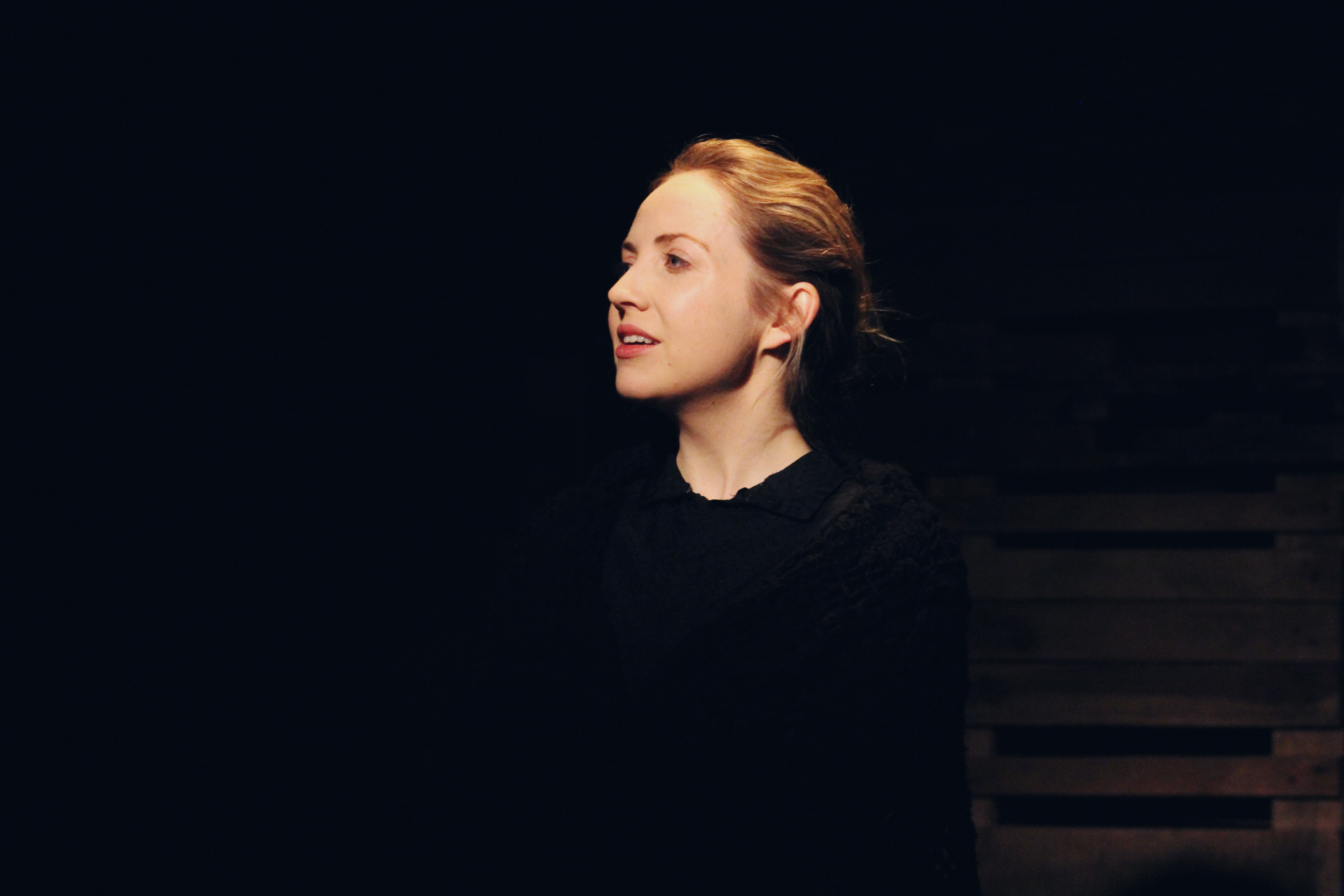
In Skagway, currently playing in Studio 2 at the Arcola Theatre, is a play baring all the hallmarks of the exuberant writer finding their feet – and carries along with it the positives and negatives that such a statement may suggest.

Karen Ardiff’s play has won the Stewart Parker/BBC Radio Drama award. This is a telling achievement as there are moments watching In Skagway that one feels that radio, where it is within a person’s imagination that the last embers of the Alaskian gold rush ahead of the encroaching Alaskan winters are recreated, is the perfect medium for this story.

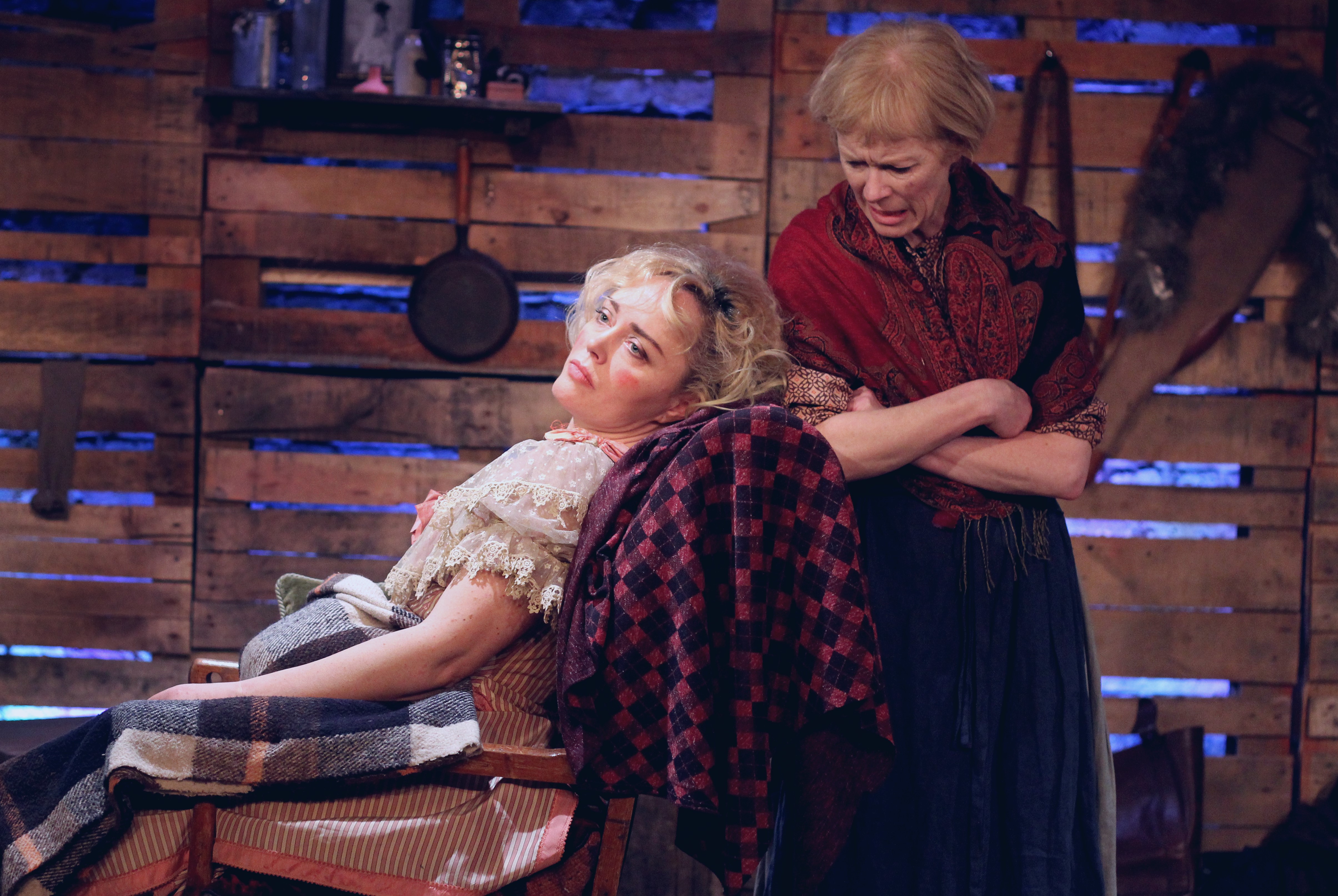
Through the heart of this play runs a fabulously well thought out parallel; Frankie Harmon (Angeline Ball) plays anIn Skagway, Arcola Theatre, Feb 2014, courtesy Leith Lothian 8 actress whose heyday has passed and is now immobile after what appears to be a stroke, whilst the role she was most famous for was that of Hermione in The Winter’s Tale – most well known for being a statue that is eventually restored to life.

This idea – of an actress no longer capable of action being feted for a role that is known for its transition from statue to life – is a brilliant conceit and a wonderful place to begin a story. For the play to then be set in the face of the approaching harsh winter, as the gold that sustains the town begins to run out, suggests that Ardiff has a keen eye for creating a narrative that is able to fold back in on itself.

However at times the narrative attempts to much and some of the themes risk falling into incoherence; a large proportion of the play was dedicated to Frankie’s backstory and it was not always entirely clear how this meshed with the central story. Throughout the play there were hints that she was difficult and manipulative but a revelatory twist revealed by May’s towards the end still appeared to come out of leftfield with very little foreshadowing.

A secondary problem with placing so much emphasis on Frankie’s history was that it relied on a number of transitions to a rather ill-defined past. This is a shift that can work well on radio but in the theatre it did lead to a struggle to maintain fluidity and coherence. The final scenes, which operated with a voiceover, were more successful and mimic the radio experience more explicitly but those that were straight re-enactments were less successful and did jolt the audience out of the reality of the Alaskan cabin.

In Skagway, Arcola Theatre, Feb 2014, courtesy Leith Lothian 9 (1)Geraldine Alexander (May) and Kathy Rose O’Brien (T-Belle) did a fine job with their characters and the scenes towards the end, as they took their final look back towards the Alaskan town that was soon to become another footnote in the history of American gold rush, evoked a lyrical tenderness that hinted at a more poetic and reflective play lying under the surface.

Ardiff has the qualities needed for good writing; she has a well-defined sense of place – Skagway itself is a fascinating and underdeveloped slice of history – and an astute eye for an interesting dramatic structure – layering the plot with intricate themes that faintly echo each other. That being said it does not come as a surprise to find that Ardiff was previously an actor; In Skagway currently feels as if was written to be performed rather than written to be watched.

To directly lift from a great writer, Kurt Vonnegut captured it best when he said ‘we have to be continually jumping off cliffs and developing our wings on the way down’ for how else do we learn?

Not feeling my opinion? Here are two more reviews plucked from the web

A true life American has this to say (Webcowgirl)

A proper magazine has this to say (Fourth Wall)