The Curious Incident of the Detective on the Radio

The Hound of the Baskerville –  The Radio Theatre – Veni Vedi Theatre, Theatro Technis, until 12 May 2012

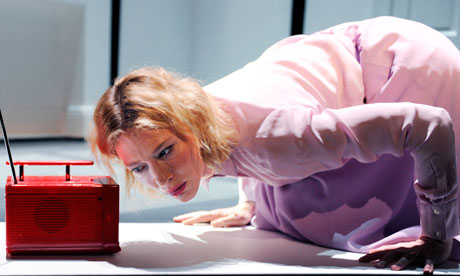
Veni Vedi Theatre’s ‘The Hound of the Baskervilles – The Radio Theatre’ is being sold as an immersive event theatre and whilst it ultimately struggles to live up to this billing , it proves itself as a very entertaining romp that successfully recreates the behind-the-scenes excitement of a live radio broadcast unfolding.
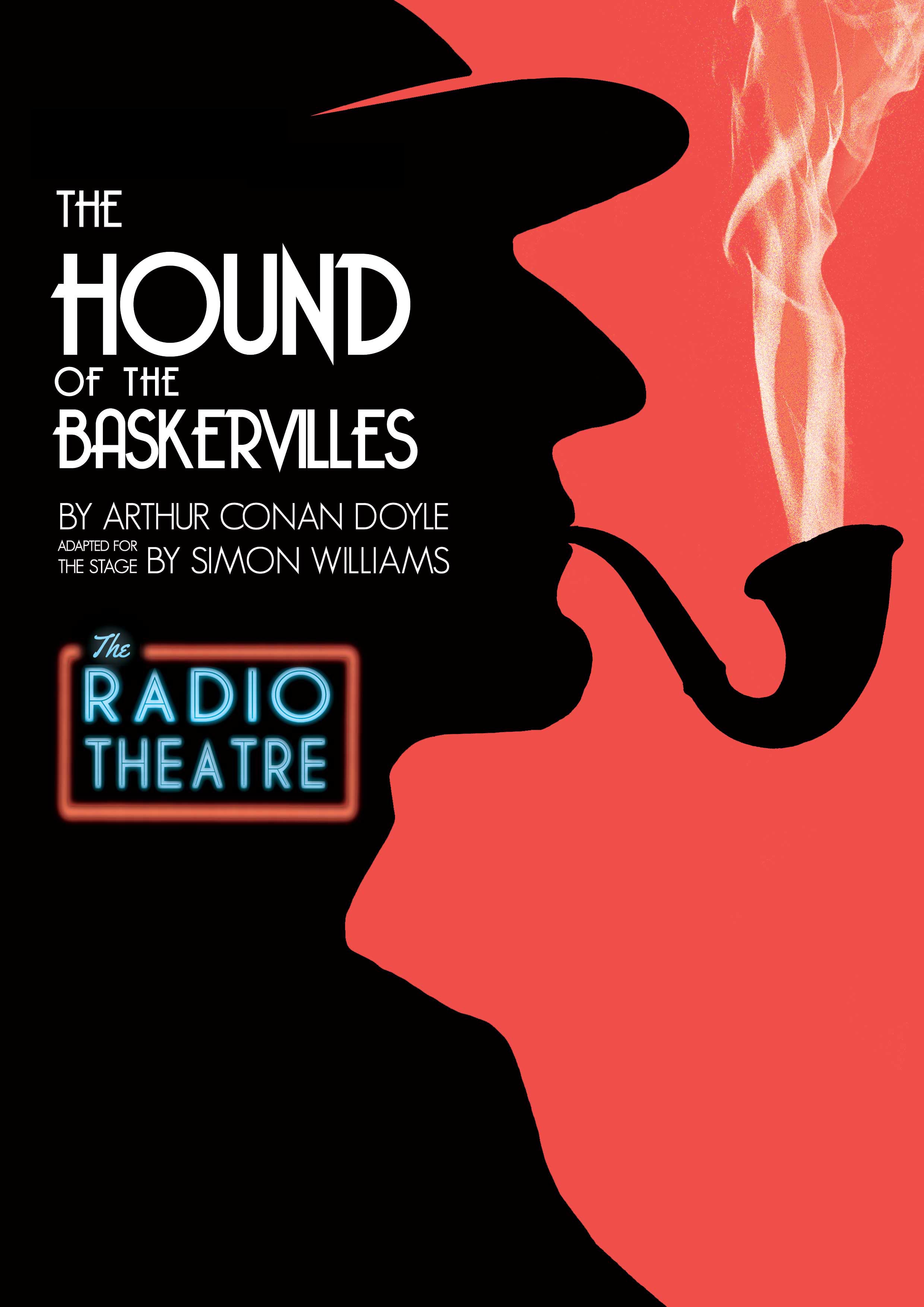
The strength of Veni Vedi’s production initially appears to lie in the attention to detail placed on the period setting and the use of live sound effects to recreate the atmosphere of the Conon Doyle story. However this is a smokescreen that obscures the real talent that lies in successfully managing an ensemble cast through what is essentially one 2hr static scene.

Director Natalie-Anne Downs has pulled off a minor-key miracle in overcoming the challenge of the format. One of the draws of the play is the use of on-stage sound effects but Downs’ manages to avoid it become the focal point of the production – which rightly remains as the Sherlock Holmes’ story. In every sense it enhances the evening and adds both a technical and emotional depth, as it is first admirable for its virtuosity before falling into the background and serving to drive the tension in the story.

The play opens intelligently, running straight into the opening scene – perhaps a nod towards immersion – as the audience filters in. The adaptation of Simon William’s script provides inconsequential conversations as the radio actors arrive. This creates a free-flowing nature that adds a relaxed naturalism to the dialogue and allows the audience to feel as if they are genuinely overhearing conversations that hint of characters with lives that continue off-stage. So often in the theatre there is the sense that the audience is only being allowed to see what the playwright wishes us to see but with no scene breaks there is nowhere for William’s script to hide.

<<Continue to full review here>>

Cillian Murphy mixes characters in stodgy Irish stew

Misterman – National Theatre, Selected dates until May 28 2012

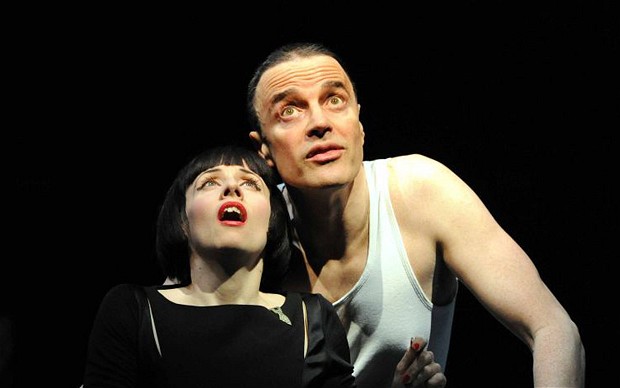
Watching Cillian Murphy’s Thomas Magil, Inishfree’s one-man self-appointed morality committee, in Enda Walsh’s Misterman, I found myself transported back to two days previously to the Barbican where Cate Blanchett was the actor and Boho Strauss the playwright.  The parallels, as both plays hit London in the run-up to the Cultural Olympiad, perhaps reveal more about the process of staging a difficult play in the current climate than they reveal about the plays themselves.

The heavily-advertised cherry on top of each production is a bona fide Hollywood actor but not in the classic star mould that so often has the critics sharpening their knives. Both began their career in another country and grew up with one foot in the theatre rather than the Hollywood Hills. Neither has fully embraced the movie system despite Blanchett winning an Oscar for her role as Katharine Hepburn in Scorsese’s The Aviator; as close to embodying Hollywood royalty as it gets. Murphy has never embraced his potential leading man status whilst building a body of work that includes the huge Christopher Nolan blockbusters of the Dark Knight and Inception.

It is intriguing that in their return to stage both have chosen roles that focus almost exclusively on the isolation of the leading characters. Blanchett’s Lotte is a woman cast adrift from society following the break-up of her marriage; she is unable to effectively anchor herself and drifts along engaging in surreal encounters with friends and families that only heighten her growing isolation.

On the surface Murphy’s Thomas is suffering from an imposed isolation. He is literally rather than metaphorically alone; forced into making conversation with tape-recorded voices. However even in these interactions it is clear that Thomas was always out of kilter with those around him. It is a fantastical set-up but there is realism within the structure of the conversations that sets it apart from Big and Small.

It is difficult not to speculate what led the actors to these roles. They are not well-known plays and it seems unlikely that either would enjoy the same positioning and budget without their leads. The roles allow a freedom to an actor that is rarely granted, even in the theatre, but under the surface they are also strangely inflexible and a little one-note. As neither play really sketches out anything more than a caricature of secondary characters, the actors have no-one to play off and at times it can feel like an intense therapy session.

<<Read the full review here>>

And you can even watch a trailer here:

Alice’s Germanic Wonderland

Big and Small – Sydney Theatre Company, Barbican Theatre until April 29 2012

Boho Strauss’1970’s play Big and Small has been given a new translation by every A-level student’s favourite writer, Martin Crimp, and a major box office draw has been added in the form of Cate Blanchett. Sporting a spare but striking visual motif that weaves in moments from Alice in Wonderland, the resulting production is crisp and clean but remains a mixed-bag; both in terms of structure and in terms of quality. Director Benedict Andrews introduces some lovely elements throughout but it often feels that he is having to work very hard with not a great deal of material – although it should be pointed out that ‘not a great deal of material’ manages to fill over 2½ hours of stage time.

The main challenge for the production is its unevenness; a fragmented, dream-like structure is an appropriate choice for a play charting an individual’s experience of social alienation, and a lack of an obvious direct narrative helps capture the essence of isolation rather than the reasons behind it. It is attempting a theatre of poetry rather than a theatre of stories.

The unevenness relates to a lack of balance; the first half feels ponderous and slow, a series of scenes acting as snapshots of a multi-occupancy house induced a level of tedium due to scene changes that took longer than the actual scenes, and there is a free-wheeling lack of focus that suggests a play that is struggling to understand what it wants to be.

<<Continue to the full review>>

The name’s Bond, Edward Bond: A very different take on consumerist culture

The Chair Plays – Hammersmith Lyric Studio, until 05 May

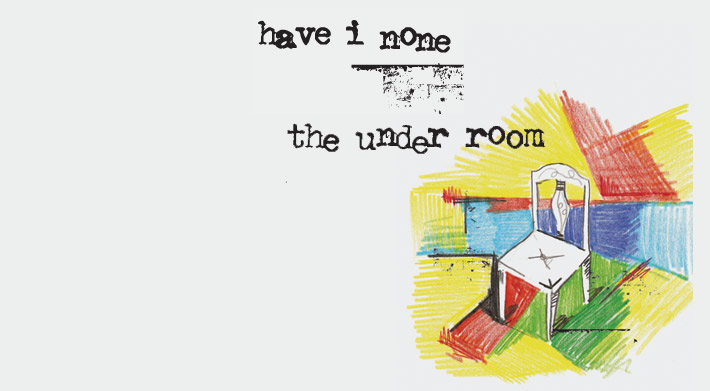
Edward Bond’s one-act Have I None, first performed in 2009, is a lacerating fifty-five minute portrayal of humanity surviving in a post- consumerist world. It hinges on Bond’s neat take on the dystopian vision; usually we are provided with one of two choices, either a world that initially appears to have the trapping of a democracy and people seem to have every whim catered before it becomes obvious that it is sustained by the brutal repression of the masses, Hunger Games being the $£750 million example of this. The alternative is a society controlled by a militaristic bureaucracy where everything seems to exist on a tonal palette running from grey to greyer; Orwell’s Nineteen Eighty-Four or Pinter’s New World Order both seem appropriate here.

In Have I None, Bond has carved his own path. The play considers a world where humanity has seen society destroy itself through its consumerist appetites; a character describes people buying sports car just to crash them into walls. In response people have turned to the state for action, and the Government has acted by creating ‘resettled’ towns where the past has been banned and the only personal possessions allowed are those provided by the state. It is enforced equality in action.

Those towns that have not been resettled are infected by mass suicide outbreaks, which give Bond a chance to turn his often-underutilised poetic skills to the sight of rows and rows of people in overcoats waiting for their turn to leap from a bridge. It is a classic Bond technique; every-day brutality that is captured by a lyricism that suggests a beauty that attracts and alienates in equal measure.

<<Click here for the full review>>

The Master and Margarita – a devilish concoction of imagery

The Master and Margarita – Complicite at the Barbican, until 07 April (Sold Out)

Few companies generate the same level of excitement before a new production as Complicite. There is a noticeable frisson of energy circulating the foyer before the audience takes it seat that is the result of a reputation for innovation and startling coup de theatre. It is a position that is very much deserved, as for three decades Complicite have pushed at the boundaries of the possible in both staging and story-telling; they have championed physical theatre and challenged the standardly linear model of naturalistic performances as a mechanism for exploring deeper metaphysical questions in their work.

This approach has been extraordinarily effective in tackling themes and stories that would otherwise be far too complex to bring to stage. Who else would have attempted A Disappearing Number, a play that shone a light on the 20th century mathematical genius, Ramanujan, and engaged the audience with the complexities of sting theory? Or attempted Mnemonic, a play that was part anthropological lecture told through the story of a corpse entombed in ice, part-character study of those involved in his later discovery and throughout an examination of memory and its mutability, fragmentation and unreliability.

Mikhail Bulgakov’s 1930’s Soviet satire, The Master and Margarita, often held up alongside the greatest novels of the 20th century, has defeated visionaries from Polanski to Fellini. It’s digressive storylines and recursive plotting variously tells the story of the titular characters, The Master and Margarita, and the lengths they would go to for love, whilst also featuring the devil in the shape of Woland and a retinue of associates who wreak havoc on the Soviet literature establishment, whilst a dialogue between Pontius Pilate and Christ interweaves and informs the narrative throughout.

<Click her for the full review>

The mystery man and the problem play

Bingo – Young Vic, until 31 March

Edward Bond tends to write exactly the sort of plays that you would imagine a British Marxist growing up in a declining post-war England to write. Heavily influenced by Brecht, Bond’s writing operates with a rigidly mechanistic quality that wouldn’t seem out of place in a Soviet factory. There is a brutalism to life in Bond that may have reached its apotheosis in Saved and its infamous scene of a baby stoned to death. Saved, his second play, cemented Bond’s legacy due to the role it played in the battle to overturn the Lord Chamberlain’s Office right to censor works for the stage.

Deliberately challenging his audience and a notoriously prickly individual to work with, Bond has fallen from the public eye and in recent years has worked outside of the mainstream. However the Cock Tavern in Kilburn, now sadly closed, staged a number of older plays alongside new work in 2010 and the Lyric Hammersmith took on Saved in 2011 to suggest that we may finally be rehabiliting ourselves towards one of our most overtly political playwrights.

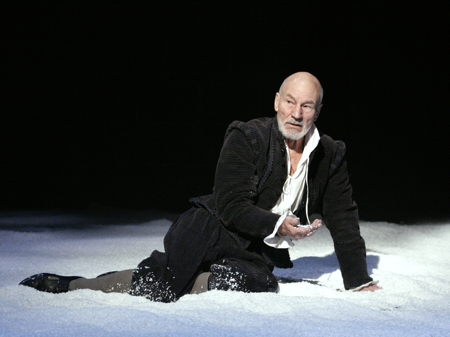
The Young Vic has continued this process with Bingo; it is seemingly an astute choice, one of Bond’s most accessible plays featuring Shakespeare as its central protagonist, and the casting of Patrick Stewart, who originally played the role in the 1970’s, guaranteed to bring in an audience that might otherwise avoid such austere fare.

Shakespeare retains central to Britain’s cultural heritage and represents the country’s main claim to a true cultural genius to rank alongside Da Vinci and Mozart. Those individuals that command an international agreement of their stature are rare indeed and whenever their legacy is challenged people have a tendency to react defensively.

<Click here for the full review>