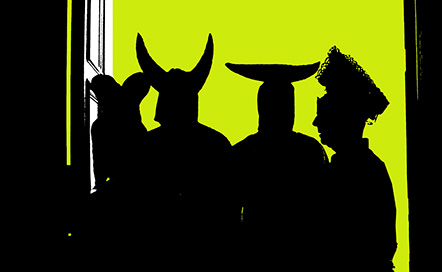
Radical treatment, radical theatre

The Eradication of Schizophrenia in Western Lapland – Ridiculusmus @ Battersea Arts Centre (Touring until March 2015)

For various reasons this review of The Eradication of Schizophrenia in Western Lapland comes over a week after experiencing the production at the Battersea Arts Centre. Often, as a reviewer flitsEradication from theatre to theatre, trying to write a review after such a delay can be troublesome as images from different plays begin to blur together in the mind. This isn’t a problem for Ridiculusmus’ The Eradication…, which pulls of a coup de théâtre with their simple but brilliantly effective approach to staging.
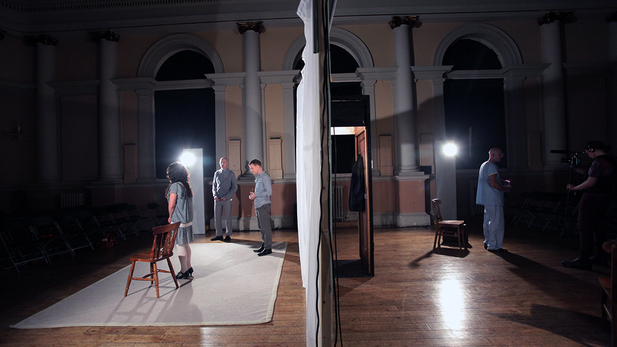
In portraying a family being pulled apart by the spectre of mental illness, Ridiculusmus’ decision to split the audience in half, dividing the stage with a simple screen and performing two overlapping narratives, isn’t just a technical device to garner attention on the highly competitive fringe circuit but exists to act as a mechanism to enable the audience to step inside the fog of psychosis.
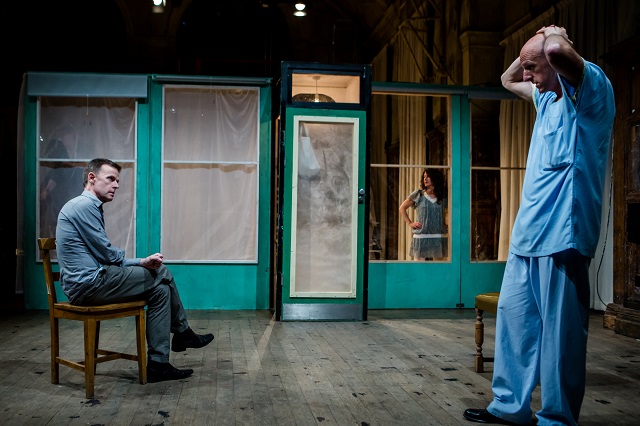
Ridiculusmus present the eradication of schizophrenia in western lapland at BACCreating a shared understanding is one of the big challenges to changing perceptions on mental illness. Most people have suffered injury or been physically ill at some point in their lives, and as a result they are able to draw on this experience, however limited, in order to shape their understanding and build a connection to those with a terminal disease or with a physical disability.

However if a person has never experienced a mental health illness then it is very difficult to associate with any description on the pressures on a fragile psyche, and in turn the best that can be offered is glib and often wildly inaccurate approximations.

Ridiculusmus’ approach to staging brings an audience about as close to the reality of mental illness as it is possible to get. Separated from half the on-stage action but with the dialogue bleeding through the divide – sometimes appearing to interlink with the scene you are watching, at times talking over it and on other occasions hearing it only as a background hum – it recreates, in the audience, the polyphonic chorus that accompanies many people entering schizophrenic psychosis.
<<Read full review>>

Gods and Monsters – Review

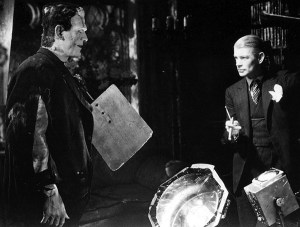
Gods and Monsters (originally a 1998 film starring Ian McKellen), based on Christopher Bram’s novel Father of Frankenstein, considers the career and fate of James Whale, monumental director, WHALEFRANKENSTEINmost famous for his adaptation of Frankenstein. The play explores Whale’s life and career and his slow dissolution into obscurity.Once he was known throughout the world, yet if it wasn’t for  it’s likely that today only the cine-literate would remember his name. It’s a fate that many in Hollywood must one day endure, and Gods and Monsters examines Whale’s singular experience and reaction. At the play’s outset, we join Whale in the eve of his life, living in semi-obscurity, tired with Hollywood and frustrated, having been pigeon-holed by this one film.

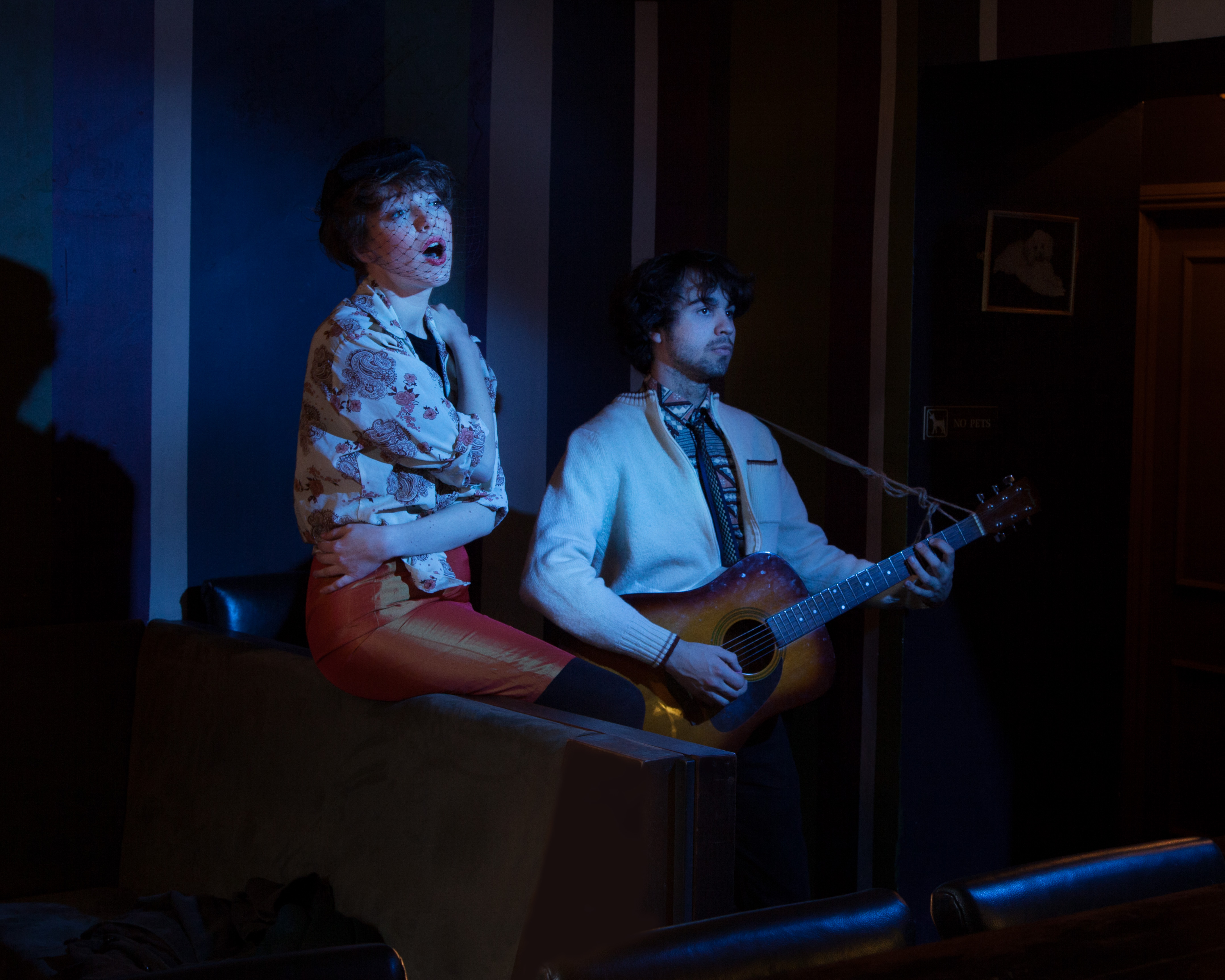
Ian Gelder is fantastic in the central role. He is required to display two very different sides to Whale. There is the side he shows to his guests, which has become a rather grotesque caricature of a slightly lurid and predatory Hollywood homosexual. Gelder gives the sense that Whale has fallen into this role and has now played it for so long it feels like a second skin. Here Gelder captures the sharpness, the hint of danger to Whale’s interactions that gives the play a much needed tension…continues at www.everything-theatre.co.uk

<<You can read the full review on Everything Theatre)

A mirror reflects a man’s face but what he is really like is shown by the kind of friends he chooses

Ablutions – Fellswoop Theatre @ Soho Theare, until 22 February 2015 (Tickets)

“A mirror reflects a man’s face but what he is really like is shown by the kind of friends he chooses”

It may be unusual for Civilian Theatre to be quoting from Proverbs but the title ‘Ablutions’ has already thrown us one rather heavy-handed piece of religious symbolism, and watching the travails of Ablutions, Fellswoop Theatre, Soho Theatre, courtesy of Charley Murrellour barman/hero it is not hard to recognise that the trip he embarks upon midway through the play could have easily been towards Damascus as it was towards the Grand Canyon.

In Fellswoop’s adaptation of the debut novel from Booker Prize nominated author Patrick deWitt we are deep into the realms of the redemptive road-trip, with a side order of the cleansing power of the bottle. From what was, apparently, an already strange and lurid confection Fellswoop have given us a rather bizarre musical and mime show.

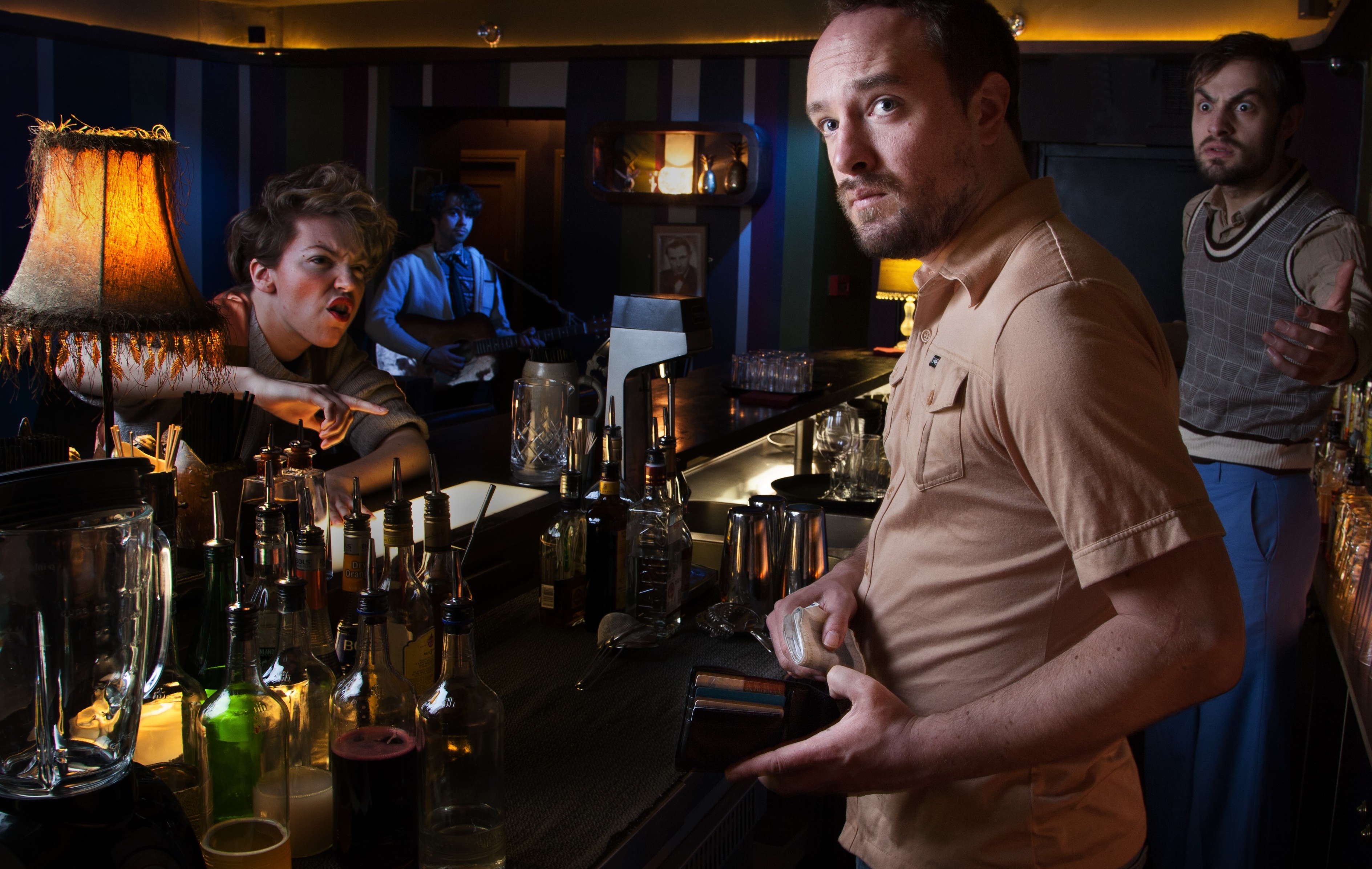
Ablutions 4, Fellswoop Theatre, Soho Theatre, courtesy of Charley MurrellIt is a play that is certainly not without its charms. The musicianship and technical ability of the cast are highly impressive. We are provided with a lovingly crafted soundscape and the cast of Eoin Slattery, Fiona Mikel and Harry Humberstone are able to recreate a complete Hollywood dive bar, with a fully stocked array of colourful regulars, through the use of physical theatre and some wonderfully grotesque characterisations.

Humberstone – perhaps given more licence than the rest to stretch his characters to the extremes – provides us with enough sleazy figures by himself to have the audience squirming in their seats. Whilst I hope that someone as disturbingly charmless as Curtis doesn’t actually exist, I have a horrible suspicion that bars around the world will prove me wrong.

The core of the story belongs to Slattery’s Barkeeper. We join him when, if he isn’t already a loser, he is fast on his way to becoming one; living a life where work, friends and drink have combined to create a spiralling descent into an alcoholic’s chaos.

<<Read the full review>>

Who chooseth me shall get as much as he deserves

The Merchant of Venice – Almeida Theatre, until 14 February 2015

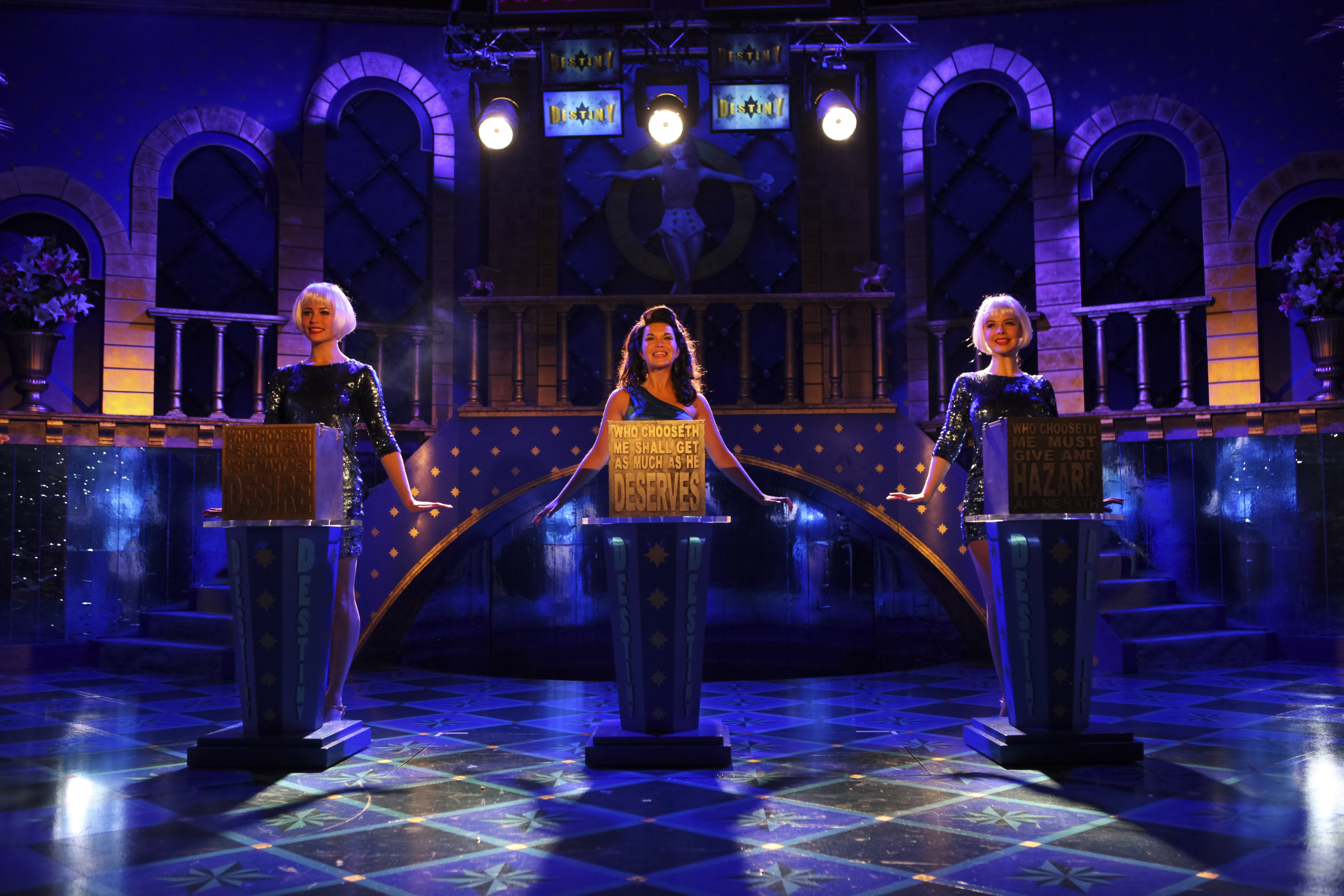
There are few directors who have the ability to divide audiences as much as Rupert Goold. It has become standard for his reinterpretations to brim with ideas and display an exuberance that can irkmov-364-merry-holden-emily-plumtree-and-rebecca-brewer-and-susannah-fielding-by-ellie-kurttztraditionalists as much as they excite those who believe a play to be a living text.

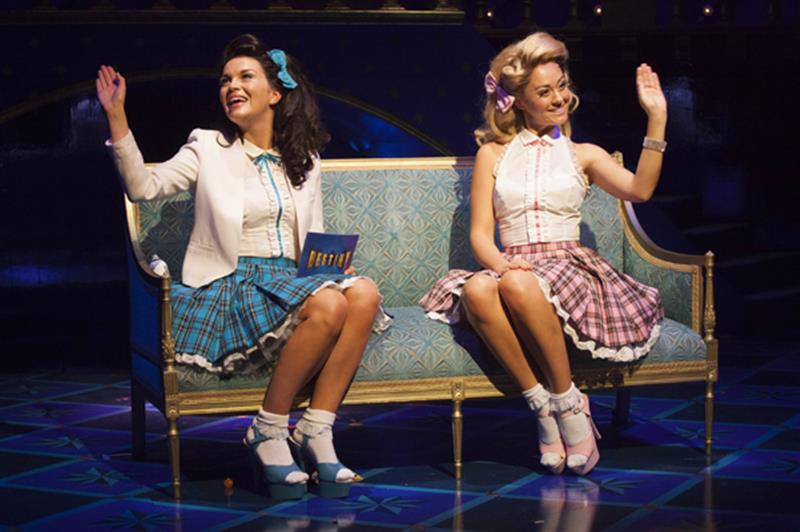
His production of The Merchant of Venice, reaching the Almeida after a season in Stratford, does more than most to alienate, and even his most fervent supporters reach the interval trying to grasp at the point of transferring the play from renaissance Venice to 20th century Las Vegas.

We must consider the play one of Shakespeare’s most problematic. Any director must think through how it can be staged effectively and it is a cop-out to provide a traditional setting in order to avoid the context that the modern world brings to how we must approach Shylock and his humiliation. It is clear what may have been acceptable for Elizabethan audiences will not play as well to the modern theatre goer.

MOV 045 - Rebecca Brewer and Susannah Fielding by Ellie Kurttz for webAs much as Shakespearian scholars can claim there is more to the interpretation of Venetian Jewry than may be initially apparent, it is hard to avoid the grubbiness with which he portrays Shylock debasement and Jessica’s elopement with Lorenzo. As much as we can argue that art should live in a vacuum it is impossible to watch the play without holding an awareness of what has happened in the 20thcentury.

It is also a structurally difficult play that ends entirely peculiarly. It is, technically, a comedy but it fails to fulfil many of the rules that we might associate with Elizabethan comedies. It doesn’t end in a wedding and rather than finishing with the duke bringing order to the chaos, it ends with Gratiano, a lower character, making a rather inelegant ribald remark about his betrothed.

Well Goold makes the decision to turn the play on its head, and leaves us with an ending so bleak, so suggestive of storm clouds gathering, that if not quite being equal to the great tragedies it is at least worthy of an HBO series.

As the final curtain descends we are left with three couples who, in destroying Shylock, have destroyed themselves. The audience are left with Bassanio’s question to Shylock, ‘Do all men kill the things they do not love?’ [IV.i] to mull over. In their single-minded pursuit of what they thought they desired they have ultimately left themselves a future built on lies and deceit. The warning on Portia’s caskets that ‘who chooseth me shall get as much as he deserves‘ returns to us with a startling relevance.

<<Read full review>>

Fever 0272 - Tobias Menzies by Perou

A hallucination from my fevered brain

The Fever – Almeida Theatre @ The May Fair Hotel, until 07 February 2015

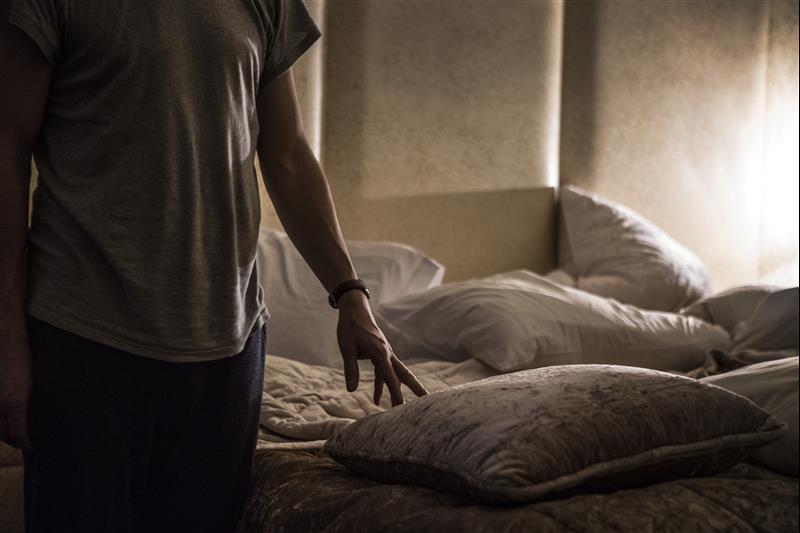
The use of The May Fair Hotel is spot-on. It isn’t so much that it is a luxury hotel, but it is that type of global, anonymous luxury that means absolutely nothing. The Savoy, the Ritz or the Carlton;the fever banner they may be pricy but there is a distinct personality to them. From the lobby, through the corridors and into the exclusive high-end suite where Wallace Shawn’s incisively powerful monologue has been set, the most striking feature is the sheer facelessness of this wealth.

Generic abstract ‘world’ art hangs on the wall, the corridors have a plush carpet but are really not so different to those found in any Travel Lodge and there is absolutely no personality to the room. Containing huge flat screen TVs, top-end speakers and a bathroom as big as a London studio flat, it doesn’t thrill but importantly it doesn’t offend. Perfect for the wealthy Russian and assorted euro trash clientele that swarm around Mayfair, keeping London’s economy buoyant in the face of the latest dismal news emanating from the eurozone.

Fever 0242 - Tobias Menzies by PerouIt is perfectly chosen for a monologue that captures the global dynamic of modern wealth, the faceless hotel room culture of the high-flying worker from the developed world. Take a photo of it and you could never hope to guess what city it is located in. London to Mumbai, New York to Lagos, we have joined the hermetically sealed world of the international class.

Wallace Shawn wrote this tremendous piece back in the 1990’s. Even if some of the terms have dated – there is an almost charmingly old-fashioned bit on Das Capital and, of course, there is no mention of the threat posed from a resurgent Islam – it is sadly even more relevant than when it was written. Day after day we hear how yet more of the world’s global wealth has fallen under the control of the richest. In 15 years we haven’t turned this tanker around, and the terrifying aspect of Shawn’s play is the chilling realism of it not trying to suggest we will do so in the future.

Shawn wrote words that he felt needed to be said. Well, this production demonstrates we need to keep saying them. He brilliantly frames issues in a way that have an immediate resonance. His section on the fanaticism of the metropolitan class – how their brains refuse to even allow themselves to consider the inherent unfairness of the global capitalist set-up because if they did then they couldn’t function – is one of the most singularly incisive critiques I have heard on the issue.

<<Read full review here>>

IMG_4060 These are courtesy of Rocco Redondo.

The play where everybody is somebody and anybody is nobody.

The Diary of a Nobody – Rough Haired Pointer @ King’s Head Theatre, until 14 February (Tickets)

It feels appropriate that The Diary of a Nobody should kick off the new King’s Head Theatre season in January. For how many nibs have been sharpened, fresh pages turned and inner-most thoughts committed to paper since the start of the year? And how many, begun with the best of intentions, are already gathering an unholy combination of dust and regret?

That so many are abandoned is hardly surprising, for it takes a rare blend of solipsism and dedication to commit to the task of capturing your thoughts for posterity. The jeu d’esprit of the professional raconteur is a rare talent, and even celebrated diarists of the stature of Alan Clarke or Christopher Isherwood can be heavy going if read cover to cover.

Literary triumphs recognise the average diary writer is nothing like these people; rather they prick, with considerable acuity, the pomposity of the English middle classes. In modern times we have the brilliance of Sue Townsend’s Adrian Mole, whose sense of his own self-importance is drolly sent-up in his teenage obsession with Malcolm Muggeridge. The Victorians, who certainly knew a thing or two about pomposity, had one Charles Pooter of the The Laurels, Brickfield Terrace, Holloway.

The creation of George and Weedon Grossmith, Pooter is a character that grew larger than the book that contained him (a fact that would have pleased him greatly if he didn’t stop to find out why). To be ‘Pooterish’ is to have a vastly inflated sense of one’s own importance and to take oneself far too seriously. In today’s world of internet blogs, Twitter feeds and Facebook sharing, it is a word that has more relevance than ever before (and yes, Civilian Theatre recognises that ‘glass houses’ and ‘stones’ comes to mind here).

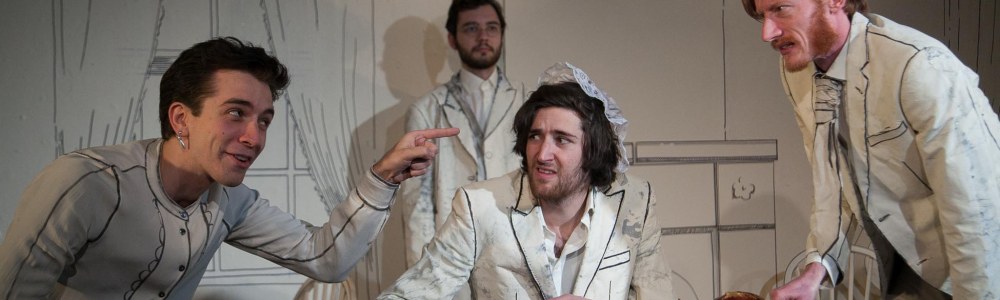
Rough Haired Pointer has taken on the difficult task of adapting the wonderful comic novel, The Diary of a Nobody – the lasting chronicle of Charles Pooter, his family, friends and servants. They do so with energetic vigour and considerable panache, as four actors take it upon themselves to play 45 characters across 100 minutes in a space with nowhere near enough room to swing a cat.

<<Read full review>>