An uncategorisable wonder

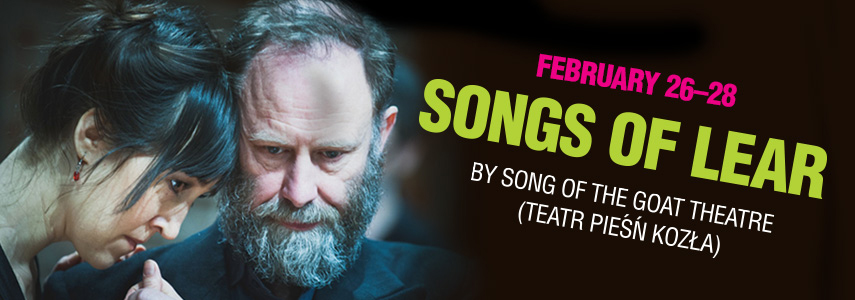
Songs of Lear – Song of the Goat @ Battersea Arts Centre, until 22 February 2015

For some people theatre is purely a title used to describe a single homogenous mass of culture. They make no distinction between plays and musicals, and certainly don’t delineate between the many genre classifications that exist within drama. However for regular theatre goers there exist a number of tell-tale phrases that act as a useful guide as to whether a theatre event is something likely to be enjoyed.  Z Warzynski2 fot
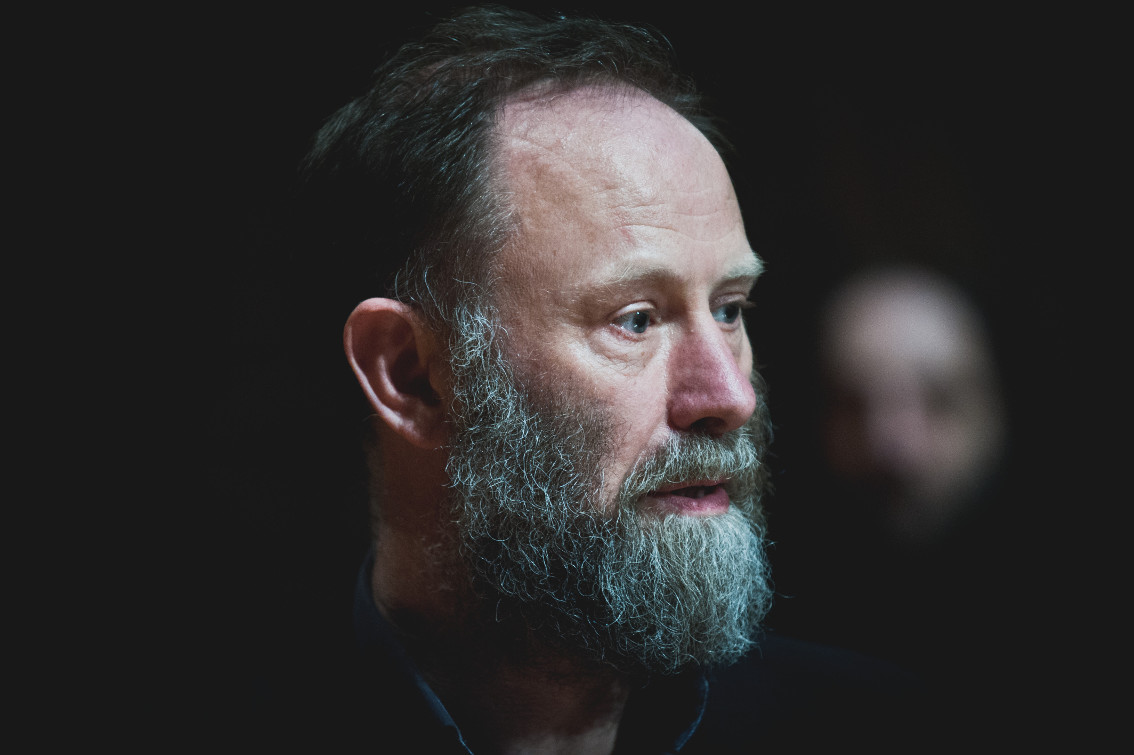
Take Songs of Lear by Song of the Goat; they rather bravely describe their new play as ‘deeply rooted in the best traditions of Polish avant-garde theatre’. Despite putting it top of my list of plays to see in 2015, I must admit to being extremely intrigued in how tickets were selling at the box office.

So it was extremely heartening to report that the Grand Hall at the Battersea Arts Centre was a near sell-out; somewhere in the region of 400 people had clearly felt there wasn’t nearly enough non-linear, dramatic retellings of King Lear using polyphonic singing, gestures and mime in the London theatre scene to satisfy their cravings.

To describe Songs of Lear is close to impossible. It exists as a bold and brilliant reinvention of King Lear that takes its cue from the play but whose source material would be near impossible to identify without director, Grzegorz Bral, providing a summary explanation at the start of each episode.

It contains virtually no dialogue from the play but the dialogue it does contain seems to tell you all that is needed. Instead the cast – or possibly choir – perform the most haunting choral singing, with influences that seem to stretch from across Europe and North Africa.
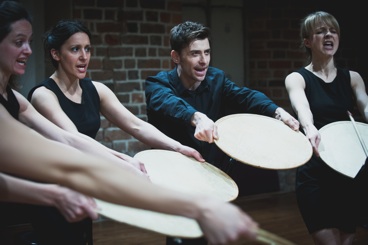
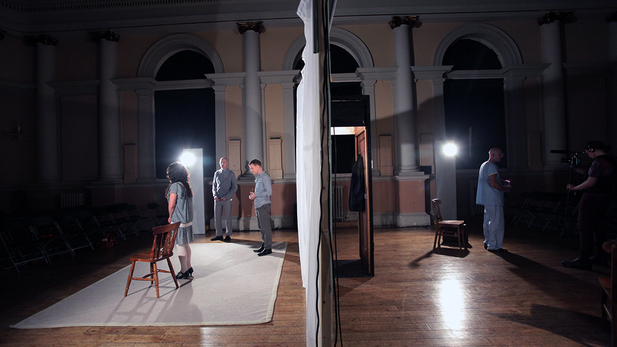
1web_DSC0970Some moments sound liturgical and there are elements of what could be Gregorian chanting. A musician playing the Balkan bagpipes enters at key moments, directing his playing towards the actors; his interpolations are open to debate but for me they were a signifier of the existence of the wider world that is being slowly torn apart by the actions of Lear and his daughters. Or it could just be a man playing the bagpipes.

It ends with what appears to be an Arabic-inflected piece – the dead king paid homage to in the guttural cries of mourners, but are they mourning him or are they mourning the divided, fractured kingdom left behind?

<<Continue to full review>>

Though this be madness there should be method in it

Hamlet – English Repertory Theatre @ Cockpit Theatre, until 15 March 2015 (tickets)

I would like to open this review by mentioning that Civilian Theatre does not see itself as one of those critics that takes a perverse pleasure in lacerating poor productions with a damning review; chuckling to oneself with each stab of the keyboard. In the four years of reviewing plays, Civilian Theatre has only really laid into two productions (Babel and Peter & Alice) and both were big B02J4494-210enough to make it unlikely that my chiding remarks would have any real impact on the sensitivities of those involved.

With smaller-scale, or up and coming, companies it usually preferable to take a more modulated tone; criticism can serve two purposes, on one hand a review is written so that a potential ticket buyer can draw something meaningful about a play whilst a theatre company may also use it to draw insight from what a person distanced from the production process took away from the evening.

So in a roundabout way, and with the previous two paragraphs forming a mea culpa for what is to follow, we reach Hamlet, usually by William Shakespeare but here pared-down to 90 minutes and subject to reworking by the English Repertory Theatre.

Now I have been a stalwart defender of the right to adapt Shakespeare in order to draw in new audiences or to cast fresh perspectives on the action. I loved both of Phyllidia Lloyd’s productions at the Donmar (Julius Caesar and Henry IV), and felt that cutting close to four hours from Henry IV Part I & Part II was entirely validated due to the way it thrillingly reinterpreting the relationship dynamics between the lead roles.

However it is a high risk approach and one has to be sure that every snip from the text is dramatically justified and lends to the clarity and purpose of the production. So in this version it is understandable that you would excise much of the political intrigue that swirls around Elsinore, cutting Fortinbras and Hamlet’s trip to England completely and narrowing the action to Hamlet’s coterie in order to fit it to the school setting.

What is less understandable is why you would then reallocate dialogue so that Horatio delivers Fortinbras’ final lines in a cod-Norwegian accent. It is a terribly misjudged comic coda for what is ostensibly a tragedy, and also acts as a strangely out-of-place addendum at odds with the key themes that have been drawn out in the cut-down text.

This is just one example of the confusion that mars a production that reeks of being cannily targeted at the school syllabus; the stripped down running time and the schoolyard setting feel  little more than a lure to entice the financially powerful student trip market. The use of a school as a framing device is never justified, and leads to far more questions than answers, so that in the end it becomes a performance that lacks narrative coherence.

<<Read the full review here>>

Radical treatment, radical theatre

The Eradication of Schizophrenia in Western Lapland – Ridiculusmus @ Battersea Arts Centre (Touring until March 2015)

For various reasons this review of The Eradication of Schizophrenia in Western Lapland comes over a week after experiencing the production at the Battersea Arts Centre. Often, as a reviewer flitsEradication from theatre to theatre, trying to write a review after such a delay can be troublesome as images from different plays begin to blur together in the mind. This isn’t a problem for Ridiculusmus’ The Eradication…, which pulls of a coup de théâtre with their simple but brilliantly effective approach to staging.

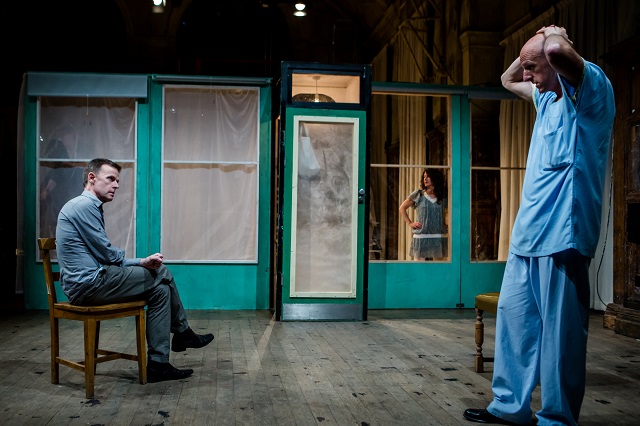
In portraying a family being pulled apart by the spectre of mental illness, Ridiculusmus’ decision to split the audience in half, dividing the stage with a simple screen and performing two overlapping narratives, isn’t just a technical device to garner attention on the highly competitive fringe circuit but exists to act as a mechanism to enable the audience to step inside the fog of psychosis.

Ridiculusmus present the eradication of schizophrenia in western lapland at BACCreating a shared understanding is one of the big challenges to changing perceptions on mental illness. Most people have suffered injury or been physically ill at some point in their lives, and as a result they are able to draw on this experience, however limited, in order to shape their understanding and build a connection to those with a terminal disease or with a physical disability.

However if a person has never experienced a mental health illness then it is very difficult to associate with any description on the pressures on a fragile psyche, and in turn the best that can be offered is glib and often wildly inaccurate approximations.

Ridiculusmus’ approach to staging brings an audience about as close to the reality of mental illness as it is possible to get. Separated from half the on-stage action but with the dialogue bleeding through the divide – sometimes appearing to interlink with the scene you are watching, at times talking over it and on other occasions hearing it only as a background hum – it recreates, in the audience, the polyphonic chorus that accompanies many people entering schizophrenic psychosis.

<<Read full review>>

Gods and Monsters – Review

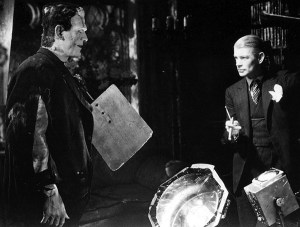
Gods and Monsters (originally a 1998 film starring Ian McKellen), based on Christopher Bram’s novel Father of Frankenstein, considers the career and fate of James Whale, monumental director, WHALEFRANKENSTEINmost famous for his adaptation of Frankenstein. The play explores Whale’s life and career and his slow dissolution into obscurity.Once he was known throughout the world, yet if it wasn’t for  it’s likely that today only the cine-literate would remember his name. It’s a fate that many in Hollywood must one day endure, and Gods and Monsters examines Whale’s singular experience and reaction. At the play’s outset, we join Whale in the eve of his life, living in semi-obscurity, tired with Hollywood and frustrated, having been pigeon-holed by this one film.

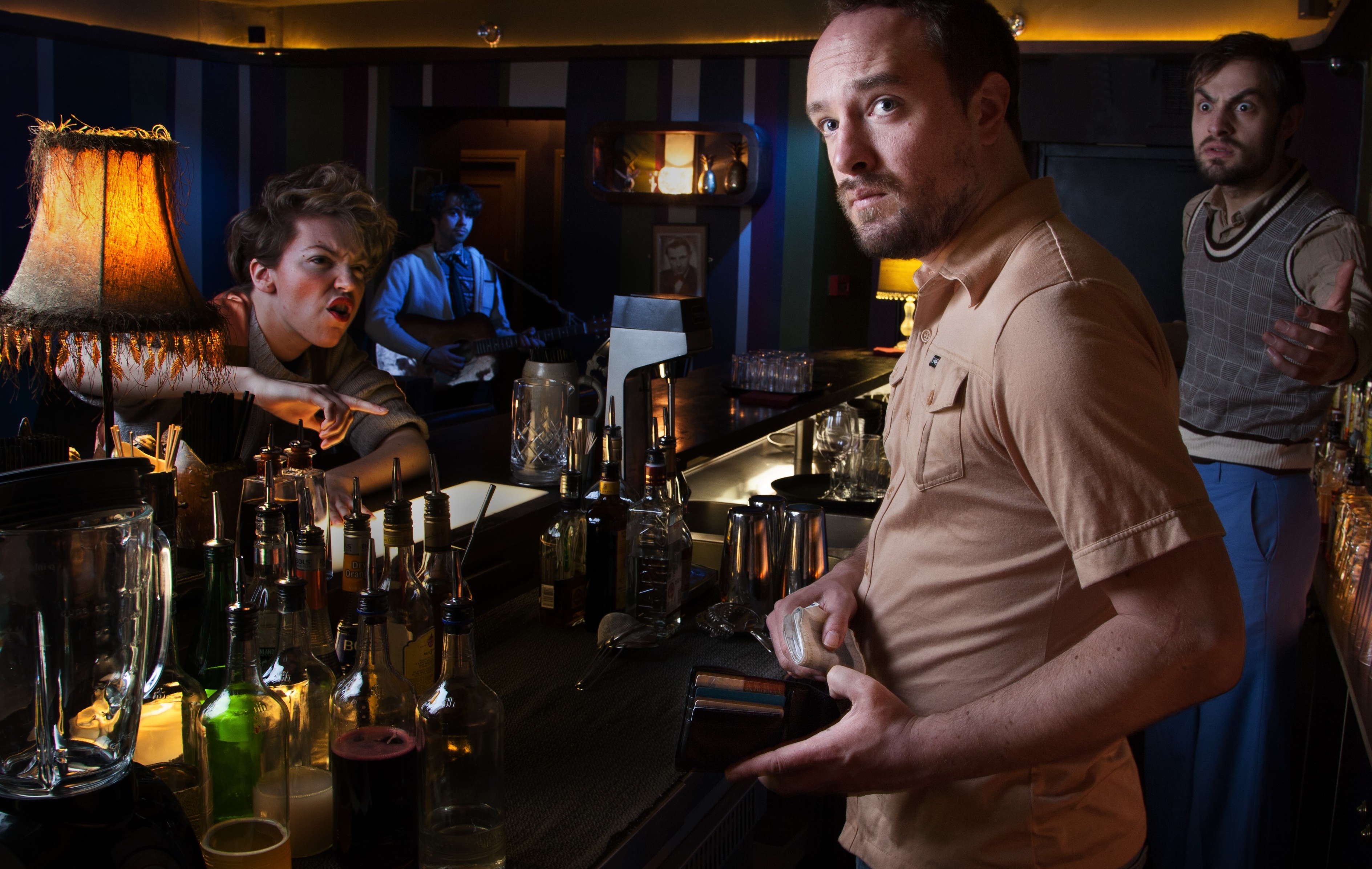
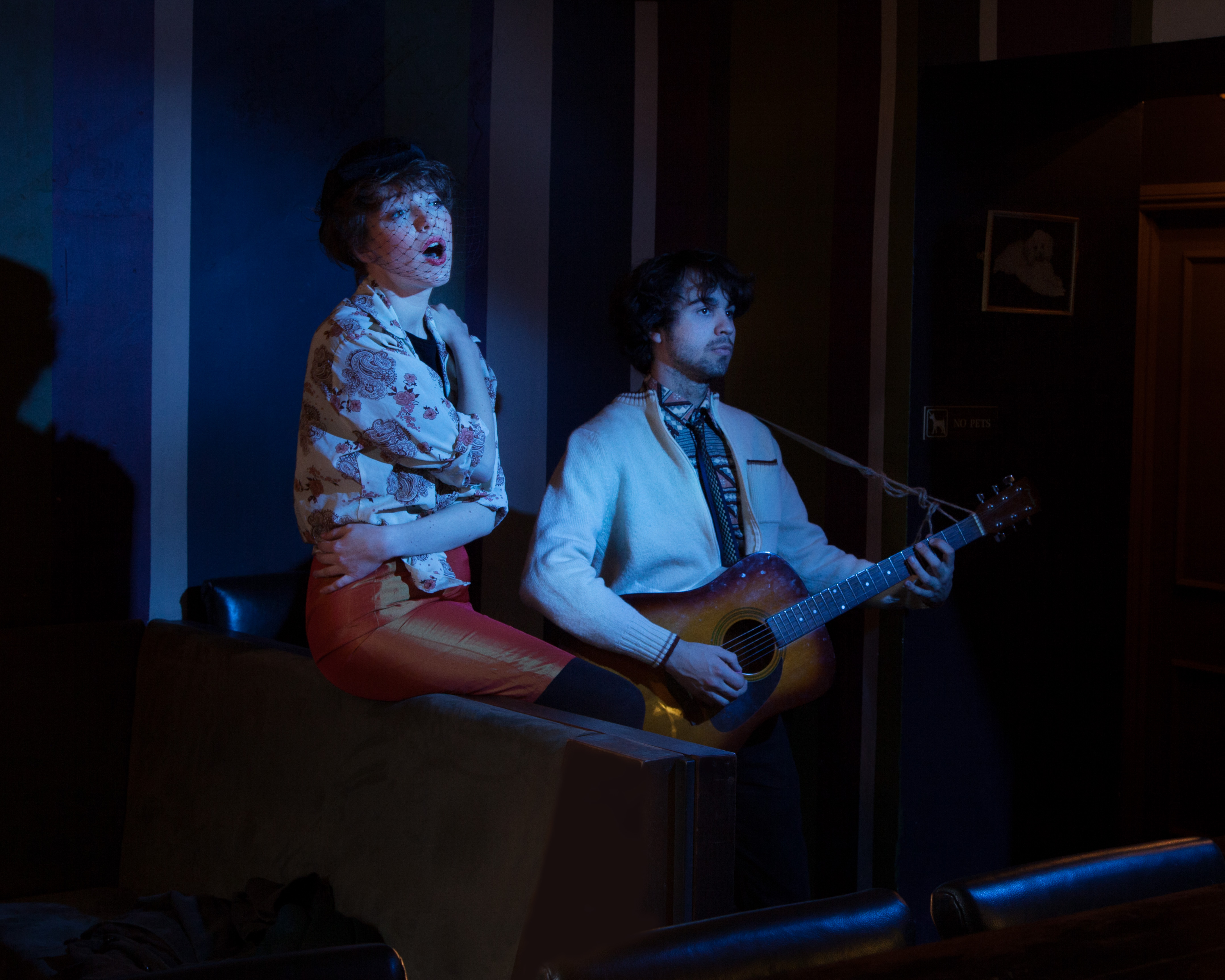
Ian Gelder is fantastic in the central role. He is required to display two very different sides to Whale. There is the side he shows to his guests, which has become a rather grotesque caricature of a slightly lurid and predatory Hollywood homosexual. Gelder gives the sense that Whale has fallen into this role and has now played it for so long it feels like a second skin. Here Gelder captures the sharpness, the hint of danger to Whale’s interactions that gives the play a much needed tension…continues at www.everything-theatre.co.uk

<<You can read the full review on Everything Theatre)

A mirror reflects a man’s face but what he is really like is shown by the kind of friends he chooses

Ablutions – Fellswoop Theatre @ Soho Theare, until 22 February 2015 (Tickets)

“A mirror reflects a man’s face but what he is really like is shown by the kind of friends he chooses”

It may be unusual for Civilian Theatre to be quoting from Proverbs but the title ‘Ablutions’ has already thrown us one rather heavy-handed piece of religious symbolism, and watching the travails of Ablutions, Fellswoop Theatre, Soho Theatre, courtesy of Charley Murrellour barman/hero it is not hard to recognise that the trip he embarks upon midway through the play could have easily been towards Damascus as it was towards the Grand Canyon.

In Fellswoop’s adaptation of the debut novel from Booker Prize nominated author Patrick deWitt we are deep into the realms of the redemptive road-trip, with a side order of the cleansing power of the bottle. From what was, apparently, an already strange and lurid confection Fellswoop have given us a rather bizarre musical and mime show.

Ablutions 4, Fellswoop Theatre, Soho Theatre, courtesy of Charley MurrellIt is a play that is certainly not without its charms. The musicianship and technical ability of the cast are highly impressive. We are provided with a lovingly crafted soundscape and the cast of Eoin Slattery, Fiona Mikel and Harry Humberstone are able to recreate a complete Hollywood dive bar, with a fully stocked array of colourful regulars, through the use of physical theatre and some wonderfully grotesque characterisations.

Humberstone – perhaps given more licence than the rest to stretch his characters to the extremes – provides us with enough sleazy figures by himself to have the audience squirming in their seats. Whilst I hope that someone as disturbingly charmless as Curtis doesn’t actually exist, I have a horrible suspicion that bars around the world will prove me wrong.

The core of the story belongs to Slattery’s Barkeeper. We join him when, if he isn’t already a loser, he is fast on his way to becoming one; living a life where work, friends and drink have combined to create a spiralling descent into an alcoholic’s chaos.

<<Read the full review>>

Who chooseth me shall get as much as he deserves

The Merchant of Venice – Almeida Theatre, until 14 February 2015

There are few directors who have the ability to divide audiences as much as Rupert Goold. It has become standard for his reinterpretations to brim with ideas and display an exuberance that can irkmov-364-merry-holden-emily-plumtree-and-rebecca-brewer-and-susannah-fielding-by-ellie-kurttztraditionalists as much as they excite those who believe a play to be a living text.

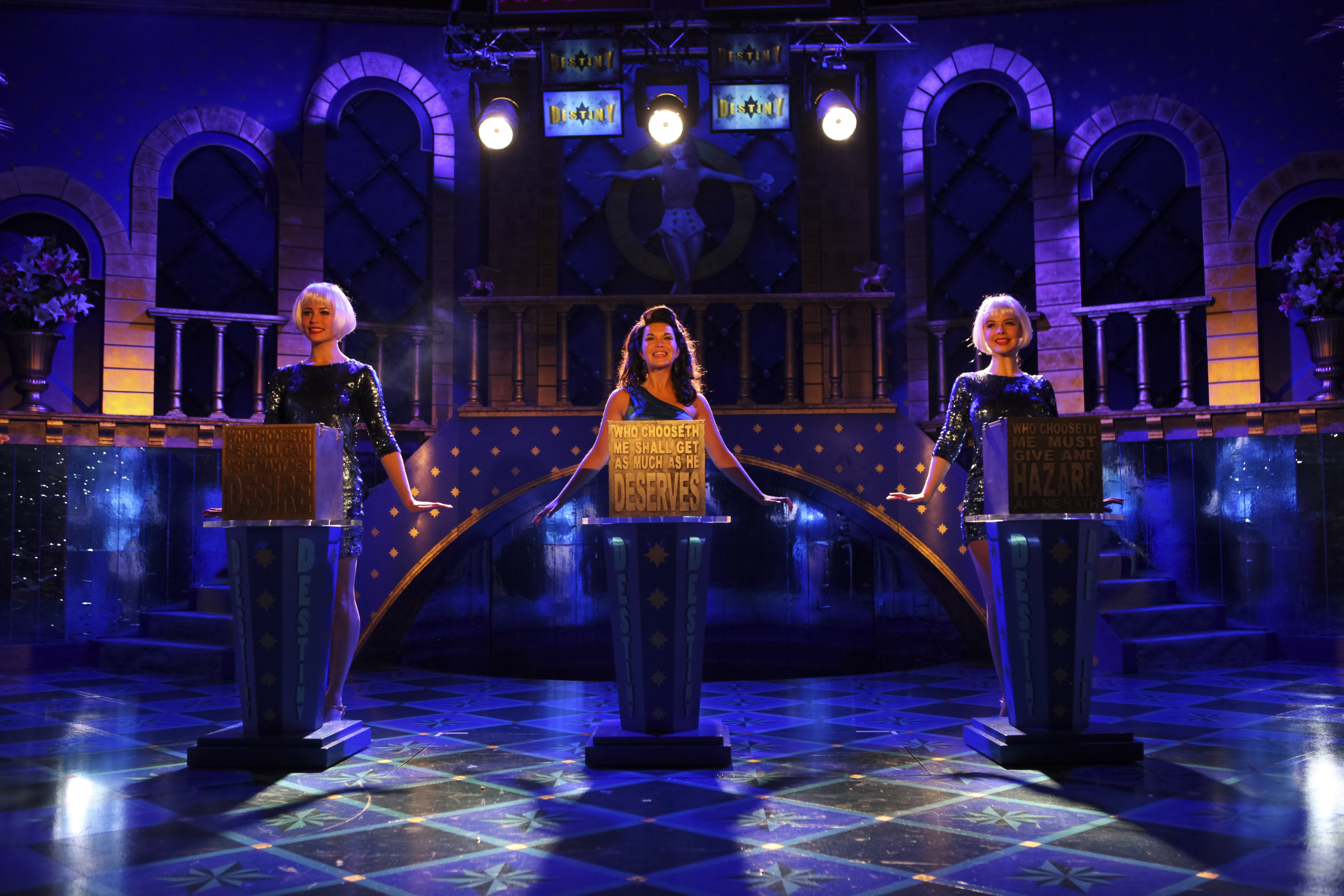
His production of The Merchant of Venice, reaching the Almeida after a season in Stratford, does more than most to alienate, and even his most fervent supporters reach the interval trying to grasp at the point of transferring the play from renaissance Venice to 20th century Las Vegas.

We must consider the play one of Shakespeare’s most problematic. Any director must think through how it can be staged effectively and it is a cop-out to provide a traditional setting in order to avoid the context that the modern world brings to how we must approach Shylock and his humiliation. It is clear what may have been acceptable for Elizabethan audiences will not play as well to the modern theatre goer.

MOV 045 - Rebecca Brewer and Susannah Fielding by Ellie Kurttz for webAs much as Shakespearian scholars can claim there is more to the interpretation of Venetian Jewry than may be initially apparent, it is hard to avoid the grubbiness with which he portrays Shylock debasement and Jessica’s elopement with Lorenzo. As much as we can argue that art should live in a vacuum it is impossible to watch the play without holding an awareness of what has happened in the 20thcentury.

It is also a structurally difficult play that ends entirely peculiarly. It is, technically, a comedy but it fails to fulfil many of the rules that we might associate with Elizabethan comedies. It doesn’t end in a wedding and rather than finishing with the duke bringing order to the chaos, it ends with Gratiano, a lower character, making a rather inelegant ribald remark about his betrothed.

Well Goold makes the decision to turn the play on its head, and leaves us with an ending so bleak, so suggestive of storm clouds gathering, that if not quite being equal to the great tragedies it is at least worthy of an HBO series.

As the final curtain descends we are left with three couples who, in destroying Shylock, have destroyed themselves. The audience are left with Bassanio’s question to Shylock, ‘Do all men kill the things they do not love?’ [IV.i] to mull over. In their single-minded pursuit of what they thought they desired they have ultimately left themselves a future built on lies and deceit. The warning on Portia’s caskets that ‘who chooseth me shall get as much as he deserves‘ returns to us with a startling relevance.

<<Read full review>>