Tower of Babel crumbles to reveal evidence of shonky workmanship

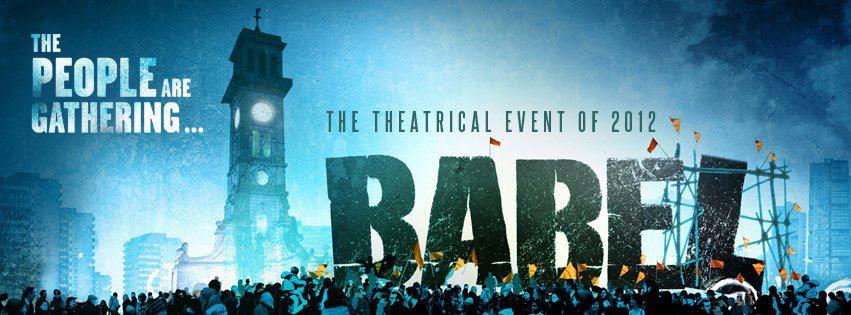
Babel – Performed at Caledonian Park,  until May 20th 2012

When it was announced that a collaborative project involving Wildworks, integral to The Passion of Port Talbot; the Theatre Royal Stratford East, previously home to Joan Littlewood;  the Battersea Arts Centre, long-term supporters of Kneehigh and Punchdrunk; and the Young Vic, would focus on the story of Babel as part of the World Stages Festival there was a feeling that it could become the theatre event of 2012.

Involving a cast of over 300 and creating an immersive experience in the middle of London, Caledonian Park to be exact, Babel had the potential to create a truly gripping experience that would draw an audience together in a piece that would explore questions that have remained fundamental to human nature since the  birth of our earliest civilisations.

The story of Babel is a story of primeval humanity and the development of language. Primarily thought of as biblical, it has antecedents common to a number of ancient civilisations. This is not uncommon in origin stories, and Babel in particular touches on questions of a universal root language that is as central to modern linguistics today as it would have been to ancient thinkers. It is hard not to imagine an oral tradition passing the story of Babel down through the generations as an an answer to the question of how it came to pass that humanity, rooted in theistic societies, spoke with such a multiplicity of tongues?
It is a story that has many resonances with the modern day, particularly in a world where Twitter bridges culture and internet search engines can  translate web pages instantaneously. Perhaps after thousands of years humans are beginning to hurtle back towards a supposed original state where humans can converse across a universal language. The fact that Babel so singularly fails to address any of these questions is only the starting point of a troublingly flawed production.

In business circles, it is often felt that any negativity in performance appraisals should take the form of the infamous ‘shit sandwich’ – for those unaware of such a delicacy, it generally involves a criticism layered carefully between two positive statements. Unfortunately in the case of Babel, there is far too little of the positive to create a sandwich, at best you might be able to fashion some form of Danish Smørrebrød but even that appears optimistic.

<< Click here to continue to full review>>

The Cultural Olympiad: Better late then never?

Well the big news of the day is the announcement of some major theatre projects that will be heading our way in 2012. One of the elements of the Olympic legacy that never really seem to have caught the public imagination is the Cultural Olympiad – something aptly skewered in the BBC’s painfully accurate picture of life as a middle-manager on the Olympics (something that I have at times had the questionable fortune to view first hand). 

World Stages London is (and this sounds does sound a little to close  to the clip above for comfort) “…a once-in-a-lifetime celebration through theatre of the exhilarating cosmopolitan diversity of London’s people and culture”. Well okay, in fairness London is one of the great international cities of the world – and what sets it apart on the cultural stage is it is ability to be a melting pot that blends the ingredients of the art and world view of different cultures to create something unique – in a way that only New York can really claim to challenge..

With talents as varied as Peter Brook and Jonathan Dove, and pieces including a 500 strong site-specific work about Babel and the first-ever production of Wild Swans, it seems pretty certain that there will be something for everything in the run-up to the Olympics (where it will be wall-to-wall British sporting patriotism for the best part of six weeks).

Reasons to be cheerful…

The Suit

Peter Brook, in a collaboration with Marie Helene Estienne, continues his exploration of fables and the art of story-telling and  myth-making with this adaptation of a short-story by Can Themba. Now personally I have found Brook’s last two outings at the Barbican insubstantial and well below the standards that he is capable of. Lately his reduction of the stage to its barest essentials have taken on the feel of an ascetic. However one always lives in hope of a return to the form that made him a colossus of 20th century theatre.

It runs from 21 May to the 16 June. More details can be found here

Babel

In what looks like a very special production and the possible flagship event of the whole project, Battersea Arts Centre and WildWorks (responsible for the critically acclaimed The Passion at Port Talbot) are teaming up for Babel, which includes a cast of 500 community and professional actors, musicians and performers. It is site-specific and the location is yet to be revealed, but it seems likely that a famous London landmark is involved and one imagines that it will have to be somewhat tower-shaped (my personal hope is Big Ben but one imagines security concerns may make that one tricky)

It runs from 08 – 20 May. More details can be found here

Wild Swans

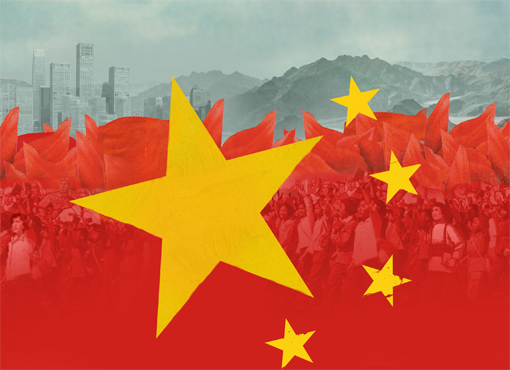
A literary classic and a world-wide best seller (no hyperbole here, over 30 translations and 10 million copies – thanks Wikipedia!), Juna Chang’s novel looks set to be one of the more popular smash hits of the festival. Telling a story of one family’s multi-generational struggle against the backdrop of an ever-changing China, it effectively contains the biographies of three generations of women in the Chang family.

I must admit it has never held any interest for me whatsoever. I haven’t read it and can’t imagine doing so soon. No doubt it is my loss but then so are many of the other books I have never, and sadly will never, read. It is almost certain going to be a complete sell-out and if you want to go, you should get your tickets soon.

It runs from 13 April to 13 May. More details can be found here

Three Kingdoms

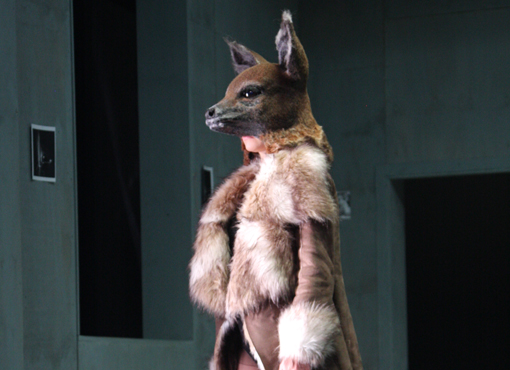
Despite being one of the more mysterious offerings on the programme, its sheer intriguing nature has me hooked and will be what I will be most looking forward to this spring. Written by Simon Stephens and exploring the trade in trafficked women and organised crime across Europe, it doesn’t profess to being the most uplifting evening you are likely to spend in the theatre. However a new play by Stephens is always worth catching and it is interesting to see a plotline that seems more suggestive of a film being given the stage treatment – throw in the puzzling trail picture (above) and you can count me in.

It runs from 03 – 19 May. More details can be found here

Much more on World Stages London