You don’t have to be mad to extemporise here but it helps

Hamlet – Young Vic, Running until 21 January 2012

Ian Rickson’s production of Hamlet at the Young Vic begins with an elaborate entrance through the backstage area, which has been transformed into a passage through a mental hospital. As you wind through narrow corridors, you catch glimpses of action through windows and the pervading sense from the TV screens and telephones on display that we are entering the 1970s.

To be honest all this effort feels a little laboured although it does help to immediately ground the play in its overarching theme: is Hamlet mad?  It is a question that has been raked over many times, be it in productions, literary criticism or psychological analysis. However through Ian Rickson’s radical interpretative staging, it is a question that delivers a revelatory redefinition of how the play can be understood.

The play begins with a striking image; Michael Sheen’s Hamlet appears out of nowhere in long shot, trapped in a solitary light shining upstage. Rickson’s exquisite framing is a feature that runs throughout the play but this first image, with a clear allusion to Carol Reed’s The Third Man is particularly notable. It is a potent reference point, immediately conjuring up thoughts of Vienna; the spiritual home of Freud and the psychology movement. The Third Man itself is indebted to German expressionists of early cinema, such as  Fritz Lang and FW Murnau, who were fascinated by madness and its effect on the human condition.

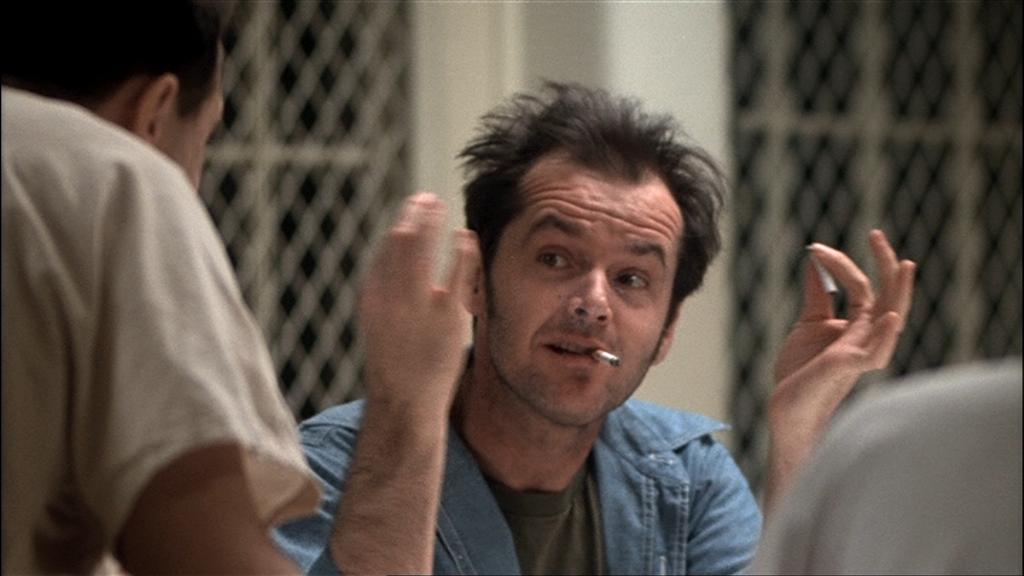
References abound in this play; the 1970’s institutional setting brings to mind One Flew Over the Cuckoo’s Nest and, compared to the recent Hamlets of David Tennant and John Simm, Sheen has an alpha-male muscularity that is redolent of Jack Nicholson without, thankfully, adopting any more of Nicholson’s mannerisms.

The other crucial reference point is the work of RD Laing. In a play that has at its heart the discussion and understanding of madness, Laing’s work has a relevance that underpins the perspective that Rickson takes to the play. At the centre of Laing’s theories is the idea that psychosis is not a biological or psychic response but something that can develop out of socio-cultural situations. This has a direct relevance to the understanding of Hamlet. Hamlet is not ‘mad’ per se but he may have become mad due to the conditions that he has found himself within and the drama of the play may be an attempt to break him of that psychosis.

This reading is reinforced through Laing’s idea that ‘going crazy’ can be the sane response to an insane situation. In this, as in so many other cases, we can infer that Shakespeare touched on the principle a few hundred years before the development of psychology as a science. This may be a stretch but it does appear to reflect Hamlet’s understanding of himself; he wishes to assert his own identity, ‘to thine own self be true’, through his understanding and response to his father’s death. However Hamlet’s ideas conflicts with the response demanded by his ‘uncle-father’ Claudius; Laing would argue that Hamlet is stuck between the persona he has created, the avenger of his father, and the one demanded by parental authority and it is in this bind that the context for Hamlet’s ‘madness’ should be understood.

Click here to read full review

Furious speculation and petulant snubs

The Evening Standards are almost upon us, so it is time to cast eyes over the shortlist. Harrumph over those missing from the list and make pointlessly futile predictions over who might be coming out on top. As usual we see the usual suspects vying for position.

This year the National leads the way with nine nominations, squeezing out the Royal Court with eight. Most disappointed must be the Donmar with just two nominations and a complete shut-out in both Best Actress and Best Actor catagories despite a number of barnstorming performances from Derek Jacobi, Jude Law and Ruth Wilson.

As usual the commercial sector is poorly represented and even in the musicals category they are squeezed by a National and a RSC production in London Road and Matilda respectively. However it is possible to see the faintest glimmer around the edges as Theatre Royal Haymarket managed to sneak a nomination for Sheridan Smith in Flare Path and a number of other nominations that never quite made it off the longlist. While it is far too early to say, it could be the start of a private theatre that plans to lead with serious, if understandably traditional and crowd-pleasing, drama.

————————————————————————————————————————————————————————————-

Best Actor

Bertie Carvel Matilda RSC Stratford and Cambridge Theatre
Benedict Cumberbatch Frankenstein National’s Olivier
Charles Edwards Much Ado About Nothing Shakespeare’s Globe
Jonny Lee Miller Frankenstein National’s Olivier

Well the most interesting thing about this year’s Best Actor category is the double-header of Benedict Cumberbatch and Jonny Lee Miller being nominated for Frankenstein. It would have been cruel to have nominated one without the other but the question is whether they will pull votes away from each other and allow a sneaky victory for either Bertie Carvel or Charles Edwards to slip through in the ensuing mayhem. Either way looking at the shortlist it feels that it may have been a slightly weak year for male leads – with certainly no standout performance to stand alongside Rory Kinnear’s Hamlet of last year and the England-sized shadow of Mark Rylance in Jerusalem.

There are some notable omissions from the shortlist and James Corden in particular should perhaps feel most put-out by the lack of inclusion. He received universally rave reviews for One Man, Two Guvnors and the play had a host of 5* reviews and earned a nomination in its own right for Best Play. No space either for the Hollywood A-list of Spacey, Fiennes and Law; with Law perhaps producing the most transformative performance of them all in Anna Christie and re-establishing his right to be called a credible actor.

Will Win

Benedict Cumberbatch – Frankenstein (successfully holding off the split vote)

Should Win

Benedict Cumberbatch – Frankenstein

Should Have Been Nominated

James Corden – One Man, Two Guvnors / Jude Law – Anna Christie

————————————————————————————————————————————————————————————-

Natasha Richardson award for Best Actress

Sheridan Smith Flare Path Theatre Royal Haymarket
Samantha Spiro Chicken Soup With Barley Royal Court
Kristin Scott Thomas Betrayal Comedy Theatre

The formidable Kristin Scott Thomas looms large over the Best Actress category; bringing a stately grandeur and the imperious air of a known winner to proceedings. A handsome, well-acted Pinter play has awards written all over it but it hasn’t caught the eye in any of the other catagories so it is possible that it doesn’t quite have the legs to deliver the prize to Kristin.

It is entirely possible that the mass of goodwill that Sheridan Smith generated in Legally Blonde may transfer over to her first major lead in a straight play. And we are in a Rattigan centenary year as well. So as the stars seem to align for one double S, it appears the other, Samantha Spiro may be leaving empty handed despite an immensely powerful performance in Chicken Soup with Barley.

In a double blow for Anna Christie and the Donmar, Ruth Wilson joined Jude Law in failing to make it off the shortlist. Looking at the plays, we have a Rattigan, a Wesker, a Pinter and no room for any Americans. Perhaps as uncertainty swirls all around there has been a reward for those choosing Britain’s great 20th century playwrights to reflect on the modern psychology of the nation.

Will Win

Sheridan Smith – Flare Path

Should Win

Samantha Spiro – Chicken Soup with Barley

Should Have Been Nominated

Ruth Wilson – Anna Christie

————————————————————————————————————————————————————————————-

Best Play

The Heretic Richard Bean Royal Court
One Man, Two Guvnors Richard Bean National’s Lyttelton
Becky Shaw Gina Gionfriddo Almedia
Tribes Nina Raine Royal Court

Following my previous point about American plays, I suspect that we can count Becky Shaw out of the running. Undoubtably a strong play, I feel its previous history running off-Broadway may count against it in the final reckoning. Richard Bean can count himself unlucky to be nominated twice for Best Play but failed to even make it to the shortlist for Best Director. If people vote for the man rather than the play, we may see both The Heretic and One Many, Two Guvnors miss out on a split vote.

If this logic means Tribe picks up the award then justice may well have been done, as it would be just reward for a young writer’s elegant handling of the contentious topic of disability. Whilst not containing the full liberating freedom of A Day in the Death of Joe Egg, it manages to free the topic from its normal parameters in order to confront the traditional Royal Court audience with a painful dose of reality. After last year’s win for the hugely successful Clydebourne Park, it appears the Royal Court may have found a rich vein of form in forcing its liberal supporters to reassess their underlying beliefs and prejudices.

Will Win

One Man, Two Guvnors – Richard Bean

Should Win

Tribes – Nina  Raine

Should Have Been Nominated

Wittenberg – David Davalos

————————————————————————————————————————————————————————————-

Ned Sherrin Award For Best Musical

Betty Blue Eyes
London Road
Matilda the musical

Not having seen any of these makes it difficult to comment. However it is hard to see past Matilda the musical sweeping all before it. Rapturous reviews at Stratford for the acting and singing, alongside Tim Minchin’s inspired lyricism; possibly one of the few individuals who would be able to capture Roald Dahl’s imagination. London Road is undoubtably a powerful piece of work but was it so good that you can convince voters to go for such a dour work in traditionally sunny category? Betty Blue Eyes? Reasonably reviews but will  people vote for something that is closing early? I think not.

Will Win

Matilda the musical

Should Win

Matilda the musical

Should Have Been Nominated

Nothing really stands out in what feels like a particularly weak year for musicals despite what the Evening Standard may say on the matter.

————————————————————————————————————————————————————————————-

Best Director

Rob Ashford Anna Christie Donmar
Dominic Cooke Chicken Soup with Barley Royal Court
Edward Hall Richard III & The Comedy of Errors Propeller At Hampstead
Mike Leigh Grief National’s Cotteslow

As much as I would love to see Edward Hall pick up a reward for the virtuoso vision that drives Propeller and their all-male Shakespeare productions, it feels like a very big ask for a company that doesn’t have the catchy celebrity names and longstanding reputations of the Donmar and the Royal Court. I think Mike Leigh can be ruled out as well, as loved as he may be this does not feel like a Mike Leigh year and Grief passed me by with little more than a whisper.

Coming down to Rob Ashford and Dominic Cooke we have two plays that highlight the differences in writing on either side of the Atlantic. O’Neill vs Wesker is a mouth-watering proposition. It is shaped up to be an extremely close run race that I supect will be decided by the fact that we appear to be in a period of re-evaluating Wesker,  Chicken Soup… at the Donmar and the The Kitchen at the Nationa. This extra name recognition and a seeming favouring of British playwrights should be enough to swing the judges towards Dominic Cooke.

A lot of big names have missed out. There is no space for Sam Mendes or Danny Boyle for their interepretations of Richard III and Frankenstein. It’s a shame to see Declan Donnellan has not made the cut for The Tempest, although Russian language plays are always going to be a tough sell.

Will Win

Dominic Cooke – Chicken South with Barley

Should Win

Edward Hall – Richard III & The Comedy of Errors

Should Have Been Nominated

Declan Donnellan – The Tempest

————————————————————————————————————————————————————————————-

Best Design

Bunny Christie Men Should Weep National’s Lyttelton
Lizzie Clachan Wastwater Royal Court
Adam Cork Sound designer of Anna Christie and King Lear Donmar
Mark Tildesley Frankenstein National’s Olivier

Not much to say on this other than if Mark Tildesley doesn’t win for Frankenstein then I shall eat my hat. The Olivier is a famously difficult to space to work with and while Danny Boyle’s production may have had its problems, the design was not one of them. Visually stunning and a replica steam train on stage; whatever beats it must be out of this world.

Will Win

Mark Tildesley – Frankenstein

Should Win

Mark Tildesley – Frankenstein

Should Have Been Nominated

Jon Bausor –  Lord of the Flies

————————————————————————————————————————————————————————————-

Charles Wintour Award For Most Promising Playwright

E.V. Crowe Kin Royal Court
Vivienne Franzmann Mogadishu Lyric Hammersmith
Penelope Skinner The Village Bike Royal Court

Not having seen any of these its hard to comment. However based purely on word of mouth I suspect that Vivienne Franzmann is out in front for Mogadishu. A deserving win could be on the cards for the Lyric Hammersmith that has championed new writing but has often been overlooked in favour of the reputation of the Royal Court.

————————————————————————————————————————————————————————————-

Milton Shulman Award For Outstanding Newcomer

Phoebe Fox For her performances In As You Like It (Rose, Kingston) and The Acid Test (Royal Court) and There Is A War (National’s Paintframe)
Malachi Kirby For his performance In Mogadishu (Lyric Hammersmith)
Kyle Soller For his performances In The Glass Menagerie (Young Vic), Government Inspector (Young Vic) and The Faith Machine (Royal Court)
David Wilson Barnes For his performance In Becky Shaw (Almeida)

In one of the more interesting developments across the nominations, we saw husband, Kyle Soller, up against his wife, Phoebe Fox, in the battle for Outstanding Newcomer. Out of the two my money is on Kyle Soller, if in part for an outstanding performance as Khlestakov in the Young Vic’s version of The Government Inspector and an extremely strong follow-up in The Glass Menagarie.

I feel Malachi Kirby will struggle to match this with just Mogasdishu behind him and there will be no justice in the world  if David Wilson Barnes walks off with the award – as any quick glance at his C.V suggests ‘newcomer’ maybe laying it on a bit thick.

A reflection: 10 years on

Decade – Headlong, St Katherine’s Docks – Until 15th October

There is no doubt that Decade, Headlong’s collaborative theatrical response to 9/11, reaches moments that are powerfully affecting, even for those with no direct ties to the event. The strongest of these in Decade are where we see the butterfly effect in action; the ripples that change the course of someone’s life, years after the event.

We witness a woman engaged in an increasingly manic speed dating event, plagued both by eczema and a need for security and strength, ultimately unable to commit as she is unable to let go of her husband who died. A group of survivor wives meet every year at a coffee shop within sight of the Ground Zero. The audience are shown the scenes in reverse; a tricksy device suffers from the law of diminishing returns in its final scenes but does function as a powerful reminder of the long shadow cast by 9/11. The wives are unable to grieve in any understandable way, holding on to brittle bonds artificially-forged in the tragedy; held together by a sense of duty and continually reinforced by the sight of presidential candidates solemnly appearing at the site as part of carefully stage-managed campaigns.

Also outstanding is Tobias Menzies portrayal of a man recollecting his account of watching the Tower’s collapse after booking the day off. The audience’s awareness of events lends Menzies’ flat affectless delivery a heart-breaking quality. As we hear, with an Alan Bennett like focus on the absurdity in the mundane, a description of the day before and an ensuring phonecall to the office just after a plane hit the first time, there is a tragic inevitably in the growing awareness there won’t be Hollywood happy endings. Later we find that as a result of his experiences he has edged close to the ‘Truther’ movement; desperately trying to find meaning in his unanswered questions.

Not everything was crafted so successfully, a muscular, Mamet-ish duologue between journalist and a soldier involved in the death of Osama Bin Laden, began promisingly with the conversation hurled across the audience in staccato bursts reminiscent of machine-gun fire. However the contrivance of building a link to a relative who died in the Pentagon began to pull the characters apart at the seams and strain credulity. Continue Reading Here

Sheridan meets Brecht: when legends collide

School for Scandal – Barbican Theatre, 14 June 2011

There isn’t much left to write about the Deborah Warner directed School for Scandal currently playing at the Barbican. An award-winning director who was most recently seen at the National with a stellar production of Mother Courage and Her Children, Warner’s original take on Sheridan’s 18th century classic became the rather surprising subject of unusually intense critical debate, before descending into a rather indecorous war of words between Warner and the theatre critics, Michael Billington and Charles Spencer.

The production demonstrates fairly conclusively that Sheridan’s restoration comedy continues to withstand the test of time. A sparklingly witty acidic comedy, the dense wordplay maybe be occasionally hard to follow for modern audiences but taking the time to really listen is more than worthwhile, with a script packed with lines biting enough to make you think of an 18th century Thick of It. The cast do fine work with the material. Alan Howard as Sir Peter Teazle is first rate, finding the perfect blend of genuine compassion mixed with the kind of grumpiness evident in older men who find themselves in a fractious relationship with a younger wife. It is interesting to watch Howard and remember back to a time in the 1970’s when he was one of the coming men of the stage, running through the repertoire of romantic leads for the RSC. Matilda Ziegler’s Lady Sneerwell and Vicki Pepperdine as the irrepressible Mrs Candour are both excellent and wring the maximum amount of humour out of two of the funniest roles in the play.

Leo Bill, playing Charles Surface as a trustifarian with a, very deeply hidden, moral centre, is entirely convincing. A bundle of nervous energy, constantly on the move, Bill injects some much needed pace into a play that, while constantly zipping along and never feeling flabby, is still a three hour haul.

However fans of Sheridan maybe scratching their heads at the description of Charles Surface as a trustifarian and this is where problems in the production begin to arise. The criticisms of Warner’s production have focused on the modern flourishes that have been brought to the play and a certain irritation that parallels with society today were being, in some cases literally, clearly signposted for the audience. Continue reading here

Just enough Sturm und just enough Drang

The Damnation of Faust – English National Opera, Coliseum, 20 July 2011

3 Performances left before Tuesday 07 June

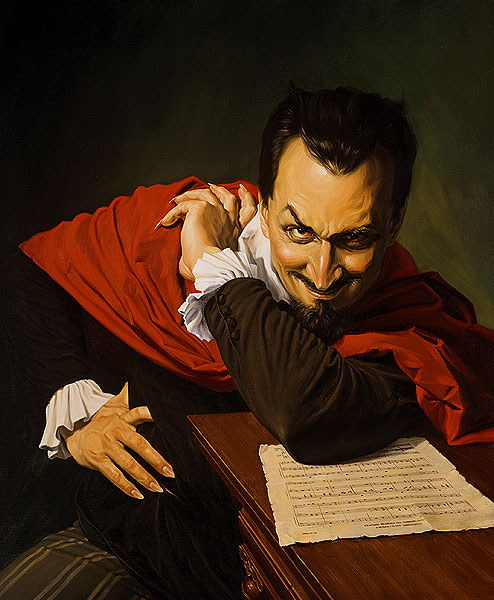
Reputedly when Hector Berlioz saw the first productions of The Damnation of Faust he concluded that it was impossible to stage as the production techniques of the time could not bring the drama to life. Had the risks of selling your soul to the devil not been made abundantly clear then I might have been sorely tempted to offer much in return for Berlioz being able to witness what happens when thoroughly 21st century technology is let loose on it. It is hard to believe that he would not be impressed with the result.

Some critics expressed surprise that the ENO would take a risk on Gilliam but it has hard to think of a film director who might be better suited to the demands of opera. A man often regarded as holding cinema’s most rampant, if occasionally incoherent, imagination seems like an ideal choice for a medium where the audience’s suspension of disbelief is often asked to hang off the smallest threads. His films demonstrate that he never lacks for ideas even if it does occasionally comes at the expense of a coherent narrative; The Imaginarium of Dr Parnassus gave the sensation of being fed a succession of amuse-bouches, each one a delicate and delightful treat but in the end never providing the satisfaction gained by a well-planned three-course dinner.

However this approach makes Gilliam well suited to Berlioz’ Faust, a piece often described as a series of musical sketches rather than fully-fledged opera. It flits between styles and scenes in a manner that gives Gilliam free license to let his magpie approach to directing run riot. There is no unifying directorial style in the production but instead the audience are led, by Faust and Mephistopheles, through a history of unified Germany up to World War II; Faust’s final descent into hell appearing inextricably linked to a nation bent on following a similar path.

Gilliam, without forgetting the credit that is due to the brilliance of Hildegard Bechtler designs, has created an unforgettable masterpiece that creates substance out of style. Each scene is unique and can stand alone from the rest of the production; this leads to a potential disjointedness in the production but Gilliam’s vivid creativity and thoughtful transitions between scenes means the audience is not allowed to rest and are continually drawn into the immediacy of the production, senses overwhelmed by a panoply of sound and image.  Continue reading here.

Spotting a summer celebrity – 2011

 Five to watch

It’s that time of year again when those celebrities, or those unfortunate to have missed out on the chance to spend the next four months sitting in hotel lobbies desperately promoting a $200 million turkey to  hacks still willing to buy into the illusion that Pirates of the Caribbean represents a significant addition to cinema’s canon, remember that theatre represents their true calling along’.  We can forget for the moment that most will have disappeared back State-side, ready to add a new-found gravitas to an already embarrassingly padded C.V, just in time for the festival circuit and instead enjoy gawping at people we normally see in while chowing down on a bucket of popcorn the size of a small child.

5) Rupert Everett & Diana Rigg

Pygmalion – Garrick  Theatre, from the  25 May 2011

First off, sadly Diana Rigg is not due to play Eliza Doolittle, although that would be an officially awesome reworking of George Bernard’s Shaw classic. Instead she is down to play Mrs Higgins, while Rupert Everett reprises the role of Henry Higgins that he first played as part of the Chichester Festival.

GBS is having a slightly revival of late, with recent major productions of St Joan and Mrs Warren’s Profession gracing Londdon, after a long period of having been pushed into the shadows. I am sure the imperious Diana Rigg will be splendid but Everett is the more interesting choice; he, after all, is a man who never quite made it onto the Hollywood A-list (for reasons that may or may not have to do with him being openly gay) who will be playing a character who works to fundamentally change Eliza so that she is more socially acceptable. One wonders what Freud would have to say about that?

Celebrity enjoyment factor: C

4) Jude Law

Anna Christie – Donmar Warehouse, 04 August – 08 October 2011

Jude Law loses out in the battle of the Hamlets (see 2. below) but this is partly down to the fact that I don’t really know as much as I should about Eugene O’Neill and his plays. Wikipedia tells me that this one the Pulitzer Prize back in 1922 so I am guess it is going to be pretty good and Long Day’s Journey into the Night is generally regarded as an American classic.

The Donmar rarely puts on poor productions and Jude Law, even before Hamlet, is no mug on stage. Just as he was starting out in Hollywood (way, way before the Jude Law overload of 2004, which saw him opening 6 films in one year and the public getting more and more sick of the sight of him – the nadir probably being the execrable remake of Alfie) he left an indelible impression in the Young Vic’s production of ‘Tis Pity She’s a Whore. If this production is half as good as that then, following a reasonably strong Hamlet, we may be seeing the moulding of Law as a strong presence on the British stage.

Celebrity enjoyment factor: B-

3) Ralph Fiennes

The Tempest – Theatre Royal  Haymarket, 27 August – 29 October 2011 

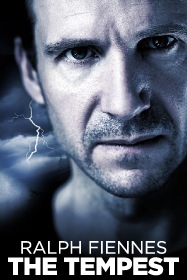
Coming as part of Trevor Nunn’s impressive first season as artistic director of the Theatre Royal Haymarket (we have already seen a well reviewed, and star-heavy, Rattigan revival in Flare Path and we can look forward to Rosencrantz and Guildernstern are Dead in early summer), The Tempest has drawn one of the few actors who seems at ease on stage as he is on camera. Ralph Fiennes, who has previously excelled as Julius Caesar and has been busy with his directoral debut, a modern-day version of Coriolanus, so is clearly no stranger to Shakepeare (even if many of his younger fans may recognise him more clearly as Voldemort in Harry Potter).

The only question-mark is his age. Not yet 50, Fiennes would seem to be a very young Prospero (even if Miranda is only supposed to 16); traditionally a part that actors take as they approach the end of their careers. The question is whether Fiennes has the gravitas of a man who was cast adrift when his daughter was just a baby. In lesser hands it may be more of a concern but looking at some of his career highlights to date – Quiz Show, Schindler’s List, The English Patient, The Reader – it is clear this is a man who understands and enjoys complex roles, and this should be an exciting proposition.

Celebrity enjoyment factor: B

2) David Tennant & Catherine Tate

Much Ado About Nothing – Wyndhams  Theatre, from May 16 2011

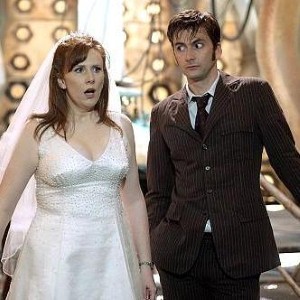
Admittedly this isn’t exactly Hollywood but this is about as close as we get in the UK. The Doctor and one of the most left-field choices of companion turning it around and going head to head in one of Shakespeare’s most ferocious and ferociously funny comedies. Tennant showed in Hamlet that he has a quick-silver tongue and Tate has demonstrated a motor-mouth on numerous occasions; even without the pre-history of Doctor Who behind them, this would be a Benedict and Beatrice worthy of note. 

My only gripe is the outrageously expensive ticket prices, god only knows whether they plan to somehow incorporate time travel into the show but with Stalls seats running at £61 and the Circle for £51 there had better be something splendid to justify the price. While it would be naive to expect reasonably priced tickets in the West End, it is profoundly depressing when a show which will clearly appeal to children and those who don’t always go to the theatre will cost a family of four over £200 for seats that are not right up in the gods (spending over 2 hours with that little leg room is enough to put people off Shakespeare for life). If people complain about the sustainability of theatre then productions like this, which seem to exclude new audiences through price alone, should take a large part of the blame.

Celebrity enjoyment factor: A-

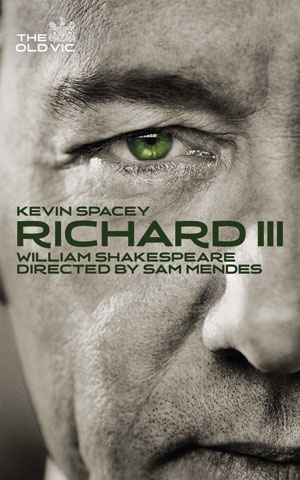
1) Kevin Spacey

Richard III – Old Vic Theatre, from 18 June 2011 before an international tour

If you, like me, has been more than a little underwhelmed by Kevin Spacey’s period as artistic director for the Old Vic then hopefully here is the big project you have been waiting for.  It seems that there have been too many small scale American plays that haven’t resonated with audiences this side of the Atlantic and when Spacey has been on stage we have seen nothing of the tour de force performance that brought him international acclaim in The Iceman Cometh.

Well if anything calls for a tour de force then it must be Richard III. One of the great ‘acting’ roles, Richard III must leave actors salivating. A great plot of intrigue and murder, one of the first anti-heroes; a king who is both crippled in mind and body. From the off… ‘Now is the winter of our discontent…’ this is a play crammed full of memorable lines and set-pieces. It can only be hoped that Spacey, under the direction of the reliable Mendes, who clearly knows how to work with film actors, really lets himself go and retakes the stage by storm.

Celebrity enjoyment factor: A