Antigone: A very modern ancient Greek tragedy

Antigone – National Theatre, until 21 July 2012

Polly Findlay’s production of Antigone, which runs at a brisk 100 minutes without an interval, is a fine example of balancing the demands of classical Greek tragedy against modern audience sensibilities. In this regard it is helped by Don Taylor’s solid translation that irons out much of the overly heightened poetics in favour of a more earthy realism. This has the dual effect of making the plot a lot less tangled to an audience not raised on the complexities of Grecian mythology and also downplaying the role of the gods in the drama – possibly the single biggest problem in finding contemporary resonance in the surviving works by Greek playwrights.

The text has been filleted to make it performable without a break and this broadly works in the narrative’s favour. Antigone is rooted in conflict  from the opening moments and it doesn’t take long to become apparent that the audience are watching the playing out of a tragedy made inevitable by the choices taken by humans. By removing the interval Findlay is able to keep the tension ratcheted up and allows momentum to build like a wave from first scene to last.

The action is set, effectively if not a little predictably, in the war rooms of Creon’s (Christopher Eccleston) administration. Soutra Gilmour’s set design has done an impressive job of filling the Olivier stage without giving the impression of it being cluttered. This is achieved by partitioning offices towards the back of the stage that has the effect of shortening the vast space by a good 10 metres and forcing most of the action towards the audience. As a result the production feels much more intimate than many staged at the Olivier.

Findlay doesn’t waste the space and there is the constant background buzz of an administration on the brink. The Chorus form the civil servants that run things behind the scenes. There are two very cute moments in the opening moments that help to create a world that is instantly recognisable; the first is what must surely be a deliberate echo of the famous image of Obama and team watching the raid on Osama’s hideout. The second is the chorus’ announcement of the death of Polyneices & Eteocles restaged as the drafting of the press release, with the text being revised to tone down the language of war.

What marks Antigone as one of the most important plays in the Western canon is the fact that, despite it being dated to a period almost 2500 years ago, it is still dealing with issues that are recognisably modern. Other surviving plays are of interest, or contain some certain relevance, to a modern audience but Sophocles captures issues that are still being played out on the world stage in the 21st century.

The idea of the rights of the individual against the rule of the state is one that will never be resolved and Sophocles shows it through an issue that has a stark modern relevance; the death of Osama Bin Laden led to mass protests following his burying at sea, which was seen as breaking Sharia law. This contemporary example amply demonstrates that the right to be buried in accordance with tradition has not diminished over two millennia.

<<Continue to the full review>>

Around Town: Next Week in London

The lack of an update for over a week is a sign that Civilian Theatre has been taking a well-earned break following the enduring trauma experienced by watching Babel. However the reviewing season kicks off again in earnest next week with three plays lined up, each of which I am quietly confident about.

Antigone has the enticing prospect of Christopher Ecclestone returning to the National Theatre after a 22-year absence. Performing in one the great plays of the classical era, Ecclestone has the craggy and worn features that seem ideally suited to play Creon, a man who has spent years charged with the responsibility of holding together the state over and above any call to personal desires. He is one of our great character actors who actually appears in a lot less work than you probably remember but whose appearance is usually a clue that we are going to be watching some quite special – he is superb as Derek Bentley in Let Him Have It; one of those rare films where you can feel the anger of injustice bubbling through every scene, and equally good in the seminal 90’s TV series, Our Friends in the North.   

The Physicists will be the next play under Josie Rourke’s tenure at the Donmar. Having scored a big hit with The Recruiting Officer but perhaps underwhelmed slightly for many with Making Noise Quietly, Rourke will be looking to come back strongly with Durrenmatt’s The Physicists. It is hard to think of a playwright, or indeed style, that has fallen more out favour in recent years than Durrenmatt’s slightly avant-garde, philosophical work. However I can remember being absolutely blown away by a production of The Visit and the staging possibilities that such a play open’s up. When you take time to sit back and survey London’s theatrical landscape do you realise the striking absence of such originality- even if plots and narrative can still remain freewheeling and anarchic, there is a sense that dramatically everything looks a little a bit conservative. Admittedly Complicite are still pushing boundaries but, for all the positive reviews, plays like Laura Wade’s Posh appear very formal in style. One hopes that a strong production of The Physicists will help start getting director’s to re-embrace the experimental in formal settings rather than feeling that experimental necessarily means site-specific pieces and audience engagement. Time was when director’s used a theatre to recreate an atmosphere, currently it feels that the audience aren’t trusted to suspend our disbelief and will only understand that we are in an abattoir if we see real cows hanging off hooks around us.

The Ninagawa’s Company production of Cymbeline at the Barbican promises to finally kick start what has been so far a rather disappointing World Stage Festival. Little more needs to be said about Babel, and Three Kingdoms, whilst interesting, did not set the world alight with a mixture of fantastic ideas and, at times, incoherent structure. Having previously missed all of Ninagawa’s English productions, I am tremendously excited by a company that has a global reputation for Shakespeare and a history of producing visually spectacular tableaux that meld together Shakespearian storytelling with traditional Japanese techniques. Cymbeline is a particualarly interesting choice of play, as it is one of Shakespeare’s more problematic narratives and seems to be one that is alighted on more frequently by companies that often take an angle slightly askance of the traditional – the last major London production being Kneehigh’s version at the Battersea Arts Centres, which included all its usual visual flair but perhaps provided a little too much fun over substance.

Stills from Ninagawa’s Cymbeline

This slideshow requires JavaScript.

Cillian Murphy mixes characters in stodgy Irish stew

Misterman – National Theatre, Selected dates until May 28 2012

Watching Cillian Murphy’s Thomas Magil, Inishfree’s one-man self-appointed morality committee, in Enda Walsh’s Misterman, I found myself transported back to two days previously to the Barbican where Cate Blanchett was the actor and Boho Strauss the playwright.  The parallels, as both plays hit London in the run-up to the Cultural Olympiad, perhaps reveal more about the process of staging a difficult play in the current climate than they reveal about the plays themselves.

The heavily-advertised cherry on top of each production is a bona fide Hollywood actor but not in the classic star mould that so often has the critics sharpening their knives. Both began their career in another country and grew up with one foot in the theatre rather than the Hollywood Hills. Neither has fully embraced the movie system despite Blanchett winning an Oscar for her role as Katharine Hepburn in Scorsese’s The Aviator; as close to embodying Hollywood royalty as it gets. Murphy has never embraced his potential leading man status whilst building a body of work that includes the huge Christopher Nolan blockbusters of the Dark Knight and Inception.

It is intriguing that in their return to stage both have chosen roles that focus almost exclusively on the isolation of the leading characters. Blanchett’s Lotte is a woman cast adrift from society following the break-up of her marriage; she is unable to effectively anchor herself and drifts along engaging in surreal encounters with friends and families that only heighten her growing isolation.

On the surface Murphy’s Thomas is suffering from an imposed isolation. He is literally rather than metaphorically alone; forced into making conversation with tape-recorded voices. However even in these interactions it is clear that Thomas was always out of kilter with those around him. It is a fantastical set-up but there is realism within the structure of the conversations that sets it apart from Big and Small.

It is difficult not to speculate what led the actors to these roles. They are not well-known plays and it seems unlikely that either would enjoy the same positioning and budget without their leads. The roles allow a freedom to an actor that is rarely granted, even in the theatre, but under the surface they are also strangely inflexible and a little one-note. As neither play really sketches out anything more than a caricature of secondary characters, the actors have no-one to play off and at times it can feel like an intense therapy session.

<<Read the full review here>>

And you can even watch a trailer here:

Olivier Awards 2012…and the winners are…

Tomorrow night sees the stars of the stage descend upon the Royal Opera House for what is arguably the biggest night in England’s (or perhaps more contentiously given the list of nominees – London’s) theatre world: the Laurence Olivier Awards. It will be possible to watch the event live via the red button on the BBC, or listen to Radio 2, from 19:30.

As is often the case the list of nominees make for interesting reading and arguably casts a brighter light on the theatre scene than the list of those who actually win. Rather than going through the complete list of the  runners and riders, a quick glance across the categories does raise some interesting talking points.

8 Key Questions

  1. In what can only be seen as a damning indictment of the non-subsidised West End stomach for risk-taking, the only nominated new play that premièred outside of the subsidised sector was an adaptation of the most famous of all Ealing comedies. Whilst well-received by the critics, is it not possible for a playwright to be allowed to stage new work in the West End (special exemptions for famous Hollywood actor/writers not withstanding)?
  2. Is it a thin year dramatically? Even the revivals don’t seem to have their usual vim. Hopefully Anna Christie will be recognised for its fine work and it will be up against a strong revival of Rattigan’s Flare Path; a playwright very much in vogue.  However Noises Off seems to be a rather populist choice when you consider the fine year the Donmar had with the rarely performed and excellently executed ‘Inadmissable Evidence’ directly following Anna Christie.
  3. Will London Road be able to withstand the Matilda charge? It lost out to populism at the Evening Standard Awards, and whilst Matilda is a fine and deserving winner in its own right isn’t it time that London Road was recognised for the stunningly brave and unique production it is (and for those who missed it first time, it is coming back to the Olivier this summer – a portent perhaps?)
  4. Can the Sheridan Smith success story continue? Everyone’s favourite 2 Pints of Lager…breakout star is up for a fairly unique double; after picking up Best Musical Actress at the first time of asking for Legally Blonde, Ms Smith will be hoping to make it two in two years for her fine performance in Flare Path. However competition is tough in a category that also includes Mark Addy, Bryony Hannah and Johnny Flynn; all of whom should be regarded as excellent contenders in their own right.
  5. Just how many can Matilda win? The remarkable story continues and you don’t fancy anyone coming up against them. Best new musical to edge out London Road? Bertie Cavill is surely a lock-in for Best Actor Musical. Does anyone have the heart to deny the Matilda’s their moment as Best Actress Musical? Paul Kaye could be on shakier ground as he is up against Katherine Kingsley’s Lina Lamont – a scene-stealing role if  ever there was one. And after all that there is a raft of technical awards that someone has to win.
  6. The Best Actress/Best Actor awards seem totally up for grabs. Desperately hope that the double-header Cumberbatch/Lee Miller is overlooked as Frankenstein wasn’t that great.  My personal preference would be a Ruth Wilson/Jude Law double for Anna Christie. However Douglas Hodge in Inadmissible Evidence would be a worth winner.
  7. What is the point, I mean really, what is the point of the BBC Radio 2 Oliver Audience Award when you have to chose between Jersey Boys /  Wicked / Les Freakin  Mis and Billy Elliot? How about giving us a write-in winner?
  8. How much more alive does theatre feel when you look at the nominees in Outstanding Achievement in an Affiliate Theatre? Mogadishu and Roadkill could have been strong contenders in the main categories but here they feel punted to the sidelines.

And finally good luck to all the nominees.

Laurence Oliver Awards 2012

Furious speculation and petulant snubs

The Evening Standards are almost upon us, so it is time to cast eyes over the shortlist. Harrumph over those missing from the list and make pointlessly futile predictions over who might be coming out on top. As usual we see the usual suspects vying for position.

This year the National leads the way with nine nominations, squeezing out the Royal Court with eight. Most disappointed must be the Donmar with just two nominations and a complete shut-out in both Best Actress and Best Actor catagories despite a number of barnstorming performances from Derek Jacobi, Jude Law and Ruth Wilson.

As usual the commercial sector is poorly represented and even in the musicals category they are squeezed by a National and a RSC production in London Road and Matilda respectively. However it is possible to see the faintest glimmer around the edges as Theatre Royal Haymarket managed to sneak a nomination for Sheridan Smith in Flare Path and a number of other nominations that never quite made it off the longlist. While it is far too early to say, it could be the start of a private theatre that plans to lead with serious, if understandably traditional and crowd-pleasing, drama.

————————————————————————————————————————————————————————————-

Best Actor

Bertie Carvel Matilda RSC Stratford and Cambridge Theatre
Benedict Cumberbatch Frankenstein National’s Olivier
Charles Edwards Much Ado About Nothing Shakespeare’s Globe
Jonny Lee Miller Frankenstein National’s Olivier

Well the most interesting thing about this year’s Best Actor category is the double-header of Benedict Cumberbatch and Jonny Lee Miller being nominated for Frankenstein. It would have been cruel to have nominated one without the other but the question is whether they will pull votes away from each other and allow a sneaky victory for either Bertie Carvel or Charles Edwards to slip through in the ensuing mayhem. Either way looking at the shortlist it feels that it may have been a slightly weak year for male leads – with certainly no standout performance to stand alongside Rory Kinnear’s Hamlet of last year and the England-sized shadow of Mark Rylance in Jerusalem.

There are some notable omissions from the shortlist and James Corden in particular should perhaps feel most put-out by the lack of inclusion. He received universally rave reviews for One Man, Two Guvnors and the play had a host of 5* reviews and earned a nomination in its own right for Best Play. No space either for the Hollywood A-list of Spacey, Fiennes and Law; with Law perhaps producing the most transformative performance of them all in Anna Christie and re-establishing his right to be called a credible actor.

Will Win

Benedict Cumberbatch – Frankenstein (successfully holding off the split vote)

Should Win

Benedict Cumberbatch – Frankenstein

Should Have Been Nominated

James Corden – One Man, Two Guvnors / Jude Law – Anna Christie

————————————————————————————————————————————————————————————-

Natasha Richardson award for Best Actress

Sheridan Smith Flare Path Theatre Royal Haymarket
Samantha Spiro Chicken Soup With Barley Royal Court
Kristin Scott Thomas Betrayal Comedy Theatre

The formidable Kristin Scott Thomas looms large over the Best Actress category; bringing a stately grandeur and the imperious air of a known winner to proceedings. A handsome, well-acted Pinter play has awards written all over it but it hasn’t caught the eye in any of the other catagories so it is possible that it doesn’t quite have the legs to deliver the prize to Kristin.

It is entirely possible that the mass of goodwill that Sheridan Smith generated in Legally Blonde may transfer over to her first major lead in a straight play. And we are in a Rattigan centenary year as well. So as the stars seem to align for one double S, it appears the other, Samantha Spiro may be leaving empty handed despite an immensely powerful performance in Chicken Soup with Barley.

In a double blow for Anna Christie and the Donmar, Ruth Wilson joined Jude Law in failing to make it off the shortlist. Looking at the plays, we have a Rattigan, a Wesker, a Pinter and no room for any Americans. Perhaps as uncertainty swirls all around there has been a reward for those choosing Britain’s great 20th century playwrights to reflect on the modern psychology of the nation.

Will Win

Sheridan Smith – Flare Path

Should Win

Samantha Spiro – Chicken Soup with Barley

Should Have Been Nominated

Ruth Wilson – Anna Christie

————————————————————————————————————————————————————————————-

Best Play

The Heretic Richard Bean Royal Court
One Man, Two Guvnors Richard Bean National’s Lyttelton
Becky Shaw Gina Gionfriddo Almedia
Tribes Nina Raine Royal Court

Following my previous point about American plays, I suspect that we can count Becky Shaw out of the running. Undoubtably a strong play, I feel its previous history running off-Broadway may count against it in the final reckoning. Richard Bean can count himself unlucky to be nominated twice for Best Play but failed to even make it to the shortlist for Best Director. If people vote for the man rather than the play, we may see both The Heretic and One Many, Two Guvnors miss out on a split vote.

If this logic means Tribe picks up the award then justice may well have been done, as it would be just reward for a young writer’s elegant handling of the contentious topic of disability. Whilst not containing the full liberating freedom of A Day in the Death of Joe Egg, it manages to free the topic from its normal parameters in order to confront the traditional Royal Court audience with a painful dose of reality. After last year’s win for the hugely successful Clydebourne Park, it appears the Royal Court may have found a rich vein of form in forcing its liberal supporters to reassess their underlying beliefs and prejudices.

Will Win

One Man, Two Guvnors – Richard Bean

Should Win

Tribes – Nina  Raine

Should Have Been Nominated

Wittenberg – David Davalos

————————————————————————————————————————————————————————————-

Ned Sherrin Award For Best Musical

Betty Blue Eyes
London Road
Matilda the musical

Not having seen any of these makes it difficult to comment. However it is hard to see past Matilda the musical sweeping all before it. Rapturous reviews at Stratford for the acting and singing, alongside Tim Minchin’s inspired lyricism; possibly one of the few individuals who would be able to capture Roald Dahl’s imagination. London Road is undoubtably a powerful piece of work but was it so good that you can convince voters to go for such a dour work in traditionally sunny category? Betty Blue Eyes? Reasonably reviews but will  people vote for something that is closing early? I think not.

Will Win

Matilda the musical

Should Win

Matilda the musical

Should Have Been Nominated

Nothing really stands out in what feels like a particularly weak year for musicals despite what the Evening Standard may say on the matter.

————————————————————————————————————————————————————————————-

Best Director

Rob Ashford Anna Christie Donmar
Dominic Cooke Chicken Soup with Barley Royal Court
Edward Hall Richard III & The Comedy of Errors Propeller At Hampstead
Mike Leigh Grief National’s Cotteslow

As much as I would love to see Edward Hall pick up a reward for the virtuoso vision that drives Propeller and their all-male Shakespeare productions, it feels like a very big ask for a company that doesn’t have the catchy celebrity names and longstanding reputations of the Donmar and the Royal Court. I think Mike Leigh can be ruled out as well, as loved as he may be this does not feel like a Mike Leigh year and Grief passed me by with little more than a whisper.

Coming down to Rob Ashford and Dominic Cooke we have two plays that highlight the differences in writing on either side of the Atlantic. O’Neill vs Wesker is a mouth-watering proposition. It is shaped up to be an extremely close run race that I supect will be decided by the fact that we appear to be in a period of re-evaluating Wesker,  Chicken Soup… at the Donmar and the The Kitchen at the Nationa. This extra name recognition and a seeming favouring of British playwrights should be enough to swing the judges towards Dominic Cooke.

A lot of big names have missed out. There is no space for Sam Mendes or Danny Boyle for their interepretations of Richard III and Frankenstein. It’s a shame to see Declan Donnellan has not made the cut for The Tempest, although Russian language plays are always going to be a tough sell.

Will Win

Dominic Cooke – Chicken South with Barley

Should Win

Edward Hall – Richard III & The Comedy of Errors

Should Have Been Nominated

Declan Donnellan – The Tempest

————————————————————————————————————————————————————————————-

Best Design

Bunny Christie Men Should Weep National’s Lyttelton
Lizzie Clachan Wastwater Royal Court
Adam Cork Sound designer of Anna Christie and King Lear Donmar
Mark Tildesley Frankenstein National’s Olivier

Not much to say on this other than if Mark Tildesley doesn’t win for Frankenstein then I shall eat my hat. The Olivier is a famously difficult to space to work with and while Danny Boyle’s production may have had its problems, the design was not one of them. Visually stunning and a replica steam train on stage; whatever beats it must be out of this world.

Will Win

Mark Tildesley – Frankenstein

Should Win

Mark Tildesley – Frankenstein

Should Have Been Nominated

Jon Bausor –  Lord of the Flies

————————————————————————————————————————————————————————————-

Charles Wintour Award For Most Promising Playwright

E.V. Crowe Kin Royal Court
Vivienne Franzmann Mogadishu Lyric Hammersmith
Penelope Skinner The Village Bike Royal Court

Not having seen any of these its hard to comment. However based purely on word of mouth I suspect that Vivienne Franzmann is out in front for Mogadishu. A deserving win could be on the cards for the Lyric Hammersmith that has championed new writing but has often been overlooked in favour of the reputation of the Royal Court.

————————————————————————————————————————————————————————————-

Milton Shulman Award For Outstanding Newcomer

Phoebe Fox For her performances In As You Like It (Rose, Kingston) and The Acid Test (Royal Court) and There Is A War (National’s Paintframe)
Malachi Kirby For his performance In Mogadishu (Lyric Hammersmith)
Kyle Soller For his performances In The Glass Menagerie (Young Vic), Government Inspector (Young Vic) and The Faith Machine (Royal Court)
David Wilson Barnes For his performance In Becky Shaw (Almeida)

In one of the more interesting developments across the nominations, we saw husband, Kyle Soller, up against his wife, Phoebe Fox, in the battle for Outstanding Newcomer. Out of the two my money is on Kyle Soller, if in part for an outstanding performance as Khlestakov in the Young Vic’s version of The Government Inspector and an extremely strong follow-up in The Glass Menagarie.

I feel Malachi Kirby will struggle to match this with just Mogasdishu behind him and there will be no justice in the world  if David Wilson Barnes walks off with the award – as any quick glance at his C.V suggests ‘newcomer’ maybe laying it on a bit thick.

Watch This! An anatomist of emotional pain

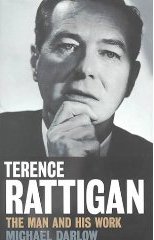
The signals have been there for a while – it probably started with the National  firing a warning shot off the bows with last year’s summer production of After the Dance at the National. Following that was Anne-Marie Duff’s barnstorming performance in Cause Celebre at the Old Vic; suddenly a star-filled, Trevor Nunn-fuelled Flare Path opens at the Haymarket and before you know it you’re in the middle of a full-blown set of centenary celebrations for one of the understated, and somewhat underrated, greats of 20th playwriting, Terence Rattigan.

A most enigmatic of figures who, like Noel Coward, was sidelined by the explosion in writing after Osborne’s Look Back In Anger blew away all the traditional conventions. However unlike Coward, Rattigan continued to write masterpieces in the form of Man and Boy and Cause Celebre.

BBC4 are shining the light on Rattigan, in which should be a fascinating look at a rather forgotten figure. Even better, current actor of the moment, Benedict Cumberbatch has been roped into host (naturally he must ‘go on a journey’, in this case visiting his own school, Harrow, where – surprise surprise – Rattigan was also a pupil)

Details: Thursday, 21:00 BBC4