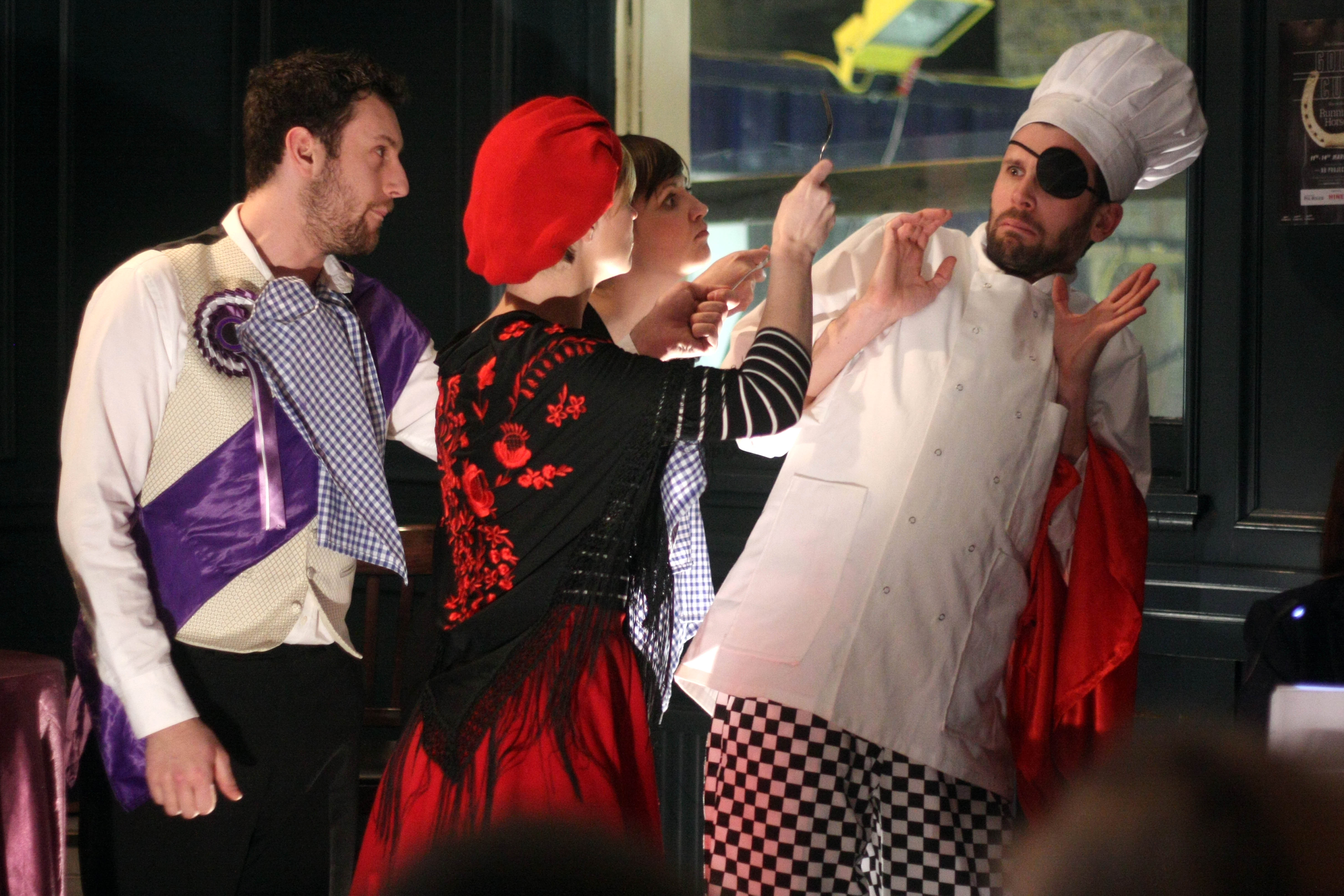
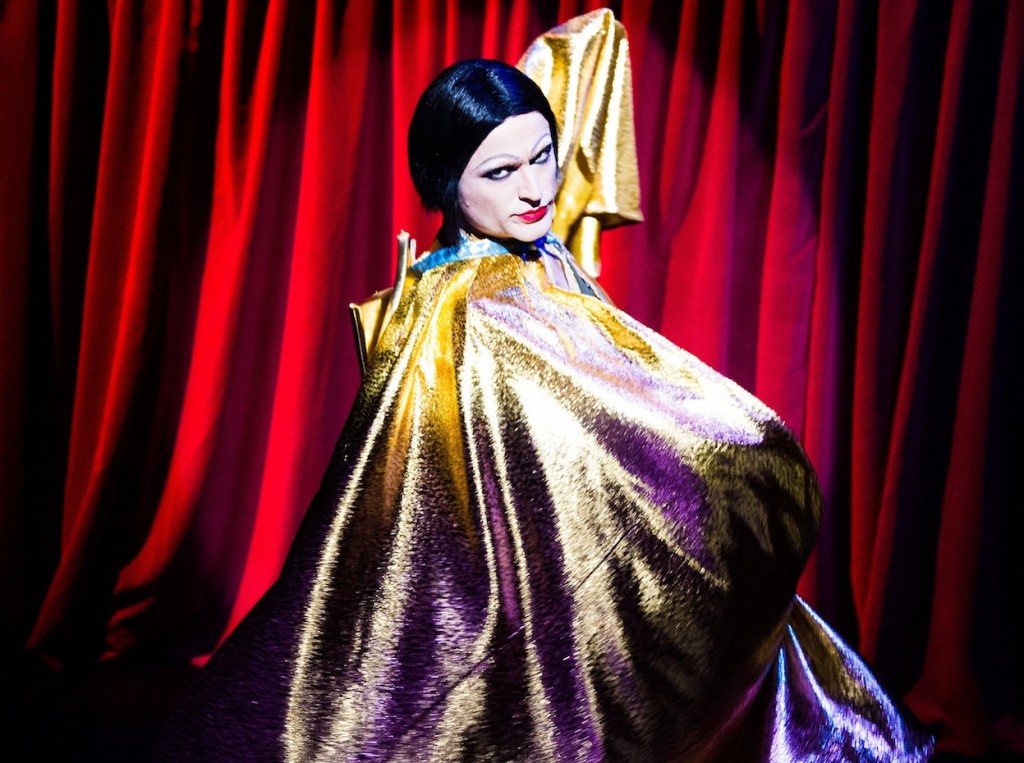
On Tidy Endings and Safe Sex 3, Photography by Jamie Scott-Smith, www.tenbyeight.co.uk

Living with a killer: relationships in a time of AIDS

On Tidy Endings / Safe Sex – Tristan Bates Theatre, until 17 May 2014

The ploy of drawing in an audience with left-field casting decisions is a high-risk strategy; it can take a production to a much wider community but it can also overwhelm the production itself. It is easy to see why actors are tempted to these roles; it gives them an opportunity to breakout of typecasting and open the door to a range of new possibilities, and for the audience it is always a pleasant surprise to see someone outside their comfort zone.
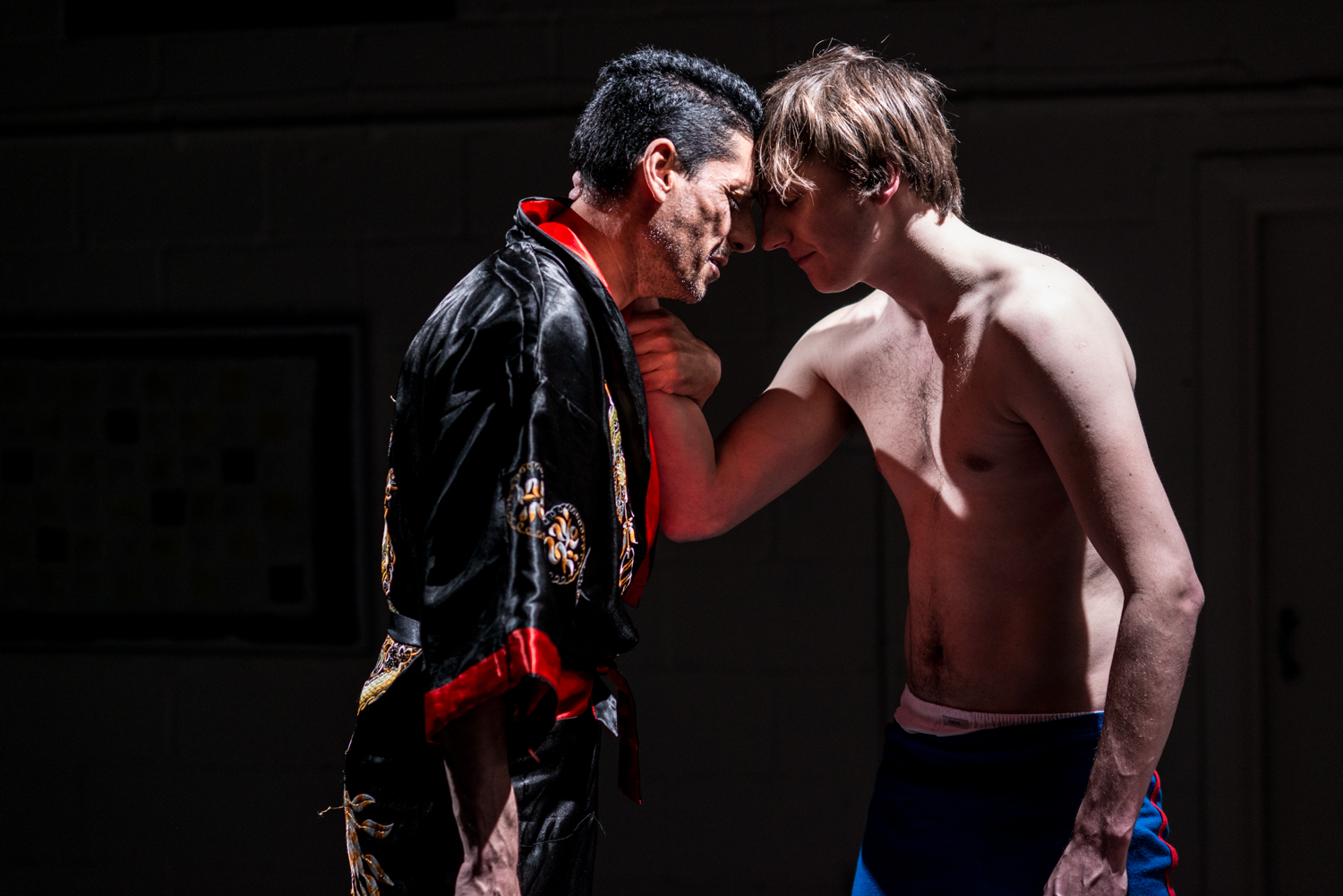
On Tidy Endings and Safe Sex 4, Photography by Jamie Scott-Smith, www.tenbyeight.co.ukWithout such free thinking how could we have got to the reinvention of Liam Neeson from Oskar Schindler to grizzled action hero or indeed, going the other way, the meta-masterpiece JCVD with everyone’s favourite head-kicking Timecop? When it goes wrong however it can be an excruciating; the very, very brief attempt to position Kiera Knightley as an action star (Domino, anyone?) is a particularly painful memory, but far more awful can be the attempt to become a cross-over star. Britney Spears in Cross Roads, Mariah Carey in Glitter? Pick from the unfathomably terrible Mr Nanny or Santa with Muscles starring everyone’s favourite 80’s wrestling superstar, Hulk Hogan.

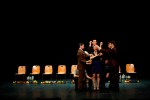
It was with this knowledge lodged in mind that made going to see the Harvey Fierstein’s On Tidy Endings / Safe Sex with former Egghead, CJ de Mooi, at the Tristan Bates Theatre a slightly nerve-wracking experience – particularly as, with a central role in both plays, the night seems to be set-up as a showcase for his abilities.

Thanks to the strength of Fierstein’s writing, it can be reported that de Mooi does not overly dominate the night. A long-term, and highly successful, fixture on Broadway, Fierstein wrote the book for both La Cage aux Folles and Kinky Boots while his Torch Song Trilogy led to two Tony’s. A long-term champion of gay rights, On Tidy Endings / Safe Sex takes a personal and mature view of the impact of AIDS in a way that is wry and heartfelt without sliding into mawkish sentimentality.

Fierstein has said that Safe Sex represents a personal response to living in the time of AIDS and the character of Gerry can be viewed as a version of the writer reflected on stage. The play is lyrical, reflective and contains a strong monologue that captures a truly human perspective of what it was like to be living through the before- and after-times of the AIDS crisis. It is at this point we can begin to appreciate the huge transition that the illness pressed onto gay men everywhere; where equality movements created momentum for change, AIDS forced the issue and, in the most negative way, pushed sexuality into the mainstream and ensured that, for better or worse, a person’s sexual identity could never be a wholly private matter.

Within the monologue, de Mooi finally relaxes into the role. He has a naturally intense presence and for the opening 20 minutes his performance is constrained by a lot of tension, which worked with the physicality but detracted from the vocals. A flat delivery that was reminiscent of line-reading and an actor prodding and pressing at the edges of a new character detracted from his performance. Ghee tells Mead that the relationship is ‘the most intense passion I have ever felt’, which one might believe from the dialogue but not from the rather one-note performance.

Reaching the monologue a transition takes place and the tension floats away with the arrival of the heightened dialogue. Indeed the mood changed so dramatically that it raised a question mark over whether the whole On Tidy Endings and Safe Sex 5, Photography by Jamie Scott-Smith, www.tenbyeight.co.ukpiece, given its reflective, personal nature, would have been better suited to being a monologue. The conversation between Mead and Ghee never really takes flight and a number of absurd character switchbacks seem to aim somewhere between Woody Allen and screwball comedy but only serve to add to the sense that Safe Sex has arrived underdone, both in writing and rehearsing.
Returning after the interval, On Tidy Endings works hard to redress the balance. By some margin the stronger of the two pieces, it is a mature and painfully accurate study of modern relationships and the contested space that is left behind (and particularly when it is from a disease that has as many pejorative markers as AIDS). It reflects on the wider dynamics that causes society to skim over the new partner in favour of maintaining the illusion of the traditional marriage model, no matter how broken it was. The conversation, primarily a two-hander,between de Mooi’s Arthur and Deena Payne’s Marion is strong, adult drama and both actors bring out the raw human emotion that runs through the writing.
<<Continue to full review>>

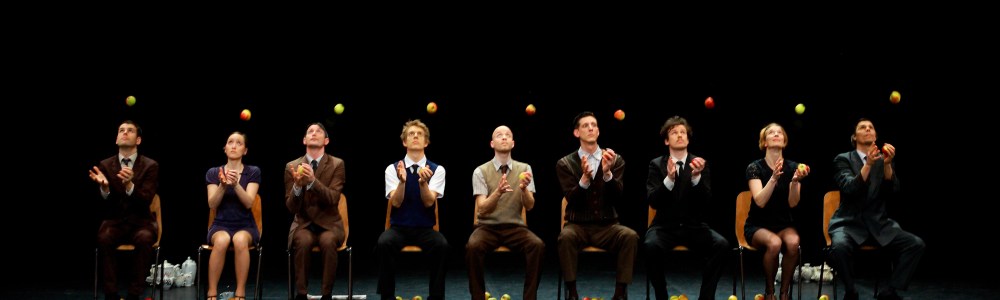
012 Apple Line, Smashed (courtesy Ryoko Uyama)

The art of juggling / the juggling of art

Smashed – Gandini Juggling @ Udderbelly, until 18 May 2014

The last time I was in the big purple cow of the Udderbelly was very late one night after a few too many beers at the Edinburgh festival. It consisted of men in thongs, scantily clad women doing things with ping pong balls and a chainsaw. Luckily, Smashed, running as part of the Udderbelly Festival on the Southbank, is a very different affair.

011 Female Distract, Smashed (courtesy Ryoko Uyama)

011 Female Distract, Smashed (courtesy Ryoko Uyama)

Performed by Gandini Juggling, a company formed over 20 years ago to fuse contemporary dance and mathematical notations in the field of juggling, Smashed is utterly (not udderly? – ED) delightful. It’s perhaps hard to imagine how an hour of juggling could keep you so entertained, but the constant variations in pace, theme, tempo and movement styles weave an intricate story between the performers and without a word you are embroiled in their loves, loses, competitions and seductions. Smashed falls somewhere between circus, contemporary dance, symbolist theatre and mime, but works hard to effortlessly fuse these strands to create a family friendly, entertaining and deeply likeable piece.

The company of 9 performers enter their apple strewn tea party all smiles and poised precision. But it is soon apparent that not all is going to go to plan, and with wit and extreme dexterity, proceedings literally start to fall apart. The speed and complexity with which the jugglers perform is astonishing, especially during the group routines, and the performers’ expressions and precise movement tell a playful story of gender politics and everyday power struggles.

The influence of Pina Bausch is clear to see throughout; short scenes investigating male and female interaction, scrutiny of bubbling personal tensions, intricate composition and concise choreography that is rich in symbolism, playful use of repetition and even the muted tones of the formal costumes and popular soundtrack. It’s a thoughtful tribute to her work.

Smashed is an entirely charming, intelligent and unusual performance, with a delicious spark of anarchy that is well suited to the Udderbelly cow. And there’s not a ping pong ball in site.


Watch some impressive jugglery-pokery action


This review was written by our roving review, Sarah Stewart. If you are interested in reviewing or writing articles for Civilian Theatre then please email civiliantheatre@gmail.com 

Orpheus Returns

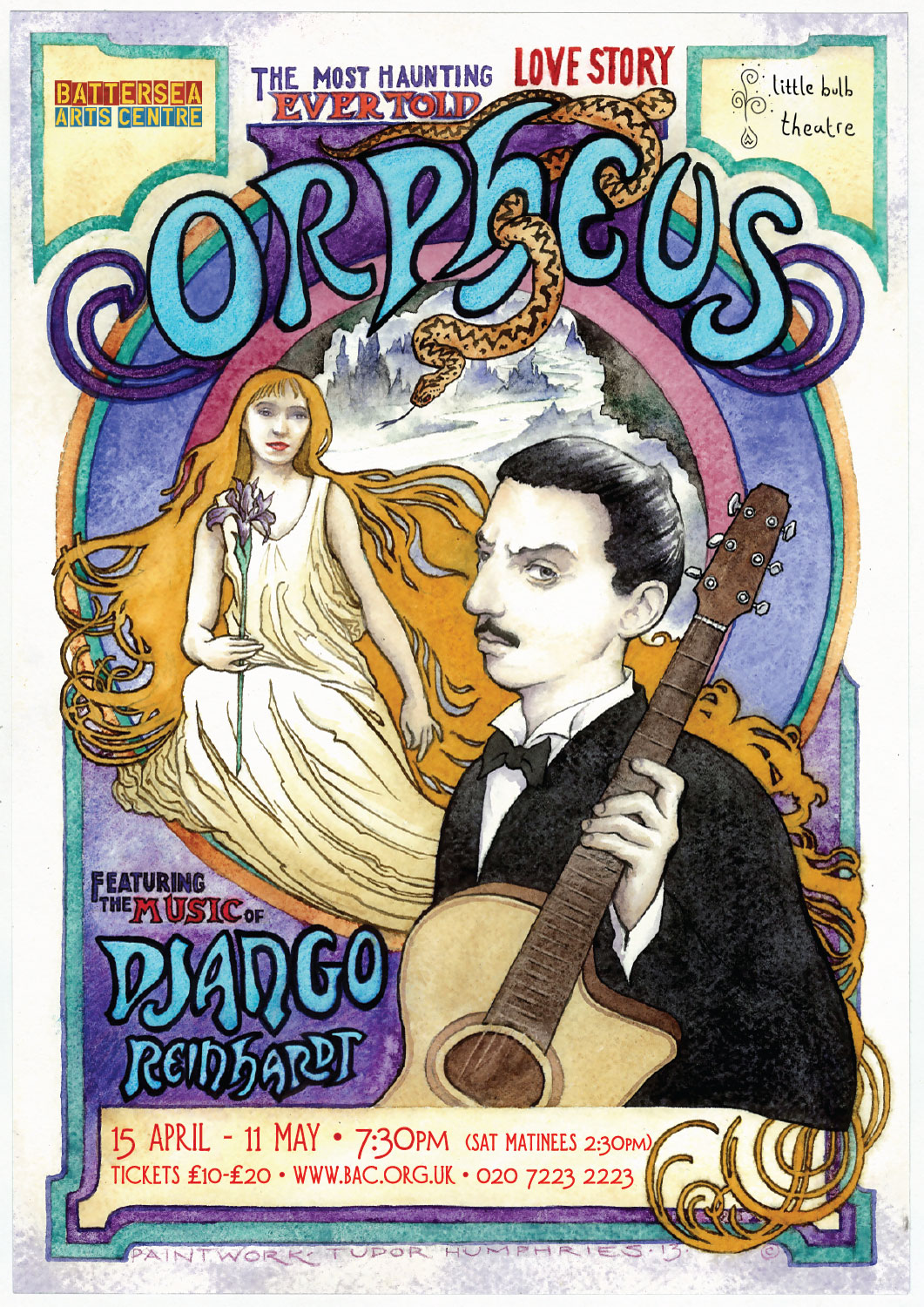
It’s always welcome to hear of a small scale show that returns due to popular demand. A Little Bulb Theatre’s highly original take on the Orpheus myth was one of those charming, quirky surprises that most unexpectedly Flyer for Orpheussweeps you off away on a wave of inventive playfulness and understated talent. An excellent cast made light work of a high-concept, high-risk approach of using the BAC’s gorgeous period interiors to recreate the feel of 1930’s Paris – pastiching both the music of that genre, early cinema and classical scores to great effect.

In light of its return then click here for the review of last year’s production, which gives a feel for the evening.

More on the Battersea Art Centre’s website.

Orpheus is on at the Battersea Art Centre until 17 May 2014.

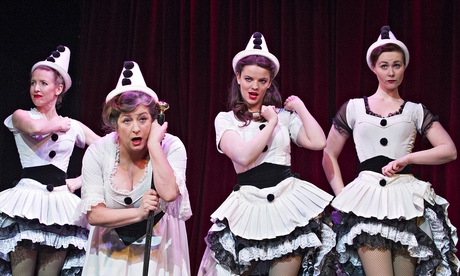
Rebecca Howell, Caroline Quentin, Alice Bailey Johnson and Zoe Rainey in Oh What A Lovely War

Michael Gove: A donkey in lions clothing

Oh What A Lovely War, Theatre Royal Stratford East

There can’t be many productions playing in London that begin with an announcement that the evening’s entertainment will be dedicated to Tony Benn – a statement followed by an unprompted and hearty ovation. With top oh what a lovely warprice tickets for the revival of Noel Coward’s Blithe Spirit with, soon to be Dame, Angela Lansbury clocking in at £92.50 (plus booking fee, naturally) one can’t begin to imagine why the trend hasn’t caught on.

Somewhere Michael Gove would be pursing his lips at the news and busying himself with the retrieval of the hatchet he had carefully placed in Boris Johnson’s back before steadying himself for another swing at the leftist establishment. This is the combined massed ranks of the cultural elite and academia who have the temerity, if his recent diatribe is to be believed, to suggest that Britain is not necessarily as ‘great’ as Mr Gove thinks it is.

Mr Gove is one of those unfortunate politicians that have managed to hold onto the illusion of the Edwardian gentleman that saw Britain truly as the empire on which the sun never sets and, unlike those pesky Europeans from across the channel, a country that left behind a colonial legacy of democracy, fair play and cricket. No matter that there are those in Kenya and Malaysia who may choose to disagree with this assessment.

That people still express these opinions in the 21st century points to the continuing necessity of productions like Oh What A Lovely War. 50 years from its debut, 100 years from the start of World War One, it is clear that proximity to power still seems to blind our political leaders to some painful home truths about our nation’s history. Indeed the myopia of Mr Gove is not a million miles from the delusions of Field Marshall Haig that allowed him to happily order men to walk into the field of fire whilst declaring there must be ‘no squeamishness over losses’.

There is no-one who can seriously engage in the content of Oh What A Lovely War and see a show that reflects at best an ambiguous attitude to this country  and, at worst, an unhappy compulsion on the part of some to denigrate virtues such as patriotism, honour and courage’.

Rebecca Howell, Caroline Quentin, Alice Bailey Johnson and Zoe Rainey in Oh What A Lovely WarIt may be true that Littlewood’s original production could have at least mentioned that the sense of traditional values of a large part of the embedded aristocracy meant that they were among the first to volunteer for the front and as a result suffered absolutely catastrophic losses, and far disproportionate to any other social class.

However this is a straw man argument and deliberately ignores the fact that the show quite clearly shows a deep and abiding love of Britain, and most particularly the men and women of Britain. It shows only compassion for the hapless men who were destined to be pinned between German machine gun fire and the equally lethal artillery of their own lines. It demonstrates every virtue that Mr Gove accuses it of undermining. There is never any doubting that Littlewood believes in the courage and virtue of the men who signed up to go to war, even when the lies and insanity of decision-making of their superiors, far from the front, must have been clear to them.

Has the show lost its power? Part of what made the original a revelation was that these attitudes were genuinely radical. They were telling stories that felt totally anti-establishment, that did not fit with the myth of the just and true war, of heroic stands and grand plans. However the seismic shift in history scholarship, away from the ‘great man’ theory of leadership and towards the narratives of everyday men and women has meant that World War One has been mined from every conceivable angle.

We now know ‘Tommy’s story’ inside-out; we recognise the deprivations of the trenches and the incompetence of the commanders. Increasingly the pendulum has begun to swing towards the middle-ground and new arguments highlight the complexity of the war and go further than the cheap jibes and easy solution found on both sides of the debate. This then begs the question of whether there is still a purpose for Littlewood’s production or has its iconic status turned it into the very thing that it probably most wants to avoid – something co-opted by the establishment as one of the official narratives for understanding the war?

<<Continue to full review>>

Le Docteur Miracle - Pop-up Opera

Violently assaulted by tambourines

Le Docteur Miracle – Pop-Up Opera at Drink Shop & Do then touring (tickets)

Being entirely unequipped to comment on the musical quality of Pop-up Opera’s Le Docteur Miracle, Civilian Theatre found itself both perplexed and perspiring in hipster paradise Drink Shop & Do  – a location Pop-up Opera Spring 2014, Le Docteur Miracle 1 (courtesy Jenny Dale)that clearly thinks that what it lacks in circulating air can be made up for in aggressively twee interior design.

The production can be seen as part of the continuing rise of the small-scale opera; a surprisingly niche success story even by the standards of a city that has managed to revitalise shops that specialise solely in knitting, cupcakes and inept service. The movement has being gaining ground since 2009 and the great success of OperaUpClose’s genuinely fantastic La Boheme, which lead to the company gaining a residency at The King’s Head Theatre in Islington where they went on to produce programmes that combined interesting work with variable quality.

Rather than establishing a permanent base, Pop-up Opera appear to have taken the form of the travelling players that have decided their form would be comic operas rather than morality plays. Le Docteur Miracle hearteningly plays for one-night-only in locations where London is merely a distant blight on an OS map; for every Hackney Wick and Dalston there is an evening performing to the good people of Herefordshire, Cornwall and Sussex.

492492_0_pop-up-opera-uk-presents-bizets-le-docteur-miracle_400

A travelling production brings with it logistical challenges. Each venue is likely to be prepped only hours before the show and so a slightly rough-and-ready approach to the proceedings is only to be expected, and in this case forms part of the production’s immense charm. The cast work hard to actively draw the audience into proceedings and there is an undeniable pantomime feel to some of the evening, which may offend the purists but arguably puts at ease those less comfortable with the whole concept of opera.

That is not to say that it all works; the short get-in combined with the unraked seating leads to some major issues with audience sight-lines. There were some moments that were probably lovely but as they had been staged at the same level as the seated audience it meant all that could be seen was a sea of trendy haircuts.

However the story-telling was impeccable. Not being able to follow librettos when they are in English, it would certainly have been challenging to follow Bizet’s French. However the artful staging of the surtitles was an excellent touch. Eschewing the classic libretto of the original, there is a real verve to how Pop-up Opera have taken it forward.

Bizet’s classic story has been updated to the 21st century; it blends internet-era visuals and memes with witty takes on current affairs to create a plot that even opera philistines – like this reviewer – could follow without resorting to the programme synopsis.

<<Continue to full review>>

Life is a cabaret, old chum

Ballad of the Burning Star – Theatre Ad Infinitum @ the Battersea Arts Centre then touring (details)

Or, in homage to the style of the evening, how do you solve a problem like the occupied territories?

There is no doubt that Theatre Ad Infinitum’s new production, first seen at Edinburgh and subsequently taking the old-fashioned route of touring the country before pitching up for an extended stay at the Battersea Arts Centre, takes on contentious subject matter.

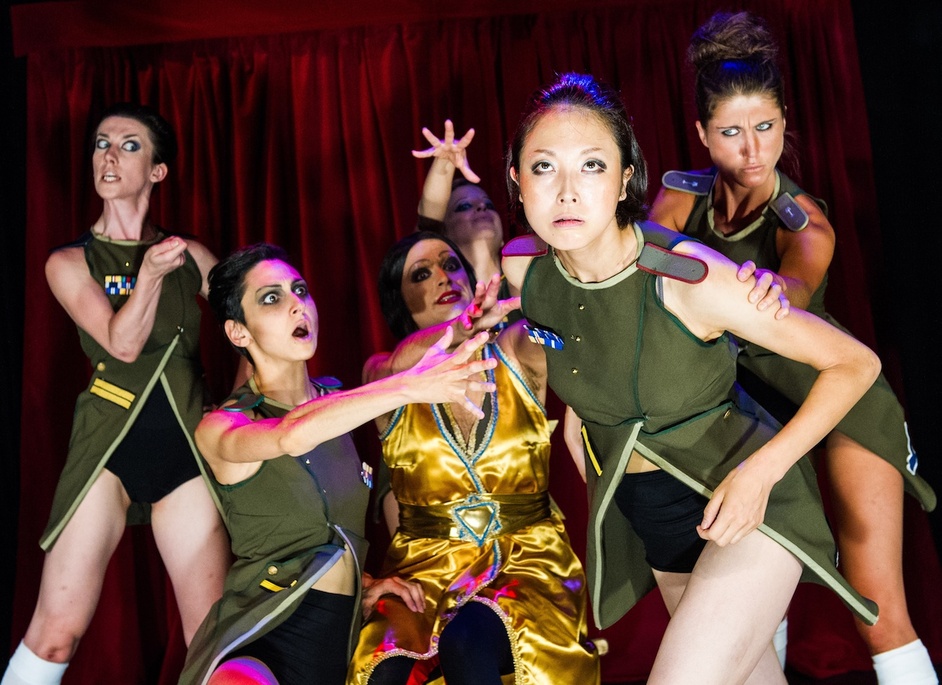
That the story is told through a drag queen and her cabaret troupe is a fun but rather unsurprising mechanism. Once a radical device, these days it does serve as a useful alienation device and, in the case of Ballad ofThe Starlets in Ballad of the Burning Starthe Burning Star, the issues remain so sensitive that it is critical for depoliticising the very act of storytelling.

The events we hear are shocking but if told as straight narrative then perspectives of the characters would be caught in the surrounding context and events discarded as being irrevocably biased. Or alternatively the play would try so hard to capture both positions that the value of the final product is fundamentally undermined.

We are told this story by MC Star and her Starlets, and through this prism the story is seen to unfold in a Brechtian manner. At no point is there any expectation that what is being seen are to be understood as real Israelis or Palestinians, the audience is reminded throughout that they are being shown representations of a family, and representations of real events.

Theatre-Ad-Infinitum-Ballad-of-the-Burning-Star-∏-Alex-Brenner-please-credit-_DSC82911-1024x763This allows certain latitude to extract humour from the story, characters are able to step outside of their roles and comment on proceedings and it allows the development of a duality and tension between the increasingly autocratic Star and the actions of Israel in the occupied lands.

That Star is played by writer and director Nir Paldi hints of a biographical nature to the story, and throughout this feels like a passion project that has developed a life of its own. It is also embeds a sense of truth that often only comes from a person with first-hand experience and, in this case, has been at the sharp-end of the consequences of forty years of regional foreign policy.

Any story must be understood within the context of its creation. The story of Israel, the lead character in the show, like so many narratives around the state of Israel, must be understood within the context and implication of the wider story of Jewish history.

Israel, the character, and Israel, the state, are separate individuals but share such a common history that the two must constantly struggle to be separated. The state and the individual share the collective memory of the Holocaust and the legacy of the historical persecution of the Jews through Europe and the Middle East is reinforced to create a state of mind of defensiveness. Both individual and state cannot be understood without understanding this context.

<<Continue to full review>>