Exclusive: Tabloid editor mined for comedic gold

Clarion – Arcola Theatre, until 16 May 2015 (tickets)

The last few years haven’t been kind to journalists. The decline in print journalism has led to the decimation to the 20th century model of news creation whilst their standing in the public’s eyes has wpid-wp-1429963568067.jpgfallen to levels usually reserved for MPs and lawyers as phone-hacking revelations continue to destroy the industry’s slender claims to ethical credibility.

However they continue to soldier on, harbouring a dewy-eyed nostalgia for behaviour of the sort that would not be acceptable in other line of employment. Against it all journalists continue to cling to the iconic image of the noble, incorruptible news reporter – immortalised many times on screen and in print – and try to square it with the reality of a culture of bullying and humiliation that – to outsiders – seems endemic to the profession.

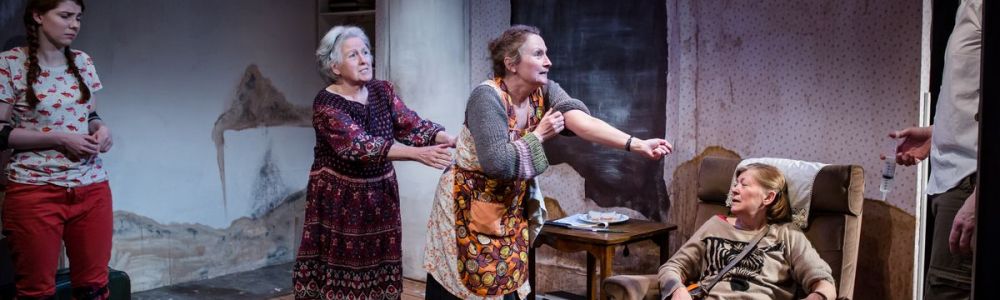
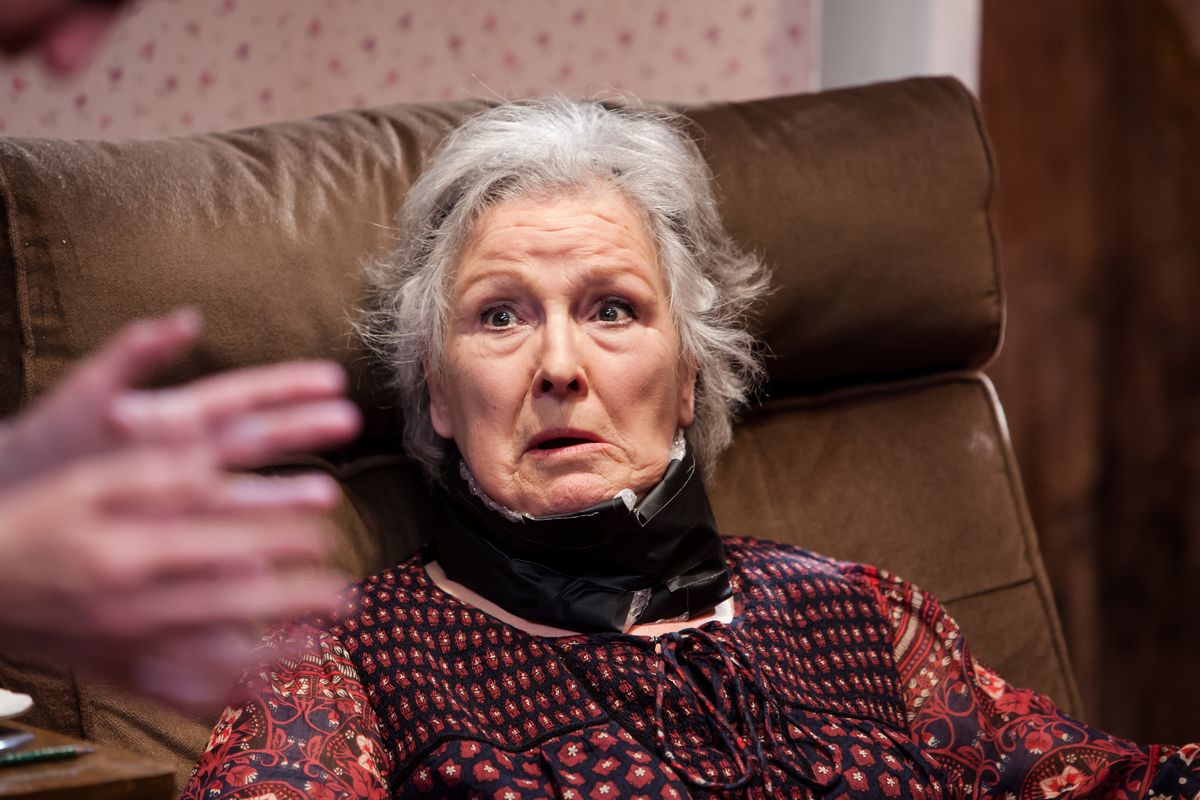
These tensions are evident in Mark Jagasia’s scabrous satire Clarion.  Jagasia, who worked for the Evening Standard and the Daily Express, has written a play fuelled with an intimate knowledge of its subject that is brutally scathing about the news industry, gut-wrenchingly funny in parts, but that can also be seen as a love letter to a dying friend.

Technology has left the medium wobbling on its last legs. It is likely there will be people watching this play that have never paid for a newspaper. Even the idea of a front page splash is fading as people see news as a series of equally sized tiles on mobile phones. The profession survives but it is a shadow of what it was, and it is hard not to feel that Clarion carries with it the faint note of a eulogy.

For as much as this is a comedy, it is impossible to ignore the artful nods towards Greek tragedy. It broadly adheres to the unities of time, action and place – taking place across a single day in a newsroom that is coming under increasing siege – and we see characters undone by their own hubris, whilst the modern day god of Mammon sows destruction among the just and unjust alike. Jagasia even skilfully incorporates a Tiresias-like seer in the form of a prescient horoscope writer.

That these allusions work and don’t come off as pretentious is due to Jagasia’s skill as playwright. It is a very impressive debut and, by taking time to reveal its true depth, leaves a final impression of a play that displays a far greater degree of complexity than Richard Bean’s Great Britain.

Where Great Britain was a very broad satire, and incredibly funny at times, it never scratched the surface of the issues it portrayed. It preferred caricatures to characters and one never got the sense that in reality these cartoons are actual human beings. Clarion may appear to cleave to similar stereotypes but, by limiting the cast to six core roles, Jagasia has time to add extra elements that give humanity to his creations.
<Continue to full review>

A distinct lack of Werther’s Originals in this dystopian world

Animals – Theatre 503, until 02 May 2015 (tickets)

Emma Adams’ Animals is the latest play to benefit from Theatre 503’s commitment to staging new work by emerging playwrights. Iwpid-wp-1429443050288.jpgt is an admirable philosophy and, judging by the near full house on a Wednesday night for an unsung play, one that appears to be attracting a supportive audience.

For the regular theatre goer it offers a respite from the seasoned polish of restaged classics in central London theatres (that said I am now waiting sixteen months to see Kenneth Branagh in The Entertainer) and provides a welcome opportunity to simply enjoy the process of watching a story being told to you for the first time.

Watching emerging playwrights is akin to entering a lucky dip. You buy a ticket knowing that for the 95 times out of a hundred you leave having watched an average play, eventually you will be in the audience watching this generation’s equivalent of Pinter’s The Birthday Party or Sarah Kane’s Blasted.

Even if the play doesn’t quite hold together, there is still the chance to watch the formation of a new writing talent. This is certainly the case with Emma Adams’ Animals. It is a play that feels heavy with the influences of others and watching it provides an interesting chance to see an individual’s voice beginning to define itself.

<<Continue to full review>>

So It Goes – Review

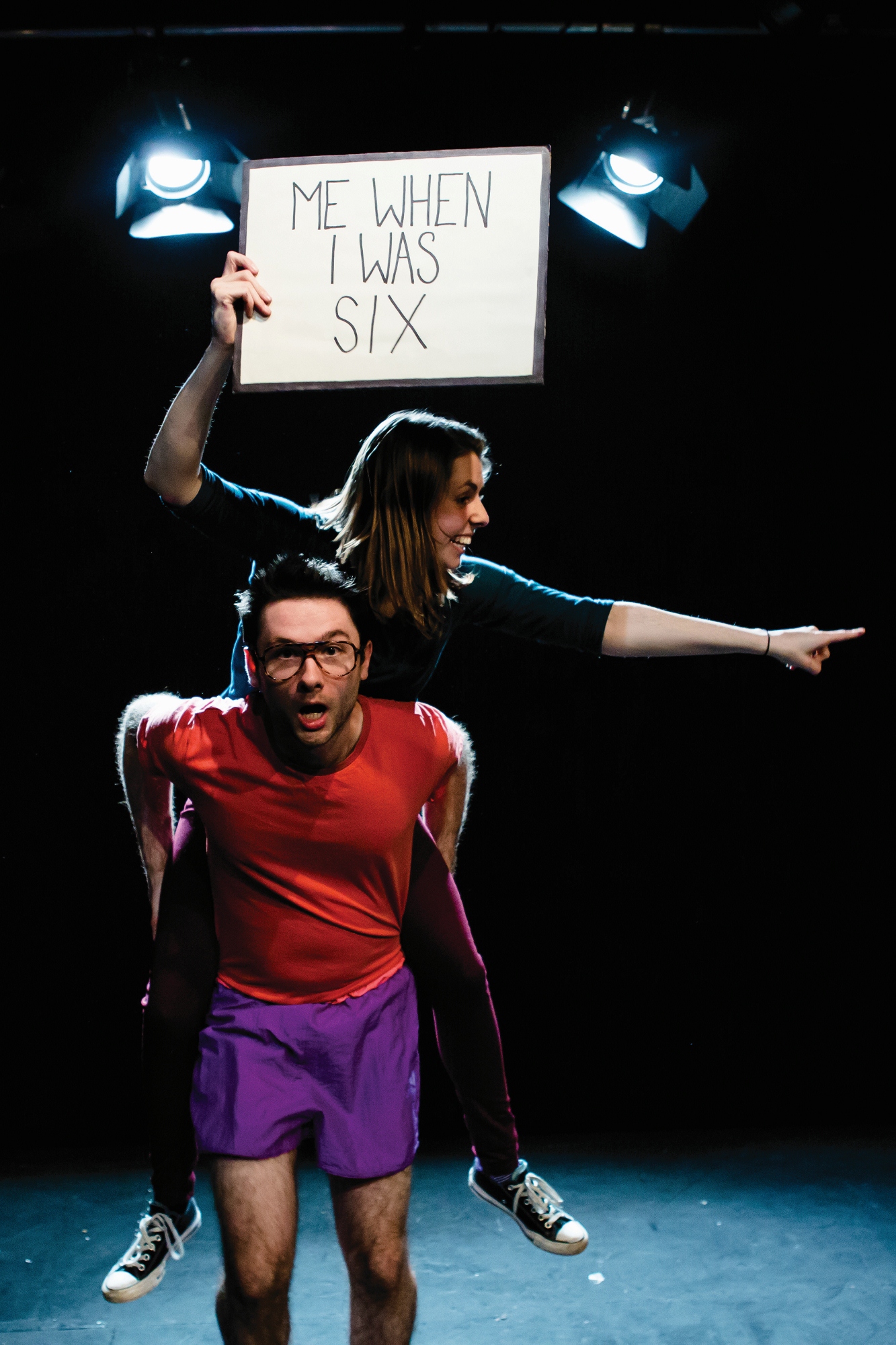
The premise to So It Goes seems unpromising. A sixty minute show about a woman coming to terms with the loss of her father. There are a great number of shows that are taken to the EdinburghSo It Goes Production Photos Fringe Festival with similar sounding descriptions, rather less come back down again with glowing reviews and a full touring schedule.

So It Goes manages to achieve something that is quite rare in British theatre. It engages genuinely with the nature of grief, the paralytic hold that it can have over us, and the way it warps our memories of those we loved and those that are left behind.

We are often not comfortable talking about death so seeing people on stage talk openly about their feelings can seem a little artificial, and the emotion false. Whilst we recognise that theatre is not a complete reflection of reality it still can be hard to reconcile stage reactions to death with the numbness that is felt when you hear a loved one is dead.

Hannah Moss has utilised a high-risk strategy to tell the story. Rather than use words, the whole play is described through the use of tablet whiteboards to write out dialogue. Even writing it down sounds cloyingly pretentious but as soon as Hannah simply writes “I’m not speaking, it’s easier” the purpose of it becomes clear.continues at www.everything-theatre.co.uk

<<You can read the full review on Everything Theatre)

Distant Voices, Still Bloggers

It has been a quiet few weeks for Civilian Theatre as the rigours of work and the first signs of Spring have being jostling theatre for my attention; providing a distraction from the questionable pleasures of spending precious free time sitting in darkened rooms with strangers having a shared experience (in a way distinctly less kinky than that may sound).

What it has done is allow time to catch up on the rest of the blogosphere. As I have mentioned previously the rather wonderful, and supremely energetic, Rebecca at Official Theatre has circled the wagons around #LDNTheatreBloggers and an increasing number of bloggers are gathering around the Twitter campfire

It is quite depressing how talented – and young – most of them are but (deep breath) it’s about collaboration not competition. Although I am sure that the desire to rewatch Theatre of Blood (96% on the Tomatometer people!) is purely coincidental.

This being the Internet there is naturally a blog for every niche interest imaginable and below are just a few of my favourites.

Making money from being brainy

For a long time Matt Trueman has been writing comment and criticism that has been the model for Civilian Theatre’s own output. Quite regularly a review will be uploaded, only to discover that Matt Trueman has written a far more perceptive and challenging article that gets to the heart of matter with half as much pseudo-intellectualism. Read him and weep – no wonder he is actually making proper money from this. The new Michael Billington (with all due respect to the existing Michael Billington). http://matttrueman.co.uk/  

Victoria Sadler, writing at The Huffington Post, is one of these infuriating bloggers who have demonstrated themselves as a master of all trades, jack of none. As articulate and interesting writing about art exhibitions as she is about theatre, if you are looking for another regular weekly columnist then Victoria Sadler’s articles for The Huffington Post a well worth a look-in. http://www.huffingtonpost.com/victoria-sadler/

Thinking about theatre

James Waygood – the self-styled Grumpy Gay Critic – is somewhat less churlish in person than his Twitter handle may suggest. Luckily his critical faculties are, if anything, all the more potent as a result and he is always willing to give the plays he watches the write-ups they deserve. If you prefer in-depth commentary about what makes a production work to a 400 word plot synopsis and the casual awarding of 4 stars then Grumpy Gay Critic may be the blog for you. And now with added videos! http://grumpygaycritic.co.uk/

Laura Peatman is part of the aforementioned brigade of young and talented bloggers. However I try to keep my jealously intact and not to hold it against her as we have a tendency to swim in the same waters and Laura is always good value for a refreshing, perceptive and informed take on anything from ancient Greeks onwards. https://laurapeatman.wordpress.com/page/2/

I am sure that neither would thank me for mentioning it but Webcowgirl and There Ought To Be Clowns are relative veterans of the theatre blogging scene. There Ought To Be Clown’s first review dates back to 2003 – Trevor Nunn’s magical production of Anything Goes, which happens to be still the only musical production that Civilian Theatre has been to more than once – whilst Webcowgirl was in full flow by 2006. Early adopters indeed. Both blogs were key to encouraging Civilian Theatre dipping his toes into the murky world of internet blogging. Still the original and still often the best.

There are a number of multi-reviewer sites and these are often a mixed-bag. Views from the Gods is worthy of mention due to its impressive commitment to reviewing plays from the fringes of London’s theatre scene. The array of reviews at Views from the Gods acts as an important reminder that you can barely swing a cat in London without someone labelling it as site-specific theatre and charging £16 a ticket, and they offer a valuable service in telling you whether that would be a good investment of your precious time and money.

…And they just keep coming

There are obviously loads of other great sites. Exeunt is good for pretentious elitism, Everything Theatre is good for bite-sized reviews and A Younger Theatre is good for my developing Dorian Gray fantasies.

As part of the single-blogger army I am always happy to see others confidently carving their own individualistic furrow and so the final three recommends go to Mingled Yarns, The Bardette and Hello Emma Kay.

Happy reading folks.

As much wonderful women as super men

Man and Superman – Littleton Theatre @ National Theatre, until 19 May 2015 (Tickets – day seats & returns only, NT Live on 14 May 2015)Man_and_Superman_poster_notitle

Judging by reviews it appears difficult to talk about Man and Superman without first beginning by highlighting all the intimidating facts that surround it. So yes, it is three and a half hours of densely packed text, cut-down from closer to five, written by a formidably – and forbiddingly – intelligent committed socialist who straddled late-Victorian/early Edwardian Britain. And yes, back in 1903, it was described as ‘unstageable’.

With that introduction it may come as a surprise that tickets are also as rare as hen’s teeth (day seats and returns only). One suspects that it hasn’t been produced because the public have been crying out for a revival of a play that was last staged at the National two years before this critic had even been born. It is possible that the presence of an actor who can plausibly claim to be an A-lister of both stage and screen may be the cause of ticket scarcity.

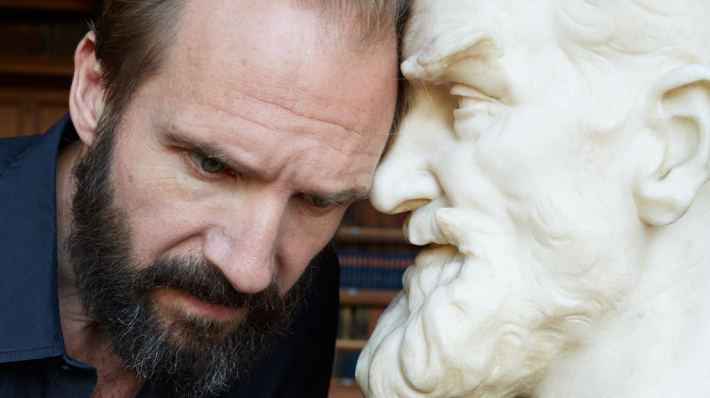
Stage appearances by Ralph Fiennes have been limited over the last 15 years; he was last seen as Prospero back in 2011, in what was unfortunately a rather interminable production by Michael Grandage (a sentence I seemed to have repeated more and more in the intervening years), but reminded everyone of his talents with a blistering snippet of Pravda’s Lambert La Roux during the National Theatre’s 50 Years celebration in 2013.

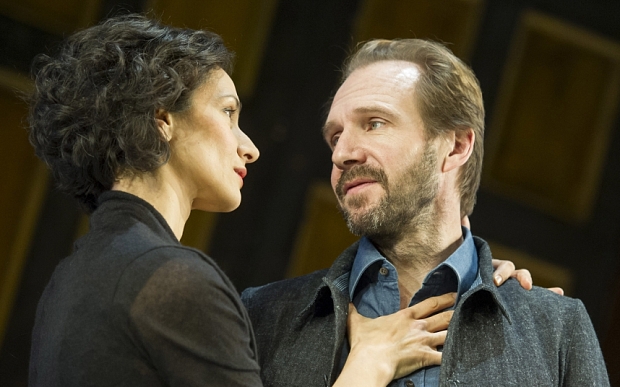
'Man and Superman' Play by Bernard Shaw performed in the Olivier Theatre at the Royal National Theatre, London, UKAnd what a performance it is. This is no stunt casting. No director would be foolish to let an inexperienced actor loose with Jack Tanner. The part is as difficult as they come. It requires the ability to enable a 21st century audience to find common ground with a figure who spends most of the play declaiming grandly about the machinations of women and who, one suspects, would only be happy marrying himself (and, as is the nature of such plots this is, in a way, exactly what happens).

The other difficulty is the sheer challenge of the language. The play runs to over 57,000 words and most of those are Tanner’s. Actors cannot rely on lovingly crafted Elizabethan verse-speaking to help settle the lines in the head, dialogue is akin to the densely packed social commentary of Dickens. When one hears Tanner it is hard not to detect the hectoring tones of Bernard Shaw in a room full of weary brow-beaten gentleman thoroughly bored with being told about the inequities of the Edwardian world. This is a challenging part, getting the wrong tone will lead to the comedy seeming tin-eared, or the moralising too earnest.

Fiennes is quite magnificent in the role. His performance fizzes with an energy that is vital for driving the momentum of a plot that seeks to extend a seemingly traditional comedy of manners into an epic spanning more than 200 minutes. Fiennes energy feels justified by the character – his vitality in keeping with the slightly pompous air of the revolutionary driven by ideology but supported by money.

<<Continue to full review>>