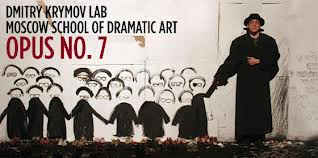
Poking the Russian Bear
Opus No 7 – Moscow School of Dramatic Art Theatre (Dmitry Krymov Lab) @ Barbican Theatre, until 14 June 2014
We are in the middle of LIFT 2014; the annual festival that is both glorious celebration of international theatre and sober reminder of the staid and conservative nature of so many Anglo-American creations.
This can rarely be seen as starkly as in the spell-binding Opus No 7; concocted by the Dmitry Krymov Laboratory, it 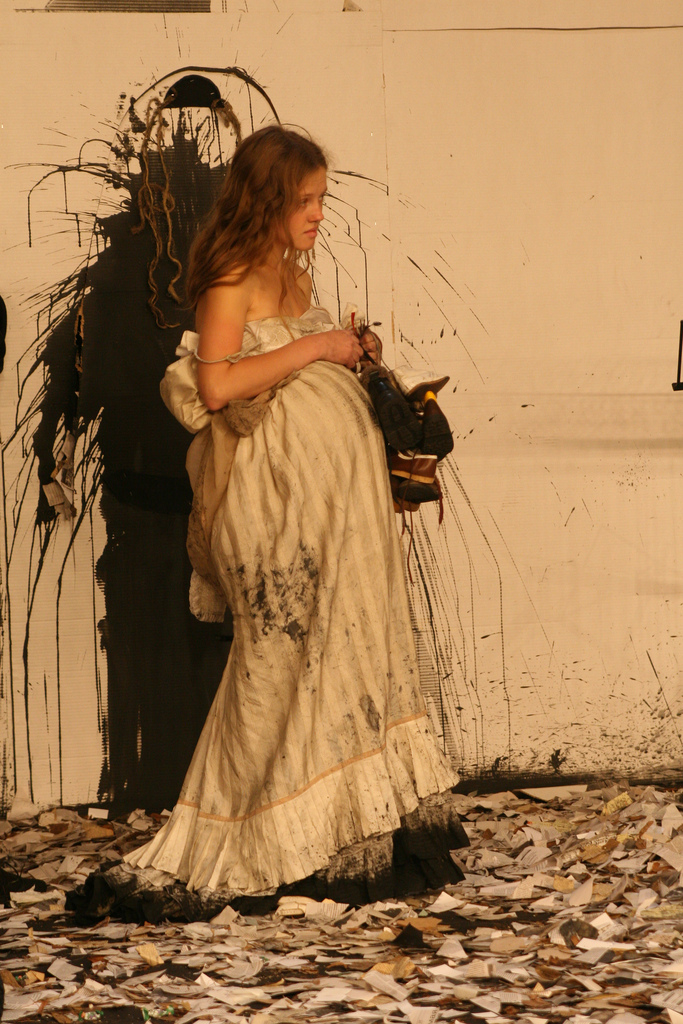 combines sublime beauty with haunting imagery to create a remarkable balance that allows a curiously harmonious co-existence of opacity and clarity. As it overwhelms the senses one is left with the impression that this is a performance that could not have been conceived of in this country let alone created here.
Watching Opus No 7 is like working through a cryptic crossword clue. The explanation of the image is always tantalisingly close but remains impenetrable until resolved. There are no easy answers but one holds on to the images as they morph fluidly from one startling creation to another with faith that a narrative will emerge.
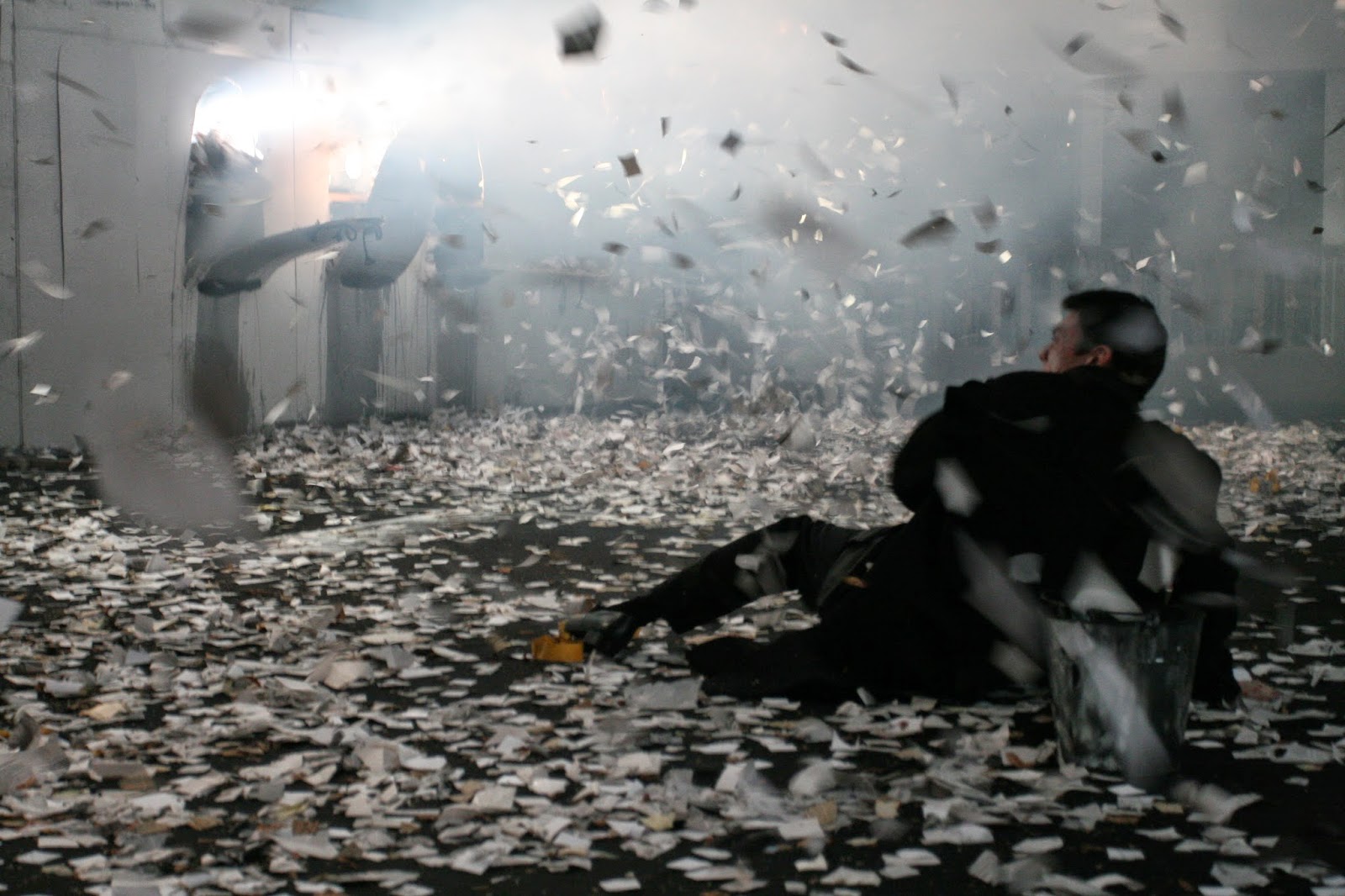 Images coalesce until they suggest an idea. The piece is often without dialogue and usually underscored with the lightest of musical notes, faintly directing and reacting to the action. The first half is titled ‘Genealogy’ and tells the tale of the Jews in the second world war but with continually hints to the wider narrative of Jewish history and their earliest beginnings. Biblical reference points abound and their cast have a childish innocence that harks back to the earliest days of God’s children.
They are nameless figures who slowly wander through their past claiming fragments – taking the form of letters, photos and memories – to shape their lost identity. They seem scattered to the wind, lost as individuals but finding each other as one finds ones community. They exist in a hinterland reminiscent of Beckett and the image of Krapp winding through his old tapes comes to mind as they pore through scraps of books becoming intrigued by the unfamiliar words, the sounds and shapes of names that no longer mean anything to them.
 So the fact that Hiraeth have cut 50 minutes from the running time shouldn’t necessarily be seen as a terrible idea. It can be seen as heresy to cut Shakespeare but one must remember that the text itself is just one element of a production; it must battle against the demands of director, designer and actor. It also recognises that a play should be accessible to its target audience and that if you are going to aim it at schools (which surely is the market for this version) then it is not unreasonable to think that those who are only there because it is a GCSE core subject may see being subjected to three hours of theatre as a cruel and unusual punishment.
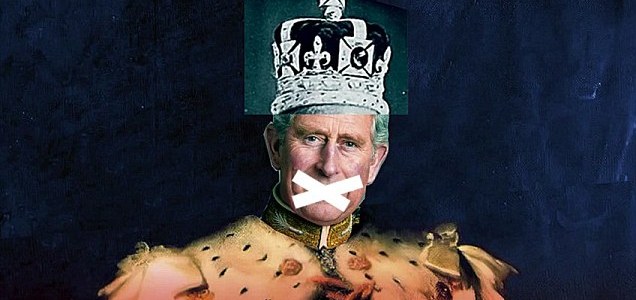
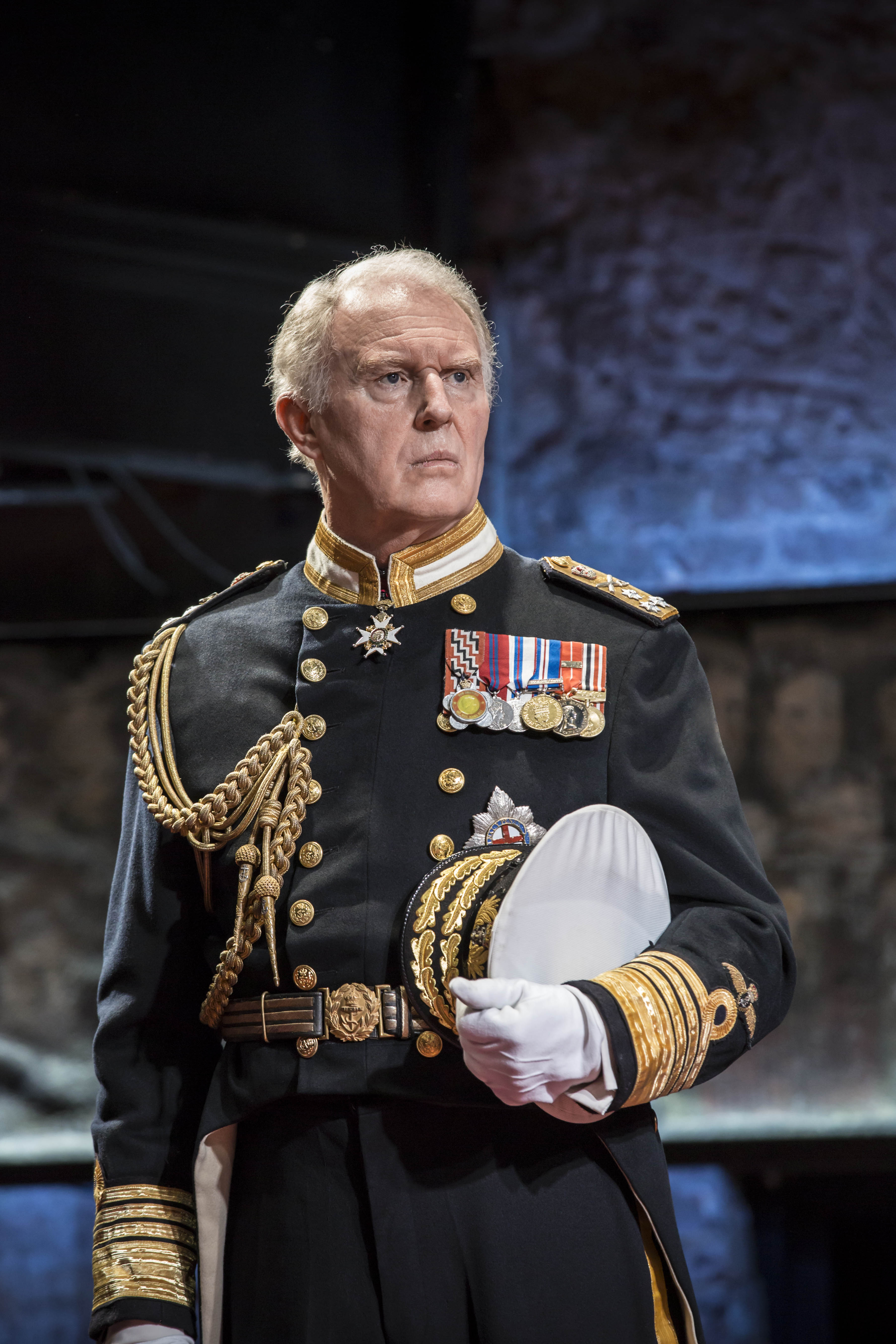
 The greatest PR trick that royalty has ever pulled off was to create this public image and then to strenuously avoid revealing their true face. Our current Queen has studiously kept to this template and it is notable that it is only when the mask slips that the public begins to question their value. As we enter a new era, the age of Will and Kate and of smartphones and public accessibility, this model is in a state of flux and Bartlett has pitched Charles’ succession as the moment that the new and old world will collide.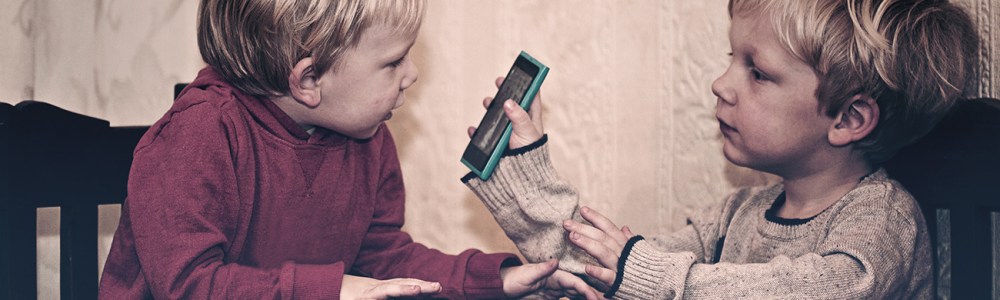
 Civilian Theatre