When critics go to war

Ding, ding seconds out. The gloves are well and truly off in a good old fashioned spat playing out in the funny pages between two men who represent the ancien regieme of theatre criticisms and an award-winning director with a reputation for bold reinventions of the classics.

In the blue corner are those two critics who embody the establishment and who might require dynamite to remove them from their seats of power; Michael Billington of the Guardian and Charles Spencer of the Telegraph.

And in the red corner is one of the mostly highly regarded female directors, who has put on versions of Shakespeare, Ibsen and Brech and is a twice winner of the Olivier Award for Best Director.

Round 1:

Deborah Warner’s latest production opens to distinctly mediocre reviews across the board. There is general frustration at the need to update a play that is regarded as one of Britain’s finest comedies. Charles Spencer goes to town, calling it inept and awful and finishing off by announcing that Warner should be served with a theatrical equivalent of an asbo.

Round 2:

Warner responds to Spencer in a Guardian comment piece. She argues that plays are meant for updating and that there is no problem by placing it overtly in a modern setting so that they can appeal to new audiences. However critics are to stuck with their preconceived notions of what these plays should be and, with their pining for the past, can be held culpable for stopping a different audience from embracing the theatre.

Round 3: 

Billington counter-punches by tartly claiming that some plays work with updating and some do not. Moreover it is incredibly patronising to suggest that younger people require a play to be updated for it to be a success; they may be perfectly capable of making the leaps of imagination required.

Round 4:

Determined not to let sleeping dogs lie, Deborah Warner refers to the two critics as two complacent toads crouching on their nest. This vivid image conjures up pictures far to horrible to contemplate but it is fair to say that the exchange hit a nerve or two.

Round 5:

Spencer gets in the last word so far, outlining the Telegraph some of the reasons that he has managed to get so far under Warner’s skin. Apparently, like all good feuds, this goes far back into the mists of time. Spencer had taken exception with the casting of a women as Richard II and panned the production as a result. However it seems that Warner has never taken criticism lightly and like all good thespians, she consulted Shakespeare until she found the perfect expression: Patience is stale and I weary of it. Unfortunately she hadn’t counted on Spencer to return the compliment in kind with Things past redress are now with me past care. It seems relations, and possibly reviews, have soured since then.

Are there lessons to be learned from all this?

Never fight critics on their own patch – seriously do you expect to win a war of words played out in the broadsheets? Clearly someone has never read The Art of War? If you must fight, and fighting should always be a last resort, then always ensure you do so on terms that favour you. How about the next production being Throne of Blood, and how about making audience participation this time?
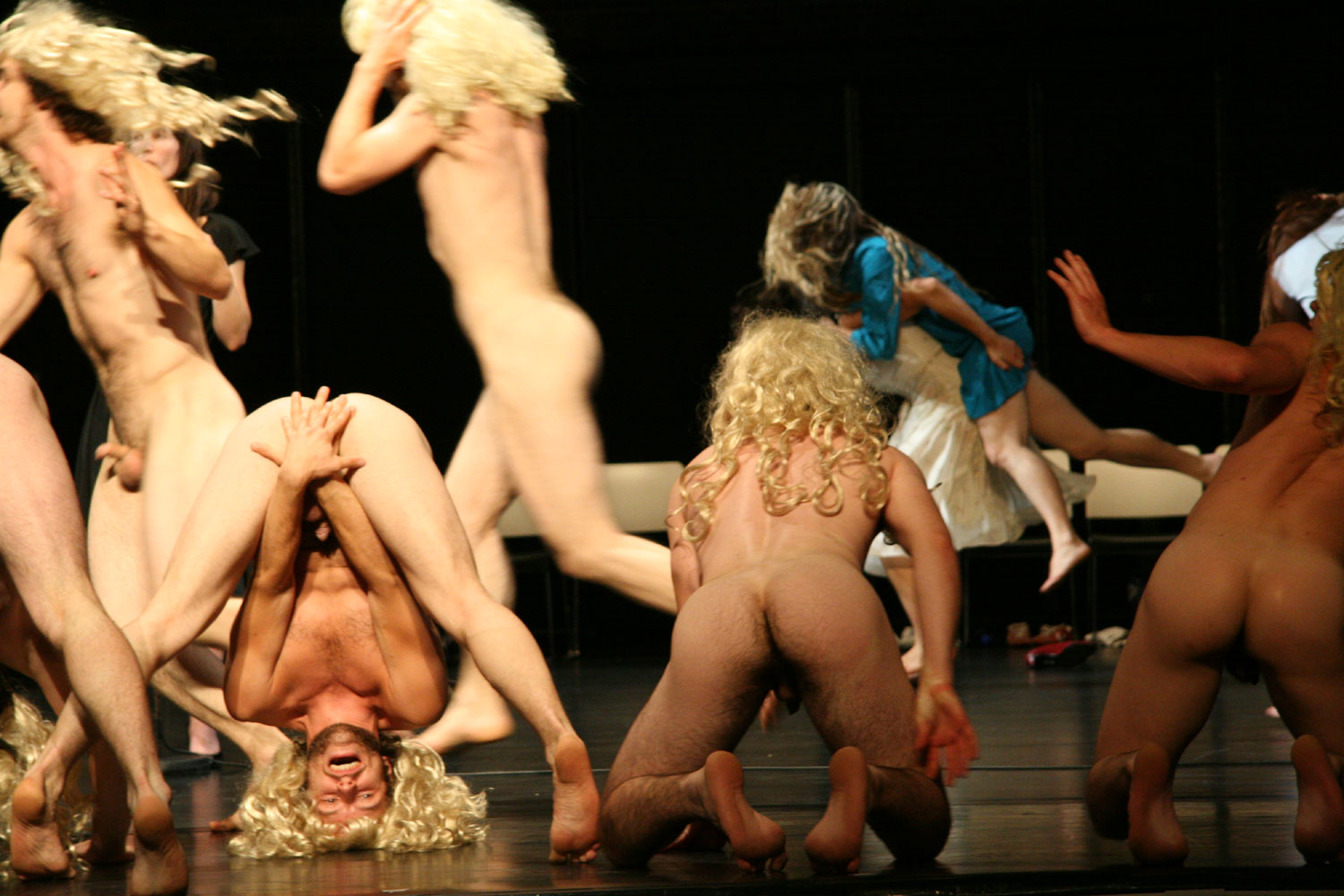
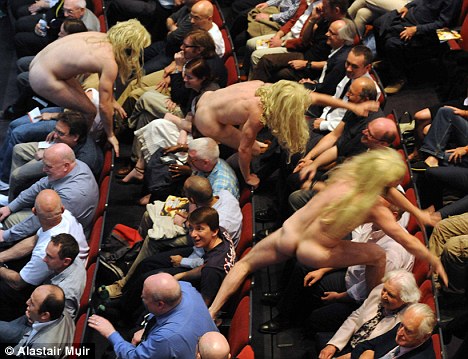
…and then he stuck it in my ear…

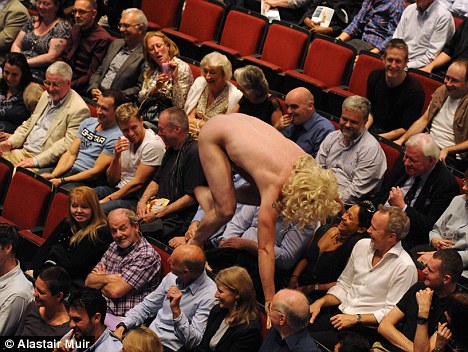
By a very large margin the biggest cultural event to hit London for quite some time was Dave St-Pierre’s show Un Peude Tendresse, Bordelde Merde! at Sadler’s Wells. Critical debate over the piece has been raging amidst tales of mass walkouts and rapturous applause. The Telegraph certainly didn’t like it, and the The Guardians wasn’t exactly glowing in its praise. However, and rather surprisingly, it found a small amount of favour with that notoriously liberal institution; The Daily Mail.
Tales of dancers rampaging naked through the audience, with one critic memorably describing having the rather unfortunate sensation of having someone’s member thrust into their ear, reminds us that there are still things that are capable of shocking us on stage. And, as is often the case, it appears that nothing is guaranteed to make the British feel deeply uncomfortable than the human body laid bare in all its questionable glory. Particularly when it is taken off the stage and into the audience, smashing the conventional boundaries that exist between performers and the audience and forcing them to take a much more detailed interest in the subject than they might have expected.

St-Pierre continues the growing trend for challenging the conventional relationship that exists between actor and audience. Director’s are learning that by finding ways to draw the audience past the traditional barrier of the stage, you begin to discover new mechanisms for involving them more closely in the action. The interactiveness found in Punchdrunk’s stunning, if flawed, Duchess of Malfi, meant that there were moments where audience members were left feeling they had some power to change the direction of the narrative.

In Un Peude Tendresse, Bordelde Merde! St-Pierre doesn’t just aim to break the conventions of traditionally staged dance, he means to create a piece that assumes a whole different compact with the audience. He wants the audience to view nakedness as a neutral state, one that should be value-free and without judgement. The male dancers who leap into the auditorium exist as state-of-nature innocents and the audience are challenged not to feel like voyeurs but to accept the dancers own child-like acceptance of their bodies. There is no doubt that St-Pierre blindsides the audience – they are helpless participants who must either sit there or walkout – but prior knowledge allows the opportunity to prepare for the assault on your preconceptions and the power of the piece exists in the tension of not knowing what could happen next.

He uses nakedness as a weapon to force the audience  to confront the idea that, rather than being the free-minded liberal individuals we like to think we are, in fact there are areas of our nature that we have marginalised. As a society, nakedness, whether as sexual imagery or just a neutral concept, has been pushed to the edges of what is acceptable, and there it remain; not discussed, not questioned and not seen. Whereas we can watch violence on TV and even practice gross violence in incredibly realised detail through computer games, it is much harder to see images of naked people in either format. There is virtually no nakedness, sexualised or otherwise, prior to the watershed, unless there is an ‘educational’ element to the show (such as The Sex Education Show on Channel 4) whereas soaps can contain storylines that often resolved by acts of rather extreme violence.

You can agree or disagree with the various codes of practice that has allowed a position like this to develop but the consequences can be seen in the reaction to Dave St-Pierre’s piece. Whilst the quality of the choreography apparently left a lot to be desired, it was hardly awful enough to cause such a large number of people to leave. The walkouts occurred because members of the audience were not ready to face such a direct assault on their values. And this was achieved through the immediacy of the piece, the result of taking the nakedness into the audience. In a time when it appears more and more difficult for people to shock and offend, it is interesting to see that one of the last remaining taboos is something that should be so innocent.

It is interesting to think about the different levels of acceptance to nudity and violence when thinking about the piece in contrast to the warmly-received but emotionally rather limp revival of Blasted at the Hammersmith Lyric earlier in the year. Sarah Kane was often regarded as a similar l’enfant terrible of her generation of playwrights; often baring her soul and life in front of her audience. However watching Blasted – with its procession-line of grotesque images- surrounded by rows and rows of drama students who were clearly going along mentally ticking of all the supposedly shocking moments of horror in knowing appreciation, it was not hard to feel rather let-down by the impact.  The play clearly suffers from its familiarity and much of its power is lost in knowing what is about to occur.

The same criticism can doubtless be  levelled at St-Pierre’s piece, after a while the audience will come knowing that they are about to witness an ‘event’ and with it will come a knowingness that can only detract from the power of the piece. The audience will not be challenged to confront their discomfit because they will understand the boundaries that are expected before it begins.

Perhaps that is the ultimate fate with all pieces that have the power to shock; ‘Hair’ famous nude scene must have been quite something when it was first staged but now it is thought of with some fondness of as a curious attempt to blend the hippie movement with musical theatre. However while it remains contemporary lets embrace David St-Pierre’s piece for going out of its way to force us to confront something that clearly can still cause us deep discomfort.

Just enough Sturm und just enough Drang

The Damnation of Faust – English National Opera, Coliseum, 20 July 2011

3 Performances left before Tuesday 07 June

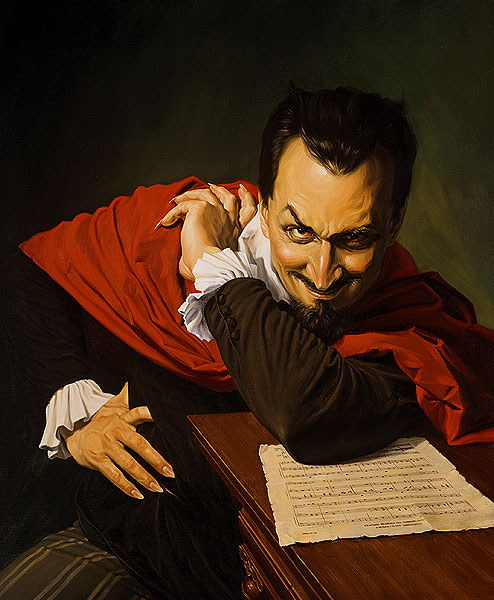
Reputedly when Hector Berlioz saw the first productions of The Damnation of Faust he concluded that it was impossible to stage as the production techniques of the time could not bring the drama to life. Had the risks of selling your soul to the devil not been made abundantly clear then I might have been sorely tempted to offer much in return for Berlioz being able to witness what happens when thoroughly 21st century technology is let loose on it. It is hard to believe that he would not be impressed with the result.

Some critics expressed surprise that the ENO would take a risk on Gilliam but it has hard to think of a film director who might be better suited to the demands of opera. A man often regarded as holding cinema’s most rampant, if occasionally incoherent, imagination seems like an ideal choice for a medium where the audience’s suspension of disbelief is often asked to hang off the smallest threads. His films demonstrate that he never lacks for ideas even if it does occasionally comes at the expense of a coherent narrative; The Imaginarium of Dr Parnassus gave the sensation of being fed a succession of amuse-bouches, each one a delicate and delightful treat but in the end never providing the satisfaction gained by a well-planned three-course dinner.

However this approach makes Gilliam well suited to Berlioz’ Faust, a piece often described as a series of musical sketches rather than fully-fledged opera. It flits between styles and scenes in a manner that gives Gilliam free license to let his magpie approach to directing run riot. There is no unifying directorial style in the production but instead the audience are led, by Faust and Mephistopheles, through a history of unified Germany up to World War II; Faust’s final descent into hell appearing inextricably linked to a nation bent on following a similar path.

Gilliam, without forgetting the credit that is due to the brilliance of Hildegard Bechtler designs, has created an unforgettable masterpiece that creates substance out of style. Each scene is unique and can stand alone from the rest of the production; this leads to a potential disjointedness in the production but Gilliam’s vivid creativity and thoughtful transitions between scenes means the audience is not allowed to rest and are continually drawn into the immediacy of the production, senses overwhelmed by a panoply of sound and image.  Continue reading here.

Something for the weekend sir?

Not sure what to do over the Bank Holiday? The idea of wall-to-wall sport proving too much to bare? Well here are a couple of suggestions for things to go and see discover some theatre that you never even knew existed.

ONE MAN, TWO GUVNORS

Who? James Cordon returns to the stage at the National. Last seen on stage in Alan Bennett’s phenomenally successful The History Boys playing a schoolboy, subsequently seen practically everywhere else. His omnipresence has meant that he has been known to appear in dreams, flashbacks and in the corner of your eye at tube stations.
What? One Man, Two Guvnors is closely based on the 18the Century play The Servant with Two Masters by Carlo Goldoni. It contains many of the classical elements of comedies from this period; class systems, women dressing up as men and general confusion and farcical misunderstandings. James Cordon is a man who (rather unsurprisingly) has two employers (one of whom is a woman pretending to be her dead brother) and you may not be surprised to learn that hilarious shenanigans ensue.
Why? Given Lesbian Vampire Killers and the Horne & Cordon sketch show, people can be forgiven for being wary of seeing a play that seems to be set-up as a celebrity vehicle for James Cordon. However this forgets the naturalism of his performance in Gavin and Stacey and the stagecraft he demonstrated in The History Boys. Reviews have been uniform in praising the production and it seems the National has one of the hits of the Summer on its hand.
Where? National Theatre
When? Until 26 July
How much? £12 – £45 (£5 tickets available for 16-25 year olds)
Tedious one sentence deconstruction: Over-exposed TV actor returns to the stage in an adapted play that has surprised many critics by funnier than imagined.

TACTICAL QUESTIONING

Who? The Tricycle Theatre has developed a reputation for being one of London’s premiere venues for breaking political theatre. Tactical Questioning is the 8th tribunal play that has been produced at the venue and previous subjects have included the Hutton Inquiry, the Saville Inquiry and Guantanamo Bay.
What? There is no denying that Tactical Questioning will be a grim, painful and intense evening at the theatre. It couldn’t be any other way. It is an edited but verbatim account taken from the transcripts of a Public Inquiry into the death of Baha Mousa whilst in the custody of the British army. These performances have come after the closure of the inquiry but before it reports its findings and only contains excerpts from statements taken from those interviewed.
Why? Some plays are enjoyable and some are important. The Tricycle’s Tribunal plays are very much in the latter category. Their importance can be summed up by noting that Guantanamo (2004) was performed at both the Houses of Parliament and on Capitol Hill in Washington, whilst Archbishop Desmond Tutu appeared in their New York production. These plays are a raw and painfully real – real events are depicted with real dialogue, and in doing so drama is created out of what is in reality interminably long and complex proceedings.
Where? Tricycle Theatre
When? June 2nd – July 2nd
How much? £12 – £22
Tedious one sentence deconstruction: Blurring the line between drama and reality, the tribunal productions are unlike anything else on the british stage and Tactical Questioning should be mandatory viewing for anyone with an interest in the workings of international justice.

Opera on a shoe-string

Coronation of Poppea – Kings Head Theatre, Islington, 19 May 2011

The Coronation of Poppea is on as part of the OperaUpClose repertory programme until the end of June 

Not always a nice man...

The startling success of OperaUpclose’s debut production, a modern-day, stripped-down promenade La Boheme, is the kind of story that semi-professional companies usually can only dream of. Six-months at the Cock Theatre in Kilburn put it in the record books as the longest consecutive run of any opera in history, and this was followed up by two six-week sold-out runs at the Soho Theatre. However this kind of instant success brings with it a level of critical scrutiny that might concern even the most long-established groups. Any new production is likely to be picked apart to see if it was a one-off, particularly among opera critics who have a reputation for being notoriously difficult to please.

Establishing a repertory programme at the Kings Head Theatre in Islington made clear that there was an enthusiasm to build on the popularity of La Boheme and bring opera to the masses (the well-heeled masses of Islington at any rate). A seasonal programme that mixed classics like Madame Butterfly and Barber of Seville with less well-known work such as Montiverdi’s Coronation of Poppea suggested a company that were savvy enough to know what would appeal to both mass audeinces and critics.

However early signs weren’t good as rumours about the exploitation of backing singers seeped through the press and a version of Madame Butterfly felt a big misstep; disjointed, badly staged and unsuited to the venue, it raised a big question-mark over whether La Boheme was anything more than an amusing one-off. A big problem with Madame Butterfly was due to the limitations of the Kings Head and the needs of repertory programming requiring much simpler settings meant the production lacked the basics that made La Boheme such an appealing prospect; promenade staging and a fantastically realistic set.

Knowing that these would not have been resolved for Coronation of Poppea meant the production was approached in trepidation. However, in a huge coup for OperaUpClose, Mark Ravenhill has been brought on board as an Associate Director of the company. The Coronation of Poppea marks his directorial debut and from the start it was clear that there was someone with experience working behind the scenes.  Continue reading review here

Around the web

Searching around the interweb for the best of the blogosphere, the following articles have caught my attention over the last few days. Happy reading.

1) Following the continuing success of Jerusalem (now gaining rave reviews on Broadway for both the play and Mark Rylance’s stunning performance), the Guardian have interviewed Jez Butterworth. Considering how Londoncentric the cultural world tends to be in the UK, it is interesting that he really only rediscovered his mojo (nothing like a high-concept pun) by moving to the countryside. Be warned it is slightly painful to discover that he was the script doctor on Mr & Mrs Smith, it feels like Picasso being asked to touch up a potato print. Full article here…

2) Matt Trueman’s Carousel of Fantasies continues to review all the plays that I wish had seen but never got round to (and now don’t need to!). This week its I am the wind at the Young Vic.

3) The always intriguing West End Whingers have taken their idiosyncratic approach to Edward Albee and have given a rather luke-warm reception to A delicate balance. An interesting contrast to the hugely positive review (but still only 4*) in The Guardian

4) The Independent brings tales of a very Summer-y Alice in Wonderland. Far too much potential for audience interaction as far as I am concerned but it does sound like you get a slap-up meal to go with it so if you happen to be in Norfolk between the 18-21 May then give it some thought.

5) Last but not least, the Guardian’s theatre blog muses on whether critics give too little focus to the actors’ performances during their critiques of plays. As usual the comment board is open and getting feistier and more personal by the minute.