Democracy under the microscope in Ibsen reworking

Public Enemy – Young Vic Theatrebooking until 08 June

Continuing from where he left off with Gogol’s The Government Inspector, Richard Jones’ production of a Public Enemy at the Young Vic delves deeper into small town communities and how the introduction of an outside force – be it the arrival of a government official or a report of a contaminated water supply – inexorably leads to the exposure of the venality and hypocrisy of those in positions of responsibility, and those who are able to exercise power.

Running at a brisk 100 minutes and dispensing with the interval in order to allow the play to build towards a frenetic and frenzied conclusion, David Harrower’s updated text reworks Ibsen’s Enemy of the People into a 1970’s Public Enemy logosetting. In this he is aided by a superb set design from Miriam Buether and costumes from Nicky Gillibrand that immediately places the location in a Scandinavia of the 1970s.

Updating Enemy of the People has an advantage of other Ibsen plays in that the central plot device feels as relevant today as when it was written. The tainting of the water supply is something that doesn’t seem so unlikely to a society who has seen the Yangtze River turned the colour of blood and minor earthquakes hit Blackpool following adventures in fracking.

Jones’ Public Enemy reminds us once again of Ibsen’s skill of placing characters in the most exquisite of personal dilemmas – forced into positions that expose their venality and corruption to the world. Each passes under the lens of his microscope, and each ultimately fails to take the action that would potentially redeem them.

<<Continue to full review>>

A Night at the Theatre – Olivier Awards 2013

So the Olivier Awards have been and gone for another year, and as a result what have we have learnt the state of theatre – London theatre, sorry to anyone reading further afield but it is a very parochial affair – in 2013. Well their own website leads with ‘A curious night at the Olivier’s’, which rather sums it up for me. It was a list of winners that doesn’t reflect the experiences of this website’s year in theatre.

To look at those celebrating last night would be to imagine a rather staid and conservative theatre scene. However there has been a vitality and verve to theatre – witness the excitement over Punchdrunk announcements, A Curious Incident...winner of 7 Awardstickets to see Branagh’s Macbeth selling out in less than 10 minutes in Manchester or new plays by young playwrights that embraced quantum theory (Payne), neuroscience (Prebble) or a play that covers everything and nothing in eighty minutes (Butterworth) – that is broadly absent from the list of winners.

Perhaps this could have been guessed at by looking at a nominations list where Lucy Prebble’s The Effect was almost shut out and where the Best New Play category included just one play not reflecting on historical events or retooling an existing story for the stage.

One may argue that last year’s big winner – Matilda – is hardly a broadside against conservatism. However Matilda was the first time anything had walked home with seven awards and it was deservedly seen as a stunning achievement and that a brilliant production had been rewarded for managing the rare feat of capturing hearts, minds and wallets of critics and the public alike.

It does rather undermine the perceived value of the achievement if the next year we see another play walk-off with exactly the same number. Whilst critics have warmly received ‘A Curious Incident…’ and the public continue to throng through the doors, it does not seem to have reached the groundswell of public love and critical affirmation that marked the success of Matilda – which swept everything before it and which was the must-see performance from its very first outing in Stratford.

It is clear A Curious Incident… is good but is it seven awards good? Is it so good that we feel happy that the ‘A Dolls House’ at the Young Vic, ‘Constellations’, ‘This House’ and Complicite’s ‘Master and Margarita’ walk away with nothing? And when we talk about magnificent interpretations of novels, how did the adaptation of Bulgakov’s impossible Master and Margarita not even get a mention? The problem with placing so much attention on just three productions – A Curious Incident, The Audience and Sweeney Todd – is that it doesn’t even remotely capture the spectrum of success of what has been, in all honesty, a relatively mediocre year for theatre in London.
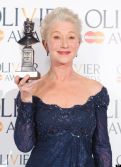
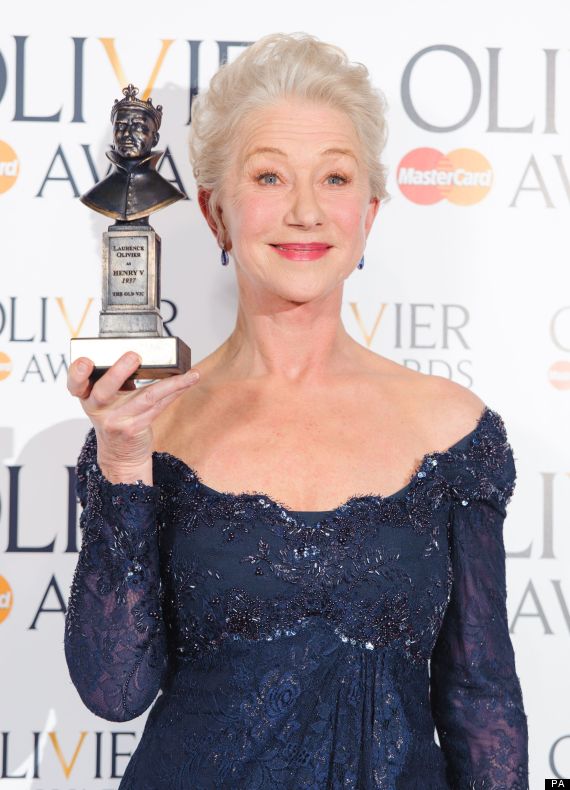
Another award for Helen Mirren, The Queen or possibly bothThe success of The Audience has more than a little of a smattering of one eye on the need to reward the private sector for at least trying a new play, and a more cynical person may suggest that the value of the international market may have had a role to play. Helen Mirren as Best Actress? She might have won it for her awards speech more than the actual part.

It was a pleasure to see Nicola Walker win for ‘A Curious Incident’, a stalwart of TV and of downtrodden wives and mothers everywhere, and without having seen the production it is hard to imagine a more perfect piece of casting for the mother of the 15-yr old lead. Equally commentary seems satisfied with the victory of Luke Treadaway in the role;  a part that is catnip for award judges, as it is basically the modern day answer to the ‘idiot savant’ – something that is a little bit out-of-kilter with modern understandings of mental health. As usual it was a strong year and personally a win for Rupert Everett would not have been amiss but Treadaway seems deserving of the accolades.

With an equally impressive set and technical team it suddenly becomes easier to count up those seven awards. However the Complicite team can feel short-changed not to have picked up a single technical award for their visually stunning take on Bulgakov’s masterpiece. As usual it is mind-boggling that Cheek By Jowl were not nominated for anything – despite the Barbican being a home from home.

Everyone on the Best New Play shortlist can feel hard done by for losing out to something that restaged an existing story – surely there are so many adaptations that this can be a separate category. And ‘Long Day’s Journey into Night’ Best Revival – a truly interminable evening that deserved nothing and for which the praise of critics from every quarter is something that is genuinely unfathomable, even the cast – Suchet, Metcalfe, Soller, all usually so excellent – were dire.

If this year’s Olivier Awards has proved anything to me, it is that this was not a stand-out year for British Theatre; that this reviewer has, Sweeney Todd excepted, has missed most major plays of the year; and that the Donmar needs to re-establish its identity with great haste. A lot of attention has come Josie Rourke’s way and so far the response has been muted at best – where is this year’s Inadmissible Evidence or Anna Christie?
The Full Awards List

What does the Guardian say…

What does the Telegraph say…

McAvoy shines through a dank and dirty Macbeth

Macbeth – Trafalgar Studios, until 27 April 2013

Macbeth, by virtue of its perennial presence on the national curriculum and its pulpy plot that might just possibly hold the attention of recalcitrant teenagers who would rather be playing Call of Duty than sitting in a darkened theatre listening to verse-speaking for over two hours, is a Shakespeare play that never seems far from reach. It also has the added advantage of lead role that can be tailored to actors as apart in their careers as Kenneth Branagh and James McAvoy.

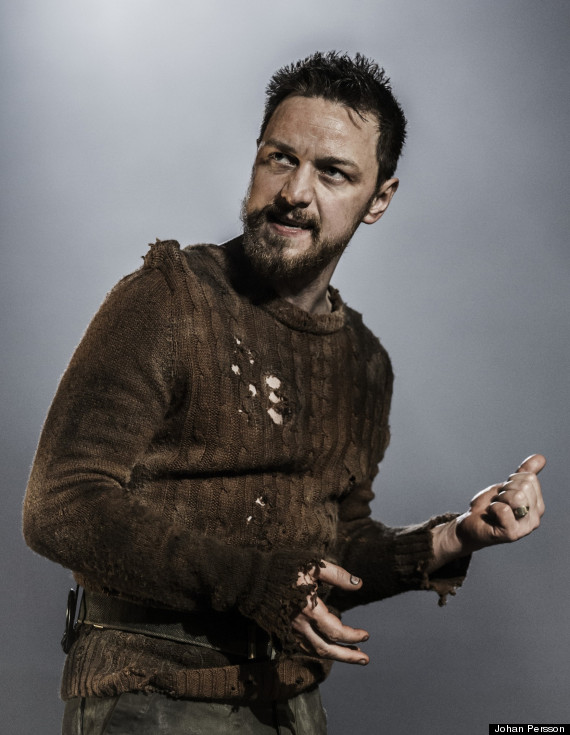
This sense of over-familiarity has harmed the play’s standing in the canon of Shakespearian tragedy, where it is rarely considered to be on the same level as Hamlet and King Lear. This distinction is hard to deny if the sole value for the tragedies is driven by the psychological complexity of its lead characters. However in Macbeth, which post-dates both plays, Shakespeare seem less interested in this then it exploring man as a primal force of nature. Where Hamlet ruminates on the moral legitMACBETH by Shakespeare,   Credit: Johan Persson - www.perssonphotography.com /imacy of his actions and the imperatives that drive him, Macbeth is driven by the emotion that eventually subsumes him – the tragedy lies precisely in this lack of reflection.

One of the joys of Macbeth for a director is that it provides an appealingly blank canvas; the landscape is sketched out as roughly as the country it is set in, and the setting is not tied to any significant fixed points in history. The result allows freedom for the director to overlay an idea onto the play without destroying the sheer enjoyment of Macbeth’s whirlwind central performance.

Jamie Lloyd’s production embraces the wild and primitive nature of the text – it is a Macbeth that lives and breathes the visceral and savage world in which it is set. There is no re-imagining Macbeth as a modern-day dictator or gangland crime boss; this is a Macbeth of history but a history that is rarely seen – when kings were a long way from assuming a divine right and living in a world of pomp and pageantry. In this Macbeth, you are king in so far as you assert a brutal right to supremacy. You are king of what you can hold and no further.

At its heart is Hobbes’ maxim that life without a settled community is a life of ‘continual fear, and danger of violent death, and the life of man, solitary, poor, nasty, brutish and short’.The set could be described as post-apocalyptic, post-climate change, post-fall of civilisation but it could easily reflect the nature of Britain prior to the establishment of a settled state. It is dank, dirty and decaying, and suits the purposes of those rule it. From the outset it is clear that these hard men living in hard times; when Duncan exclaims ‘what bloody man is that?’ [I.ii] it is not out of concern for his condition but out of wariness over his allegiance. Until Malcolm confirms that he is the Sargent he is welcomed only by the barrel of a rifle.

Similarly when Duncan reaches Glamis it seems more in keeping with a temporary base of a raging civil war; people sit on fold-up chairs and the ‘throne’, in a playful twist, is a toilet. The castle stands as a base of operations and nothing further. These men embody thec tribes forced north of the wall centuries earlier by the Romans than the contrasting civilisation of southern England. A point made by Lloyd as he bathes the set in an almost spiritual light during the play’s foray south of the border to hear Macduff and Malcolm debate the values of kingship.

This imagined world revolves around Spinoza’s belief that ‘peace is not the absence of war, but a virtue based on strength of character’. The play begins as war is concluded and the opportunity for peace to descend, yet it appears inevitable that it will only act as a temporary cessation of hostilities. It is so embedded that Macduff, who represents the forces of moral legitimacy, ultimately fails to demonstrate the virtues that can allow peace to flourish. The stark imagery of Macduff lifting Macbeth’s severed head above his own, face slowly covered by the blood of the defeated King, resembles the savagery of all that was fought against than the kingly virtues that Malcolm extols.

It is essential to understand that McAvoy’s Macbeth exists against this backdrop, as it is an explanation to the question of why Macbeth cannot turn away once he has achieved everything that was promised to him. Even before the Witches’ promise him the title of King it seems apparent that this Macbeth would not have been satisfied with his lot. Like those around him, he is a man of war and his achievements breed an emptiness rather than satisfaction.

<<Continue to full review>>

Olivier Awards: Runners and Riders and Early Fallers

Last week the nominations for the Olivier Awards were revealed and if its place at the end of the long awards season means it is an unlikely place to find many surprises, the shortlist does provide potential of scope for eyebrow raising omissions. Most people in theatre – who don’t work for the RSC – will be mightily relived that the Matilda juggernaut is no longer crush all of the competition. Looking across the nominations, it seems impossible that anything will come close to the level of dominance that Matilda achieved. The leading contender, ‘The Curious Incident of the Dog in the Night Time, has eight nominations  and could conceivably end up with five awards given the excellent technical work underpinning the show.

As usual the subsidised sector leads the nominations but the private sector is not totally unrepresented. However the lasting impression of the shortlist is the absence of controversy and also the absence of anything that really stands out. For the first time in a number of year there doesn’t seem to be a new play that blew everyone away or a revival that places an actor at the very top of their game.

Thinking back through the last few Best Actor winners, the Mark Rylance of Twelve Night does not appear comparable to the Mark Rylance of Jerusalem. James McAvoy is good but not near the level of Chiwetel Ejiofor in the 2008 Othello.  Rupert Everett appears to be getting rave reviews in The Judas Tree and good easily be the dark horse in the pack for a play that continues to build an unstoppable momentum.

This year’s round-up takes its cue from the Oscars and includes a number of special awards dedicated to certain fields. So without further ado we have:

3243292_ratio1x1_width42The Day-Lewis Award:

This special award is made of cast-iron and essentially means that whether or not the judges have actually seen the play in question, they are duty bound to give the award to this actor. It’s cast-iron qualities means that its long-lasting and on receipt of one, you are more likely to come home with another in the future. Not to be mistaken for the Tomei Award, which is made of stone and causes your career to sink equally fast.

1d1ea3a837e3cfcc607da792eb69bc38_normalThe Deakins Award:

The Deakins is given to those who suffer from unrecognised brilliance. The ability to from award show to award show and be cast over due to the fact you are so darn good that people already think that you have won one. Unfortunately as a result you have never won an award. This award is for you.

ben-affleck-2013-64x64The Ben Affleck WTF Award:

So just because you star and direct something that goes on to win Best Film means you will at least get nominated right? I mean, you even went to the effort of growing a dashing, auteur beard for the occasion. Wrong, sucker. I mean they loved absolutely everything about the show, well, apart from the way it was directed and the main star was pretty irritating as well.

*Note: Apologies for the terribly boring formatting below. WordPress is still completely inept at handling tables. Or more possible is the fact that I am equally inept at handling tables in WordPress. Why you can’t just past from Word it keep the formatting is beyond me. God knows where the lines are. I can see the lines and then they disappear. *Sigh* Technology Fail.


Best Actor
James McAvoy

Macbeth

Mark Rylance

Twelfth Night

Rafe Spall

Constellations

Luke Treadaway

The Curious Incident Of The Dog In The Night-Time

Rupert Everett

The Judas Kiss

As noted this doesn’t feel as much as gold star category as it has done in previous years. It is hard to look beyond a Rylance / Everett shoot-out for the win. Rafe Spall is good with a very difficult text but not stretched, McAvoy is the weaker of the two Shakespeare and Treadaway may just be a little young to take it from such established titans.
The Day-Lewis Award: No lock-in here, but I fancy the almost unrecognisable Rupert Everett against the gender-bending but still strangely recognisable Mark Rylance.

The Deakins Award: Again nothing stands out, probably Rupert Everett.

The Ben Affleck WTF Award: It is telling that I cannot think of a single person more deserving than these five. Maybe Christopher Ecclestone in Antigone but even that was slightly underwhelming

Best Actress
Helen Mirren

The Audience

Hattie Morahan

A Doll’s House

Billie Piper

The Effect

Kristin Scott Thomas

Old Times

If the men have not lived up to expectations then Michael Billington was able to find an almost entire shortlist of women who might have expected to be represented.It is hard to see (particularly after last years Cumberbatch / Lee-Miller double) how they could split Lia Williams and Kristin Scott-Thomas. However Hattie Morahan is so much of a lock for the Day-Lewis they might as well rename it the Morahan for next year.
The Day-Lewis Award: Hattie Morahan. That is all.

The Deakins Award: Since Kristin Scott-Thomas and Helen Mirren are already in the upper firmament of stars, they can hardly claim the Deakins. So again it must go to Morahan.

The Ben Affleck WTF Award: Lia Williams for sure. But also how there is no space for Harriet Walter in the Donmar’s Julius Caesar is absolutely outrageous – for me the stand-out female performance of the year without question. Also, given Rafe’s nomination, Sally Hawkins may feel a little hard done-by not to get a look in.

Best Actor in a Supporting Role
Paul ChahidiTwelfth Night

Richard McCabe

The Audience

Adrian Scarborough

Hedda Gabler

Kyle Soller

Long Day’s Journey Into Night

For this I campaign on an anyone but ‘Kyle’ ticket. Having given total support for his emergence after The Young Vic’s The Glass Menagerie a volte-face is in operation after watching this car crash of a show. Strangely beloved by critics, no-one I went with could comprehend why such a stiflingly long and boring production could have had everyone in such raptures.
The Day-Lewis Award: Richard McCabe – because we love a Peter Morgan play and Helen Mirren won’t win.

The Deakins Award: Paul Chahidi – if only that someone wins who isn’t Kyle Soller.

The Ben Affleck WTF Award: Reversing it for this award – Kyle Soller, really? (Fine actor, just not in this).

Best Actress in a Supporting Role
Janie DeeNSFW

Anastasia Hille

The Effect

Cush Jumbo

Julius Caesar

Helen McCrory

The Last Of The Haussmans

Nicola Walker

The Curious Incident Of The Dog In The Night-Time

Having not seen any of these performances bar Cush Jumbo it is difficult to provide a fair judgement.  All were well received and again are, if anything, stronger than their male counterparts.
The Day-Lewis Award: In a strongly contested field Helen McCrory may edge it due to the intergenerational vote-grabbing of The Last Of The Haussmans .

The Deakins Award: Pass.

The Ben Affleck WTF Award: Linda Bassett in People. I thought as far as Supporting Parts are concerned this was the kind of scene-stealing performance in a populist play that is guaranteed a nomination. Surprised to see People miss out across the board.

MasterCard Best New Play 
ConstellationsThe AudienceThe Curious Incident Of The Dog In The Night-TimeThis House Well a win for Constellations would be a final feather in the cap for what has been an obscenely successful year for the 29-yr old playwright, Nick Payne.However this may prove a bridge to far and whilst I hope that an adaptation won’t win, I think the sheer complexity and vision of This House will see it through.
The Day-Lewis Award: This House. Not without flaws but you have to admire the vision.

The Deakins Award: Constellations. A play that shows a deeply complex topic can sell-out the West End.

The Ben Affleck WTF Award: The Effect. Lucy Prebble’s follow-up to ENRON was one of the most anticipated of the year and sold-out almost instantly. Despite picking up two acting nominations, it has been snubbed for new play and best director. Ouch.

Best Director
Stephen DaldryThe Audience

Marianne Elliott

The Curious Incident Of The Dog In The Night-Time

Jeremy Herrin

This House

Simon McBurney

The Master And Margarita

Stephen Daldry’s return to the stage can be met with a significant yawn; The Audience proving to be a rather bland affair given the previous vehicles that Peter Morgan has found for Dame Mirren.The other three are technically complex in varying ways. McBurney deserves great credit for bring Bulgakov’s masterpiece to the stage with some degree of coherence.Herrin’s This House is remarkable for the way it gels such difficult material and Marianne Elliott combines visuals with superb performances from the leads.
The Day-Lewis Award: Marianne Elliott. The only director to get both visual and acting nominations for the play.

The Deakins Award: Marianne Elliott. For the above reason.

The Ben Affleck WTF Award: Rupert Goold, like Lucy Prebble, must be feeling somewhat aggrieved by the nominations. Still he does get to be Artistic Director at the Almeida, so there’s always that.

Best Actor in a Musical
Michael Ball – Sweeney Todd
Alex Bourne – Kiss Me, Kate
Tom Chambers – Top Hat
Will Young – Cabaret
 Michael Ball has this locked in. He has won pretty much everything going and a better Mr Todd in a better production it is hard to imagine.
Best Actress in a Musical
Heather Headley – The Bodyguard
Imelda Staunton – Sweeney Todd
Summer Strallen – Top Hat
Hannah Waddingham – Kiss Me, Kate
Until seeing Kiss Me, Kate then I would have put the house on Imelda Staunton helping Sondheim sweep the board. However Hannah Waddingham’s performance is sunshine in an otherwise cloudy production and is most deserving of the win.
Best Performance in a Supporting Role in a Musical
Adam Garcia – Kiss Me, Kate
Debbie Kurup – The Bodyguard
Siân Phillips – Cabaret
Leigh Zimmerman – A Chorus Line
 Having only seen Adam Garcia, all I know about this is that Adam Garcia surely can’t win. There must have been something better. My money goes on A Chorus Line.
Best New Musical
Loserville
Soul Sister
The Bodyguard
Top Hat
Christ, best new musical includes a remake of a woeful 1990’s film with one massive song, and (how is this anything but technically not a revival) of the 1935 classic with Fred ‘n Ginger.For that reason hopefully the flop Loserville will win it.
Best Revival
Long Day’s Journey Into Night
Macbeth
Old Times
Twelfth Night
I suspect that Long Day’s Journey Into Night will win. It sends a cold shiver down my spine but I think it will. Any of the others are more deserving but lets face it Macbeth and Twelfth Night are revived every other bloody year.
Best Musical Revival
A Chorus Line
Cabaret
Kiss Me, Kate
Sweeney Todd
  Sweeney Todd. The Day-Lewis Award for certainty.
Outstanding Achievement in Affiliate Theatre
Caroline Horton for You’re Not Like The Other Girls Chrissy at the Bush theatre
The production of Red Velvet at the Tricycle theatre
The season of new writing at the Jerwood Theatre Upstairs at the Royal Court theatre
Kate Bond and Morgan Lloyd for You Me Bum Bum Train, presented by Theatre Royal Stratford East
The usual suspects are deservedly well-represented here. The Royal Court with its normal stellar seasons, the Bush gets a nod and its nice to see Jerwood recognised.Hopefully the Tricylce will win but I have a fear that You Me Bum Bum Train may get the prize and even worse fear that it may encourage others to follow in its footsteps.

The Theatre of Politics

This House – National Theatrebooking until 16 May

This House has been the surprise package of what is proving to be a very successful season for the National – defying the surrounding economic gloom with a string of sell-out hits. It was inevitable that tickets for The Effect, Lucy Prebble’s follow-up to ENRON, and the latest Alan Bennett play would be scarcer than gold dust.

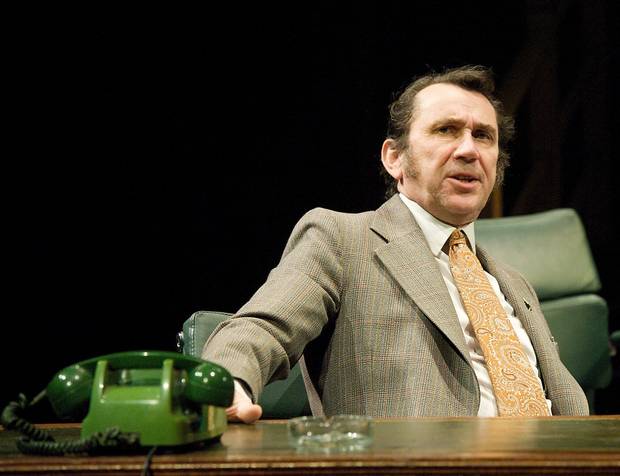
However This House did appear to be an altogether tougher sell; a play based almost entirely back rooms of Parliament, set between 1974 and 1979 and refusing the safety-net of caricature by eschewing references to MPs byPhil_Daniels_This_House name. Unless one held an acute knowledge of mid-70’s parliamentary constituencies it paid little concession to providing a Spitting Image-style satire on its subjects other than references to a certain ‘MP for Finchley’ and a fleeting appearance from a young Michael Heseltine.

As a self-confessed political and theatrical nerd none of this was particularly troubling as seeing the political process dissected on stage was the real joy. The likes of David Hare may stage politics with a big ‘P’, and there have always been any number of young tyros looking to reflect the impact of politics on society, but the institutions – the strange and archaic mechanisms that have supported one of the world’s longest running parliamentary democracies seem to have been rarely considered by playwrights.

Lord Scarman summed up the position eloquently in the late 80’s when he referred to the fact that the people are ‘only occasional partners in the constitutional minuet danced for most of the time by Parliament and the political party in power’. For all the radicalism of playwrights and protestors, politicians continue serenely onwards, safe in the institutions that have bent, flexed and twisted but never entirely shattered over the centuries. The British parliamentary system finds durability in its seeming lack of permanence. The lack of a codified constitution allows great flexibility in its approach; rules are in place because they are in place and always have been in place, not because they are written down in a book.

The very essence of maintaining the status quo, a great British tradition, is built into this approach. Without an awareness of the rules, and without any access to them, how can someone challenge the system? It is into these murky waters that James Graham’s This House looks to shine a light. It illuminates the hidden world of small ‘p’ politics; the grindingly mundane processes that allow the Government to govern and teases out exactly what happens when the metaphorical rulebook is thrown out of the metaphorical window.

So much of Parliament – the opening of Parliament by Black Rod, the Queen’s Speech, Prime Minister’s Question Time – is laced with symbolism about the importance of the function it serves, even if these aspects mean nothing to actual governing. James Graham and Jeremy Herrin have intrinsically grasped the parallels with theatre, which is that behind the spectacle there are those working themselves to the bone to keep the wheels turning and where power really resides. This is why the play focuses on the political Whips; the backroom boys who ensure that everything happens on time, that people know what they are supposed to be doing and that things actually happen.

<<Continue to full review>>

Peter and Alice and a whole lack of wonder

Peter and Alice – Noel Coward Theatre, until 01 June 2013

It all works so well on paper: Michael Grandage and Christopher Oram as director and set designer; John Logan behind the script; Ben Wishaw and Dame Judi Dench heading the cast. If any more of a hook was needed to guarantee an audience, the plot concerns Peter Pan and Alice in Wonderland (or at least their real-life inspirations).

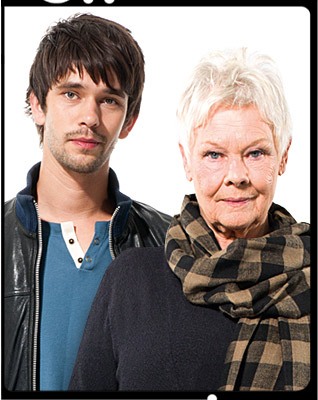
What could possibly go wrong?Peter and Alice - Ben Wishaw and Judi Dench

In some ways very little.

The major problem is that very little goes right.

For the audience, Peter and Alice is an almost pitch-perfect study in the average, the mediocre, the reassuringly dull. No doubt the brigades that travel on mass from the Home Counties, that can afford to sit in the stalls, that buy a programme, a drink and an ice-cream, that keep the West End at near maximum-capacity and that are, without doubt, vital to the on-going vitality of the London theatre scene, are going to be satisfied.

However Charles Dodson and J.M Barrie would be appalled. Not necessarily by the character assassinations perpetrated on them by Logan, in scenes that have a loose connection to the truth, but certainly by the sheer lack of imagination displayed by everyone involved in the production. Peter Pan and Alice in Wonderland are two of the finest examples of the flexibility of the adult mind; the sheer imaginative range of Carroll’s wordplay and of Barrie’s adventuring is a joy that has not receded in over one hundred years.

Peter and Alice fails to capture one tenth of this joy, this anarchic free-spiritedness, in one hundred minutes.

Reading the description of Barrie’s original production of Peter and Wendy one learns that Tinkerbell was created by the expedient use of a mirror to reflect a light onto the stage so that it would seem to dart and fly. This illusion, using the simplest mechanism imaginable, holds more wonder than the entire po-faced philosophising of Logan’s script.

To begin on the positives; Christopher Oram’s set is a delight. Opening on a musty office, it unfolds to a reveal the reassuringly sight of a chequer-board set and instantly recognisable Tenniel-inspired drawings of familiar characters. Given Peter Pan’s origins on stage it was a nice touch to reflect this in the use of classic flats that drop from the sky and retain a resolute two-dimensionality that highlights the artifice that lies behind theatre, and that means it will only ever be a simulacrum of reality.

Ben Wishaw and Judi Dench are perfectly adequate, and one hopes that, given this was a preview, there is a certain vitality that is still to come as they feel their way into the roles. Dench has a commanding presence that cannot help but be transferred to her characters – it is hard to imagine her playing a particularly vulnerable part. Her Liddell has developed a cast-iron exterior to the pressures of the world, and this contrasts well with Wishaw’s more vulnerable Peter Davies, a man who has not come to terms with the world as it is and the man who he will always be.

<<Continue to full review>>