And so goodbye to summer…

For regular theatre goers there can be few markers that you have passed the last dregs of summer than no longer suffering a twinge of jealousy as you walk past all the tourists drinking merrily on the South Bank as you take your seat in the hot, sweaty and dark auditorium.

Not that, as we were constantly reminded, this was a summer like any other. In effect normality went into a two month hiatus as London, and in time the rest of the country, came to a complete standstill as we eventually recognised that we are not nearly as useless as we enjoy telling each other we are. The trains arrived, the people were friendly, we avoided being blown up by terrorists or trigger-happy missile silos, the army ran the logistics and G4S ran nothing and the Mo-Bot became a meme. In short the Olympics and the Paralympics happened and everyone forgot about the rain.

In between all of this excitement the London theatre scene quietly ticked over in the background. Unsurprisingly Andrew Lloyd-Webber’s predictions of audience carnage proved entirely wrong as the West End’s goal of relieving punters of ever increasing amounts of money from their cash-strapped wallets in exchange for third-rate musicals culled from second-rate films continued remorselessly onwards. Luckily for the rest of us the National Theatre proved that affordable theatre can have depth, resonance and even the odd sprinkling of star power.

The revival of London Road – transplanted to the Olivier – was an example of how to draw on a weighty subject with a lightness of touch that is rare among those more used to the deadening hand of television. Having somehow contrived to miss the first run, despite being aware of the sacksful of critical praise that it gathered meant that this was a must see. The fact that the engrossing Katherine Fleetwood reprised her role only added as an extra incentive – an actor indelibly marked in my brain following her unforgettable turn as the strongest Lady Macbeth I have had the fortune to see, and surely a match for Judy Dench’s classic portrayal, in Rupert Goold’s memorable production.

How unfortunate to have been released in the same year as the equally critically-acclaimed and certainly rather more family-friendly Matilda, London Road never received the awards it richly deserved but the fact it could sell out the Olivier for a musical based on interviews with people who lived on the same road as Richard Wright, the Ipswich serial killer, tells its own story about the power of the production.

A truly haunting piece, skilfully manipulated and never less than engaging, it raises many interesting questions about the stories that aren’t told; the impact on the community, the everyday people, of a media circus and a major police operation. Whilst there are legitimate questions over how composite characters reflect the truth and whether they bring forward narrative interest over narrative truth, there is enough in the words and the playful skill with which they are turned into song that sets this apart as a musical of rare power and intelligence.

Alongside this, the Olivier season included Simon Russell Beale giving us Timon of Athens. Without fail described as a difficult play, Timon of Athens has so many contemporary resonances that it should mean more to us. The parallels of the first half to the modern day are so clear, so apparent, that one almost hopes that the play doesn’t resume after the interval. This production, like so many before it, faced and failed the classic problem of trying to unpick and restitch Shakespeare to craft a specific relevance to modern times.

Watching the rise and inevitable fall of Timon, one is both appalled by the actions of Athenians but also frustrated by Timon’s obvious naiveté. It is hard to truly accept that Timon could have fared so well in society based on the actions we see in the play. The fault here is part Shakespeare and part Simon Russell Beale – who was a strangely passive and reedy presence in a play that really demands a lot of heft. His slightly cherubic public school persona – so perfect as Widmerpool in A Dance to the Music of Time – feels out of place in his hermit hovel on the outskirts of the city.

The most interesting aspect of the play is to follow the generally accepted fact that the play was written by two different playwrights. Shakespeare, it is assumed, is responsible for the grandstanding and most of the second half, and Middleton, who is believed to behind the city-based Athenians. It is clear that when one thinks of the play in these terms, it is Shakespeare who comes off worst. Middleton’s play fizzes with a comic satire and adds to his reputation as one of the great comic playwrights of the Elizabethan era. His background characters hit the stage fully formed and when interacting with one another there is a robust and fascinating take on the avarice of Athenian society but the play too often grinds to a deathly halt once the moralising fury of Timon takes centre stage.

It was a disappointing production underpinning a disappointing play. There are many who call Simon Russell Beale one of our finest character actors, yet the case is still to be made of his credentials as a great Shakespearian actor following his rather undercooked Falstaff with this forgettable Timon.
Olympic Opening Ceremony: Boyle’s Brand Britain Brings Belief Back

Be not afeard / This isle is full of noises [The Tempest]

Etched onto the largest bell cast at the Whitechapel Foundry and overlooking a pastoral idyll of Britain – maypoles, shire horses and, naturally, cricket – Danny Boyle took from our great playwright a statement of intent that he then used to totally reimagine a way a country uses such events to present itself to the world.

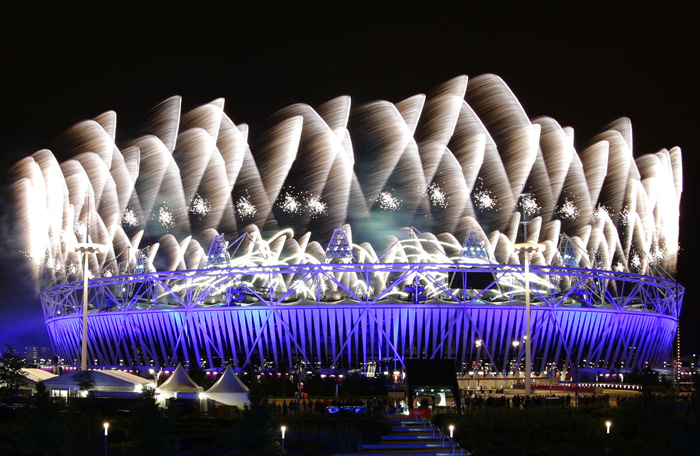
Years in the planning but managing to remain one of the most well-kept secrets in this age of Twitter, Instagram and Facebook, yesterday we finally got to find out what happens when you spend £27 million on a one-off show. The results were as thought-provoking as they were spectacular. It showcased a Britain that may finally becoming at ease with its history and its place in the world.

After 50 years of declining world influence, colonial guilt and compounded by the growing financial crisis that may yet see the balance of power transfer permanently to the emerging economies, there is an anxiety that undercuts our patriotism. Boyle does not deny our history and does not gloss over the seismic transformations that fractured Britain and then the world. It is an incredibly bold move and one that only a mature country confident in its heritage could countenance.

When Beijing hosted the Games in 2008 they put together a spectacular that no country in the world could hope to match. It was also exactly the sort of thing that a regime that only pays lip-service to democracy would put together – encompassing thousands of people but with no sense of communal spirit and full of gloss. Boyle strips all this away – it has long been recognised you could not hope to beat Beijing at its own game. At times it felt chaotic and unmanaged but it had heart and soul. It put the volunteers themselves front and centre rather than being units in a large structure.

Boyle’s Britain is at times a terrifying place. Given our history, our colonial past and the traumatic impacts of war and social-cultural revolutions it could never have been otherwise.  Having been lucky enough to be in the Olympic Stadium during the technical rehearsal I can testify to the cauldron of noise created by the two thousand drummers. A faint rumble from the Olympic Park signifies the arrival of the industrial era, the growing wall of sound creating a pulsating beat as the green pastures of Britain is stripped away and out of the ground great towers begin to emerge and metal works creating molten rivers. The vibrations of technological chance ripple through the audience and a brutal landscape grows out of nothing. At times it is hard to tell whether we are being shown Britain or Tolkien’s Mordor.

Victorian industrialists, led by Kenneth Branagh as Brunel and given the task of delivering Prospero’s ‘Isles of Wonder’ speech in the absence of Mark Rylance, summon up the towers as if praying to some new deity. Boyle understands that these traumas are fundamental to our consciousness and to ignore them would be to hark back to ‘the green and pleasant land’ of William Blake’s Jerusalem whilst ignoring the all-important ‘dark satanic mills’.

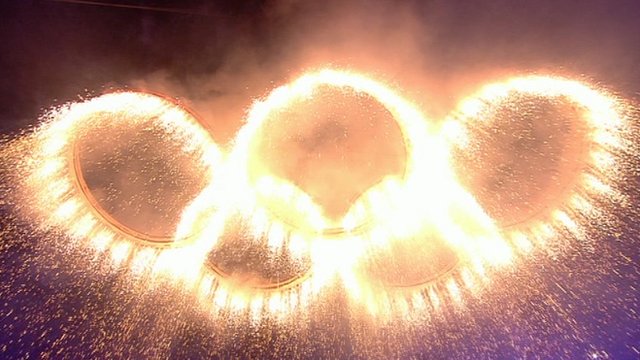
The use of the set to deliver the Olympic Rings was visually magnificent. It had the all-important reveal and there were audible gasps as the audience began to realise how all the pieces fitted together. As the rings started to crackle and spark it was obvious why Boyle demanded a late start. The image of the Olympic Rings built out of British industry and burnt into the night sky will become one of the iconic images of the 2012 Games.

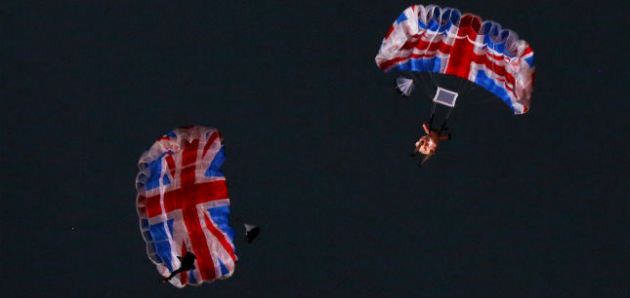
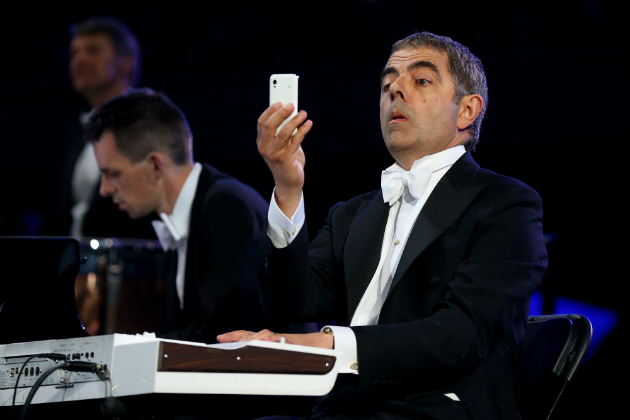
A sense of reminding the world, and Britain itself, of the innovations Britain has given it was at the heart of this show. Brand Britain was on display and Boyle (with an awful lot of help from his long-term collaborators, Underworld) displayed his usual mastery of the magpie approach – cherrypicking his way through our shared history. James Bond was an obvious touchstone and there was clearly a global thrill of showing him meeting the Queen but it is a shrewd move to include Rowan Atkinson as Mr Bean. In this country we recognise Bean but perhaps don’t realise just what a valuable brand Bean has become worldwide. Rowan Atkinson has long-established a legacy as one of the most gifted physical comedians of all time, and deserves to stand alongside true greats like the Marx Brothers and Buster Keaton, and much deserved his slot at the event, alongside slotting in his much needed humour during the Chariots of Fire sequence.

Perhaps the most emotional honour, and clearly a cornerstone of Boyle’s whole vision, was the prominence going to Sir Tim Berners-Lee; perhaps the man who has transformed Britain, if not the world, more than any other at the tail end of the 20th century. His anonymity is as incredible as it is unforgivable considering that he invented the architecture for global communications – the world-wide web. What better stage – a UK audience of at least 26 million and a global audience of up to 2 billion – to give him the status he richly deserves?

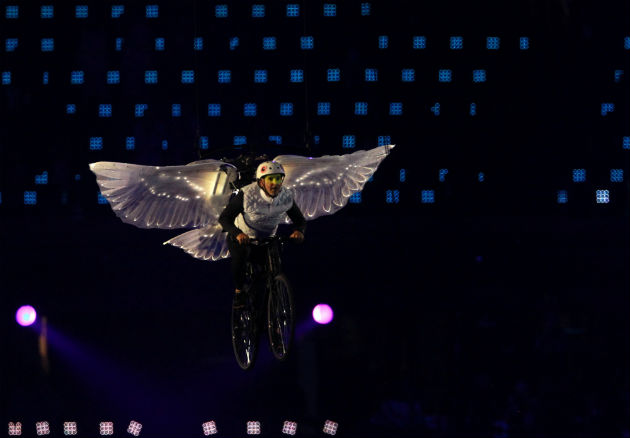
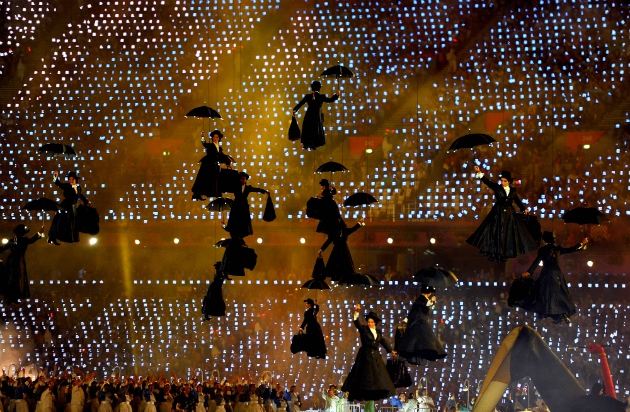
Brand Britain also included two of our crown jewels – the NHS and the BBC. The show started with the uniquely British shipping forecast – unrecognisable to people who don’t live here but a cosy reminder of all things British– and included a long section involving NHS volunteers in a vibrant number that also celebrated the importance of children’s literature. A reminder to the world about how British authors have set the global standard in this field; JK Rowling was given the honour of stage-time but the show harked back to the golden age of Peter Pan, Alice in Wonderland and Chitty Chitty Bang Bang. Here, as throughout, Boyle didn’t take the easy route of simple-minded jingoism but looked deeper into the soul of the nation and realised that Britain has never shied away from looking into the darkness in order to find light.

Lord Coe promised to ‘inspire a generation’ in 2005, and in 2012 this vision was realised with a left-field choice for lighting the Olympic cauldron. Standard practice is to give the torch to an icon or suitable dignitary. Would any other country have decided to abandon this practice and give the torch to unknown young athletes who have been selected by our current greats? What message does this send to the children watching around the world? And how, in 2016, will Brazil manage to top such an audacious, and pretty much uncriticisable, choice?

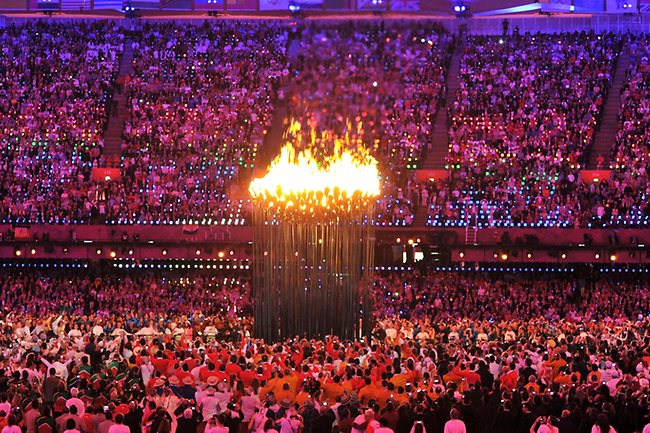
And special mention must be made of the Olympic cauldron. An unbelievably spectacular artwork in its own right; something that almost managed to upstage everything that came before. An art-installation with practical purpose, built with copper petals carried by every nation of the games. Amazing demonstrations of the Olympian ideal of unity and togetherness that towered above the athletes and was a fitting send off to the evening – alongside the spine-tingling sound of 80,000 people booming out the inevitable na-na-na-na’s of Hey Jude.

Danny Boyle was given something that was a chance of a lifetime but, in the wake of Beijing, deeply unenviable. His career to date has displayed an unshakeable knack of hitting the cultural pulse in any genre he has taken on – small-scale urban drama in Shallow Grave, a kinetic slice-of-nation in Trainspotting, global understanding in Slumdog Millionaire and in 127 Hours an audio-visual montage that served as a warm-up for some of the video sequences employed in the show. Here he has cemented his reputation and for him the world becomes his oyster.

He has given a Britain that we can believe in, that we can be proud of and that balances the light and dark of our history in harmony. He has given the world a Britain that recognises its contribution to the world, that has given the world great industrial and social change, that has provided an imaginary world for its children and an audio soundtrack to people’s lives for the past 50 years. And you really can’t ask for more than that.

For more on the global media reaction to the Opening Ceremony click here

The best of the Opening Ceremony

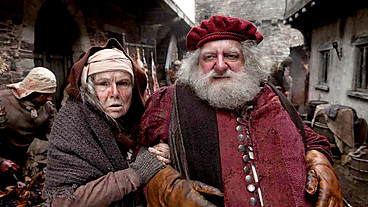
Falstaff take centre stage as The Hollow Crown reveals its brutal truth

The Hollow Crown: Henry IV Part II – BBC 2

So Shakespeare continues on the BBC with Henry IV Part II and Falstaff discovering just how hollow the crown can be. It remains testament to Shakespeare’s talent that despite the clear danger of offending the monarchy he could write a play about kingship that would show it to be an undesirable burden that turns saviours into tyrants.

The old dying king, Henry IV, is laid bare before the audience; his noble persona stripped aware by a ravaging illness and worn down by the internecine rivalries of his nobles and the licentious behaviour of his heir. The regal nature of Jeremy Iron’s Henry has long since disappeared to be replaced by a solitary figure forced to send others to fight his wars and left to restlessly wander the palace at night exhorting that “uneasy lies the head that wears the crown” [III.i].

It is worth mentioning that Irons is magnificent as Henry IV – as it is a part often forgotten under the weight of the Hal/Falstaff relationship. Iron’s Henry captures the viewers’ attention with an exceptional understanding of verse speaking and bringing real intelligence to the dialogue. The great speech where he discovers Hal upon the throne and lashes out with “What! canst thou not forbear me half an hour? / Then get thee gone and dig my grave thyself” [IV.v] proves one of the real highlights of the series so far and brings just a glimpse of a potential King Lear – a  proposition that really does make the mouth water.

Tom Hiddleston’s Hal does not provide the tempting alternative that Shakespeare would later paint with far more grandeur in Henry V. As with last week, Hiddleston gives us a Hal that, for all his revelry and low-flung behaviour, is very much in control of his character. He may feel warmth to these people but he also is self-aware enough to retain a certain detachment as a king would his subjects. Hal is shown to be the kind of figure who would make a good king but possibly an even better tyrant.

Richard Eyre focusses on melancholy as the central theme of this production of Henry IV Part II. It is a melancholy centred around the relationships Falstaff has throughout the play which draw out his own tragic self-awareness that so often is hidden behind bluster. Simon Russell Beale gives us a Falstaff that continues to scheme but who is fatally unable to change his character and for whom the dead-hand of time continues to advance.

<<Continue to full review>>

Much more on BBC’s Shakespeare Unlocked here


Hiddleston’s impresses as Hal but Eyre’s Henry can’t quite match Goold’s Richard

Henry IV part I: The Hollow Crown – BBC 2  / BBC HD

Following the rapturous reception received by Goold’s treatment of Richard II was always going to be a challenge; the highly experienced Richard Eyre was assigned the task of continuing The Hollow Crown through Henry IV parts I and II, and on last night’s offering is set to deliver a textually inventive if slightly visually austere riposte.

Overall The Hollow Crown concept has been left a little exposed – clever and audience-enticing as it may be – as the stylistic dissimilarities mean that, other than the continuation of history, there is little in Henry IV part I that audiences would recognise from the filmic vistas of Goold’s Richard II.

Fortunately Shakespeare is not constrained by the straightjacket of slick BBC publishing. Henry IV part I is a play that needs no extra gloss; it contains his most-loved character in Falstaff and gives the audience, as Simon Schama pointed to in his recent documentary, a view of England from the bottom-up. This is in direct contrast to a Richard II that inhabited the world of kings and noble elites.

It’s also a play in which Shakespeare sketches out, in Prince Hal, the images that he would shade in later in one of his greatest creations, Hamlet – complete with two fathers (Falstaff and Henry IV pre-empting Claudius and the Ghost) and a play within a play (the great Act II Scene IV where Hal, in the guise of his Father, banishes Falstaff).

There is a seismic shift in language between Richard II and Henry IV. The world of Richard’s verse has been replaced by the more naturalistic prose of Henry Bolingbroke, now Henry IV. It serves to emphasise the working people that inhabit the play; the phrasing and speech reflects the way people actually talk to one another. It reflects a changing England; the shattering of Richard’s divine right and replaced by a, now frail and ill, Henry IV paranoid to the threat of conspirators. There is no place in this landscape for the playful verse that marked Richard II. This point is rammed home by Shakespeare through Harry Percy who ridicules and undercuts the fanciful imagery put forward by Glendower about his birth.

The core of Henry IV is not, of course, the King but his son, Prince Hal. Falstaff may steal the show but he is not the heart; the heart is the relationship of Hal to his two fathers, the King and the Fool, and the inevitable renunciation of the latter in order to safeguard the former.

In this production Eyre appears to have taken a very deliberate step to recast Hal and Falstaff’s relationship away from the loving underpinnings with which it is normally shown. It is usual to show a warmth and affection in Hal when he undercuts Falstaff’s numerous embellishments but here there is coldness in Tom Hiddleston’s Hal. This is introduced from the very opening scenes of the play and Hal’s speech where he talks of renouncing his way of life; it is delivered in voiceover and there is an added potency to lines like ‘So when this loose behaviour I throw off’ [I.ii] given out in contemptuous manner at the same time as Hiddleston’s Hal strides through the Boar’s Head. Outwardly he is smiling, winking, interacting, whilst his interior monologue makes clear he understands that he is just playing a part that will be discarded.

<<Continue to full review>>

Masterful Richard II proves the BBC does ‘do’ Shakespeare

Richard II – BBC2 and BBC HD, until late July 2012

Settling into watching Richard II in glorious HD on the BBC last night it was difficult to ignore the Beeb’s previous ill-fated attempts to engage with ‘the Bard’. Whilst Civilian Theatre has a better opinion than most of the BBC’s attempt to film all the Shakespeare plays; where else could we see an Othello with Anthony Hopkins and Bob Hoskins as the leads, or a young Helen Mirren playing Rosalind in As You Like It and Imogen in Cymbeline – it is still hard to avoid the criticisms of wobbly sets and at times really duff stage-to-screen acting.

However the BBC’s reputation has been pulled significantly out of the mire after their last two adaptations of acclaimed stage productions – Tennant’s Hamlet and Stewart’s Macbeth- received sensitive transitions. Goold’s Macbeth in particular had a visual style that was magnificently assured given his background as a stage director. So hearing that he had been tasked with opening proceedings with Richard II did a lot to calm the nerves.

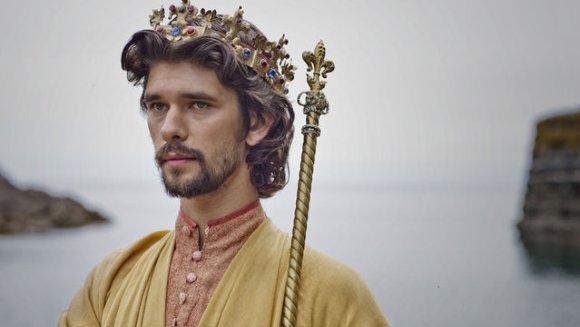
This calm was only reinforced by the sweeping shot across Richard II’s court; Ben Wishaw as Richard; Patrick Stewart as John of Gaunt; Rory Kinnear as his son, Bolingbroke; the two David’s – Suchet and Morrisey – as father and son of York; and James Purefroy, steaming under armour as Mowbray. It goes without saying that once such accomplished actors are placed in position then there is little left to do but let them unfurl Shakespeare’s glorious language.

Richard II, compared to the rest of the history plays, is difficult. It has less of the cartoonish villain that makes Richard III such a crowd-pleaser; it lacks a comic core of Falstaff or the jingoism of Henry V. It is a wordy play about a poor king and bitter nobles. To make it worse Shakespeare, as a stylistic tic, vastly increases the amount of rhyming verse. For those untrained in plays of the era the language is often perceived to be a barrier – and Richard II does risk encapsulating everything that people think they dislike about Shakespeare – it is difficult, unnatural and can be hard to follow.

Goold and the cast respond to this challenge magnificently. For perhaps the first time we see that TV could have the edge of stage productions in some aspects. The history plays, far more than the tragedies and comedies, are complex, difficult and rely on a certain level of prior-knowledge that Shakespeare contemporaries would have had but that current audiences, for the most part, lack.

The ability to zoom-in, jump-cut and provide proper location filming – sweeping landscapes and equisite interiors that provide a true sense of time and place – thus provides an essential element in driving the plot. No longer must we scan the faces of a court scene to decide who Richard is castigating, the camera does this for us. Some may cry foul but this is both good TV – no-one needs completely static shots – and also good for accessibility. It is a period location but that does not mean that modern stylistic devices shouldn’t be used.

Goold deserves a huge amount of credit. This, and his Macbeth, were excellent adaptations that demonstrated he has a natural eye for balance and an assured touch. He may well work alongside a mighty fine cinematographer but having seen a number of his plays staged, it is clear that he has an innate understanding of composition and brings to the theatre filmic elements and here he proves he can work his artistry in reverse.

<<READ ON FOR THE FULL REVIEW>>

Musical Theatre: Comparing old with new

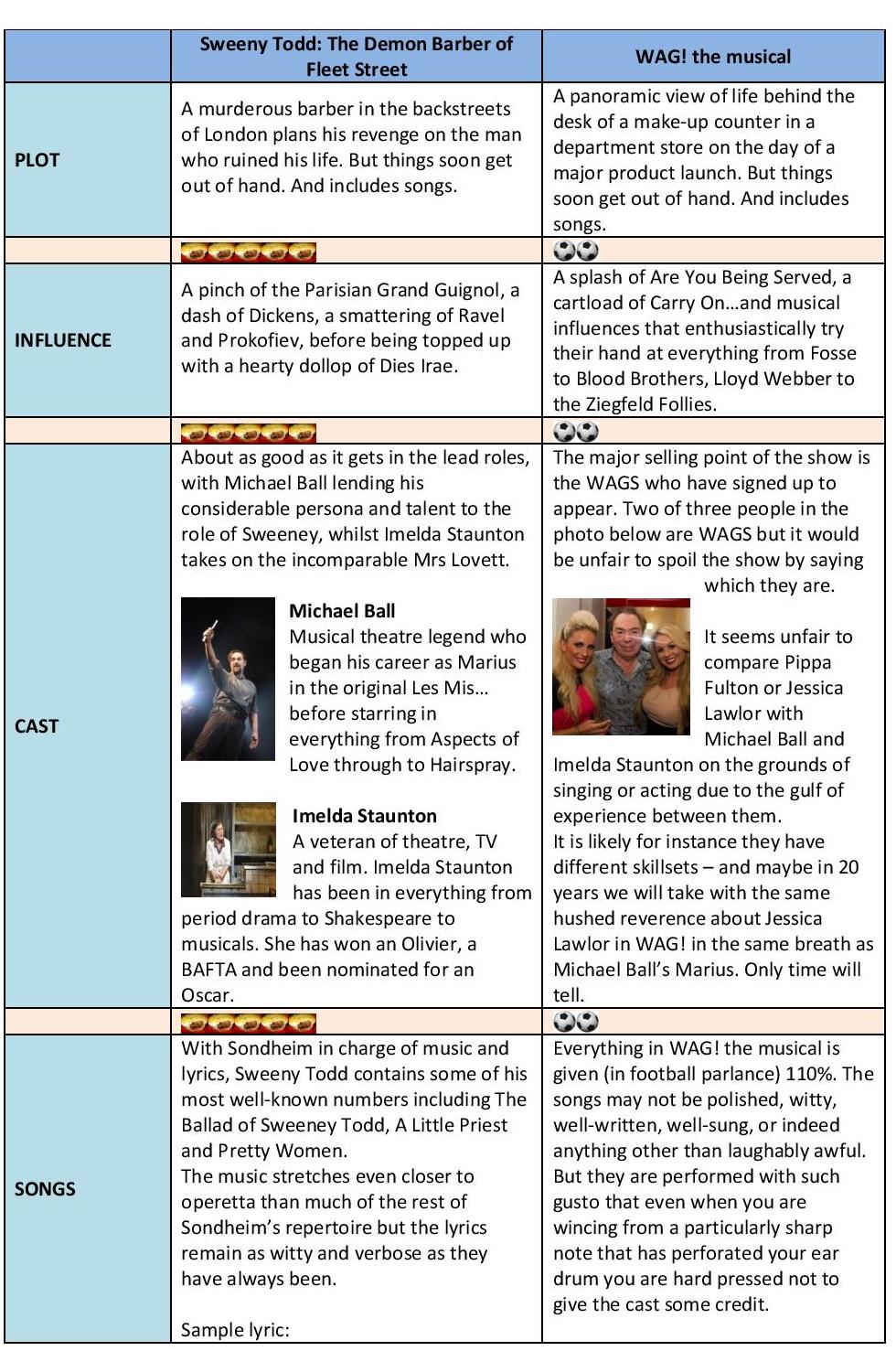
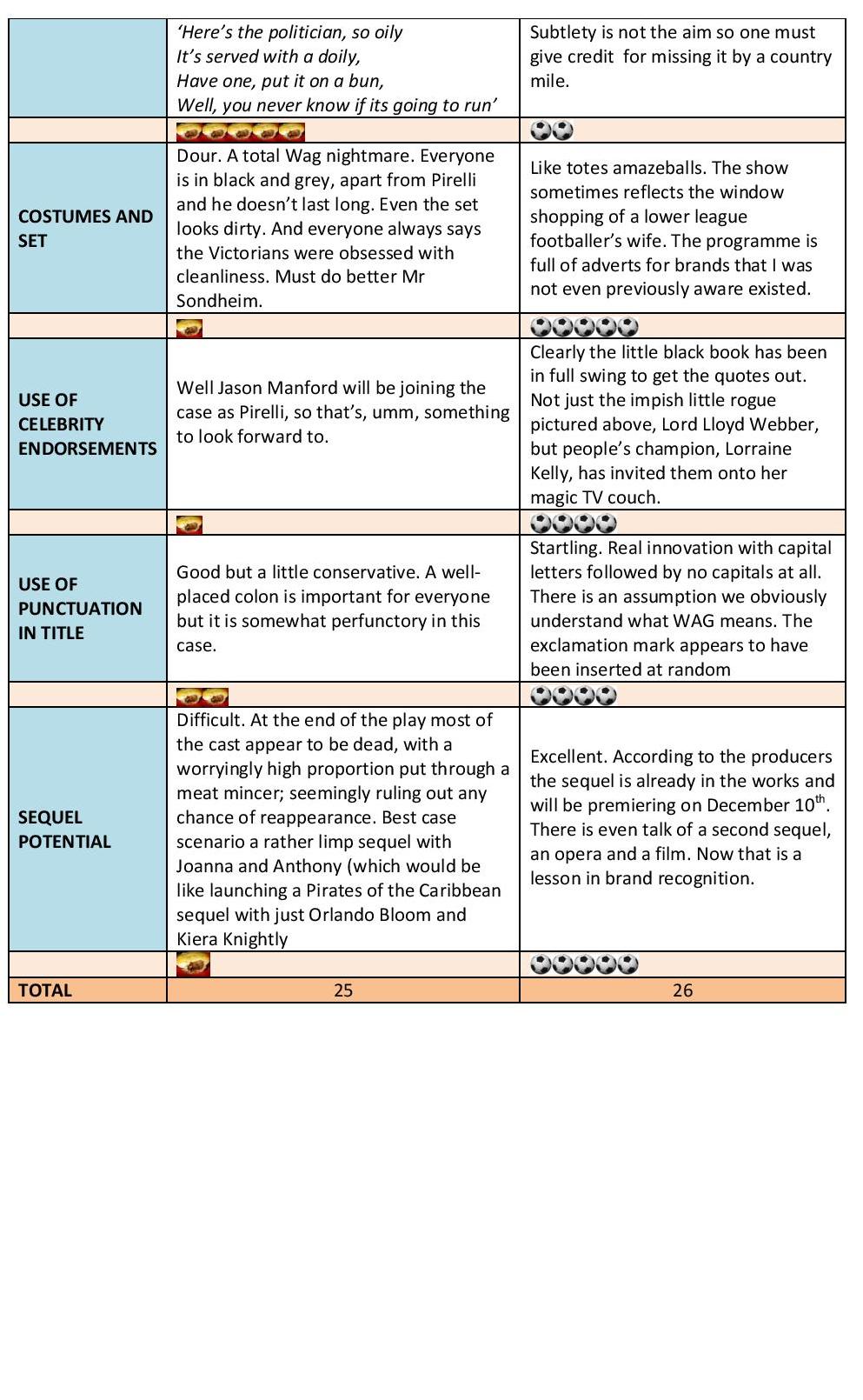
Last week I had the somewhat dubious pleasure of sampling two musicals. One is a scathing social satire on contemporary values whereas the other is a gruesome tale of revenge that ends in a bloodbath for all concerned. One is a complex work that draws on recurring classical motifs whilst the other takes a magpie approach to the classic styles of twentieth century musicals. One is regarded as one of the great musicals by a legend in his field. The other has been championed by Lorraine Kelly. But are we letting reputations get ahead of us?

In the interests of fairness, Civilian Theatre has assessed the merits of both shows to see whether Sweeney Todd: The Demon Barber of Fleet Street, the perennially popular Stephen Sondheim musical that won rave reviews at the Chichester Festival last year and has since transferred to the West End, is really any better than WAG! The Musical, which was enjoying its world premiere at the Ye Olde Rose and Crown in Walthamstow.

So there you have it, a win for the WAGS. The colossus of Broadway has been brought to his knees by some upstart wives of footballers. As any sportsman knows – the stats don’t lie. WAG! the musical has proved itself every inch the equal of Sweeney Todd and Sondheim (lyricist for West Side Story, Academy Award Winner, Pulitzer Prize Winner, Winner of 8 Tony’s, 8 Grammy’s and 6 Olivier Awards and with a theatre named after him) clearly has been humbled by a new challenger for the crown.

See more here:

WAG!

Sweeney Todd

Editors Note: Apologies to Mr Sondheim for the misspelt Sweeney in the above article. If I hadn’t been moved close to despair by uploading gremlins then the amendment would have been made.