Culture Crash

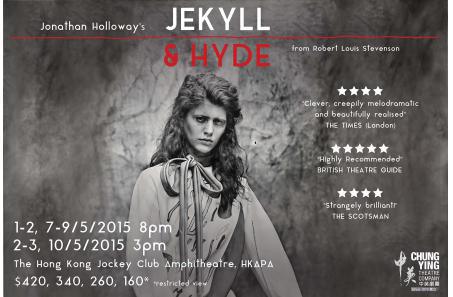
Jekyll & Hyde – Chung Ying Theatre Company in association with Red Shift Productions @ Platform Theatre, until 08 August 2015 (tickets)
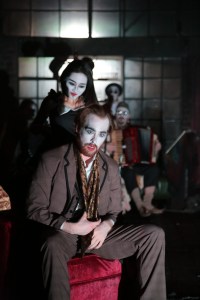
Whilst different artistic pursuits offer their different pleasures, theatre offers something that art, film, TV and literature struggle to match; it is the only medium whose primary output is never static. Either a production reworks an existing play or it is new work that is in a constant state of evolution. There is also never just one output, each performance will be unique and, in a longer running show, a company is likely to seek improvements by continuing to tweak the production.

It is the last of these reasons that drew me to Jekyll & Hyde at Platform Theatre. Two years ago Red Shift partnered Flipping the Bird to produce an adaptation of Robert Louis Stevenson’s famous story. My recollection is of a frustrating experience as it showed real promise but was undermined by a script that ought to have gone through several more drafts. (Previous review here).

Having gone through the Edinburgh experience and onto China after the Chung Ying Theatre Company recruited Red Shift founder, Jonathan Holloway, I was fascinated to see how the play might have transformed. There was anticipation over finding out how cultural collaboration had affected it, and how it been altered in the interim.

The results, to be perfectly frank, were disappointing. The play, rather like Dr Jekyll, seems to be suffering from a crisis of identity.

Mr Holloway has come up with a neat premise (altered from the previous version), where Dr Jekyll is a woman looking to transform herself into a man due to experiences suffered in her war-torn homeland. Transformation becomes a survival mechanism, and her physical transition is accompanied by a psychological one so that Hyde is a manifestation of that which she most fears.
<Continue to full review>

Continuing adventures in Podcast Land

How very exciting (well for me, I will leave further excitement up to reader discretion), after a week hiatus I ended back in the world of podcasts and a repeat visit to the As Yet Unnamed Theatre Podcast. This time play’s under discussion were Face The Music! and An Oak Tree (both previously reviewed on the site), and Violence and Son.

Joining our host, Tim Watson (http://www.londontheatregoer.com), was Nick (Partially Obstructed View), Gareth (http://garethjames.wordpress.com/) and Johnny Fox (www.johnnyfox.co.uk)

You can listen here: As Yet Unnamed Theatre Podcast 

Enjoy (and, as always, thoughts and feedback are welcome)

An assault on the ears: Reviews in handy podcast format

It was probably inevitable that after spending three years forcing diligent readers to consume my witterings through their eyeballs, I would look to find an even easier way to force my views upon people. Handily the perfect opportunity has arrived and all Civilian Theatre had to do was show up.

Earlier this month I went to see the excellent Oresteia at the Almeida Theatre. It is the first part of Rupert Goold’s ‘Almeida Greeks’ season, which will also include The Bakkhai (with Ben Whishaw) and Medea (with Kate Fleetwood). Aeschylus’ tragic trilogy of plays concerning the curse of the House of Atreus has been condensed into one super-play lasting 3hr40min. The time may put a lot of people off, but luckily the podcast is a mere 10min – a much easier proposition.

Civilian Theatre will be writing a more detailed article in due course on Oresteia, but until then you can fix your lugholes on this:

As Yet Unnamed Theatre Podcast (either listen to the whole thing, or the review of Oresteia is about 14min in).

Also taking part was Tim Watson (Host and http://www.londontheatregoer.com),  Phil from the West End Whingers (http://westendwhingers.wordpress.com), Gareth James, (http://garethjames.wordpress.com/), Julie Raby (http://julieraby.com/).

Enjoy (and, as always, thoughts and feedback are welcome)

Whose line was it anyway? A Tim Crouch theatrical experience

An Oak Tree – Temporary Space @ National Theatre, until 15 July 2015 (Tickets)tim-crouch-97210

Whether you would enjoy An Oak Tree might be best based on the response you’d give on learning that the play is named after a Michael Craig-Martin artwork in which an artist asks the viewer to suppose a glass of water has become a tree, and that Crouch is someone who described theatre as ‘a conceptual artform. It doesn’t need sets, costumes and props, but exists inside an audience’s head’.

There will be many who find the 70-min play – where Crouch performs opposite an actor who he meets an hour before and arrives on stage not having seen the script, or knowing anything about the play – exactly the kind of pretentious garbage that justifies the swingeing cuts currently being delivered to the Arts Council. However those who see in theatre a medium naturally open to the world of almost infinite possibility will surely be invigorated by this revival of an early work from one of the most formally inventive writers of the 21st century.

In recent years we have seen the flowering of a new generation of playwrights, with few ties to the in-yer-face dramatists of the 1990s. Nick Payne, Lucy Prebble and Lucy Kirkwood have burst onto the scene with superbly delicate plays that balance strong writing with inventive design and narrative trickery. Yet for all their skill none have come close to Crouch’s assault on the nature of theatre.

Coming in under the radar, Adler & Gibb – his most high profile play to date – was a shock to the system and a welcome reminder that there are still people willing to use theatre as a means to interrogate itself. It was infuriating, brilliant and radical. Exactly what theatre ought to be.

<Continue to full review>


And in the beginning there was the play. And the play was Everyman…

Everyman – Olivier Theatre @ National Theatre, until August 30 2015 (tickets)

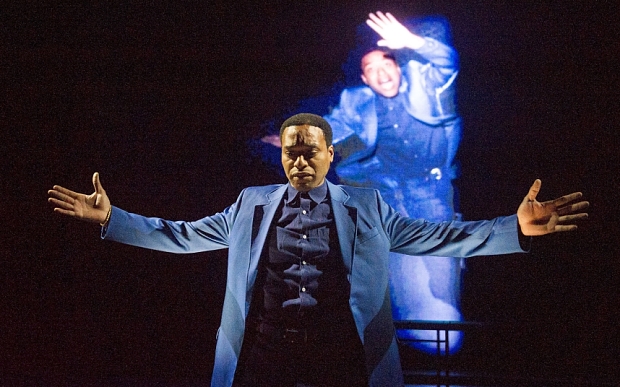
As a statement of intent of what Norris intends to bring to the National Theatre during his tenure as Artistic Director, Everyman – his first directing role since taking over- could hardly have been more purposeful.

The bravura opening sequence that stretches from the studied simplicity of Kate Duchêne’s God to Chiwetel Ejiofor’s spectacular initial entrance marries energetic vitality to a clear eye for using the wpid-wp-1431261893128.jpgOlivier’s vast space to compose striking images. It is a breathless and hugely ambitious piece of staging that successfully draws the audience into the action from the off.

It feels like a mark of how the National Theatre stagnated towards the end of Nicolas Hytner’s tenure that one has to go back to Danny Boyle’s Frankenstein in 2011 (or, tellingly, Norris’ own direction of London Road in 2012) to find another play that so successfully combined powerful story-telling with making full use of the Olivier’s unique performance area to create a truly theatrical experience.

London Road – now a film – may well have done more than anything else to secure Norris the most coveted role in British theatre. The critically acclaimed production created a beautiful harmonisation between a visually spectacular design and a highly original approach to verbatim story-telling. The play took universal themes and pulled them inside out, seeking to give voice to those ignored by traditional genre plotting but who still have to live their lives at the epicentre of tragedy. Between Alecky Blythe’s dramatisation and Norris’ direction, the voices of regular people from a small corner of Britain were given as much weight as importance as Peter Morgan gave to the Queen in The Audience. London Road was not just a play but a thoughtful articulation on what a national theatre’s mandate could be.

<<Continue to full review>>

Lights! Camera! Acting!

Product – Inside Intelligence @ Arcola Theatre, until 23 May 2015 (tickets)

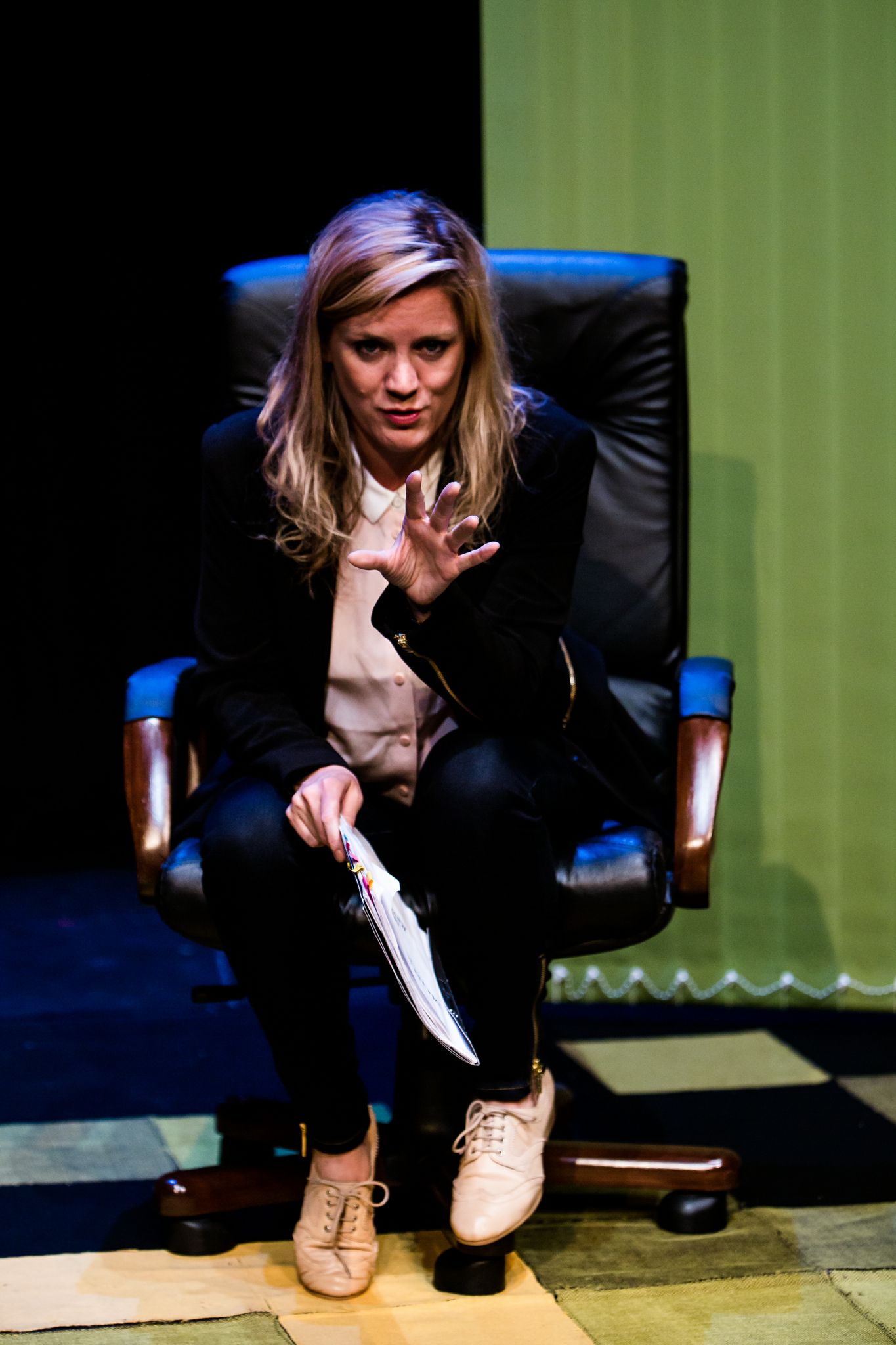
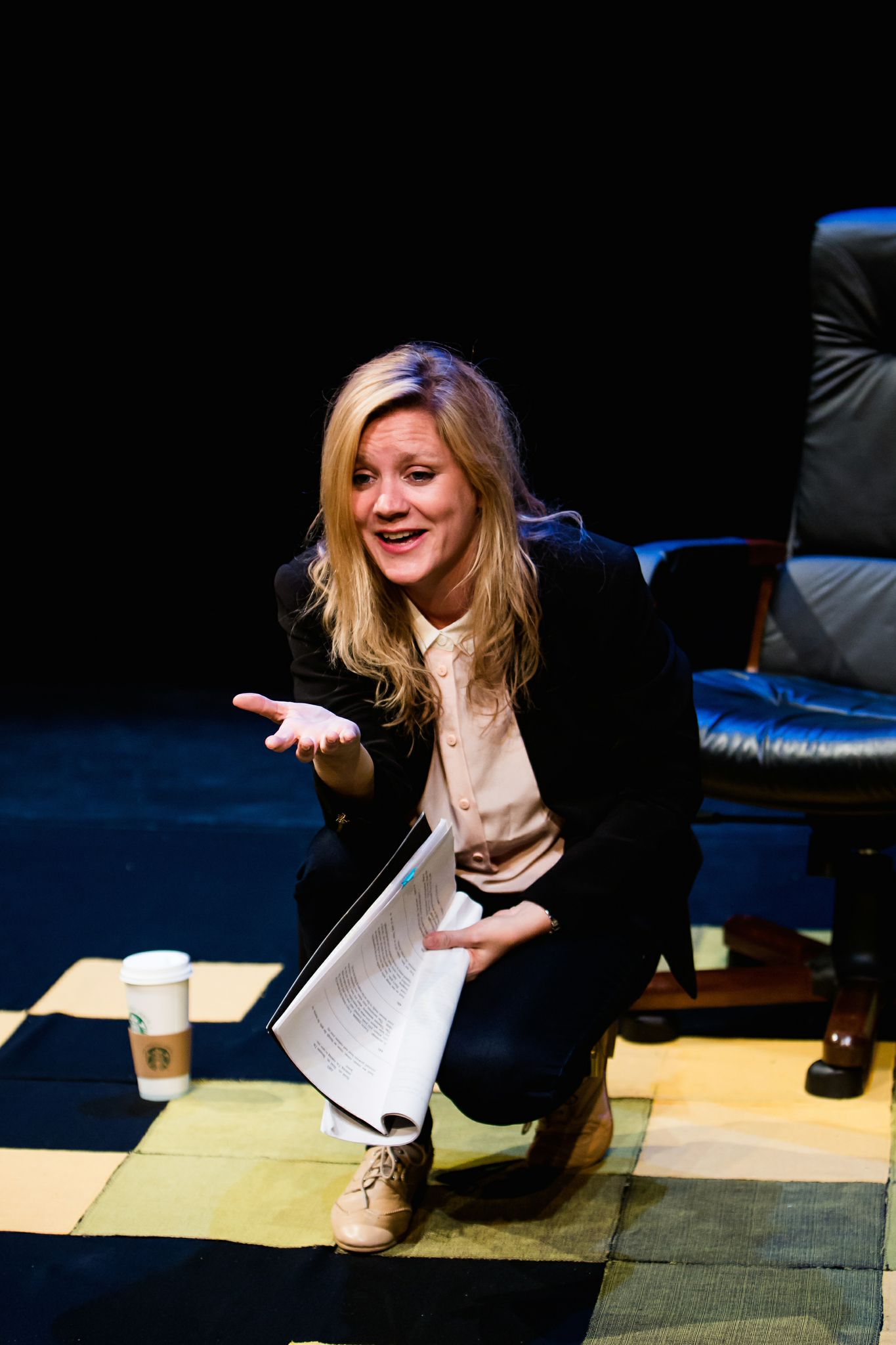
One could criticise Product for setting its sights too low. Hollywood – in all its gaudy, crass self-centeredness – is just too easy a target for a playwright as good as Mark Ravenhill; a writer whose wpid-wp-1430939978876.jpgdialogue is best delivered with a rapier’s thrust rather than a cudgel’s blow. But then, Hollywood being Hollywood, a complete shitball of a film like The Interview gets made (a film whose pointlessness is only equalled by its charmless offensiveness). Next thing a chain of events is set in motion that ends with news broadcasts dominated by the threat of North Korea going to war.

Whether we like it or not Hollywood matters. Cultural imperialism is one of the strongest weapons in America’s arsenal. Democracy may be won on the battleground but those beloved ‘western values’ are secured elsewhere. It is in the malls, the bootleg CDs and – for many – in the cinemas, where citizens are shown worlds of freedom, choice and (of course) sweet, sweet capitalism. Increasingly as the wheel continues to turn towards the East and the world welcomes China to the consumers club, we have seen the money men of Hollywood willingly kowtow to the emerging markets as American cinema spending flatlines. As a result major blockbusters, think Mission Impossible or James Bond, have whole sequences set in Macau and Shanghai shoehorned into the action.

wpid-wp-1430939985949.jpgThese strands of Hollywood venality and its relationship with the rest of the world were not the issues concerning Ravenhill when he wrote Product back in 2005. Then the focus was on the media’s response to terrorist events (9/11 is the shadow that looms large in the background) and the need for easily explainable narratives to sell to the public. The problem when trying to view the play in this light is that – and it may be a question of 10 years remove – these wider themes are never really brought into the light. It seems more obviously an often witty, always filthy, satire on the self-obsession of those working in the film industry. The play wonderfully breaks down a universal tragedy and places it entirely within the context of the individual – what does it mean to the character? What does it mean to the actress playing the character and to the person pitching them the role?

The play is strengthened immeasurably by the assured performance by Olivia Poulet. Always the character with not quite enough screen time on The Thick of It, Poulet is given room and time to develop the role. The script is so funny, and Poulet such an engaging and lively performer, that at times it has the air of a character comic rather than theatre piece. This is enhanced due to the fact that the audience effectively takes on the role of the actress being pitched to, and so Poulet talks straight to us. She is very good at flicking between the world of the film, and the abstracted commentator on the script she is describing, and by the end of the play she has conjured an entire film that the audience can believe it has really seen.

<<Continue to full review>>