London Riots: Theatre Special

So with the world, his wife  and their media entourage encamped in Edinburgh for the next few weeks, it asks the question of how those cosmopolitan metrosexuals of the capital can keep themselves entertained.

Well having asked the question, this week we got our answers… And our survey said that out of 100 participants the top two responses were:

 1) Looting

                               2) Appearing in court for looting

However for those who believe that life may have more to offer than G-Star Jeans, shiny new Nikes and £3000 of Rothman Superkings then there  is still the vibrant London theatre-scene…or not, an unfortunate consequence of the rioting meant that much of theatreland closed early to avoid the less than desirable impact of having your audience flambéed during the climax to Love Never Dies (the relief at being put of your misery twenty minutes early notwithstanding).

Having said that, every good rioter deserves favour now and again. And doing my bit to save London’s theatre, I suggest the following West End plays that are suitable for both rioters and vigilantes alike:

1) Hamlet – Young Vic

Shakespeare’s masterpiece about an emotionally troubled young man with an absent father. Watch as Hamlet slowly goes off the rails without the existence of strong familial discipline. Attempts from wise elders, young friends and even his own mother are unable to reign him in and the end, when it comes, is as tragic as it is sadly predictable.

2) Aladdin – Lyric Hammersmith

Experience the thrills and spills of Aladdin’s adventure to steal a magic lamp from a hardworking small business owner. Gasp in awe and laugh with delight as you watch Aladdin’s hilarious mishaps as he attempts to escape the local fuzz while holding on to a bin-liner stuffed with swag. And don’t worry folks, its just a pantomime so we can rest assured that Aladdin will get away with it and get the girl in the end.

3) Jerusalem – Apollo Theatre

A vision of life in our green and pleasant land. Follow Johnny Byron, spokesman for the everyday man as he faces eviction by the Council and hostility from the local community.

4) Les Miserables – Queen’s Theatre

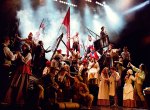
Follow Jean Valjean,our hero and a former prisoner, who is pursuedrelentlessly by his nemesis, the policeman, Javert. Featuring the most convincing portrayals of civil disorder ever captured on the London stage and stuffed full of famous songs that you will have heard at riots up and down the land, you too can sing along with popular classics such as ‘Do you hear the people sing?’ and ‘At the barricades’

5) Accomplice – Menier Chocolate Factory

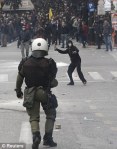
Described as part-tour, part-game, part-theatre, this innovative production takes people on a tour of Southwark. Constantly evolving, what started as a rather staid interactive mystery on the streets of London has turned into the capital’s hot ticket with new attractions including a burned out cornershop and a ransacked Lush. In this uniquely immersive productions, participants are able to throw bricks at police and indulge in a spot of light GBH in full-view of the much-loved London CCTV network. Smile for the camera guys!

Honorable Mention

Betty Blue Eyes – Novello Theatre

10% discount for English Defence League members.


Watch This! An anatomist of emotional pain

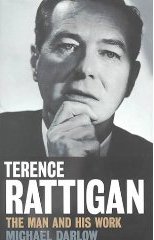
The signals have been there for a while – it probably started with the National  firing a warning shot off the bows with last year’s summer production of After the Dance at the National. Following that was Anne-Marie Duff’s barnstorming performance in Cause Celebre at the Old Vic; suddenly a star-filled, Trevor Nunn-fuelled Flare Path opens at the Haymarket and before you know it you’re in the middle of a full-blown set of centenary celebrations for one of the understated, and somewhat underrated, greats of 20th playwriting, Terence Rattigan.

A most enigmatic of figures who, like Noel Coward, was sidelined by the explosion in writing after Osborne’s Look Back In Anger blew away all the traditional conventions. However unlike Coward, Rattigan continued to write masterpieces in the form of Man and Boy and Cause Celebre.

BBC4 are shining the light on Rattigan, in which should be a fascinating look at a rather forgotten figure. Even better, current actor of the moment, Benedict Cumberbatch has been roped into host (naturally he must ‘go on a journey’, in this case visiting his own school, Harrow, where – surprise surprise – Rattigan was also a pupil)

Details: Thursday, 21:00 BBC4

The Beggar’s Opera : A pictorial review

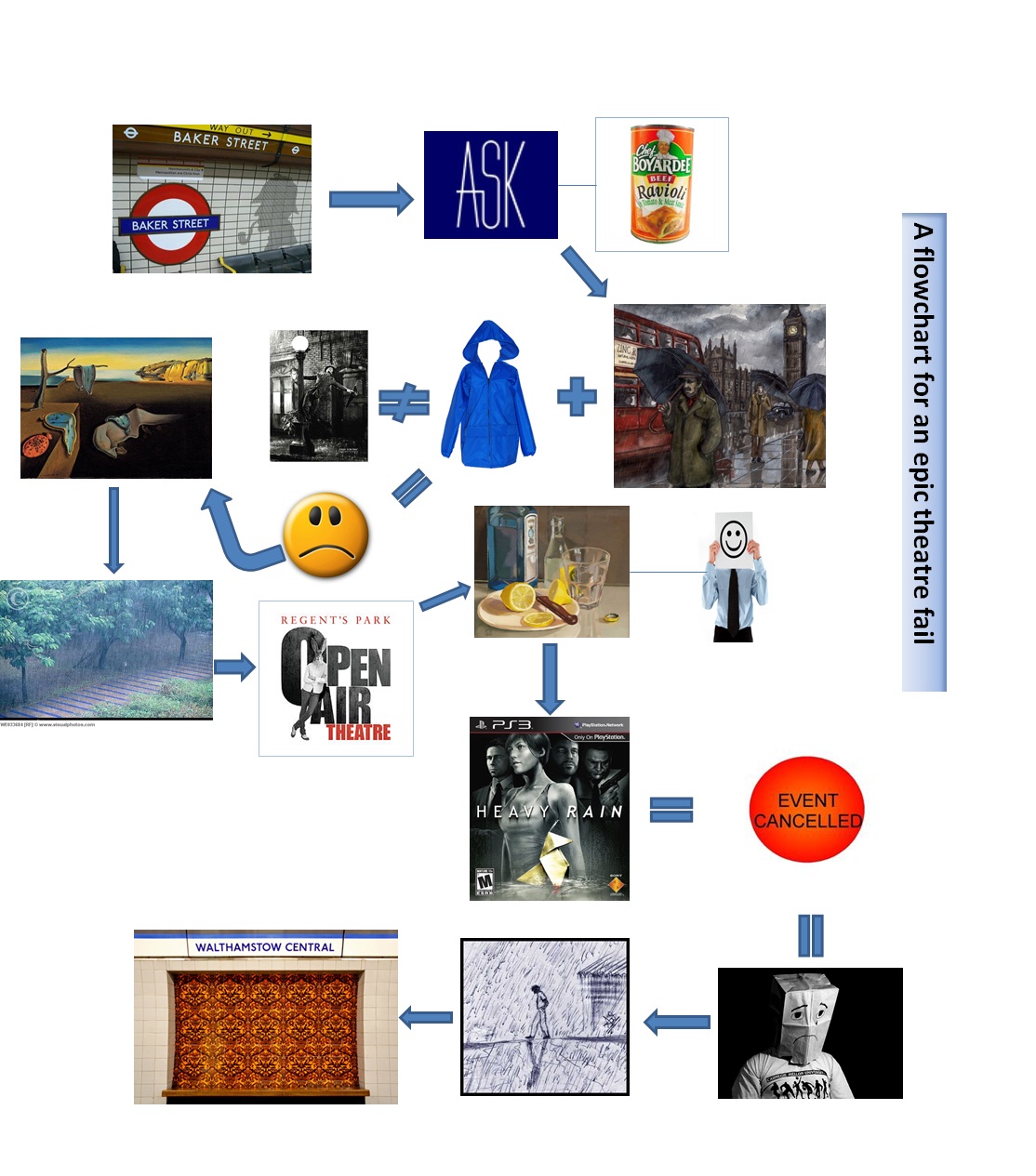
Last week, at the height of the glorious English summer, I decided to go and see John Gay’s classic popular opera, The Beggar’s Opera. An interesting piece that at the time satirised the excess of Italian opera, it is perhaps most famous today for Kurt Weill’s and Bertold  Brecht’s adaptation that turned it into The Threepenny Opera and the originator of the song, Mac the Knife. Anyway in a change to my normal prose, today’s review comes in the form of a flowchart.


…and then he stuck it in my ear…

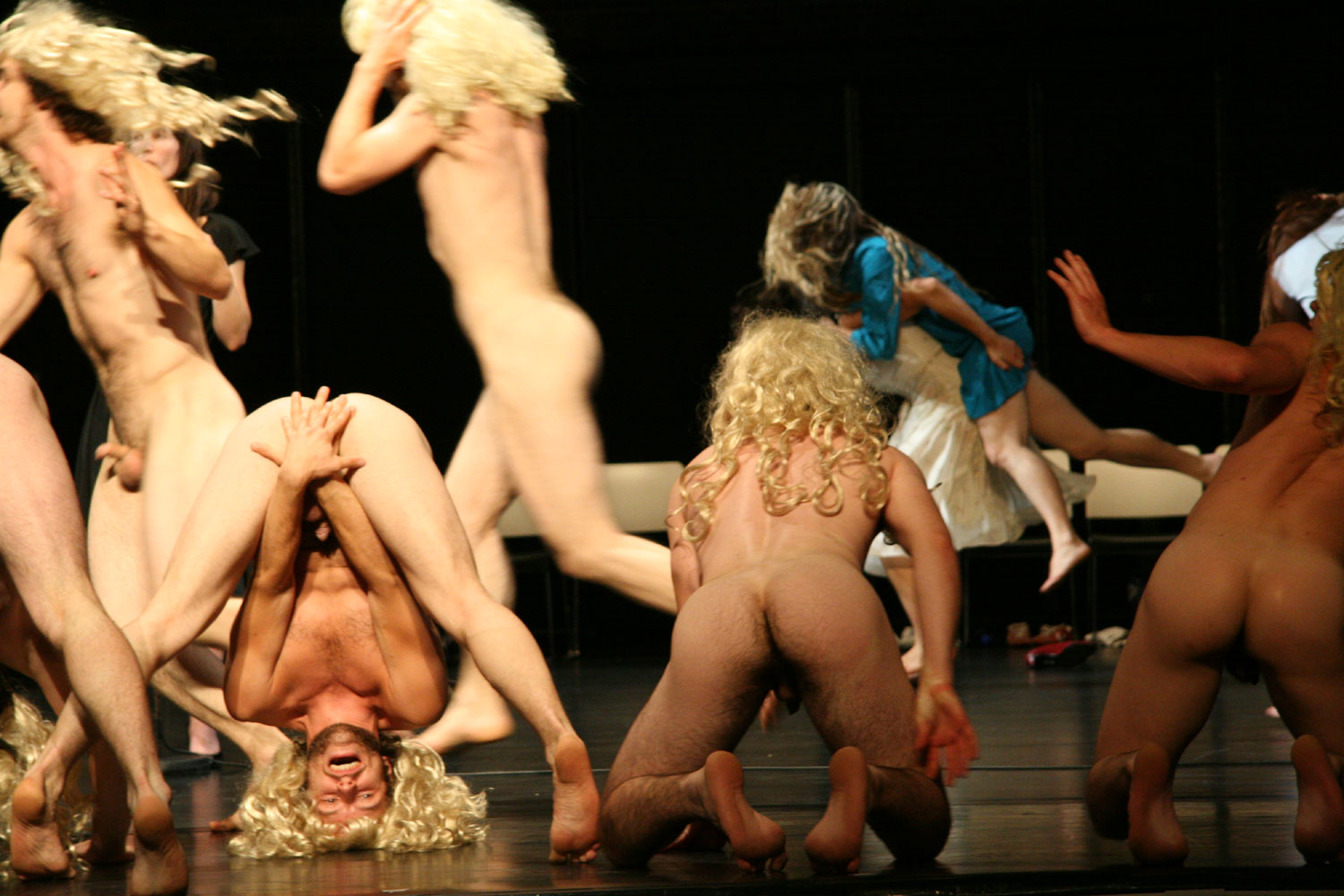
By a very large margin the biggest cultural event to hit London for quite some time was Dave St-Pierre’s show Un Peude Tendresse, Bordelde Merde! at Sadler’s Wells. Critical debate over the piece has been raging amidst tales of mass walkouts and rapturous applause. The Telegraph certainly didn’t like it, and the The Guardians wasn’t exactly glowing in its praise. However, and rather surprisingly, it found a small amount of favour with that notoriously liberal institution; The Daily Mail.
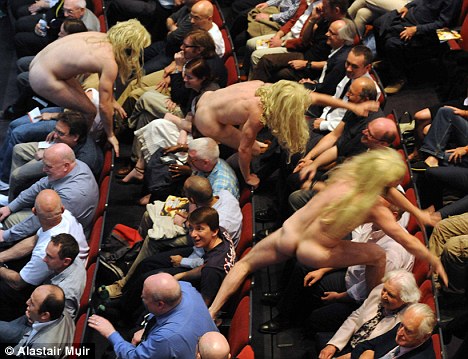
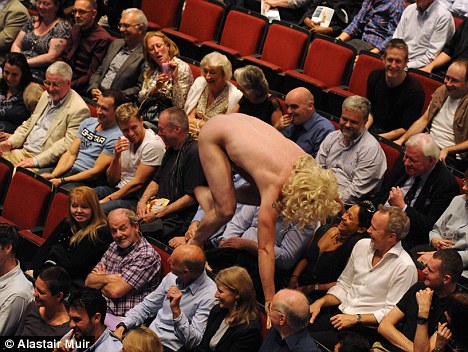
Tales of dancers rampaging naked through the audience, with one critic memorably describing having the rather unfortunate sensation of having someone’s member thrust into their ear, reminds us that there are still things that are capable of shocking us on stage. And, as is often the case, it appears that nothing is guaranteed to make the British feel deeply uncomfortable than the human body laid bare in all its questionable glory. Particularly when it is taken off the stage and into the audience, smashing the conventional boundaries that exist between performers and the audience and forcing them to take a much more detailed interest in the subject than they might have expected.

St-Pierre continues the growing trend for challenging the conventional relationship that exists between actor and audience. Director’s are learning that by finding ways to draw the audience past the traditional barrier of the stage, you begin to discover new mechanisms for involving them more closely in the action. The interactiveness found in Punchdrunk’s stunning, if flawed, Duchess of Malfi, meant that there were moments where audience members were left feeling they had some power to change the direction of the narrative.

In Un Peude Tendresse, Bordelde Merde! St-Pierre doesn’t just aim to break the conventions of traditionally staged dance, he means to create a piece that assumes a whole different compact with the audience. He wants the audience to view nakedness as a neutral state, one that should be value-free and without judgement. The male dancers who leap into the auditorium exist as state-of-nature innocents and the audience are challenged not to feel like voyeurs but to accept the dancers own child-like acceptance of their bodies. There is no doubt that St-Pierre blindsides the audience – they are helpless participants who must either sit there or walkout – but prior knowledge allows the opportunity to prepare for the assault on your preconceptions and the power of the piece exists in the tension of not knowing what could happen next.

He uses nakedness as a weapon to force the audience  to confront the idea that, rather than being the free-minded liberal individuals we like to think we are, in fact there are areas of our nature that we have marginalised. As a society, nakedness, whether as sexual imagery or just a neutral concept, has been pushed to the edges of what is acceptable, and there it remain; not discussed, not questioned and not seen. Whereas we can watch violence on TV and even practice gross violence in incredibly realised detail through computer games, it is much harder to see images of naked people in either format. There is virtually no nakedness, sexualised or otherwise, prior to the watershed, unless there is an ‘educational’ element to the show (such as The Sex Education Show on Channel 4) whereas soaps can contain storylines that often resolved by acts of rather extreme violence.

You can agree or disagree with the various codes of practice that has allowed a position like this to develop but the consequences can be seen in the reaction to Dave St-Pierre’s piece. Whilst the quality of the choreography apparently left a lot to be desired, it was hardly awful enough to cause such a large number of people to leave. The walkouts occurred because members of the audience were not ready to face such a direct assault on their values. And this was achieved through the immediacy of the piece, the result of taking the nakedness into the audience. In a time when it appears more and more difficult for people to shock and offend, it is interesting to see that one of the last remaining taboos is something that should be so innocent.

It is interesting to think about the different levels of acceptance to nudity and violence when thinking about the piece in contrast to the warmly-received but emotionally rather limp revival of Blasted at the Hammersmith Lyric earlier in the year. Sarah Kane was often regarded as a similar l’enfant terrible of her generation of playwrights; often baring her soul and life in front of her audience. However watching Blasted – with its procession-line of grotesque images- surrounded by rows and rows of drama students who were clearly going along mentally ticking of all the supposedly shocking moments of horror in knowing appreciation, it was not hard to feel rather let-down by the impact.  The play clearly suffers from its familiarity and much of its power is lost in knowing what is about to occur.

The same criticism can doubtless be  levelled at St-Pierre’s piece, after a while the audience will come knowing that they are about to witness an ‘event’ and with it will come a knowingness that can only detract from the power of the piece. The audience will not be challenged to confront their discomfit because they will understand the boundaries that are expected before it begins.

Perhaps that is the ultimate fate with all pieces that have the power to shock; ‘Hair’ famous nude scene must have been quite something when it was first staged but now it is thought of with some fondness of as a curious attempt to blend the hippie movement with musical theatre. However while it remains contemporary lets embrace David St-Pierre’s piece for going out of its way to force us to confront something that clearly can still cause us deep discomfort.

Spotlight On: Adam Curtis

Ok the first in a new series of Spotlight On. These will look at people who, for whatever reason, have caught my interest. First up the inexplicable and inexplicably brilliant Adam Curtis.

Adam Curtis returns to the BBC on the 23 May with his new series, ‘All Watched Over By Machines Of Loving Grace’. For anyone reading who doesn’t know who Adam Curtis or why a documentary maker is featuring on a theatre blog then the good ol’ folks at the BBC have put the whole of ‘It Felt Like A Kiss’ on the website (http://www.bbc.co.uk/blogs/adamcurtis/it_felt_like_a_kiss/). This sublime montage work was created in collaboration with Punchdrunk as part of the Manchester Festival.

It Felt Like A Kiss marks a more explicitly artistic approach to serious documentary film making than Curtis has subsequently produced and ‘All Watched Over…’ appears to be a continuation of this approach (a short taster can be seen here: http://www.guardian.co.uk/tv-and-radio/2011/may/06/adam-curtis-computers-documentary). In the clip Curtis seems to be continuing with his experimentations in montage and discordant sounds rather than delivering a straight narrative (in the style of Dispatches or Panorama). The ongoing use of film clips, archive news footage and interview in juxtaposition may be regarded as pretentious by some but this underestimates the scale of what Curtis is attempting.

Curtis’ documentaries are… continue reading here

Spotting a summer celebrity – 2011

 Five to watch

It’s that time of year again when those celebrities, or those unfortunate to have missed out on the chance to spend the next four months sitting in hotel lobbies desperately promoting a $200 million turkey to  hacks still willing to buy into the illusion that Pirates of the Caribbean represents a significant addition to cinema’s canon, remember that theatre represents their true calling along’.  We can forget for the moment that most will have disappeared back State-side, ready to add a new-found gravitas to an already embarrassingly padded C.V, just in time for the festival circuit and instead enjoy gawping at people we normally see in while chowing down on a bucket of popcorn the size of a small child.

5) Rupert Everett & Diana Rigg

Pygmalion – Garrick  Theatre, from the  25 May 2011
First off, sadly Diana Rigg is not due to play Eliza Doolittle, although that would be an officially awesome reworking of George Bernard’s Shaw classic. Instead she is down to play Mrs Higgins, while Rupert Everett reprises the role of Henry Higgins that he first played as part of the Chichester Festival.

GBS is having a slightly revival of late, with recent major productions of St Joan and Mrs Warren’s Profession gracing Londdon, after a long period of having been pushed into the shadows. I am sure the imperious Diana Rigg will be splendid but Everett is the more interesting choice; he, after all, is a man who never quite made it onto the Hollywood A-list (for reasons that may or may not have to do with him being openly gay) who will be playing a character who works to fundamentally change Eliza so that she is more socially acceptable. One wonders what Freud would have to say about that?

Celebrity enjoyment factor: C

4) Jude Law

Anna Christie – Donmar Warehouse, 04 August – 08 October 2011

Jude Law loses out in the battle of the Hamlets (see 2. below) but this is partly down to the fact that I don’t really know as much as I should about Eugene O’Neill and his plays. Wikipedia tells me that this one the Pulitzer Prize back in 1922 so I am guess it is going to be pretty good and Long Day’s Journey into the Night is generally regarded as an American classic.

The Donmar rarely puts on poor productions and Jude Law, even before Hamlet, is no mug on stage. Just as he was starting out in Hollywood (way, way before the Jude Law overload of 2004, which saw him opening 6 films in one year and the public getting more and more sick of the sight of him – the nadir probably being the execrable remake of Alfie) he left an indelible impression in the Young Vic’s production of ‘Tis Pity She’s a Whore. If this production is half as good as that then, following a reasonably strong Hamlet, we may be seeing the moulding of Law as a strong presence on the British stage.

Celebrity enjoyment factor: B-

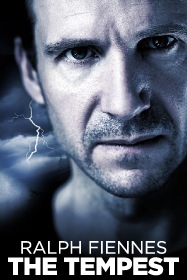
3) Ralph Fiennes

The Tempest – Theatre Royal  Haymarket, 27 August – 29 October 2011 
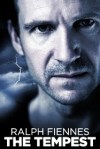
Coming as part of Trevor Nunn’s impressive first season as artistic director of the Theatre Royal Haymarket (we have already seen a well reviewed, and star-heavy, Rattigan revival in Flare Path and we can look forward to Rosencrantz and Guildernstern are Dead in early summer), The Tempest has drawn one of the few actors who seems at ease on stage as he is on camera. Ralph Fiennes, who has previously excelled as Julius Caesar and has been busy with his directoral debut, a modern-day version of Coriolanus, so is clearly no stranger to Shakepeare (even if many of his younger fans may recognise him more clearly as Voldemort in Harry Potter).

The only question-mark is his age. Not yet 50, Fiennes would seem to be a very young Prospero (even if Miranda is only supposed to 16); traditionally a part that actors take as they approach the end of their careers. The question is whether Fiennes has the gravitas of a man who was cast adrift when his daughter was just a baby. In lesser hands it may be more of a concern but looking at some of his career highlights to date – Quiz Show, Schindler’s List, The English Patient, The Reader – it is clear this is a man who understands and enjoys complex roles, and this should be an exciting proposition.

Celebrity enjoyment factor: B

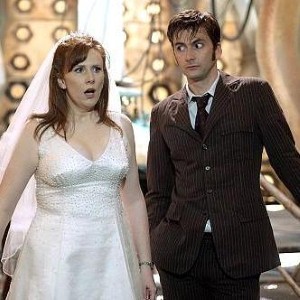
2) David Tennant & Catherine Tate

Much Ado About Nothing – Wyndhams  Theatre, from May 16 2011

Admittedly this isn’t exactly Hollywood but this is about as close as we get in the UK. The Doctor and one of the most left-field choices of companion turning it around and going head to head in one of Shakespeare’s most ferocious and ferociously funny comedies. Tennant showed in Hamlet that he has a quick-silver tongue and Tate has demonstrated a motor-mouth on numerous occasions; even without the pre-history of Doctor Who behind them, this would be a Benedict and Beatrice worthy of note. 
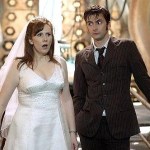
My only gripe is the outrageously expensive ticket prices, god only knows whether they plan to somehow incorporate time travel into the show but with Stalls seats running at £61 and the Circle for £51 there had better be something splendid to justify the price. While it would be naive to expect reasonably priced tickets in the West End, it is profoundly depressing when a show which will clearly appeal to children and those who don’t always go to the theatre will cost a family of four over £200 for seats that are not right up in the gods (spending over 2 hours with that little leg room is enough to put people off Shakespeare for life). If people complain about the sustainability of theatre then productions like this, which seem to exclude new audiences through price alone, should take a large part of the blame.

Celebrity enjoyment factor: A-

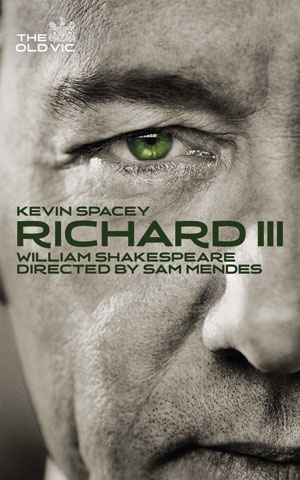
1) Kevin Spacey

Richard III – Old Vic Theatre, from 18 June 2011 before an international tour

If you, like me, has been more than a little underwhelmed by Kevin Spacey’s period as artistic director for the Old Vic then hopefully here is the big project you have been waiting for.  It seems that there have been too many small scale American plays that haven’t resonated with audiences this side of the Atlantic and when Spacey has been on stage we have seen nothing of the tour de force performance that brought him international acclaim in The Iceman Cometh.
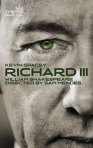
Well if anything calls for a tour de force then it must be Richard III. One of the great ‘acting’ roles, Richard III must leave actors salivating. A great plot of intrigue and murder, one of the first anti-heroes; a king who is both crippled in mind and body. From the off… ‘Now is the winter of our discontent…’ this is a play crammed full of memorable lines and set-pieces. It can only be hoped that Spacey, under the direction of the reliable Mendes, who clearly knows how to work with film actors, really lets himself go and retakes the stage by storm.

Celebrity enjoyment factor: A