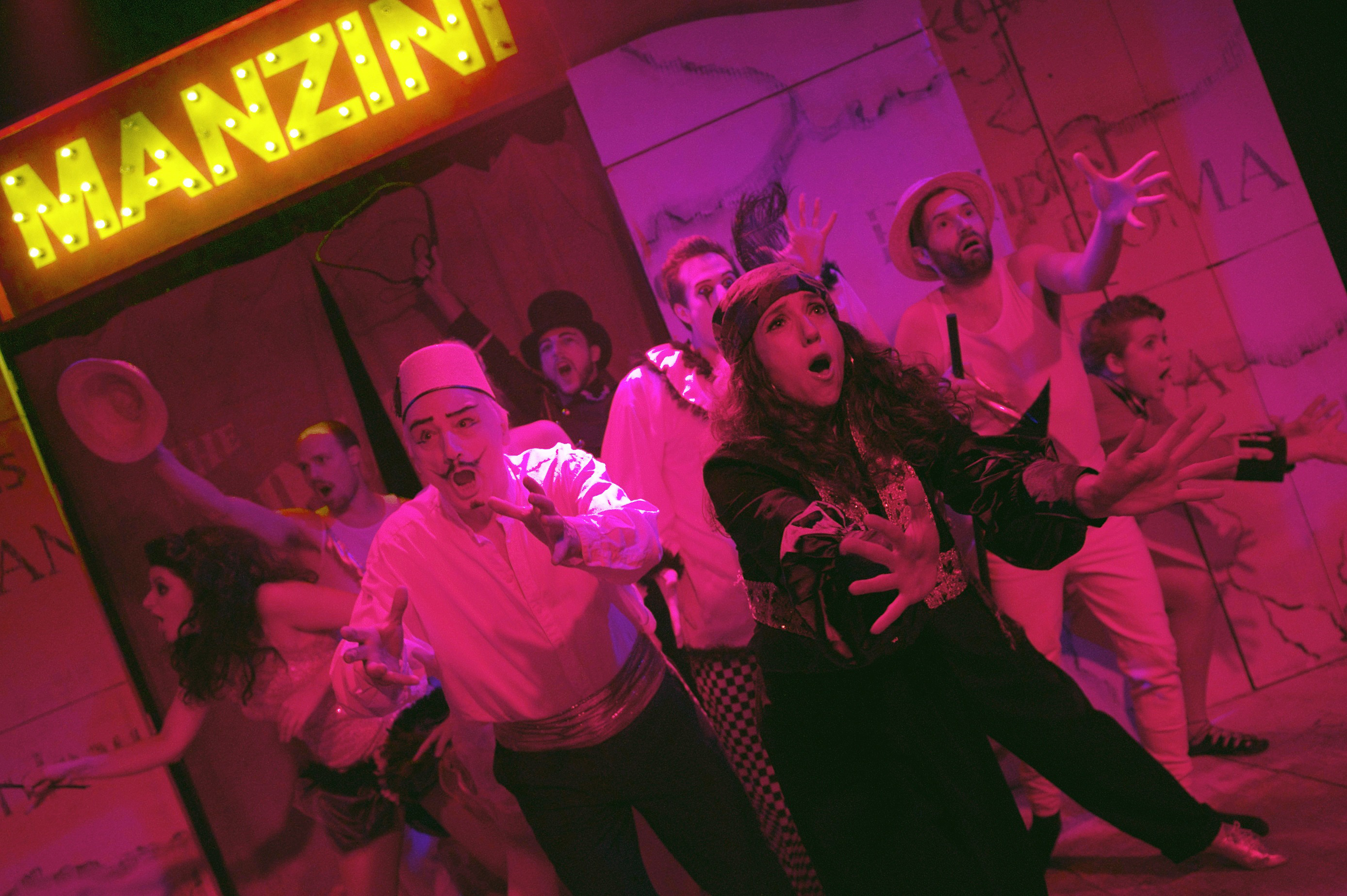
Though this be madness there should be method in it

Hamlet – English Repertory Theatre @ Cockpit Theatre, until 15 March 2015 (tickets)

I would like to open this review by mentioning that Civilian Theatre does not see itself as one of those critics that takes a perverse pleasure in lacerating poor productions with a damning review; chuckling to oneself with each stab of the keyboard. In the four years of reviewing plays, Civilian Theatre has only really laid into two productions (Babel and Peter & Alice) and both were big B02J4494-210enough to make it unlikely that my chiding remarks would have any real impact on the sensitivities of those involved.
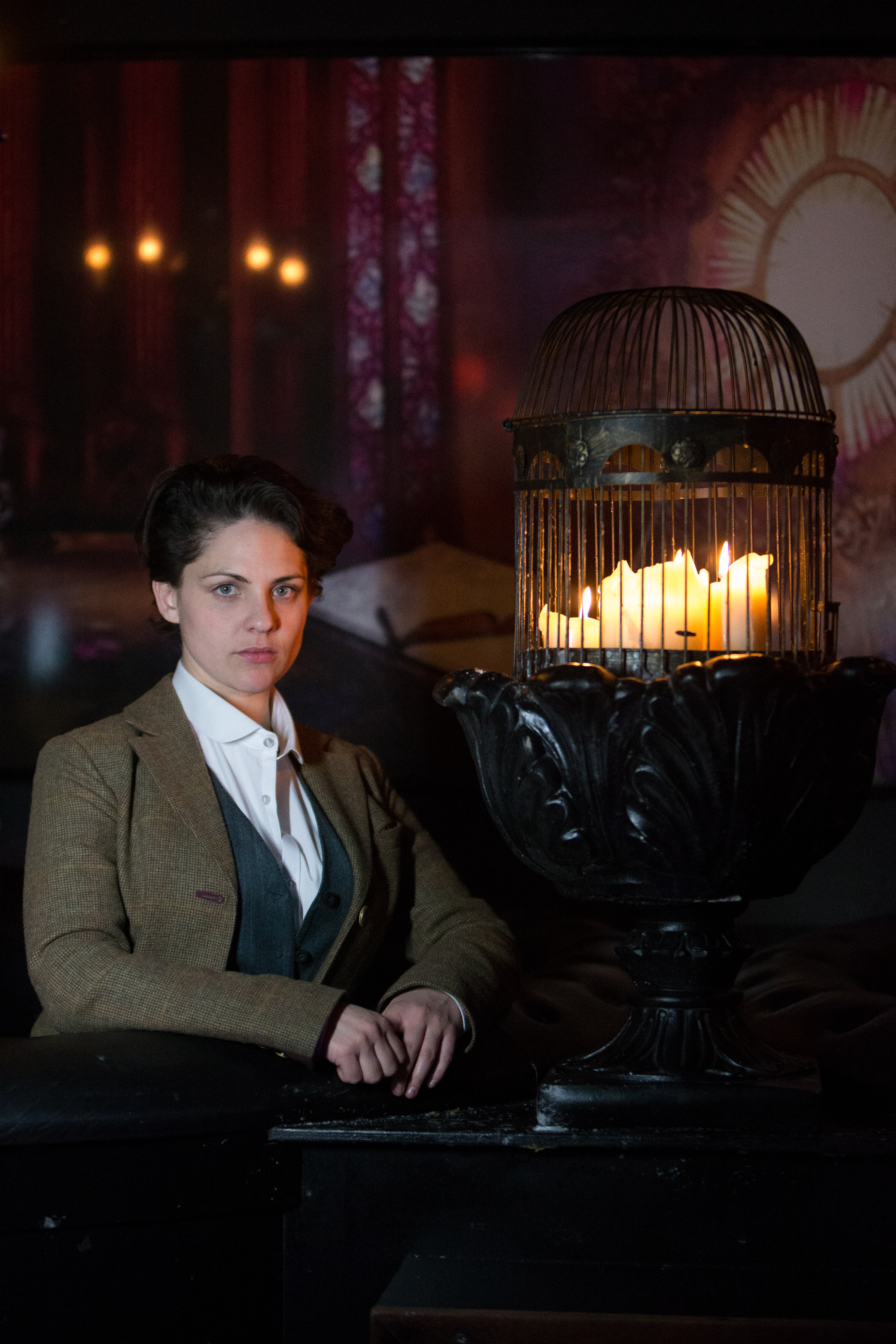
With smaller-scale, or up and coming, companies it usually preferable to take a more modulated tone; criticism can serve two purposes, on one hand a review is written so that a potential ticket buyer can draw something meaningful about a play whilst a theatre company may also use it to draw insight from what a person distanced from the production process took away from the evening.

So in a roundabout way, and with the previous two paragraphs forming a mea culpa for what is to follow, we reach Hamlet, usually by William Shakespeare but here pared-down to 90 minutes and subject to reworking by the English Repertory Theatre.

Now I have been a stalwart defender of the right to adapt Shakespeare in order to draw in new audiences or to cast fresh perspectives on the action. I loved both of Phyllidia Lloyd’s productions at the Donmar (Julius Caesar and Henry IV), and felt that cutting close to four hours from Henry IV Part I & Part II was entirely validated due to the way it thrillingly reinterpreting the relationship dynamics between the lead roles.

However it is a high risk approach and one has to be sure that every snip from the text is dramatically justified and lends to the clarity and purpose of the production. So in this version it is understandable that you would excise much of the political intrigue that swirls around Elsinore, cutting Fortinbras and Hamlet’s trip to England completely and narrowing the action to Hamlet’s coterie in order to fit it to the school setting.

What is less understandable is why you would then reallocate dialogue so that Horatio delivers Fortinbras’ final lines in a cod-Norwegian accent. It is a terribly misjudged comic coda for what is ostensibly a tragedy, and also acts as a strangely out-of-place addendum at odds with the key themes that have been drawn out in the cut-down text.

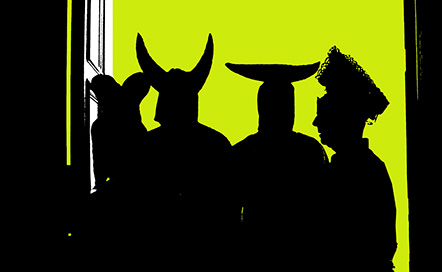
This is just one example of the confusion that mars a production that reeks of being cannily targeted at the school syllabus; the stripped down running time and the schoolyard setting feel  little more than a lure to entice the financially powerful student trip market. The use of a school as a framing device is never justified, and leads to far more questions than answers, so that in the end it becomes a performance that lacks narrative coherence.
<<Read the full review here>>

Radical treatment, radical theatre

The Eradication of Schizophrenia in Western Lapland – Ridiculusmus @ Battersea Arts Centre (Touring until March 2015)

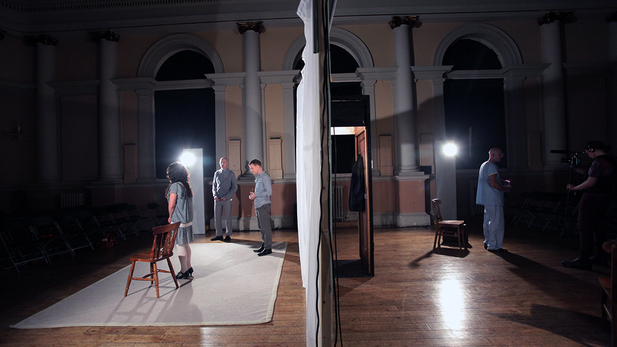
For various reasons this review of The Eradication of Schizophrenia in Western Lapland comes over a week after experiencing the production at the Battersea Arts Centre. Often, as a reviewer flitsEradication from theatre to theatre, trying to write a review after such a delay can be troublesome as images from different plays begin to blur together in the mind. This isn’t a problem for Ridiculusmus’ The Eradication…, which pulls of a coup de théâtre with their simple but brilliantly effective approach to staging.

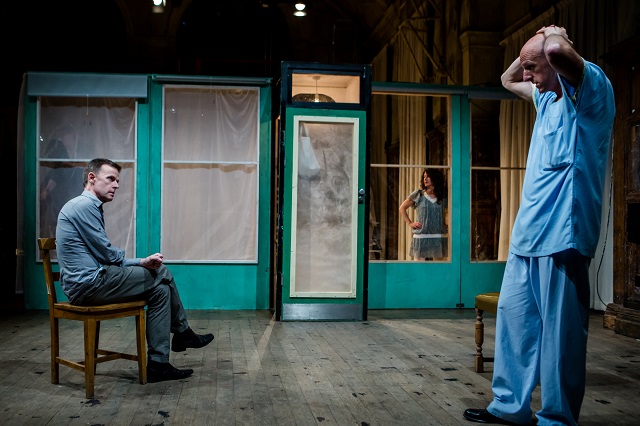
In portraying a family being pulled apart by the spectre of mental illness, Ridiculusmus’ decision to split the audience in half, dividing the stage with a simple screen and performing two overlapping narratives, isn’t just a technical device to garner attention on the highly competitive fringe circuit but exists to act as a mechanism to enable the audience to step inside the fog of psychosis.

Ridiculusmus present the eradication of schizophrenia in western lapland at BACCreating a shared understanding is one of the big challenges to changing perceptions on mental illness. Most people have suffered injury or been physically ill at some point in their lives, and as a result they are able to draw on this experience, however limited, in order to shape their understanding and build a connection to those with a terminal disease or with a physical disability.

However if a person has never experienced a mental health illness then it is very difficult to associate with any description on the pressures on a fragile psyche, and in turn the best that can be offered is glib and often wildly inaccurate approximations.

Ridiculusmus’ approach to staging brings an audience about as close to the reality of mental illness as it is possible to get. Separated from half the on-stage action but with the dialogue bleeding through the divide – sometimes appearing to interlink with the scene you are watching, at times talking over it and on other occasions hearing it only as a background hum – it recreates, in the audience, the polyphonic chorus that accompanies many people entering schizophrenic psychosis.

<<Read full review>>

Fever 0272 - Tobias Menzies by Perou

A hallucination from my fevered brain

The Fever – Almeida Theatre @ The May Fair Hotel, until 07 February 2015

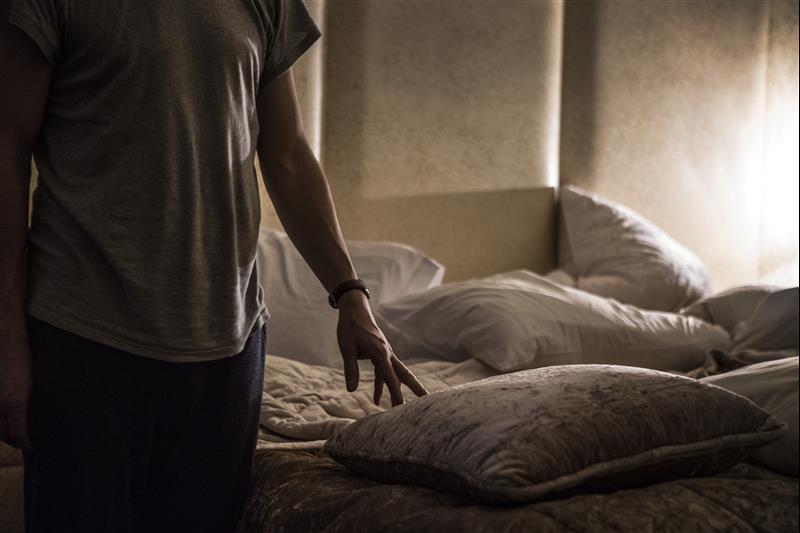
The use of The May Fair Hotel is spot-on. It isn’t so much that it is a luxury hotel, but it is that type of global, anonymous luxury that means absolutely nothing. The Savoy, the Ritz or the Carlton;the fever banner they may be pricy but there is a distinct personality to them. From the lobby, through the corridors and into the exclusive high-end suite where Wallace Shawn’s incisively powerful monologue has been set, the most striking feature is the sheer facelessness of this wealth.

Generic abstract ‘world’ art hangs on the wall, the corridors have a plush carpet but are really not so different to those found in any Travel Lodge and there is absolutely no personality to the room. Containing huge flat screen TVs, top-end speakers and a bathroom as big as a London studio flat, it doesn’t thrill but importantly it doesn’t offend. Perfect for the wealthy Russian and assorted euro trash clientele that swarm around Mayfair, keeping London’s economy buoyant in the face of the latest dismal news emanating from the eurozone.

Fever 0242 - Tobias Menzies by PerouIt is perfectly chosen for a monologue that captures the global dynamic of modern wealth, the faceless hotel room culture of the high-flying worker from the developed world. Take a photo of it and you could never hope to guess what city it is located in. London to Mumbai, New York to Lagos, we have joined the hermetically sealed world of the international class.

Wallace Shawn wrote this tremendous piece back in the 1990’s. Even if some of the terms have dated – there is an almost charmingly old-fashioned bit on Das Capital and, of course, there is no mention of the threat posed from a resurgent Islam – it is sadly even more relevant than when it was written. Day after day we hear how yet more of the world’s global wealth has fallen under the control of the richest. In 15 years we haven’t turned this tanker around, and the terrifying aspect of Shawn’s play is the chilling realism of it not trying to suggest we will do so in the future.

Shawn wrote words that he felt needed to be said. Well, this production demonstrates we need to keep saying them. He brilliantly frames issues in a way that have an immediate resonance. His section on the fanaticism of the metropolitan class – how their brains refuse to even allow themselves to consider the inherent unfairness of the global capitalist set-up because if they did then they couldn’t function – is one of the most singularly incisive critiques I have heard on the issue.

<<Read full review here>>

Dante: Re-Brand-ed

Dante’s Inferno: A Modern Telling – Craft Theatre @ The Rag Factory, until 01 February (Tickets)

On sitting down to enjoy a post-show drink the friend I invited to this intense interpretation of the first part of Dante Aligherei’s Divine Comedy, the dante 114th century epic allegory of a man’s descent through the nine circles of hell, sheepishly admitted they may have told colleagues they were going to see Dante’s Peak.

Well, one can but try.

Full disclosure leads me to sadly announce that at The Rag Factory there was little sign of either active volcanoes or renowned vulcanologist Pierce Brosnan.

Instead audiences had better buckle up and prepare themselves for 80 minutes of earnestly performed theatre that attempts to blend the meditations of an early renaissance literary masterpiece with the post-1970’s politico-spiritual philosophies recently given a new lease of life through the ever enthusiastic talking head that has become Russell the Brand.

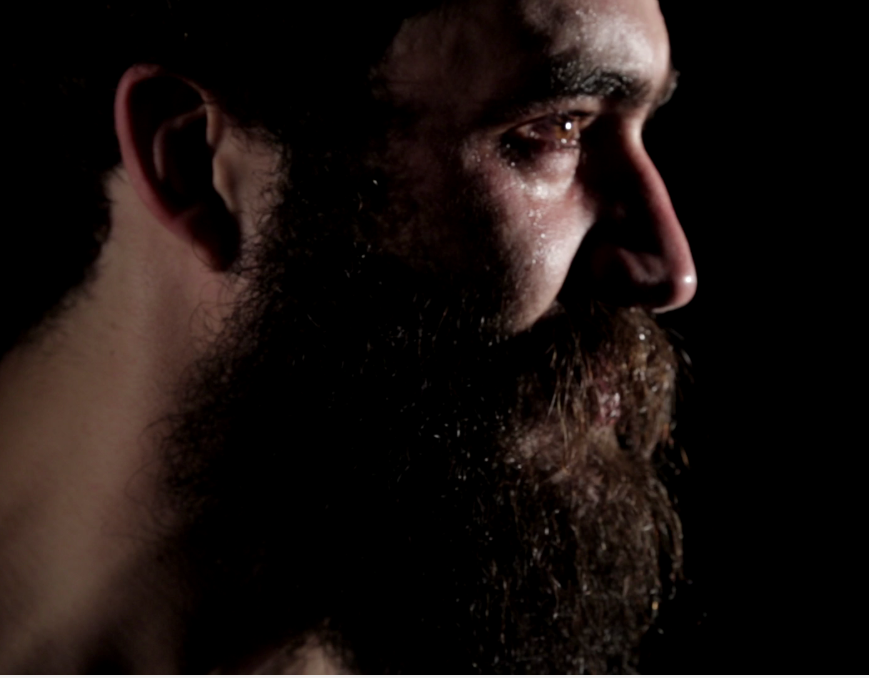
luke eyeThere is something thrilling about watching a young company work through the process of creating a form of confrontational theatre of their own.

And Craft Theatre certainly know how to talk a good game. Their website is full of intriguing statements about how they have “a practice that allows the actor to understand and become master of their body, emotional reservoirs, and internal mechanism. Our unique way of working keeps the actor present, authentic, grounded, and always searching for development”. And some of the rest is perhaps best left to Private Eye’s Pseuds Corner.

The working techniques reference the incorporation of physical exhaustion and identity deconstruction, which on the surface doesn’t seem entirely pleasant but at least sounds more appropriate for Dante’s Inferno than for, say, The Importance of Being Earnest.

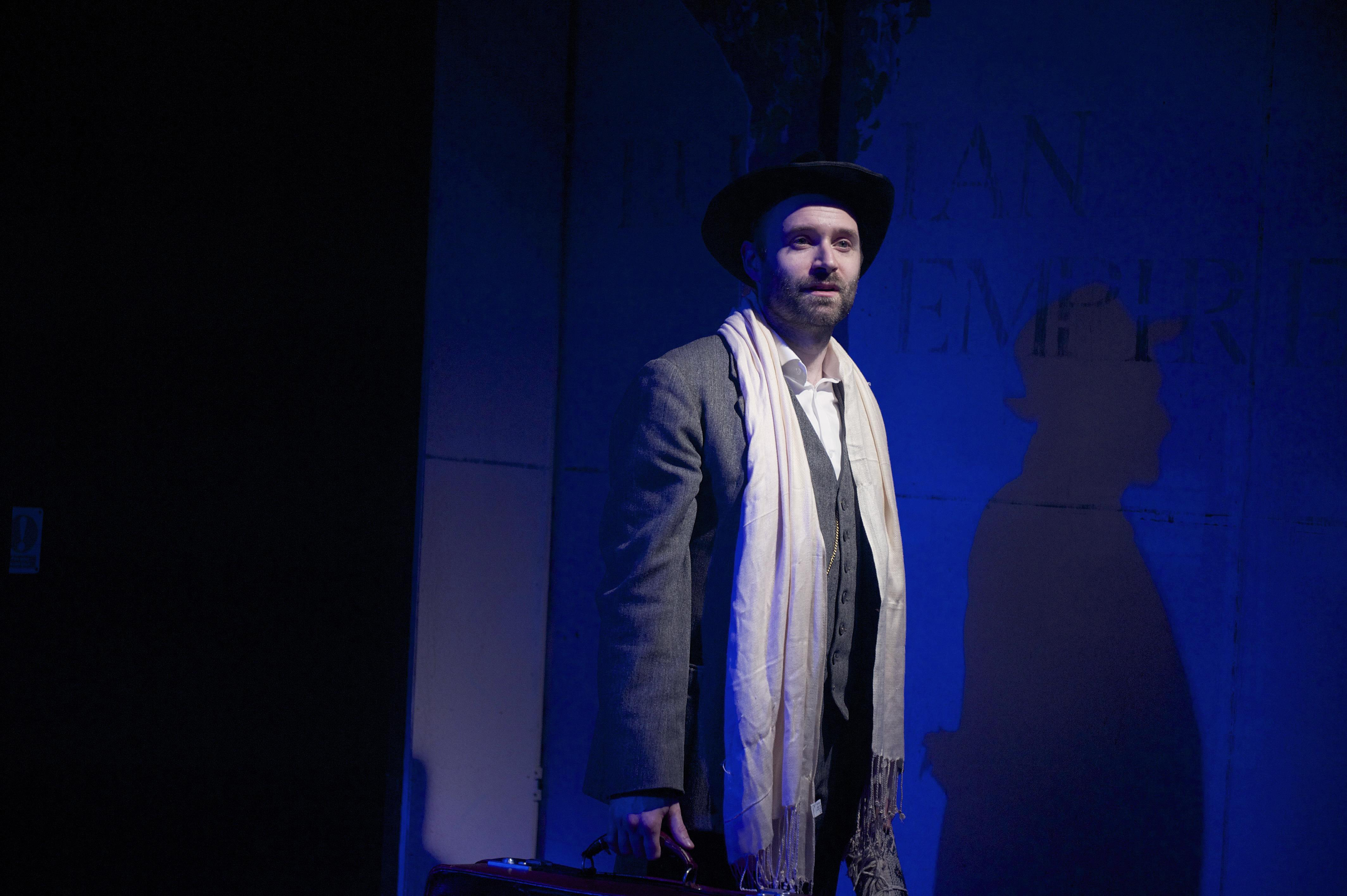
It contains several lovely moments that suggest a level of trust between performers not always evident on stage. In particular the bedroom scenes between Dante (Lucas John Mahoney) and his partner (Maria Swisher) display a naturalistic intimacy more often associated with US indie filmmaking, and it provides a realism that grounds Mahoney’s Dante in the world we recognise.

<<Read full review>>

2014: A Year in Facts and Figures

A very quick snapshot of Civilian Theatre’s year theatre, as captured by WordPress.

73: Plays Seen  (36% up on 2013)    

69: Plays Reviewed

This includes:
8 Shakespeare Plays (11%)
10 Musicals / Operas (14%) 
37 were new works (50%), of which 22 were not based in existing literature or historical events (30%)
6 were in a foreign language (8%)


Most popular posts of 2014

1. The Crucible

I am sure it was the popularity of Arthur Miller’s classic play and not the appearance of chisel-jawed Thorin Oakenshield in the cast that propelled this to the top of my most read articles of 2014.

2. A Dream Turned Sour

Anything that increases the popularity of The Tiger Lillies is fine by me. This production, orchestrating World War One poetry, was all the things that they do well. Bringing a new and revealing power to well known works by filtering it through their atmospheric baroque soundscapes.

3. The Nether

So it appears I am the only one who thought this play was entirely average and not nearly as interesting as it seemed to think it was. Other bloggers appeared to have loved it and it has got a West End transfer, so it shows how little I know about such things.


Top 10 Countries by Visitors (thanks guys!)

  1. United Kingdom
  2. United States
  3. Brazil
  4. Germany
  5. Australia
  6. France
  7. Canada
  8. Italy
  9. Spain
  10. Russia Federation
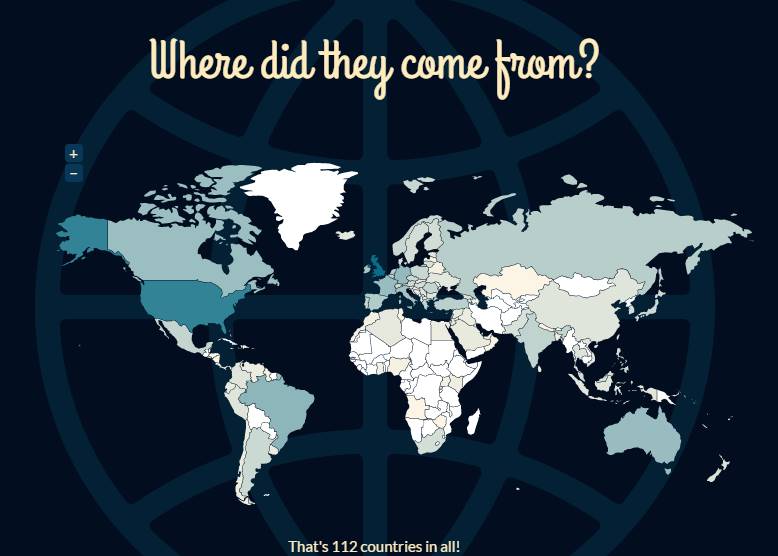
  • Civilian Theatre was visited by people from 112 countries in 2013. Up from 83 last year. This represents 58% of all countries recognised by the United Nations.
  • However I hope the one person from Nepal will visit again next year. A lot to do in Africa with the majority of the continent not finding their way to the site. Better news in the Middle East where we even managed to get multiple views from Iraq and Syria. Clearly Civilian Theatre is part of the bumpy road to democracy.

The worldwide reach of Civilian Theatre

Countries


The Grand Tour? Oh you mean ‘Le Grand Tour’, oui?

The Grand Tour – Finborough Theatre, until 21 February (tickets)

In Hello Dolly Jerry Herman can lay claim to having created one of the most successful Broadway musicals of all time. It ran for over 2800 performance and won a staggering 10 Tony Awards. Two decades later he enjoyed another huge hit in La Cage aux Folles, which has won a major Tony in each of its Broadway runs.The Grand Tour 3 Alastair Brookshaw (Jacobowsky) photo Annabel Vere

In the decade between these two huge hits Herman wrote three less successful musicals (which include the cult classic Mack and Mabel) of which one was ‘The Grand Tour’. It has never having previously been performed in Europe and there was, despite the Finborough’s mighty reputation, a question mark in my mind over the reason why this might be so.

Well it certainly isn’t a dud. If this is not the strongest musical to hit the London stage then one only need cast a jaded eye over the offerings from ‘Theatreland’ to see that it is a long, long way from being the weakest.

However for all the spirited energy of the cast and another piece of spritely direction from Thom Southerland – who currently appears to be operating a cartel in the relatively niche field of small-scale musical direction – there are enough problems with Michael Stewart’s and Mark Bramble’s Book to suggest the work is destined to remain a curio piece for the dedicated rather than be reassessed as a missed masterpiece.

The Grand Tour 5 Natasha Karp, Nic Kyle, Vincent Pirillo, Michael Cotton, Samuel J Weir, Laurel Dooling Dougall, Alastair Brookshaw and Lizzie Wofford photo Annabel VereThe main problem is that, despite being based on a pre-existing play, the production feels more akin to fragmentary scenes forced into a thematic connection by the overarching story of Jacobowsky and the Colonel. As a result, after a strong opening, we have ‘a scene on a train’, ‘a scene at the circus’ and then, most jarringly, ‘a scene at Jewish wedding’. All of these are performed extremely well and are very enjoyable to watch, but it is hard to be convinced as to why it is all occurring.

The relationship between the three leads is rather too closely reminiscent to the dynamics between Rick, Ilsa and Laszlo in Casablanca. However the creators are too fond of Jacoboswky to allow for the depiction of humanity’s shades of grey that makes Casablanca such a masterpiece. In the end Jacoboswky is both the humane, philosophical Jewish refugee and the hero who will lay down his life for his friends.

In opposition to this Colonel Stjerbinsky really is a clunking idiot – at least Victor Laszlo got the wonderful moment of being able to singLa Marseillaise to remind the audience why Ilsa would have fallen for him in the first place. Without a similar moment we are left to wonder why on earth Marianne prefers him to our hero, Jacobokwsky, and how Stjerbinsky got even half as far as he did without someone selling him out to the Nazis.

Yet despite all of this, it still works remarkably well. There are a number of songs that show us that Herman was still in the middle of his three decade purple patch. I’ll be here tomorrow would stand
up well in any musical, and underneath the lightness of touch is a reminder of the quiet pain and necessary stoicism of anyone born into a Jewish family pretty much anywhere in central Europe in the first half of the 20th century.

<<Continue to full review>>