Entering The Aztec Zone

Las Maravillas – Rose Lipman Building, until 01 November 2014

The last time I was at the Rose Lipman Building was to watch Toby Jones and Imelda Staunton in Circle.Mirror.Transformation. I didn’t investigate the basement at the time but I am pretty sure it didn’t act as a portal to the Aztec underworld. Naturally I could be wrong; I hadn’t expected to see Toby Jones in the building either.WZD-2332

The Dreamery call themselves a ‘horror and fantasy art experience production company conjuring magical and mysterious performance art and installations’. That is a hugely ambitious remit, particularly for a fledgling company still looking to establish themselves. Genre fans of any ilk are a pernickety bunch and are notoriously quick to point out any perceived flaws – often volubly and with extreme irritation.

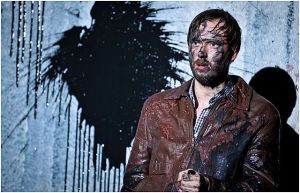
Still, the transformation of the Rose Lipman basement was an impressive achievement. Despite clearly operating with a tight budget the space had been neatly compartmentalised to form a number of small rooms, each with its own clear sense of space and purpose. The overall effect was to create a number of different sensory environments to unsettle the audience. Some areas had clearly suffered from financial limitations, where the money clearly hadn’t stretched as far as needed. It could be a sign of a rookie company that this was most apparent in the opening room and the transition back to reality, as what it meant was that the good bits in the middle were bookended by less impressive memories and often this can be what the audience will remember.
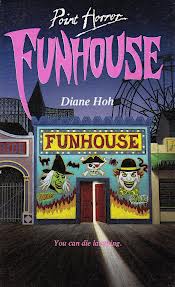
funhouseIn a small, merry (there were a few stifled giggles to be heard) band of companions, it appears that we are to escape Mitclan and return to the questionably more pleasant surroundings of the De Beauvoir estate. Except, like most ‘immersive’ experiences, this wasn’t really the case; the reality of the fantasy is always more prosaic than can be conceived in fevered imaginings. It is actually a linear journey through a series of classic horror scenarios. There is little in the way of interaction and a number of the scenes feel as if they have no obvious connection to the concept of the Aztec underworld. Instead the feeling was much closer to that of a journey through that icon of Americana – the local funfair’s haunted house (and anyone who spent their teenage years reading Point Horror knows exactly how scarifying that can be).

The unevenness was undeniable and, without giving away too much of the shocks, there is your classically creepy psychotic, ghostly girl and some disturbingly alluring savages but then the next room MIctlan3_pixlr3 banner#would be a new scene and you’d be presented with a half-formed idea that reminded you this a young company still learning to refine its product.

It was the lack of narrative thread that gave the production this disjointed quality. We were ushered from one frame to another, and whilst each individual experience was interesting it never really had the opportunity to come together as something greater than the sum of its parts.

However it never tries to be pretentious and there are few moments where the cast seem to be tipping the audience a knowing wink to the comical element that underlies most horror. The production demonstrates you can be committed to interactive theatre without being incredibly po-faced about it, something that both Punchdrunk and dreamthinkspeak would do well to remind themselves of occasionally.

No doubt The Dreamery will reflect on the successes (and it sounds like it has been a total sell-out) but I hope that, as a young company, they end-up taking more away from what didn’t go to plan than what did. They clearly have huge reserves of invention and are savvy enough to be working in one of theatre’s growth areas so learning to really focus on what they can deliver for the money and by spending more time building coherence into the audience’s experience then The Dreamery could find a very successful niche for themselves as purveyors of high-class interactive horror and fantasy.


Watch a video

And this is their far better video

Interview with Teatro Vivo

Back in September I had the pleasure of catching Mother Courage and Her Children –  a colloborative piece between GLYPT and Teatro Vivo. They staged Mother Courage, Brecht’s famously anti-war parable, as a promenade piece through the Royal Woolwich Dockyards. Afterwards I caught up with Kas Darley and Mark Stevenson of Teatro Vivo.

You can read my interview with them on the Everything Theatre website by clicking here.

Not alive exactly but definitely resurrected

Jacques Brel is alive and well and living in Paris – Charing Cross Theatre, until 22 November 2014 (tickets)

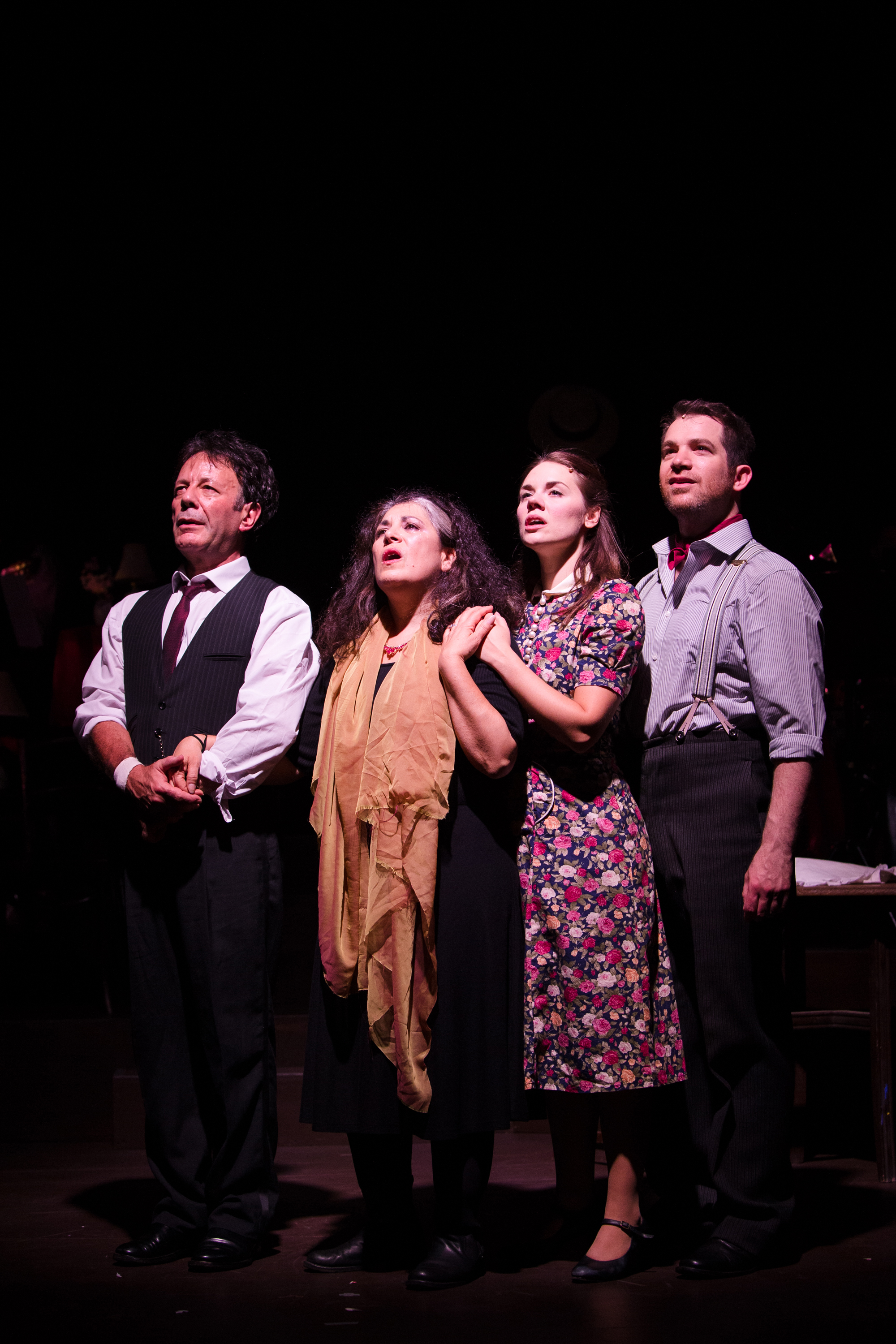
Jacques Brel embodied his era; his musical style, evocative of a philosophical rat-packer, fitted perfectly with the picture of France seen through the envious eyes of those in the grey, dreary England of energy rationing and emergency IMF loans. For those with intellectual pretensions, how could the Paris of the 1968 student revolt, Godard and the new-wave and, of course, the Satre-quoting, Gauloises-smoking, coffee-shop David Burt, Eve Polycarpou, Gina Beck, Daniel Boys (1) in Jacques Brel is Alive and Living in Paris Photo Scott Rylander (1)inhabitants of the left bank, possibly be resisted?

The extent of the obsession with France shouldn’t be underestimated and Brel came to personify the music (and, yes, he was actually Belgian but no matter). This obsession may explain the staggering fact that, after being scheduled for a two-week run in Cleveland in 1973, this show ran for more than two years and over 500 performances.

However all things must pass and interests move on to the next big thing. Brel has become something of a forgotten man, and nowadays I am not sure how many people under 40 have heard of him. One might suggest that the producers have taken rather a risk on reviving this rather curious show; would people who have never heard of Brel be interested in coming to see it, and would those who like Brel want to see his songs be reinterpreted through a musical revue?

These are tough questions but one of the answers lies in the talent of the performers. This is an opportunity to see a West End cast in an atmospheric and intimate venue. Gina Beck has previous as Glinda in Wicked, Daniel Boys came to prominence in the TV talent show, Any Dream Will Do, whilst David Burt and Eve Polycarpou are veterans of stage and screen. Watching up close you are reminded of the range and subtlety that West End stars possess – items that can get lost by the demands of performing in a 1000 seat venue with full-on technical wizardry.

<<Continue to full review>>


Simon Stephens’ takes axe to Chekov’s orchard

The Cherry Orchard – Young Vic Theatre, Until 29 November (Tickets)

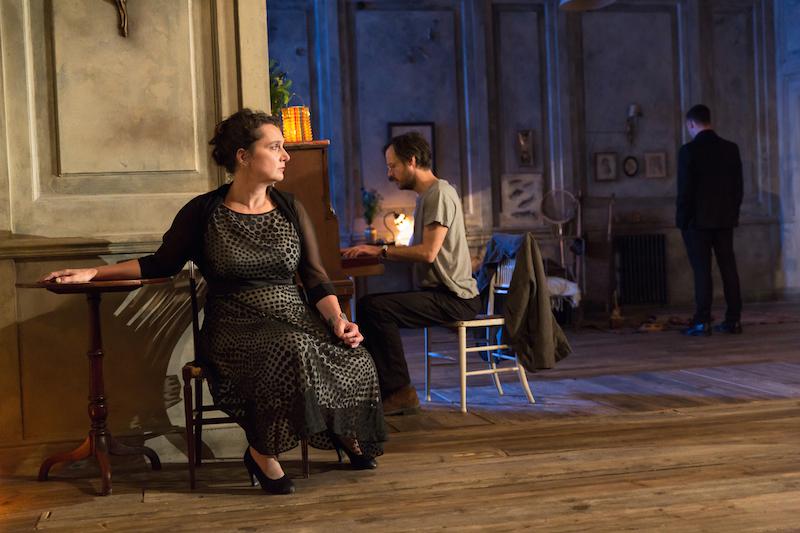
Every regular theatre goer has their blind spots, the playwrights that don’t just pass them by but they go out of their way to avoid. Civilian Theatre will happily spend an evening debating the merits of the musical or delivering a polemic against those who worship at the pedestal of Sarah Kane. However in the dark, locked away from public view, is a secret shame; a failure to comprehend, or even by interested in, the merits of turn of Kate Duchêne (Lyubov Ranevskaya) and Paul Hilton (Peter Trofimov) in The Cherry Orchard at the Young Vic Photo by Stephen Cummiskeythe century Russian naturalism.

Being aware that Chekov is, arguably, thought of as second-only to Shakespeare as a playwright and that the finest writers, dramatists and critics hold the likes of Tolstoy, Gorky and Dostoevsky in the highest regard only increases the sense of a personal failure. Add a disinterest in Dickens and Ibsen and the feeling there is a black hole in my cultural awareness grows.

This is not to deny the obvious talent on display; it is impossible, even if you don’t like them, not to respect Dickens’ sentences or Chekov’s details but appreciating the building blocks is a very different thing to admiring the final structure – take the ArelorMitttal Tower, it is certainly impressively constructed but that doesn’t stop it being a hideous eyesore that is nothing more than a well-captured Freudian representation of Boris Johnson’s ego.

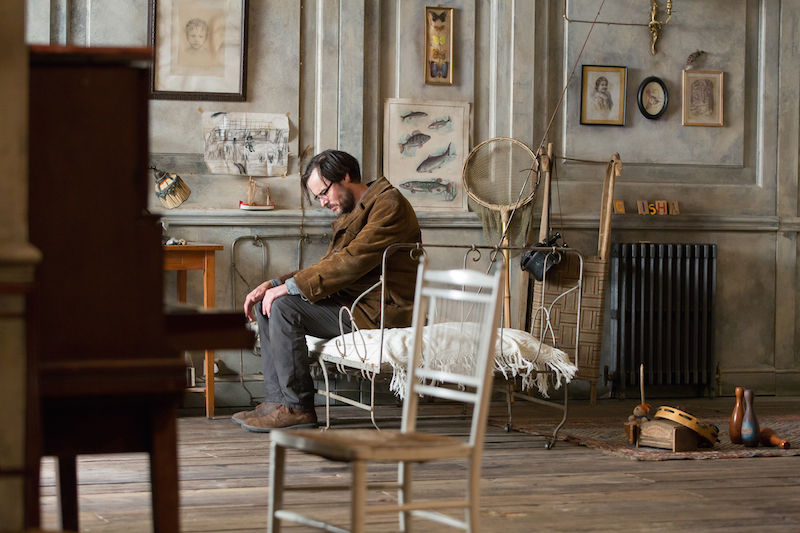
YOUNG VIC THEATRE: THE CHERRY ORCHARD, 2014Sticking with Freud, I suspect the problems spring from childhood – an A-Level interrogation of A Doll’s House through the lens of Stanislavski is enough to break the spirit of anyone. Task, Objective, Super Objective; it may be true, it may be necessary, it certainly sucks the spirit of the unknown out of theatre. It went in hand-in-hand with experiencing a lifeless, long and boring production of Gorky’s Summerfolk at the National (although seeing the cast included Roger Allam, Patricia Hodge and Simon Russell-Beale, I am willing to concede the problem may have been with this particular reviewer).

Whether the production was good or not, it came at one of those moments you only later realise was ‘formative’. In the same year I saw Complicite’s Mnemonic and  a revival of Steven Berkoff’s East – how could a staid, hundred year old drama possibly compete with the vitality of Berkoff or a company showing an impressionable young mind all that theatre could be.

<<Continue to full review>>


‘Presume not that I am the thing I was’ in Lloyd’s radical new Henry IV

Henry IV – Donmar Warehouse, until 29 November 2014 (tickets)

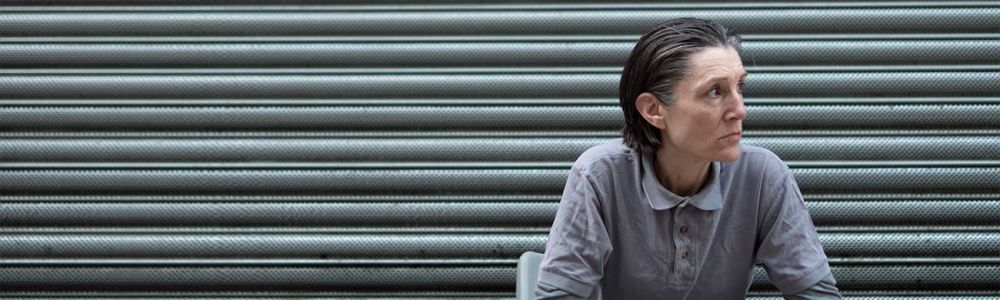
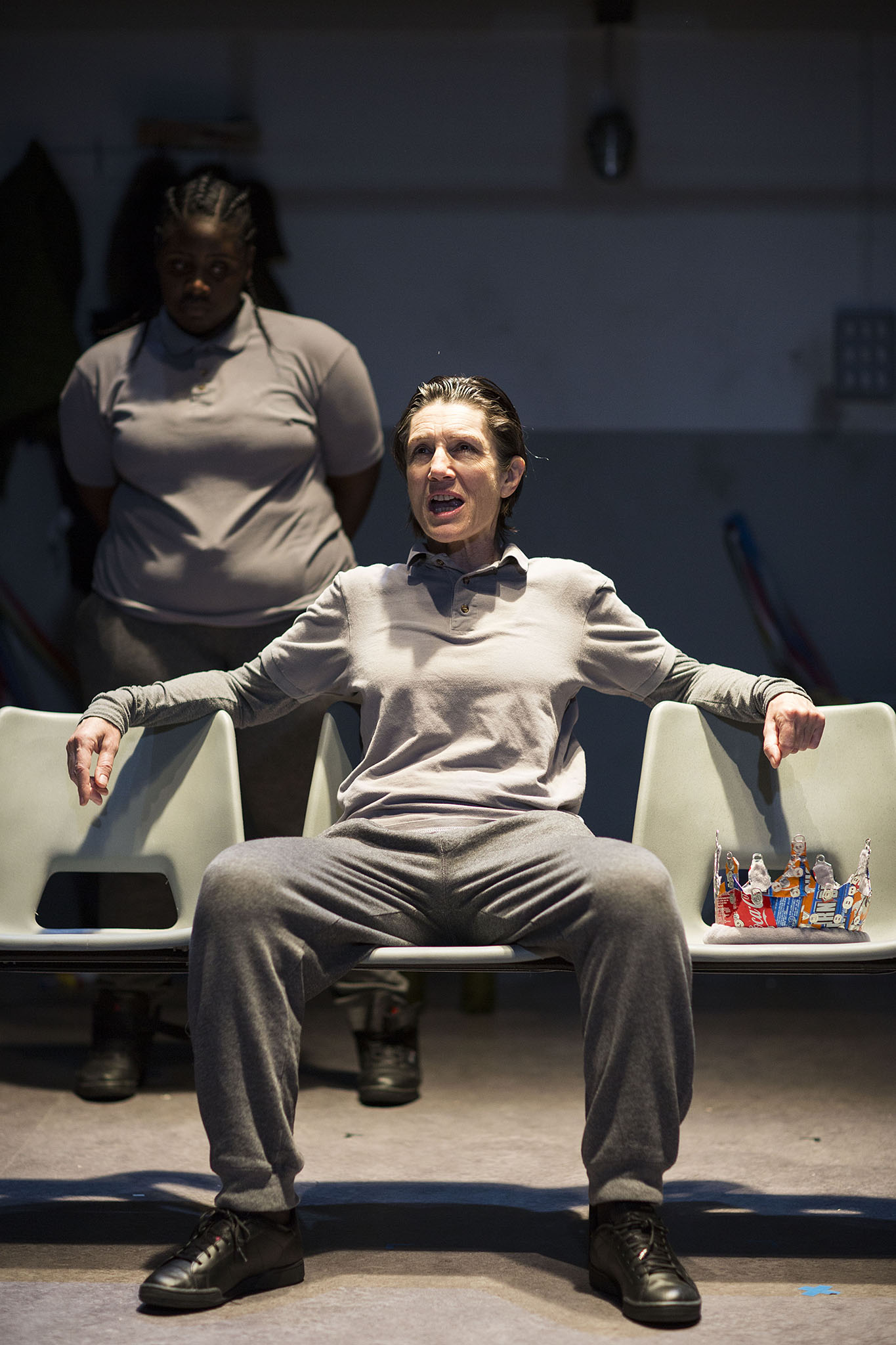
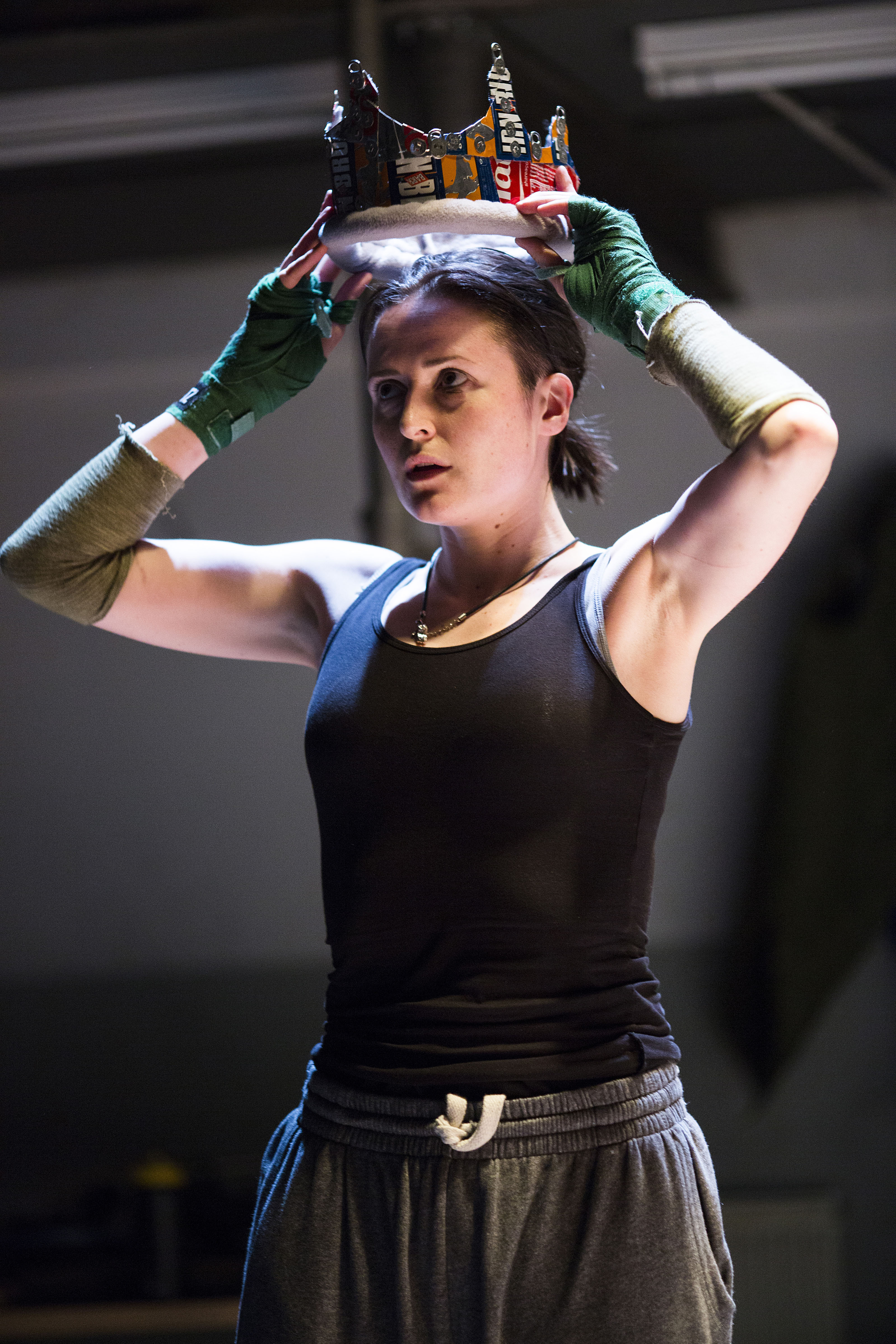
So here we are back at the Donmar Warehouse, back in a Phyllidia Lloyd production, back in prison, back with an all-female cast and, sadly, back to howls of protest emanating from the comment boards. Despite the compelling evidence of last year’s Julius Caesar for the benefits of seeing women perform ‘male’ roles, including Harriet Walter putting in the performance of the year as Brutus, little seems to have changed and so the old Harriet Walter (King Henry) 2 Photo credit Helen Maybanks.jpgarguments have been dusted off and trotted back out.

To incite further ire Phyllidia Lloyd has radically altered Shakespeare’s original text. This is not a snip here, a cut there. This is Henry IV Parts I and II, totalling almost six hours of performance, smashed together and pared down to 120 minutes. That really is an audacious move.

It is also a smart one. May directors have discovered how difficult it is to change Shakespeare by working around the fringes; if you are looking to show something new within something old then far better to prune the excess foliage until what is obscured below is revealed. Shakespeare’s talent did on occasion lead to an explosion of brilliance, his imagination working so fast that one play can contain more plot strands than most writers can work into several; this is his genius but the audience, unpicking the complexity of plot and language, can lose focus on anything that isn’t centre-stage.

Henry IVIn Henry IV productions almost all exclusively focus on the Hal/Falstaff dynamic; it is the interesting complexity of the prince we know will become the near-mythic Henry V, and his relationship with the greatest tragicomic creation of his age. However in Lloyd’s reduction we see this become a play that focuses on the dynamics of a father with two sons, and a son with two fathers.

With Harriet Walter as the dying king it makes sense to ensure that the most is made of an actor of her calibre. By barely cutting Henry IV’s lines, it makes the role far more central to the play. Much of Falstaff’s activities outside of Hal’s orbit are cut and this results in a balancing of Falstaff and Henry IV and creates two much clearer allegiances for Hal.

The resulting time is given over to the rebels, and in particular Jade Anouka’s sparky Hotspur – a brilliant performance that brings to vivid life Frank Kermode’s description of Hotspur’s lines being ‘anti-poetry, a contempt for poetry as flummery and affectation’. By stripping the text it aligns Hotspur and Hal as the son the king wished he had and the son that he wished he hadn’t. It also allows room for Hotspur’s wife, Lady Percy (Sharon Rooney), to shine. The scenes with her husband and mourning his death are often lost amid the action but here they are in focus and Rooney gives a heartbreakingly tender performance of someone who loses a husband and then desperately seeks to avoid losing a father.

<<Continue to full review>>

Knocking down the Berlin (fourth) Wall

An Enemy of the People – Schaubühne Berlin @ Barbican (24 – 28 September 2014)

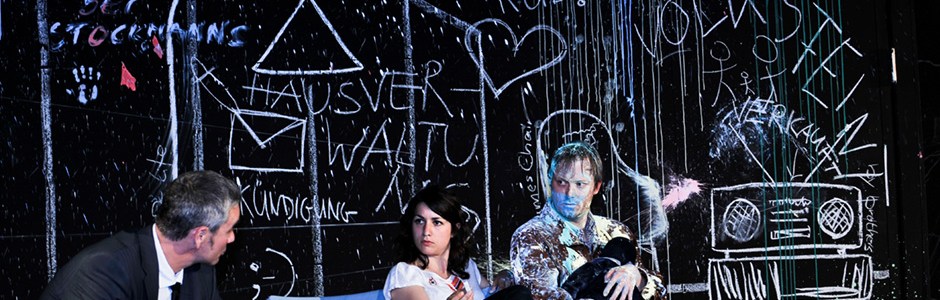
They don’t make many like they make Thomas Ostermeier. That he is not on the tip of the tongue of British theatre-goers says more about the appallingly low number of productions that make it across the channel and the limited tours when if the even get here. An Enemy of the People was sold out for its five performances at the Barbican and I am certain if there was the bravery to finance a small tour then people would come. How can people71c4ddf9-d738-459e-9cb0-b6f09f73e98d-460x276 learn what they like if they never get the chance to see anything different?

The glorious thing about watching an Ostermeier production is that while you may not know quite what you will get, you know it will still be a quintessentially Ostermeier affair. For, yes, we are back in the realm of the director as  auteur. Cue much huffing and puffing from the comment boards and cue rapturous, and occasionally unthinking, applause from everyone else. An Enemy of the People is the latest to hit the Barbican and follows on from a radical Hamlet that tore down almost every Shakespearian convention and reinvented the play from the grave up.

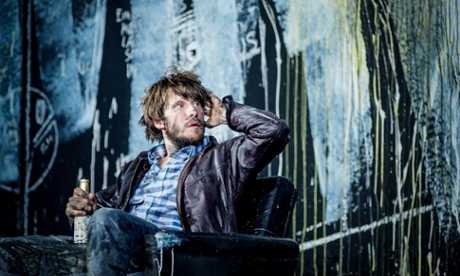
T1Ostermeier seems to be a man who will be anything but be dull. He brings his own hyperactivity to the text and energises performances far past what audiences should find comfortable; Hamlet clocked in at 168 minutes without an interval, and An Enemy of the People doesn’t fall far short at 150. Yet the quality can be seen that, despite the ridiculous running time, the audience sat in rare rapt attention, with not a rustle or toilet break to be seen disrupting the action.

An Enemy of the People is not without flaws and there is a nagging suspicion that Florian Borchmeyer commits serious logical fallacies in trying to bridge his adaptation of Ibsen’s text with a modern element that draws on the anonymous 2007 paper, The Coming Insurrection. However these flaws don’t destroy the integrity of the play and should be placed in the context of the vitality of the production and the creation of a theatrical experience that genuinely led to an enforced, and welcome, assessment of my own political values.

That the modern element fails is a shame due to the fact that Ibsen’s own play is so strangely contemporary that it barely needs updating to maintain its resonance. The idea of the small, righteous man standing up against a society that does not want to hear his truth has never gone out of fashion and has grown in stature in recent years, with the Young Vic staging a 1970’s set version last year.

<<Continue to full review>>