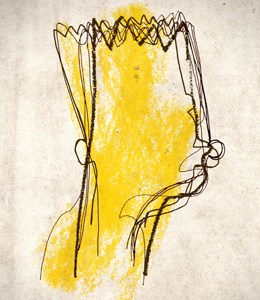
Wot No Fish 2_Credit Malwina Comoloveo

For madeleine read fishball

Wot? No Fish!! – Battersea Arts Centre, until the 19 July 2014 (Tickets)

It has taken Wot? No Fish!! a while to reach the Battersea Arts Centre. After spending two years in development, it premiered at last year’s Edinburgh Festival before working its way through the regional theatre circuit then finally arriving in London just as Edinburgh begins for this year’s crop of hopefuls.

Except this isn’t quite true. The story we are told pre-dates all of this by the best part of ninety years, and the show was already there just waiting to be found. For Danny Braverman has pieced together, drawing on his ownBattersea Arts Centre_Wot No Fish family history, a far more tender and moving story than could ever be realistically crafted in fiction: the life of an East End Jewish shoemaker and his family told through the weekly sketches he gave to his wife on the back of his wage packet.
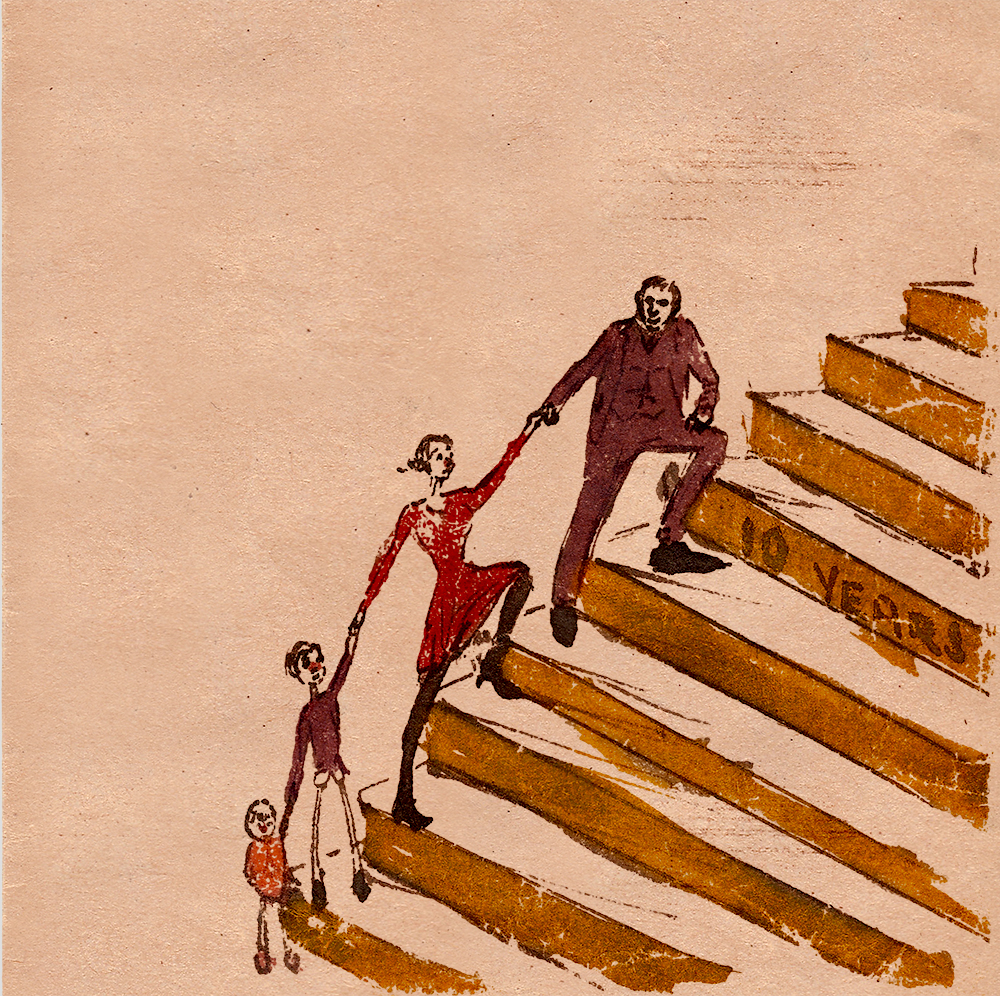
It may be told with all the simplicity of a fairy-tale but the magic is created in the natural complexity of the lives of real people. It is a story of a family who may not have encountered witches, dragons and quests but instead must confront argumentative sisters, the threat of war and a move from the East End to Golders Green.

This is the story of Celie and Ab Soloman and we hear about their lives through Braverman whilst seeing it brought to a vivid reality through Ab’s miniaturist cartoons; it is less a play and more an illustrated aural biography. Braverman has made a wise decision to not perform the story because he has realised that all the drama exists in the pictures; he recognises his role is to explain, to be our guide through the lives of others.
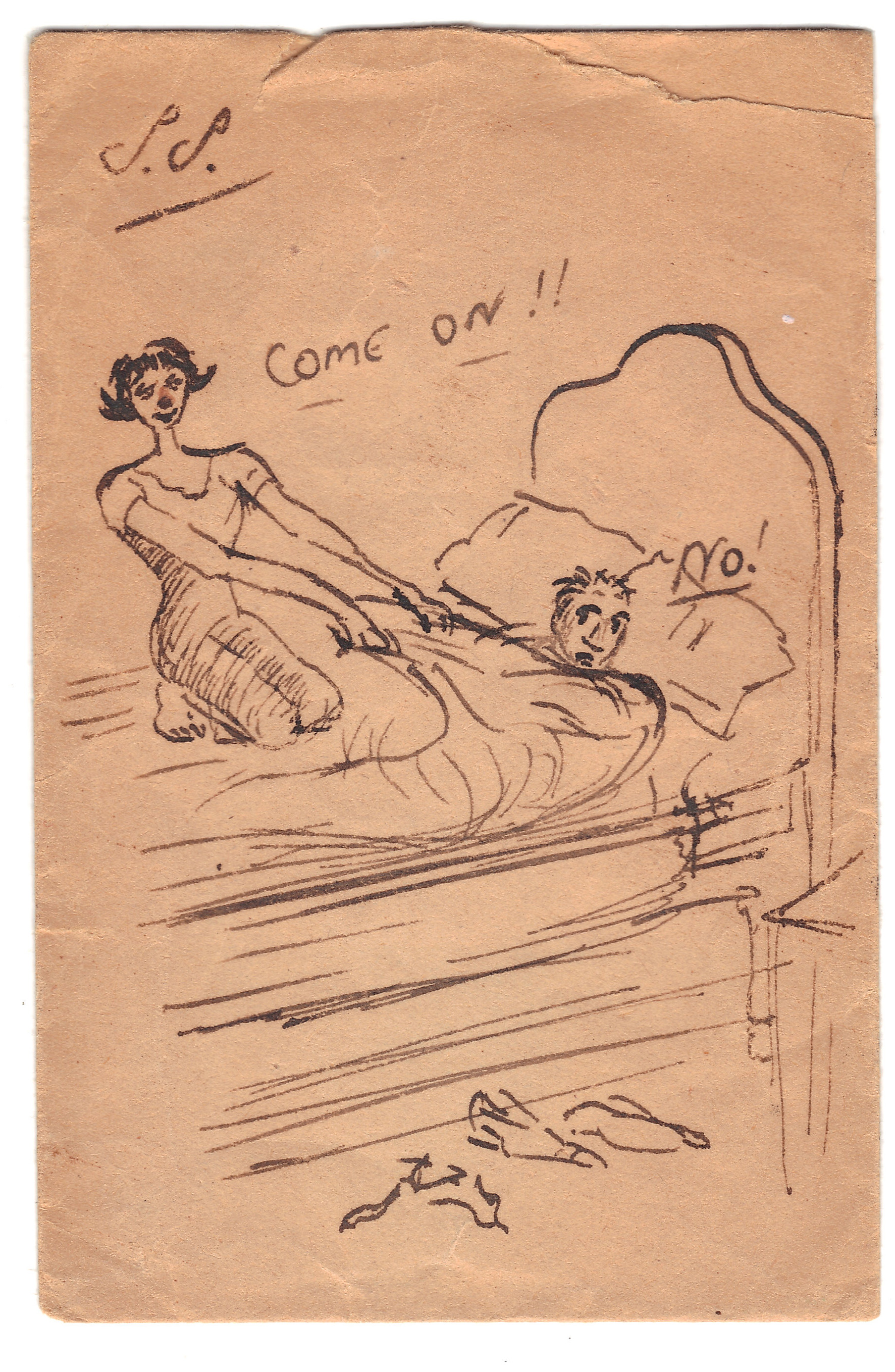
Battersea Arts Centre_WNF_Ab Picture_6The production has a few touches that hint to its past life at Edinburgh, perhaps some will find the slightly whimsical delivery irritating and the attempts to engage the audience a little heavy-handed but this is just part of the charm of a production that is constantly reinforcing a sense of community and of shared stories.

As Proust starts with a madeleine so Braverman starts with fishballs. And if you didn’t already know you were entering the close knit world of east end Jewish families then the references to gefilte fish and chrain prove something of a clue. It is the memory of this snack that accompany him on a trip through hospital and it is the recurring motif that Braverman returns in order to continue unravelling the lives of Celie and Ab over time.

Braverman acts as a curator of the work. The care with which he has unpicked and ordered the events is staggering. There are over 3000 works in total and we are shown a carefully woven selection to build a richly textured picture of two lives that we never knew existed before walking into the room. By the end of the journey (inevitably it must end and like all human journeys it can only end in one final destination) we feel we know them as well we know our own relatives.
<<Continue to full review>>

Adler and Gibb

Bafflingly brilliant Adler & Gibb presents a conceptual challenge

Adler & Gibb – Royal Court, until 05 July 2014 (tickets)

There is no way, easy or otherwise, to describe Tim Crouch’s latest play, Adler & Gibb, so that it makes sense to the reader. Despite seeing more than 100 plays over the last three years I cannot recall another production that feels so elusive that I am left suggesting that the only way to understand it is to experience it. As a play it is defiantly high-concept, deliberately infuriating and fully aware of the challenge it makes of its audience. Having roundly trashed Mr Burns for pretty much identical reasons it suddenly becomes apparent how fine the margins between success and failure really are.

Denise Gough and Brian Ferguson in Adler and Gibb at the Royal Court, LondonNot only is it difficult to describe, it is hard even to talk about it in a way that doesn’t make it sound like the most appallingly self-indulgent piece of pretentious, beard-stroking metropolitan claptrap. If it sounds to readers that I damning Adler & Gibb with this review then I can only echo Shakespeare’s Mark Anthony eulogy and the dubious claim that he comes ‘[… ] to bury Caesar, not to praise him’.

Tim Crouch does not tend to make plays with easy answers. In Adler & Gibb he has made a play without easy questions. Like a magician he lays subtle clues with one hand – a neat reference to the Maine lion that gives a hint to the identity of the actor – whilst at the same time misdirecting with the other – the changing story behind the napkin.

Yet the crucial factor is that despite arriving at the interval with a general sense of befuddlement and feeling close to displeasure at the opaqueness of the first half, Crouch has still built an atmosphere of trust; that this a play worth persisting with. It has an intangible quality that nags away at the back of the mind that you are on cusp of something quite special, and that if does fail then at least it will fail spectacularly.

To start with a description; Adler & Gibb is about a conceptual artist, her relationship with Gibb, their retreat from the world and what happened after. Or Adler & Gibb is about a student looking for scholarship funding through a study of Adler and Gibb. Or Adler & Gibb is about an actor who used to be a student who is making a film about Adler and Gibb. Or Adler & Gibb is about an actor playing Adler who meets Gibb, who tells us the story of Adler and Gibb. Or it is about different mediums of art, the tones they employ and how it affects the narratives they tell and the stories heard by the audience.  Or it is about all of this and none of this.

To start at the beginning; the play opens with a presentation from a student about Adler and Gibb. She is eager, passionate and delightfully gauche; instantly recognisable as someone who has been inspired but lacks the articulacy and the knowledge to present her views as we might expect. She tells us the story of Adler and Gibb but through it is digressive, fractured and jarringly myopic.

<<Continue to full review>>

A two and three quarter hour play based on a 20 minute cartoon – that sounds like a great id…D’oh.

Mr Burns – Almeida Theatre, until 26 July 2014

Regular visitors to the blog will have noticed that Civilian Theatre is often as, if not more, interested in exploring what leads a director to stage a production in the style they have chosen or why a playwright has written the
play they have, than in the quality of acting or the production itself.

As such the idea of Anne Washburn’s Mr Burns is appealing. The available synopsis suggests that we are going to witness an exploration of these very topics, an insight into how myths arise and the form that mythic creations arising out of our modern cultural legacy may take. Just as Homer would have drawn on the collective memory passed down through generations of oral story-tellers to leave us with the Iliad and the Odyssey; with its world containing the larger-than-life figures of Achilles and Ajax, Paris and Hector, Washburn promises to delve into how a very different Homer will be built into the mythos of a future civilisation.

TMr Burns_10his is really interesting stuff, and the concept of three standalone acts that appear to echo the cultural development of storytelling is intriguing. The cast begins around a campfire – an updated version of those first ancient people telling each other stories round a fire, repeating them so often that they become fixed as an early truth. The second act, seven years later, has seen them morph into travelling players, spreading knowledge and culture across a divided and disparate society, before the third act, 75 years later, sees the performance fully embedded in the prevailing culture, taking on aspects of religious tradition, characters becoming symbols of good and evil, with Mr Burns emerging as a figure within modern folklore; a demonic embodiment of the dangers of nuclear power and its destructive influence.


It is the kind of play that signifies its intent early, and the signs that title each act may as well have written on them that this is a ‘big play’ tackling ‘big themes’. We know it is important because it is two and three quarter hours long and contains two intervals. Only big important plays get to have two intervals.

It is definitely an opinion-splitter and will almost certainly be championed by the kind of metropolitan hipster who carries around a well-thumbed but mainly unread copy of Infinite Jest and idolizes Douglas Copeland. For everyone else I fear it will prove to be a remarkably unentertaining evening; for it is quite a feat to develop a production that has so many interesting ideas, inspired costumes and high-concept set-pieces that returns so few engaging moments.

<<Continue to full review>>

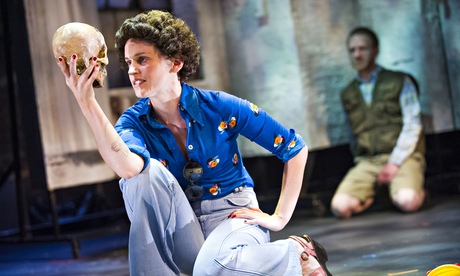
Hamlet Hammersmith Riverside Studios photocredit Adam Trigg

Denmark’s a prison? Totes bruv’

Hamlet – Hammersmith Riverside Studios, until 22 June (Tickets)

The latest adaptation from Hiraeth Artistic Productions – following reworkings of classics like Titus Andronicus and Blood Wedding – has a somewhat inauspicious opening scene. We see Hamlet arriving to prison and for a while it seems we are set to watch his transfer in real time; paperwork is laboriously filled out, jewellery relinquished and, somewhat gratuitously, a stripsearch is implemented.

It is all very stripped back, natural, pretty much inaudible and what could be discerned wasn’t any Hamlet that this reviewer had ever heard; it was more like stumbling into a mumblecore adaptation of Scum than Shakespeare most famous tragedy. However from this worrisome start the first half cracks along under Zoe Ford’s pacey direction and carefully planned staging, making innovative use of a flexible set to allow prison’s claustrophobic atmosphere sufficient room to breathe.

Last year the CASA Latin American festival brought the Bolivian Hamlet de los Andes to the Barbican Pit. It was a production that sparked with wit and invention and, following Ostermeier’s version in 2012, demonstrated entirely new interpretations on Hamlet’s themes in a manner that breathed fresh life into the text.

Hamlet Boxing - Hammersmith Riverside Studios photocredit Adam TriggSo the fact that Hiraeth have cut 50 minutes from the running time shouldn’t necessarily be seen as a terrible idea. It can be seen as heresy to cut Shakespeare but one must remember that the text itself is just one element of a production; it must battle against the demands of director, designer and actor. It also recognises that a play should be accessible to its target audience and that if you are going to aim it at schools (which surely is the market for this version) then it is not unreasonable to think that those who are only there because it is a GCSE core subject may see being subjected to three hours of theatre as a cruel and unusual punishment.

The idea of setting it in a prison did make this reviewer wince. The concern about taking on such a high concept approach is that whether the play can be made to work without requiring serious stylistic contortions for plotting to make sense.

Part of the production does fall prey to this problem – for instance the Polonius/Ophelia/Hamlet portion could not be saved and character motivation was inevitability incoherent throughout. Do we really believe that Polonius, no matter how scheming, would ask his daughter to meet a dangerous criminal alone in a prison? Would Ophelia, seemingly a trained prison counsellor, be so affected by Hamlet’s actions that she would commit suicide? These are the kind of problems that must be countered by the director when developing such a strong framing device for the plot.

However other elements of the production work extremely well. There are some innovative directorial ideas – including a very good staging of the ghost appearing to Hamlet, which used light and dark to impressive effect in creating a startling appearance of the apparition. The fight scenes, including the boxing match that replaces the fencing in the final scene, were superbly choreographed and gave off the genuine impression that people were getting seriously hurt.

<<Continue to full review>>

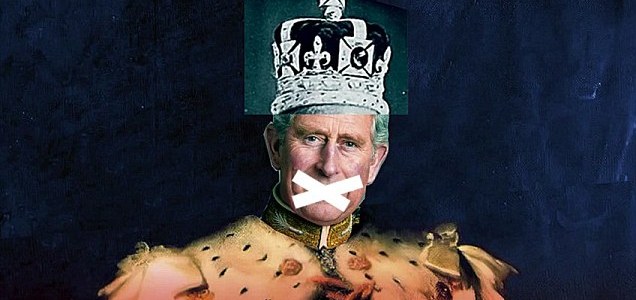
King Charles III Poster

‘Go some of you and fetch a looking glass’; writing for kings in the 21st century

King Charles III – Almeida Theatre, until 31 May 2014 (Day Seats & Returns only)

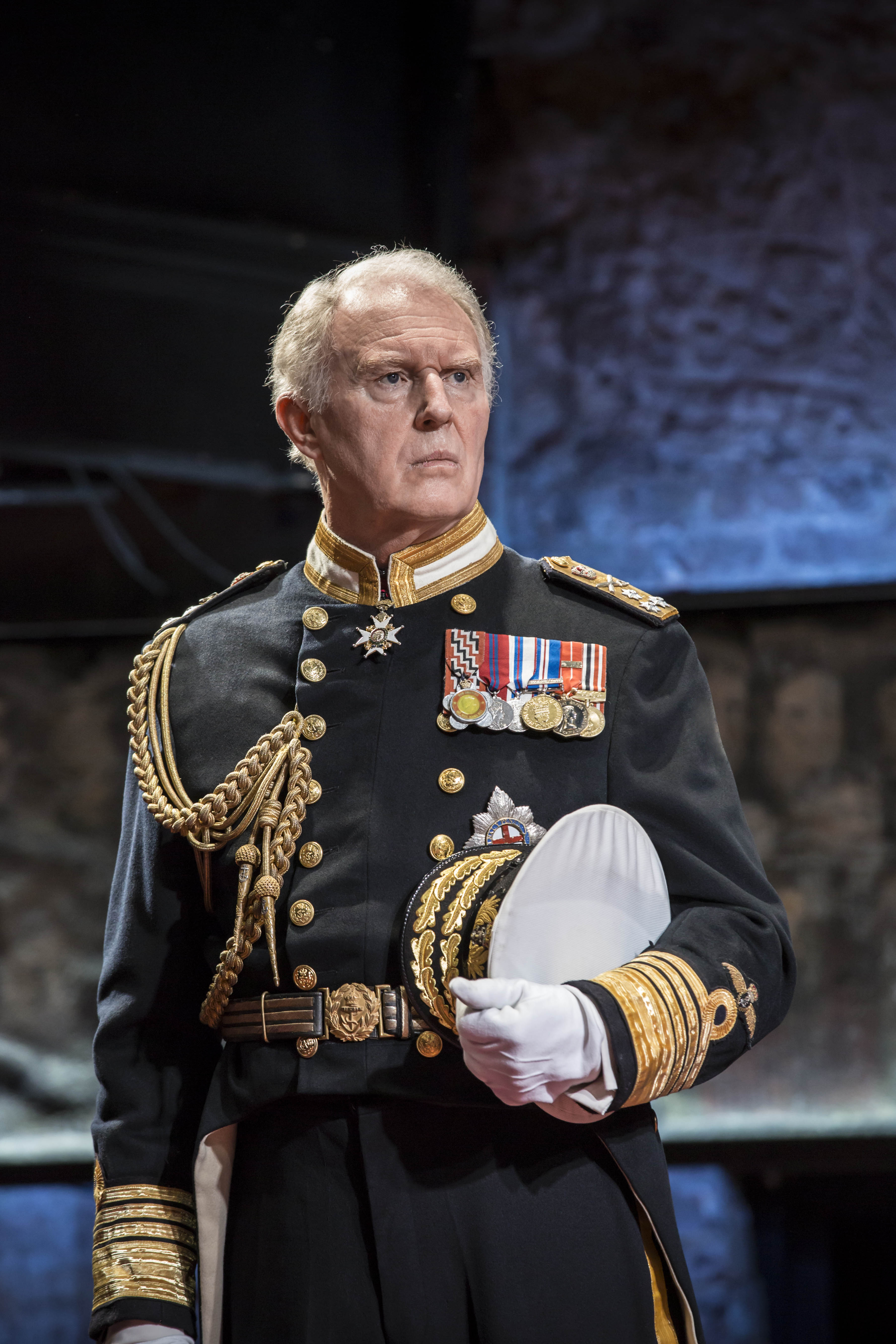
Civilian Theatre was one of many celebrating when Rupert Goold snagged the job of Artistic Director at the Almeida and given the unenviable task of continuing the success of Michael Attenborough’s 11-year tenure. Based on his opening salvo; the intentionally eye-catching American Psycho: The Musical before bringing in his former company with the Headlong-produced 1984, it appears Goold has a canny sense of how to blur the KING CHARLES III by Bartlett,        , Writer - Mike Bartlett, Director -  Rupert Goold, Design - Tom Scutt, Composor - Jocelyn Pook, Lighting - Jon Clark, Almeida Theatre, London, UK, 2014, Credit: Johan Persson - www.perssonphotography.comboundaries between popular and elitist theatre.

Appropriately enough the issue of succession is at the heart of the first play Goold has personally directed at the venue; Mike Bartlett’s King Charles III. Another well-judged choice, Bartlett’s play cannot fail to appeal to all audiences. Much has been made of the Shakespearian overtones but the true success of the play is that it is a hugely enjoyable piece of, what Bartlett calls, ‘future history’, which also raises questions that Britain as a country will need to confront in time.

Like Jerusalem this is proper state of the nation theatre and it is heartening to see a playwright unapologetically examine ‘big issues’ on such a grand scale. Bartlett demonstrates that verse has its place in modern drama and that audiences needn’t be turned off by the use of heightened language. The use of iambic pentameter isn’t purely to demonstrate Bartlett’s skill as a poet but because he is dealing with characters that are simultaneously entirely real and, to the majority of us, entirely unknowable.

King-Charles-III-Almeida-LondonThe greatest PR trick that royalty has ever pulled off was to create this public image and then to strenuously avoid revealing their true face. Our current Queen has studiously kept to this template and it is notable that it is only when the mask slips that the public begins to question their value. As we enter a new era, the age of Will and Kate and of smartphones and public accessibility, this model is in a state of flux and Bartlett has pitched Charles’ succession as the moment that the new and old world will collide.
The use of verse is a way into this private world. How can prose be placed into the mouths of people who are so recognisable but so unknown? We cannot know how they really speak behind closed doors and so creating a state of unreality through artifice is a way to reach some kind of truth. It also allows Bartlett pre-existing conventions to slip seamlessly between conversation and monologue. We are permitted into an inner-realm, not just the closed world of the monarchy but the private consciousness of its key figures.

The allusions come thick and fast and for those who know Shakespeare there is much fun to be had in spotting the references. However Bartlett ensures that this is not to the detriment of those who haven’t been schooled in all the History plays and a fair portion of the tragedies. The characters he draws are fascinating in their own right and capture the essence of who they are. It is perhaps Prince Harry who is closest to caricature but how could one resist when he is built to be modelled on the classic arc of Hal in Henry IV Part I and II.

<<Continue to full review>>

Small family business yields little profit

A Small Family Business – Olivier @ National Theatre, until 27 August 2014

The National Theatre website currently advertises its revival of Alan Ayckbourn’s A Small Family Business as running until the 27 August 2014; given middling reviews and, more damagingly, the desolate swath empty seats all around, this now seems a trifle optimistic. One wonders if Ayckbourn has lost touch with his heartland and whether that distant sound is of Geoffrey Howe readying his poison pen.

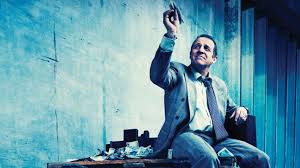
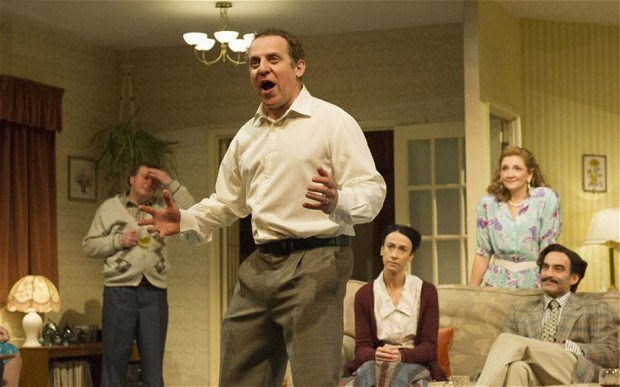
If the above analogy seems tortured and meaningless in 2014 then try sitting through two and half hours of Thatcher-era satirical farce played, almost without exception, as if actors were being paid by the minute.A_Small_Family_Bus_2875957b

Astute readers may have gathered that A Small Family Business is not considered a success. There are many problems with the production but at its heart is the play. Ayckbourn is a fine dramatist – one whose reputation has grown as the subtle radicalism of his writing and staging has become ever more appreciated – but his work has always run the risk of being too identified with the period that he critiques.

Whereas writers like Pinter and Beckett examine the universal, Ayckbourn’s skill has always been the microscopic. He is one of the great observers; capable of skewering the social charade and unveiling the fissure lines that runs through society, the unspoken conventions of the British that permeates life and ensures everyone conforms to their class.

Family businessThe conclusion that can be drawn from A Small Family Business is that we have entered a period where his targets are no longer recognisable. It may be quarter of a century old but the world that Ayckbourn has pictured seems embarrassingly quaint; quintessentially English, it is not comforting in the same way that we relax into a Miss Marple and it is not a period piece in the way we might enjoy something by Noel Coward.

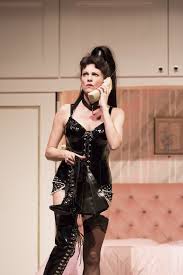
With the benefit of hindsight it does not seem like biting satire but instead offers a naïve view of the world. Living in an era where companies like Amazon pay £4.2 million in UK tax on generated sales of over £4 billion, it is hard not to recognise the scale of the ethical corruption of big business. In this work the idea that a small family concern needs to pay off a private detective to the tune of £50,000 does not really hit the mark. It is all a little reminiscent of Austin Power’s Dr Evil:


Indeed one of the more charmingly amusing ideas in the play is the idea that Britain has any small family-run businesses at all, let alone ones that aren’t riddled by corruption.

<<Continue to full review>>