
When critics go to war

Ding, ding seconds out. The gloves are well and truly off in a good old fashioned spat playing out in the funny pages between two men who represent the ancien regieme of theatre criticisms and an award-winning director with a reputation for bold reinventions of the classics.

In the blue corner are those two critics who embody the establishment and who might require dynamite to remove them from their seats of power; Michael Billington of the Guardian and Charles Spencer of the Telegraph.

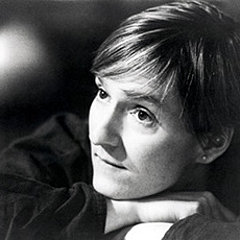
And in the red corner is one of the mostly highly regarded female directors, who has put on versions of Shakespeare, Ibsen and Brech and is a twice winner of the Olivier Award for Best Director.

Round 1:

Deborah Warner’s latest production opens to distinctly mediocre reviews across the board. There is general frustration at the need to update a play that is regarded as one of Britain’s finest comedies. Charles Spencer goes to town, calling it inept and awful and finishing off by announcing that Warner should be served with a theatrical equivalent of an asbo.

Round 2:

Warner responds to Spencer in a Guardian comment piece. She argues that plays are meant for updating and that there is no problem by placing it overtly in a modern setting so that they can appeal to new audiences. However critics are to stuck with their preconceived notions of what these plays should be and, with their pining for the past, can be held culpable for stopping a different audience from embracing the theatre.

Round 3: 

Billington counter-punches by tartly claiming that some plays work with updating and some do not. Moreover it is incredibly patronising to suggest that younger people require a play to be updated for it to be a success; they may be perfectly capable of making the leaps of imagination required.

Round 4:

Determined not to let sleeping dogs lie, Deborah Warner refers to the two critics as two complacent toads crouching on their nest. This vivid image conjures up pictures far to horrible to contemplate but it is fair to say that the exchange hit a nerve or two.

Round 5:

Spencer gets in the last word so far, outlining the Telegraph some of the reasons that he has managed to get so far under Warner’s skin. Apparently, like all good feuds, this goes far back into the mists of time. Spencer had taken exception with the casting of a women as Richard II and panned the production as a result. However it seems that Warner has never taken criticism lightly and like all good thespians, she consulted Shakespeare until she found the perfect expression: Patience is stale and I weary of it. Unfortunately she hadn’t counted on Spencer to return the compliment in kind with Things past redress are now with me past care. It seems relations, and possibly reviews, have soured since then.

Are there lessons to be learned from all this?

Never fight critics on their own patch – seriously do you expect to win a war of words played out in the broadsheets? Clearly someone has never read The Art of War? If you must fight, and fighting should always be a last resort, then always ensure you do so on terms that favour you. How about the next production being Throne of Blood, and how about making audience participation this time?

Something for the weekend sir?

Not sure what to do over the Bank Holiday? The idea of wall-to-wall sport proving too much to bare? Well here are a couple of suggestions for things to go and see discover some theatre that you never even knew existed.

ONE MAN, TWO GUVNORS

Who? James Cordon returns to the stage at the National. Last seen on stage in Alan Bennett’s phenomenally successful The History Boys playing a schoolboy, subsequently seen practically everywhere else. His omnipresence has meant that he has been known to appear in dreams, flashbacks and in the corner of your eye at tube stations.
What? One Man, Two Guvnors is closely based on the 18the Century play The Servant with Two Masters by Carlo Goldoni. It contains many of the classical elements of comedies from this period; class systems, women dressing up as men and general confusion and farcical misunderstandings. James Cordon is a man who (rather unsurprisingly) has two employers (one of whom is a woman pretending to be her dead brother) and you may not be surprised to learn that hilarious shenanigans ensue.
Why? Given Lesbian Vampire Killers and the Horne & Cordon sketch show, people can be forgiven for being wary of seeing a play that seems to be set-up as a celebrity vehicle for James Cordon. However this forgets the naturalism of his performance in Gavin and Stacey and the stagecraft he demonstrated in The History Boys. Reviews have been uniform in praising the production and it seems the National has one of the hits of the Summer on its hand.
Where? National Theatre
When? Until 26 July
How much? £12 – £45 (£5 tickets available for 16-25 year olds)
Tedious one sentence deconstruction: Over-exposed TV actor returns to the stage in an adapted play that has surprised many critics by funnier than imagined.

TACTICAL QUESTIONING

Who? The Tricycle Theatre has developed a reputation for being one of London’s premiere venues for breaking political theatre. Tactical Questioning is the 8th tribunal play that has been produced at the venue and previous subjects have included the Hutton Inquiry, the Saville Inquiry and Guantanamo Bay.
What? There is no denying that Tactical Questioning will be a grim, painful and intense evening at the theatre. It couldn’t be any other way. It is an edited but verbatim account taken from the transcripts of a Public Inquiry into the death of Baha Mousa whilst in the custody of the British army. These performances have come after the closure of the inquiry but before it reports its findings and only contains excerpts from statements taken from those interviewed.
Why? Some plays are enjoyable and some are important. The Tricycle’s Tribunal plays are very much in the latter category. Their importance can be summed up by noting that Guantanamo (2004) was performed at both the Houses of Parliament and on Capitol Hill in Washington, whilst Archbishop Desmond Tutu appeared in their New York production. These plays are a raw and painfully real – real events are depicted with real dialogue, and in doing so drama is created out of what is in reality interminably long and complex proceedings.
Where? Tricycle Theatre
When? June 2nd – July 2nd
How much? £12 – £22
Tedious one sentence deconstruction: Blurring the line between drama and reality, the tribunal productions are unlike anything else on the british stage and Tactical Questioning should be mandatory viewing for anyone with an interest in the workings of international justice.

Around the web

Searching around the interweb for the best of the blogosphere, the following articles have caught my attention over the last few days. Happy reading.

1) Following the continuing success of Jerusalem (now gaining rave reviews on Broadway for both the play and Mark Rylance’s stunning performance), the Guardian have interviewed Jez Butterworth. Considering how Londoncentric the cultural world tends to be in the UK, it is interesting that he really only rediscovered his mojo (nothing like a high-concept pun) by moving to the countryside. Be warned it is slightly painful to discover that he was the script doctor on Mr & Mrs Smith, it feels like Picasso being asked to touch up a potato print. Full article here…

2) Matt Trueman’s Carousel of Fantasies continues to review all the plays that I wish had seen but never got round to (and now don’t need to!). This week its I am the wind at the Young Vic.

3) The always intriguing West End Whingers have taken their idiosyncratic approach to Edward Albee and have given a rather luke-warm reception to A delicate balance. An interesting contrast to the hugely positive review (but still only 4*) in The Guardian

4) The Independent brings tales of a very Summer-y Alice in Wonderland. Far too much potential for audience interaction as far as I am concerned but it does sound like you get a slap-up meal to go with it so if you happen to be in Norfolk between the 18-21 May then give it some thought.

5) Last but not least, the Guardian’s theatre blog muses on whether critics give too little focus to the actors’ performances during their critiques of plays. As usual the comment board is open and getting feistier and more personal by the minute.

Something for the weekend sir?

Sitting around on a Saturday night? Reconciling yourself to an evening spent watching manic depressive Irish twins and a faded noughties boyband systematically deconstruct the meaning of what music has to be? Well this glimpse of what’s on the London stage may encourage you to put on your gladrags and discover some theatre that you never even knew existed.

I AM THE WIND

Who? A bit of a high-culture European super-group; acclaimed French director Patrice Chereau (La Reine Margot) works with Simon Stephens (Wastewater, Punk Rock) and Jon Fosse (by all accounts Europe’s most performed playwright – who knew?).  It’s basically a bit like when John Lennon formed a band with Keith Richards, Eric Clapton and Mitch Mitchell but probably a lot less cool.
What? Two nameless characters are alone on a boat, they drift into the ocean and into the world of the unknown. They are entering a world of metaphor, allusion and philosophical questions about man’s relationship with itself and with nature.How much you enjoy this play probably rests on whether you got to the end of the previous sentences without raising your eyebrows at the pretentiousness of it all.
Why? With such a strong British tradition and the constant influx of big names from America, this is a chance to see how they do it on the continent. A legendary director meeting a prolific playwright (over 900 productions in 40 languages) would be cause for celebration across Europe but here it has received a decidedly mixed reception. Fosse is seen by many as a sub-Ibsen or Beckett but you do not get translated that many times without being able to tap into certain universality.
Where? The Young Vic
When? Until 21st May (and then on an international tour)
How much? £10 – £27.50
Tedious deconstruction of the play to one sentance:An existentialist play directed by a Frenchman where there are two characters called ‘the one’ and ‘the other’; you can’t argue you didn’t know what you were letting yourself in for when you bought the tickets.

TENDER NAPALM

Who? Tender Napalm is the first play in three years by Phillip Ridley, winner of Time Out, Evening Standard and Critics’ Circle awards and includes Jack Gordon (Fish Tank, War Horse) who won the Screen International Star of Tomorrow award.
What? Taking its influences from a number of playwrights, including Pinter & Coward and with nods towards Shakespeare and the ancient Greeks, Tender Napalm is more than a string of cultural reference points. It presents an intelligent study of the lines (in reality, in language and in metaphor) that pull a relationship through love and hate. A stripped back stage and fully committed performances by the actors draw the audience into the action.
Why? Ridley’s ear for language draws you into the hidden depths and finds ways of vocalising those places in the mind that in real life remain unsaid, this leads to a play that has a vitality and a rawness that is too often missing from similar plays. Rather than clunky realist plotting, Ridly manages to draw the life out the play out of the emotion and imagination of his characters.
Where? Southwark Playhouse
When? Until 14th May
How much? £8 – £18
Tedious deconstruction of the play to one sentence

A brutal, excoriating but often very funny examination of a relationship and the fine lines drawn between love and hate; stellar performances and intelligent staging underpin a play by one of Britain’s most exciting writers.