Around Town: Next Week in London

The lack of an update for over a week is a sign that Civilian Theatre has been taking a well-earned break following the enduring trauma experienced by watching Babel. However the reviewing season kicks off again in earnest next week with three plays lined up, each of which I am quietly confident about.

Antigone has the enticing prospect of Christopher Ecclestone returning to the National Theatre after a 22-year absence. Performing in one the great plays of the classical era, Ecclestone has the craggy and worn features that seem ideally suited to play Creon, a man who has spent years charged with the responsibility of holding together the state over and above any call to personal desires. He is one of our great character actors who actually appears in a lot less work than you probably remember but whose appearance is usually a clue that we are going to be watching some quite special – he is superb as Derek Bentley in Let Him Have It; one of those rare films where you can feel the anger of injustice bubbling through every scene, and equally good in the seminal 90’s TV series, Our Friends in the North.   

The Physicists will be the next play under Josie Rourke’s tenure at the Donmar. Having scored a big hit with The Recruiting Officer but perhaps underwhelmed slightly for many with Making Noise Quietly, Rourke will be looking to come back strongly with Durrenmatt’s The Physicists. It is hard to think of a playwright, or indeed style, that has fallen more out favour in recent years than Durrenmatt’s slightly avant-garde, philosophical work. However I can remember being absolutely blown away by a production of The Visit and the staging possibilities that such a play open’s up. When you take time to sit back and survey London’s theatrical landscape do you realise the striking absence of such originality- even if plots and narrative can still remain freewheeling and anarchic, there is a sense that dramatically everything looks a little a bit conservative. Admittedly Complicite are still pushing boundaries but, for all the positive reviews, plays like Laura Wade’s Posh appear very formal in style. One hopes that a strong production of The Physicists will help start getting director’s to re-embrace the experimental in formal settings rather than feeling that experimental necessarily means site-specific pieces and audience engagement. Time was when director’s used a theatre to recreate an atmosphere, currently it feels that the audience aren’t trusted to suspend our disbelief and will only understand that we are in an abattoir if we see real cows hanging off hooks around us.

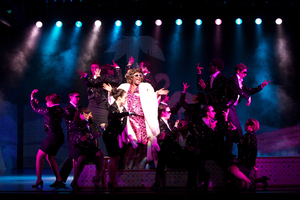
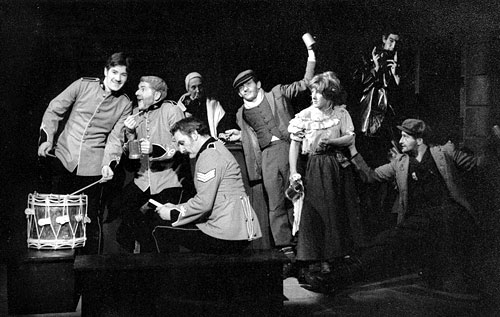
The Ninagawa’s Company production of Cymbeline at the Barbican promises to finally kick start what has been so far a rather disappointing World Stage Festival. Little more needs to be said about Babel, and Three Kingdoms, whilst interesting, did not set the world alight with a mixture of fantastic ideas and, at times, incoherent structure. Having previously missed all of Ninagawa’s English productions, I am tremendously excited by a company that has a global reputation for Shakespeare and a history of producing visually spectacular tableaux that meld together Shakespearian storytelling with traditional Japanese techniques. Cymbeline is a particualarly interesting choice of play, as it is one of Shakespeare’s more problematic narratives and seems to be one that is alighted on more frequently by companies that often take an angle slightly askance of the traditional – the last major London production being Kneehigh’s version at the Battersea Arts Centres, which included all its usual visual flair but perhaps provided a little too much fun over substance.

Stills from Ninagawa’s Cymbeline

This slideshow requires JavaScript.

Six of the Best: Scathing Babel Reviews

With the dust beginning to settle around the remains of the ill-fated Tower, it only remains to pick through the rubble for some choice quotes from a set of reviewers who have acted with a singularity of purpose that one wishes might have applied by the eight partner companies behind Babel.

With hindsight it seems horribly inevitable that a production based on the story of the development of languages should be so inchoate in its own messages. Working together like a pack of wolves scenting blood, reviewers of all shapes and sizes have seized on its weaknesses in order to give all concerned a right kick in the Babels.

Given the general tone of respectable politeness that most of my peers exude the only reasonable explanation is some kind of Village of the Damned-style mind control. Tragic of course, but rather than waste the opportunity this humble reviewer has taken the opportunity to gather together the most scabrous, haranguing, bad-temperedly bilious reviews in one easy cut-out and keep article. So do please enjoy.

Six of the best

6. Michael Coveney, What’s On Stage

“The best part of it is the queuing outside (rather like on the first day of a Lord’s Test Match), the bar inside, the gathering in the Pleasance round the corner…”

Well it seems only fair that we kick off with one of the more positive reviews. It is true that a £3.50 for a decent sized cup of red wine, the bar on site proved to be remarkably better value than the eye-wateringly high prices that regularly empties the pockets of punters frequenting the Barbican.  The review does rather go downhill from there…

5. Charles Spencer, The Daily Telegraph

“…politically correct, dramatically inert and involves a great deal of tiresome queuing

Ok, scratch that, maybe not everyone liked the queuing.

4. Matt Trueman, Carousel of Fantasies

“…sickly stench of hippyish platitudes and synthetic good will”

Hmm, it really does seem that people were turned off by the do-gooding spirit of the whole affair. Perhaps audiences have become more cynical but I am sure that we weren’t the only ones expressing some sympathy with the guards, particularly when being forced to face protestors with sentiments that sounded like they were agreed by passing around a conch at a commune in the 1970’s.

3. Charles Spencer, The Daily Telegraph

“…we are instructed to “cherish the child that holds your hand.” At this point I thought I might throw up.”

Yes, there really was a backlash against the way the sentiment in the show is presented. Even our muesli-eating friends at the Guardian had problems with it being ‘too politically naïve, too lacking in complexity and texture’. If they hoped it might strike a chord with those issue-conscious Indy readers then, well, bad luck: making the schmaltzy declarations of our shared humanity […] shouted out at the end harder to swallow”.

=2. Eleanor Turney, A Younger Theatre / Michael Coveney, What’s On Stage

banal pomposity” / “self-conscious, low-level, intellectual sloppiness”

A tie for 2nd place as A Younger Theatre and What’s On Stage battle it out for the most succinctly elegant riposte. Turney wins on artful simplicity, whereas Coveney has the edge on bilious testiness.

And our winner is…

1. Matt Trueman, Carousel of Fantasies

“Only the spirit in which Babel was conceived saves it from being irredeemable. In its execution, it ranks as a failure on all fronts, most significantly on the grounds that it fans the very cynicism that it sets out to counter”

Umm, ouch. As an introductory paragraph this pretty much takes the biscuit. In most of the reviews it would take until the second or third paragraph before really laying into the production but Trueman sets his sights on the jugular from almost the first word. In fact the whole effect is magnified by the half-hearted attempt to inject some positivity by referring to the spirit of the production. I remember being in a rugby team walloped by over 100 points against our public school betters, apparently we could console ourselves in the fact we ‘played the game with spirit’. It didn’t console me then, and it shouldn’t console anyone now.

And the winners were…looking back at the 2012 Olivier awards

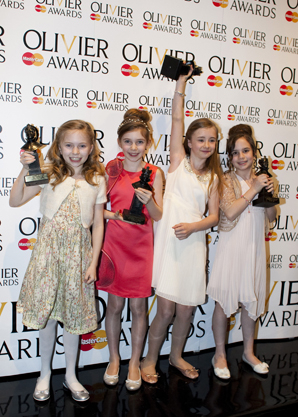
So in the final analysis the 2012 Olivier awards ended ‘not with a bang but with a whimper’.  The relentless march of the Matildas’ continues apace, more than a match for T-2 in terms of remorselessly crushing all that stand in their way. The Evening Standard Awards pointed towards what was to come but the warnings weren’t heeded and on Sunday, at approximately five o’clock in the afternoon, the Matildas’ laid waste to another awards festival. The destruction, when it came, was all but total. 

Nominated in ten categories, the Matildas’ blitzed the competition in seven to break the RSC’s own record that has stood firm for over 30 years; back when Nicholas Nickleby made all bow before him. They took a clean sweep of almost all the major musical catagories, including Best Actor, Best Actress, Best New Musical, Best Director & Best Theatre Choregrapher – the only break in the chain came with the surprising victory of Nigel Harman in Shrek: the Musical. It is thought his victory, as the vertically-challenged Lord Farquaad, only come about as judges mistook his diminutive stature for the infamous fifth Matilda, and awarded him the prize accordingly.

The other musicals kneel before the newly crowned queens of the West End. The big loser of the evening being the box office smash hit Ghost: The Musical. As unappealing as the concept may sound, it has unsurprising and dispiritingly been ‘box-office dynamite’. However not so much of a hit with the judges; going home empty-handed despite nominations in 5 categories.

Two rather more depressing news items is that London Road also managed to lose out in each of  its 4 categories. Each time nominated against a Matilda, each time losing out. Crush, Kill, Destroy. The other woeful piece of news is the fact that Les Miserables managed to somehow win the BBC Radio 2 Audience Choice Award. Seriously, how many awards does it need to win? Hasn’t it had enough, haven’t people had enough? We are going to get it rammed down our throats later in the year, as Oscar-magnet Tom Hooper and hotel-destroying-magnate Russell Crowe have been handed the reigns to put it into every multiplex in the country. Can we not have a break, please?

The Open Air Theatre’s production of Crazy for You continuing its late-blossoming West End success story, managing to snag two awards in just three nominations and taking home for hotly contested Best Musical Revival – fending off stiff competition from Singing in the Rain, South Pacific and the Wizard of Oz.

In the non-musicals (or plays, as some like to style them) it was a much closer fight. With no overall winner, Frankenstein and Anna Christie both walked away with two, whilst Collaborators and Roadkill ended up with one apiece. In the battle of the celebs, Jude Law lost out again (following the Evening Standard Awards) to the Jonny & Benny show in Frankenstein. If this seemed strange, what seems almost perverse is that Frankenstein picked up Best Lighting Design but Underworld’s magnificent pulsating score failed to win Best Sound Design and Mark Tildesley failed to even get a nomination for his epic set that made full use of the Olivier’s vast open spaces.

Ruth Wilson picked up a richly deserved Best Actress gong for Anna Christie, in doing so she fended fending off a series of  ‘A-List’ stars in Kristin Scott-Thomas, Lesley Manville and Celia Imrie; all of whom gave solid performances in rather less solid plays. Still a much-deserved win and one that suggest a bright future is ahead of her (if she can be kept away from the bright lights of the silver screen).

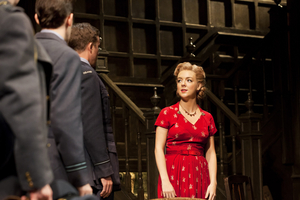
And talking of bright futures – in some of the most heart-warming news of the evening, Sheridan Smith completed her double by walking off with Best Performance in a Supporting Role for her role in Flare Path. This follows her Best Actress win in Legally Blonde last year and marks a triumphant return to the stage and is proof that she is capable of doing serious alongside light and frothy.

Olivier Awards 2012…and the winners are…

Tomorrow night sees the stars of the stage descend upon the Royal Opera House for what is arguably the biggest night in England’s (or perhaps more contentiously given the list of nominees – London’s) theatre world: the Laurence Olivier Awards. It will be possible to watch the event live via the red button on the BBC, or listen to Radio 2, from 19:30.

As is often the case the list of nominees make for interesting reading and arguably casts a brighter light on the theatre scene than the list of those who actually win. Rather than going through the complete list of the  runners and riders, a quick glance across the categories does raise some interesting talking points.

8 Key Questions

  1. In what can only be seen as a damning indictment of the non-subsidised West End stomach for risk-taking, the only nominated new play that premièred outside of the subsidised sector was an adaptation of the most famous of all Ealing comedies. Whilst well-received by the critics, is it not possible for a playwright to be allowed to stage new work in the West End (special exemptions for famous Hollywood actor/writers not withstanding)?
  2. Is it a thin year dramatically? Even the revivals don’t seem to have their usual vim. Hopefully Anna Christie will be recognised for its fine work and it will be up against a strong revival of Rattigan’s Flare Path; a playwright very much in vogue.  However Noises Off seems to be a rather populist choice when you consider the fine year the Donmar had with the rarely performed and excellently executed ‘Inadmissable Evidence’ directly following Anna Christie.
  3. Will London Road be able to withstand the Matilda charge? It lost out to populism at the Evening Standard Awards, and whilst Matilda is a fine and deserving winner in its own right isn’t it time that London Road was recognised for the stunningly brave and unique production it is (and for those who missed it first time, it is coming back to the Olivier this summer – a portent perhaps?)
  4. Can the Sheridan Smith success story continue? Everyone’s favourite 2 Pints of Lager…breakout star is up for a fairly unique double; after picking up Best Musical Actress at the first time of asking for Legally Blonde, Ms Smith will be hoping to make it two in two years for her fine performance in Flare Path. However competition is tough in a category that also includes Mark Addy, Bryony Hannah and Johnny Flynn; all of whom should be regarded as excellent contenders in their own right.
  5. Just how many can Matilda win? The remarkable story continues and you don’t fancy anyone coming up against them. Best new musical to edge out London Road? Bertie Cavill is surely a lock-in for Best Actor Musical. Does anyone have the heart to deny the Matilda’s their moment as Best Actress Musical? Paul Kaye could be on shakier ground as he is up against Katherine Kingsley’s Lina Lamont – a scene-stealing role if  ever there was one. And after all that there is a raft of technical awards that someone has to win.
  6. The Best Actress/Best Actor awards seem totally up for grabs. Desperately hope that the double-header Cumberbatch/Lee Miller is overlooked as Frankenstein wasn’t that great.  My personal preference would be a Ruth Wilson/Jude Law double for Anna Christie. However Douglas Hodge in Inadmissible Evidence would be a worth winner.
  7. What is the point, I mean really, what is the point of the BBC Radio 2 Oliver Audience Award when you have to chose between Jersey Boys /  Wicked / Les Freakin  Mis and Billy Elliot? How about giving us a write-in winner?
  8. How much more alive does theatre feel when you look at the nominees in Outstanding Achievement in an Affiliate Theatre? Mogadishu and Roadkill could have been strong contenders in the main categories but here they feel punted to the sidelines.

And finally good luck to all the nominees.

Laurence Oliver Awards 2012

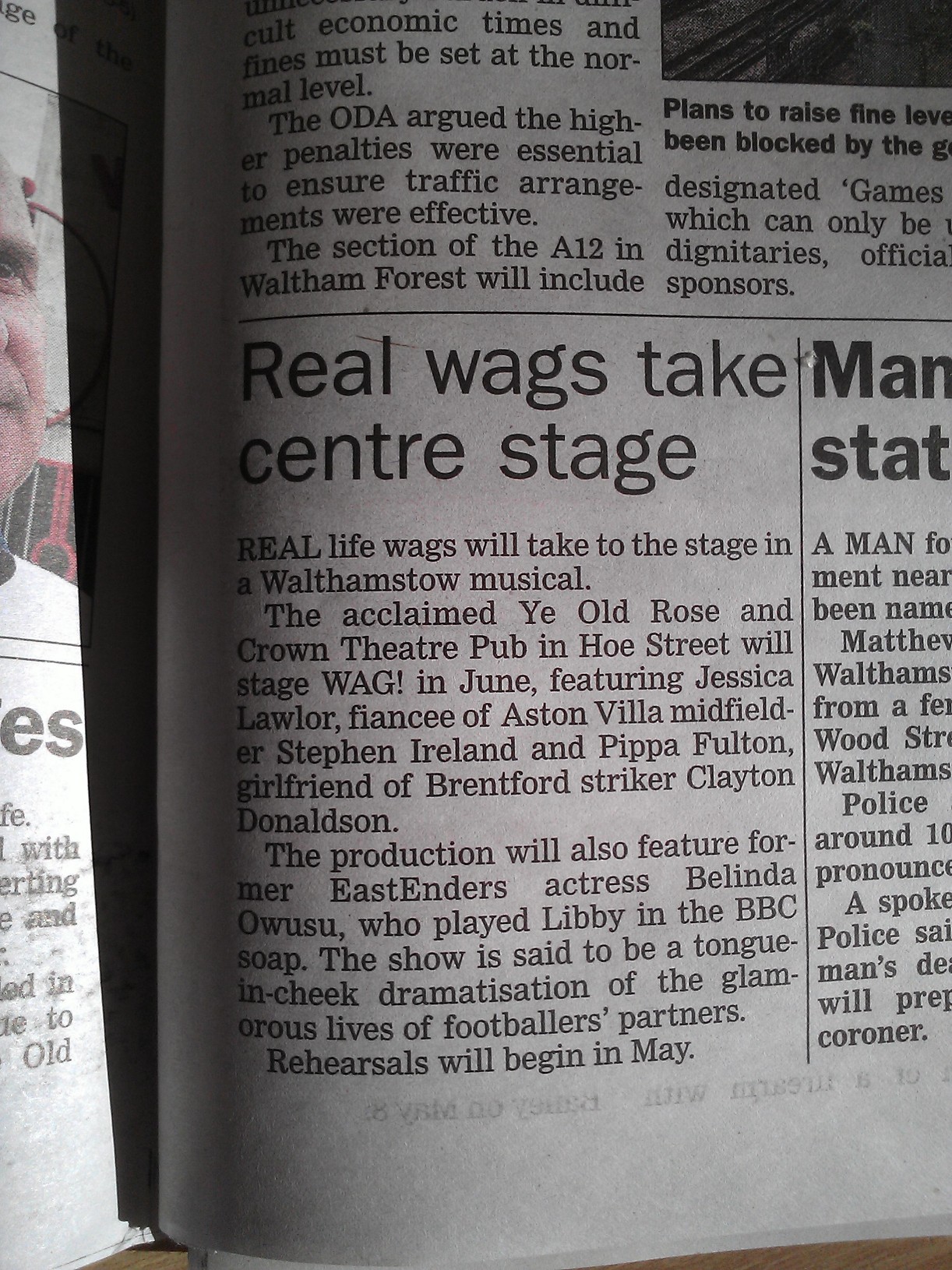
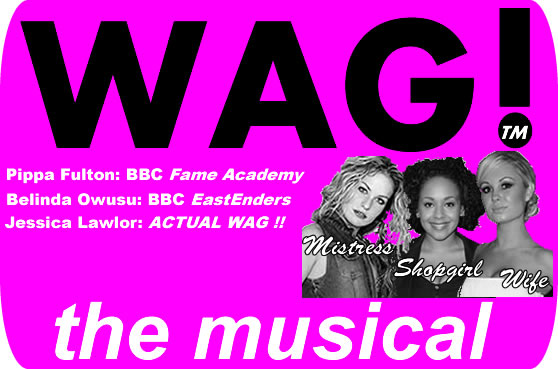
So this looks…um…

Words fail me but luckily they don’t fail Pippa ‘”My own experience is completely different” Fulton. Apparently her “relationship is a million miles away from the characters in the play, I am familiar with the world of WAGs, so I can put my own experiences into the part.” Whilst not being entirely clear if dating a Brentford striker (currently riding high 8th in League Division 2) strictly speaking qualifies you as a wag of the first rank and so a recourse to method acting will no doubt have to come into play to create a fully-rounded character.To be perfectly fair, Pippa did rise to stardom on BBC hit show Fame Academy and since then her career has been going from strength to strength, as her biography demonstrates.

It has been a bit harder to locate the acting credentials of the other big-name signing, Jessica Lawlor, but one needs only look to her sterling performance in lying to the Republic of Ireland manager, Steve Staunton, by telling him that Stephen Ireland’s maternal grandmother had died so that he could get out of playing a crucial game against the Czech Republic to know that she has the chops for such a major role.

Well-timed to coincide with the European Championships, the ‘acclaimed’ Rose and Crown Theatre Pub will presumably have to put in an upper-tier to meet the demand for this neo-Brechtian social satire on money and fame. With such promising material, it is important that the team behind WAG! don’t cheapen the whole affair by trying to drum-up cheap celebrity-driven content.

Oh…

http://menmedia.co.uk/manchestereveningnews/tv_and_showbiz/s/1487884_wag-side-story-new-musical-about-footballers-wives-to-star-stephen-irelands-finacee-jessica-lawlor

Well that is a regional press, its not as if a national newspaper has used it as an opportunity to include a double-page spread using sexy photos of Wags as a selling point,

http://www.wagthemusical.com/wagsmusicalnewspaper.pdf

Oh.

John Arden (1930 – 2012)

John Arden, a forgotten giant of the post-war renaissance in British theatre, has died at the age of 81. Long based in Ireland following a series of disputes with the English theatrical scene, Arden continued to write plays that were sharply critical of the British establishment’s policy towards his adopted homeland. However it is for his early work, which at the time were both commercial and critical failures, that his legacy will remain. 

Like so many other writers of the period, Arden came through the Royal Court’s Writer’s Group and his first play, The Waters of Babylon, highlighted his desire to engage with the social issues of  the time but also to avoid the trap of moralisation and gritty social realism. It also demonstrated Arden’s uncanny ability to pre-figure national events that were yet to break into the public consciousness, with a plot that identified the simmering tensions over immigration that were to explode in Notting Hill, eleven months after the play opened.

His plays were flops by any stretch of the imagination, Live Like Pigs managed 25% houses while Serjeant Musgrave’s Dance, a play now regarded as a modern classic was dismissed by critics and saw almost 4 out of 5 seats remain empty. A reaction to the shooting of villagers in Cyprus by British soldiers, Serjeant Musgrave’s Dance was quickly reassessed as a major work and it won the Evening Standard Best Play award in 1960.

Like so many writers who never quite achieve the status they deserve, Arden proved to be too radical for mainstream consumption. Radical in his politics – he was a Marxist intellectual who used his plays to challenge the established order and was an ardent pacifist- he was also a radical in his writing. Arden’s plays are a rich and vivid affairs that blend prose, poetry and songs. He had a remarkable talent for dialect that allowed his characters to spring fully-shaped from the page. He also offered the audience no obvious direction as to whether their moral sympathies  should be directed –  characters that would normally be signposted as ‘bad’ and ‘good’ remain equally vibrant and engaging, leaving critics unsure as to what the message of his play were supposed to be.

Today Arden remains an underperformed playwright but Serjeant Musgrave’s Dance retains a major influence on writers. The fact that it is hard to remember how innovative it was to see a play use a historical setting to discuss current events is a measure of how ahead of his time Arden was in using a narrative device that is now a common feature of playwrights looking for a new angle in which to express old ideas.

Arden’s influence can be seen in the most recent play to be acclaimed as a British masterpiece – Jez Butterworth’s Jerusalem. Like Serjeant Musgrave, the story of ‘Rooster’ Byron seems to exists in a nether world where the threat of the outside is ever-present but does not encroach until the latter stages of the play, the characters are portrayed with a degree of moral ambivalence that makes it difficult for the audience to apportion their sympathies and there use of dialectal realist language mixed with prose poems and songs are reminiscient of Arden’s signature style.

Read the Guardian Obituary

Read the Telegraph Obituary