Out of darkness comes Light

Light – Theatre Ad Infinitum @ The Pit, Barbican Centre (Touring until 16 February 2015)

Performed as part of the London International Mime Festival

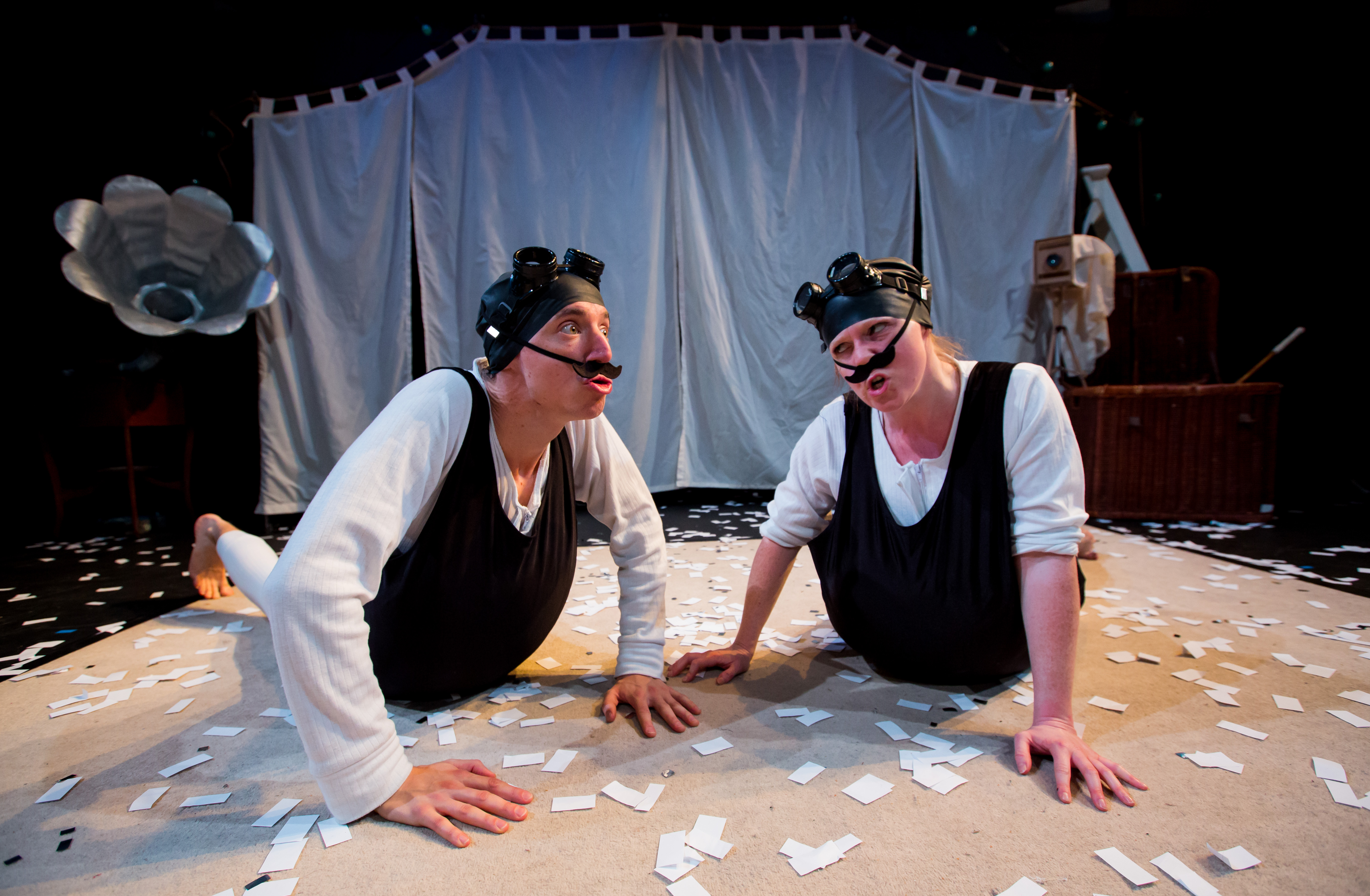
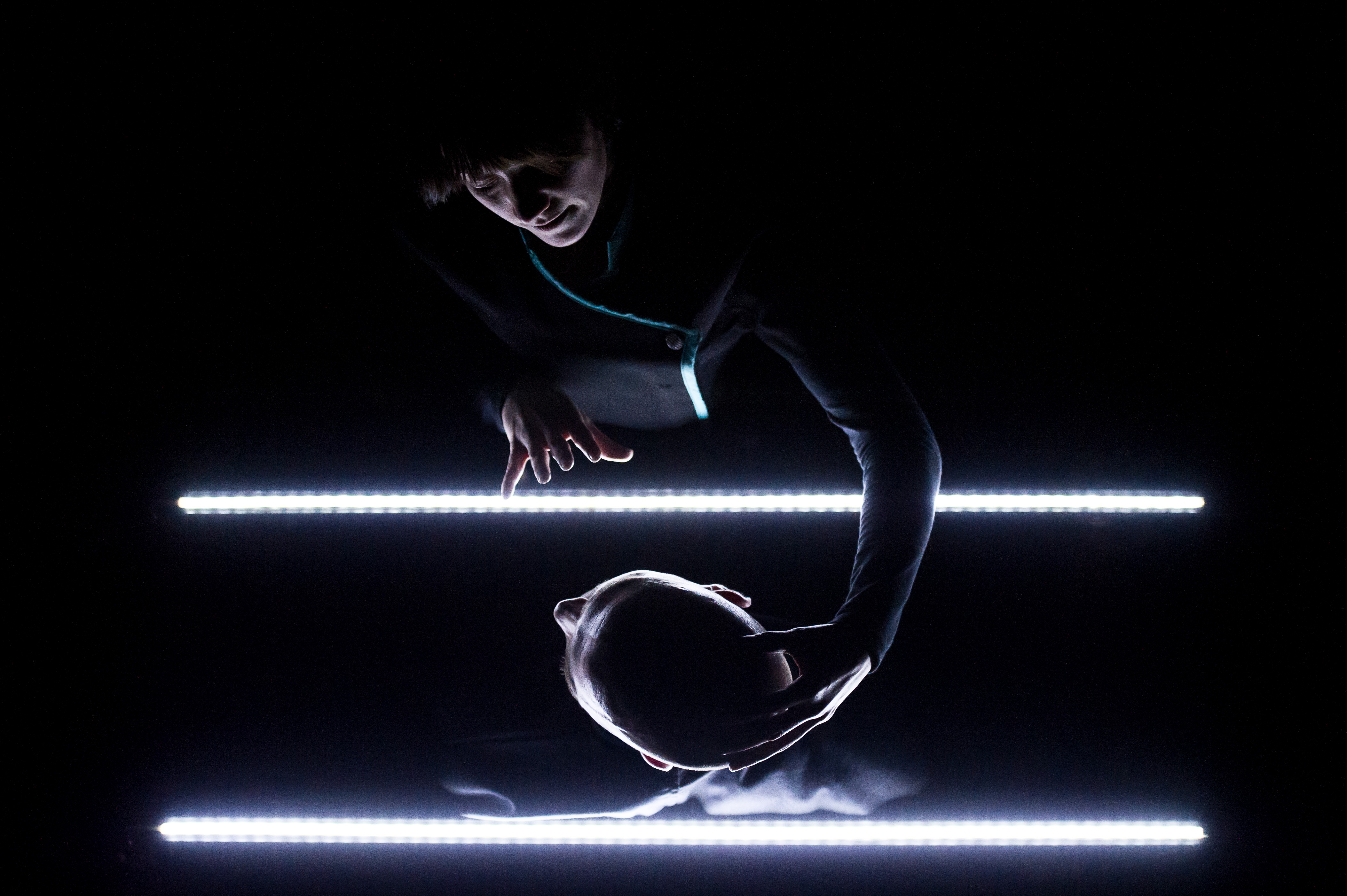
Light is proof, as if any were needed by now, that Theatre Ad Infinitum are staggeringly good. Just staggeringly, staggeringly good. They are a theatre company that completely and utterly Theatre-Ad-Infinitum-Light-c-Alex-Brenner-photoconfound expectations, and produce plays make you leave the auditorium wanting to tell everyone you know that the absolutely most important thing they could be doing is going to see one of their productions.

Hence the gushing opening paragraph.

Slowly but surely people are waking up to their talents. Light, performed as part of the London International Mime Festival, sold out months ago. They clearly have a devoted fan base and have won a number of fringe awards but it feels like they are currently on the cusp, like 1927 with Golem, of producing a show that takes them out of the Barbican’s rather tiny Pit theatre and onto the main stages.

Theatre Ad Infinitum are not a company that like to sit still. They came to my attention at the London International Mime Festival in 2012 with Translunar Paradise – a work of quiet, tragic brilliance. It demonstrated in its simple, understated way the art of puppetry and despite the alienating effects of the mime it felt more human than any other play produced that year.
Theatre-Ad-Infinitum-Light-c-Alex-Brenner-please-credit-_DSC4592-dimmer-dressesThey followed it up with something completely different; the hyper-verbal, bundle of energy that was Ballad of the Burning Star. If not as technically refined as Translunar Paradise, it was a fabulously entertaining take on the most contentious issue in world politics. It was a forceful piece of theatre that refused to allow itself to be pigeonholed and gave very few easy answers.

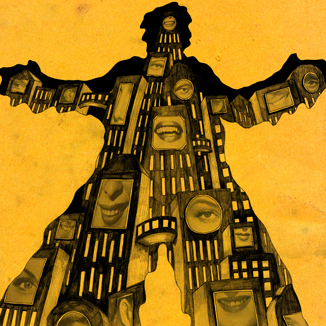
And now they are back with Light. This time we are in genre sci-fi territory with a dystopian piece of futurism, imagining what might be as twin developments in technology and neuroscience allow for an ever greater entwining of individual and social consciousness.
<<Read full review>>

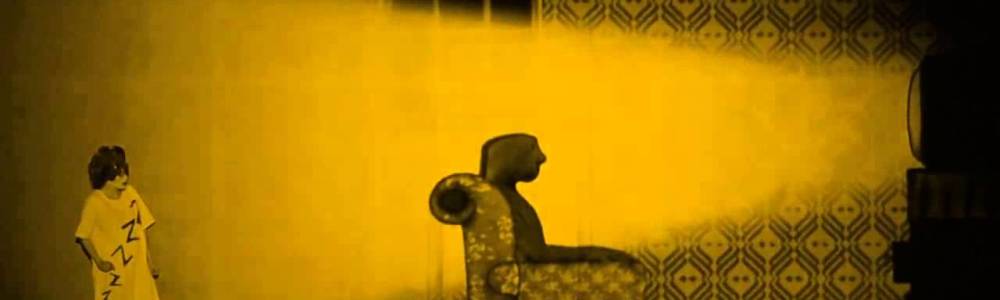
Annie (played by Esme Appleton), Robert (Shamira Turner), Golem and Granny (Rose Robinson) Photo Will Sanders

Challenging uniformity in life and on stage.

Golem1927 @ Young Vic Theatre, until 31 January (Tickets)

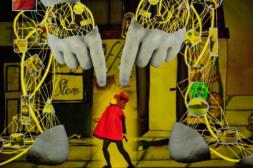
At its heart 1927’s Golem is a modern reworking of Gustav Meyrink’s 1914 novel, Der Golem, which itself was a retelling of the Prague Golem stories. The legend is a classic piece of Jewish folklore and the oldest narratives date to the Talmud and the very beginnings of Judaism. It is a story that has always held an instinctive appeal. In its most basic form it is about creating life out of golem_new_326x326inanimate matter something that can be identified in most of mankind’s origin myths but as society advanced something about the golem has meant the stories have retained their relevance. Golem’s stories became intertwined with its purpose as he unstoppable, implacable slave of its instruction. It can be seen in the mechanisation of the modern army and again in the prism of the Industrial Revolution that saw the skilled worker become expendable in the face of technological improvements.

The golem, in its nether-changing silence, seems always to reflect the images that a new generation projects upon it. 1927 are just the latest company to breathe life into the clay man and they do so with an extraordinary visual flair and breath-taking inventiveness. Whilst their central conceit, that modern society is a troublingly homogenous mass of cultural identity and branding, is not particularly original and also rather debatable, what cannot be denied is the originality Esme.Appleton.in_.1927.s.Golem_.at_.the_.Young_.Vic_.9.Dec_.2014..17.Jan_.2015..Photo_.by_.Bernhard.M.ller_.2of the company themselves and that they have, with Golem enjoying a sold-out residency at the Young Vic, announced their arrival as a major player on the UK theatre scene.

So what makes 1927 so impressive? Simply put they are leading the vanguard of companies that are using visual effects to question the limitations of the traditional theatrical space. VFX have been a game changer in challenging assumptions about what stories can and can’t be told on stage, and with Golem we are seeing theory turned into practice. Whilst it is not the perfect production – the quality of design, costume and musicianship does outweigh the quality of acting and writing – as a statement of intent it certainly leaves its mark.

VFX are used throughout the West End to provide the ‘value added’ – that extra little bit that makes you feel you haven’t wasted your money and time on a show. However if it is seen in these terms then it is little surprise that VFX rarely do more than add pizazz, it is far rarer to see VFX used to deepen the narrative or to have been carefully considered for its use in producing more complex sets.

The first time I was really aware of the power of VFX was in 2005 with the Menier Chocolate Factory’s wonderful production of Sondheim’s Sunday in the Park with George. It used technology to move the audience between the Art Institute of Chicago and the banks of the Seine. Watching Daniel Evan’s Seurat ‘paint’ the pointillist masterpiece onto a virtual backdrop was to see for the first time the possibilities that VFX brings to the theatre, and to see a narrative that was immeasurably strengthened by being integrated with the technology.

<<Continue to full review>>


Watch the trailer:

The spirit of Christmas

A Christmas Carol – The Old Red Lion, until 03 January 2015 (tickets)

‘Humbug’. The modern lexicon creatively being employed by the youth of today means it’s a word that sits on the milder end of the spectrum. Yet, tellingly, for many it retains a special power; it’s A Christmas Carol, Old Red Lion, courtesy of Anna Söderblom,11indelibly linked with one man and one situation. To tell someone they are a humbug is to accuse them of hating Christmas – a damning indictment indeed.

Dickens’ story is so powerful that it has forced a character into their own existence. Scrooge. A creation so potent that his very name became synonymous with being a miser. It is a very simple story – of one man’s redemption over the course of one fantastical night – that has held a grip over the imagination since it was written. Each generation has their own favourite; whether it was read to them at Christmas, seeing Alistair Sims in black and white hunched around the TV or going to the cinema to watch the Muppets.

Metal Rabbit are one of three companies performing A Christmas Carol in London this winter. If you are after lashings of period detail then Antic Disposition’s version in the fabulous surroundings of Middle Temple Hall may be more to your preference, however Metal Rabbit provides a stripped down updating that consciously nods as much towards modern Britain as it does the slum-like conditions that Dickens captured so well.

Alexander McMorran’s Scrooge is, quite literally, at the centre of this production; he spends much of the play standing centre-stage on a safe (that neatly doubles as a gravestone). It is an arresting opening image that is enhanced by McMorran rhythmically clinking a chain to hint at the miser counting his money but also inescapably leading the subconscious to the ticking of a clock that governs the passage of time over this fantastical night.

<<Continue to full review>>

A most unexpected adventure

Antarctica – Little Bulb @ Battersea Arts Centre, until 04 January 2014 (tickets)

Astute readers of this blog will most likely have guessed that I am not between the ages of two and six. They may well have also concluded, given the amount of theatre I am able to watch, it is ANTARCTICA-11 Paul Blakemorelikely that I have either a very forgiving partner or no small children of my own. As a result it may be surprising to find Civilian Theatre at the Battersea Arts Centre on a Saturday afternoon to join Little Bulb and their ‘brave explorers club’ on a 55-minute adventure to Antarctica (not bad going – it takes me over 2 hours to get to Gloucester at Christmas).

Antarctica is a show for children from Little Bulb, the theatre company that thoroughly charmed this reviewer when they took full advantage of the Battersea Arts Centre’s period décor to present a wonderfully innovative take on the Orpheus and Eurydice myth.

ANTARCTICA-18 Paul BlakemoreDespite the tragedy of Eurydice they managed to introduce a humour built on whimsical charm and a very intelligent silliness that gave Orpheus a really unique feel, and it felt that their creative and spirited approach to story-telling would be perfect for the world of children’s theatre.

Paying close attention to their audience they have built up the silliness but, and this is crucial to all children’s theatre, they haven’t dumbed down the approach. At no point do you feel that Little Bulb are patronising or phoning it in. This is not Nativity 3, where if you look closely you can see £ signs where the actors’ pupils should be.

Each child is afforded the respect that any adult would be, and this is evident in the humour that runs deep throughout the show. Jokes have a structure and intelligence that acts as a reminder that there should be no cheap laughs no matter who is watching; good comedy is hard work and it requires a lot of heavy lifting to make jokes that feel this light.

The cast of Clare Beresford, Dominic Conway and Alex Scott work really hard to provide a warm and inclusive show. It starts as the audience is filing in, settling down and finding somewhere to put the various bags/scarves/hats/mittens that appear to accompany any mass family outing. Beresford and Conway create a soothing and magical atmosphere with the aid of xylophones and various percussion whilst Alex Scott (Sir Peregrine Falcon) makes himself busy teaching us all the brave explorers greeting and bestowing his sandwiches, maps and flags on various small children.

<<Continue to full review>>

Gilbert and Sullivan with added jazz hands

The Mikado – Charing Cross Theatre, until 03 January 2015

Gilbert and Sullivan are never going to appeal some people. High-brow opera aficionados will most likely turn their nose up in distaste whilst theatre connoisseurs will wryly shake their head before searching out a disused prison for the latest in immersive theatre. People who don’t go the theatre will probably just be entirely baffled by the whole experience.

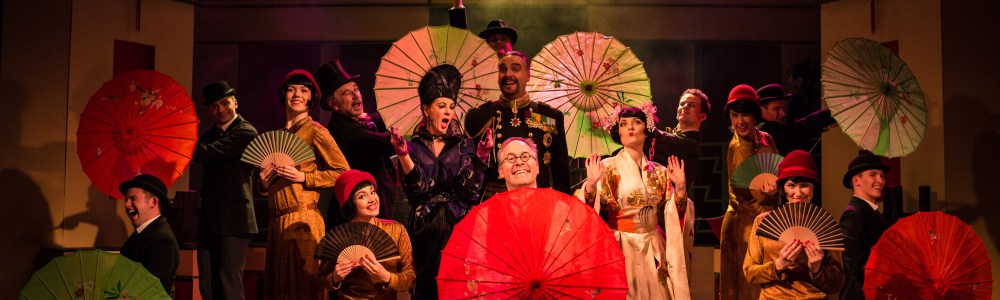
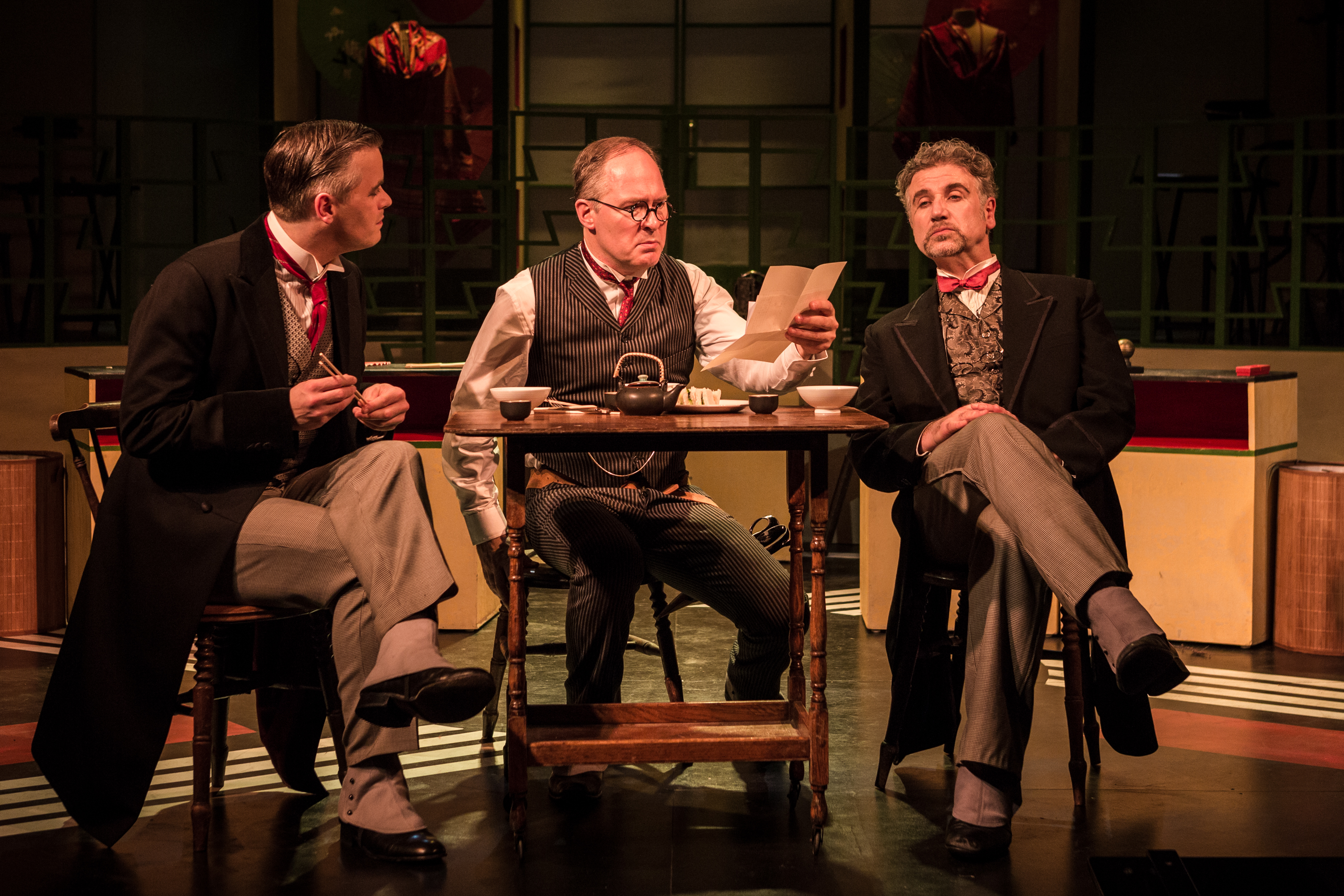
For those who like Gilbert and Sullivan the joy is that they manage to keep themselves outside of any particular bracket. They are just who they are, and you feel that their operettas achieve precisely what they wanted them to achieve. Make no mistake: The Mikado is an MikadoChX-Press-SRylander-011 (1) (1)absolutely ludicrous show and so much better for it. Thom Southerland, who has a number of recent notable fringe musical successes under his belt, understands this and pitches the show in a bizarre 1930’s factory that makes absolutely no logical sense to the plot but which allows a free-wheeling lunacy to give the show a hugely infectious, if slightly demented, charm.

Southerland’s choice of location helps remove the focus from Japan, and as a result some of the slightly more knuckle-chewingly inappropriate reference points are adroitly side-stepped. In fact the result of updating the plot is that it actually makes it easier to see how Gilbert and Sullivan could be a precursor to the likes of Cole Porter and Irving Berlin, and perhaps they deserve more recognition in the creation of what we understand musicals to be. Anything Goes is one of the great musicals but the plot itself is pure hokum, and really how different is The Mikado? Both are full of memorable songs, some great jokes and end in marriages.

The link to American musicals is aided by some sparkling choreography from two-time Tony Award nominee, Joey McKneely. It is quite clear that McKneely is someone who knows what they are doing. He has drilled the ensemble into some fine, spirited work on a small stage. Indeed some of the energy is so high you worry that they are about to tip off the front and severely disrupt the two folk bashing away on the baby grand pianos that provide the musical accompaniment.

<<Continue to full review>>

Five plays for the day

Theatre Uncut 2014 – Soho Theatre

Theatre Uncut will be in Brighton, Bristol, Canterbury and Liverpool in December 2014. For more details and to book tickets check outTheatre Uncut’s website

The Theatre Uncut project is now four years old. That is four years of coalition cuts, four years of the retrenchment of public services and four years where the quiet desperation of those without a voice has remained largely unheard. In that time Theatre Uncut has expanded so that it has now been performed in 17 countries across 4 continents. It has also started its first national tour and this year, through online polling and through a workshop process, writers chose to focus on the topic; ‘Knowledge is power, knowledge is change’.

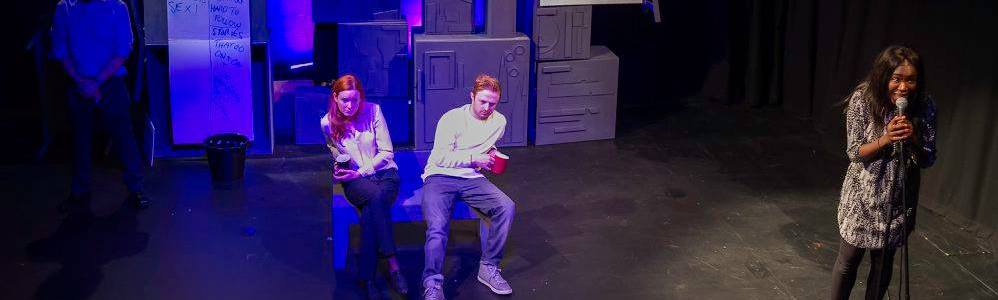
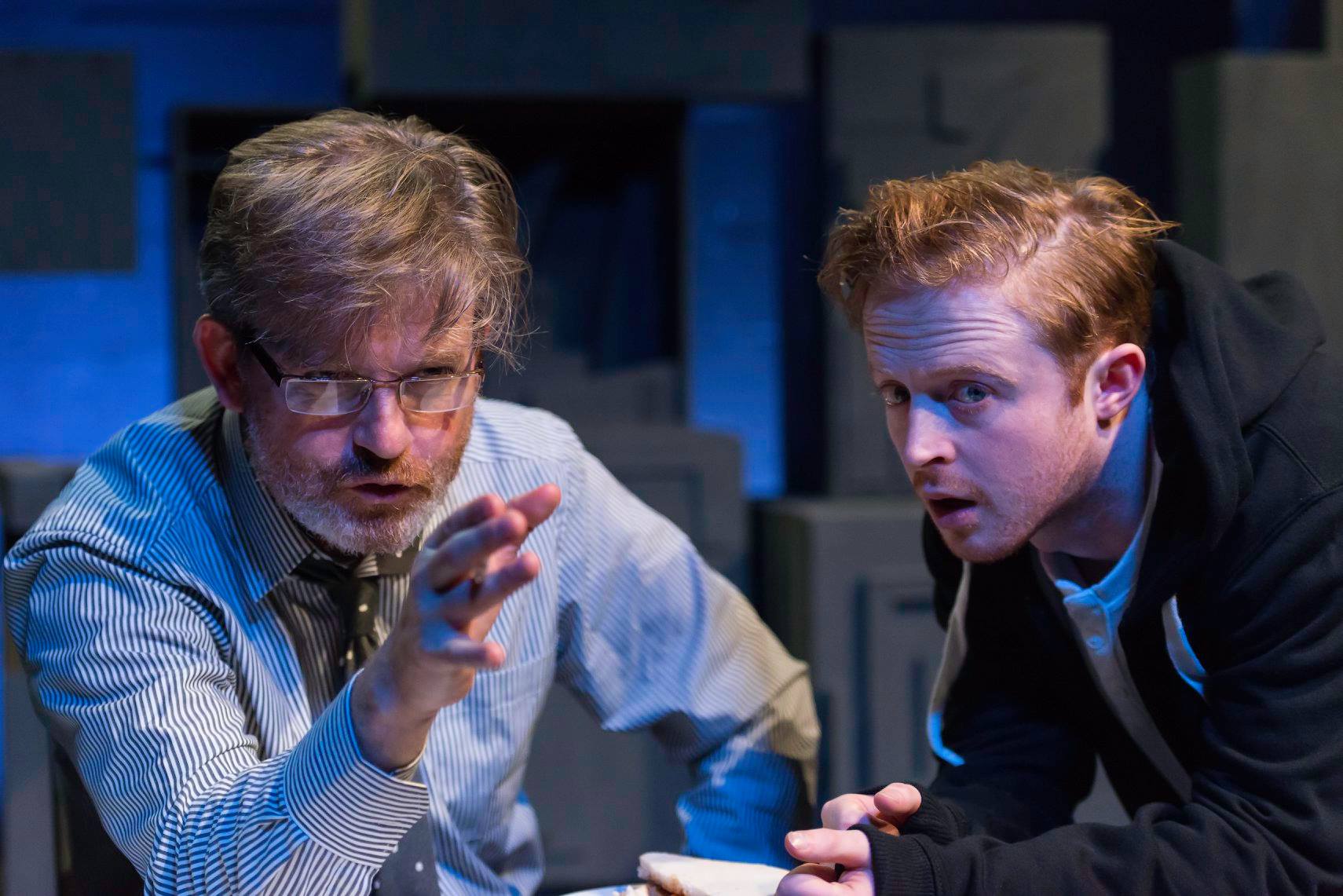
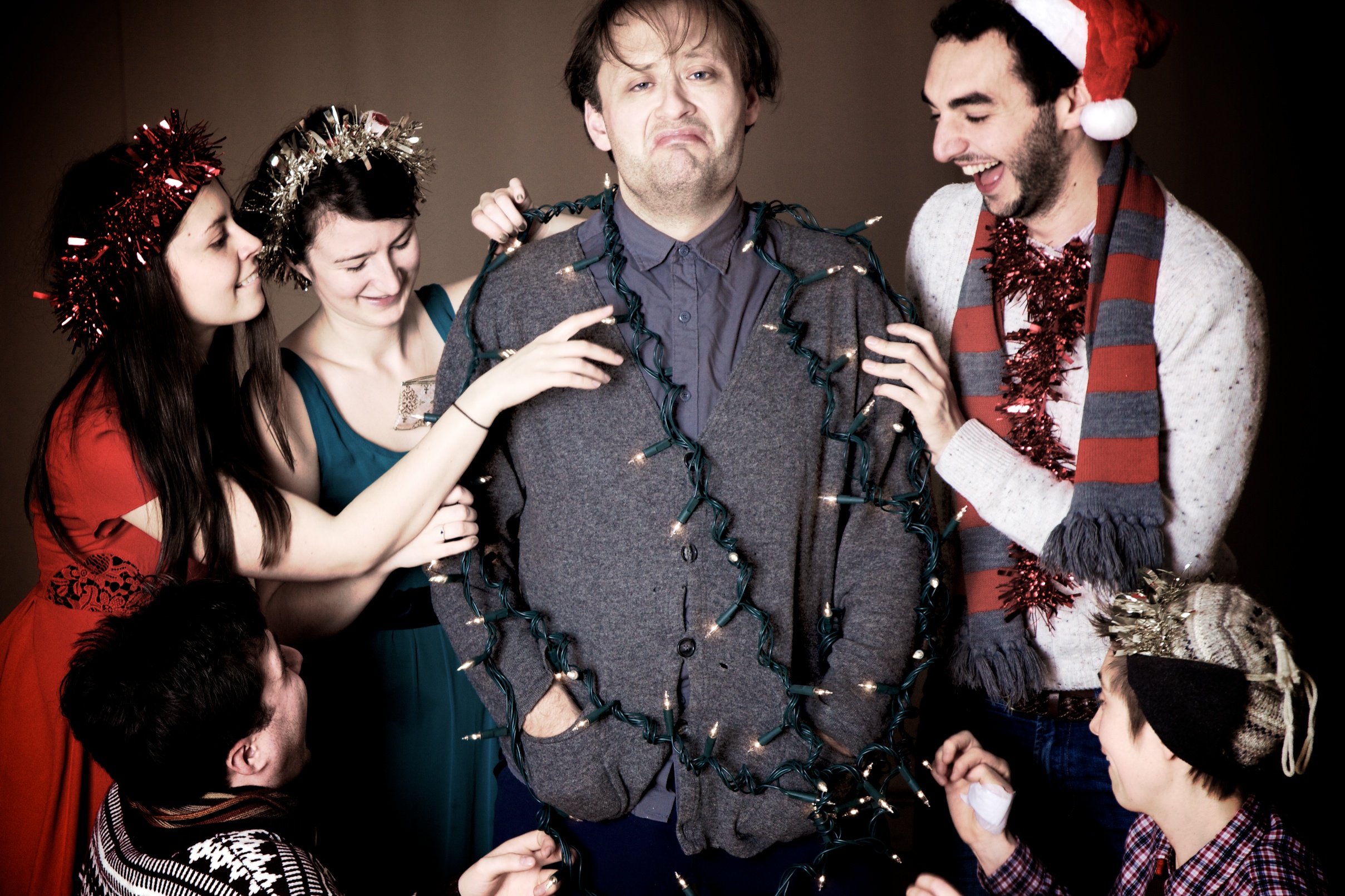
10495065_755198004552857_8325607810536121571_oOne of the most interesting aspects of the process is finding out how five different writers decided to interpret the statement and how they decided to engage with the overtly political process of writing under these conditions.

Perhaps most surprisingly, and most refreshingly, is that a number of the plays focus on the personal more than the political. There was a balance that helped stop the gnawing sense that the whole programme was little more of an anguished wail of the liberal left against a coalition government that (like it or not) had every right to govern and who had been tasked with reducing a sky-rocketing debit burden following the global economic meltdown.

The variety on display meant it avoided the sense of lecture and the evening was leavened by a remarkable versatility in the well-judged humour throughout. It starts off in a blackly comic tone with ‘The Finger Of God’, which could easily have slid out of Charlie Brooker’s Black Mirror-inflected fevered imagination. It takes a classically dystopian near-future world where the lottery is seeking to ramp up interest in its games due to falling public demand. On one hand we get a rather obvious satire of the powerful slowly ramping up the consequences of playing but on the other we get a more nuanced look at those who continue to play the game even when it is so clearly rigged.

<<Continue to full review>>