Memories are made of this

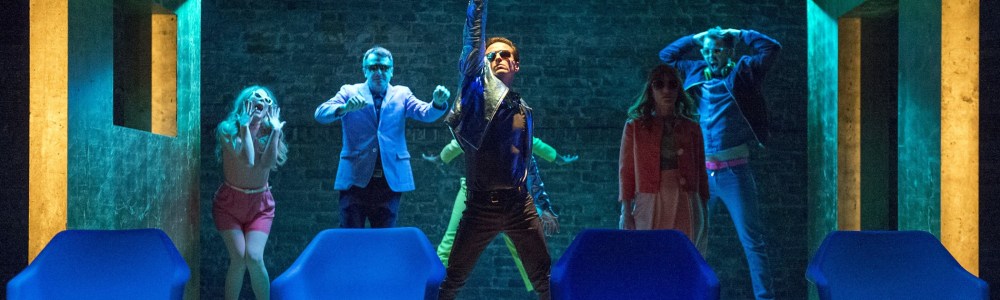
Incognito – The Bush Theatre, booking until 21 June 2014

What separates humans from the rest of the animal world? Whilst we have many evolutionary advantages it is surely the way our brain evolved its extraordinary capacity to retain and recall information to such a complex degree that makes human fundamentally different from other animals.

Genetically it may be our DNA that determines that we are biologically human but is it not our memories that are essential in creating personality – in essence what turns a ‘human’ into a ‘person’. Without memories we can be biologically human and be expected to treated as such, but if we lose all sense of our memory and the associated ability to make the connections to identify with our past, can we still be thought of as the same person as we were before?

This argument is a modern conception of the Humean idea of the self. We are made up of instances, of individual perceptions, and it is the continuous linkage that creates the self. Without this ability to tap into these Incognito 2experiences, to recall them, do we retain the same self?
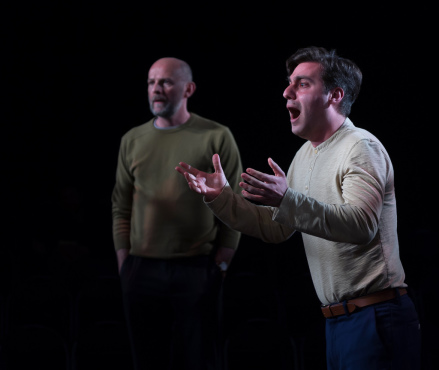
Part of the problem with answering these questions is that, compared to our other organs, we know laughably little about the brain and how it functions. Neurologists may claim, with assured prognoses, that image or area tells us that a person is a serial killer or understands a joke, but this is all inference. We do not know how it works in practice, we cannot say with certainty what is in a brain that makes one person a genius and another a fool.

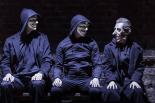
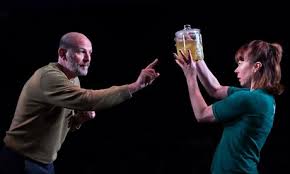
This is the starting point for Nick Payne’s latest play, Incognito. Payne takes the remarkable story of Einstein’s brain and uses it to frame a complex, demanding but ultimately satisfying investigation into the fragility of humans, both as physical objects and emotional beings.
<<Continue to full review>>.

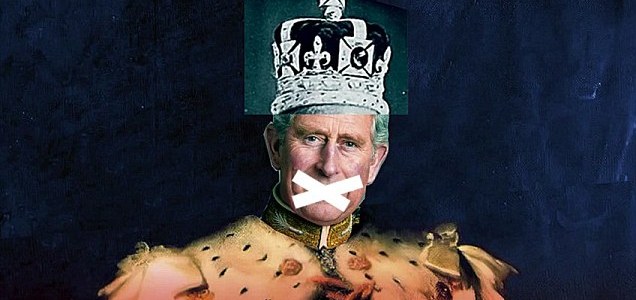
King Charles III Poster

‘Go some of you and fetch a looking glass’; writing for kings in the 21st century

King Charles III – Almeida Theatre, until 31 May 2014 (Day Seats & Returns only)

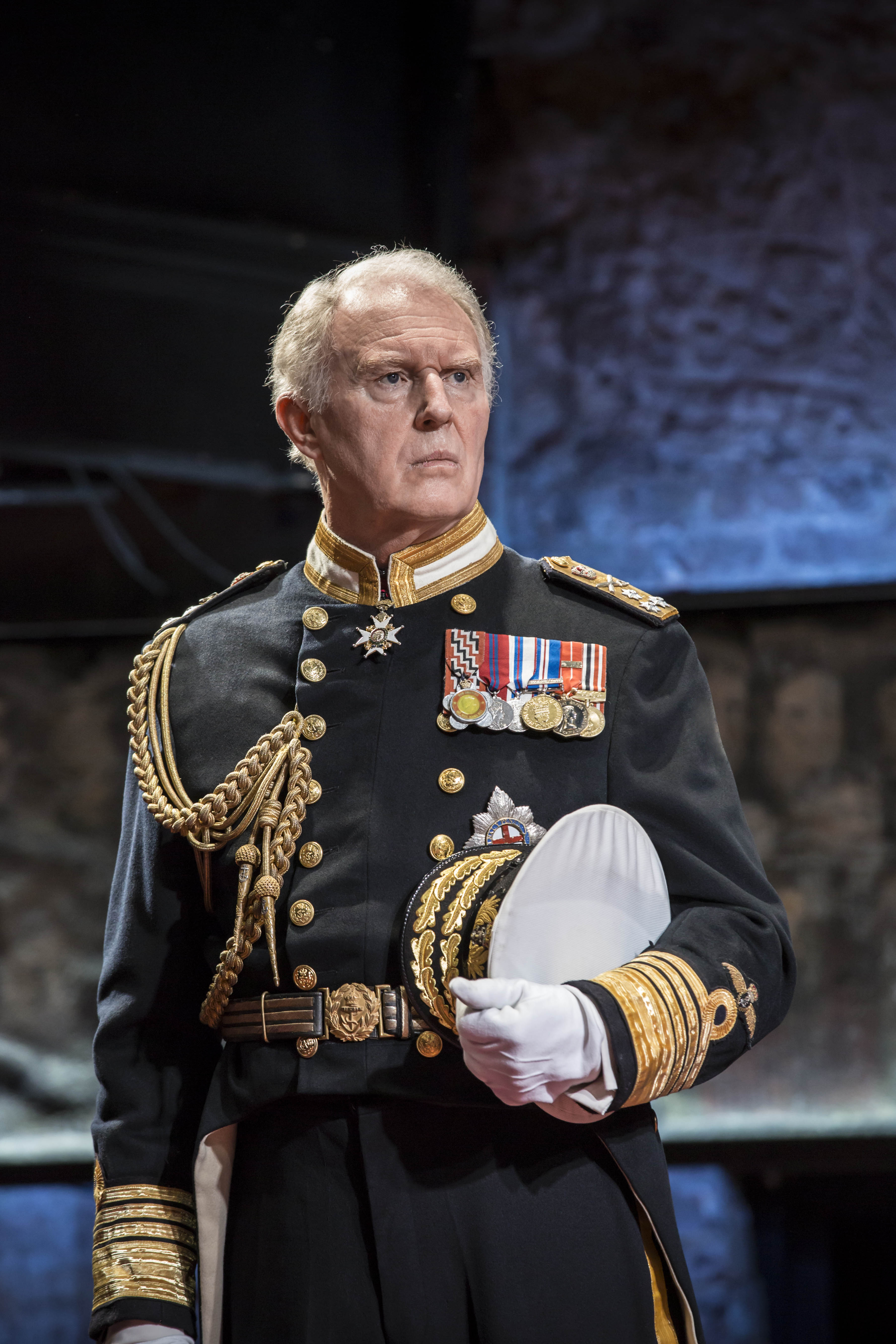
Civilian Theatre was one of many celebrating when Rupert Goold snagged the job of Artistic Director at the Almeida and given the unenviable task of continuing the success of Michael Attenborough’s 11-year tenure. Based on his opening salvo; the intentionally eye-catching American Psycho: The Musical before bringing in his former company with the Headlong-produced 1984, it appears Goold has a canny sense of how to blur the KING CHARLES III by Bartlett,        , Writer - Mike Bartlett, Director -  Rupert Goold, Design - Tom Scutt, Composor - Jocelyn Pook, Lighting - Jon Clark, Almeida Theatre, London, UK, 2014, Credit: Johan Persson - www.perssonphotography.comboundaries between popular and elitist theatre.

Appropriately enough the issue of succession is at the heart of the first play Goold has personally directed at the venue; Mike Bartlett’s King Charles III. Another well-judged choice, Bartlett’s play cannot fail to appeal to all audiences. Much has been made of the Shakespearian overtones but the true success of the play is that it is a hugely enjoyable piece of, what Bartlett calls, ‘future history’, which also raises questions that Britain as a country will need to confront in time.

Like Jerusalem this is proper state of the nation theatre and it is heartening to see a playwright unapologetically examine ‘big issues’ on such a grand scale. Bartlett demonstrates that verse has its place in modern drama and that audiences needn’t be turned off by the use of heightened language. The use of iambic pentameter isn’t purely to demonstrate Bartlett’s skill as a poet but because he is dealing with characters that are simultaneously entirely real and, to the majority of us, entirely unknowable.

King-Charles-III-Almeida-LondonThe greatest PR trick that royalty has ever pulled off was to create this public image and then to strenuously avoid revealing their true face. Our current Queen has studiously kept to this template and it is notable that it is only when the mask slips that the public begins to question their value. As we enter a new era, the age of Will and Kate and of smartphones and public accessibility, this model is in a state of flux and Bartlett has pitched Charles’ succession as the moment that the new and old world will collide.
The use of verse is a way into this private world. How can prose be placed into the mouths of people who are so recognisable but so unknown? We cannot know how they really speak behind closed doors and so creating a state of unreality through artifice is a way to reach some kind of truth. It also allows Bartlett pre-existing conventions to slip seamlessly between conversation and monologue. We are permitted into an inner-realm, not just the closed world of the monarchy but the private consciousness of its key figures.

The allusions come thick and fast and for those who know Shakespeare there is much fun to be had in spotting the references. However Bartlett ensures that this is not to the detriment of those who haven’t been schooled in all the History plays and a fair portion of the tragedies. The characters he draws are fascinating in their own right and capture the essence of who they are. It is perhaps Prince Harry who is closest to caricature but how could one resist when he is built to be modelled on the classic arc of Hal in Henry IV Part I and II.

<<Continue to full review>>

Welcome to the world of tomorrow, today

Privacy – Donmar Warehouse, booking until 31 May 2014

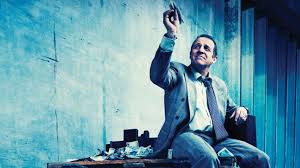
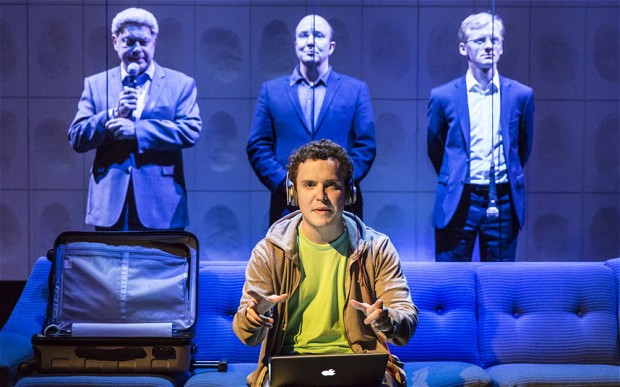
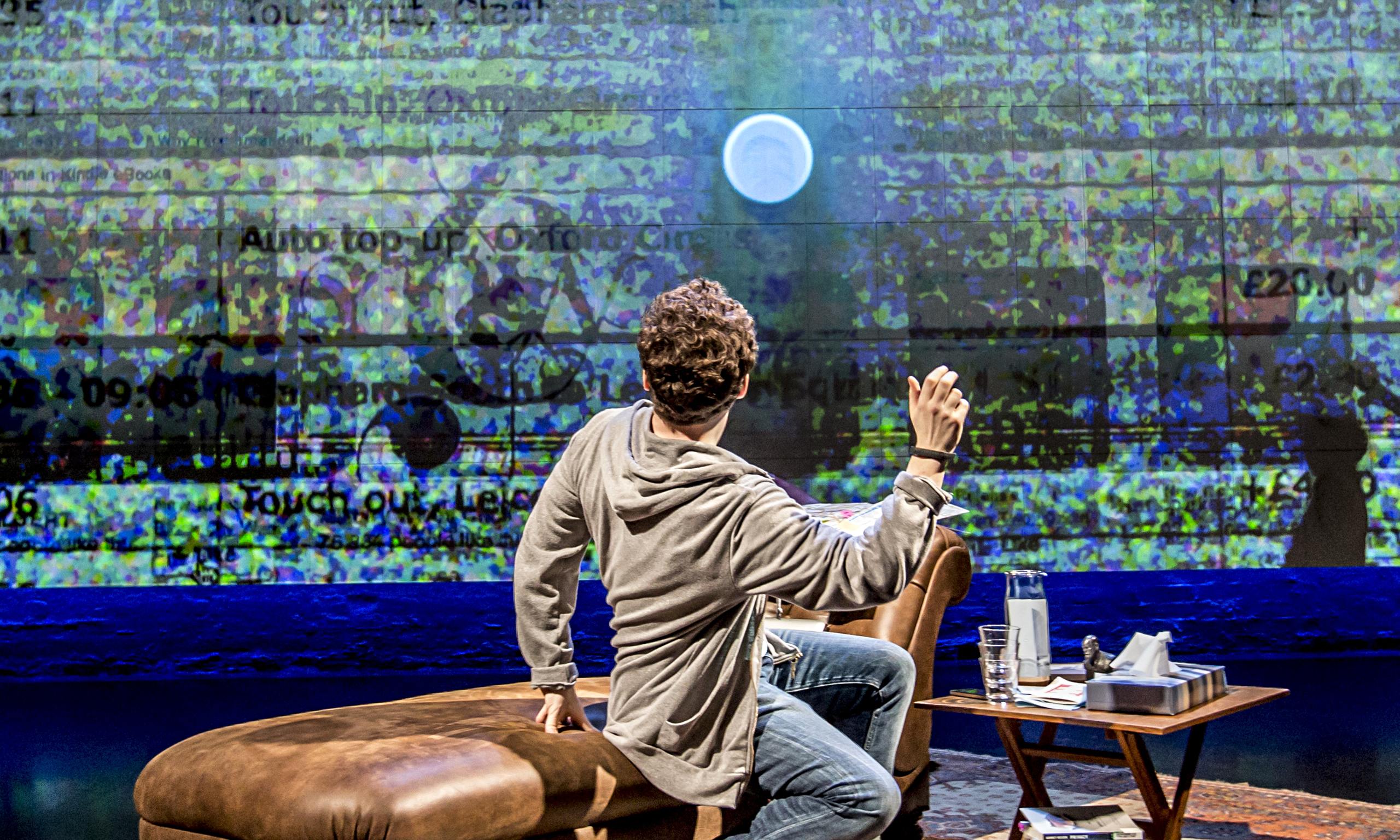
Privacy or, according to the Donmar’s listing, PRIVACY. Pri-vacy or Priv-acy. In James Graham’s latest play, which follows the unexpectedly huge success of this This House at the National, everything is up for debate. Indeed the amount of audience interaction and feedback means far more democracy is on display in Privacy than in This House’s exploration of parliamentary backchannel deal-making.

It does Privacy a disservice to think of it as a ‘play’; judging against these criteria one has to acknowledge that the fictional narrative is rather slight. The idea of a playwright writing a play about the subject and entering Privacy at Donmar WarehouseSocratic dialogue with those he encounters is lazy for a playwright at this level. We have been living in post-modern culture for over a quarter of a century and this is approach is pretty much meta-101. From a purely textual perspective Privacy is also hindered by the fact that this fictional plot is far less interesting than the people he talks to and the subjects discussed.

Privacy may be sold as a play but in truth it is less play and more a fascinatingly structured lecture that has been fictionalised. It is not dissimilar to the most entertaining TED Talks and the purpose of the evening is more edutainment than anything else. In this environment the characters of writer, director and psychiatrist are entirely secondary to, and at the service of, the relying of information from source to audience.

The structure is familiar to Black Watch; it interweaves verbatim dialogue with dramatized situations. It is unclear how much, if any, of Graham’s work comes from first hand interviews and what has been lifted from other sources, for instance much of the detailing of the Guardian’s involvement in the Snowdon affair and in the destruction of the hard drives felt as if it had been previously recorded elsewhere.

privacy donmar warehouseThis weaving of sources is an entirely appropriate academic technique for synthesising information but without the accompanying intellectual rigour it leaves the production open to criticism over how it represents its material. Theatre does, and should, present partial viewpoints; it is not the role of theatre to present unbiased reportage. Indeed the best verbatim theatre – the tribunal plays produced at the Tricycle under Nicolas Kent – used unbiased reportage to create a clearly partial view.

However Graham’s play sits in a grey area where we are invited to take a view on how shocking it is what the government and big business get up to, and we are meant to feel it is strengthened by including ‘real experts’ speaking ‘real dialogue’. It is a fast-paced and highly enjoyable journey but on reflection doubts over whether it is a substantial whole begin to creep in.

It is a rather superficial gaze on the issues – perhaps reflected in the fact that many of the accounts are given by politicians, journalists and the omni-present Shami Charkrabarti, pretty much the epitome of the liberal media darling. These are all people used to speaking in sound bites, regurgitating complex issues into digestible chunks.

<<Continue to full review>>

Small family business yields little profit

A Small Family Business – Olivier @ National Theatre, until 27 August 2014

The National Theatre website currently advertises its revival of Alan Ayckbourn’s A Small Family Business as running until the 27 August 2014; given middling reviews and, more damagingly, the desolate swath empty seats all around, this now seems a trifle optimistic. One wonders if Ayckbourn has lost touch with his heartland and whether that distant sound is of Geoffrey Howe readying his poison pen.

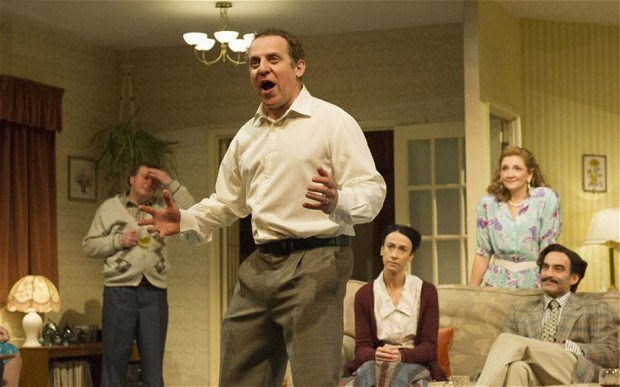
If the above analogy seems tortured and meaningless in 2014 then try sitting through two and half hours of Thatcher-era satirical farce played, almost without exception, as if actors were being paid by the minute.A_Small_Family_Bus_2875957b

Astute readers may have gathered that A Small Family Business is not considered a success. There are many problems with the production but at its heart is the play. Ayckbourn is a fine dramatist – one whose reputation has grown as the subtle radicalism of his writing and staging has become ever more appreciated – but his work has always run the risk of being too identified with the period that he critiques.

Whereas writers like Pinter and Beckett examine the universal, Ayckbourn’s skill has always been the microscopic. He is one of the great observers; capable of skewering the social charade and unveiling the fissure lines that runs through society, the unspoken conventions of the British that permeates life and ensures everyone conforms to their class.

Family businessThe conclusion that can be drawn from A Small Family Business is that we have entered a period where his targets are no longer recognisable. It may be quarter of a century old but the world that Ayckbourn has pictured seems embarrassingly quaint; quintessentially English, it is not comforting in the same way that we relax into a Miss Marple and it is not a period piece in the way we might enjoy something by Noel Coward.

With the benefit of hindsight it does not seem like biting satire but instead offers a naïve view of the world. Living in an era where companies like Amazon pay £4.2 million in UK tax on generated sales of over £4 billion, it is hard not to recognise the scale of the ethical corruption of big business. In this work the idea that a small family concern needs to pay off a private detective to the tune of £50,000 does not really hit the mark. It is all a little reminiscent of Austin Power’s Dr Evil:


Indeed one of the more charmingly amusing ideas in the play is the idea that Britain has any small family-run businesses at all, let alone ones that aren’t riddled by corruption.

<<Continue to full review>>

Doing time with Birdland

Birdland – Royal Court Theatre, until 31 May 2014

There are few playwrights whose output is as prodigious as Simon Stephens; since 2010 he is credited against 15 works either as writer or adapter. He has built a fertile partnership with Katie Mitchell leading to a new translation of The Cherry Orchard arriving at the Young Vic in the autumn and, like Mitchell, he is highly feted abroad; working with Patrice Chéreau and Estonia’s Theatre NO99 on audience-challenging work that utilise multiple levels of abstraction and woozy dreamscapes to threaten the entire disintegration of narrative. However he is proved himself equally adept at producing crowd-pleasing adaptations and enjoyed great success with Mark Haddon’s A Curious Incident of the Dog in the Night–time and his translation of Ibsen’s A Doll’s House.

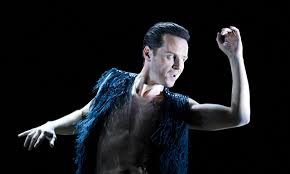
Andrew Scott in Birdland - Royal CourtAround Stephens’ swirls this air of the unknown, which makes any new work by him an enticing proposition. However this inability to pigeon-hole him has also led to him becoming one of Britain’s most divisive playwrights and Birdland is no exception to this.
What’s On Stage has pulled together how it has split the major newspapers, the blogging world has been generally united in criticism and it has been left to the always insightful Matt Trueman to attempt a passionate and cogent defence of the play.

Having been intrigued by Three Kingdoms and its radical Lynchian take on cross-border crime drama – possibly the only bright spot of the otherwise dire attempt to produce a theatrical ‘cultural Olympiad’ – Civilian Theatre has always been prepared to give Stephens a degree of slack. However it is troubling that flaws evident in Three Kingdoms crop up again in Birdland.

Three Kingdoms portrayal of female characters and sexual violence came very close to glorification rather than dispassionate reportage and whilst the work of multiple hands in the authorship of the piece made it hard to assign responsibility, it is depressing to see that three years later Stephens’ female characters remain ciphers for his fascination with charismatic men.

His work also remains far too long, Three Kingdoms was a punishing three hours whilst Birdland clocks in at an interval-less 110 minutes. It is slickly directed by Carrie Cracknall and the plot bounces along but as Andrew Scott’s rockstar Paul ends up in yet another European city, you do wonder if they could have shortened this endless tour by just a little.

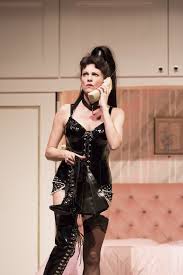
It is down to the magnetic and compelling performance by Andrew Scott that the evening did not feel even longer. Whilst many of the audience may be drawn to this by his work in Sherlock (and one can see echoes of Moriarty in Scott’s dangerously charismatic Paul), he is no novice to the stage and took the lead in the (unfortunately woeful) Emperor and Galilean at the National. The snippet of Angels in America, shown as part of the National Theatre’s 50th birthday celebrations, also provided a chance to see an unusually intelligent and sensitive actor at work.

He turns Paul, on the surface a rather two-dimensional rockstar damaged by the sudden accumulation of wealth and fame, into a living creation. Scott finds a kernel of humanity within Paul’s increasingly disaffected personality; that part of his soul that led him to create the music that first brought him to people’s attention and which he is in the systematic process of destroying.

<<Continue to full review>>


Birdland Trailer


Read…people in defence of Birdland

Matt Truman

Michael Billington

The Other Bridge Project

Read…people criticising Birdland

Charles Spencer

Huffington Post

Cream of Vampire Soup

The-Testament-of-Mary-Fiona-Shaw-photocredit-Paul-Kolnik-copy-630x310

Breathing life into a statue: Fiona Shaw as Mary, Mother of God

The Testament of Mary – Barbican Theatre, until 25 May 2014

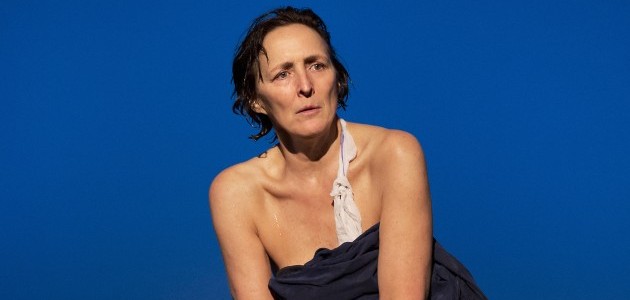
The Testament of Mary opens with a quite remarkable image that captures in tableau the vision of the director, Deborah Warner, the mesmeric focus of Fiona Shaw and the inspiration of set-designer Tom Pye; Fiona Shaw’s Mary is in her most recognisable garb, portrayed as a Raphaelite Madonna, but the seemingly tranquil pose is undercut a furious muttering, is it a liturgy or is it something more, which suggests that all may not be as it seems.

Shaw’s Mary presented in a Perspex box with the audience invited on stage to gawp at the figure within; this image hints not just towards Mary as one of art’s most famous faces but also towards the public spectacle of MaryMary as a carnival attraction, the figure of endless fascination.

There is something grotesque about the scene and it is hard not to think of visitors to P.T Barnum’s famous circus. The voyeuristic aspect is brought home by the vulture that sits and watches proceedings and reflects both on the way that the acolytes would feast upon Jesus’ legacy after his death and the role that we continue to play as audience members.

So begins this brilliant adaptation of Colm Tóibín’s novella that consists of a monologue from Mary reflecting upon her son and the events leading up to his death. Tóibín gives voice to Mary and presents a human relationship that deftly prizes open the centuries old fallacy presented by the Christian church of Mary as a form of virginal purity; this Mary is a mother, not just in name but also in deed.

Crown of thornsShaw embodies this earthy, human Mary. She is raw, alive and mourning the loss of Jesus as only a mother can. There is a humour amid her grief, thick and black, as she considers the impact her son had on others. Her Mary is Irish, this is both important and unimportant; what nationality should she be? She could be from anywhere but in making her Irish Shaw finds a folksy grounding and enables access to a natural informality in dialogue that can both raise the everyday to the state of the miraculous whilst grounding the miraculous in the everyday.

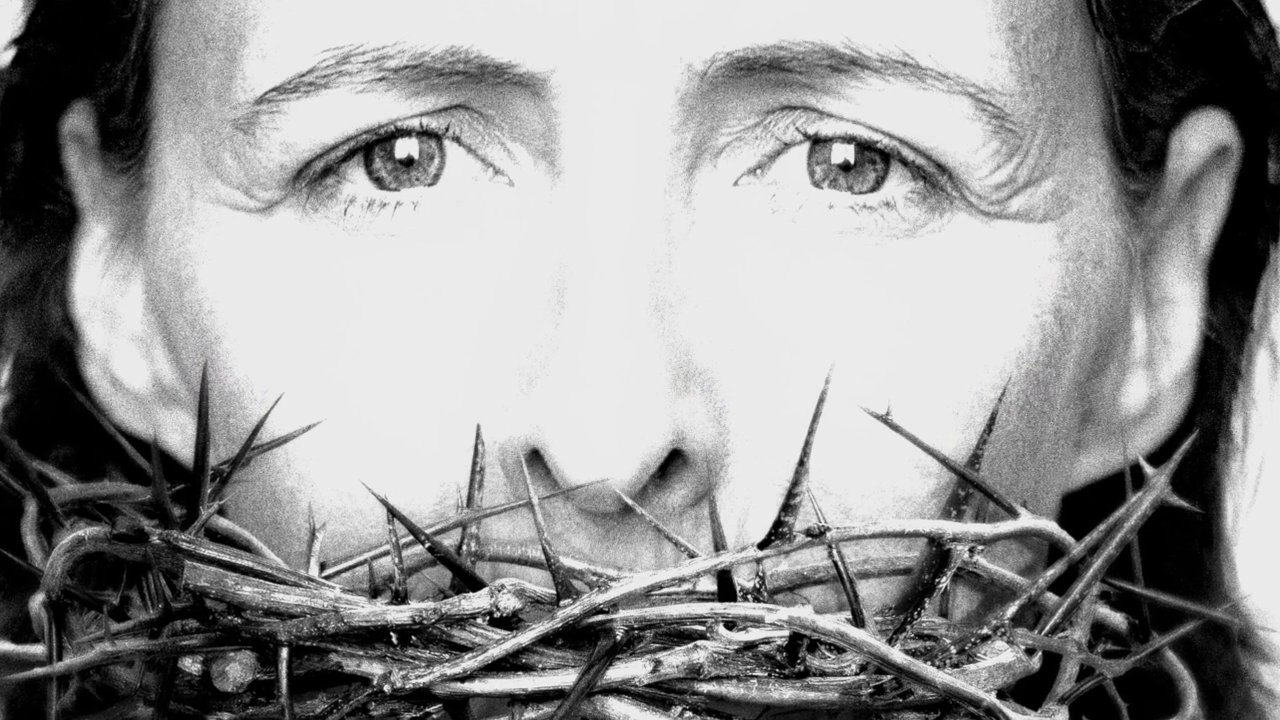
Running through the play is a strong feminist undercurrent that gives voice and power to the women in Jesus’ life. Advertising the play is an image of Mary gagged by a crown of thorns. It is a heavily symbolic image and suggests the fact that Mary, as woman and mother, is isolated in the aftermath of the crucifixion by those creating the mythology. One could argue that Shaw’s Mary is outlandishly modern but this critique seems misplaced, this is not being presented as history but as fable. Mary’s modernity is only as misplaced as the existence of miracles that she is so sceptical of.

Shaw’s Mary is no true believer – time and again we are pulled back to the central mother-son dynamic and, like many mothers, she cannot bring herself to trust her son’s friends and the actions that the ascribe to him. Her outsider status gives her an angle on to the famous miracles. The Lazarus myth is skewered quite brilliantly and demonstrates the horror that might accompany bringing someone back from dead. She is able to delve into the darkness of the story and the Lazarus that returns is closer to a zombie, reduced to wandering in a near-fugue state or sitting alone halfway between one world and the next.

<<Continue to full review>>


Watch the trailer

<p><a href=”http://vimeo.com/92254717″>The Testament of Mary – Trailer</a> from <a href=”http://vimeo.com/barbicancentre”>Barbican Centre</a> on <a href=”https://vimeo.com”>Vimeo</a&gt;.</p>


Read more

The Guardian

The Telegraph

Daily Mail

Independent