The descent into hell is easy but in the return a mighty labour lies

A View From The Bridge – Young Vic, until 07 June 2014

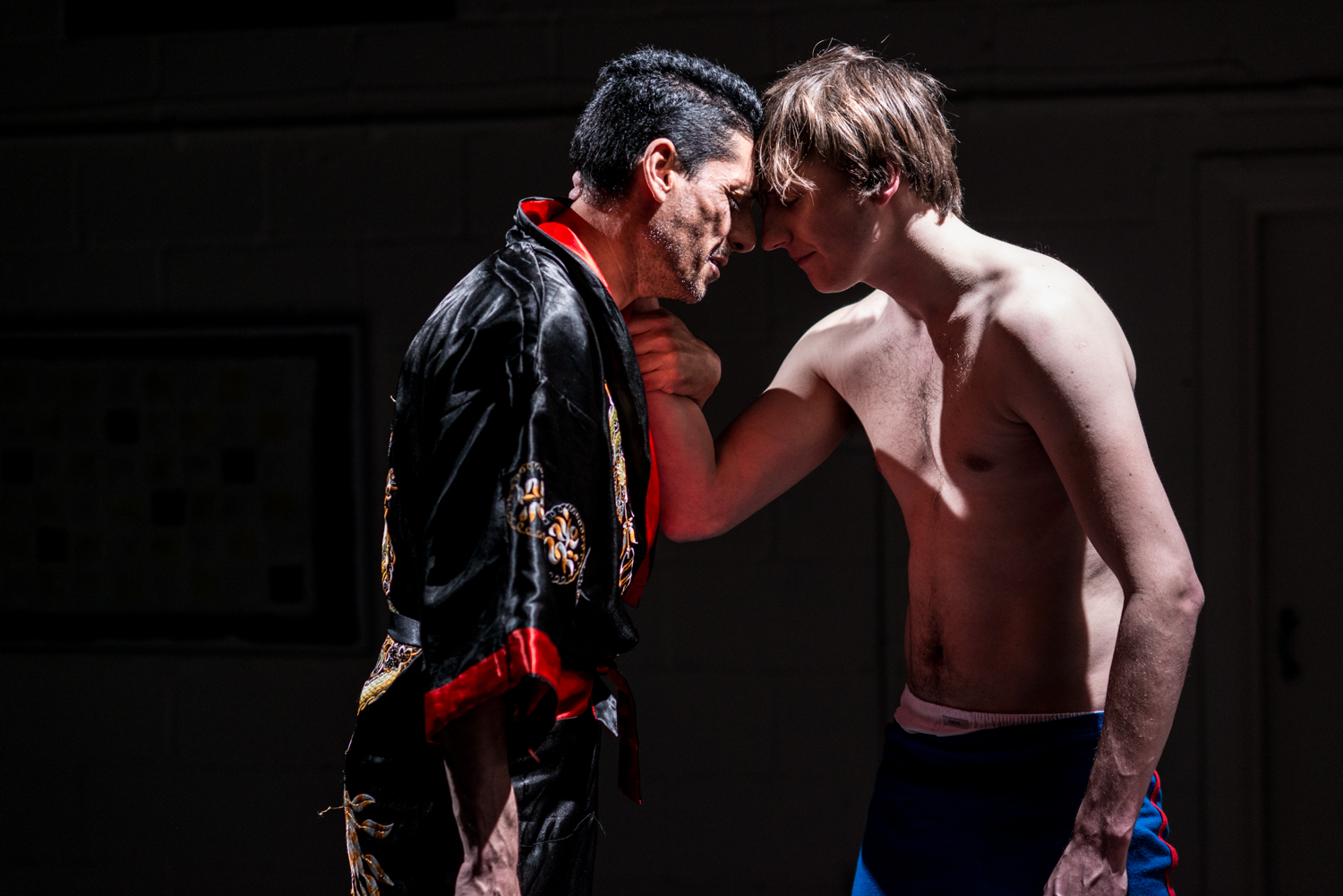
Considering the reputation that accompanies Ivo van Hove the first thing to be said about his production of Arthur Miller’s famous play is that it’s more restrained than might have been expected. This is not to suggest that it is performed in the shadows of the play’s reputation but rather that van Hove has created a singular work of such potency that despite stripping away external features and focusing View from the Bridge timesintently on the performances, it retains the power of the great naturalistic dramas.

Van Hove is a director that appears to relish the challenge of recasting great works in a new light; he is happy to cross cultural mediums and recent work includes the Antonioni Project, which re-enacted the Italian director’s films, and a highly-lauded adaptation of Strindberg’s Scenes from a Marriage. He has demonstrated a desire to bring new perspectives to classic works and this reached its peak with the hugely ambitious Roman Tragedies, which came to the Barbican in 2009. The production brought together Shakespeare’s roman plays and pulled them in to the modern era through an immersive multimedia spectacle that captured the increasingly symbiotic relationship between news and drama in the age of 24-hour reporting.

He is also happy working with the great American playwrights having previously staged Eugene O’Neill, Tennessee Williams in New York and now brings Arthur Miller to London. The influence of the director is clear from the moment the audience enters; Van Hove has used the flexibility of the Young Vic’s auditorium to physically conceal the entire set within a black box. Indeed the raising and eventual sealing of the stage suggests a symbolic entombing of the story and hints to its timeless nature.

The production strips away all hints of naturalism from the setting. It exists as a stark, white rectangle surrounded by a glass bench. The only prop being a wooden chair that forms the essential test of strength between Eddie and Marco; van Hove recognises its significance and frames Marco holding the chair aloft in a moment of absolute stillness. It is reminiscent of a classical sculpture and is one of a number of markers that draw out the links to Greek tragedy that Miller hinted at within the text.

A View From The BridgeThe lack of a setting inevitably directs greater attention towards the actors, and they are uniformly excellent. Van Hove has drawn highly stylised performances out of his cast without losing the grounding in naturalism that is essential for demonstrating the characters’ humanity and for capturing the emotionally draining tragedy that lurks in the background throughout.

There is an expressionistic quality to the performances that adds a strand of universalism to the highly specific nature of the plot. Whilst the story of Italian migrants and working-class longshoremen places it within a time and place, this production leaves the audience in no doubt that the deeper themes are those that have always been with us.

It is anchored by a performance of exceptional power by Mark Strong as Eddie Carbone. He brings a natural physicality to the role that tells a story of sinewy strength rather than bullish power; the famous description of ‘eyes like tunnels’ is entirely apt for his Eddie, this is no knuckle-headed docker, but a man of complexity and internal conflict. We sense that behind those eyes is a torrent of raging emotions that he is intelligent enough to recognise but too inarticulate to express.

<<Continue to full review>>


Watch the Trailer

On Tidy Endings and Safe Sex 3, Photography by Jamie Scott-Smith, www.tenbyeight.co.uk

Living with a killer: relationships in a time of AIDS

On Tidy Endings / Safe Sex – Tristan Bates Theatre, until 17 May 2014

The ploy of drawing in an audience with left-field casting decisions is a high-risk strategy; it can take a production to a much wider community but it can also overwhelm the production itself. It is easy to see why actors are tempted to these roles; it gives them an opportunity to breakout of typecasting and open the door to a range of new possibilities, and for the audience it is always a pleasant surprise to see someone outside their comfort zone.

On Tidy Endings and Safe Sex 4, Photography by Jamie Scott-Smith, www.tenbyeight.co.ukWithout such free thinking how could we have got to the reinvention of Liam Neeson from Oskar Schindler to grizzled action hero or indeed, going the other way, the meta-masterpiece JCVD with everyone’s favourite head-kicking Timecop? When it goes wrong however it can be an excruciating; the very, very brief attempt to position Kiera Knightley as an action star (Domino, anyone?) is a particularly painful memory, but far more awful can be the attempt to become a cross-over star. Britney Spears in Cross Roads, Mariah Carey in Glitter? Pick from the unfathomably terrible Mr Nanny or Santa with Muscles starring everyone’s favourite 80’s wrestling superstar, Hulk Hogan.

It was with this knowledge lodged in mind that made going to see the Harvey Fierstein’s On Tidy Endings / Safe Sex with former Egghead, CJ de Mooi, at the Tristan Bates Theatre a slightly nerve-wracking experience – particularly as, with a central role in both plays, the night seems to be set-up as a showcase for his abilities.

Thanks to the strength of Fierstein’s writing, it can be reported that de Mooi does not overly dominate the night. A long-term, and highly successful, fixture on Broadway, Fierstein wrote the book for both La Cage aux Folles and Kinky Boots while his Torch Song Trilogy led to two Tony’s. A long-term champion of gay rights, On Tidy Endings / Safe Sex takes a personal and mature view of the impact of AIDS in a way that is wry and heartfelt without sliding into mawkish sentimentality.

Fierstein has said that Safe Sex represents a personal response to living in the time of AIDS and the character of Gerry can be viewed as a version of the writer reflected on stage. The play is lyrical, reflective and contains a strong monologue that captures a truly human perspective of what it was like to be living through the before- and after-times of the AIDS crisis. It is at this point we can begin to appreciate the huge transition that the illness pressed onto gay men everywhere; where equality movements created momentum for change, AIDS forced the issue and, in the most negative way, pushed sexuality into the mainstream and ensured that, for better or worse, a person’s sexual identity could never be a wholly private matter.

Within the monologue, de Mooi finally relaxes into the role. He has a naturally intense presence and for the opening 20 minutes his performance is constrained by a lot of tension, which worked with the physicality but detracted from the vocals. A flat delivery that was reminiscent of line-reading and an actor prodding and pressing at the edges of a new character detracted from his performance. Ghee tells Mead that the relationship is ‘the most intense passion I have ever felt’, which one might believe from the dialogue but not from the rather one-note performance.

Reaching the monologue a transition takes place and the tension floats away with the arrival of the heightened dialogue. Indeed the mood changed so dramatically that it raised a question mark over whether the whole On Tidy Endings and Safe Sex 5, Photography by Jamie Scott-Smith, www.tenbyeight.co.ukpiece, given its reflective, personal nature, would have been better suited to being a monologue. The conversation between Mead and Ghee never really takes flight and a number of absurd character switchbacks seem to aim somewhere between Woody Allen and screwball comedy but only serve to add to the sense that Safe Sex has arrived underdone, both in writing and rehearsing.
Returning after the interval, On Tidy Endings works hard to redress the balance. By some margin the stronger of the two pieces, it is a mature and painfully accurate study of modern relationships and the contested space that is left behind (and particularly when it is from a disease that has as many pejorative markers as AIDS). It reflects on the wider dynamics that causes society to skim over the new partner in favour of maintaining the illusion of the traditional marriage model, no matter how broken it was. The conversation, primarily a two-hander,between de Mooi’s Arthur and Deena Payne’s Marion is strong, adult drama and both actors bring out the raw human emotion that runs through the writing.

<<Continue to full review>>

012 Apple Line, Smashed (courtesy Ryoko Uyama)

The art of juggling / the juggling of art

Smashed – Gandini Juggling @ Udderbelly, until 18 May 2014

The last time I was in the big purple cow of the Udderbelly was very late one night after a few too many beers at the Edinburgh festival. It consisted of men in thongs, scantily clad women doing things with ping pong balls and a chainsaw. Luckily, Smashed, running as part of the Udderbelly Festival on the Southbank, is a very different affair.

011 Female Distract, Smashed (courtesy Ryoko Uyama)

011 Female Distract, Smashed (courtesy Ryoko Uyama)

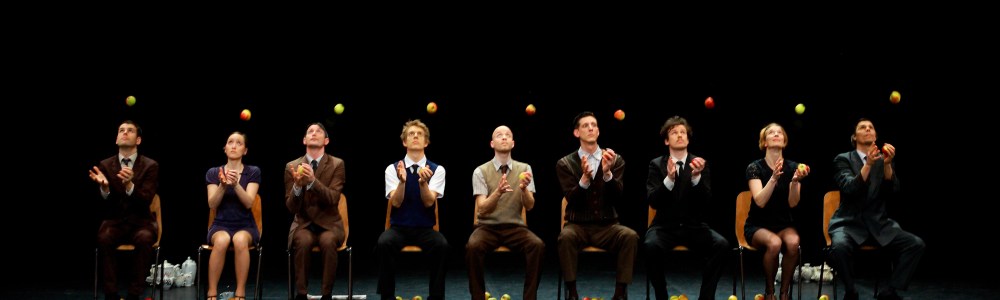
Performed by Gandini Juggling, a company formed over 20 years ago to fuse contemporary dance and mathematical notations in the field of juggling, Smashed is utterly (not udderly? – ED) delightful. It’s perhaps hard to imagine how an hour of juggling could keep you so entertained, but the constant variations in pace, theme, tempo and movement styles weave an intricate story between the performers and without a word you are embroiled in their loves, loses, competitions and seductions. Smashed falls somewhere between circus, contemporary dance, symbolist theatre and mime, but works hard to effortlessly fuse these strands to create a family friendly, entertaining and deeply likeable piece.

The company of 9 performers enter their apple strewn tea party all smiles and poised precision. But it is soon apparent that not all is going to go to plan, and with wit and extreme dexterity, proceedings literally start to fall apart. The speed and complexity with which the jugglers perform is astonishing, especially during the group routines, and the performers’ expressions and precise movement tell a playful story of gender politics and everyday power struggles.

The influence of Pina Bausch is clear to see throughout; short scenes investigating male and female interaction, scrutiny of bubbling personal tensions, intricate composition and concise choreography that is rich in symbolism, playful use of repetition and even the muted tones of the formal costumes and popular soundtrack. It’s a thoughtful tribute to her work.

Smashed is an entirely charming, intelligent and unusual performance, with a delicious spark of anarchy that is well suited to the Udderbelly cow. And there’s not a ping pong ball in site.


Watch some impressive jugglery-pokery action


This review was written by our roving review, Sarah Stewart. If you are interested in reviewing or writing articles for Civilian Theatre then please email civiliantheatre@gmail.com 

Orpheus Returns

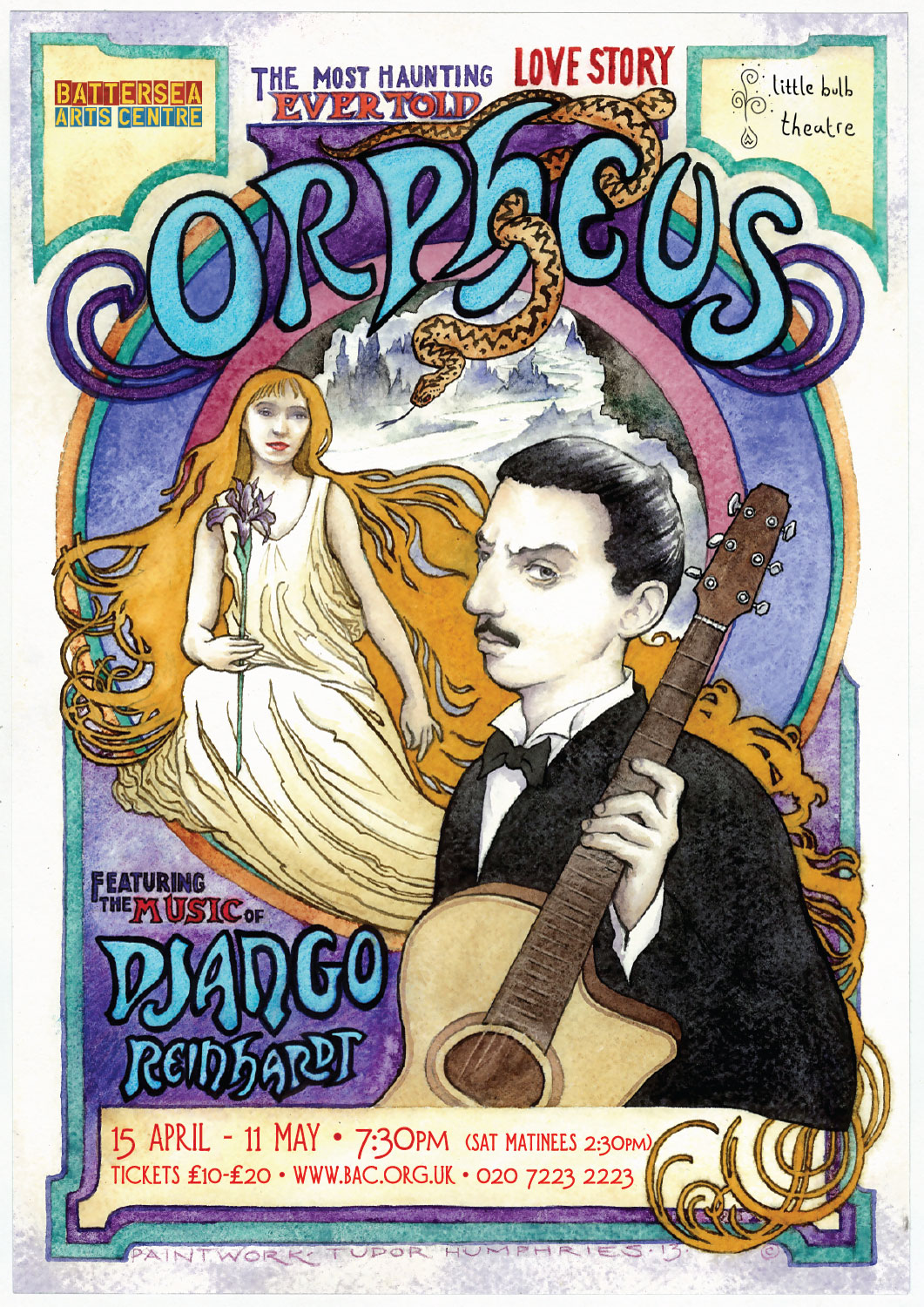
It’s always welcome to hear of a small scale show that returns due to popular demand. A Little Bulb Theatre’s highly original take on the Orpheus myth was one of those charming, quirky surprises that most unexpectedly Flyer for Orpheussweeps you off away on a wave of inventive playfulness and understated talent. An excellent cast made light work of a high-concept, high-risk approach of using the BAC’s gorgeous period interiors to recreate the feel of 1930’s Paris – pastiching both the music of that genre, early cinema and classical scores to great effect.

In light of its return then click here for the review of last year’s production, which gives a feel for the evening.

More on the Battersea Art Centre’s website.

Orpheus is on at the Battersea Art Centre until 17 May 2014.

Egusi Soup 4

The legacy of Mr Anyia

Egusi Soup – Albany Theatre, and touring until 05 April 2014 (Tickets)

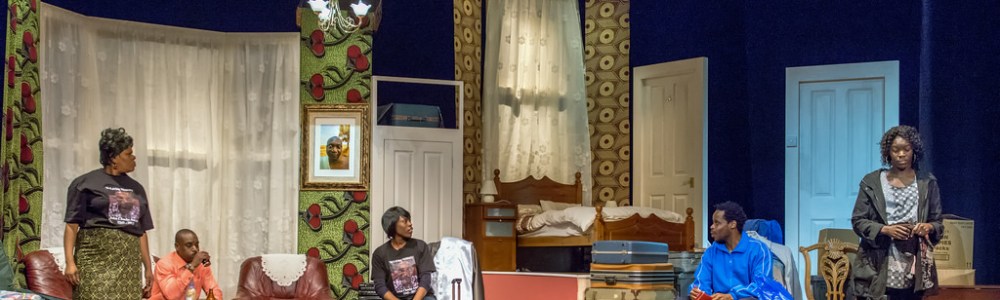
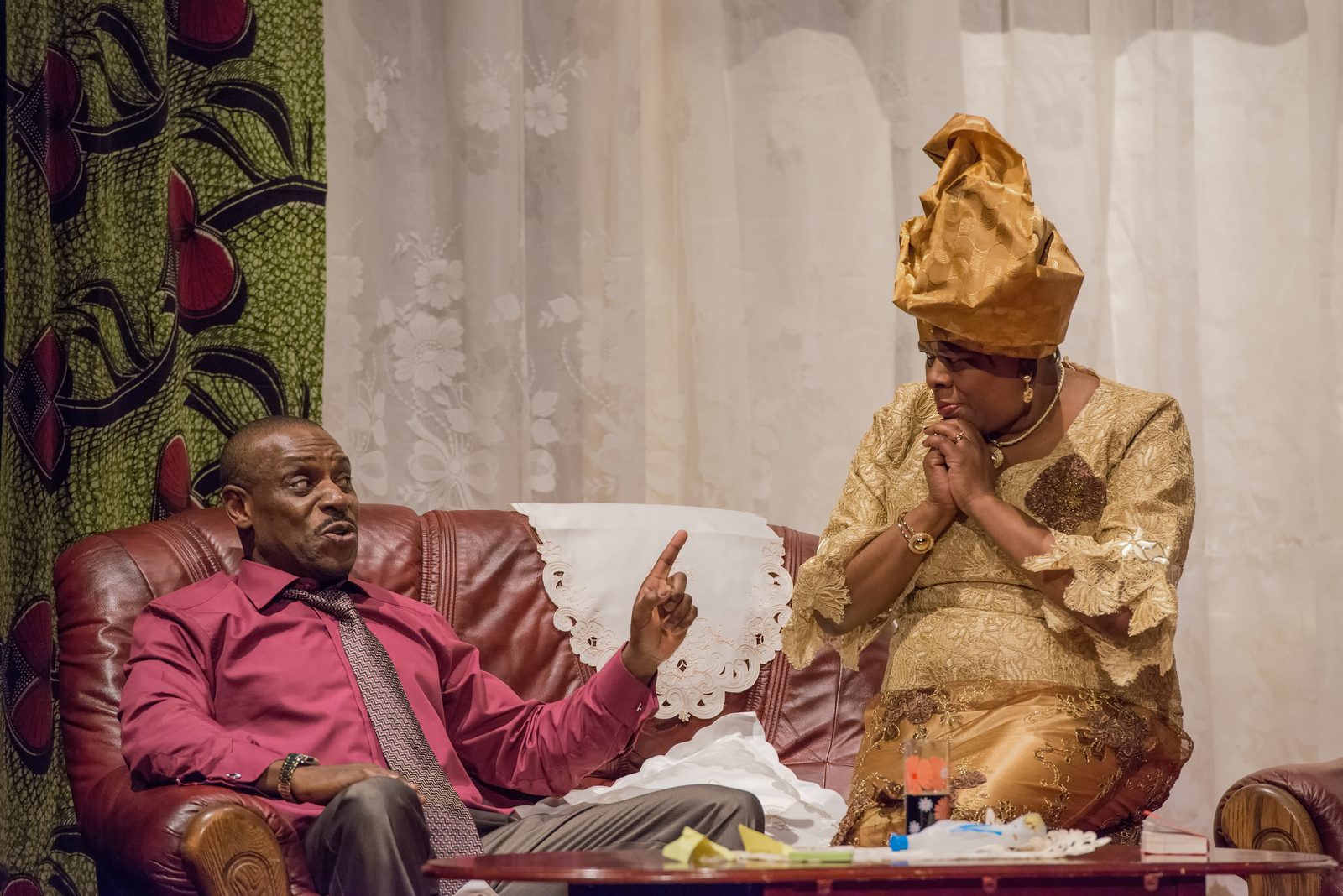
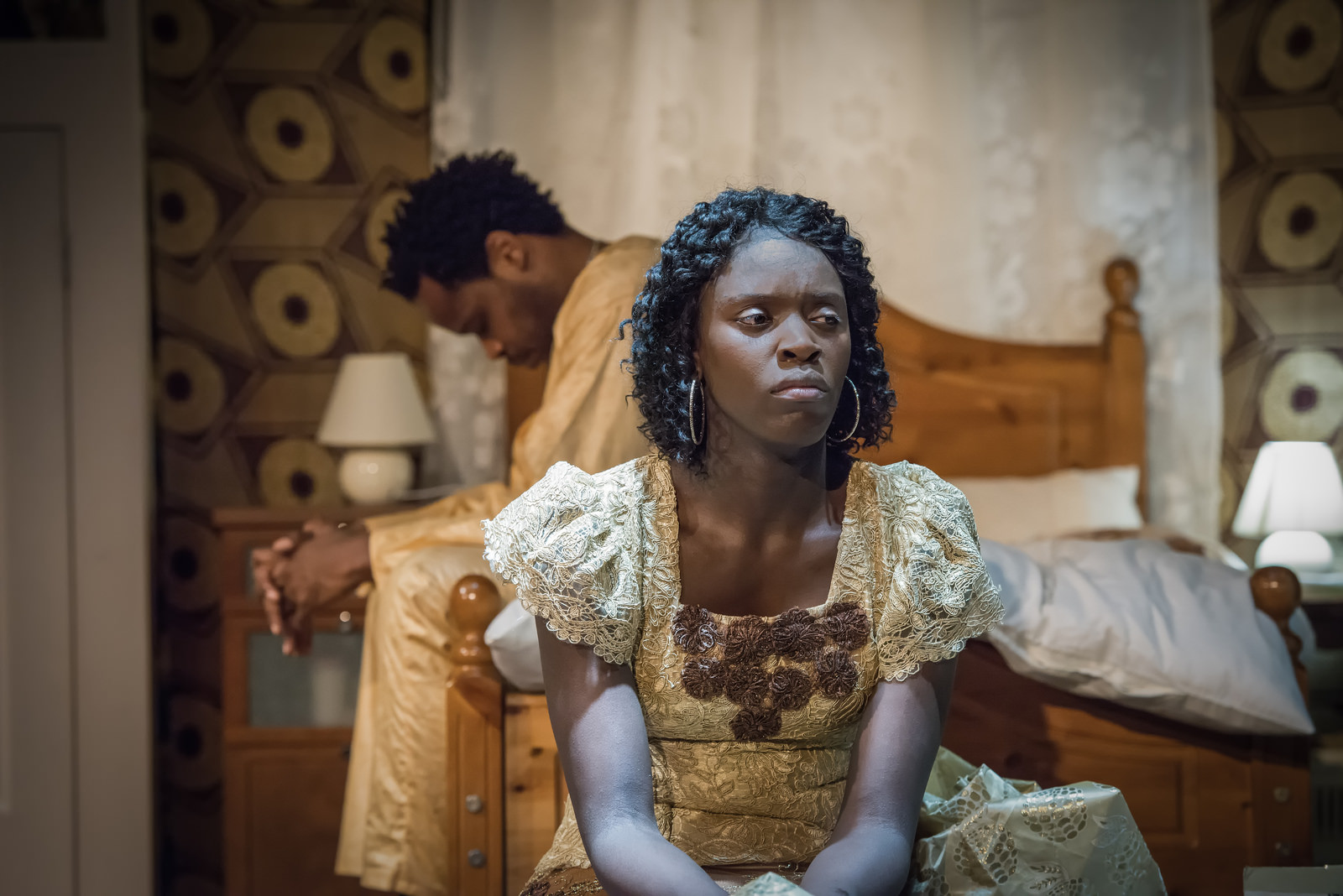
At its heart Egusi Soup, a play by Bruntwood Prize winner Janice Okoh, is a comedy-drama about a British-Nigerian family experiencing the familiar tension between the life they have built themselves in the West and the traditions that their mother, Mrs Anyia (Lorna Gayle), left behind.

Egusi Soup 7The trigger event that drives the action is the one year memorial for Mr Anyia. The suitcases are forever nearly packed and the family (if not the storm clouds) are gathering ahead of a trip back to Lagos to celebrate Mr Anyia and his legacy. It is clear from the outset that life is not quite the rose-tinted paradise that Mrs Anyia would like those in Nigeria to believe.

The formal structure of Egusi Soup hints at Janice Okoh’s background, which includes an MA in Creative Writing and a place on the BBC Drama Writers Academy. It makes a refreshing change to see a two act play that takes place in an traditionally linear fashion. Flowing from scene to scene, the play moves confidently through the action and delivers a number of enjoyable set-pieces before building inevitably to a resolution where secrets are unveiled and resolution is found in forgiveness and acceptance.

Okoh clearly knows these characters and Egusi Soup is anchored by Gayle’s performance as Mrs Anyia. Gayle treads a careful path between colourful stereotype and a wife who has lost the person who filled her world. Any slip into cliché is knowing and is offset by the sense that this is someone desperately trying to hold onto tradition as a way of holding onto her husband. This is drawn out of the smaller touches like the spare room that still Egusi Soup 10holds Mr Anyia’s possessions and her willingness to believe he was poisoned rather than taken by cancer before his time.

The comedy is primarily driven by the two male characters, Richard Pepple’s Pastor, Mr Emmanuel, and Seun Shote’s Dele. These draw on stock roles of the Nigerian entrepreneur and evangelical; they artfully mirror each other and serve to bookend the proceedings with light relief that, whilst firmly based in Nigerian culture, is accessible to everyone.

Here Okoh demonstrates a subtlety in her writing; drawing out the strange duality in the two positions without overtly referencing it. Mr Emmanuel being a fine entrepreneur and a man who sees opportunity everywhere, whereas Dele is a hopeless businessman who is happy to turn to religion as the answer to his financial and fertility worries.

<<Continue to full review>>

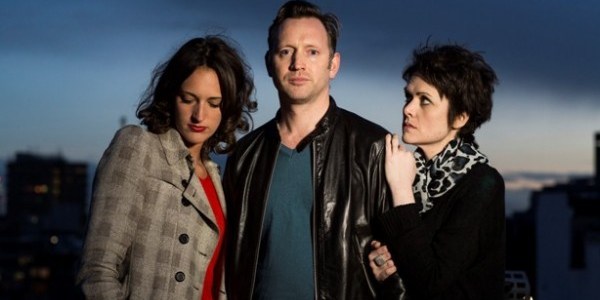
Full Cast - Phoebe Waller-Bridge, Rufus Wright and Lu Corfield

Brutal or brutally funny?

The One – Soho Theatre, until 30 March 2014

In the middle of one of the many conversations between Jo (Phoebe Waller-Bridge) and Harry (Rufus Wright) that tread an impossibly fine line between needling argument and verbal foreplay, Jo’s mobile phone goes off. The ringtone is familiar but not quite identifiable, moments later, before the chorus kicks in, Jo answers the phone with ‘Hi Mum’ and at the same moment you realise that she has set the ring tone to be I Touch Myself by the DiVinyls.

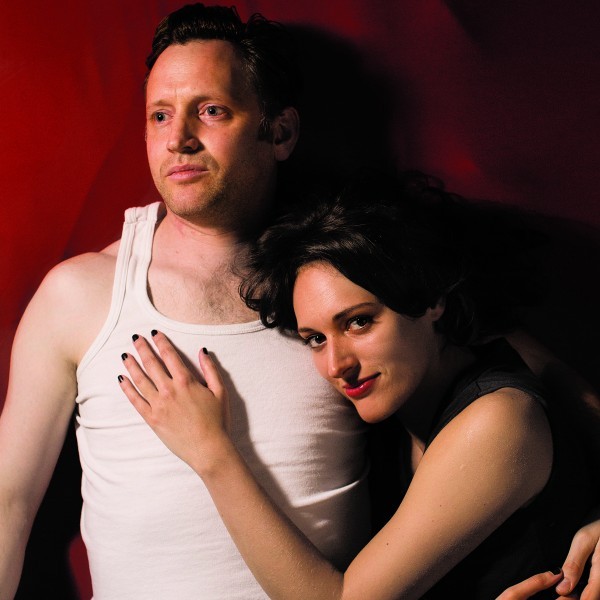
Vicky Jones’ The One is a play that is peppered with jokes that rely on an audience with an eye for high and low cultural reference points and a penchant for filthy dialogue. It is as comfortable expounding on Madame The one  Phoebe Waller-Bridge and Rufus WrightBovary as it is in displaying the realities of unengaged sex. There are some brutally funny lines in The One and there also some just plain brutal ones. It is a play that sets out to shock its audience and it more than succeeds in doing so.

DryWrite, the theatre company created by Vicky Jones and Phoebe Waller-Bridge, was the force behind two of the most unexpected treats of 2013, Mydidae and Fleabag. With The One this creative partnership have created a trio of plays that, while formally unconnected, work together to create a portrait of dysfunction within a certain strata of well-educated, middle class women in 21st century Britain. As a whole they form a serious and important contribution to the ongoing cultural debate about whether there are ways that women should live and behave in the context of feminism as being something that had been ‘won’.

Clock

Waller-Bridge excels in each of the plays. She inhabits characters that clearly show the challenges of women who have grown up to believe in the freedoms hard won by their parents but struggle to shape an identity for themselves in a society that is still undeniably masculine.

At the heart of Mydidae and The One is the presence of a formidably intelligent woman who self-censures herself in order to maintain the fantasy of the dominant male. In both cases the self-censuring has a warping effect and the emasculating quality of the action (even as it seeks to avoid this very outcome) ultimately leads to displays of violence; physical, sexual and emotional.

The One demonstrates writing of exceptional quality and Jones’ displays a real talent for carving heightened language out of the banality of the everyday; creating prose that is grounded in reality whilst seeming disturbingly unreal. That the play is set over the course of the evening and scenes are intercut with Phantom of the Opera’s The Music of the Night adds to the sensation that is closer to nightmarish dreamscape than the real world.

Yet this is no Athenian forest and here there is no honest Puck to make amends and to ensure that Jo and Harry ‘think no more of this night’s accidents’. Rather than sleep and awake to a new dawn, they continue their conversations until sunrise when they are forced to look at each other in the harsh light of day.

<<Continue to full review>>