You don’t have to be mad to extemporise here but it helps

Hamlet – Young Vic, Running until 21 January 2012

Ian Rickson’s production of Hamlet at the Young Vic begins with an elaborate entrance through the backstage area, which has been transformed into a passage through a mental hospital. As you wind through narrow corridors, you catch glimpses of action through windows and the pervading sense from the TV screens and telephones on display that we are entering the 1970s.

To be honest all this effort feels a little laboured although it does help to immediately ground the play in its overarching theme: is Hamlet mad?  It is a question that has been raked over many times, be it in productions, literary criticism or psychological analysis. However through Ian Rickson’s radical interpretative staging, it is a question that delivers a revelatory redefinition of how the play can be understood.

The play begins with a striking image; Michael Sheen’s Hamlet appears out of nowhere in long shot, trapped in a solitary light shining upstage. Rickson’s exquisite framing is a feature that runs throughout the play but this first image, with a clear allusion to Carol Reed’s The Third Man is particularly notable. It is a potent reference point, immediately conjuring up thoughts of Vienna; the spiritual home of Freud and the psychology movement. The Third Man itself is indebted to German expressionists of early cinema, such as  Fritz Lang and FW Murnau, who were fascinated by madness and its effect on the human condition.

References abound in this play; the 1970’s institutional setting brings to mind One Flew Over the Cuckoo’s Nest and, compared to the recent Hamlets of David Tennant and John Simm, Sheen has an alpha-male muscularity that is redolent of Jack Nicholson without, thankfully, adopting any more of Nicholson’s mannerisms.
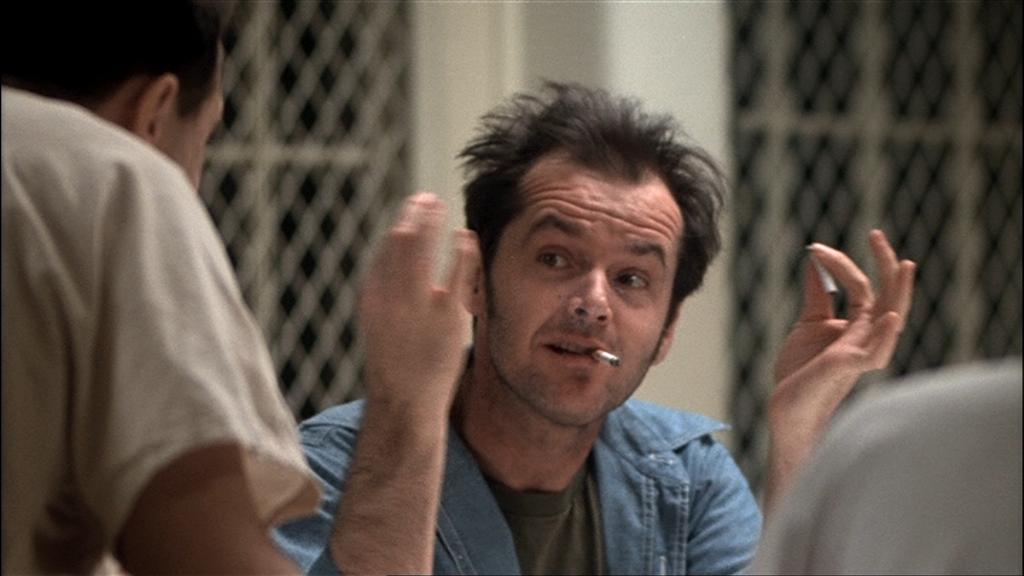
The other crucial reference point is the work of RD Laing. In a play that has at its heart the discussion and understanding of madness, Laing’s work has a relevance that underpins the perspective that Rickson takes to the play. At the centre of Laing’s theories is the idea that psychosis is not a biological or psychic response but something that can develop out of socio-cultural situations. This has a direct relevance to the understanding of Hamlet. Hamlet is not ‘mad’ per se but he may have become mad due to the conditions that he has found himself within and the drama of the play may be an attempt to break him of that psychosis.

This reading is reinforced through Laing’s idea that ‘going crazy’ can be the sane response to an insane situation. In this, as in so many other cases, we can infer that Shakespeare touched on the principle a few hundred years before the development of psychology as a science. This may be a stretch but it does appear to reflect Hamlet’s understanding of himself; he wishes to assert his own identity, ‘to thine own self be true’, through his understanding and response to his father’s death. However Hamlet’s ideas conflicts with the response demanded by his ‘uncle-father’ Claudius; Laing would argue that Hamlet is stuck between the persona he has created, the avenger of his father, and the one demanded by parental authority and it is in this bind that the context for Hamlet’s ‘madness’ should be understood.
Click here to read full review

Sexual politics and swinging London

When Did You Last See My Mother – Trafalgar Studios, until 08 October. 

Written when he was 18 and produced for the Comedy Theatre two years later, When Did You Last See My Mother, marked Christopher Hampton’s explosive debut and meant that he was the youngest playwright of modern times to have a play staged in the West End. It opened to almost universally rapturous reviews and immediately propelled Hampton into the spotlight as a precocious new talent. After a career that includes The Philanthropist, Tales from Hollywood and the Oscar-winning screenplay for Dangerous Liaisons, When Did You Last See My Mother seems like it is from the distant past and almost unbelievably this new production at the Trafalgar Studios marks the first major revival of the play in the West End for almost 40 years.

Currently the West End appears to be in a period of looking to the past; we have seen a number of Rattigan revivals in his centenary year, The Kitchen has just opened at the National and the Donmar will soon be staging Osborne’s Inadmissible Evidence. A reason behind these revivals is the belief that these three playwrights share an ability to create a universality of truth that can transcend the time when it was written; Rattigan finds his range across the spectrum of human emotion whilst Wesker’s masterpiece, The Kitchen, lays bare the individual within the machine.

To expect that a play written by an 18 year old will reach such a level of truth is unreasonable and there are moments when it is clear that Hampton is still finding his ear for dialogue; in particular Jimmy’s mother must deliver a couple of lines that suggest a playwright still finding his feet in giving voice to a mature women; interestingly a theme mirrored within the play. However this production is full of moments that touch on the sublime and show us glimpses of a master honing his art. More crucially, Hampton is very strong on the undercurrents of sexual identity and class envy that run through the play and still feel immediate and challenging to a modern audience. Review Continues Here

A reflection: 10 years on

Decade – Headlong, St Katherine’s Docks – Until 15th October

There is no doubt that Decade, Headlong’s collaborative theatrical response to 9/11, reaches moments that are powerfully affecting, even for those with no direct ties to the event. The strongest of these in Decade are where we see the butterfly effect in action; the ripples that change the course of someone’s life, years after the event.

We witness a woman engaged in an increasingly manic speed dating event, plagued both by eczema and a need for security and strength, ultimately unable to commit as she is unable to let go of her husband who died. A group of survivor wives meet every year at a coffee shop within sight of the Ground Zero. The audience are shown the scenes in reverse; a tricksy device suffers from the law of diminishing returns in its final scenes but does function as a powerful reminder of the long shadow cast by 9/11. The wives are unable to grieve in any understandable way, holding on to brittle bonds artificially-forged in the tragedy; held together by a sense of duty and continually reinforced by the sight of presidential candidates solemnly appearing at the site as part of carefully stage-managed campaigns.

Also outstanding is Tobias Menzies portrayal of a man recollecting his account of watching the Tower’s collapse after booking the day off. The audience’s awareness of events lends Menzies’ flat affectless delivery a heart-breaking quality. As we hear, with an Alan Bennett like focus on the absurdity in the mundane, a description of the day before and an ensuring phonecall to the office just after a plane hit the first time, there is a tragic inevitably in the growing awareness there won’t be Hollywood happy endings. Later we find that as a result of his experiences he has edged close to the ‘Truther’ movement; desperately trying to find meaning in his unanswered questions.

Not everything was crafted so successfully, a muscular, Mamet-ish duologue between journalist and a soldier involved in the death of Osama Bin Laden, began promisingly with the conversation hurled across the audience in staccato bursts reminiscent of machine-gun fire. However the contrivance of building a link to a relative who died in the Pentagon began to pull the characters apart at the seams and strain credulity. Continue Reading Here

Miracles in Islington

Miracle – Nameless TheatreHen and Chickens Theatre, running to the 03 September 

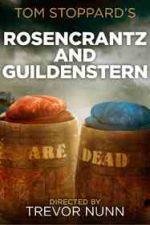
Allusions to the world of theatre run deeply through Reza de Wet’s Miracle; the basic premise is that a weary band of down-at-the-heel travelling players stop in an unnamed town to perform something that is redolent of the traditional morality play. In this troupe of actors we catch glimpses of what might have happened if Stoppard had fixed his eye on the Players rather than Rosencrantz and Guildenstern. However the play it cleaves most strongly to is Pirendello’s masterpiece, Six Characters In Search Of An Author. In many ways Miracle appears the inverse of Pirendello. Here it is the actors who are disturbed by a strange, almost alien presence, who represents the unknown outer world and acts as a catalyst for action. The absurdist fantasy of Pirendello has been exchanged for a more linear narrative structure but the resulting play retains an intriguing layered quality viewed through the unravelling of the travelling company.

In giving the play a theme, the director, James Farrell, focuses the attention primarily on the sense of a theatrical world gone to seed and this helps to breathe life into a script that occasionally has a rather leaden feel. When the play springs into action it comes through the dynamism of the actors’ handling of the material rather than from a script that feels like it is striving towards a grander purpose than it ever quite earns. In Farrell’s vision of exaggerated theatricality and stars on the wane, we see hints of Beckett’s Vladimir and Estragon continually returning to the vaudeville rather than confront the present.

On stage this comes through in the excellent central performance by Edmund Dehn as Du Pre. He is the glue that is holding the actors together as a functioning company, and in the play as a whole it is his energy that keeps the audience engaged with the action. Dehn’s De Pre provides a wonderful sense of the final days of music hall; the constant travelling from town to town, reaching gradually dwindling audiences in ever smaller towns. He is a man who has been on the road a long time, a former star for whom accepting second fiddle would be a humiliation greater than playing to an audience of  ten. So he continues and with him he drags a company by sheer force of personality alone until they reach a point where physically and mentally they cannot continue. Continue Reading Here

Ladies and Gentleman, please welcome your host for the evening…Kevin Spacey

Richard III – The Old Vic, booking until 11 September 2011 and then on international tour

After three years Kevin Spacey’s slightly underwhelming time at the helm of the transatlantic Bridge Project is coming to an end. In finding a play worthy of closing the season and rounding things off with almighty bang, it is hard to image too much time was spent time arguing whether Richard III fitted the bill. With Sam Mendes returning to theatre and reviving the collaborative relationship that turned American Beauty from interesting mid-budget indie-pic into a major Hollywood hit, a bona-fide English classic (a treat in what otherwise has been a rather barren diet of macho-slices of Americana from the Old Vic) that is an audience favourite and most importantly a lead role that appears tailor-made for a man who has made unsettlingly charming characters his stock in trade.

It is evident from the outset that Mendes is fully aware of where interest in this production lies. With no disrespect to the rest of the cast, this is as much the Kevin Spacey spectacular as it is Richard III. It is, in short, what the audience, who are paying considerable amounts to be there, are hoping for: towering, powerhouse, barnstorming, tour de force. Critics have been reaching for the thesaurus for ever more obscure ways of acclaiming the performance, even if the production itself does not always reach such high standards.

This is very much acting with a capital ‘A’. More importantly it is acting that is only rarely seen on the English stage nowadays. There is more in common with the greats of the past than the more modern approach, which has seen overt performing dialled down in favour of a more studied psychological approach. Compared with the recent Hamlets of Kinnear, Tennant, which looked to develop particular strains of the character, Spacey’s performance risks looking brash and overbearing.

However, whilst it is clear that Spacey is having tremendous fun in the role, this is a world away from the bombastic delivery of an old ham; he is far too intelligent an actor for that. A more accurate depiction would be to describe it as a masterclass of camp; in its most traditional sense of ‘ostentatious’ and ‘exaggerated’. This is the knowing performance of a man who understands both the play and how to hold the audience in the palm of his hand. The brief flicker of the eyes out to the audience when telling Lady Anne ‘My tongue could never learn sweet smoothing words’ was eerily reminiscient of Frank telling Brad ‘It wasn’t all bad was it? Not even half-bad in fact…’ in the Rocky Horror Picture Show. Continue reading here

Rosenstern and Guildenctanz are dead (with apologies to Mr Stoppard)

Rosencrantz and Guildenstern Are Dead

Theatre Royal Haymarket

Booking until 20 August


(Lights Up)
ROSENSTERN: (Tosses a coin, checks the result and repeats) Heads…Heads…Heads…Heads…
GUILDENCRANTZ: (Interrupting) Does it ever feel to you like we’ve done all this before?
ROSENSTERN: How do you mean?
GUILDENCRANTZ: That we’re stuck in a rut. Going through the same things day after day.
ROSENSTERN: (Considering this) We were someone else before.
GUILDENCRANTZ: Yes but that’s history. We were boys back then.
ROSENSTERN: True. (Pause) And now we’re here?
GUILDENCRANTZ: (looking around) Alone…but at least we’re the centre of attention. It’s all about us.
ROSENSTERN:  I thought the play’s the thing?
GUILDENCRANTZ: Oh you can do anything with a play, words are flexible. Anyway people know us now; we’re stars in own right.
ROSENSTERN: We’re recognisable
GUILDENCRANTZ: Familiar
ROSENSTERN: Similar?
GUILDENCRANTZ: indistinguishable. You’ve seen us once, you’ve seen us anywhere.
ROSENSTERN: Or everywhere.
GUILDENCRANTZ: See, we’ll fit right in, like we’ve always been there. (Pause) Are you sure we haven’t done this before.
ROSENSTERN: (Tossing a coin) Heads…
GUILDENCRANTZ: This all seems very familiar. (Enter the reviewer). Who are you? We were expecting someone else.
REVIEWER: Tim
ROSENSTERN: Tim?
GUILDENCRANTZ: Curry?
REVIEWER: I think there’s been a misunderstanding, I’m not an actor; I’m supposed to be reviewing the play.
GUILDENCRANTZ: No, no. This does not make any sense at all. You’re not in the script. The audience won’t stand for it.
ROSENSTERN: We don’t have to tell them do we? (Indicating to the reviewer) He can try his best.
GUILDENCRANTZ: It will be a surprise but audiences get used to anything.
REVIEWER: If it remains relevant.
GUILDENCRANTZ: (aghast) relevant. Outrageous
ROSENSTERN: Scandalous
GUILDENCRANTZ: Preposterous. Creations like this are timeless.
ROSENSTERN: Ageless.
GUILDENCRANTZ: We are an exegesis on existentialism.
ROSENSTERN A deconstruction of determinism.
GUILDENCRANTZ: The product of a precocious talent.
ROSENSTERN: (Firmly) Two precocious talents.
REVIEWER: (Frustrated) Yes but do you have anything new to add. Is there a purpose to all this wordplay? Does it go anywhere or is it all, well, just a little bit pretentious.
GUILDENCRANTZ: Pretention? Purpose? (To Rosenstern) Have you ever felt so offended? (To read more click here)