An uncategorisable wonder

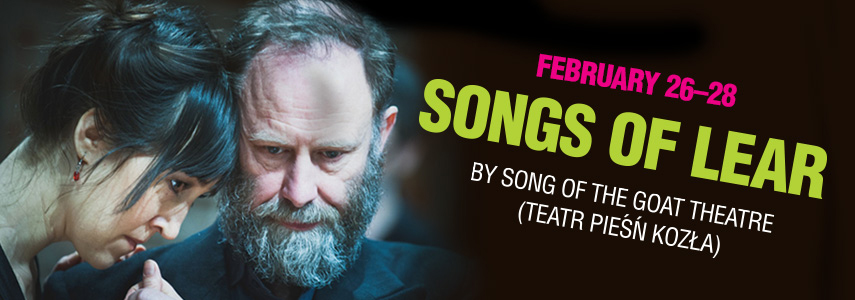
Songs of Lear – Song of the Goat @ Battersea Arts Centre, until 22 February 2015

For some people theatre is purely a title used to describe a single homogenous mass of culture. They make no distinction between plays and musicals, and certainly don’t delineate between the many genre classifications that exist within drama. However for regular theatre goers there exist a number of tell-tale phrases that act as a useful guide as to whether a theatre event is something likely to be enjoyed.  Z Warzynski2 fot
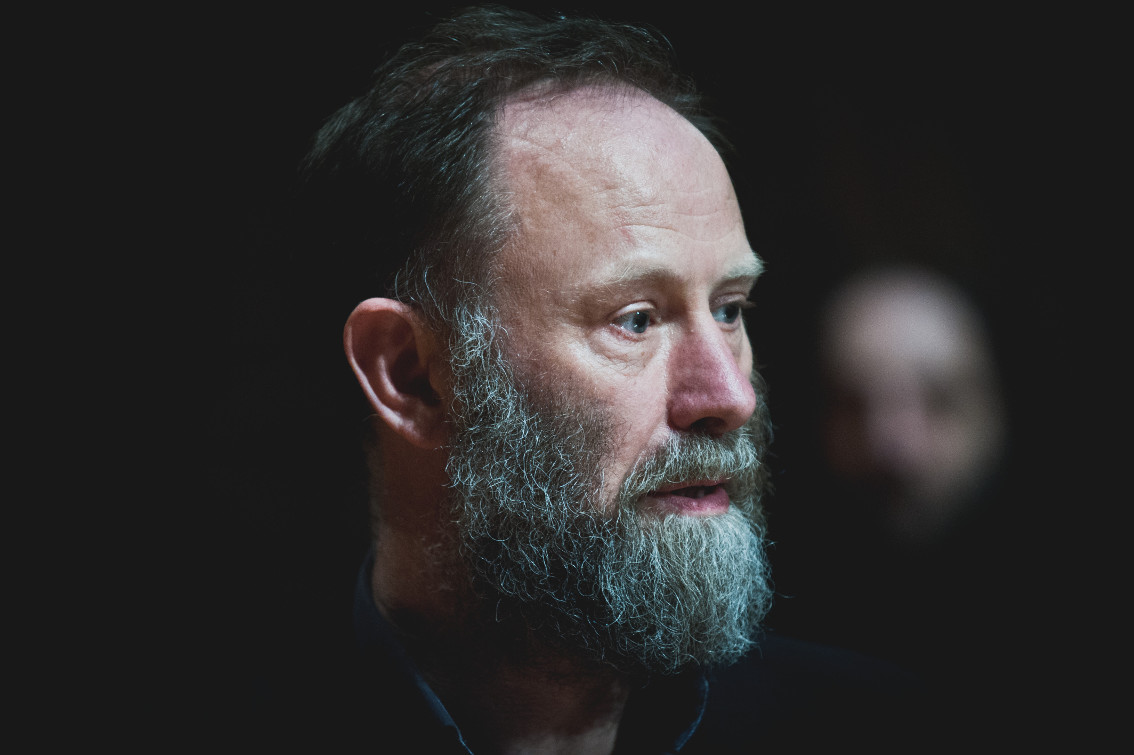
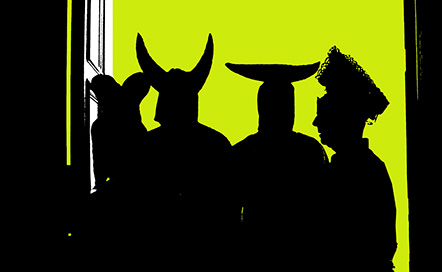
Take Songs of Lear by Song of the Goat; they rather bravely describe their new play as ‘deeply rooted in the best traditions of Polish avant-garde theatre’. Despite putting it top of my list of plays to see in 2015, I must admit to being extremely intrigued in how tickets were selling at the box office.

So it was extremely heartening to report that the Grand Hall at the Battersea Arts Centre was a near sell-out; somewhere in the region of 400 people had clearly felt there wasn’t nearly enough non-linear, dramatic retellings of King Lear using polyphonic singing, gestures and mime in the London theatre scene to satisfy their cravings.

To describe Songs of Lear is close to impossible. It exists as a bold and brilliant reinvention of King Lear that takes its cue from the play but whose source material would be near impossible to identify without director, Grzegorz Bral, providing a summary explanation at the start of each episode.

It contains virtually no dialogue from the play but the dialogue it does contain seems to tell you all that is needed. Instead the cast – or possibly choir – perform the most haunting choral singing, with influences that seem to stretch from across Europe and North Africa.
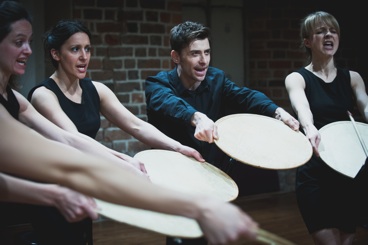
1web_DSC0970Some moments sound liturgical and there are elements of what could be Gregorian chanting. A musician playing the Balkan bagpipes enters at key moments, directing his playing towards the actors; his interpolations are open to debate but for me they were a signifier of the existence of the wider world that is being slowly torn apart by the actions of Lear and his daughters. Or it could just be a man playing the bagpipes.

It ends with what appears to be an Arabic-inflected piece – the dead king paid homage to in the guttural cries of mourners, but are they mourning him or are they mourning the divided, fractured kingdom left behind?
<<Continue to full review>>

Radical treatment, radical theatre

The Eradication of Schizophrenia in Western Lapland – Ridiculusmus @ Battersea Arts Centre (Touring until March 2015)

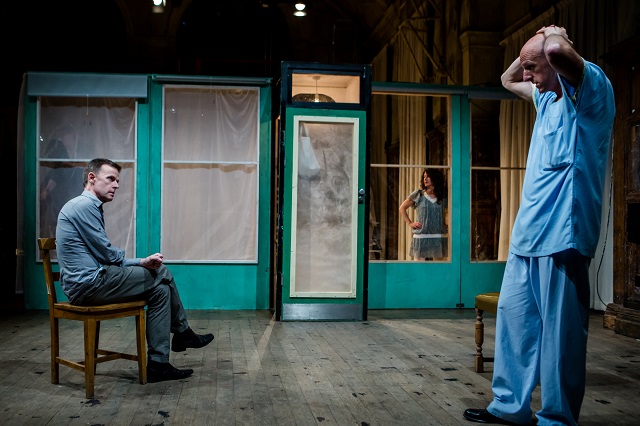
For various reasons this review of The Eradication of Schizophrenia in Western Lapland comes over a week after experiencing the production at the Battersea Arts Centre. Often, as a reviewer flitsEradication from theatre to theatre, trying to write a review after such a delay can be troublesome as images from different plays begin to blur together in the mind. This isn’t a problem for Ridiculusmus’ The Eradication…, which pulls of a coup de théâtre with their simple but brilliantly effective approach to staging.

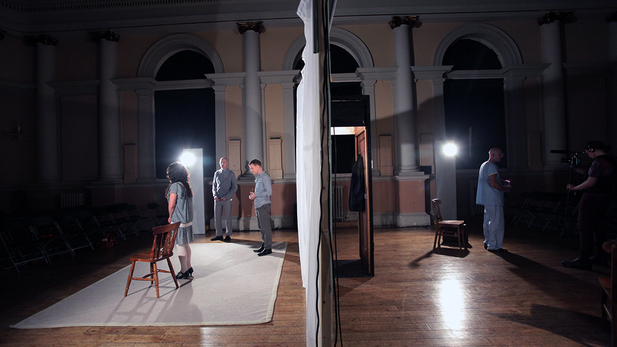
In portraying a family being pulled apart by the spectre of mental illness, Ridiculusmus’ decision to split the audience in half, dividing the stage with a simple screen and performing two overlapping narratives, isn’t just a technical device to garner attention on the highly competitive fringe circuit but exists to act as a mechanism to enable the audience to step inside the fog of psychosis.

Ridiculusmus present the eradication of schizophrenia in western lapland at BACCreating a shared understanding is one of the big challenges to changing perceptions on mental illness. Most people have suffered injury or been physically ill at some point in their lives, and as a result they are able to draw on this experience, however limited, in order to shape their understanding and build a connection to those with a terminal disease or with a physical disability.

However if a person has never experienced a mental health illness then it is very difficult to associate with any description on the pressures on a fragile psyche, and in turn the best that can be offered is glib and often wildly inaccurate approximations.

Ridiculusmus’ approach to staging brings an audience about as close to the reality of mental illness as it is possible to get. Separated from half the on-stage action but with the dialogue bleeding through the divide – sometimes appearing to interlink with the scene you are watching, at times talking over it and on other occasions hearing it only as a background hum – it recreates, in the audience, the polyphonic chorus that accompanies many people entering schizophrenic psychosis.

<<Read full review>>

A most unexpected adventure

Antarctica – Little Bulb @ Battersea Arts Centre, until 04 January 2014 (tickets)

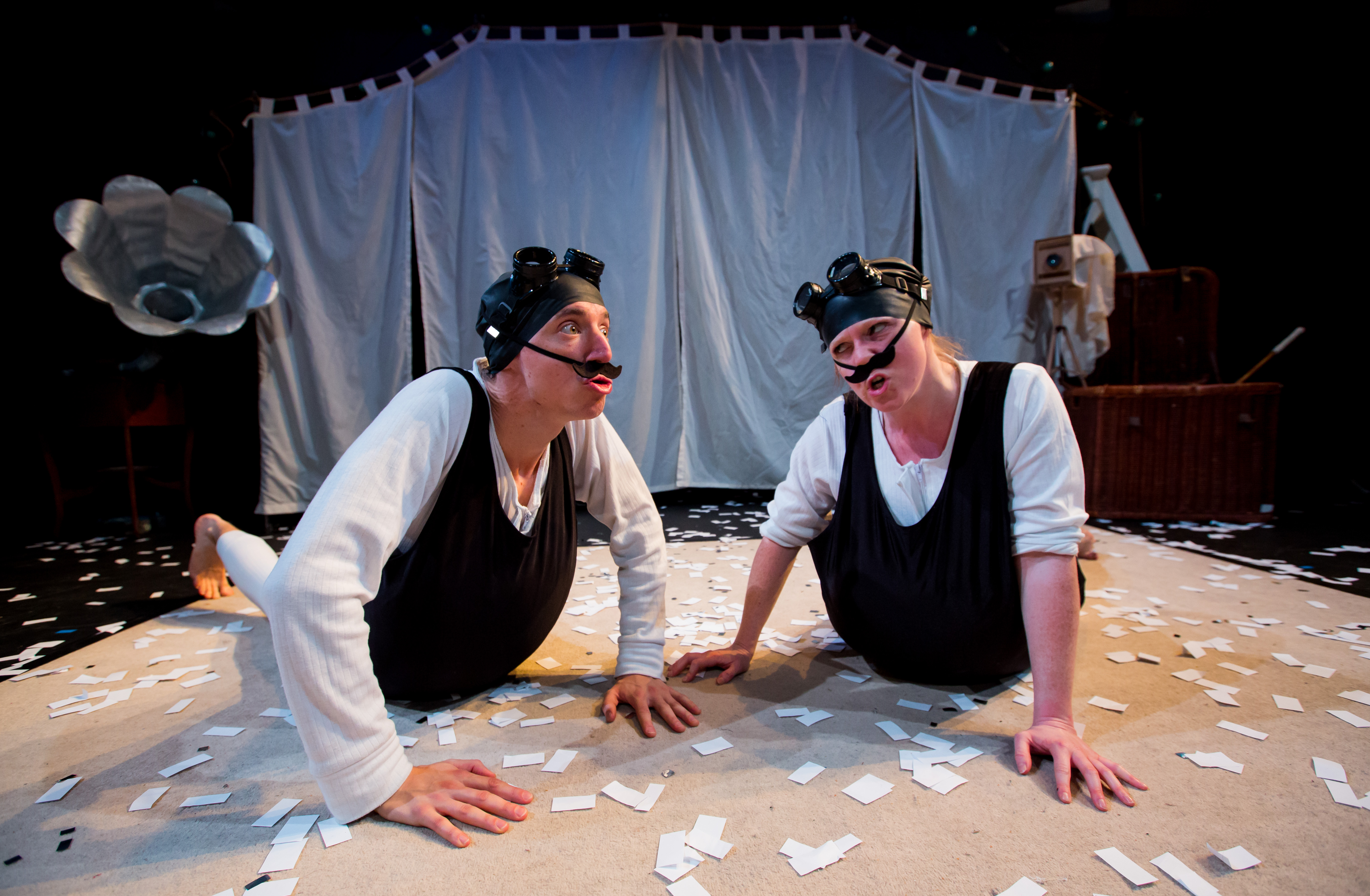
Astute readers of this blog will most likely have guessed that I am not between the ages of two and six. They may well have also concluded, given the amount of theatre I am able to watch, it is ANTARCTICA-11 Paul Blakemorelikely that I have either a very forgiving partner or no small children of my own. As a result it may be surprising to find Civilian Theatre at the Battersea Arts Centre on a Saturday afternoon to join Little Bulb and their ‘brave explorers club’ on a 55-minute adventure to Antarctica (not bad going – it takes me over 2 hours to get to Gloucester at Christmas).

Antarctica is a show for children from Little Bulb, the theatre company that thoroughly charmed this reviewer when they took full advantage of the Battersea Arts Centre’s period décor to present a wonderfully innovative take on the Orpheus and Eurydice myth.

ANTARCTICA-18 Paul BlakemoreDespite the tragedy of Eurydice they managed to introduce a humour built on whimsical charm and a very intelligent silliness that gave Orpheus a really unique feel, and it felt that their creative and spirited approach to story-telling would be perfect for the world of children’s theatre.

Paying close attention to their audience they have built up the silliness but, and this is crucial to all children’s theatre, they haven’t dumbed down the approach. At no point do you feel that Little Bulb are patronising or phoning it in. This is not Nativity 3, where if you look closely you can see £ signs where the actors’ pupils should be.

Each child is afforded the respect that any adult would be, and this is evident in the humour that runs deep throughout the show. Jokes have a structure and intelligence that acts as a reminder that there should be no cheap laughs no matter who is watching; good comedy is hard work and it requires a lot of heavy lifting to make jokes that feel this light.

The cast of Clare Beresford, Dominic Conway and Alex Scott work really hard to provide a warm and inclusive show. It starts as the audience is filing in, settling down and finding somewhere to put the various bags/scarves/hats/mittens that appear to accompany any mass family outing. Beresford and Conway create a soothing and magical atmosphere with the aid of xylophones and various percussion whilst Alex Scott (Sir Peregrine Falcon) makes himself busy teaching us all the brave explorers greeting and bestowing his sandwiches, maps and flags on various small children.

<<Continue to full review>>

Visceral thrills and society’s ills

This is how we die – Battersea Arts Centre, until 14 November 2014 (tickets – returns only)

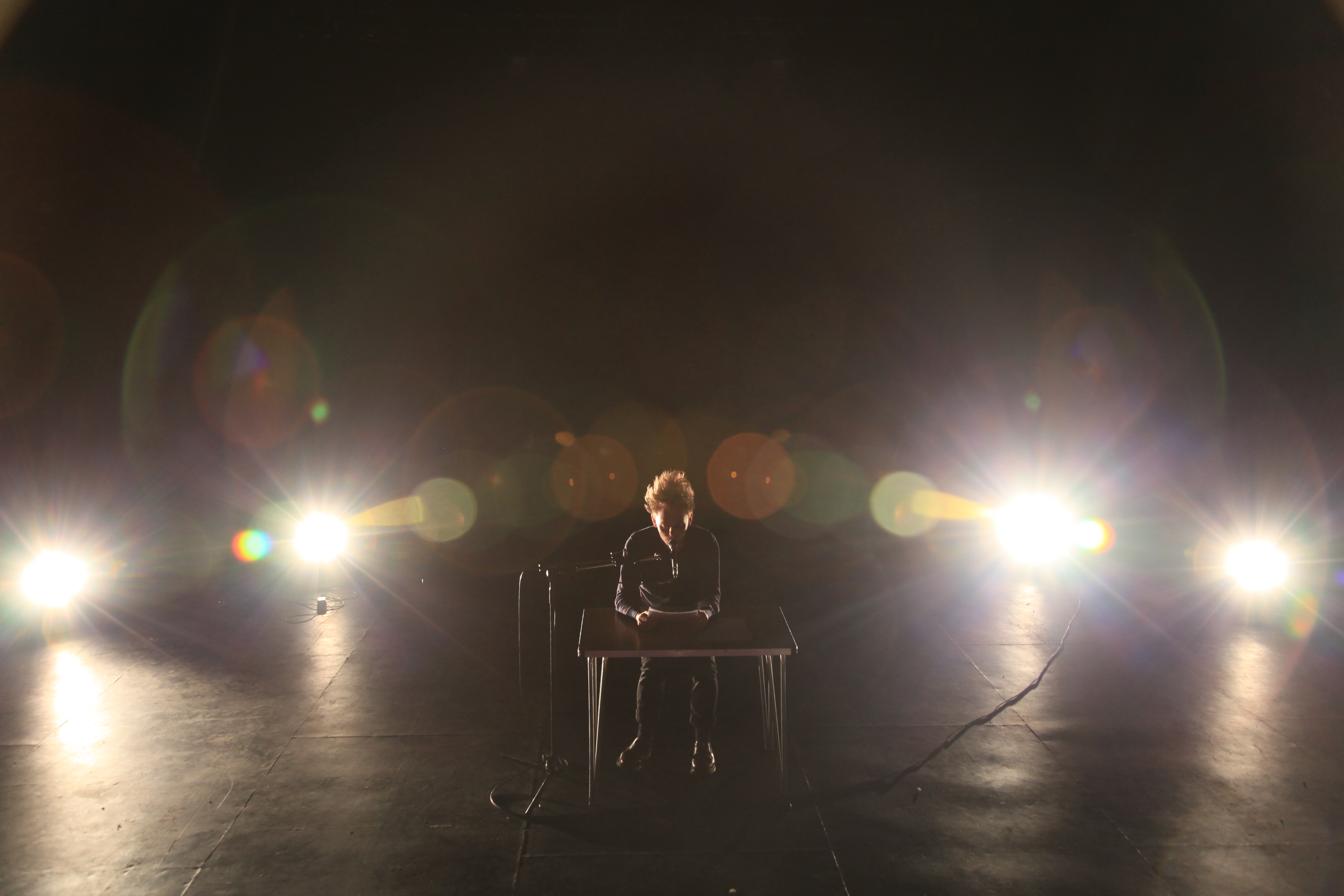
At the end of Christopher Brett Bailey’s performance of This is how we die the audience are subjected to – and it is a case of being subjected to rather than being passive observers of – a sonic assault that is best imagined as the sound of an imploding, decaying universe and the tentative hope that something new and beautiful can rise from the fading flickering light. The stage lights turn their impassive bulbs on the audience, bathing the Christopher Brett Bailey_THIS IS HOW WE DIE_Credit Jemima Yongobservers in a harsh, unforgiving light whilst ear-shattering, fuzzy rhythms rise and fall, roll and repeat, looping and overlaying motifs amongst discordant sounds. It is the white-noise of paranoia and of an overwhelmingly claustrophobic hopelessness. And then suddenly, within this kaleidoscope of fear, emerges the purity of higher-pitched strings, cutting through the chaos and providing the possibility of escape.

This antagonistic ending, this attritional warfare waged between performer and observer is only eight minutes long but it could easily have been eighty. It is a wonderfully considered reflection and response to the sixty minutes that come before, and adds to the impression that Christopher Brett Bailey has talents and intelligence far beyond being a highly articulate performer blessed with startling verbal dexterity.

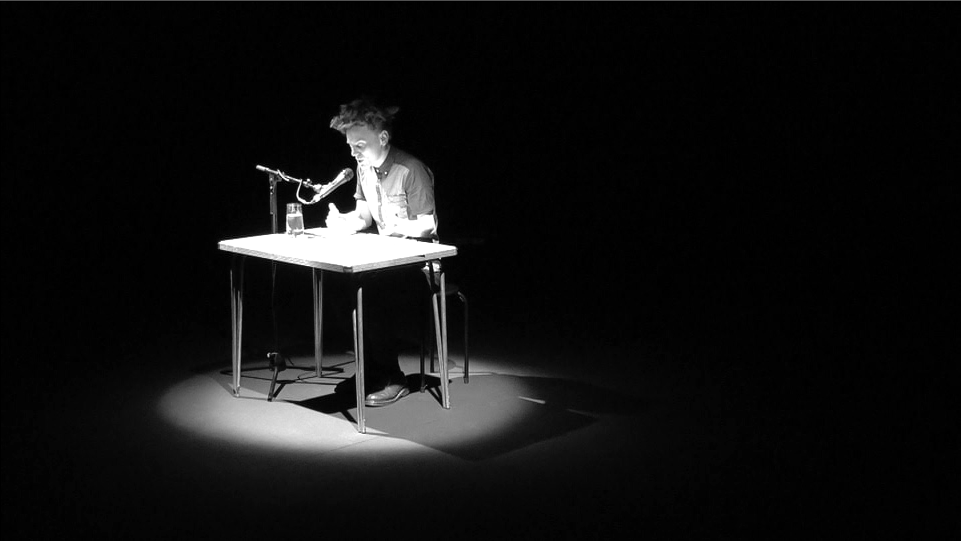
Video Doc Still 2014-07-09 at 17.27.44Having not previously heard of Bailey, and without looking at the show’s synopsis, I hadn’t really considered what to expect. Whatever I might have expected wouldn’t have come close to the reality. This is a performance that is felt rather than seen. The audience are almost immaterial; nothing has been created for our benefit. The stagecraft is defiantly un-staged. It is a man at a desk, talking, talking and continuing to talk, from notes, for sixty minutes, without stopping, almost without breathing, he continues to talk, to himself, to the walls, to the room, whether the audience is in the room or not, it feels as if he would continue to talk, possibly until all words had become exhausted.

It leaves you in a state of mental and physical exhaustion. Listening to the dialogue, focusing on the words is mentally draining, but there is also palpable tension, as a result of a deliberately abrasive delivery style, that creates an adrenalin rush so intense that by the end of performance you leave the auditorium woozy, unsteady and in need of air.

Bailey arrives as an unassuming, almost diffident presence – perhaps the only hint of what is to come is the resemblance to a young David Lynch – but as soon as he begins he exerts a magnetism that pulls in whatever direction the flight of fancy will take him. He is a remarkably assured performer and is blessed with a lyrical nimbleness that allows what, are assumed to be, tightly crafted pieces the air of stream-of-consciousness dialogue.

<<Continue to full review>>

The best and worst of experimental theatre

Ring – Fuel @ Battersea Arts Centre, until 11 October 2014

Karaoke – Sleepwalk Collective @ Battersea Arts Centre, until 18 October 2014

It is presumably with a sense of playful creativity that Battersea Arts Centre has paired Ring and Karaoke as an unofficial double-bill, meaning the adventurous theatre-goer can head straight from Fuel’s Ring in the Council Chamber in time to catch the start of Sleepwalk Collective’s Karaoke in the Staff Recreation Room.Ring_NEWWEB

Even the anodyne room names, a hangover from the BAC’s municipal past and a world away from the bright lights of the West End, are appropriate for two shows that, in very different ways, explore the nature of theatre as performance. For Spanish-English company, Sleepwalk Collective, this exploration is at the very heart of its show but for Fuel it is a by-product of their production.

David Rosenberg and Glen Neath worked with neuroscientists at the UCL Ear Institute in order to grasp how the human brain manages to map the location of sound and have put their learning to good effect in Ring. Set in complete darkness and told to the audience through a pre-recorded audio track via headphones, there is no live performance but we are a long way from the world of the Radio 4 afternoon play. The sound design is very impressive and, in the darkness, through the headphones, you get a fully-rounded 360 degree performance that could easily be mistaken for live action.

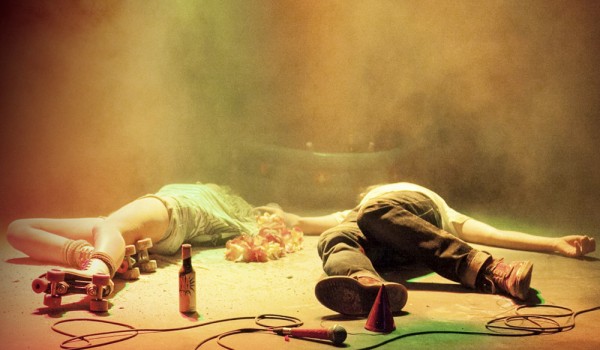
KARAOKE-Sleepwalk-Collective-600x350The darkness is integral to the plot and so there is not a disconnect with the fact you are sitting in a room with the lights off. The functional surroundings are also important because for the concept to work people need to forget they are an audience member and believe that they could be part of the story. Dwelling on this would spoil the experience but the play hinges on ideas about group therapy and what people may share in the anonymity that darkness provides.

There is a creeping menace within the action that plays on the best type of horror – not one of shocks but a genuine psychological unease. It is that moment of quiet realisation that can be terrifying; the end of The Vanishing or the rich seam of Japanese psychological horrors through the late 90’s. You become, it seems, a central player in the story; it revolves around you and the room itself becomes alive with an action that you know can’t be there but that becomes real through the connections the brain will force you to make.

Ultimately Ring will work to the degree that the individual invests in the concept, any feeling of unease will only come from your own mind. The words and sounds are played directly into your head, and whilst everyone is listening to the same story they are listening to it within their own world. As the narrative unfolds, and scenes are played out, it is still only a sketch, it is the responsibility of the audience to colour the picture in. The success with which you do so will determine how successful you find the show.

<<Continue to full review>>