Merrily we roll out of the theatre

Merrily We Roll Along – Harold Pinter Theatrebooking until 27 July 2013

Among otherwise level-headed people musical theatre remains a peculiarly divisive form of popular culture. There are many of who would happily sit through two and a half hours of magic-soaked love stories in the forests Merrily We Roll Along - Harold Pinter Theatreoutside of Thebes, or will extol the merits of a Turner-prize winner whose contribution to the artistic world is to create soundscapes under Glaswegian bridges.
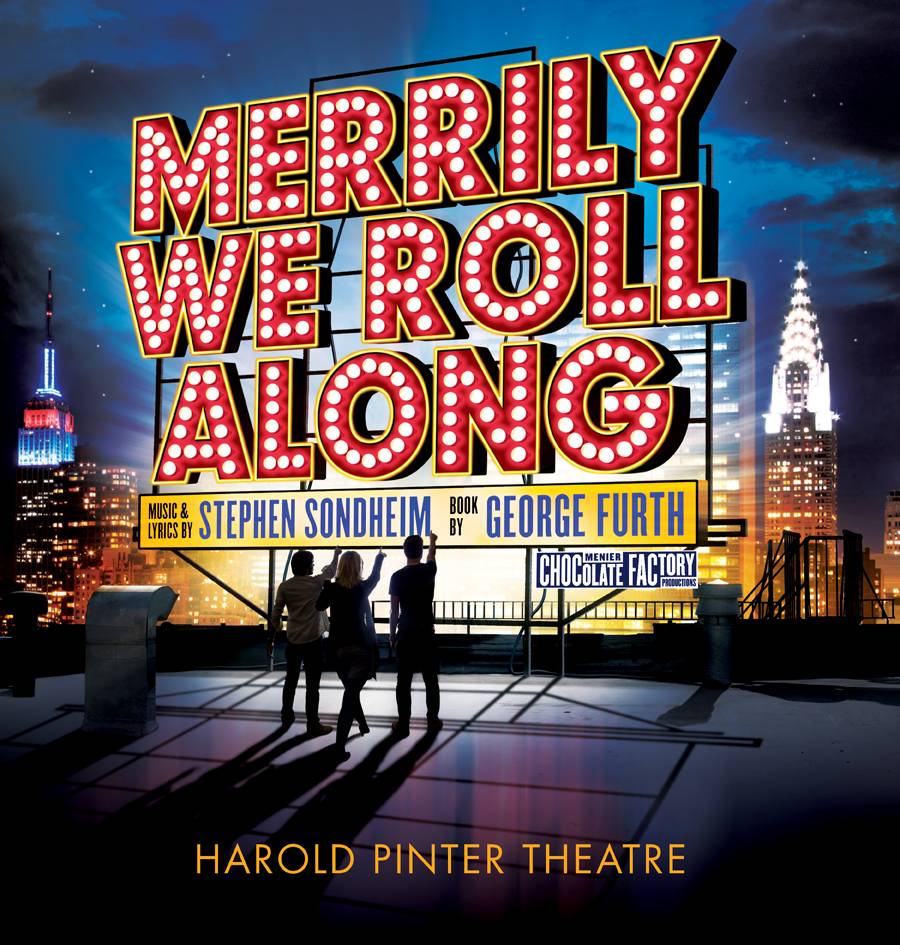
However present them with a Pulitzer Prize winner who has written musicals as diverse as an examination of the life of pointillist painter, George Seurat; or the gore-spattered grand guignol of the demon barber of Fleet Street; or even an unpicking of the psychological darkness at the heart of the Grimm Brothers’ fairytales, and they will raise their eyebrows and silently mouth the words ‘jazz hands’.

Watching productions like Merrily We Roll Along act as a constant reminder why such narrow-minded viewpoints need to be challenged. Certainly the landscape of musical theatre has changed markedly since Stephen Sondheim made his career by writing the lyrics for Bernstein’s West Side Story. The rise of Andrew Lloyd-Webber that introduced pop-sensibilities and extravagant staging to Broadway couldn’t be further away from the nuanced lyrics and subtle melodies that encapsulate the magic of Sondheim.

The divide only got greater in the last two decades, as the rise of the mega-musical from Mamma Mia! to We Will Rock You saw a new way for theatre producers to cash-in; tapping into the recognition factor of proper bands set against a licence to perform them in a sub-par way with a witless plot under the banner of ‘musical theatre’ – surely as lowest common denominator entertainment goes these productions are right up there with ‘X-Factor’ and ‘Britain’s Got Talent’.

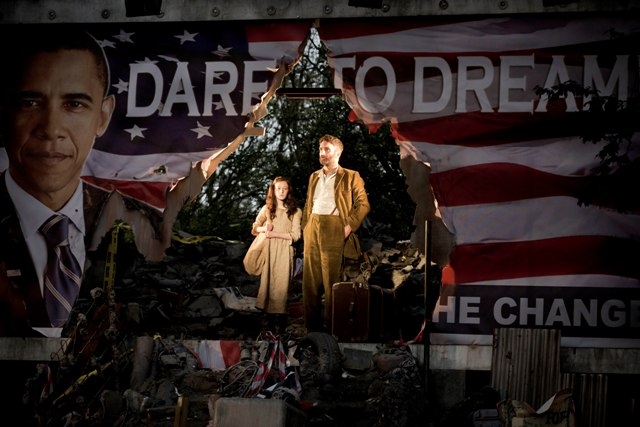
Merrily We Roll Along Trio

The Menier Chocolate Factory must be applauded for setting itself against the tide and producing a string of Sondheim revivals that remind us that there are people out there who see no distinction in artistic merit between a ‘play’ and a ‘musical’. In bringing us A Little Night Music, Sunday in the Park with George and now Merrily We Roll Along – transferred to the West End – the Menier has proved time and again that there is a space for intelligent, difficult musicals that can be both commercial and critical hits.

Merrily We Roll Along, a notorious flop when it opened, has taken two decades to gain similar levels of acclaim to what are seen as Sondheim’s masterpieces. However the intervening years have only served to increase its relevance to the audience. Charlie’s bitterness at Franklyn’s desire to follow the money and to leave ‘proper’ writing behind him only seems more familiar to a theatre-scene where, despite writing the lyrics for the commercial smash-hit of Matilda, Tim Minchin finds it difficult to raise any funding for a musical that isn’t based on an existing concept.
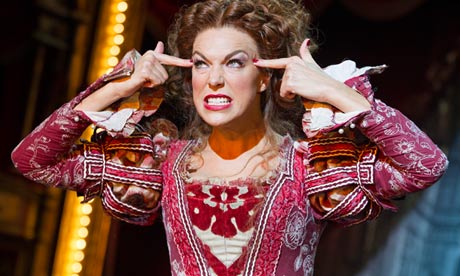
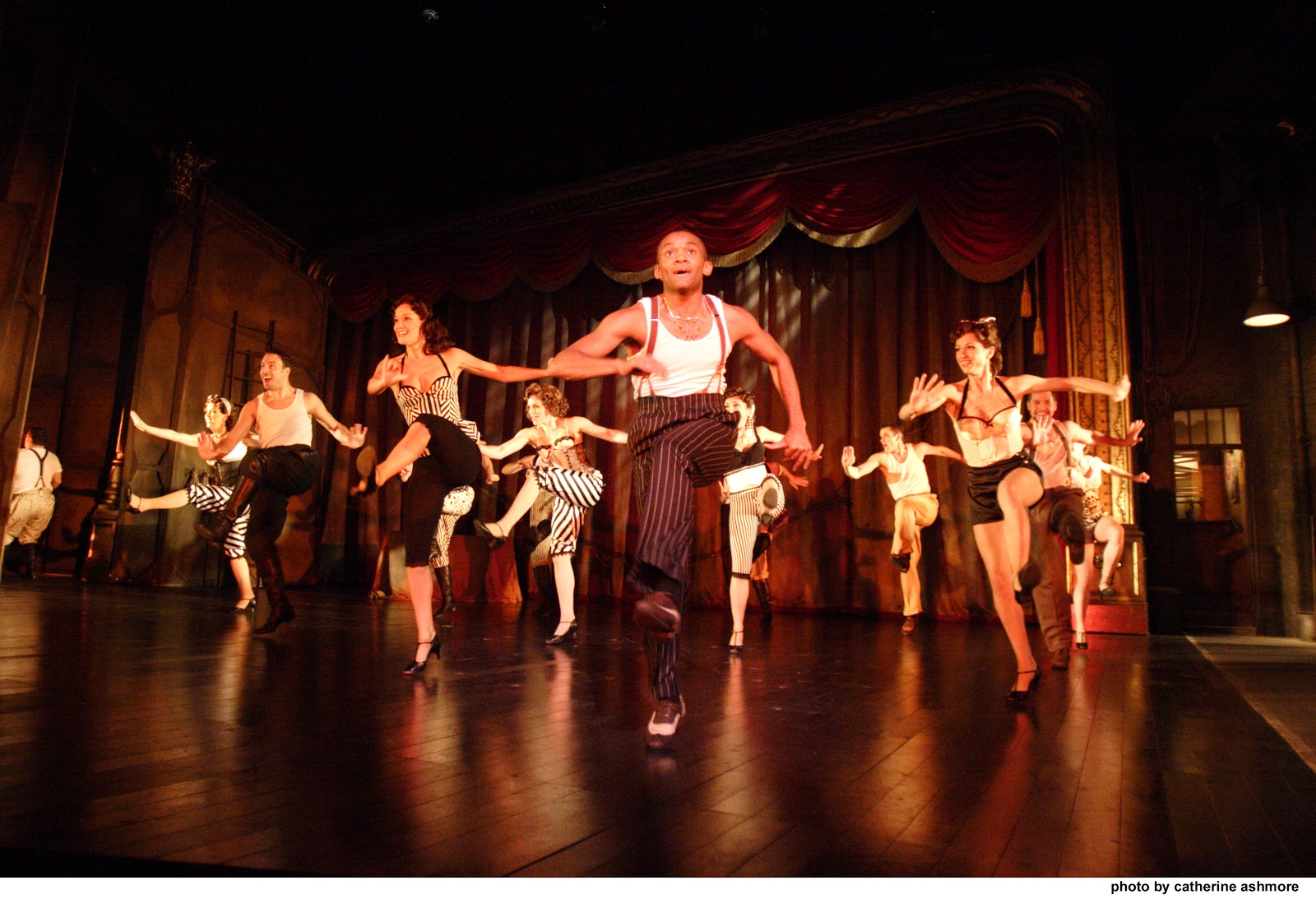
<<Continue to full review>>

Shakespeare (with added song and dance routines)

Kiss Me, Kate – The Old Vic, until 02 March 2013

Having now seen two productions of Kiss Me, Kate, separated by more than twelve years, what immediately stands out is that it becomes far more rewarding experience if one arrives forearmed with a strong knowledge of The Taming of the Shrew. Cole Porter’s signature touches are mixed with a far more literate concept than would be expected from his back catalogue, and in doing so it becomes a musical that manages to both please and perplex,

Cole Porter thought of Kiss Me, Kate, along with Anything Goes, as one of his two perfect musicals and Trevor Nunn is a man who clearly thinks along similar wavelengths. Having been responsible for the National Theatre’s stunning revivial of Anything Goes in 2003, he also takes the reigns here and displays the assured hand of a man who is as equally at home in musical theatre as he is in Shakespeare. No mean achievement and one that pays dividends in bringing Porter’s screwball reinvention of Shakespeare’s lacerating take on gender politics to life.

Kiss Me, Kate_2579ashm_1084_Photo credit Catherine AshmoreNot many musicals stand toe-to-toe with Anything Goes, and not many productions can match Nunn’s revival, which has so far proved to be one of the few great musical moments of the 21st century. It was the last of the great examples of chorus-line choreography, Crazy for You, Top Hat and Singin in the Rain being pale comparisons of the form. It also boasted fine central performances, particularly from John Barrowman as Billy Crocker. And of course it had Cole Porter at his irrepressibly brilliant best.

All of which is a roundabout way of pointing out that Kiss Me, Kate is not the equal to Anything Goes. Songs like Wunderbar, Brush Up Your Shakespeare and Kiss Me, Kate are mere shadows of It’s De-Lovely, You’re the Top and Anything Goes. There are occasionally moments where riffs and motifs feel repeated, and parts of We Open in Venice sound like a straight lift from Bon Voyage.

At his best Porter has a verbal dexterity that has only been matched by Stephen Sondheim, a lightness of phrase that can wrap a barb within the most delightful melody and an almost unparelled ability to produce rousing, climaxes that blend dance routines seamlessly with witty lyrics and show-stopping choruses.

Unusually Porter is strongest with the spoken dialogue rather than the music and lyrics. It is without doubt a very intelligent reworking of Shakespeare’s play. There is a level of meta-textual dynamism that is most unexpected from a musical written that was written in 1948 and ran for over 1000 performances. The play presents us with an off-stage version of Kate and Petruchio but also flips the action to show us both faithful, and unfaithful, renditions of the actual Shakespearean parts. Naturally action overlaps between off-stage and on, whilst fictional characters invade the world of the play-within-a-play all the while building to a suitably romantic ending.

<<Continue to full review>>

And so goodbye to summer…

For regular theatre goers there can be few markers that you have passed the last dregs of summer than no longer suffering a twinge of jealousy as you walk past all the tourists drinking merrily on the South Bank as you take your seat in the hot, sweaty and dark auditorium.

Not that, as we were constantly reminded, this was a summer like any other. In effect normality went into a two month hiatus as London, and in time the rest of the country, came to a complete standstill as we eventually recognised that we are not nearly as useless as we enjoy telling each other we are. The trains arrived, the people were friendly, we avoided being blown up by terrorists or trigger-happy missile silos, the army ran the logistics and G4S ran nothing and the Mo-Bot became a meme. In short the Olympics and the Paralympics happened and everyone forgot about the rain.

In between all of this excitement the London theatre scene quietly ticked over in the background. Unsurprisingly Andrew Lloyd-Webber’s predictions of audience carnage proved entirely wrong as the West End’s goal of relieving punters of ever increasing amounts of money from their cash-strapped wallets in exchange for third-rate musicals culled from second-rate films continued remorselessly onwards. Luckily for the rest of us the National Theatre proved that affordable theatre can have depth, resonance and even the odd sprinkling of star power.

The revival of London Road – transplanted to the Olivier – was an example of how to draw on a weighty subject with a lightness of touch that is rare among those more used to the deadening hand of television. Having somehow contrived to miss the first run, despite being aware of the sacksful of critical praise that it gathered meant that this was a must see. The fact that the engrossing Katherine Fleetwood reprised her role only added as an extra incentive – an actor indelibly marked in my brain following her unforgettable turn as the strongest Lady Macbeth I have had the fortune to see, and surely a match for Judy Dench’s classic portrayal, in Rupert Goold’s memorable production.

How unfortunate to have been released in the same year as the equally critically-acclaimed and certainly rather more family-friendly Matilda, London Road never received the awards it richly deserved but the fact it could sell out the Olivier for a musical based on interviews with people who lived on the same road as Richard Wright, the Ipswich serial killer, tells its own story about the power of the production.

A truly haunting piece, skilfully manipulated and never less than engaging, it raises many interesting questions about the stories that aren’t told; the impact on the community, the everyday people, of a media circus and a major police operation. Whilst there are legitimate questions over how composite characters reflect the truth and whether they bring forward narrative interest over narrative truth, there is enough in the words and the playful skill with which they are turned into song that sets this apart as a musical of rare power and intelligence.

Alongside this, the Olivier season included Simon Russell Beale giving us Timon of Athens. Without fail described as a difficult play, Timon of Athens has so many contemporary resonances that it should mean more to us. The parallels of the first half to the modern day are so clear, so apparent, that one almost hopes that the play doesn’t resume after the interval. This production, like so many before it, faced and failed the classic problem of trying to unpick and restitch Shakespeare to craft a specific relevance to modern times.

Watching the rise and inevitable fall of Timon, one is both appalled by the actions of Athenians but also frustrated by Timon’s obvious naiveté. It is hard to truly accept that Timon could have fared so well in society based on the actions we see in the play. The fault here is part Shakespeare and part Simon Russell Beale – who was a strangely passive and reedy presence in a play that really demands a lot of heft. His slightly cherubic public school persona – so perfect as Widmerpool in A Dance to the Music of Time – feels out of place in his hermit hovel on the outskirts of the city.

The most interesting aspect of the play is to follow the generally accepted fact that the play was written by two different playwrights. Shakespeare, it is assumed, is responsible for the grandstanding and most of the second half, and Middleton, who is believed to behind the city-based Athenians. It is clear that when one thinks of the play in these terms, it is Shakespeare who comes off worst. Middleton’s play fizzes with a comic satire and adds to his reputation as one of the great comic playwrights of the Elizabethan era. His background characters hit the stage fully formed and when interacting with one another there is a robust and fascinating take on the avarice of Athenian society but the play too often grinds to a deathly halt once the moralising fury of Timon takes centre stage.

It was a disappointing production underpinning a disappointing play. There are many who call Simon Russell Beale one of our finest character actors, yet the case is still to be made of his credentials as a great Shakespearian actor following his rather undercooked Falstaff with this forgettable Timon.

Ragtime revival appears a little threadbare

Ragtime – Regents Park Open Air Theatre, until 08 September 2012

With The Hollow Crown and Danny Boyle’s Olympic Opening Ceremony giving British audiences the chances for two very different examinations of the national character, it seems almost unpatriotic to be reviewing Regent Park Open Air Theatre’s production of Ragtime – a musical that places itself firmly within that staple of American drama; the great American narrative.

Adapted from E.L Doctorow’s mid-seventies novel, Ragtime offers a panoramic view across early-20th century America. Blending fact and fiction, the musical weaves a loose narrative through the eyes of three rather generic stock characters; the middle-class housewife whose values are transformed through a life changing event, the eternally-optimistic immigrant who only cares about making a life for his daughter and the black musician struggling against institutional racism.

Under Timothy Sheader, the Regent’s Park Open Air Theatre has taken home the award for ‘Best Musical Revival’ in each of the last three years. Stunning productions of Hello, Dolly!, Into the Woods and Crazy for You meant that his 2012 choice was eagerly anticipated.

Despite a reputation for bold takes on American classics, Sheader’s production of Ragtime proves itself to be a rather more awkward piece of work. The tableau approach creates an uneasy balance between fact and fiction, with key events seen through the eyes of Ragtime’s characters whilst historical figures rub shoulders with fictional creations. The plot is a fairly transparent call for social and racial equality and, originally written in the 1970’s, is clearly laudable in its aims. However for those not well-versed in early 20th century American history it was slightly frustrating for never being entirely sure which scenes were real and which imagined, which characters were based in reality and which were the authors invention.

Ragtime’s closest comparator is Gershwin’s masterpiece Porgy & Bess; both are interested in showing audiences the experiences of marginalised members of American society. However where Gershwin was able to put faith in the strength of the music and the lyrics,  through songs that have become integral parts of the 20th century canon – Summertime, Ain’t Necessarily So and I Loves You Porgy – Ragtime is not able to draw from such a well. Despite fine moments the play lacks depth and delivers the narrative in a halting and didactic tone.

<<Continue for full review>>

Olivier Awards 2012…and the winners are…

Tomorrow night sees the stars of the stage descend upon the Royal Opera House for what is arguably the biggest night in England’s (or perhaps more contentiously given the list of nominees – London’s) theatre world: the Laurence Olivier Awards. It will be possible to watch the event live via the red button on the BBC, or listen to Radio 2, from 19:30.

As is often the case the list of nominees make for interesting reading and arguably casts a brighter light on the theatre scene than the list of those who actually win. Rather than going through the complete list of the  runners and riders, a quick glance across the categories does raise some interesting talking points.

8 Key Questions

  1. In what can only be seen as a damning indictment of the non-subsidised West End stomach for risk-taking, the only nominated new play that premièred outside of the subsidised sector was an adaptation of the most famous of all Ealing comedies. Whilst well-received by the critics, is it not possible for a playwright to be allowed to stage new work in the West End (special exemptions for famous Hollywood actor/writers not withstanding)?
  2. Is it a thin year dramatically? Even the revivals don’t seem to have their usual vim. Hopefully Anna Christie will be recognised for its fine work and it will be up against a strong revival of Rattigan’s Flare Path; a playwright very much in vogue.  However Noises Off seems to be a rather populist choice when you consider the fine year the Donmar had with the rarely performed and excellently executed ‘Inadmissable Evidence’ directly following Anna Christie.
  3. Will London Road be able to withstand the Matilda charge? It lost out to populism at the Evening Standard Awards, and whilst Matilda is a fine and deserving winner in its own right isn’t it time that London Road was recognised for the stunningly brave and unique production it is (and for those who missed it first time, it is coming back to the Olivier this summer – a portent perhaps?)
  4. Can the Sheridan Smith success story continue? Everyone’s favourite 2 Pints of Lager…breakout star is up for a fairly unique double; after picking up Best Musical Actress at the first time of asking for Legally Blonde, Ms Smith will be hoping to make it two in two years for her fine performance in Flare Path. However competition is tough in a category that also includes Mark Addy, Bryony Hannah and Johnny Flynn; all of whom should be regarded as excellent contenders in their own right.
  5. Just how many can Matilda win? The remarkable story continues and you don’t fancy anyone coming up against them. Best new musical to edge out London Road? Bertie Cavill is surely a lock-in for Best Actor Musical. Does anyone have the heart to deny the Matilda’s their moment as Best Actress Musical? Paul Kaye could be on shakier ground as he is up against Katherine Kingsley’s Lina Lamont – a scene-stealing role if  ever there was one. And after all that there is a raft of technical awards that someone has to win.
  6. The Best Actress/Best Actor awards seem totally up for grabs. Desperately hope that the double-header Cumberbatch/Lee Miller is overlooked as Frankenstein wasn’t that great.  My personal preference would be a Ruth Wilson/Jude Law double for Anna Christie. However Douglas Hodge in Inadmissible Evidence would be a worth winner.
  7. What is the point, I mean really, what is the point of the BBC Radio 2 Oliver Audience Award when you have to chose between Jersey Boys /  Wicked / Les Freakin  Mis and Billy Elliot? How about giving us a write-in winner?
  8. How much more alive does theatre feel when you look at the nominees in Outstanding Achievement in an Affiliate Theatre? Mogadishu and Roadkill could have been strong contenders in the main categories but here they feel punted to the sidelines.

And finally good luck to all the nominees.

Laurence Oliver Awards 2012

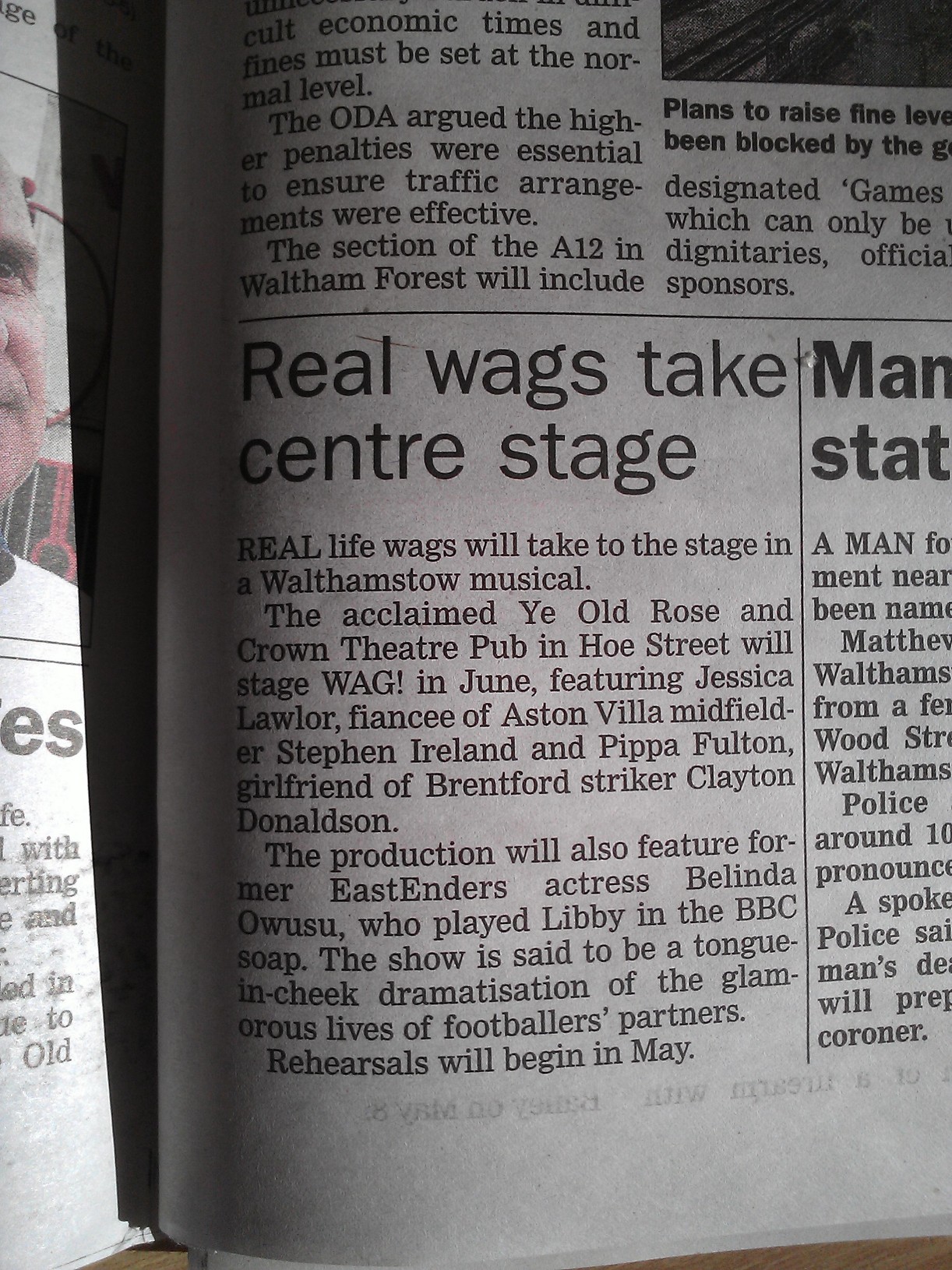
So this looks…um…

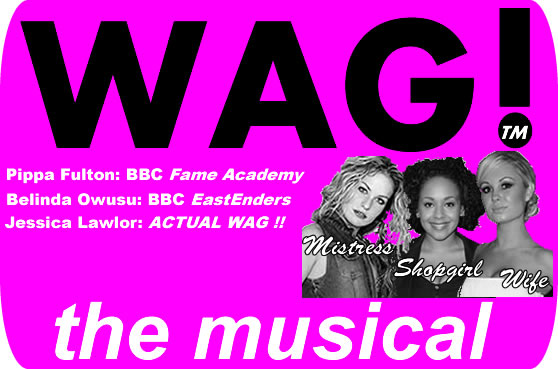
Words fail me but luckily they don’t fail Pippa ‘”My own experience is completely different” Fulton. Apparently her “relationship is a million miles away from the characters in the play, I am familiar with the world of WAGs, so I can put my own experiences into the part.” Whilst not being entirely clear if dating a Brentford striker (currently riding high 8th in League Division 2) strictly speaking qualifies you as a wag of the first rank and so a recourse to method acting will no doubt have to come into play to create a fully-rounded character.To be perfectly fair, Pippa did rise to stardom on BBC hit show Fame Academy and since then her career has been going from strength to strength, as her biography demonstrates.

It has been a bit harder to locate the acting credentials of the other big-name signing, Jessica Lawlor, but one needs only look to her sterling performance in lying to the Republic of Ireland manager, Steve Staunton, by telling him that Stephen Ireland’s maternal grandmother had died so that he could get out of playing a crucial game against the Czech Republic to know that she has the chops for such a major role.

Well-timed to coincide with the European Championships, the ‘acclaimed’ Rose and Crown Theatre Pub will presumably have to put in an upper-tier to meet the demand for this neo-Brechtian social satire on money and fame. With such promising material, it is important that the team behind WAG! don’t cheapen the whole affair by trying to drum-up cheap celebrity-driven content.

Oh…

http://menmedia.co.uk/manchestereveningnews/tv_and_showbiz/s/1487884_wag-side-story-new-musical-about-footballers-wives-to-star-stephen-irelands-finacee-jessica-lawlor

Well that is a regional press, its not as if a national newspaper has used it as an opportunity to include a double-page spread using sexy photos of Wags as a selling point,

http://www.wagthemusical.com/wagsmusicalnewspaper.pdf

Oh.