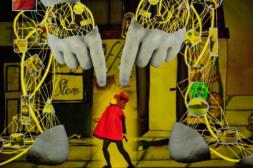
A mirror reflects a man’s face but what he is really like is shown by the kind of friends he chooses

Ablutions – Fellswoop Theatre @ Soho Theare, until 22 February 2015 (Tickets)

“A mirror reflects a man’s face but what he is really like is shown by the kind of friends he chooses”

It may be unusual for Civilian Theatre to be quoting from Proverbs but the title ‘Ablutions’ has already thrown us one rather heavy-handed piece of religious symbolism, and watching the travails of Ablutions, Fellswoop Theatre, Soho Theatre, courtesy of Charley Murrellour barman/hero it is not hard to recognise that the trip he embarks upon midway through the play could have easily been towards Damascus as it was towards the Grand Canyon.
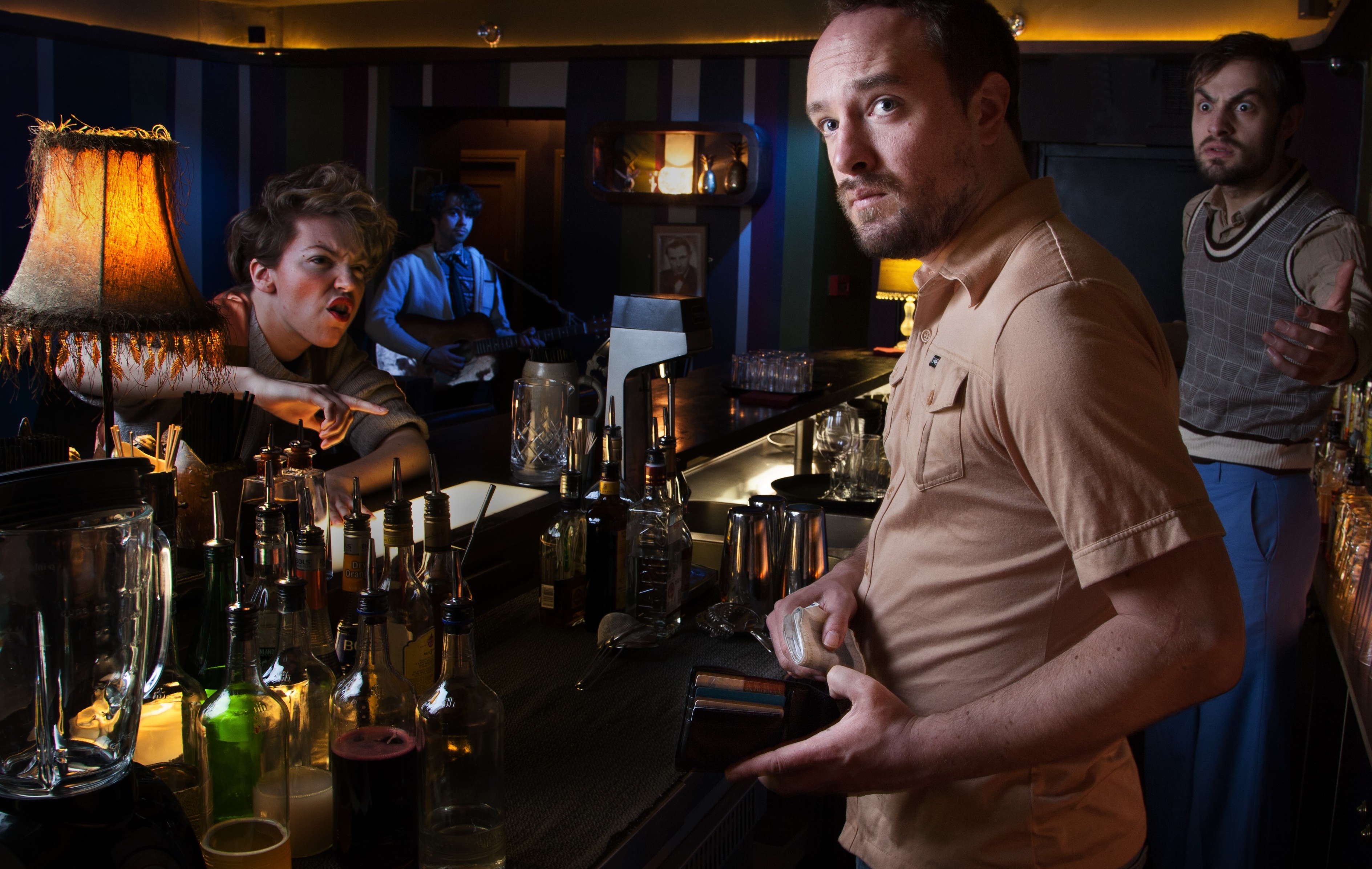
In Fellswoop’s adaptation of the debut novel from Booker Prize nominated author Patrick deWitt we are deep into the realms of the redemptive road-trip, with a side order of the cleansing power of the bottle. From what was, apparently, an already strange and lurid confection Fellswoop have given us a rather bizarre musical and mime show.
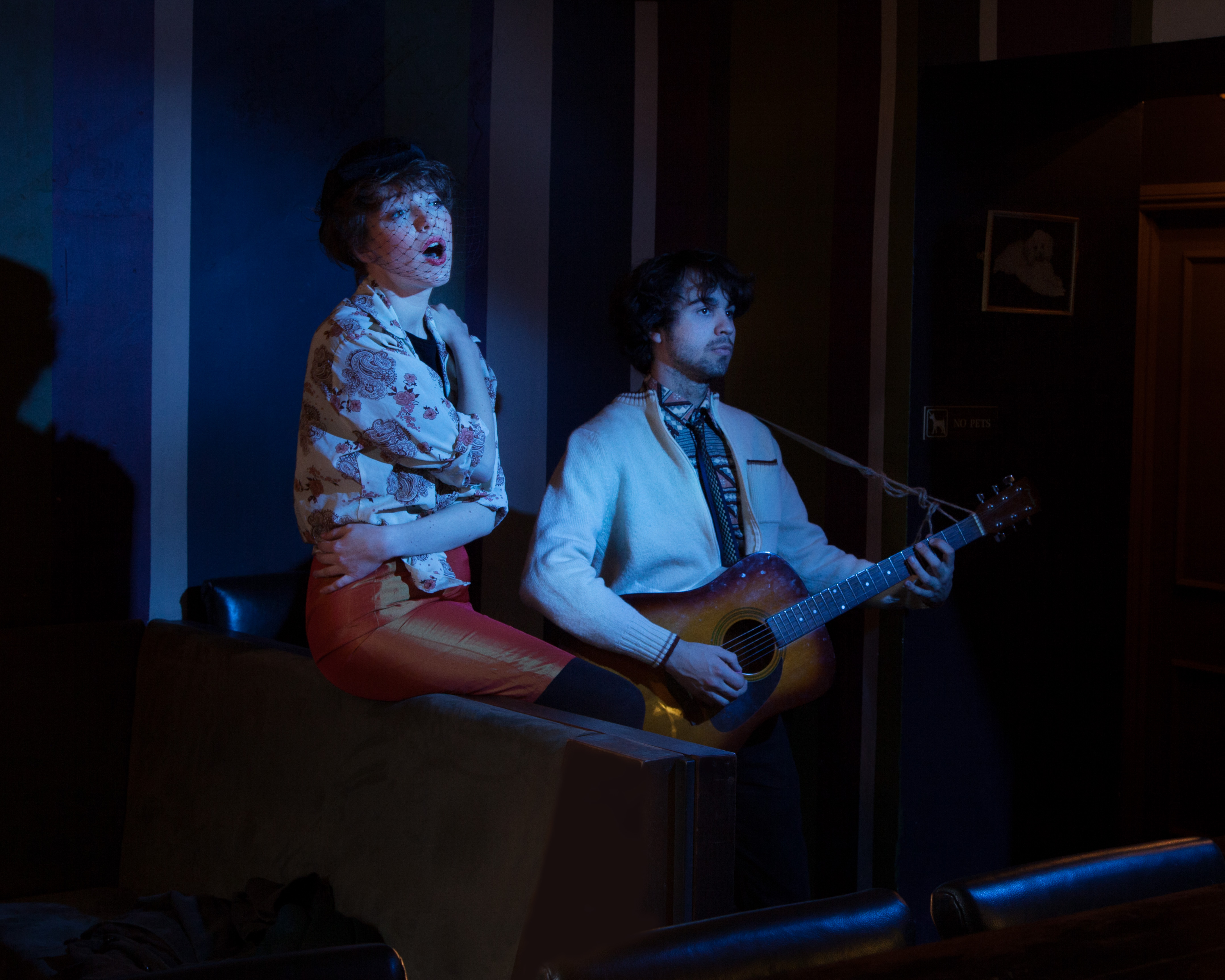
Ablutions 4, Fellswoop Theatre, Soho Theatre, courtesy of Charley MurrellIt is a play that is certainly not without its charms. The musicianship and technical ability of the cast are highly impressive. We are provided with a lovingly crafted soundscape and the cast of Eoin Slattery, Fiona Mikel and Harry Humberstone are able to recreate a complete Hollywood dive bar, with a fully stocked array of colourful regulars, through the use of physical theatre and some wonderfully grotesque characterisations.

Humberstone – perhaps given more licence than the rest to stretch his characters to the extremes – provides us with enough sleazy figures by himself to have the audience squirming in their seats. Whilst I hope that someone as disturbingly charmless as Curtis doesn’t actually exist, I have a horrible suspicion that bars around the world will prove me wrong.

The core of the story belongs to Slattery’s Barkeeper. We join him when, if he isn’t already a loser, he is fast on his way to becoming one; living a life where work, friends and drink have combined to create a spiralling descent into an alcoholic’s chaos.

<<Read the full review>>

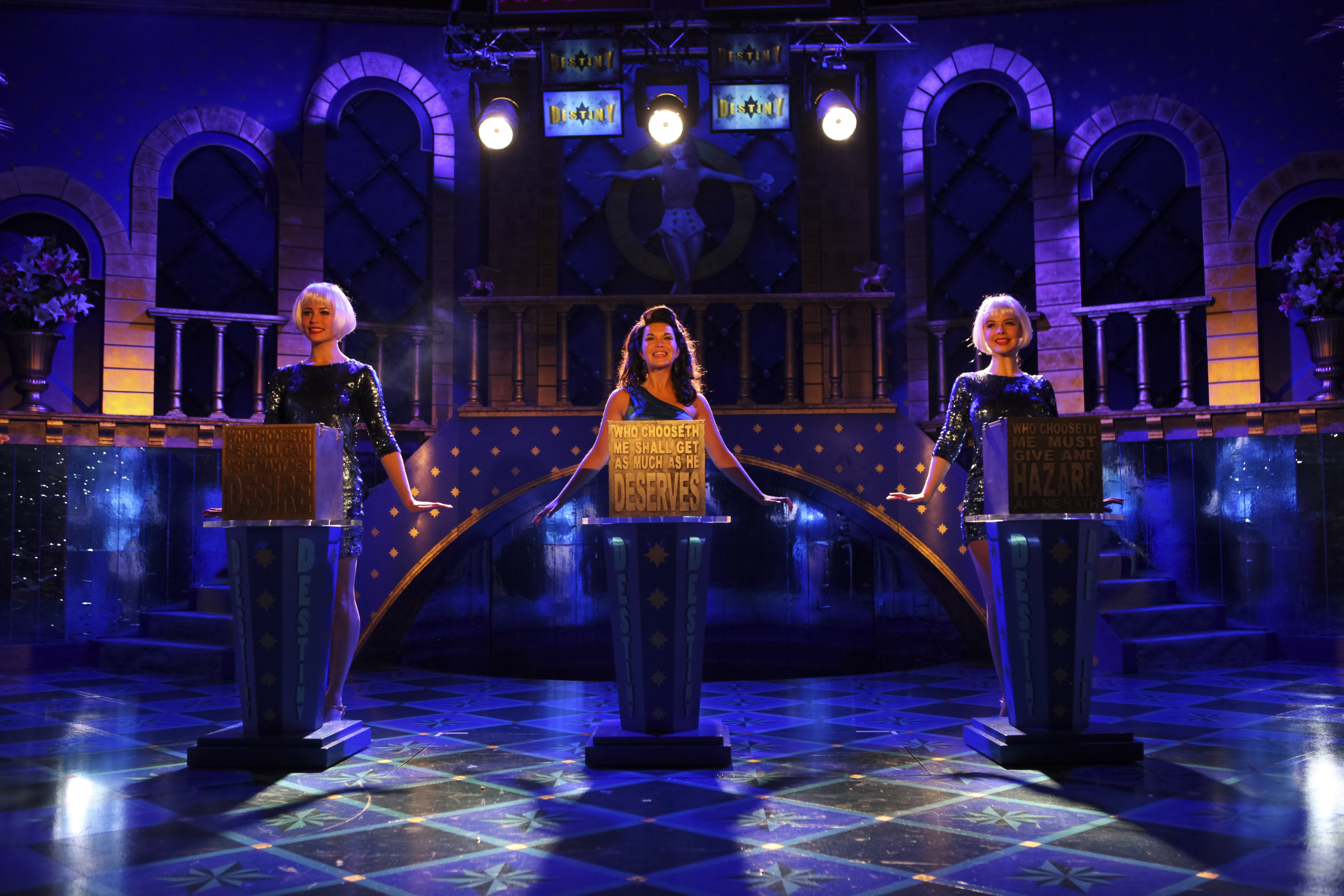
Who chooseth me shall get as much as he deserves

The Merchant of Venice – Almeida Theatre, until 14 February 2015

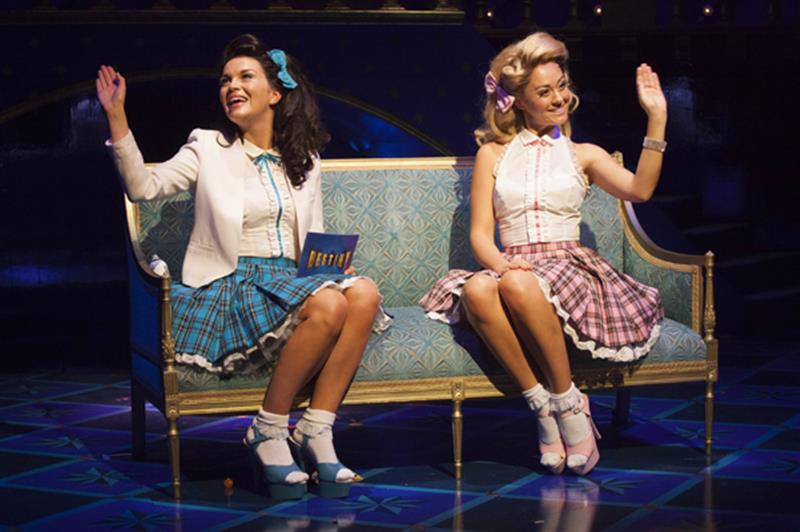
There are few directors who have the ability to divide audiences as much as Rupert Goold. It has become standard for his reinterpretations to brim with ideas and display an exuberance that can irkmov-364-merry-holden-emily-plumtree-and-rebecca-brewer-and-susannah-fielding-by-ellie-kurttztraditionalists as much as they excite those who believe a play to be a living text.

His production of The Merchant of Venice, reaching the Almeida after a season in Stratford, does more than most to alienate, and even his most fervent supporters reach the interval trying to grasp at the point of transferring the play from renaissance Venice to 20th century Las Vegas.

We must consider the play one of Shakespeare’s most problematic. Any director must think through how it can be staged effectively and it is a cop-out to provide a traditional setting in order to avoid the context that the modern world brings to how we must approach Shylock and his humiliation. It is clear what may have been acceptable for Elizabethan audiences will not play as well to the modern theatre goer.

MOV 045 - Rebecca Brewer and Susannah Fielding by Ellie Kurttz for webAs much as Shakespearian scholars can claim there is more to the interpretation of Venetian Jewry than may be initially apparent, it is hard to avoid the grubbiness with which he portrays Shylock debasement and Jessica’s elopement with Lorenzo. As much as we can argue that art should live in a vacuum it is impossible to watch the play without holding an awareness of what has happened in the 20thcentury.

It is also a structurally difficult play that ends entirely peculiarly. It is, technically, a comedy but it fails to fulfil many of the rules that we might associate with Elizabethan comedies. It doesn’t end in a wedding and rather than finishing with the duke bringing order to the chaos, it ends with Gratiano, a lower character, making a rather inelegant ribald remark about his betrothed.

Well Goold makes the decision to turn the play on its head, and leaves us with an ending so bleak, so suggestive of storm clouds gathering, that if not quite being equal to the great tragedies it is at least worthy of an HBO series.

As the final curtain descends we are left with three couples who, in destroying Shylock, have destroyed themselves. The audience are left with Bassanio’s question to Shylock, ‘Do all men kill the things they do not love?’ [IV.i] to mull over. In their single-minded pursuit of what they thought they desired they have ultimately left themselves a future built on lies and deceit. The warning on Portia’s caskets that ‘who chooseth me shall get as much as he deserves‘ returns to us with a startling relevance.

<<Read full review>>

Fever 0272 - Tobias Menzies by Perou

A hallucination from my fevered brain

The Fever – Almeida Theatre @ The May Fair Hotel, until 07 February 2015

The use of The May Fair Hotel is spot-on. It isn’t so much that it is a luxury hotel, but it is that type of global, anonymous luxury that means absolutely nothing. The Savoy, the Ritz or the Carlton;the fever banner they may be pricy but there is a distinct personality to them. From the lobby, through the corridors and into the exclusive high-end suite where Wallace Shawn’s incisively powerful monologue has been set, the most striking feature is the sheer facelessness of this wealth.

Generic abstract ‘world’ art hangs on the wall, the corridors have a plush carpet but are really not so different to those found in any Travel Lodge and there is absolutely no personality to the room. Containing huge flat screen TVs, top-end speakers and a bathroom as big as a London studio flat, it doesn’t thrill but importantly it doesn’t offend. Perfect for the wealthy Russian and assorted euro trash clientele that swarm around Mayfair, keeping London’s economy buoyant in the face of the latest dismal news emanating from the eurozone.

Fever 0242 - Tobias Menzies by PerouIt is perfectly chosen for a monologue that captures the global dynamic of modern wealth, the faceless hotel room culture of the high-flying worker from the developed world. Take a photo of it and you could never hope to guess what city it is located in. London to Mumbai, New York to Lagos, we have joined the hermetically sealed world of the international class.

Wallace Shawn wrote this tremendous piece back in the 1990’s. Even if some of the terms have dated – there is an almost charmingly old-fashioned bit on Das Capital and, of course, there is no mention of the threat posed from a resurgent Islam – it is sadly even more relevant than when it was written. Day after day we hear how yet more of the world’s global wealth has fallen under the control of the richest. In 15 years we haven’t turned this tanker around, and the terrifying aspect of Shawn’s play is the chilling realism of it not trying to suggest we will do so in the future.

Shawn wrote words that he felt needed to be said. Well, this production demonstrates we need to keep saying them. He brilliantly frames issues in a way that have an immediate resonance. His section on the fanaticism of the metropolitan class – how their brains refuse to even allow themselves to consider the inherent unfairness of the global capitalist set-up because if they did then they couldn’t function – is one of the most singularly incisive critiques I have heard on the issue.

<<Read full review here>>

Out of darkness comes Light

Light – Theatre Ad Infinitum @ The Pit, Barbican Centre (Touring until 16 February 2015)

Performed as part of the London International Mime Festival

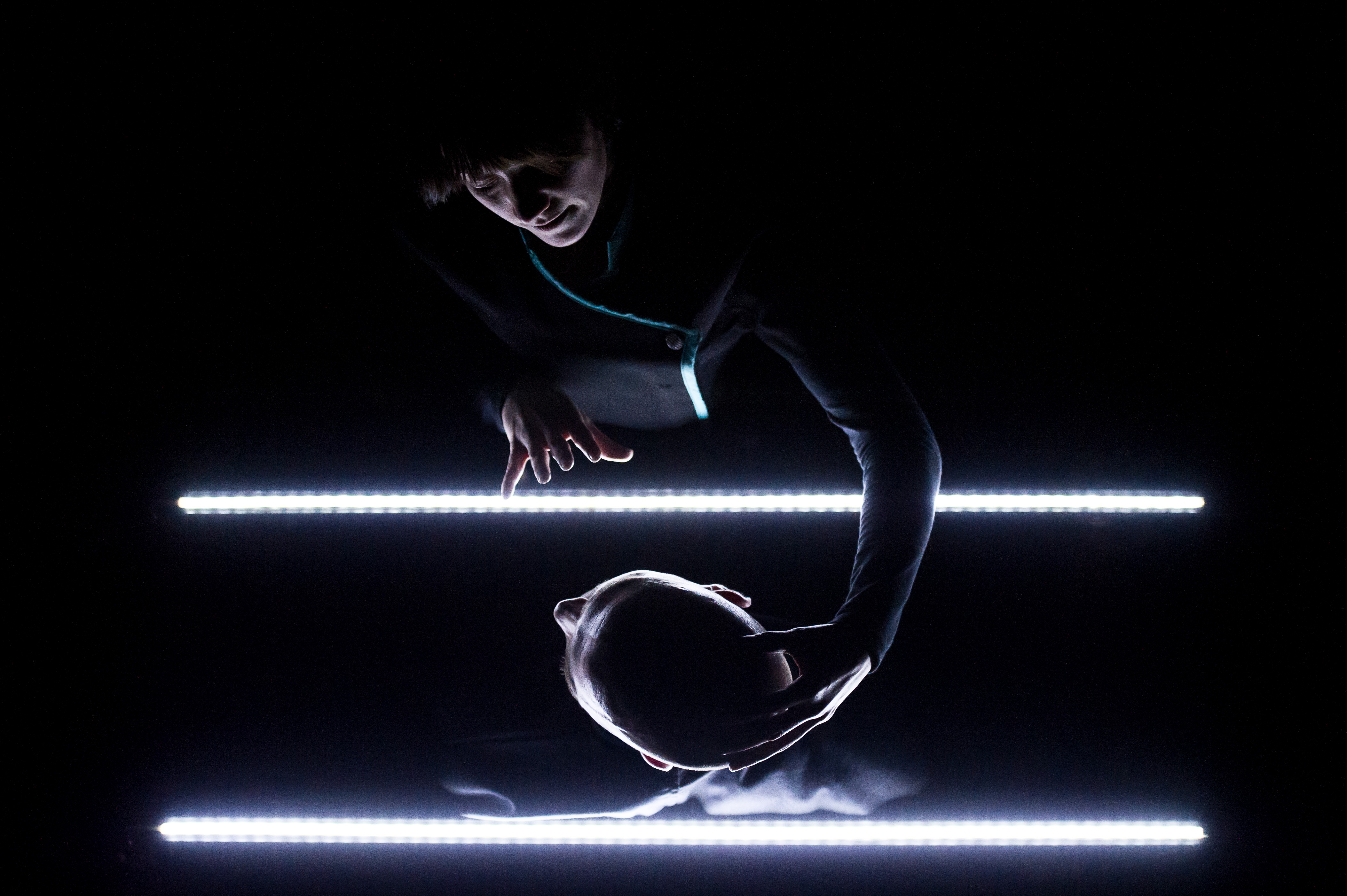
Light is proof, as if any were needed by now, that Theatre Ad Infinitum are staggeringly good. Just staggeringly, staggeringly good. They are a theatre company that completely and utterly Theatre-Ad-Infinitum-Light-c-Alex-Brenner-photoconfound expectations, and produce plays make you leave the auditorium wanting to tell everyone you know that the absolutely most important thing they could be doing is going to see one of their productions.

Hence the gushing opening paragraph.

Slowly but surely people are waking up to their talents. Light, performed as part of the London International Mime Festival, sold out months ago. They clearly have a devoted fan base and have won a number of fringe awards but it feels like they are currently on the cusp, like 1927 with Golem, of producing a show that takes them out of the Barbican’s rather tiny Pit theatre and onto the main stages.

Theatre Ad Infinitum are not a company that like to sit still. They came to my attention at the London International Mime Festival in 2012 with Translunar Paradise – a work of quiet, tragic brilliance. It demonstrated in its simple, understated way the art of puppetry and despite the alienating effects of the mime it felt more human than any other play produced that year.

Theatre-Ad-Infinitum-Light-c-Alex-Brenner-please-credit-_DSC4592-dimmer-dressesThey followed it up with something completely different; the hyper-verbal, bundle of energy that was Ballad of the Burning Star. If not as technically refined as Translunar Paradise, it was a fabulously entertaining take on the most contentious issue in world politics. It was a forceful piece of theatre that refused to allow itself to be pigeonholed and gave very few easy answers.

And now they are back with Light. This time we are in genre sci-fi territory with a dystopian piece of futurism, imagining what might be as twin developments in technology and neuroscience allow for an ever greater entwining of individual and social consciousness.

<<Read full review>>

Annie (played by Esme Appleton), Robert (Shamira Turner), Golem and Granny (Rose Robinson) Photo Will Sanders

Challenging uniformity in life and on stage.

Golem1927 @ Young Vic Theatre, until 31 January (Tickets)

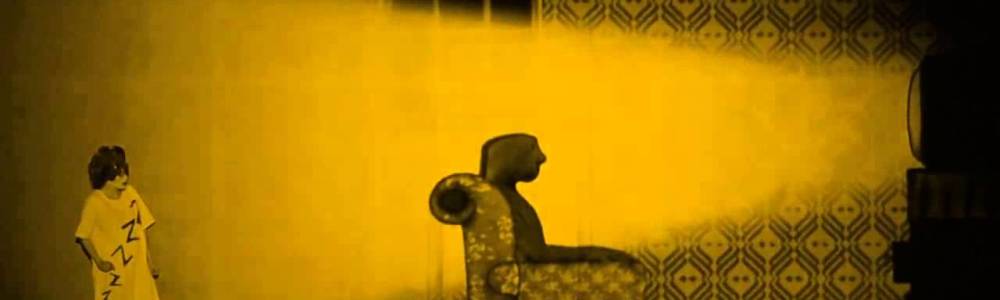
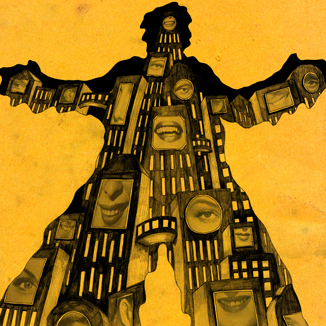
At its heart 1927’s Golem is a modern reworking of Gustav Meyrink’s 1914 novel, Der Golem, which itself was a retelling of the Prague Golem stories. The legend is a classic piece of Jewish folklore and the oldest narratives date to the Talmud and the very beginnings of Judaism. It is a story that has always held an instinctive appeal. In its most basic form it is about creating life out of golem_new_326x326inanimate matter something that can be identified in most of mankind’s origin myths but as society advanced something about the golem has meant the stories have retained their relevance. Golem’s stories became intertwined with its purpose as he unstoppable, implacable slave of its instruction. It can be seen in the mechanisation of the modern army and again in the prism of the Industrial Revolution that saw the skilled worker become expendable in the face of technological improvements.

The golem, in its nether-changing silence, seems always to reflect the images that a new generation projects upon it. 1927 are just the latest company to breathe life into the clay man and they do so with an extraordinary visual flair and breath-taking inventiveness. Whilst their central conceit, that modern society is a troublingly homogenous mass of cultural identity and branding, is not particularly original and also rather debatable, what cannot be denied is the originality Esme.Appleton.in_.1927.s.Golem_.at_.the_.Young_.Vic_.9.Dec_.2014..17.Jan_.2015..Photo_.by_.Bernhard.M.ller_.2of the company themselves and that they have, with Golem enjoying a sold-out residency at the Young Vic, announced their arrival as a major player on the UK theatre scene.

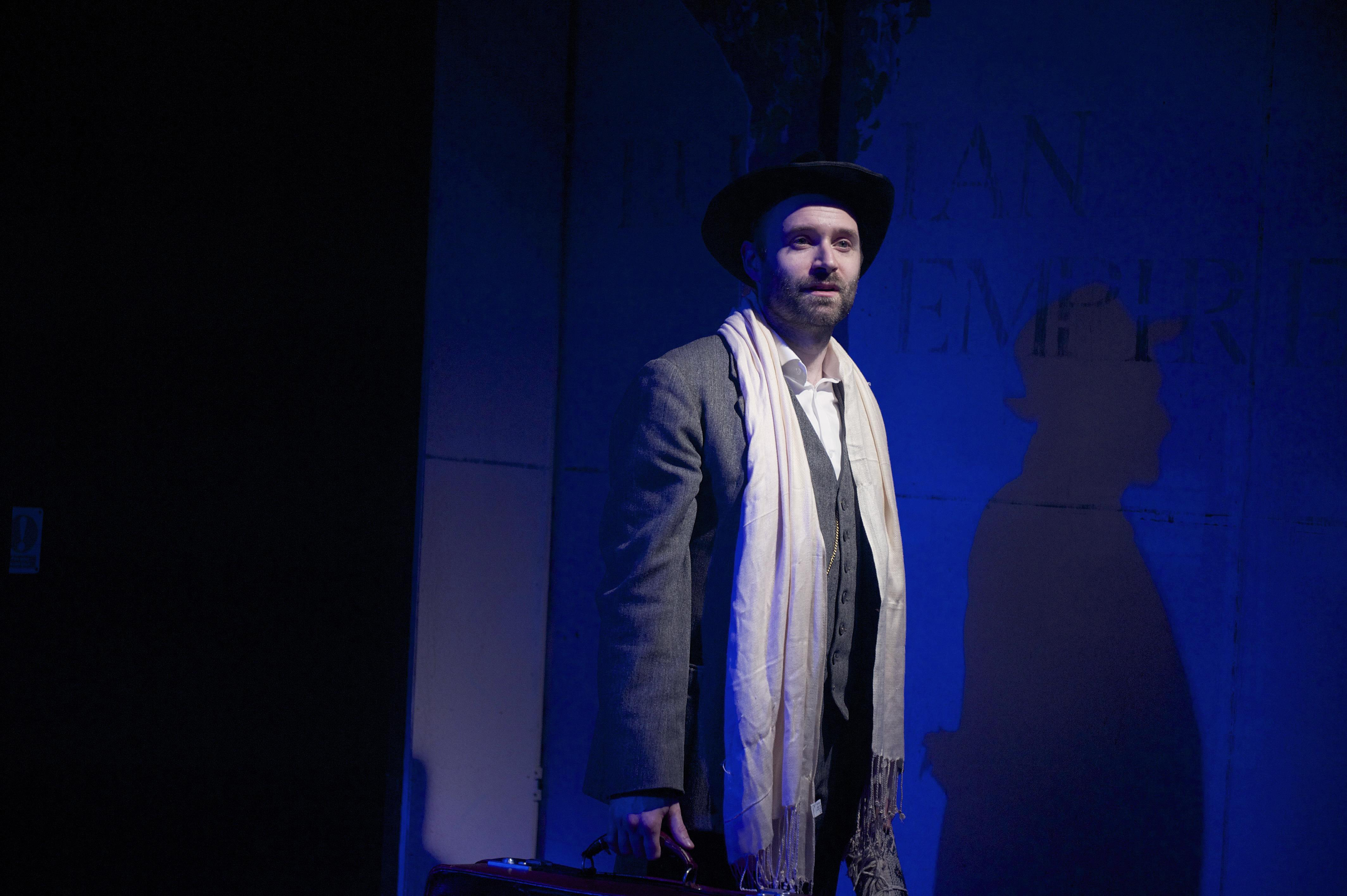
So what makes 1927 so impressive? Simply put they are leading the vanguard of companies that are using visual effects to question the limitations of the traditional theatrical space. VFX have been a game changer in challenging assumptions about what stories can and can’t be told on stage, and with Golem we are seeing theory turned into practice. Whilst it is not the perfect production – the quality of design, costume and musicianship does outweigh the quality of acting and writing – as a statement of intent it certainly leaves its mark.

VFX are used throughout the West End to provide the ‘value added’ – that extra little bit that makes you feel you haven’t wasted your money and time on a show. However if it is seen in these terms then it is little surprise that VFX rarely do more than add pizazz, it is far rarer to see VFX used to deepen the narrative or to have been carefully considered for its use in producing more complex sets.

The first time I was really aware of the power of VFX was in 2005 with the Menier Chocolate Factory’s wonderful production of Sondheim’s Sunday in the Park with George. It used technology to move the audience between the Art Institute of Chicago and the banks of the Seine. Watching Daniel Evan’s Seurat ‘paint’ the pointillist masterpiece onto a virtual backdrop was to see for the first time the possibilities that VFX brings to the theatre, and to see a narrative that was immeasurably strengthened by being integrated with the technology.

<<Continue to full review>>


Watch the trailer:

The Grand Tour? Oh you mean ‘Le Grand Tour’, oui?

The Grand Tour – Finborough Theatre, until 21 February (tickets)

In Hello Dolly Jerry Herman can lay claim to having created one of the most successful Broadway musicals of all time. It ran for over 2800 performance and won a staggering 10 Tony Awards. Two decades later he enjoyed another huge hit in La Cage aux Folles, which has won a major Tony in each of its Broadway runs.The Grand Tour 3 Alastair Brookshaw (Jacobowsky) photo Annabel Vere

In the decade between these two huge hits Herman wrote three less successful musicals (which include the cult classic Mack and Mabel) of which one was ‘The Grand Tour’. It has never having previously been performed in Europe and there was, despite the Finborough’s mighty reputation, a question mark in my mind over the reason why this might be so.

Well it certainly isn’t a dud. If this is not the strongest musical to hit the London stage then one only need cast a jaded eye over the offerings from ‘Theatreland’ to see that it is a long, long way from being the weakest.

However for all the spirited energy of the cast and another piece of spritely direction from Thom Southerland – who currently appears to be operating a cartel in the relatively niche field of small-scale musical direction – there are enough problems with Michael Stewart’s and Mark Bramble’s Book to suggest the work is destined to remain a curio piece for the dedicated rather than be reassessed as a missed masterpiece.

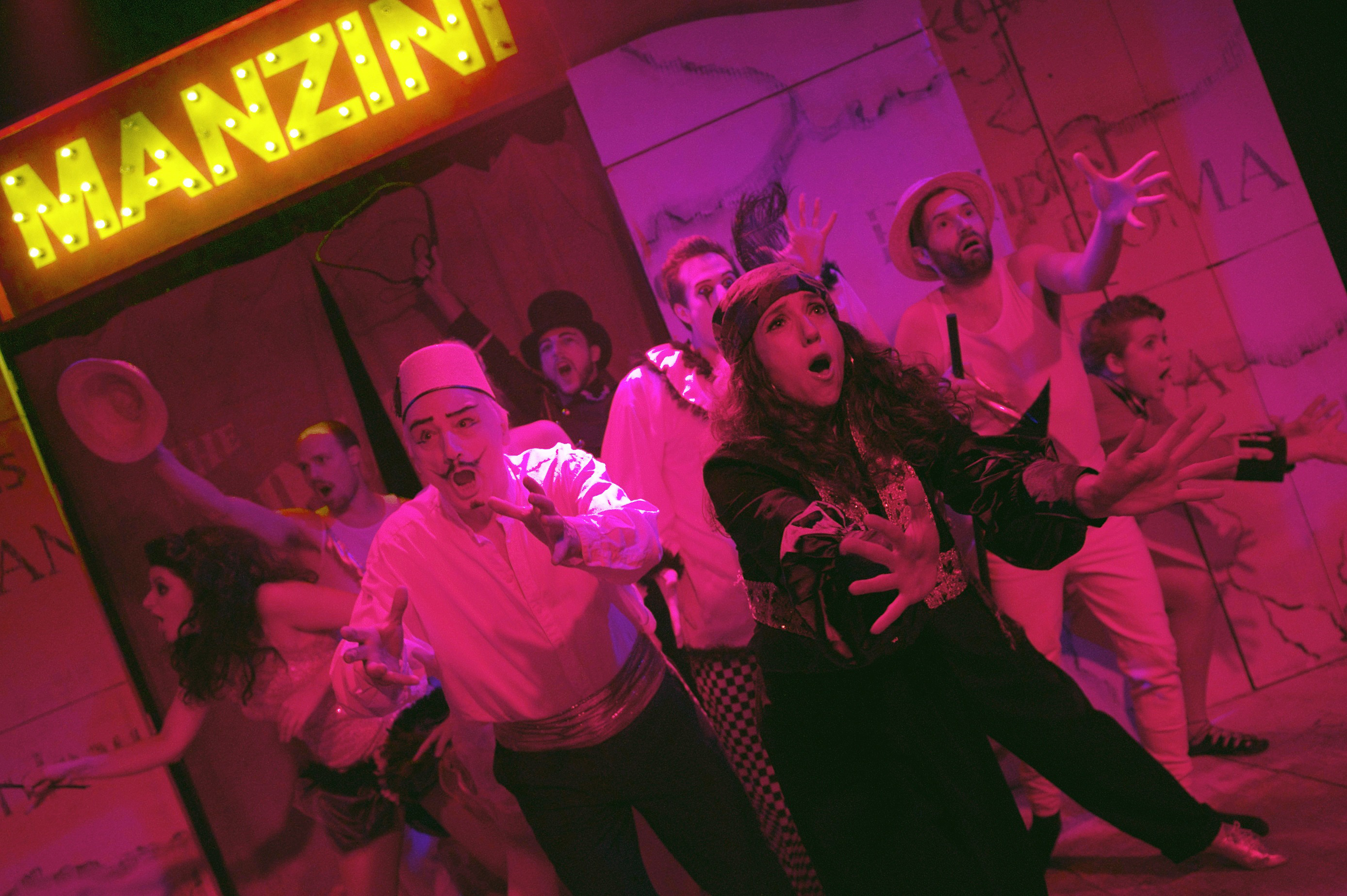
The Grand Tour 5 Natasha Karp, Nic Kyle, Vincent Pirillo, Michael Cotton, Samuel J Weir, Laurel Dooling Dougall, Alastair Brookshaw and Lizzie Wofford photo Annabel VereThe main problem is that, despite being based on a pre-existing play, the production feels more akin to fragmentary scenes forced into a thematic connection by the overarching story of Jacobowsky and the Colonel. As a result, after a strong opening, we have ‘a scene on a train’, ‘a scene at the circus’ and then, most jarringly, ‘a scene at Jewish wedding’. All of these are performed extremely well and are very enjoyable to watch, but it is hard to be convinced as to why it is all occurring.

The relationship between the three leads is rather too closely reminiscent to the dynamics between Rick, Ilsa and Laszlo in Casablanca. However the creators are too fond of Jacoboswky to allow for the depiction of humanity’s shades of grey that makes Casablanca such a masterpiece. In the end Jacoboswky is both the humane, philosophical Jewish refugee and the hero who will lay down his life for his friends.

In opposition to this Colonel Stjerbinsky really is a clunking idiot – at least Victor Laszlo got the wonderful moment of being able to singLa Marseillaise to remind the audience why Ilsa would have fallen for him in the first place. Without a similar moment we are left to wonder why on earth Marianne prefers him to our hero, Jacobokwsky, and how Stjerbinsky got even half as far as he did without someone selling him out to the Nazis.

Yet despite all of this, it still works remarkably well. There are a number of songs that show us that Herman was still in the middle of his three decade purple patch. I’ll be here tomorrow would stand
up well in any musical, and underneath the lightness of touch is a reminder of the quiet pain and necessary stoicism of anyone born into a Jewish family pretty much anywhere in central Europe in the first half of the 20th century.

<<Continue to full review>>