Britten: Mann and Boy

Death in Venice – English National Opera, Colliseum

English National Opera’s revival of Deborah Warner’s exquisite production of Benjamin Death in Venice - English National OperaBritten’s final opera is a masterclass in creating something accessible out of source material that can only be described as forbidding. A number of references have made reference to the austerity of Britten’s score but Edward Gardner’s conducting, allied to Warne’s vision, gives the piece a lightness of touch that it is impossible to avoid being drawn in to Britten’s deft recasting of Thomas Mann’s novella.
Whilst Death in Venice would be seen as something for Britten aficionado’s only, the sheer excellence of the production again casts into question the reasoning behind booking the revival for so few performances. If the ENO truly wants to widen its audience base, and encourage people to see operas outside of their comfort zone, then they have to allow people the chance to roll-up on the basis of reviews. However once again when the reviews went to print there were less than five performances remaining; it seems unlikely a hit will rarely cross over into the mainstream with this kind of scheduling.

It was ever thus, and carping should not distract from the magnificence of the production. Aschenbach is a demanding lead; on-stage for almost the entire running time and with the lion share of the libretto there is little scope for variation in tone. However, John Graham-Hall holds the stage with an acutely painful performance of an author dragged from an ascetic dedication to his craft as he becomes increasingly besotted with Tadzio, the son of a Polish family who shares his hotel.

Sam Zaldivar’s Tadzio gives a silent performance of extreme sensual grace and beauty. Kim Brandstrup’s choreography allows Zaldivar to imbue Tadzio with a lithe naturalness that flows through the character and counterbalances Aschenbach’s increasingly halting vocal. Zaldivar has a fluidity of motion that conveys a come hither playfulness that never fully escapes a sense of the mocking. For Graham-Hall’s Aschenbach, this noxious combination, reflected in the increasingly unhealthy Venetian air, comes to a head with the explosive ‘I love you’ that brings the interval on a wonderfully dramatic high.
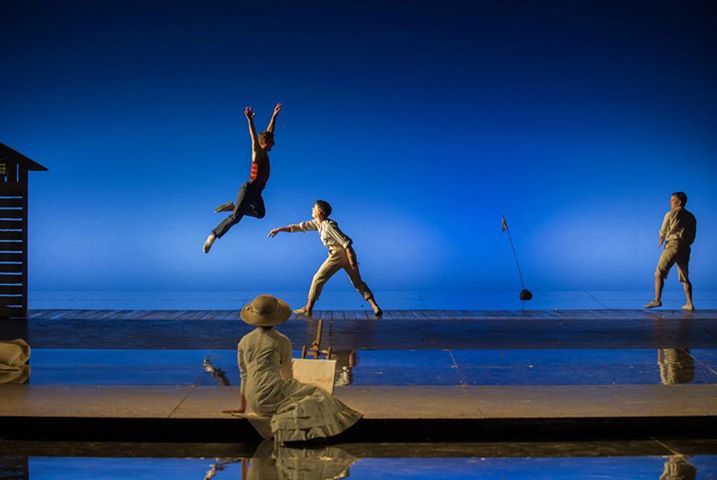
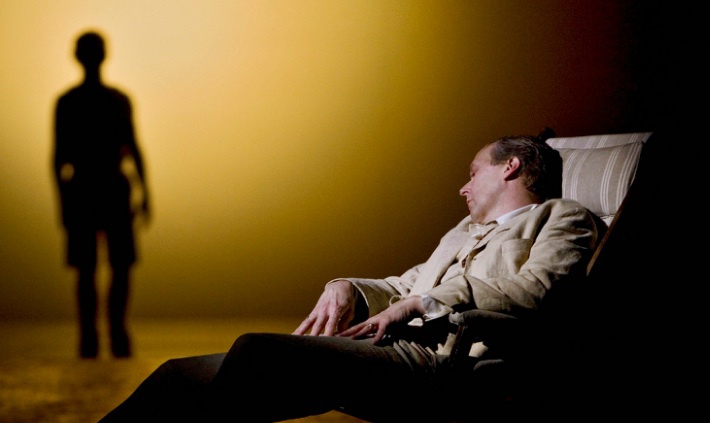
The Pan-like Tadzio in Death in VeniceFor inspiration Warner appears to have sprinkled the fairy dust of Peter Pan over Tadzio. This is most evident in the final image of the play – with Aschenbach sprawled on the stage, Tadzio is seen in silhouette framed against a huge moon. It is a most fertile avenue for Warner to explore, as Mann’s novella explores the relationship of an author’s increasing obsession, chaste or otherwise, with a young boy. Written in 1912 and based on a real life child, it is hard not to think of J.M Barrie’s creation of Peter and Wendy in 1904, and his own questionable attachment to the Llewellyn Davies children.

Britten himself cannot have been unaware by the allusion when writing the opera. It is his final piece and one that wrestles with questions that, to his biographers, Britten had been troubled with for much of his life. It is a story that does not attempt to paint its lead as hero or anti-hero, but rather as a flawed human that is worthy of, at best, pity.

Death in Venice is a story of how obsession leads to tragedy, but even in this it is an indirect tragedy. Aschenbach dies not because of Tadzio – it is not a recasting of the Narcissus and Echo myth– but because his obsession blinds him to the wider danger of the foul air. Peter Pan is an appropriate representation as he is emblematic of an intoxicating sense of the eternal. However this eternality can never be shared and those around him – no matter how they chase it – are destined to grow old and eventually die. .

Peter Pan naturally echoes Pan, the Greek god. It is unclear whether Barrie overtly acknowledged the reference point but Pan had been revived by the Romantics by the time that Peter Pan was created. They share a mischievous spirit born out of a desire to play that can transcend into a darker malevolence; it is something that we see in Pan’s actions of those that refuse his love, and it is echoed in Peter’s attempt to make Wendy believe that her family have forgotten her.
<<Continue to full review>>

Mission: Accomplished

Mission Drift – The Shed, National Theatre, until 28 June (some tickets available)

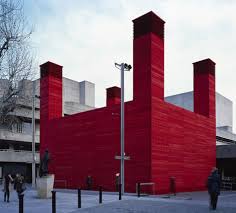
You can’t fail to notice the The Shed, the National Theatre’s striking addition to London’s Southbank. It looks a little like a student’s upturned IKEA table. In bright red. Walking into this new temporary venue, which on the inside is somewhat reminiscent of The Young Vic, is quite an adventure in itself; the smell of new wood, a wonderfully up close and personal stage area, visible stage management and technical. I like it already.

The Shed or Battersea Power Station after an elaborate student prankThe idea behind The Shed is for The National Theatre to celebrate original, ambitious and unexpected new theatre in an excitingly small venue. And on this level, boy does Mission Drift deliver.

Created by New York based The TEAM, Mission Drift is a stunning, well-crafted and inventive musical, yes it’s a musical, which takes us on a whirlwind journey through the American dream. From Las Vegas to New Amsterdam, covering 400 years of political and economic history (atomic bombs, economic downturns, slavery, prospecting, gambling; it’s all here), we follow two couples on their pioneering adventures.

In the world we recognise is Joan; a cocktail waitress laid off from her job and alienated from Las Vegas – the city she once lived for. Joan’s life is changed by the arrival of a mysterious and beguiling

Mission Drift's take on Americana

stranger who offers her a way out of everything she knows. And loves. This is equated to the mythical journey undertaken by two 14 year olds, Catalina and Joris, setting sail from Europe with the Dutch West India Company to start a new dream, in a land where space, as well as life, is cheap.

All of this is overseen by Miss Atomic (Heather Christian), an all at once alluring and repulsive figure who epitomises the best and worst of American capitalism. Her narration is funny, sleazy and engaging – a clever way of holding this bubbling pot of ideas together. She has a voice that grabs you by the balls and dominates the space. I wish her character could have been more intertwined with the two couples but it was a stunning and strong performance that captured the fragility of the American Dream perfectly.

<<Continue to full review>>

Radcliffe crippled by burden of expectation

The Cripple of Inishmaan – Noel Coward Theatre, until 31 August (some tickets available)

It is the website that gives it away. Alight on Michael Grandage Company and it is all too clear that this play is less about the ‘Company’ and very much about a certain Daniel Radcliffe. This is not in itself a criticism of Michael Grandage or Daniel Radcliffe. One must swallow the bitter pill of realism when it comes to the financial dynamics of the West End, which is, if you want to stage a play like The Cripple of Inishmaan for 12 weeks in one of the larger theatres of the West End then you must have an ace up your sleeve to get the audiences in.

Daniel Radcliffe is quite an ace, and paired with Martin McDonagh – notably of In Brugges and, rather less notably, Seven Psychopaths fame – the evening is set for quite a potent mix. The problem is that at times it feels that Michael Grandage has been so keen to find an edgy, modern play to entice a young actor looking to mould his career that he has failed to notice that he has chosen one of McDonagh’s weakest plays.

In Brugges had some incredibly dark scenes but was leavened by its acute sense of place and the fish-out-of-water verbal sparring of its two leads. The Lieutenant of Inishmore looks for black comedy and manages to eventually locate it in something the colour of pitch; a breathtakingly offensive yet hilarious play about the troubles of an Irish torturer considered too mad for the IRA.

McDonagh’s first play – The Beauty Queen of Leeane – won four Tony Awards and has a plot that marvellously manages to deceive its audience at every turn. It is rightly revered as a near-classic and a stunning achievement from the then-25 year old. Unfortunately the Young Vic revived it in a celebrated production less than two years ago and there are certainly no Radcliffe-shaped parts in it.

Daniel Radcliffe - STAR (not pictured: other actors)

The Cripple of Inishmaan is not a bad play and it follows McDonagh’s other plays in exploring an Ireland that seems to exist out of time. Eventually it can be placed temporally in the mid-1930’s but realistically it could be anytime from 1780 to 1980. On these rural islands the sense is that life continues much as it has always done; roles are fixed and nicknames determine character rather than other way. The arrival of the film crew on a nearby island is the jolt that throws the island off its axis – it acts as the classic outsider who engenders change on the local and drives the actions of the play.

Daniel Radcliffe plays Cripplebilly – a young man cursed with a limp and a name that he cannot shake. He sees the arrival of a film crew as his chance off the island and Hollywood as a place where his disability can be, if not accepted, at least overlooked.

It is another undeniably smart decision in the post-Potter career for Radcliffe. He deserves a great deal of credit for tackling Equus – a difficult play and a difficult part – and so far he has broadly eschewed the Hollywood-fodder that would seem so tempting. The lead in a reasonably intelligent The Women In Black and acting alongside Jon Hamm in ‘A Young Doctor’s Notebook’ on Sky Arts are the only real mainstream exposure he has received in a post-Potter universe. If the adaptation of Bulgakov’s short stories was a bit of a mixed bag it still represents a remarkably leftfield step for someone with the choice of pretty much any script.

<<Continue to full review>>

Feasting on justifed anger

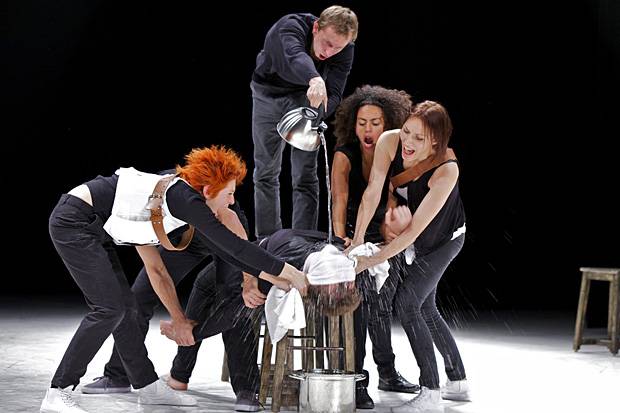
Trash Cuisine –Belarus Free Theatre @ Young Vic, booking until 15 June

Sitting on the Victoria Line as the tube wound its way towards the end of the line, two women, well-dressed and weighed down with bags, were busy working out their frustrations over the complexity of French employment law when it came to hiring locals to work in their second home. One of the pair wondered whether their 20-year old daughter was old enough to live alone in London.

Trash CusineAs I sat and listened, I found it hard not to imagine Liam Holden. Liam Holden? I hadn’t heard of Liam Holden until about two hours earlier. On the 21 June 2002 Liam Holden conviction for murdering a British soldier in Belfast was quashed. In 1989 he had been released from prison having spent 17 years in jail. During his interrogation at Black Mountain Primary School he was waterboarded 6 times, he was stretched up against a wall and beaten for 2 minutes. He had a gun put to his head and told if he didn’t confess he would be shot and have it blamed on the loyalists. By 2002 he had spent almost 70% of his life accused of the murder of Frank Bell, the British paratrooper. Liam Holden was 18 when he was convicted of murder.

I thought to myself that twenty is probably old enough to live alone in London.

Belarus Free Theatre should need no introduction. They are a banned theatre company in Europe’s last dictatorship. Having said that they need no introduction it is likely to be depressing to find out the percentage of people who do not know that Europe still has a functional dictatorship. That a country in Europe still has the death penalty. That theatre companies can still be banned.

Their theatre is raw, angry and political but it avoids polemics and comes alive in its contradictory nature. Trash Cuisine does not have a narrative but it tells many stories. Stories that are intensely local but have a global reach. Stories that are not new but that you have not heard before. Stories that tell of human action but not of humanity.

This could easily sink into the theatre of the righteous. Sub-par Brecht that preaches to the converted and ends with a self-satisfied slap on the back. Belarus Free Theatre has too much at stake and too much talent to allow this to happen. With no state funding they are, in the most literal sense, singing for their supper. With this hunger comes a razor sharp sense of purpose.

They spin steel into their silken storytelling. Scenes unwind into absurdity and farcical slapstick but their messages slice through the levity. Want to hear impressions of different types of death penalty? Well the impression of an electric chair – two minutes of screaming with a ten second break – is an impressive counterpunch.

As the stories unspool one after another like tapes in a broken recorder, each finds a way of piecing together its own meaning. Throughout they mix together a playful sense of the unexpected with a reality that is brutally grounded by the horrors of the language.

Belarus Free TheatreThe story of Nicky Ingram told through the inhabitants of an American nightclub is a beautiful juxtaposition of the everyday lives of American liberals with the final hours of Nicky Ingram, an inmate on death row. Nicky Ingram was one of Clive Stafford-Smith’s very few failures. 300 death row case and a 97% success rate. Nicky Ingram is one of the unlucky ones. For not getting off, and for being born in one of the very few western democracies that routinely kills adults under the auspices of its legal system.

Belarus Free Theatre is never going to win the Audience Choice award. Trash Cuisine is without doubt a harrowing experience but could it be anything less? For the play to succeed it should fill the audience with a sense of outrage that can’t be quelled in the bar after the show. Not every element is entirely successful. Meaning can’t be gleaned from every tableau but as the performances unfold, the company’s idiosyncratic style overwhelms all and beneath the discordant surface an underlying structure reveals itself.

And that structure is built of anger. Anger at the deaths of Vladislav Kovalyov and Dmitry Konovalov, both 26, both executed in Belarus last year, both protesting their innocence. Anger that the death penalty remains in use in 94 countries across the world. Anger that the state-sanctioned violence can lead to a situation like Nyarubuye in Rwanda where 28,000 people were killed by their fellow citizens. Nyarubuye, where it is said only six people survived. That is something everyone can get angry about, and rightly so.

Merrily we roll out of the theatre

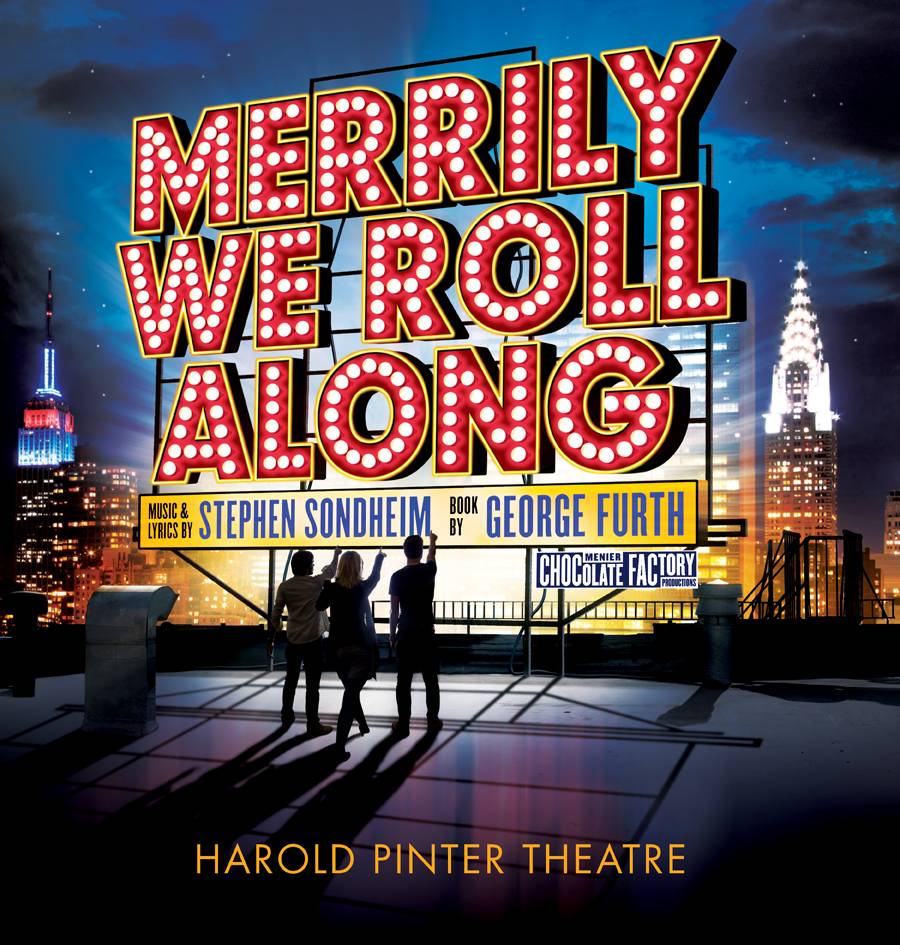
Merrily We Roll Along – Harold Pinter Theatrebooking until 27 July 2013

Among otherwise level-headed people musical theatre remains a peculiarly divisive form of popular culture. There are many of who would happily sit through two and a half hours of magic-soaked love stories in the forests Merrily We Roll Along - Harold Pinter Theatreoutside of Thebes, or will extol the merits of a Turner-prize winner whose contribution to the artistic world is to create soundscapes under Glaswegian bridges.

However present them with a Pulitzer Prize winner who has written musicals as diverse as an examination of the life of pointillist painter, George Seurat; or the gore-spattered grand guignol of the demon barber of Fleet Street; or even an unpicking of the psychological darkness at the heart of the Grimm Brothers’ fairytales, and they will raise their eyebrows and silently mouth the words ‘jazz hands’.

Watching productions like Merrily We Roll Along act as a constant reminder why such narrow-minded viewpoints need to be challenged. Certainly the landscape of musical theatre has changed markedly since Stephen Sondheim made his career by writing the lyrics for Bernstein’s West Side Story. The rise of Andrew Lloyd-Webber that introduced pop-sensibilities and extravagant staging to Broadway couldn’t be further away from the nuanced lyrics and subtle melodies that encapsulate the magic of Sondheim.

The divide only got greater in the last two decades, as the rise of the mega-musical from Mamma Mia! to We Will Rock You saw a new way for theatre producers to cash-in; tapping into the recognition factor of proper bands set against a licence to perform them in a sub-par way with a witless plot under the banner of ‘musical theatre’ – surely as lowest common denominator entertainment goes these productions are right up there with ‘X-Factor’ and ‘Britain’s Got Talent’.

Merrily We Roll Along Trio

The Menier Chocolate Factory must be applauded for setting itself against the tide and producing a string of Sondheim revivals that remind us that there are people out there who see no distinction in artistic merit between a ‘play’ and a ‘musical’. In bringing us A Little Night Music, Sunday in the Park with George and now Merrily We Roll Along – transferred to the West End – the Menier has proved time and again that there is a space for intelligent, difficult musicals that can be both commercial and critical hits.

Merrily We Roll Along, a notorious flop when it opened, has taken two decades to gain similar levels of acclaim to what are seen as Sondheim’s masterpieces. However the intervening years have only served to increase its relevance to the audience. Charlie’s bitterness at Franklyn’s desire to follow the money and to leave ‘proper’ writing behind him only seems more familiar to a theatre-scene where, despite writing the lyrics for the commercial smash-hit of Matilda, Tim Minchin finds it difficult to raise any funding for a musical that isn’t based on an existing concept.

<<Continue to full review>>

Charming production that wears its art on its sleeve

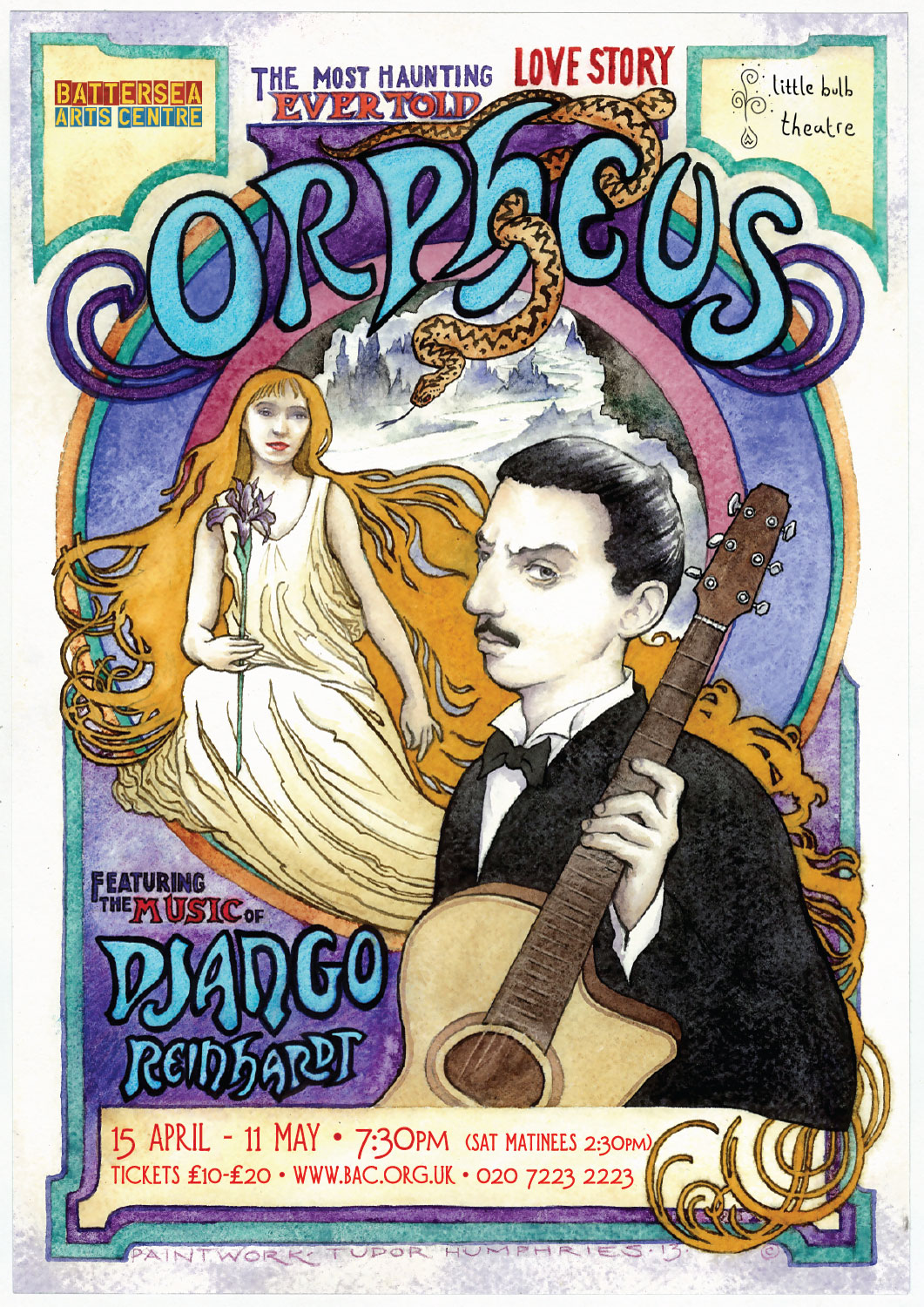
Flyer for OrpheusOrpheus – Little Bulb Theatre @ Battersea Arts Centre, until 11 May

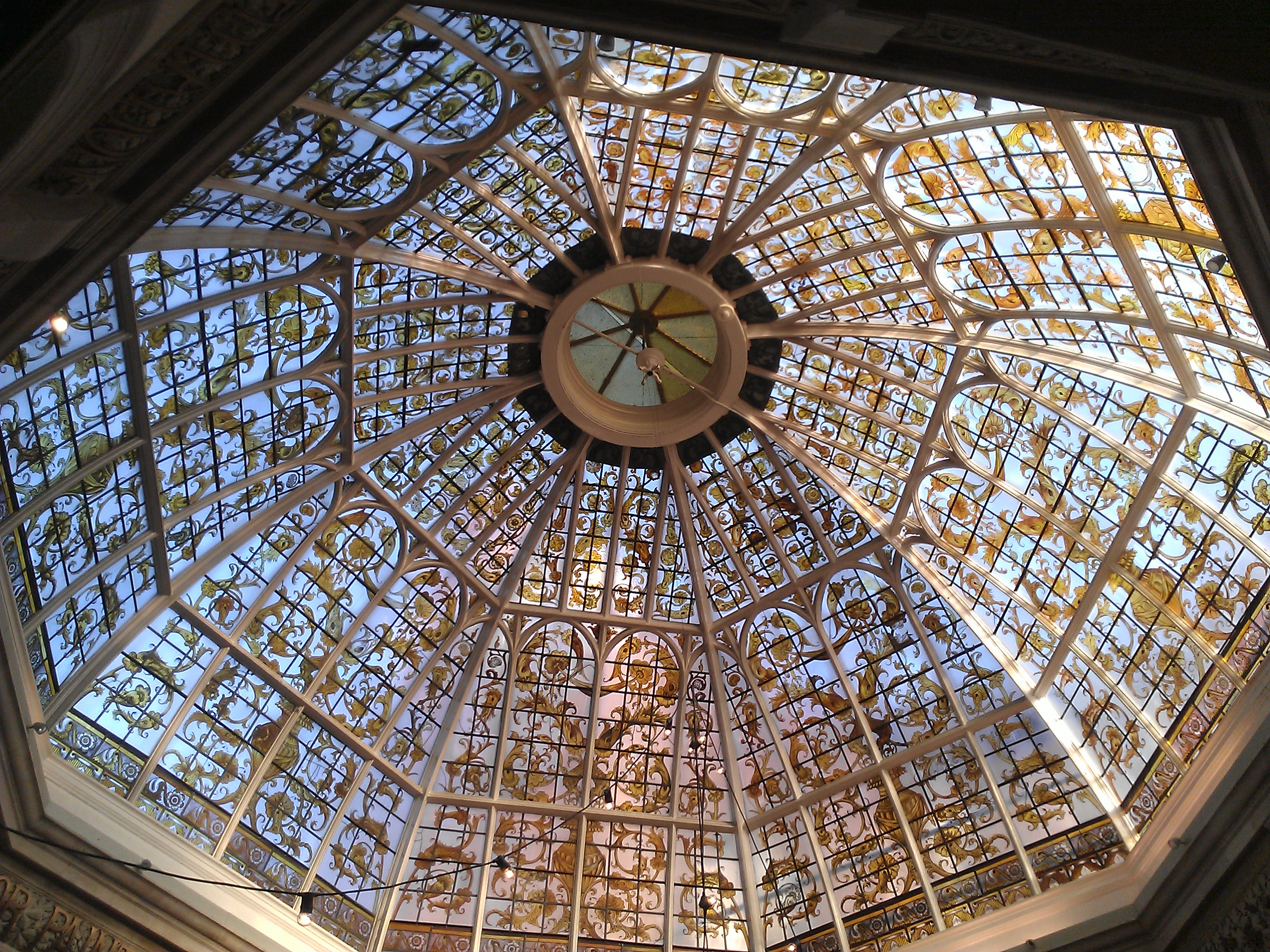
It is always a joy to spend an evening at the Battersea Arts Centre as, no matter the quality of the production, it provides an opportunity to spend an evening inside one of London’s great Victorian buildings. Many companies have looked to make the space an integral part of the performance; Punchdrunk exploded into the public consciousness with the Masque of the Red Death, a production that exposed the development of their unique style to a wider audience. They turned the BAC on its head – celebrating its beautiful interiors whilst building pocket worlds within it and ending with a strange blend of gothic classicism.

The BAC has a strong history of supporting new companies and providing spaces for those whose work doesn’t fit into more obvious spaces. The roll-call of success stories show a keen eye for understanding what works and what has audience appeal; providing a London-base for Kneehigh and partnering with Ridiculusmus, Complicite and Told by an Idiot demonstrates an important ability to spot the difference between the threadbare and the deliberately ramshackle.

WP_000121It remains to be seen where the emerging company, Little Bulb Theatre, slots into this picture but if awards were given for fitting productions to locations then their charming and quirky take on the tale of Orpheus and Eurydice would be walking away with a basketful of silverware. The BAC proves a lovely backdrop to an evening that strives valiantly to give a flavour of the 1930’s Parisian scene but knows enough of its flaws to have its tongue placed firmly in cheek throughout.

The problem, encountered in dreamthinkspeak’s latest production, with site-specific work is often they try to shoehorn a concept into a space that does not fit, or that the budget cannot do justice to. What remains is often a po-faced production that hopes you won’t notice that more time was spent dressing the set then developing characters.

Little Bulb’s Orpheus has similarly paper-thin characters – Orpheus is apparently Django Reinhardt but, other than explaining his ability with the guitar, that fact has no bearing on the play and is not developed with any real sense of purpose – but it spends a great deal of energy winning over its audience with an exuberance that is in keeping with the vaudeville staging.

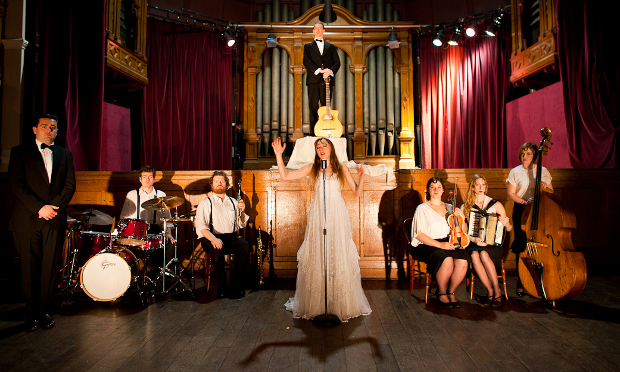
The cast perform and the BAC is transformedThe silent movie backdrop is another way of avoiding explicit character development in favour of style without undermining the production. It allows for big, expressive gestures and emotion demonstrated through action rather than internalised – another reminder to the world of the music hall. This creates a deliberate undercurrent of comedy that runs through the production; to the modern audience this style of acting seems so alien – a strange hybrid of Victorian stage-acting, mime and early 20th century cinema – that it is difficult not to warm to despite it undermining the tragedy within the Eurydice story.

Little Bulb are well supported in their endeavours by beguiling central performances; Eugenie Pastor as Eurydice and Dominic Conway as Orpheus look as if they have just stepped of the set of the latest Dietrich film. Pastor’s doe-eyes deserve a special mention of their own, as they retain a now almost-lost Clara Bow-like ability to portray a moving tableaux of longing to tragedy to absurdity in one fluid movement, whilst Conway’s profile is every-inch the slightly louche heartthrob – never the matinee idol but the one that parents would warn their daughters about.

<<Continue to full review>>