Beatboxing meets Brecht: Political theatre for 2015

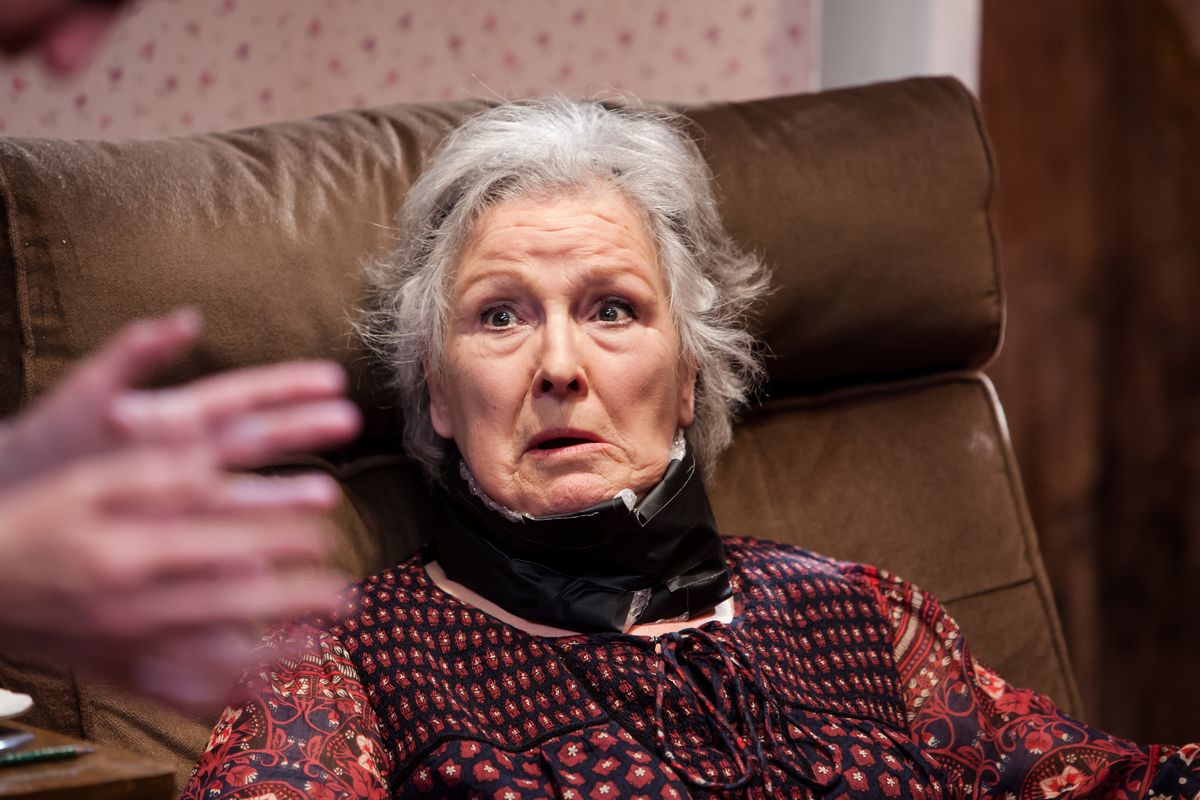
No Milk For Foxes – Camden’s People Theatre, until 09 May 2015 (tickets)wpid-wp-1430563981332.jpg
In case you missed it, there is a little thing called the ‘general election’ happening in a couple of weeks. Across England the electorate appears gripped by apathy. Not for us the forceful, passionate women leading vibrant nationalist campaigns capable of instilling a sense of self-determinative belief in voters. For those sandwiched between Wales and Scotland the choice is between three different shades of beige – one shiny as a Christmas ham, one an amalgamation of several sock-puppets and one that leaves no discernible impression at all – or, how could we forget, everyone’s favourite part-man, part-pub sound bite generator.
wpid-wp-1430563988725.jpgVoter turn-out has been declining since the 1950 election when almost 84% of people cast their ballot and by 2010 had sunk to 65% of the electorate (amazingly this is still higher than the nadir in 2001 which saw less than six out of ten eligible voters bothering to have an opinion on who they wanted to control their lives). In the intervening years mass political movements have come and gone but the institutions of Westminster have remained as hierarchal as they have ever been, and – based on a simplistic metric of ‘private education and Oxbridge’ – may have gone backwards to Victorian levels of patrician governance, with few MPs from across the political spectrum able to claim a background that even Tony Blair’s favoured ‘Mondeo Man’ could identify with.

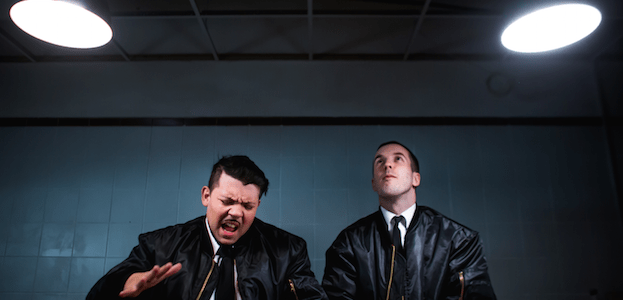
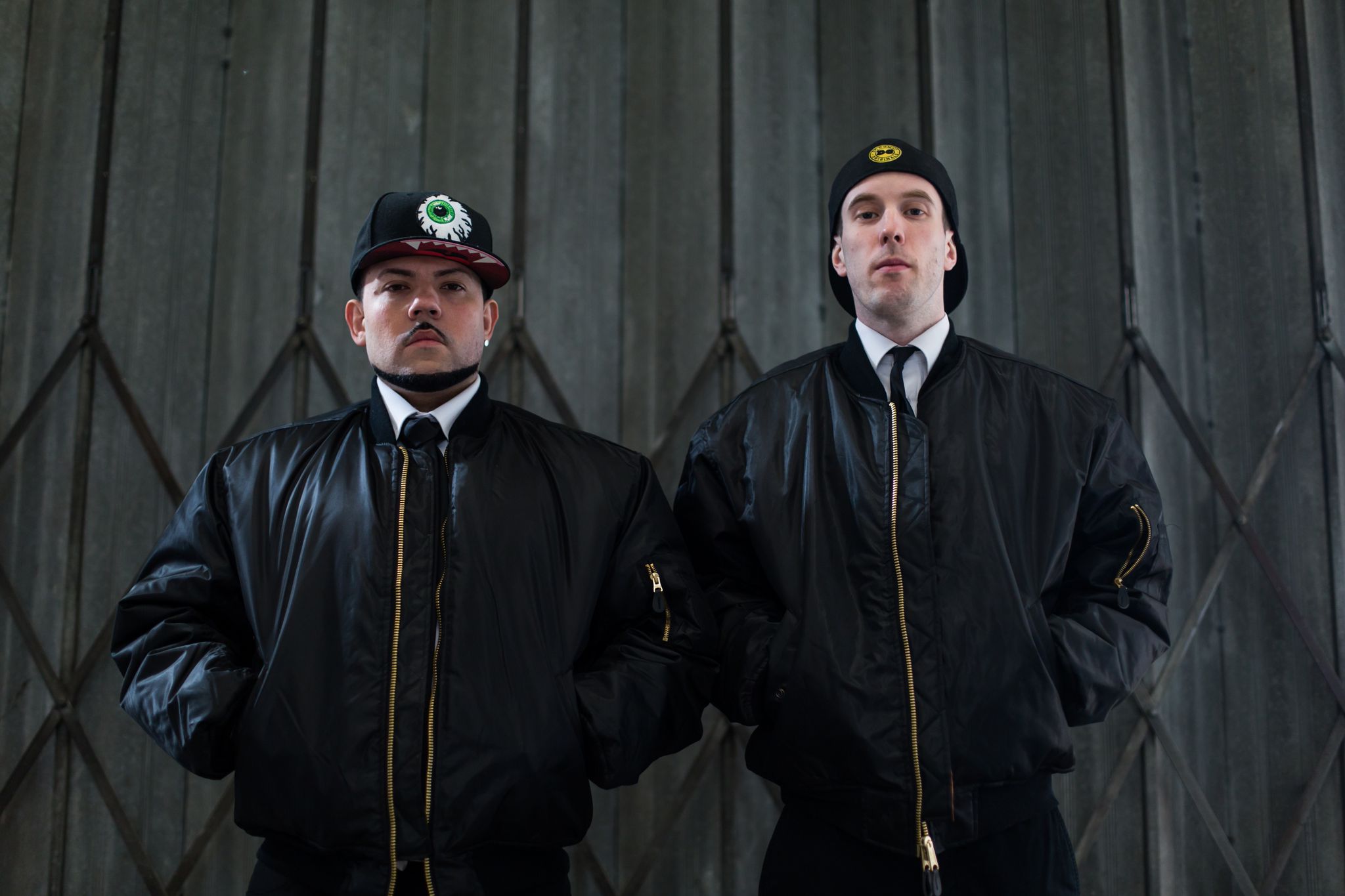
The question of how to get people back to the ballot box may not be solved by the London fringe theatre scene but at least they are trying. At present you can barely make it into any black-box space without being assailed by the sound of discontent with the political system. Camden’s People Theatre is no different and No Milk For Foxes finds itself at the centre of three weeks of drama drawn together under the appropriately-titled banner of The State We’re In.

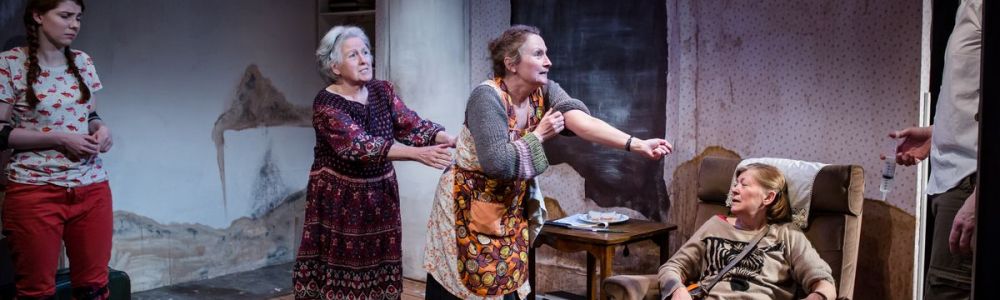
The most refreshing thing about No Milk For Foxes is that it does not lecture its audience. There is little overt politicisation in the narrative and no attempt to indoctrinate those watching with a finale that involves a rousing rendition of The Internationale. Instead it seeks to engage with political issues by shining light onto the mundane everyday pressures of living in a 21st century economy where ‘flexible working’ refers to the terrifying prospect of zero hours contracts and no money in next week’s paycheck rather than the ability to work from home on Friday afternoons.

<<Continue to full review>>

Exclusive: Tabloid editor mined for comedic gold

Clarion – Arcola Theatre, until 16 May 2015 (tickets)

The last few years haven’t been kind to journalists. The decline in print journalism has led to the decimation to the 20th century model of news creation whilst their standing in the public’s eyes has wpid-wp-1429963568067.jpgfallen to levels usually reserved for MPs and lawyers as phone-hacking revelations continue to destroy the industry’s slender claims to ethical credibility.

However they continue to soldier on, harbouring a dewy-eyed nostalgia for behaviour of the sort that would not be acceptable in other line of employment. Against it all journalists continue to cling to the iconic image of the noble, incorruptible news reporter – immortalised many times on screen and in print – and try to square it with the reality of a culture of bullying and humiliation that – to outsiders – seems endemic to the profession.

These tensions are evident in Mark Jagasia’s scabrous satire Clarion.  Jagasia, who worked for the Evening Standard and the Daily Express, has written a play fuelled with an intimate knowledge of its subject that is brutally scathing about the news industry, gut-wrenchingly funny in parts, but that can also be seen as a love letter to a dying friend.

Technology has left the medium wobbling on its last legs. It is likely there will be people watching this play that have never paid for a newspaper. Even the idea of a front page splash is fading as people see news as a series of equally sized tiles on mobile phones. The profession survives but it is a shadow of what it was, and it is hard not to feel that Clarion carries with it the faint note of a eulogy.

For as much as this is a comedy, it is impossible to ignore the artful nods towards Greek tragedy. It broadly adheres to the unities of time, action and place – taking place across a single day in a newsroom that is coming under increasing siege – and we see characters undone by their own hubris, whilst the modern day god of Mammon sows destruction among the just and unjust alike. Jagasia even skilfully incorporates a Tiresias-like seer in the form of a prescient horoscope writer.

That these allusions work and don’t come off as pretentious is due to Jagasia’s skill as playwright. It is a very impressive debut and, by taking time to reveal its true depth, leaves a final impression of a play that displays a far greater degree of complexity than Richard Bean’s Great Britain.

Where Great Britain was a very broad satire, and incredibly funny at times, it never scratched the surface of the issues it portrayed. It preferred caricatures to characters and one never got the sense that in reality these cartoons are actual human beings. Clarion may appear to cleave to similar stereotypes but, by limiting the cast to six core roles, Jagasia has time to add extra elements that give humanity to his creations.

<Continue to full review>

A distinct lack of Werther’s Originals in this dystopian world

Animals – Theatre 503, until 02 May 2015 (tickets)

Emma Adams’ Animals is the latest play to benefit from Theatre 503’s commitment to staging new work by emerging playwrights. Iwpid-wp-1429443050288.jpgt is an admirable philosophy and, judging by the near full house on a Wednesday night for an unsung play, one that appears to be attracting a supportive audience.

For the regular theatre goer it offers a respite from the seasoned polish of restaged classics in central London theatres (that said I am now waiting sixteen months to see Kenneth Branagh in The Entertainer) and provides a welcome opportunity to simply enjoy the process of watching a story being told to you for the first time.

Watching emerging playwrights is akin to entering a lucky dip. You buy a ticket knowing that for the 95 times out of a hundred you leave having watched an average play, eventually you will be in the audience watching this generation’s equivalent of Pinter’s The Birthday Party or Sarah Kane’s Blasted.

Even if the play doesn’t quite hold together, there is still the chance to watch the formation of a new writing talent. This is certainly the case with Emma Adams’ Animals. It is a play that feels heavy with the influences of others and watching it provides an interesting chance to see an individual’s voice beginning to define itself.

<<Continue to full review>>

So It Goes – Review

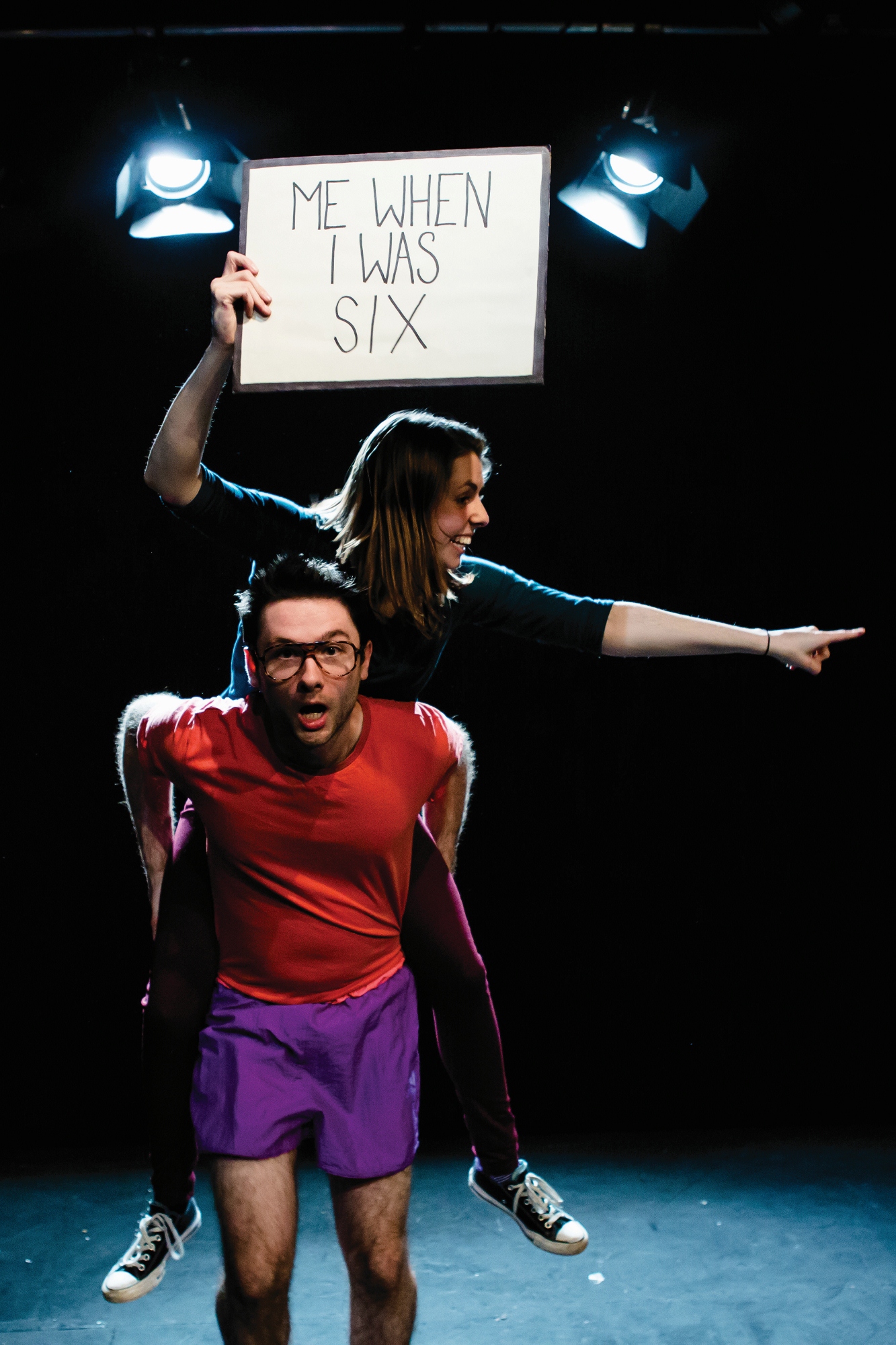
The premise to So It Goes seems unpromising. A sixty minute show about a woman coming to terms with the loss of her father. There are a great number of shows that are taken to the EdinburghSo It Goes Production Photos Fringe Festival with similar sounding descriptions, rather less come back down again with glowing reviews and a full touring schedule.

So It Goes manages to achieve something that is quite rare in British theatre. It engages genuinely with the nature of grief, the paralytic hold that it can have over us, and the way it warps our memories of those we loved and those that are left behind.

We are often not comfortable talking about death so seeing people on stage talk openly about their feelings can seem a little artificial, and the emotion false. Whilst we recognise that theatre is not a complete reflection of reality it still can be hard to reconcile stage reactions to death with the numbness that is felt when you hear a loved one is dead.

Hannah Moss has utilised a high-risk strategy to tell the story. Rather than use words, the whole play is described through the use of tablet whiteboards to write out dialogue. Even writing it down sounds cloyingly pretentious but as soon as Hannah simply writes “I’m not speaking, it’s easier” the purpose of it becomes clear.continues at www.everything-theatre.co.uk

<<You can read the full review on Everything Theatre)

As much wonderful women as super men

Man and Superman – Littleton Theatre @ National Theatre, until 19 May 2015 (Tickets – day seats & returns only, NT Live on 14 May 2015)Man_and_Superman_poster_notitle

Judging by reviews it appears difficult to talk about Man and Superman without first beginning by highlighting all the intimidating facts that surround it. So yes, it is three and a half hours of densely packed text, cut-down from closer to five, written by a formidably – and forbiddingly – intelligent committed socialist who straddled late-Victorian/early Edwardian Britain. And yes, back in 1903, it was described as ‘unstageable’.

With that introduction it may come as a surprise that tickets are also as rare as hen’s teeth (day seats and returns only). One suspects that it hasn’t been produced because the public have been crying out for a revival of a play that was last staged at the National two years before this critic had even been born. It is possible that the presence of an actor who can plausibly claim to be an A-lister of both stage and screen may be the cause of ticket scarcity.

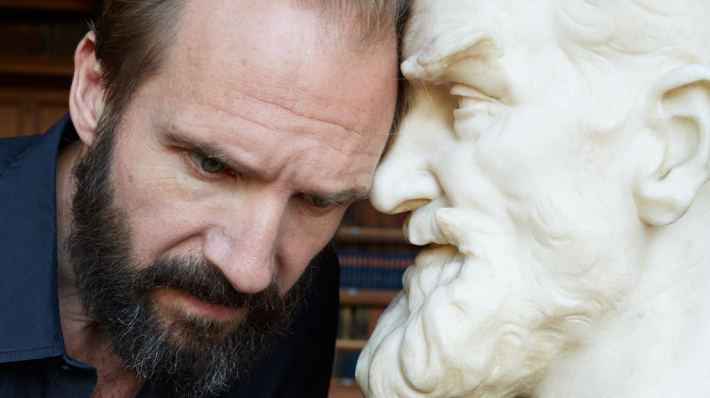
Stage appearances by Ralph Fiennes have been limited over the last 15 years; he was last seen as Prospero back in 2011, in what was unfortunately a rather interminable production by Michael Grandage (a sentence I seemed to have repeated more and more in the intervening years), but reminded everyone of his talents with a blistering snippet of Pravda’s Lambert La Roux during the National Theatre’s 50 Years celebration in 2013.

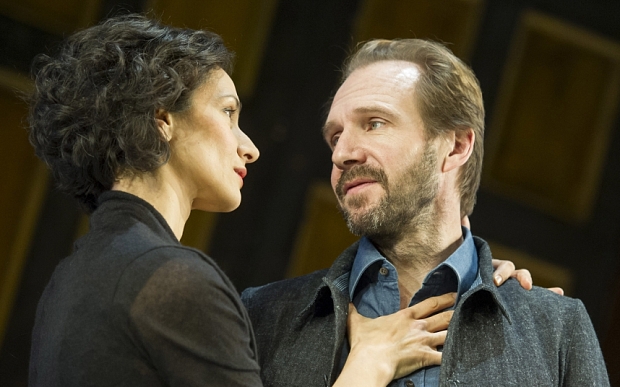
'Man and Superman' Play by Bernard Shaw performed in the Olivier Theatre at the Royal National Theatre, London, UKAnd what a performance it is. This is no stunt casting. No director would be foolish to let an inexperienced actor loose with Jack Tanner. The part is as difficult as they come. It requires the ability to enable a 21st century audience to find common ground with a figure who spends most of the play declaiming grandly about the machinations of women and who, one suspects, would only be happy marrying himself (and, as is the nature of such plots this is, in a way, exactly what happens).

The other difficulty is the sheer challenge of the language. The play runs to over 57,000 words and most of those are Tanner’s. Actors cannot rely on lovingly crafted Elizabethan verse-speaking to help settle the lines in the head, dialogue is akin to the densely packed social commentary of Dickens. When one hears Tanner it is hard not to detect the hectoring tones of Bernard Shaw in a room full of weary brow-beaten gentleman thoroughly bored with being told about the inequities of the Edwardian world. This is a challenging part, getting the wrong tone will lead to the comedy seeming tin-eared, or the moralising too earnest.

Fiennes is quite magnificent in the role. His performance fizzes with an energy that is vital for driving the momentum of a plot that seeks to extend a seemingly traditional comedy of manners into an epic spanning more than 200 minutes. Fiennes energy feels justified by the character – his vitality in keeping with the slightly pompous air of the revolutionary driven by ideology but supported by money.

<<Continue to full review>>

Snapshots of harrowing reality

Shrapnel: 34 Fragments of a Massacre – Arcola Theatre, until 02 April 2015 (ticketsJosef Altin (Photo: Nick Rutter)

That we should be angry about the Roboski massacre should go without saying. Any act in a war that leads to 34 civilians being killed is an act that should lead to outcry and public condemnation. These are statements that it is difficult to disagree with, and it is certainly the viewpoint of Anders Lustgarten – one of the most overtly political playwrights working in a city whose theatre is often criticised for cleaving to closely to middle class sentiments for middle class audiences.

Shrapnel 5 Aslam Percival Husain and Karina Fernandez Photo Nick Rutter.jpgLustgarten should be applauded for his internationalist outlook. He has avoided more obvious events and has focussed on one tragic story that is difficult to shape within our traditional western media narratives about the war on terror. To fully understand the events at Roboski it is necessary to have a reasonable grasp of the history of the Kurdish people and their relationship with the Turkish state. Whilst it perhaps isn’t essential, it would also be useful to be aware of the PKK and the long-battle that the Kurds have had across the middle-east to avoid persecution in their adoptive homelands.

It is quite clear Lustgarten knows what he is talking about, and that he has deeply held beliefs about it. The fact the programme notes he has been arrested by the Turkish secret police provides certain validity to the idea that in writing this play he has been speaking truth to power.

Performances were excellent from across the ensemble cast and weighted with a powerful emotional charge; Aslam Percival Husain and Karina Fernandez in their roles as Kurdish villagers describing the fates that have befallen their kith and kin displayed an almost unwatchable dignity and honour in the face of tragedy.

They were supported by staging that made a striking contrast between the flashy, technological toys of those with the political, military and financial might and a sparseness that fit with desolate mountain lands that the Kurdish people called their home.

<Continue to full review>>