Hiddleston’s impresses as Hal but Eyre’s Henry can’t quite match Goold’s Richard

Henry IV part I: The Hollow Crown – BBC 2  / BBC HD

Following the rapturous reception received by Goold’s treatment of Richard II was always going to be a challenge; the highly experienced Richard Eyre was assigned the task of continuing The Hollow Crown through Henry IV parts I and II, and on last night’s offering is set to deliver a textually inventive if slightly visually austere riposte.

Overall The Hollow Crown concept has been left a little exposed – clever and audience-enticing as it may be – as the stylistic dissimilarities mean that, other than the continuation of history, there is little in Henry IV part I that audiences would recognise from the filmic vistas of Goold’s Richard II.

Fortunately Shakespeare is not constrained by the straightjacket of slick BBC publishing. Henry IV part I is a play that needs no extra gloss; it contains his most-loved character in Falstaff and gives the audience, as Simon Schama pointed to in his recent documentary, a view of England from the bottom-up. This is in direct contrast to a Richard II that inhabited the world of kings and noble elites.

It’s also a play in which Shakespeare sketches out, in Prince Hal, the images that he would shade in later in one of his greatest creations, Hamlet – complete with two fathers (Falstaff and Henry IV pre-empting Claudius and the Ghost) and a play within a play (the great Act II Scene IV where Hal, in the guise of his Father, banishes Falstaff).

There is a seismic shift in language between Richard II and Henry IV. The world of Richard’s verse has been replaced by the more naturalistic prose of Henry Bolingbroke, now Henry IV. It serves to emphasise the working people that inhabit the play; the phrasing and speech reflects the way people actually talk to one another. It reflects a changing England; the shattering of Richard’s divine right and replaced by a, now frail and ill, Henry IV paranoid to the threat of conspirators. There is no place in this landscape for the playful verse that marked Richard II. This point is rammed home by Shakespeare through Harry Percy who ridicules and undercuts the fanciful imagery put forward by Glendower about his birth.

The core of Henry IV is not, of course, the King but his son, Prince Hal. Falstaff may steal the show but he is not the heart; the heart is the relationship of Hal to his two fathers, the King and the Fool, and the inevitable renunciation of the latter in order to safeguard the former.

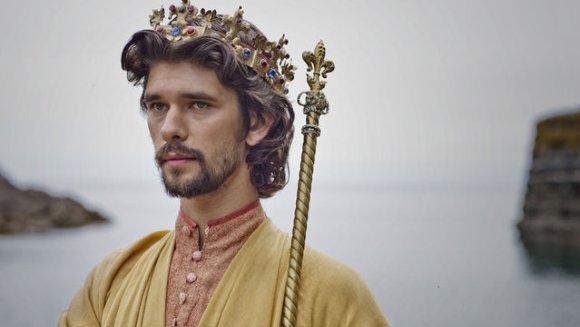
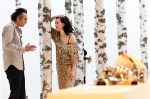
In this production Eyre appears to have taken a very deliberate step to recast Hal and Falstaff’s relationship away from the loving underpinnings with which it is normally shown. It is usual to show a warmth and affection in Hal when he undercuts Falstaff’s numerous embellishments but here there is coldness in Tom Hiddleston’s Hal. This is introduced from the very opening scenes of the play and Hal’s speech where he talks of renouncing his way of life; it is delivered in voiceover and there is an added potency to lines like ‘So when this loose behaviour I throw off’ [I.ii] given out in contemptuous manner at the same time as Hiddleston’s Hal strides through the Boar’s Head. Outwardly he is smiling, winking, interacting, whilst his interior monologue makes clear he understands that he is just playing a part that will be discarded.
<<Continue to full review>>

Masterful Richard II proves the BBC does ‘do’ Shakespeare

Richard II – BBC2 and BBC HD, until late July 2012

Settling into watching Richard II in glorious HD on the BBC last night it was difficult to ignore the Beeb’s previous ill-fated attempts to engage with ‘the Bard’. Whilst Civilian Theatre has a better opinion than most of the BBC’s attempt to film all the Shakespeare plays; where else could we see an Othello with Anthony Hopkins and Bob Hoskins as the leads, or a young Helen Mirren playing Rosalind in As You Like It and Imogen in Cymbeline – it is still hard to avoid the criticisms of wobbly sets and at times really duff stage-to-screen acting.

However the BBC’s reputation has been pulled significantly out of the mire after their last two adaptations of acclaimed stage productions – Tennant’s Hamlet and Stewart’s Macbeth- received sensitive transitions. Goold’s Macbeth in particular had a visual style that was magnificently assured given his background as a stage director. So hearing that he had been tasked with opening proceedings with Richard II did a lot to calm the nerves.

This calm was only reinforced by the sweeping shot across Richard II’s court; Ben Wishaw as Richard; Patrick Stewart as John of Gaunt; Rory Kinnear as his son, Bolingbroke; the two David’s – Suchet and Morrisey – as father and son of York; and James Purefroy, steaming under armour as Mowbray. It goes without saying that once such accomplished actors are placed in position then there is little left to do but let them unfurl Shakespeare’s glorious language.

Richard II, compared to the rest of the history plays, is difficult. It has less of the cartoonish villain that makes Richard III such a crowd-pleaser; it lacks a comic core of Falstaff or the jingoism of Henry V. It is a wordy play about a poor king and bitter nobles. To make it worse Shakespeare, as a stylistic tic, vastly increases the amount of rhyming verse. For those untrained in plays of the era the language is often perceived to be a barrier – and Richard II does risk encapsulating everything that people think they dislike about Shakespeare – it is difficult, unnatural and can be hard to follow.

Goold and the cast respond to this challenge magnificently. For perhaps the first time we see that TV could have the edge of stage productions in some aspects. The history plays, far more than the tragedies and comedies, are complex, difficult and rely on a certain level of prior-knowledge that Shakespeare contemporaries would have had but that current audiences, for the most part, lack.

The ability to zoom-in, jump-cut and provide proper location filming – sweeping landscapes and equisite interiors that provide a true sense of time and place – thus provides an essential element in driving the plot. No longer must we scan the faces of a court scene to decide who Richard is castigating, the camera does this for us. Some may cry foul but this is both good TV – no-one needs completely static shots – and also good for accessibility. It is a period location but that does not mean that modern stylistic devices shouldn’t be used.

Goold deserves a huge amount of credit. This, and his Macbeth, were excellent adaptations that demonstrated he has a natural eye for balance and an assured touch. He may well work alongside a mighty fine cinematographer but having seen a number of his plays staged, it is clear that he has an innate understanding of composition and brings to the theatre filmic elements and here he proves he can work his artistry in reverse.

<<READ ON FOR THE FULL REVIEW>>

Advance Notice – Highlights of the Autumn Season 2012

In recent days we have had announcements from both the Royal Court and Michael Grandage of their upcoming seasons. Representing the very different ends of the theatrical experience for audiences; the small intimately thrilling Royal Court where so many of our great playwrights were given a space to write and the cavernous and wallet-sapping Noel Coward Theatre, the name alone indicative of its West End heritage. It is heartening to think of Grandage’s past as Artistic Director of The Crucible and a ten-year stint at the Donmar and realise that it is still possible to trace a line from the heart of regional theatre all the way to the money-making centre of the British stage.

One might grumble about the prices of Grandage’s plays but it cannot be denied that a West End line-up containing two Shakespeare’s, a McDonagh and a new play by John Loga, whilst, maybe not groundbreaking, provides rather more interest than the usual fare of rehashed musicals, Coward revivals and vehicles for ageing American celebrities. Ticket prices may be steep at the top end but, as I have commented elsewhere, the £10 tickets actually undercut the National’s Travellex offer and, if star power is what you are after, provide fantastic value for money. Whilst advertised as ‘moderately restricted view’ I have found the seats to be absolutely adequate and you would miss virtually none of the action. Given they are available in both the Royal and Upper Circles they arguably offer better value for money than the Gallery tickets that are the next cheapest but are  already edging towards an uncomfortable £27.50 for seats right up in the gods.

With information about the National Theatre and the Barbican already available we can see that the upcoming months look very rosy indeed. And as a public service, Civilian Theatre is very happy to provide you with a month-by-month guide to the most interesting plays over the coming months (a growing requirement as it is becoming more and more evident that theatre is going the same way as gigs and stand-up comedy and selling its major events anything up to 18 months in advance – Jude Law in Hamlet in November 2013 anyone? Not busy I hope?)

___________________________________________________________________ 

September 2012

London Road (National)

This may be a last chance to catch one of the most interesting and innovative musicals in recent years. It sadly had the misfortune to go up against the Matilda juggernaut in all the major award ceremonies and as a result came home empty-handed but this tale, based on documentary footage taken from Ipswich in the aftermath of the discovery of five bodies in 2006 and put to music by Adam Cork, is one of the most complex and affecting new musicals in a long time. A real slow-burn hit, its success can be seen in the major summer revival it was given by the National just a year after it was first introduced. September is possibly the last time you will be seeing it in quite a while so go while you can.

Mademoiselle Julie (Barbican)

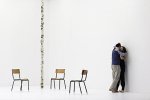
Hopefully not setting myself up for a fall after the general disappointment of Cate Blanchett in Big and Small – where the size of the play failed to meet the stature of the actor – we see Juliette Binoche meet Strindberg as another entry in the Barbican’s generally excellent international programming. Binoche is one of the deserved greats of French acting; an actress capable of turning down Spielberg’s Jurassic Park for a role in Kieslowski’s Three Colours: Blue (now that is range). The set photos are fascinating and suggest a radical take on a work famed for its naturalistic excellence:

love and information (Royal Court)

Whilst not to everyone’s tastes, a new play by Caryl Churchill is certainly not something to be ignored. One of Britain’s leading playwrights over the last 40 years and an icon for the current generation of female writers who grew up on Top Girls and Cloud 9, Churchill returns to the Royal Court with a new play, love and information. Details are scarce other but it looks likely that it will be a continuation of Churchill’s abiding fascination with non-linear story-telling and the use of the less naturalistic elements of theatre, as she creates a panoramic landscape of over 100 characters.

Hamlet (Queen Elizabeth Hall)

In what was very high up Civilian Theatre’s ‘Must Watch’ list was this import from Denmark – The Tiger Lillies performing Hamlet. Unfortunately recent news tells us that it has been cancelled for ‘scheduling issues’ but if they can find a slot for it in 2013 then I urge all to go and see it. The Tiger Lillies describe their own music as Brechtian street opera and are instantly memorable for all of those who had the fortune to see their version of Shockheaded Peter many moons ago. For those who have missed their vaudevillian morality tales then here is a performance of a song from Shockheaded Peter:

___________________________________________________________________

For more on the Autumn Season, including highlights from October and November then please click through for more.

Shakespeare’s Cymbeline finally turned into a true work of art

Cymbeline – Barbican Theatre

The Ninagawa Company, under the stewardship of Yukio Ninagawa, has built up a fearsome reputation in world theatre. They stand as the equal of any post-war company from Joan Littlewood’s Theatre Workshop through to Chicago’s Steppenwolf, whilst stylistically they are as uniquely identifiable as anything from Peter Brook or Simon McBurney.

Famed for his Shakespeare, Yukio Ninagawa has turned his attention to one of the most problematic plays in the Bard’s canon; Cymbeline. It is a difficult play to love and one that comes packaged with all kinds of traps for a modern audience. The plot winds and winds and seems unsure of what it wants to be, containing elements of romance, farce and tragedy. It has simplistic plot devices, like cross-dressing and misidentification, reminiscent of earlier plays but also contains the heavily allegorical language and non-human elements, in this case Jupiter descending on an eagle, that place it alongside The Winter’s Tale and The Tempest as one of the later plays.

Frank Kermode described the play as a tragi-comic romance and suggests that it may have been an in-joke for audiences who would have had a much better understanding of the text and references to earlier plays. None of which makes it any easier for a modern audience to unpick the complexities of the plot.

Luckily going to see a Ninagawa production is to have your visual senses wrapped in cotton wool and taken on a journey where the simplicity of images masks the masterful craftsmanship working behind the scenes. The technical understanding of balance is superbly illustrated again and again throughout the evening; light and shade, simplicity and complexity, the tonality is in harmony so that everything works towards the whole and the audience is never aware of the mechanics. Like other Japanese traditions that have bewitched Europeans over the years, from woodcuts to sushi, the skill rests on the ability to hide an incredible complexity behind a deceptively simple front.

It is difficult to fairly assess the skill of the actors without speaking Japanese and since the production leans so heavily on the visual, the rest of this review will take a radical detour and will look to provide a sense of the evening through the images it has left behind.

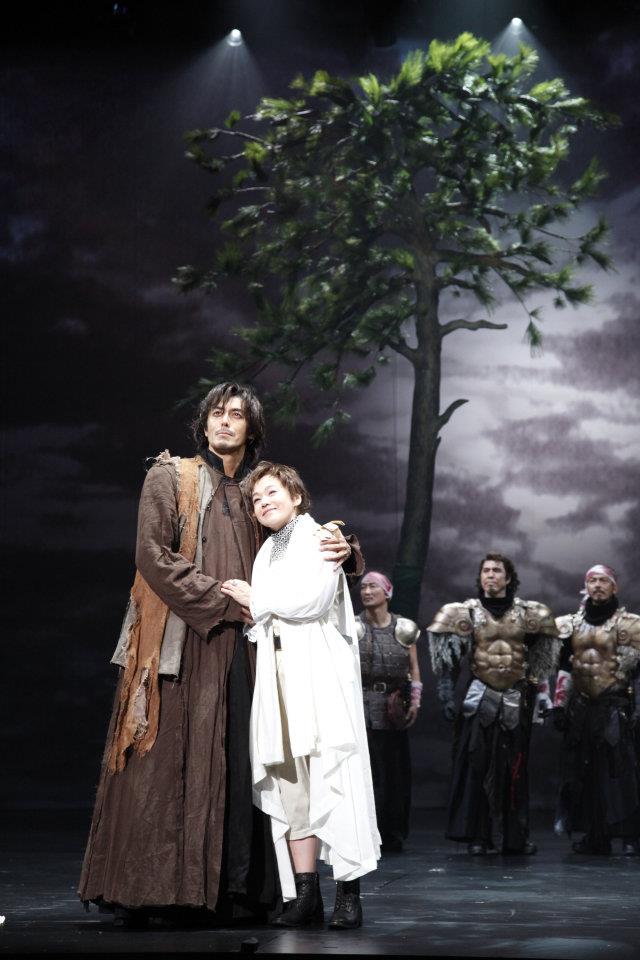
You can choose any one of a number of plot strands to call the centre of Cymbeline. Above we see the romance at the heart of the play, that of Posthumus and Imogen, as they are parted and again as they are reunited. As is traditional in Shakespeare the lovers must face many barriers before finally winning through in the end. However the play is made problematic, particularly to a modern audience, by the fact that Posthumus acts in such an unreasonable manner for much of the play, doubting his wife’s fidelity almost as soon as he leaves England before hiring his servant to murder her. That kind of level of trust does not always lead to happy relationships.

As the beating heart of the play, Hiroshi Abe, as the exiled Posthumus, and Shinobu Otake’s Imogen, bring the romance to life despite spending most of the play separated. They draw out the character traits despite the language barrier, with Hiroshi embodying the stoic and duty-bound Posthumus,  accepting of the State’s decision to banish him before later preparing to sacrifice himself in realisation at the fate he believes he inflicted on Imogen.

<<Continue to the full review>>

The mystery man and the problem play

Bingo – Young Vic, until 31 March

Edward Bond tends to write exactly the sort of plays that you would imagine a British Marxist growing up in a declining post-war England to write. Heavily influenced by Brecht, Bond’s writing operates with a rigidly mechanistic quality that wouldn’t seem out of place in a Soviet factory. There is a brutalism to life in Bond that may have reached its apotheosis in Saved and its infamous scene of a baby stoned to death. Saved, his second play, cemented Bond’s legacy due to the role it played in the battle to overturn the Lord Chamberlain’s Office right to censor works for the stage.

Deliberately challenging his audience and a notoriously prickly individual to work with, Bond has fallen from the public eye and in recent years has worked outside of the mainstream. However the Cock Tavern in Kilburn, now sadly closed, staged a number of older plays alongside new work in 2010 and the Lyric Hammersmith took on Saved in 2011 to suggest that we may finally be rehabiliting ourselves towards one of our most overtly political playwrights.

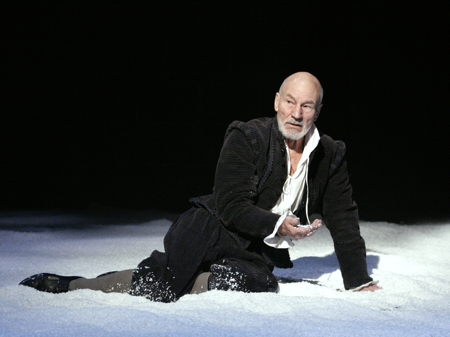
The Young Vic has continued this process with Bingo; it is seemingly an astute choice, one of Bond’s most accessible plays featuring Shakespeare as its central protagonist, and the casting of Patrick Stewart, who originally played the role in the 1970’s, guaranteed to bring in an audience that might otherwise avoid such austere fare.

Shakespeare retains central to Britain’s cultural heritage and represents the country’s main claim to a true cultural genius to rank alongside Da Vinci and Mozart. Those individuals that command an international agreement of their stature are rare indeed and whenever their legacy is challenged people have a tendency to react defensively.

<Click here for the full review>

More Shakespeare than you can shake a spear at

Ok, while I may have just been put myself in the running for most laboured pun of 2011, it has been done with the best of intentions. As the Olympics loom into view, it finally appears that the country is kicking into gear and putting together an impressive programme that will deliver on some of things that we undoubtedly do best (and no, sadly it isn’t the 100m).

It may be somewhat predictable but it certainly looks like the UK are planning to cash in one of their most lasting assets – Shakespeare. And in a fine display of collaboration, venues as dispirate as the Globe, the Barbican, the Roundhouse and the Hammersmith Riverside Studios are embarking on a truly Olympean programming schedule. The Globe alone will be performing every single one of the agreed Shakespeare canon (and on a sidenote for Mr Emmerich, please note that it is the World Shakespeare Festival, not the World Earl of Oxford Festival).

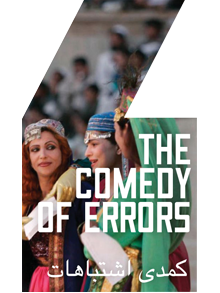
And in keeping with the Olympian spirit, the programmers have scoured the world to bring a truly international flavour to the festival. Whether it is a Tunisian Macbeth, an Afghan Comedy of Errors or a Zimbabwean Two Gentleman of Verona, there is something to suit any palette and demonstrates just how important Shakespeare is to the world of theatre. It underscores that Shakespeare, a playwright occasionally derided my philistines as being too complex for modern audiences, can operate in any language, subject to incredibly varied styles and still emerge as the single most important dramatist in history. And the philistines? To quote the great man himself “More of your conversation will infect my brain”, and if a country in as much turmoil as Afghanistan can stage a complex identity-swapping play like the Comedy of Errors, I think it is surely not to much to expect an audience to watch it.

5 to watch this summer

1) Timon of Athens – National Theatre, Dates to be confirmed

It is generally regarded as one of Shakespeare’s most difficult plays. After a first half that generally cracks alone and builds to a crescendo with Timon turning on those he had previously regarded as his friends and retreating to be a hermit on the outskirts of the city, the second half really does present a problem for a director – it consisting mainly of scene after scene of visitors and a more and more unpleasant Timon. However it is this challenge which means it makes the list – Simon Russell Beale is one our finest current Shakespearian actors and if he can’t do justice to the part then it may go down as one of Shakespeare’s very few missteps.

2) The Comedy of Errors – The Globe, 30 – 31 May

A chance to catch something really special. This Afghanistan company performed Love’s Labour’s Lost in 2005; the groundbreaking nature of this shouldn’t be overstated. In a country that was ruled a few years previously by the Taliban and drama completely forbidden, we had reached a point where men and women were able to act together. Along the way many taboos were broken; women did not always wear headscarves and lovers held hands. The Globe has managed to get their first performances outside of Kabul and they will be putting on The Comedy of Errors, a play of mistaken identifies and farcical situations.  The results could be as spectacular as they are interesting.

3) Hamlet – The Globe, 02 – 03 June

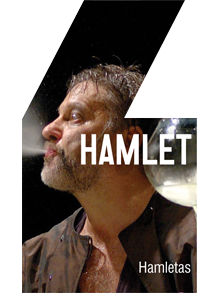
Now if anything deserves the title unmissable it is probably this production from the legendary Lithuanian director Eimuntas Nekrosius. His Hamlet is regarded as one of the most celebrated Shakespearean productions of our age and for the first time, after substantial world tours, it comes to London for the first time. Yes, it is Hamlet and it will be 3 hours and it will be in Lithuanian and it is the Globe and you may have to stand up. But there are times when you must suffer for your art and, due to the rather Anglo-american focus of most British theatre, this offers a rare chance to see one of  the true greats of European theatre. Simply: go, see.

 4) The Rest is Silence – Hammersmith Riverside Studios, 13 – 23 June

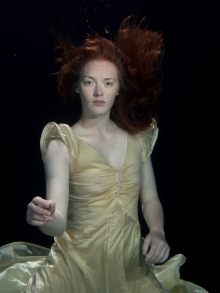
Yes, I know there are two Hamlet’s in the list and many people think that one is more than enough for one year. However given   that it is a dreamthinkspeak production, it is quite likely that this will be Hamlet only in so far Kate Bush’s Wuthering Heights is  an accurate depiction of Bronte’s novel. We are promised a textual and visual deconstruction of the play, which will utilise performance, film and installation to cut through the textual certainties that we may be used to. For some this may already sound hideously prententious and, given their reviews of Ian Rickson’s latest Hamlet at the Young Vic, it is unlikely Messirs Billington and Spencer will be rushing to see it. For those who remain alive to the possibilities that modern multimedia presents to a playwright of Shakespeare’s calibre, it also can be seen as an exciting opportunity.

5) Romeo and Juliet – The Globe, 19 – 20 June 

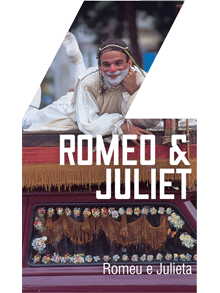
And deservedly back to the Globe for no. 5. Providing the spine for the festival and dedicating their versatile space to companies from around the world across May and June, hopefully they will get the audience and publicity they deserve for this ambitious and difficult project. An almost guaranteed sell-out – a Brazilian Romeo & Juliet at the height of summer should be a winner. The production is regarded as one of the most famous productions coming out of the Americas’. Grupo Galpão’s brings a carnival atmosphere to the Globe; mixing circus, dance and musicc with traditional Brazilian folk culture to produce something incredibly special. We are talking passion with a capital P.

You can find out far, far more about the World Shakespeare Festival here: http://www.worldshakespearefestival.org.uk/

You can find out more about the World Cities Festival here: http://www.worldstageslondon.com/

And my own earlier witterings on the World Cities Festival is here: http://civiliansguidetothetheatre.com/2011/10/04/the-cultural-olympiad-better-late-then-never/