You don’t have to be mad to extemporise here but it helps

Hamlet – Young Vic, Running until 21 January 2012

Ian Rickson’s production of Hamlet at the Young Vic begins with an elaborate entrance through the backstage area, which has been transformed into a passage through a mental hospital. As you wind through narrow corridors, you catch glimpses of action through windows and the pervading sense from the TV screens and telephones on display that we are entering the 1970s.

To be honest all this effort feels a little laboured although it does help to immediately ground the play in its overarching theme: is Hamlet mad?  It is a question that has been raked over many times, be it in productions, literary criticism or psychological analysis. However through Ian Rickson’s radical interpretative staging, it is a question that delivers a revelatory redefinition of how the play can be understood.

The play begins with a striking image; Michael Sheen’s Hamlet appears out of nowhere in long shot, trapped in a solitary light shining upstage. Rickson’s exquisite framing is a feature that runs throughout the play but this first image, with a clear allusion to Carol Reed’s The Third Man is particularly notable. It is a potent reference point, immediately conjuring up thoughts of Vienna; the spiritual home of Freud and the psychology movement. The Third Man itself is indebted to German expressionists of early cinema, such as  Fritz Lang and FW Murnau, who were fascinated by madness and its effect on the human condition.

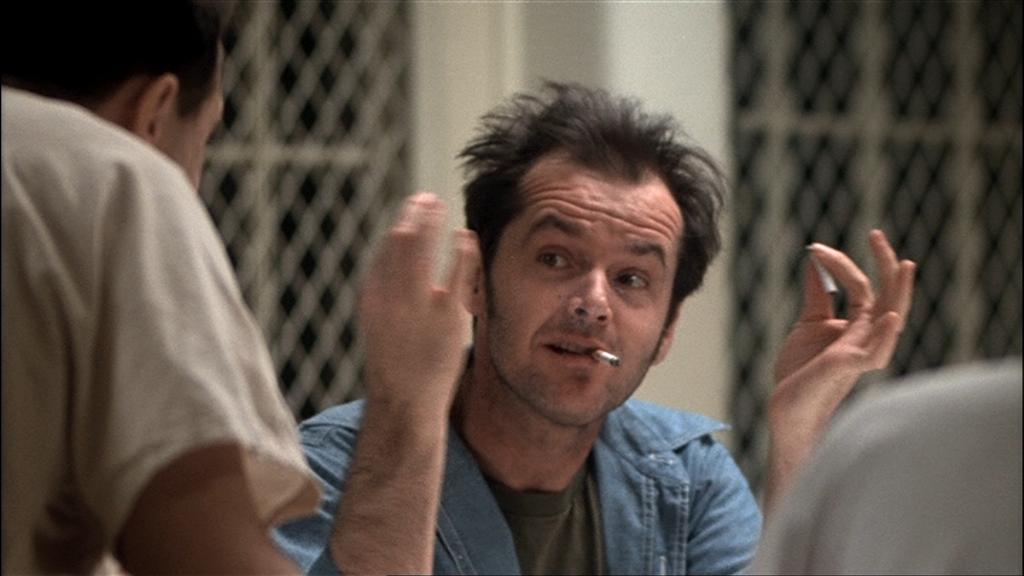
References abound in this play; the 1970’s institutional setting brings to mind One Flew Over the Cuckoo’s Nest and, compared to the recent Hamlets of David Tennant and John Simm, Sheen has an alpha-male muscularity that is redolent of Jack Nicholson without, thankfully, adopting any more of Nicholson’s mannerisms.

The other crucial reference point is the work of RD Laing. In a play that has at its heart the discussion and understanding of madness, Laing’s work has a relevance that underpins the perspective that Rickson takes to the play. At the centre of Laing’s theories is the idea that psychosis is not a biological or psychic response but something that can develop out of socio-cultural situations. This has a direct relevance to the understanding of Hamlet. Hamlet is not ‘mad’ per se but he may have become mad due to the conditions that he has found himself within and the drama of the play may be an attempt to break him of that psychosis.

This reading is reinforced through Laing’s idea that ‘going crazy’ can be the sane response to an insane situation. In this, as in so many other cases, we can infer that Shakespeare touched on the principle a few hundred years before the development of psychology as a science. This may be a stretch but it does appear to reflect Hamlet’s understanding of himself; he wishes to assert his own identity, ‘to thine own self be true’, through his understanding and response to his father’s death. However Hamlet’s ideas conflicts with the response demanded by his ‘uncle-father’ Claudius; Laing would argue that Hamlet is stuck between the persona he has created, the avenger of his father, and the one demanded by parental authority and it is in this bind that the context for Hamlet’s ‘madness’ should be understood.

Click here to read full review

Rosenstern and Guildenctanz are dead (with apologies to Mr Stoppard)

Rosencrantz and Guildenstern Are Dead

Theatre Royal Haymarket

Booking until 20 August


(Lights Up)
ROSENSTERN: (Tosses a coin, checks the result and repeats) Heads…Heads…Heads…Heads…
GUILDENCRANTZ: (Interrupting) Does it ever feel to you like we’ve done all this before?
ROSENSTERN: How do you mean?
GUILDENCRANTZ: That we’re stuck in a rut. Going through the same things day after day.
ROSENSTERN: (Considering this) We were someone else before.
GUILDENCRANTZ: Yes but that’s history. We were boys back then.
ROSENSTERN: True. (Pause) And now we’re here?
GUILDENCRANTZ: (looking around) Alone…but at least we’re the centre of attention. It’s all about us.
ROSENSTERN:  I thought the play’s the thing?
GUILDENCRANTZ: Oh you can do anything with a play, words are flexible. Anyway people know us now; we’re stars in own right.
ROSENSTERN: We’re recognisable
GUILDENCRANTZ: Familiar
ROSENSTERN: Similar?
GUILDENCRANTZ: indistinguishable. You’ve seen us once, you’ve seen us anywhere.
ROSENSTERN: Or everywhere.
GUILDENCRANTZ: See, we’ll fit right in, like we’ve always been there. (Pause) Are you sure we haven’t done this before.
ROSENSTERN: (Tossing a coin) Heads…
GUILDENCRANTZ: This all seems very familiar. (Enter the reviewer). Who are you? We were expecting someone else.
REVIEWER: Tim
ROSENSTERN: Tim?
GUILDENCRANTZ: Curry?
REVIEWER: I think there’s been a misunderstanding, I’m not an actor; I’m supposed to be reviewing the play.
GUILDENCRANTZ: No, no. This does not make any sense at all. You’re not in the script. The audience won’t stand for it.
ROSENSTERN: We don’t have to tell them do we? (Indicating to the reviewer) He can try his best.
GUILDENCRANTZ: It will be a surprise but audiences get used to anything.
REVIEWER: If it remains relevant.
GUILDENCRANTZ: (aghast) relevant. Outrageous
ROSENSTERN: Scandalous
GUILDENCRANTZ: Preposterous. Creations like this are timeless.
ROSENSTERN: Ageless.
GUILDENCRANTZ: We are an exegesis on existentialism.
ROSENSTERN A deconstruction of determinism.
GUILDENCRANTZ: The product of a precocious talent.
ROSENSTERN: (Firmly) Two precocious talents.
REVIEWER: (Frustrated) Yes but do you have anything new to add. Is there a purpose to all this wordplay? Does it go anywhere or is it all, well, just a little bit pretentious.
GUILDENCRANTZ: Pretention? Purpose? (To Rosenstern) Have you ever felt so offended? (To read more click here)

Getting down with Shakespeare

Funk It Up About Nothing – Theatre Royal Stratford East, 07 May 2011

It comes as little surprise to learn that the The Q Brothers, the group behind ‘Funk it up about nothin’, have previous when it comes to adapting Shakespeare for a modern audience. The show had been a hit at the Edinburgh festival and it’s clear that the cast are much more versatile than the slightly ramshackle approach might initially suggest.

Hidden below the surface is an awful lot of hard graft. Cutting Shakespeare in half and rewriting 95% of the dialogue should not be a task that anyone takes lightly, for no better evidence I point people towards Gnomeo and Juliet. Creating a tightly-written musical score that fits 75-minutes of continuous and fast-paced verse adds a whole another level of difficulty. And a third problem is that by placing it within the context of urban music means the audience you are aiming for will tell instantly whether we are talking genuine Prada or a Rada knock-off.

The choice of Much Ado About Nothing is extremely well-judged. It is very well suited to a hip-hop reimagining. The four leads are all too imaginable in the modern world – the pretty but vapid match of Claudio and Hero undermined all too easily by accusations of ‘being a ho’, while the quick-fire, pithy verbal sparring of Beatrice and Benedict seem a natural fit to a world of hip-hop battles and zinging one-line assaults, as thrown out by our nimble MC’s. Updating the play but remaining in verse creates a vivid sense of old and new combining – deep down we know this isn’t Shakespeare but the continually rhymes blended with the odd-line taken from the original works to disorient the audience until we are no longer entirely sure which play a reference to ‘licking the honeypot’ comes from. Continue Reading Here

Spotting a summer celebrity – 2011

 Five to watch

It’s that time of year again when those celebrities, or those unfortunate to have missed out on the chance to spend the next four months sitting in hotel lobbies desperately promoting a $200 million turkey to  hacks still willing to buy into the illusion that Pirates of the Caribbean represents a significant addition to cinema’s canon, remember that theatre represents their true calling along’.  We can forget for the moment that most will have disappeared back State-side, ready to add a new-found gravitas to an already embarrassingly padded C.V, just in time for the festival circuit and instead enjoy gawping at people we normally see in while chowing down on a bucket of popcorn the size of a small child.

5) Rupert Everett & Diana Rigg

Pygmalion – Garrick  Theatre, from the  25 May 2011
First off, sadly Diana Rigg is not due to play Eliza Doolittle, although that would be an officially awesome reworking of George Bernard’s Shaw classic. Instead she is down to play Mrs Higgins, while Rupert Everett reprises the role of Henry Higgins that he first played as part of the Chichester Festival.

GBS is having a slightly revival of late, with recent major productions of St Joan and Mrs Warren’s Profession gracing Londdon, after a long period of having been pushed into the shadows. I am sure the imperious Diana Rigg will be splendid but Everett is the more interesting choice; he, after all, is a man who never quite made it onto the Hollywood A-list (for reasons that may or may not have to do with him being openly gay) who will be playing a character who works to fundamentally change Eliza so that she is more socially acceptable. One wonders what Freud would have to say about that?

Celebrity enjoyment factor: C

4) Jude Law

Anna Christie – Donmar Warehouse, 04 August – 08 October 2011

Jude Law loses out in the battle of the Hamlets (see 2. below) but this is partly down to the fact that I don’t really know as much as I should about Eugene O’Neill and his plays. Wikipedia tells me that this one the Pulitzer Prize back in 1922 so I am guess it is going to be pretty good and Long Day’s Journey into the Night is generally regarded as an American classic.

The Donmar rarely puts on poor productions and Jude Law, even before Hamlet, is no mug on stage. Just as he was starting out in Hollywood (way, way before the Jude Law overload of 2004, which saw him opening 6 films in one year and the public getting more and more sick of the sight of him – the nadir probably being the execrable remake of Alfie) he left an indelible impression in the Young Vic’s production of ‘Tis Pity She’s a Whore. If this production is half as good as that then, following a reasonably strong Hamlet, we may be seeing the moulding of Law as a strong presence on the British stage.

Celebrity enjoyment factor: B-

3) Ralph Fiennes

The Tempest – Theatre Royal  Haymarket, 27 August – 29 October 2011 
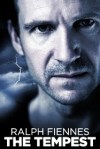
Coming as part of Trevor Nunn’s impressive first season as artistic director of the Theatre Royal Haymarket (we have already seen a well reviewed, and star-heavy, Rattigan revival in Flare Path and we can look forward to Rosencrantz and Guildernstern are Dead in early summer), The Tempest has drawn one of the few actors who seems at ease on stage as he is on camera. Ralph Fiennes, who has previously excelled as Julius Caesar and has been busy with his directoral debut, a modern-day version of Coriolanus, so is clearly no stranger to Shakepeare (even if many of his younger fans may recognise him more clearly as Voldemort in Harry Potter).

The only question-mark is his age. Not yet 50, Fiennes would seem to be a very young Prospero (even if Miranda is only supposed to 16); traditionally a part that actors take as they approach the end of their careers. The question is whether Fiennes has the gravitas of a man who was cast adrift when his daughter was just a baby. In lesser hands it may be more of a concern but looking at some of his career highlights to date – Quiz Show, Schindler’s List, The English Patient, The Reader – it is clear this is a man who understands and enjoys complex roles, and this should be an exciting proposition.

Celebrity enjoyment factor: B

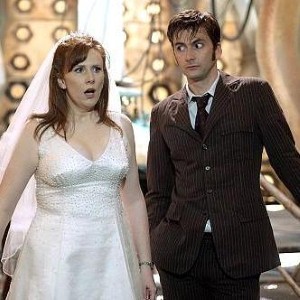
2) David Tennant & Catherine Tate

Much Ado About Nothing – Wyndhams  Theatre, from May 16 2011

Admittedly this isn’t exactly Hollywood but this is about as close as we get in the UK. The Doctor and one of the most left-field choices of companion turning it around and going head to head in one of Shakespeare’s most ferocious and ferociously funny comedies. Tennant showed in Hamlet that he has a quick-silver tongue and Tate has demonstrated a motor-mouth on numerous occasions; even without the pre-history of Doctor Who behind them, this would be a Benedict and Beatrice worthy of note. 
My only gripe is the outrageously expensive ticket prices, god only knows whether they plan to somehow incorporate time travel into the show but with Stalls seats running at £61 and the Circle for £51 there had better be something splendid to justify the price. While it would be naive to expect reasonably priced tickets in the West End, it is profoundly depressing when a show which will clearly appeal to children and those who don’t always go to the theatre will cost a family of four over £200 for seats that are not right up in the gods (spending over 2 hours with that little leg room is enough to put people off Shakespeare for life). If people complain about the sustainability of theatre then productions like this, which seem to exclude new audiences through price alone, should take a large part of the blame.

Celebrity enjoyment factor: A-

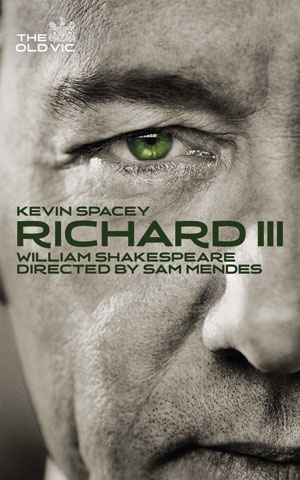
1) Kevin Spacey

Richard III – Old Vic Theatre, from 18 June 2011 before an international tour

If you, like me, has been more than a little underwhelmed by Kevin Spacey’s period as artistic director for the Old Vic then hopefully here is the big project you have been waiting for.  It seems that there have been too many small scale American plays that haven’t resonated with audiences this side of the Atlantic and when Spacey has been on stage we have seen nothing of the tour de force performance that brought him international acclaim in The Iceman Cometh.
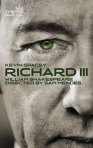
Well if anything calls for a tour de force then it must be Richard III. One of the great ‘acting’ roles, Richard III must leave actors salivating. A great plot of intrigue and murder, one of the first anti-heroes; a king who is both crippled in mind and body. From the off… ‘Now is the winter of our discontent…’ this is a play crammed full of memorable lines and set-pieces. It can only be hoped that Spacey, under the direction of the reliable Mendes, who clearly knows how to work with film actors, really lets himself go and retakes the stage by storm.

Celebrity enjoyment factor: A

A thoroughly modern monarchy

Hamlet – National Theatre, 23 April 2011

Approaching a play with as much weight and complexity as Hamlet there are numerous decisions that have to be made. It is too big, too vast in subject matter and character to tackle every angle in one production. Recent productions of Hamlet in London, as good as they were, have been driven in part by the celebrity of the actors and as a result we have had productions that are unashamedly an “actor’s” Hamlet. We have had David Tennant; quick-witted and verbally nimble, playfully engaging with the comedic nature of Hamlet’s flurries of stage-managed madness (pushed on by an excellent rapport with Oliver Ford Davies’ masterful Polonius). Hot on his heels was Jude Law; here Hamlet is emotionally angry, powerful yet filled with an engaging vulnerability. There is clearly nothing wrong with productions where Hamlet is front and centre but watching Patrick Stewart as Claudius in the RSC version, it felt a little unfortunate that such a versatile actor was left playing such a complex and interesting part in the shadows of Tennant’s performance. It seemed as if an instruction had been given to rein in the performance to allow Tennant the room to perform.

From the off Nicholas Hytner’s Hamlet steps back and places the play in context. As the house lights fade to black, the audience are met with the sound of an aeroplane cutting through the stillness as it flies by overhead. The soldiers actually look like they are patrolling and the entrance of the ghost is met with an alertness that suggests infiltrators and enemies hovering in the shadows. The spectre of Fortinbras and war loom larger over this version of Hamlet than any other I have seen. As a result this is a play about paranoia, fear and surveillance. We are reminded continually that, whether or not something is rotten in the state of Denmark, this is a Claudius unwilling to anything to chance. Outside every door are ear-piece wearing security guards, however as the play continues it becomes increasingly evident that their presence is less to protect and more to provide Claudius with additional eyes and ears. Hamlet, Ophelia and Rosencrantz & Guildenstern are monitored throughout and each entrance and exit is swiftly followed by their ‘security’. This gives Hamlet’s ‘Now I am alone’ (ii.ii) a sense of real power as the audience realises that, for the first time in the play, Hamlet can talk freely, and in doing so can give full attention to his plan to use the play to trap Claudius…Continue Reading Here