A reflection: 10 years on

Decade – Headlong, St Katherine’s Docks – Until 15th October
There is no doubt that Decade, Headlong’s collaborative theatrical response to 9/11, reaches moments that are powerfully affecting, even for those with no direct ties to the event. The strongest of these in Decade are where we see the butterfly effect in action; the ripples that change the course of someone’s life, years after the event.

We witness a woman engaged in an increasingly manic speed dating event, plagued both by eczema and a need for security and strength, ultimately unable to commit as she is unable to let go of her husband who died. A group of survivor wives meet every year at a coffee shop within sight of the Ground Zero. The audience are shown the scenes in reverse; a tricksy device suffers from the law of diminishing returns in its final scenes but does function as a powerful reminder of the long shadow cast by 9/11. The wives are unable to grieve in any understandable way, holding on to brittle bonds artificially-forged in the tragedy; held together by a sense of duty and continually reinforced by the sight of presidential candidates solemnly appearing at the site as part of carefully stage-managed campaigns.

Also outstanding is Tobias Menzies portrayal of a man recollecting his account of watching the Tower’s collapse after booking the day off. The audience’s awareness of events lends Menzies’ flat affectless delivery a heart-breaking quality. As we hear, with an Alan Bennett like focus on the absurdity in the mundane, a description of the day before and an ensuring phonecall to the office just after a plane hit the first time, there is a tragic inevitably in the growing awareness there won’t be Hollywood happy endings. Later we find that as a result of his experiences he has edged close to the ‘Truther’ movement; desperately trying to find meaning in his unanswered questions.

Not everything was crafted so successfully, a muscular, Mamet-ish duologue between journalist and a soldier involved in the death of Osama Bin Laden, began promisingly with the conversation hurled across the audience in staccato bursts reminiscent of machine-gun fire. However the contrivance of building a link to a relative who died in the Pentagon began to pull the characters apart at the seams and strain credulity. Continue Reading Here
Miracles in Islington

Miracle – Nameless TheatreHen and Chickens Theatre, running to the 03 September 

Allusions to the world of theatre run deeply through Reza de Wet’s Miracle; the basic premise is that a weary band of down-at-the-heel travelling players stop in an unnamed town to perform something that is redolent of the traditional morality play. In this troupe of actors we catch glimpses of what might have happened if Stoppard had fixed his eye on the Players rather than Rosencrantz and Guildenstern. However the play it cleaves most strongly to is Pirendello’s masterpiece, Six Characters In Search Of An Author. In many ways Miracle appears the inverse of Pirendello. Here it is the actors who are disturbed by a strange, almost alien presence, who represents the unknown outer world and acts as a catalyst for action. The absurdist fantasy of Pirendello has been exchanged for a more linear narrative structure but the resulting play retains an intriguing layered quality viewed through the unravelling of the travelling company.

In giving the play a theme, the director, James Farrell, focuses the attention primarily on the sense of a theatrical world gone to seed and this helps to breathe life into a script that occasionally has a rather leaden feel. When the play springs into action it comes through the dynamism of the actors’ handling of the material rather than from a script that feels like it is striving towards a grander purpose than it ever quite earns. In Farrell’s vision of exaggerated theatricality and stars on the wane, we see hints of Beckett’s Vladimir and Estragon continually returning to the vaudeville rather than confront the present.

On stage this comes through in the excellent central performance by Edmund Dehn as Du Pre. He is the glue that is holding the actors together as a functioning company, and in the play as a whole it is his energy that keeps the audience engaged with the action. Dehn’s De Pre provides a wonderful sense of the final days of music hall; the constant travelling from town to town, reaching gradually dwindling audiences in ever smaller towns. He is a man who has been on the road a long time, a former star for whom accepting second fiddle would be a humiliation greater than playing to an audience of  ten. So he continues and with him he drags a company by sheer force of personality alone until they reach a point where physically and mentally they cannot continue. Continue Reading Here

Ladies and Gentleman, please welcome your host for the evening…Kevin Spacey

Richard III – The Old Vic, booking until 11 September 2011 and then on international tour

After three years Kevin Spacey’s slightly underwhelming time at the helm of the transatlantic Bridge Project is coming to an end. In finding a play worthy of closing the season and rounding things off with almighty bang, it is hard to image too much time was spent time arguing whether Richard III fitted the bill. With Sam Mendes returning to theatre and reviving the collaborative relationship that turned American Beauty from interesting mid-budget indie-pic into a major Hollywood hit, a bona-fide English classic (a treat in what otherwise has been a rather barren diet of macho-slices of Americana from the Old Vic) that is an audience favourite and most importantly a lead role that appears tailor-made for a man who has made unsettlingly charming characters his stock in trade.

It is evident from the outset that Mendes is fully aware of where interest in this production lies. With no disrespect to the rest of the cast, this is as much the Kevin Spacey spectacular as it is Richard III. It is, in short, what the audience, who are paying considerable amounts to be there, are hoping for: towering, powerhouse, barnstorming, tour de force. Critics have been reaching for the thesaurus for ever more obscure ways of acclaiming the performance, even if the production itself does not always reach such high standards.

This is very much acting with a capital ‘A’. More importantly it is acting that is only rarely seen on the English stage nowadays. There is more in common with the greats of the past than the more modern approach, which has seen overt performing dialled down in favour of a more studied psychological approach. Compared with the recent Hamlets of Kinnear, Tennant, which looked to develop particular strains of the character, Spacey’s performance risks looking brash and overbearing.

However, whilst it is clear that Spacey is having tremendous fun in the role, this is a world away from the bombastic delivery of an old ham; he is far too intelligent an actor for that. A more accurate depiction would be to describe it as a masterclass of camp; in its most traditional sense of ‘ostentatious’ and ‘exaggerated’. This is the knowing performance of a man who understands both the play and how to hold the audience in the palm of his hand. The brief flicker of the eyes out to the audience when telling Lady Anne ‘My tongue could never learn sweet smoothing words’ was eerily reminiscient of Frank telling Brad ‘It wasn’t all bad was it? Not even half-bad in fact…’ in the Rocky Horror Picture Show. Continue reading here

London Riots: Theatre Special

So with the world, his wife  and their media entourage encamped in Edinburgh for the next few weeks, it asks the question of how those cosmopolitan metrosexuals of the capital can keep themselves entertained.

Well having asked the question, this week we got our answers… And our survey said that out of 100 participants the top two responses were:

 1) Looting

                               2) Appearing in court for looting

However for those who believe that life may have more to offer than G-Star Jeans, shiny new Nikes and £3000 of Rothman Superkings then there  is still the vibrant London theatre-scene…or not, an unfortunate consequence of the rioting meant that much of theatreland closed early to avoid the less than desirable impact of having your audience flambéed during the climax to Love Never Dies (the relief at being put of your misery twenty minutes early notwithstanding).

Having said that, every good rioter deserves favour now and again. And doing my bit to save London’s theatre, I suggest the following West End plays that are suitable for both rioters and vigilantes alike:

1) Hamlet – Young Vic

Shakespeare’s masterpiece about an emotionally troubled young man with an absent father. Watch as Hamlet slowly goes off the rails without the existence of strong familial discipline. Attempts from wise elders, young friends and even his own mother are unable to reign him in and the end, when it comes, is as tragic as it is sadly predictable.

2) Aladdin – Lyric Hammersmith

Experience the thrills and spills of Aladdin’s adventure to steal a magic lamp from a hardworking small business owner. Gasp in awe and laugh with delight as you watch Aladdin’s hilarious mishaps as he attempts to escape the local fuzz while holding on to a bin-liner stuffed with swag. And don’t worry folks, its just a pantomime so we can rest assured that Aladdin will get away with it and get the girl in the end.

3) Jerusalem – Apollo Theatre

A vision of life in our green and pleasant land. Follow Johnny Byron, spokesman for the everyday man as he faces eviction by the Council and hostility from the local community.

4) Les Miserables – Queen’s Theatre

Follow Jean Valjean,our hero and a former prisoner, who is pursuedrelentlessly by his nemesis, the policeman, Javert. Featuring the most convincing portrayals of civil disorder ever captured on the London stage and stuffed full of famous songs that you will have heard at riots up and down the land, you too can sing along with popular classics such as ‘Do you hear the people sing?’ and ‘At the barricades’


5) Accomplice – Menier Chocolate Factory

Described as part-tour, part-game, part-theatre, this innovative production takes people on a tour of Southwark. Constantly evolving, what started as a rather staid interactive mystery on the streets of London has turned into the capital’s hot ticket with new attractions including a burned out cornershop and a ransacked Lush. In this uniquely immersive productions, participants are able to throw bricks at police and indulge in a spot of light GBH in full-view of the much-loved London CCTV network. Smile for the camera guys!

Honorable Mention

Betty Blue Eyes – Novello Theatre

10% discount for English Defence League members.


Watch This! An anatomist of emotional pain

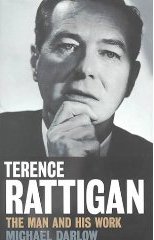
The signals have been there for a while – it probably started with the National  firing a warning shot off the bows with last year’s summer production of After the Dance at the National. Following that was Anne-Marie Duff’s barnstorming performance in Cause Celebre at the Old Vic; suddenly a star-filled, Trevor Nunn-fuelled Flare Path opens at the Haymarket and before you know it you’re in the middle of a full-blown set of centenary celebrations for one of the understated, and somewhat underrated, greats of 20th playwriting, Terence Rattigan.

A most enigmatic of figures who, like Noel Coward, was sidelined by the explosion in writing after Osborne’s Look Back In Anger blew away all the traditional conventions. However unlike Coward, Rattigan continued to write masterpieces in the form of Man and Boy and Cause Celebre.

BBC4 are shining the light on Rattigan, in which should be a fascinating look at a rather forgotten figure. Even better, current actor of the moment, Benedict Cumberbatch has been roped into host (naturally he must ‘go on a journey’, in this case visiting his own school, Harrow, where – surprise surprise – Rattigan was also a pupil)

Details: Thursday, 21:00 BBC4

Rosenstern and Guildenctanz are dead (with apologies to Mr Stoppard)

Rosencrantz and Guildenstern Are Dead

Theatre Royal Haymarket

Booking until 20 August


(Lights Up)
ROSENSTERN: (Tosses a coin, checks the result and repeats) Heads…Heads…Heads…Heads…
GUILDENCRANTZ: (Interrupting) Does it ever feel to you like we’ve done all this before?
ROSENSTERN: How do you mean?
GUILDENCRANTZ: That we’re stuck in a rut. Going through the same things day after day.
ROSENSTERN: (Considering this) We were someone else before.
GUILDENCRANTZ: Yes but that’s history. We were boys back then.
ROSENSTERN: True. (Pause) And now we’re here?
GUILDENCRANTZ: (looking around) Alone…but at least we’re the centre of attention. It’s all about us.
ROSENSTERN:  I thought the play’s the thing?
GUILDENCRANTZ: Oh you can do anything with a play, words are flexible. Anyway people know us now; we’re stars in own right.
ROSENSTERN: We’re recognisable
GUILDENCRANTZ: Familiar
ROSENSTERN: Similar?
GUILDENCRANTZ: indistinguishable. You’ve seen us once, you’ve seen us anywhere.
ROSENSTERN: Or everywhere.
GUILDENCRANTZ: See, we’ll fit right in, like we’ve always been there. (Pause) Are you sure we haven’t done this before.
ROSENSTERN: (Tossing a coin) Heads…
GUILDENCRANTZ: This all seems very familiar. (Enter the reviewer). Who are you? We were expecting someone else.
REVIEWER: Tim
ROSENSTERN: Tim?
GUILDENCRANTZ: Curry?
REVIEWER: I think there’s been a misunderstanding, I’m not an actor; I’m supposed to be reviewing the play.
GUILDENCRANTZ: No, no. This does not make any sense at all. You’re not in the script. The audience won’t stand for it.
ROSENSTERN: We don’t have to tell them do we? (Indicating to the reviewer) He can try his best.
GUILDENCRANTZ: It will be a surprise but audiences get used to anything.
REVIEWER: If it remains relevant.
GUILDENCRANTZ: (aghast) relevant. Outrageous
ROSENSTERN: Scandalous
GUILDENCRANTZ: Preposterous. Creations like this are timeless.
ROSENSTERN: Ageless.
GUILDENCRANTZ: We are an exegesis on existentialism.
ROSENSTERN A deconstruction of determinism.
GUILDENCRANTZ: The product of a precocious talent.
ROSENSTERN: (Firmly) Two precocious talents.
REVIEWER: (Frustrated) Yes but do you have anything new to add. Is there a purpose to all this wordplay? Does it go anywhere or is it all, well, just a little bit pretentious.
GUILDENCRANTZ: Pretention? Purpose? (To Rosenstern) Have you ever felt so offended? (To read more click here)