The power of art: an always timely reminder

The Scottsboro Boys – Young Vic, until 21 December 2013 (Day Seats and Returns only)

One only needs the barest grasp of American history to understand the incendiary effect Kander & Ebb’s The Scottsboro Boys was likely to have; a one sentence description ‘it is a musical about nine black men travelling The Scottsboro Boysthrough a 1930’s Alabamian town’ is enough to give significant pause.
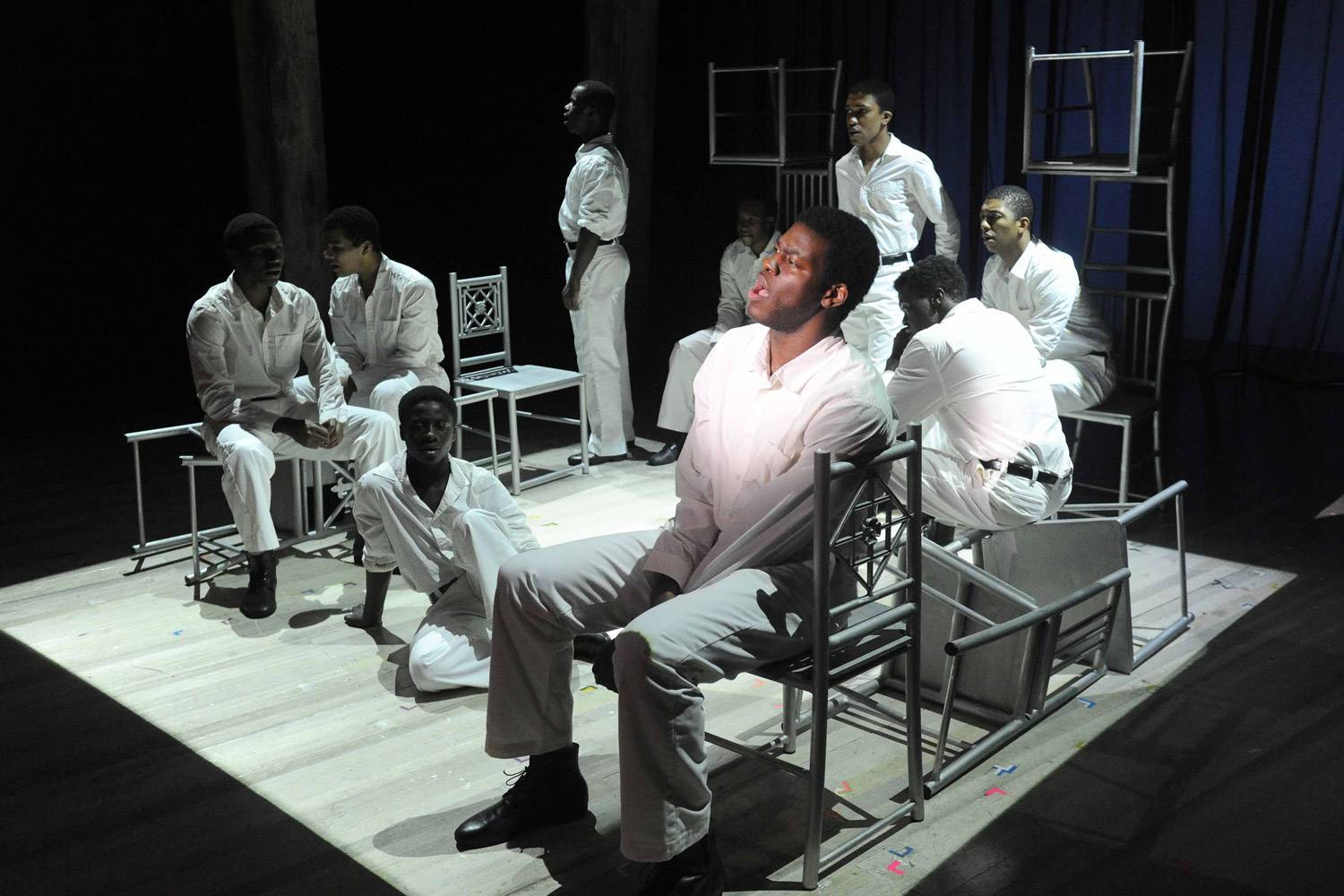
Add in that it would take the form of a musical revue featuring a black minstrel show and a white southern host and one can begin to understand that The Scottsboro Boys is risky proposition, even by the standards of the team that brought Chicago, Cabaret and a musical interpretation of Manuel Puig’s modernist classic, Kiss of the Spider Woman to the stage.

When you have reinvented the musical, as they did with Chicago, and created a rival to Singing in the Rain as the greatest film musical, Cabaret, it is hard to imagine that the last blooming of creativity would be in the same league. This seems particularly true with the output of musical writers; one only needs to look at the careers of Cole Porter, Irving Berlin, Stephen Sondheim and even Andrew Lloyd-Webber to see a marked drop-off in the quality of their output as the years tick by.

However in the blend of tone and content that Kander & Ebb have brought to The Scottsboro Boys, they have managed to create a piece of theatre that, of all their work, comes closest to being seen as great art rather than great entertainment.

Technically it may not have the brilliance of Cabaret and it may not have the sheer enjoyment of a Fosse-choreographed Chicago, but what The Scottsboro Boys does, in a way not dissimilarto London Road, is to blow away the audience’s preconceptions and retains the force of a story that needs to be told being told in the only way that it can be. There is a coherence and understanding to the work, and a clear role, purpose and intent to the interplay of theatre, music and choreography which sits perfectly with characterisation and story.

The depressing thing is that The Scottsboro Boys was nominated for 12 Tony Awards and won none. In the same year The Book of Mormon was nominated for 14 Tony Awards, winning nine. The interesting thing is that both aim to cover very similar ground despite their plots being a world apart. In a not shocking turn of events, it seems that those giving out the awards got it totally wrong.

Both aim to utilise the time-honoured construct of Juvenalian satire to address prejudices in society, and whilst Trey Stone and Matt Parker’s humour, honed after fourteen years of South Park, takes swings at the big topics it often seems to confuse the scatological for the satirical. At times its views are surprisingly conservative, which perhaps is a reflection of the need to sell those expensive tickets on Broadway to out-of-towners coming across from Middle America. After all there are only so many wise-cracking, elitist New York liberals to sell tickets too.
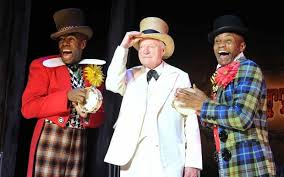
The ringmaster and his 'sidekicks'The Scottsboro Boys, on the other hand, is about as close as one can get to a modern example of this form of satire. It understands implicitly that the purpose of the technique is not to make the audience laugh but to provoke a reaction. Kander & Ebb are well aware of the power of humour to shock and use jokes like verbal hand grenades; the audience often confronted with the sight of two black men forced into playing the archetypal ‘uncle Tom’ roles for their entertainment and internally reconcile the fact that they have laughed at their ‘antics’. This is comedy operating at the very edge of tragedy, and it is all the more powerful for it.

<<Continue to the full review>>

Rufus Norris: New Artistic Director of the National Theatre

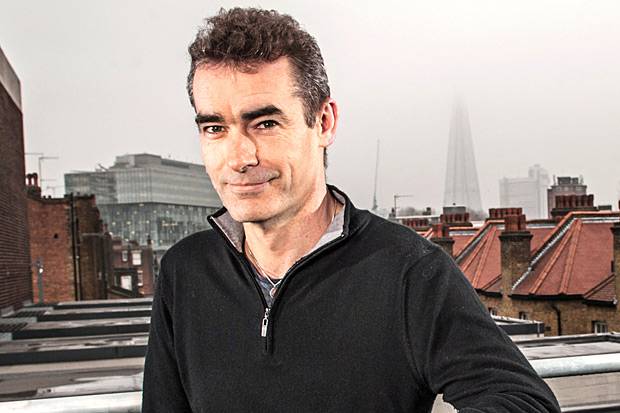
Congratulations to Rufus Norris on the news that he has been appointment to follow in the footsteps of NicholasRufus-Norris Hytner to become the next artistic director of the National Theatre. Generally seen as just about favourite for the role, he has clearly exuded a behind-the-scenes confidence that has outshone his relative lack of experience.

I have read more about his work than seen it – but what I have seen has been absolutely first rate, and whilst the National has looked to broaden its horizons in recent years it has always felt that it was just dipping its toe in the waters. With Norris in post it is perhaps time that the National will truly dive headlong in what it is to produce theatre in, and for, modern Britain.

Hytner has left some big shoes to fill – and clearly they decided not to fill them with more of the same, the National have also sidestepped the opportunity for a ‘big name’. However in all reality what chance did Daldry, Mendes and Branagh really have if they were not willing to forego their cinematic commitments? Watch the bun fight when Kevin Spacey steps down at the Old Vic; a theatre that has more than understood how a ‘celebrity’ name can be a huge draw, vastly outweighing any accompanying problems.

In leaving Norris the Shed space, Hytner’s has bequeathed an excellent legacy that will pay dividends. It gives him room, in those important early years, to work in a smaller, less pressurised space to develop innovative work that may be initially hard to put though the Olivier. It gives Norris breathing space whilst he sets about changing any internal negative attitudes to his direction, and to clear house where houses need clearing.

A couple of years down the line, we may be looking at a National that really does reflect Britain today, and whilst the lack of Shakespeare is a concern (or at least it is for the purists) but perhaps fresh eyes on the playwright is really what is needed.

Norris is an excellent choice and I can’t wait to see how he leaves his mark.

The Tragicomedy of Mac-beth; or how I learnt to stop whining and love the cuts to Arts Council funding

It is no secret that Civilian Theatre has long been troubled by the myopia and self-interest shown in the annual letter-writing campaigns to the Guardian and the Independent from the great-and-good decrying the scandalous cuts to Arts Council funding and how it will endanger the very lifeblood of the craft itself.  Whilst Civilian Theatre is not by nature a callous man and, unsurprisingly, would love to see theatre funded to the hilt in this country – with regional theatres prosperous, village halls packed to the rafters with touring companies and every worthy project that supports a vulnerable group given the financial sustenance they desperately need, it also can’t help but feel if these people of letters are looking rather closer to home for where they feel the funding should be going.

Alongside the cuts, the dramatic rebalancing of Arts Council funding towards more sustainable projects is something that has slipped under the radar. There will always be the need to finance some projects that have great worth but are unlikely to ever be sustainable, but there are plenty of other companies who seem to have grown fat on the years of plenty and seem to have given little thought to what might happen when the tap is turned off.

So what has happened? I don’t see any great decrease in the quality of productions, I don’t see any great decrease in the number of productions, we seem to be in a mini-golden age of playwrights who have broken out of the long shadow cast by Mark Ravenhill, Sarah Kane et al; Nick Payne, Lucy Kirkwood and Lucy Prebble have all put forward plays that don’t look to the past and that engage with the events of our time – be it Enron, Quantum Physics or China. Are we perhaps seeing the emergence of playwrights who can write truly international plays in global times? Time will tell but these are the people that are moving forwards rather than looking backwards.

And for those companies that have the most part always scraped by; who do theatre for the passion and for the possibility of that break. Some no doubt, funding unsecured, have fallen by the wayside, or accepted their fate is to be a strong amateur company (and there is no shame in that whatsoever). And then there are the dynamic and the proactive; the ones that are utilising every avenue to raise money to put on their shows; who are embracing the modern world in search of funding; who realise that a thousand smaller voices can make as loud a noise as one large one.

Which brings us back to the point of this post. My attention was drawn to The Tragicomedy of Mac-Beth. I have no idea if its good, if it will be good or if it has legs but that isn’t going to stop me dipping my hand in my pocket. And why not? Instead of wasting £20 on 5 pints of beer (yes, thanks London), why not help someone realise their dream, feel good about yourself and experience that smug sense of self-satisfaction when you see yourself listed in the programme?

Want to know more – check out more here

NB: It’s probably worth noting that Civilian Theatre (other than giving money) is no way linked to this production, or any of the companies involved.

Exploring new worlds in Battersea

Where The White Stops – ANTLER @ Battersea Arts Centre, 23 July 2013

Sitting inside a stiflingly hot and airless bar-cum-theatre at the Battersea Arts Centre watching the emerging ANTLER theatre company dressed head-to-toe in arctic-ready furs it was hard to resist summoning up that most over-used of precious theatrical clichés; performers that suffer for their art. Despite unbuttoning my shirt to a level that would certainly raise eyebrows at the Royal Opera House I couldn’t help but think that on this occasion the audience had got it relatively easy.

Visiting an Edinburgh preview show is always a refreshing experience. So often going to the theatre carries the expectation of seeing a product in its finished form, and it is pleasant to be occasionally reminded of the process that goesWhere the White Stops into getting to that stage. This is particularly true of a show like Where the White Stops, which has the feel of a piece that has been born out of collaborative improvisation. ANTLER, founded last year, is a young company and they retain a freshness of ideas that is an invigorating contrast to the staid conservatism of much of the West End.

Their production of Where the White Stops balances a sense of surrealist whimsy with a faintly disorientating emotional depth that gives rise to the slightly strange feeling of being trapped inside Bjork’s superb video for Wanderlust. They employ a mixture of physical theatre and polyphonic singing to create a vividly original vision of a fantastical frozen world.

If at times the whimsy can veer uncomfortably close the more navel gazing elements of The Mighty Boosh then it is not long before ANTLER bring it back on course through a tightly written narrative arc that suggests that below the improvisational, physical surface is a keen sense of the importance of the traditional story.

The story is of the modern fairytale; a heroine going on a journey to discover the world, and within it, herself. The key to the freshness of these stories – understood by everyone from Suzanne Collin’s Hunger Games trilogy to Hayao Miyazaki’s work at Studio Ghibli, and in particular Spirited Away – is in the development of a carefully designed world where flights of fancy can be accommodated within the dreamlike logic of the set-up.

<<Continue to full review>>

A Night at the Theatre – Olivier Awards 2013

So the Olivier Awards have been and gone for another year, and as a result what have we have learnt the state of theatre – London theatre, sorry to anyone reading further afield but it is a very parochial affair – in 2013. Well their own website leads with ‘A curious night at the Olivier’s’, which rather sums it up for me. It was a list of winners that doesn’t reflect the experiences of this website’s year in theatre.

To look at those celebrating last night would be to imagine a rather staid and conservative theatre scene. However there has been a vitality and verve to theatre – witness the excitement over Punchdrunk announcements, A Curious Incident...winner of 7 Awardstickets to see Branagh’s Macbeth selling out in less than 10 minutes in Manchester or new plays by young playwrights that embraced quantum theory (Payne), neuroscience (Prebble) or a play that covers everything and nothing in eighty minutes (Butterworth) – that is broadly absent from the list of winners.

Perhaps this could have been guessed at by looking at a nominations list where Lucy Prebble’s The Effect was almost shut out and where the Best New Play category included just one play not reflecting on historical events or retooling an existing story for the stage.

One may argue that last year’s big winner – Matilda – is hardly a broadside against conservatism. However Matilda was the first time anything had walked home with seven awards and it was deservedly seen as a stunning achievement and that a brilliant production had been rewarded for managing the rare feat of capturing hearts, minds and wallets of critics and the public alike.

It does rather undermine the perceived value of the achievement if the next year we see another play walk-off with exactly the same number. Whilst critics have warmly received ‘A Curious Incident…’ and the public continue to throng through the doors, it does not seem to have reached the groundswell of public love and critical affirmation that marked the success of Matilda – which swept everything before it and which was the must-see performance from its very first outing in Stratford.

It is clear A Curious Incident… is good but is it seven awards good? Is it so good that we feel happy that the ‘A Dolls House’ at the Young Vic, ‘Constellations’, ‘This House’ and Complicite’s ‘Master and Margarita’ walk away with nothing? And when we talk about magnificent interpretations of novels, how did the adaptation of Bulgakov’s impossible Master and Margarita not even get a mention? The problem with placing so much attention on just three productions – A Curious Incident, The Audience and Sweeney Todd – is that it doesn’t even remotely capture the spectrum of success of what has been, in all honesty, a relatively mediocre year for theatre in London.

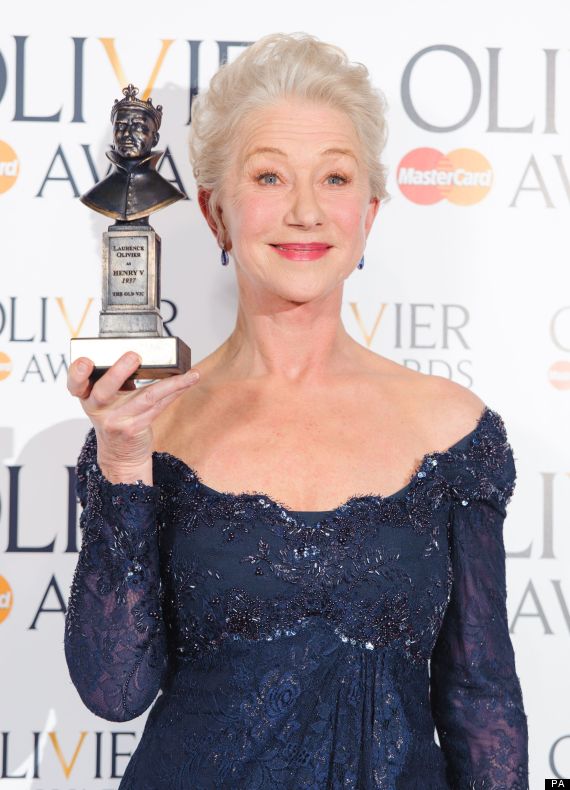
Another award for Helen Mirren, The Queen or possibly bothThe success of The Audience has more than a little of a smattering of one eye on the need to reward the private sector for at least trying a new play, and a more cynical person may suggest that the value of the international market may have had a role to play. Helen Mirren as Best Actress? She might have won it for her awards speech more than the actual part.

It was a pleasure to see Nicola Walker win for ‘A Curious Incident’, a stalwart of TV and of downtrodden wives and mothers everywhere, and without having seen the production it is hard to imagine a more perfect piece of casting for the mother of the 15-yr old lead. Equally commentary seems satisfied with the victory of Luke Treadaway in the role;  a part that is catnip for award judges, as it is basically the modern day answer to the ‘idiot savant’ – something that is a little bit out-of-kilter with modern understandings of mental health. As usual it was a strong year and personally a win for Rupert Everett would not have been amiss but Treadaway seems deserving of the accolades.

With an equally impressive set and technical team it suddenly becomes easier to count up those seven awards. However the Complicite team can feel short-changed not to have picked up a single technical award for their visually stunning take on Bulgakov’s masterpiece. As usual it is mind-boggling that Cheek By Jowl were not nominated for anything – despite the Barbican being a home from home.

Everyone on the Best New Play shortlist can feel hard done by for losing out to something that restaged an existing story – surely there are so many adaptations that this can be a separate category. And ‘Long Day’s Journey into Night’ Best Revival – a truly interminable evening that deserved nothing and for which the praise of critics from every quarter is something that is genuinely unfathomable, even the cast – Suchet, Metcalfe, Soller, all usually so excellent – were dire.

If this year’s Olivier Awards has proved anything to me, it is that this was not a stand-out year for British Theatre; that this reviewer has, Sweeney Todd excepted, has missed most major plays of the year; and that the Donmar needs to re-establish its identity with great haste. A lot of attention has come Josie Rourke’s way and so far the response has been muted at best – where is this year’s Inadmissible Evidence or Anna Christie?

The Full Awards List

What does the Guardian say…

What does the Telegraph say…

Matilda: Capturing the imagination of children and the wallets of adults alike

Very good news emanating from our cousins across the pond, as Matilda opens to rave reviews from pretty much every critic on Broadway. Whilst it doesn’t make the show any less brilliant if it fails to convert to our American Matilda friends, a Broadway smash is still seen as the gold standard for any musical – and there are many West End hits that failed to become the next ‘Phantom’ (over £5.5 billion sales worldwide and counting).

As the Guardian points out, there is money to be made in this market – the RSC anticipating £11 million advance by the end of the first day. £2.5 million was made in previews alone. It recouped its £7 million costs in London in ten weeks and plays at 98% capacity ever  since its October 2011 opening. However without the Broadway gold star then it makes the global tour of ‘Les Mis’ that much more likely, it means opening up to tours of Australia and Asia, across Europe and indeed anywhere else where it could be marketed.

There may be some in the art world that still sneers at playing to the gallery, at the rather déclassé notion of thinking about returns on investment, but this ignores the 15% real terms cut to the RSC’s Arts Council funding. It ignores just how much productions like Les Mis and Warhouse lined the coffers of publically subsidised theatre companies in the times of plenty so that now, when times are difficult and will continue to be so for some time, we see the National managing to erect a completely new temporary space in ‘The Shed’ rather than cutting costs and going dark whilst the Cottesloe is renovated. It allows the RSC’s annual tour to Newcastle to be reinstated.

In the week of Thatcher’s death it seems appropriate that the biggest product in British Theatre is a musical subsidised by the public sector. It was entirely in keeping with her vision that success in theatre equated directly to success at the box office, and to this Matilda appears to of hit the brief. However could Matilda have been made purely with private investment; could the private sector have brought the true subversive nature of Dahl to the stage? Could they have taken the risk on such a child-centric production? Would they have wanted to spend money on a production that decries the traditional family, that cocks a sneer at perceived lower-brow passions and that hires a lyricist as dynamically witty as Tim Minchin?

<<Read rest of article here>>