An evening with…The Beatles

Let It Be – Garrick Theatre (and variously on tour) [Tickets]

Let it be…said that this reviewer does stray out of their comfort zone occasionally. Children murdered by the mother? Check. Libertarian ethics of avatar paedophilia? Check. An absurdist Bolivian redux of Hamlet? Check. An evening at the Garrick Theatre spent listening to faithful renditions of songs by the most influential band of all time? Well, there is a first time for everything.
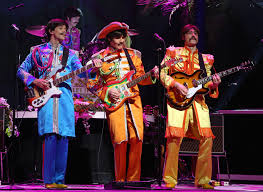
beatMany people hate on jukebox musicals but this reviewer does have time for the concept; Buddy, Mamma Mia and Our House all prove that given care and attention, and a back catalogue that can sustain a two hour plundering, it doesn’t have to be an excruciatingly painful evening. Indeed in my opinion the general terribleness of We Will Rock You says more about the quality of Queen’s songbook than it does about the show itself – and the fact that listening to 120 minutes of overblown bombast is more than enough for most people.

Well, no-one is going to claim that The Beatles don’t have the quality to cover the running time of a tribute concert. Indeed quite a fun little game to play on the tube ride home is to come up with a playlist that is just as strong as the one they left in – Oh Darling, I Want You, Nowhere Man, You’ve Got To Hide Your Love Away, She’s Leaving Home, Dear Prudence & Helter Skelter are just some I would have tried to slot in somewhere.

Perhaps it is already a well-known fact but Let It Be is not a musical in any meaningful sense of the word. This is a full blown ‘evening with The Beatles’ affair (except, rather excruciatingly and presumably for copyright reasons, they seem to be called ‘Let It Be’ which does dull some of the mystique).

There is no semblance of plot excepting an intermittent narrator guiding the audience through the years and ticking off all the big non-controversial Beatles milestones. Invading America? Yes. Bigger than Jesus? No. Hippies? Yes. Any overt references to mind-splitting amounts of acid? No. Gently mocking Ringo? Yes. Any mention of Yoko Ono? No.

Really though none of this matters. The producers have drilled to the core of what people want. And that is for those who never got to hear The Beatles the first time round, it is a chance to hear entirely competent covers of classic songs. And that is what you get – a relentless tidal wave of hit-after-hit performed with verve and energy. The music is so good that you cannot help but tap your toes, clap along and join the gustily sung, surprisingly tuneful audience-led rendition of Yesterday.

<<Continue to full review>>


I must thank the good people at Official Theatre for the tickets. Even without this shameless plug, please do check out their website to find out what is going on across the West End; it has links to tickets, venue contact details and bits ‘n bobs about all the theatres – the sort of thing I would do if I wasn’t so damn lazy.  (www.officialtheatre.com)

Where are your god’s now?

Medea – Olivier @ National Theatre, until 04 September (Tickets)

One of the most shocking things about this production of Euripides’ Medea is the discovery that it’s the first time that the National Theatre has staged it in its 50 year history; a startling omission, and all the more appalling MEDEA_2982115bwhen you consider the legion of fine female actors that have graced the stage in that time.

When you consider the paucity of roles for women in pre-20th century playwriting then to ignore one of the great tragedies is astonishing. Medea, more than many of the surviving plays of ancient Greece, has retained its relevance to the modern era as it can rely as much on an understanding of human psychology as it does on the intervention of the Gods.

That it was never picked by the National to ‘inspire debate’, if for no other reason, during the height of the fight for gender equality; it seems an obvious candidate, although a firm hand is needed to steer Medea away from a conspicuously Congreve-inspired ‘…hell a fury like a woman scorned’ and closer to Shakespeare Lear who saw himself as ‘...More sinn’d against than sinning’.

It is a crucial distinction; it is difficult to separate Medea’s anger at Jason’s actions from her anger at her own impotence, but it is essential to make this seperation if Medea is going to be humanised as a tragic figure in her own right. It is like Lear in the storm; we may not fully believe in his argument or in his call for the gods to execute justice on his behalf but we have to believe that his raging is at least partially justified.

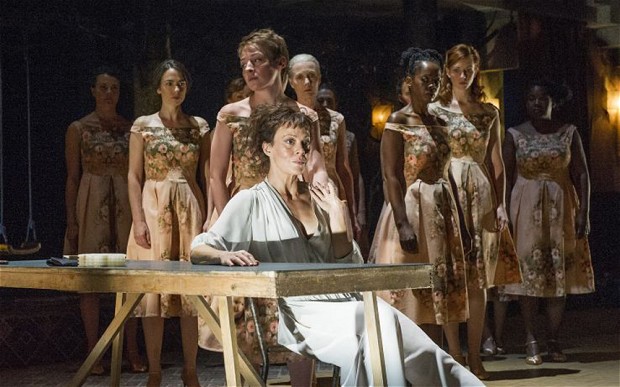
Carrie Cracknell clearly believes it would have relevance in the past having seemingly set the play in the 1970s; the period was a boom-time for psychoanalysis and self-discovery, and Helen McCrory’s Medea approach and understanding to her problems is often as someone who has spent time assessing themselves on the couch. The era is reinforced by Tom Scutt’s beautiful design and immediately recognisable period furniture. The plate glass window and minimal lines could come as easily from a Mediterranean villa as they could from a southern Californian hillside.

Dominic Rowan as AegusOver 2014 Cracknell has directed three plays and, along with the A Doll’s House at the Young Vic in 2012, there are clearly thematic links between them. She seems fascinated in the fragility of the individual and particularly those who deliberately set themselves against the grain. A Doll’s House, Birdland and Medea all contain protagonists who must bear the weight of societal pressure to conform; these people are not, in themselves, naturally heroic but find that they cannot bring themselves to act in any other way.
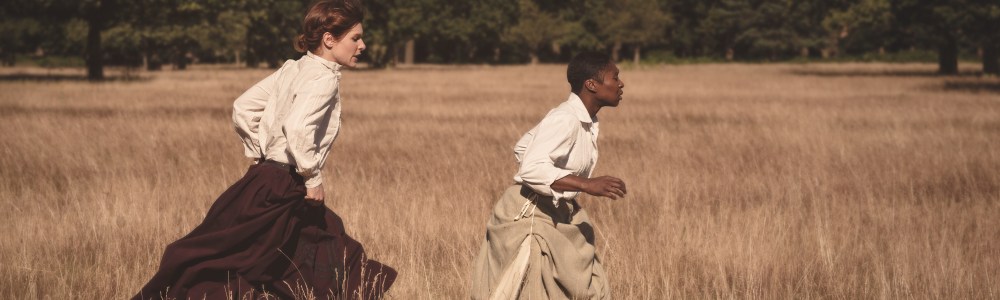
The third play – her collaborative effort with Nick Payne – was Blurred Lines highlighted another theme central to her work; an interest in women and the position they are held in by wider society. Blurred Lines was a painfully powerful expression of real lives, a melange of stories, thoughts and opinions that traversed the spectrum from bleak and melancholy to humorous and life-affirming. A Doll’s House is an established genre-defining work and Medea, well for Medea to work it needs to show the internal complexity that can push a woman to commit what continues to be one of society’s most horrifying taboos.

Helen McCrory is an actress more than capable of producing the subtleties necessary for the role. At 5’4 and with a face that has a pixyish quality McCroy is perhaps not the Medea of the imagination – all strident, astringent anger and physically domineering as the fury whips up around her – and against Danny Sapani’s burly Jason it is apparent that she is never going to go toe-to-toe with him.

<<Continue to full review>>


Watch the trailer


A whistle-stop tour of the antebellum South

Dessa Rose – Trafalgar Studios, until 30 August 2014 (tickets)

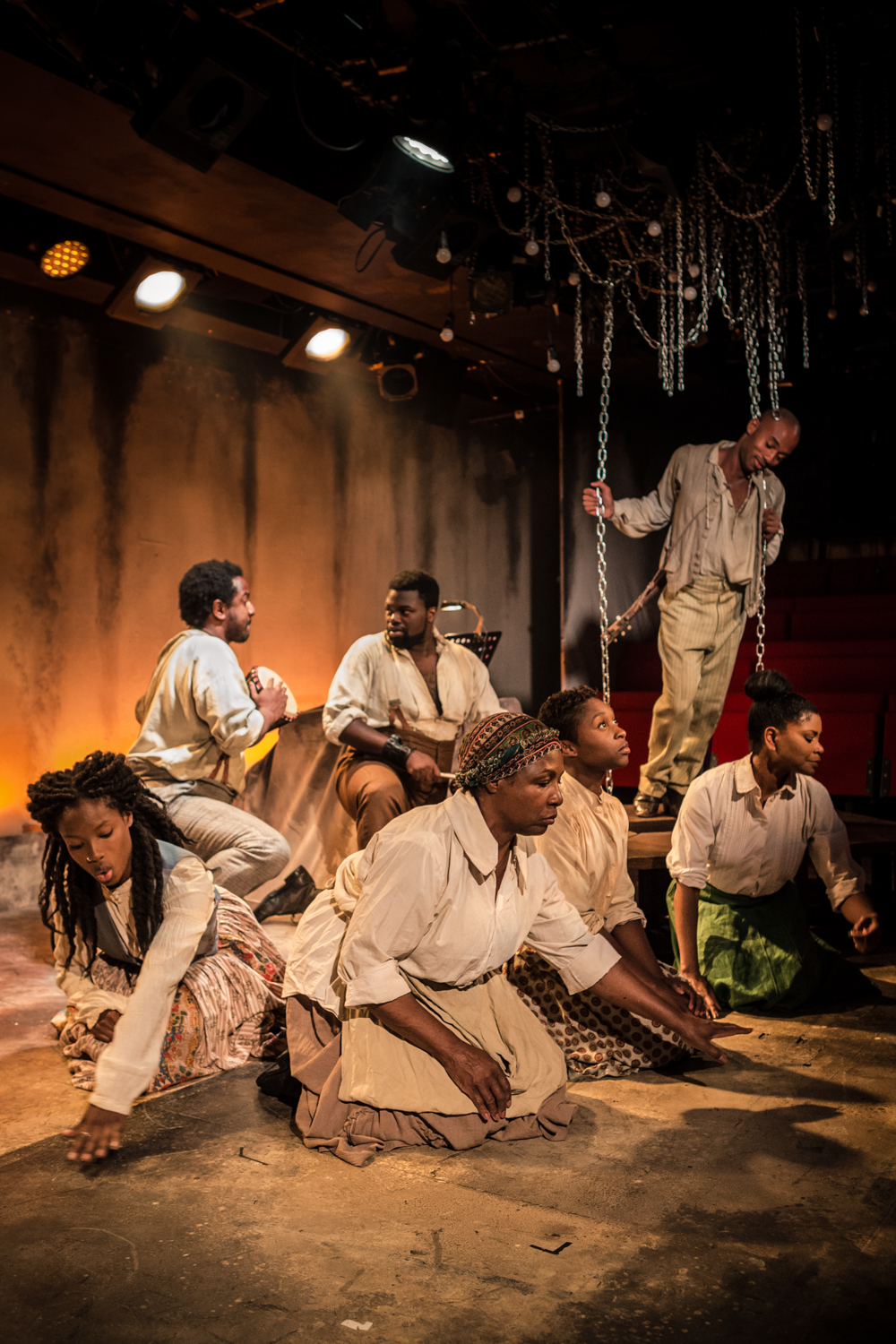
At the start of a new musical there is often a frisson of excitement that doesn’t often occur with new plays; the rarity of a new book, and the possibility that you could be in the audience for the next Chicago, Cats or Sound of MusicDessa Rose, Trafalgar Studios, Courtesy Scott Rylander,10 or, alternatively, Gone with the Wind or (fingers crossed) Carrie: The Musical seems to add a certain expectation to the evening.

As a result it is with something approaching disappointment that it must be reported that Dessa Rose proves itself to be an entirely functional musical, with performers and musicians’ skilfully executing what is, in the main, a rather humdrum book from Lynn Ahrens and Stephen Flaherty.

Whilst the production has a number of highlights it covers so much ground that you are pulled across decades as quickly as you are across musical styles. It is often not clear when or where you are, and this causes its central theme – that there is a bond between ‘women’ that can cut across the race and income divide of the prejudiced 18th century South – to never be satisfactorily addressed.

Ahrens and Flaherty have some form in producing surface-level musicals that work more as a Wikipedia summation of American history than as a complex emotionally engaging narrative. Ragtime, last seen in the summer of 2012 at Regent’s Park Open Air Theatre, was taken from E.L Doctorow’s novel, and was similarly fated to be rendered down into a deeply and problematically oversimplified tale of the oppressed masses instead of a complex view on America’s rich social-cultural history.

Musicals have taken a leading role in addressing racial prejudice and the experience of black people in America. Porgy and Bess is often held up as one of the greatest American musicals, The Scottsboro Boys finally emerged in the last couple of years as one of Kander & Ebb’s finest creations and, in the same year Ahrens & Flaherty produced Dessa Rose, The Colour Purple was also adapted for the stage.

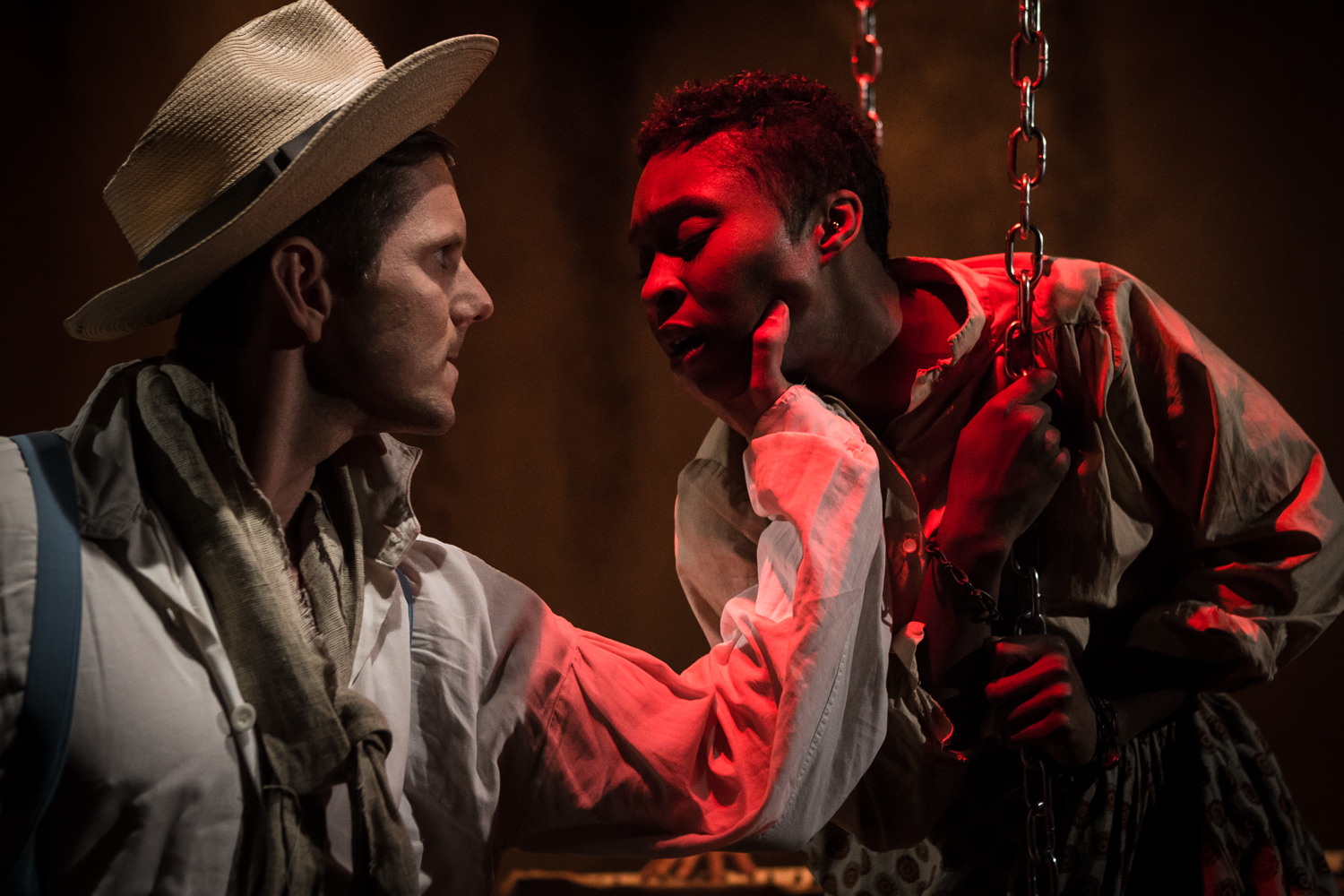
Dessa Rose, Trafalgar Studios, Courtesy Scott Rylander,28These are not small shoes to fill and Dessa Rose, for all the heart of its performers, never comes close to filling them. There is nothing that comes close to matching Summertime or It Ain’t Necessarily So as musical numbers, it doesn’t have the natural, shocking wit of The Scottsboro Boys and the twin themes of racism and sexism are far more clearly articulated in The Colour Purple.

Dessa Rose is strongest when the performers and musicians are doing what they do best and the message gets forgotten about for a while. There is a tight-knit quality to the ensemble that suggests a strong rehearsal process and credit must go to Andrew Keates (Director) and Sam Spencer Lane (Choreographer) for some remarkably agile set-pieces on the tiny Trafalgar stage. It is not easy to work on a thrust stage with a cast of twelve but it is an impressively fluid production, and rarely do the actors get under each other’s feet.

<<Continue to full review>>

A lack of logic destablises the virtual world of The Nether

The Nether – Royal Court Theatre, until 09 August 2014 (tickets)

If it is not surprising that there are aspects of the modern world that barely exist on the stage – the sheer ubiquity of mobile phones, the centrality of TV and increasingly the internet to our lives – it doesn’t mean that this is a position that shouldn’t go unchallenged. It is true that traditionally these objects and our interaction with them have been seen as profoundly un-theatrical; they are products that led us to insularity and internal monologues, they are still and render us likewise. However it is up to theatre to challenge these assumptions

So to see The Nether, a play that tackles the internet – or at least a future-net – on the main stage at the Royal Court is a welcome sight. That it is supported by snazzy graphic designs (Luke Halls) which blur the transition from the real to the virtual world signals that some thought has gone into how to dramatise such a personal, internal activity – and, once again, it showcases just how far technical effects for the theatre have come.

It follows hot on the heels of Privacy at the Donmar and, whilst covering very different ground, they share an attempt to demonstrate that theatre is a medium that can not only engage with human and social issues but also has a role in challenging audiences on the technological issues that are increasingly blurring the boundaries between internal and external thought and action.

To describe the plot risks giving away rather too much of what makes the play an interesting watch. Although since the Royal Court refers to the fact that it is about a ‘virtual wonderland’ and that it covers ‘paedophilia in a digital world’ it doesn’t take a whole lot of imagination to recognise that this is a play that, in the words of a BBC voiceover, ‘some viewers may find offensive’.

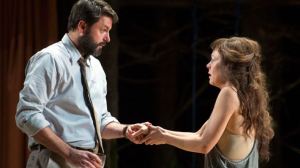
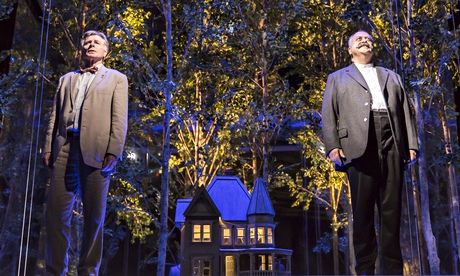
The Nether by Jennifer Haley, Royal Court, LondonThat said this reviewer is surprised to hear talk of walkouts from the audience; whilst the concept may be distasteful, the production itself is pretty clean-cut and there is nothing that comes close to Blasted or Ubu in terms of disturbing visual imagery. In fact if anything the casting of the child actor (Zoe Brough as Iris – and exceptionally good in the role with a stunning, and quite disturbing, maturity) has perhaps restricted how far they could push the elements that people would find most troubling.

There are a number of problems with the play. Despite the sterling work of Luke Hall’s visual imagery and the wonderful Victoriana set design by Es Devlin, the play never rids itself of very static direction. This is not helped by the writing that turns every other scene into a dialectic between two sides of the argument, and setting these conversations in an interrogation room leaves very little freedom for movement.

Jennifer Haley’s script has nice touches but is also surprisingly weak in a number of areas; the core problem is that Haley strives for balance between her characters in order to create a ‘debate’ and make the play something more than a moralising rant. However the challenge of creating balance when one character is clearly morally repugnant has been tackled by making the ‘other’ appear artificially weaker and flawed. The balance is upset because Amanda Hale’s Morris has been nobbled from the get-go and will never match the personality given to Stanley Townsend’s Sims. As a side-note, it is almost impossible to believe that these names aren’t supposed to evoke the world of Pinter but sadly the dialogue itself falls rather short of this.

<<Continue to full review>>


Ex-dwarf and witches combine to create a potent brew at a transformed Old Vic

The Crucible – The Old Vic, until 13 September

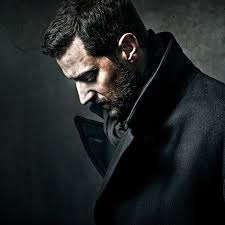
It is unclear whether London is enjoying an Arthur Miller renaissance or whether he is one of those playwrights, like Ibsen or Chekhov, who is bankable enough and with enough star roles in the canon that he will always hover on the fringes ready for a new production. Either way, David Suchet and Zoe Wanamaker combined in a pretty much perfect, highly traditional, All My Sons back in 2010, whilst earlier this year Ivo van Hove gave us a radically stripped back A View From A Bridge built around an absolutely blistering performance by Mark Strong.Richard Amitage as John Proctor

Now, just metres down the road from where Strong put in a decent early bid for performance of the year, we have Miller’s The Crucible; a play that is audacious enough to not just have one Eddie Carbone role but several. It is Richard Armitage, playing John Proctor, who dominates the posters – one presumes Hobbit-y fame and a suitably jawline is the primary reason for this but it is a rather misleading image; Proctor may be a central figure, but this is a play that revels in a large cast and in the searching light that Miller casts across the residents of Salem.

That minor quibble aside, a mark of the power of this production is that the audience sat rapt for 3½ hours on the hottest day of the year whilst being subjected to periodic blasts of burning herbs and smoke effects. As good as Miller’s writing may by, those conditions did have the potential to induce a most literal understanding of the play’s title to the poor, sweltering audience members.

It is to the full credit of Yaël Farber that the long running time rarely seems like a drain and the action, simply staged but highly evocative of the period, speeds along building an inexorable momentum through to the third act climax before the sudden transition to a final act of quiet, where the heady atmosphere that has propelled the trials disappears with the disappearance of Abigail and space is given to reflection, on both spiritual and human levels. This is the much-needed calm after the storm and the reflection is for both Miller’s characters and for the audience who are suddenly pulled back out of the manic paranoia of the town.

Farber was responsible for the wildly successful Mies Julie – a South African-set re-examining of Strindberg’s classic – and given the contemporary allegories can be seen as strong now as they were when Miller wrote the play in the long shadow of McCarthyism, it must of have been tempting to look for a way to pin The Crucible to the modern world.

However Farber plays it straight and lets the parallels speak for themselves. It is Miller’s ability to create characters that are of their time but are yet clearly visible in the 21s century that makes The Crucible such an enduring work. The manipulations of Abigail, the fallibility of John Proctor and the hypocrisy of Judge Danforth are traits that are, and will remain, commonplace for as long as there are still humans walking the earth.

The characters in The Crucible may talk in terms of the soul but Miller’s writing is concerned about the psyche. There may be much talk about God and the Devil but it is human emotion that drives much of the action and Farber conjures up periods of quiet amid the maelstrom that allows the audience a moment to glance into the hidden frailties of the characters.

<<Continue to full review>>

Wot No Fish 2_Credit Malwina Comoloveo

For madeleine read fishball

Wot? No Fish!! – Battersea Arts Centre, until the 19 July 2014 (Tickets)

It has taken Wot? No Fish!! a while to reach the Battersea Arts Centre. After spending two years in development, it premiered at last year’s Edinburgh Festival before working its way through the regional theatre circuit then finally arriving in London just as Edinburgh begins for this year’s crop of hopefuls.

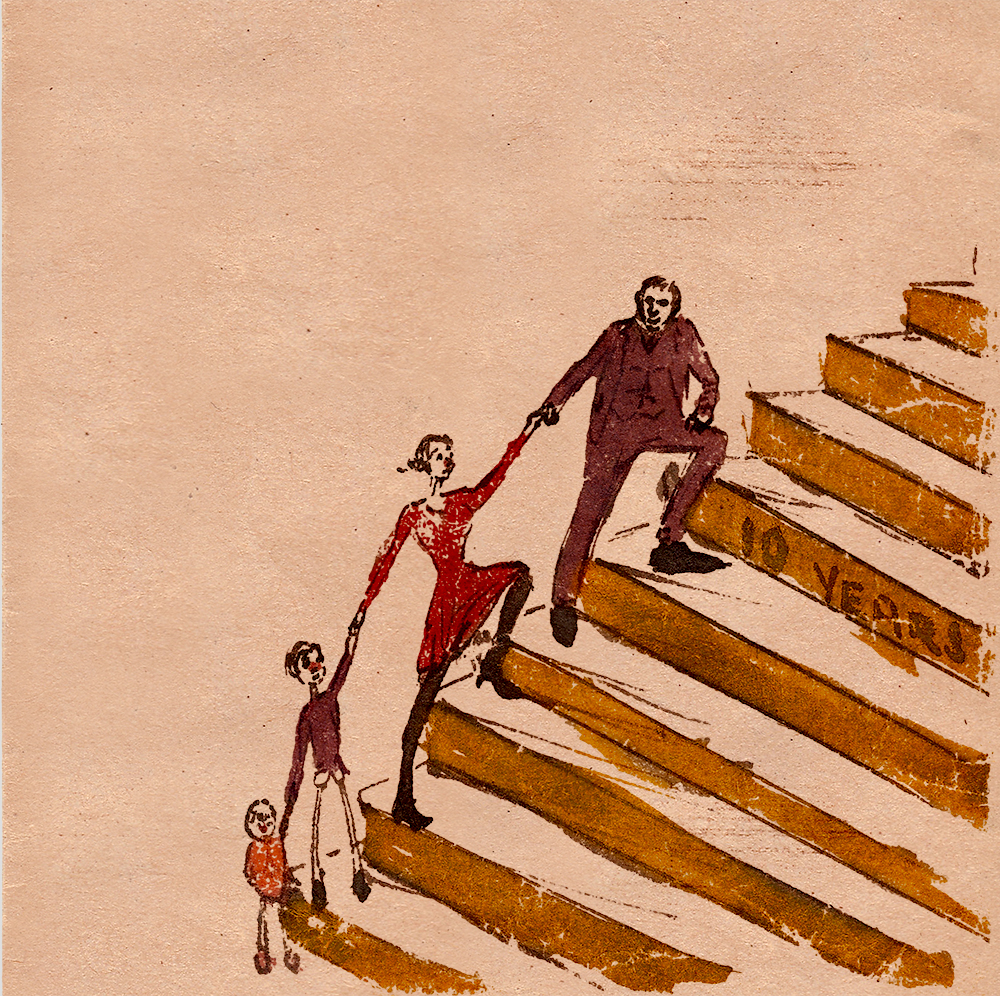
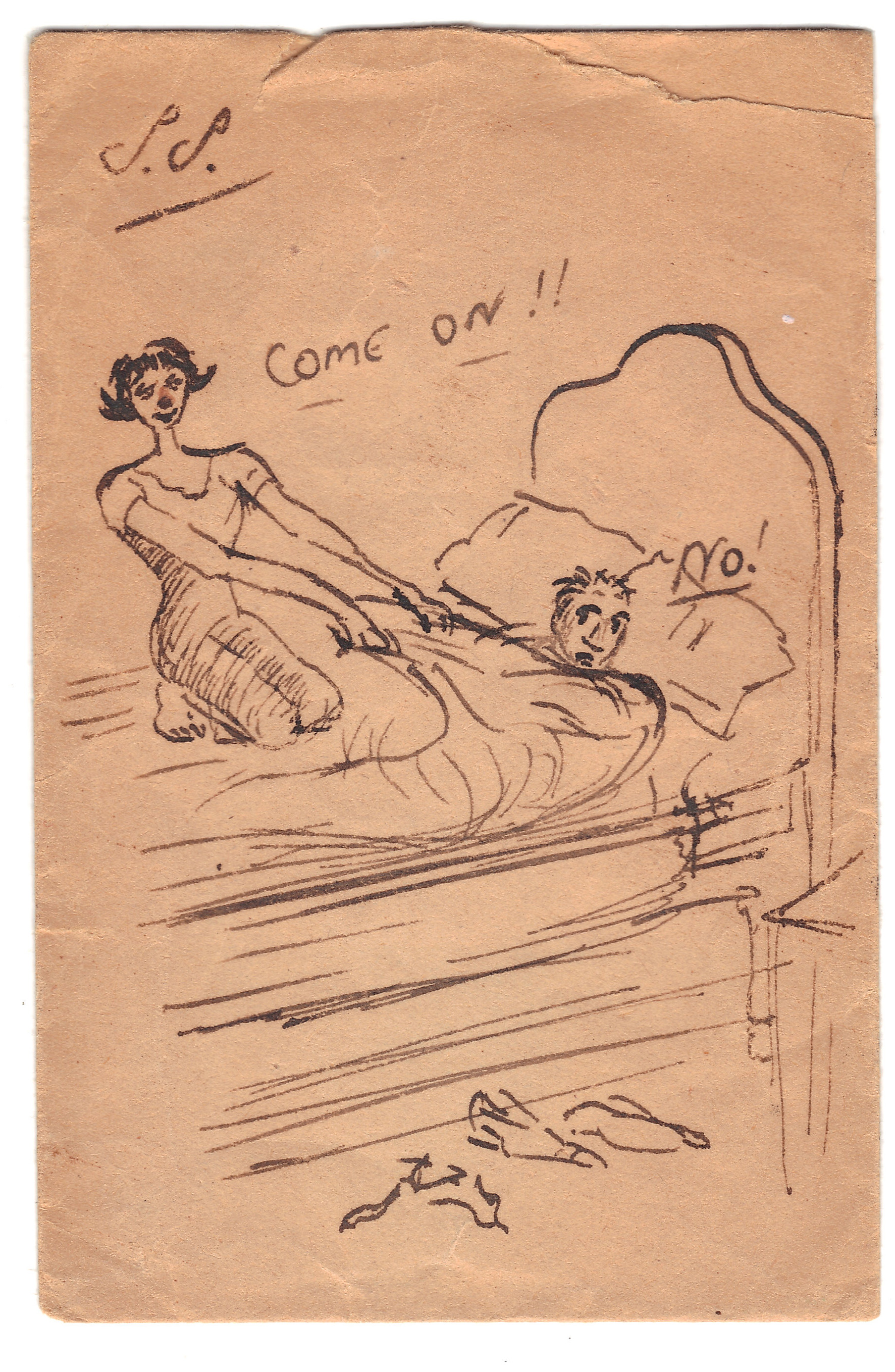
Except this isn’t quite true. The story we are told pre-dates all of this by the best part of ninety years, and the show was already there just waiting to be found. For Danny Braverman has pieced together, drawing on his ownBattersea Arts Centre_Wot No Fish family history, a far more tender and moving story than could ever be realistically crafted in fiction: the life of an East End Jewish shoemaker and his family told through the weekly sketches he gave to his wife on the back of his wage packet.

It may be told with all the simplicity of a fairy-tale but the magic is created in the natural complexity of the lives of real people. It is a story of a family who may not have encountered witches, dragons and quests but instead must confront argumentative sisters, the threat of war and a move from the East End to Golders Green.

This is the story of Celie and Ab Soloman and we hear about their lives through Braverman whilst seeing it brought to a vivid reality through Ab’s miniaturist cartoons; it is less a play and more an illustrated aural biography. Braverman has made a wise decision to not perform the story because he has realised that all the drama exists in the pictures; he recognises his role is to explain, to be our guide through the lives of others.

Battersea Arts Centre_WNF_Ab Picture_6The production has a few touches that hint to its past life at Edinburgh, perhaps some will find the slightly whimsical delivery irritating and the attempts to engage the audience a little heavy-handed but this is just part of the charm of a production that is constantly reinforcing a sense of community and of shared stories.

As Proust starts with a madeleine so Braverman starts with fishballs. And if you didn’t already know you were entering the close knit world of east end Jewish families then the references to gefilte fish and chrain prove something of a clue. It is the memory of this snack that accompany him on a trip through hospital and it is the recurring motif that Braverman returns in order to continue unravelling the lives of Celie and Ab over time.

Braverman acts as a curator of the work. The care with which he has unpicked and ordered the events is staggering. There are over 3000 works in total and we are shown a carefully woven selection to build a richly textured picture of two lives that we never knew existed before walking into the room. By the end of the journey (inevitably it must end and like all human journeys it can only end in one final destination) we feel we know them as well we know our own relatives.

<<Continue to full review>>