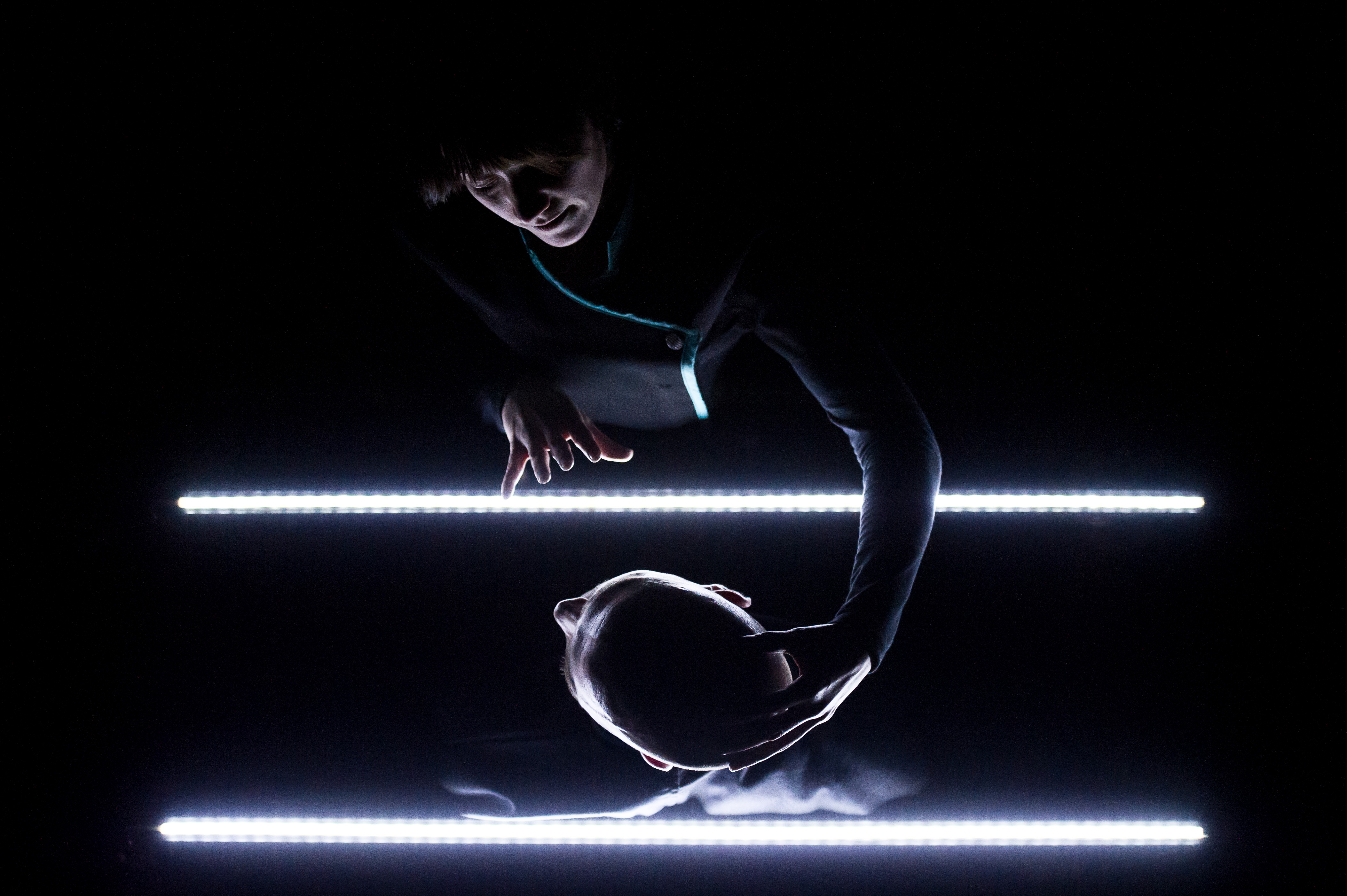
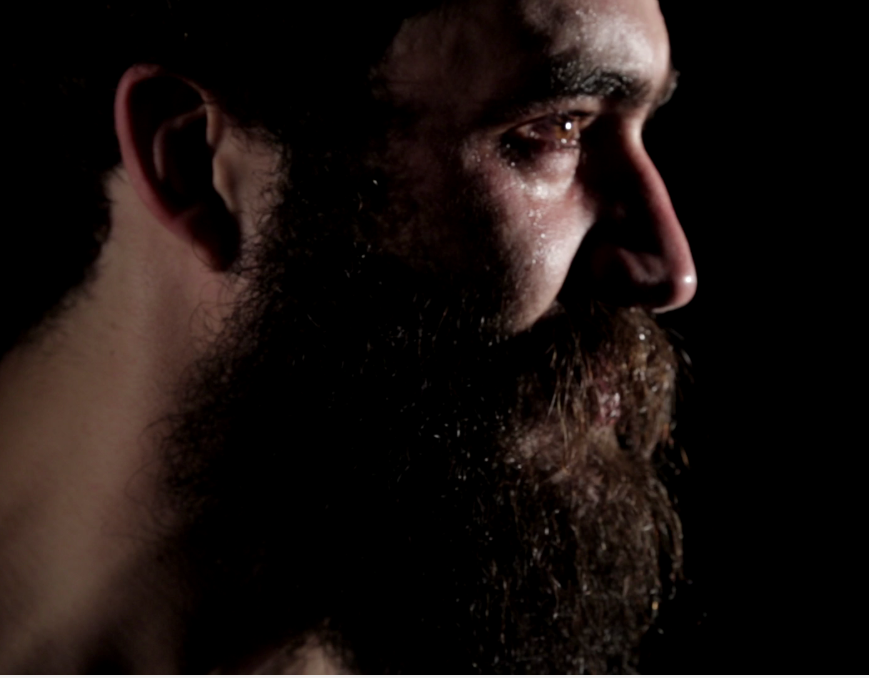
Fever 0272 - Tobias Menzies by Perou

A hallucination from my fevered brain

The Fever – Almeida Theatre @ The May Fair Hotel, until 07 February 2015

The use of The May Fair Hotel is spot-on. It isn’t so much that it is a luxury hotel, but it is that type of global, anonymous luxury that means absolutely nothing. The Savoy, the Ritz or the Carlton;the fever banner they may be pricy but there is a distinct personality to them. From the lobby, through the corridors and into the exclusive high-end suite where Wallace Shawn’s incisively powerful monologue has been set, the most striking feature is the sheer facelessness of this wealth.

Generic abstract ‘world’ art hangs on the wall, the corridors have a plush carpet but are really not so different to those found in any Travel Lodge and there is absolutely no personality to the room. Containing huge flat screen TVs, top-end speakers and a bathroom as big as a London studio flat, it doesn’t thrill but importantly it doesn’t offend. Perfect for the wealthy Russian and assorted euro trash clientele that swarm around Mayfair, keeping London’s economy buoyant in the face of the latest dismal news emanating from the eurozone.
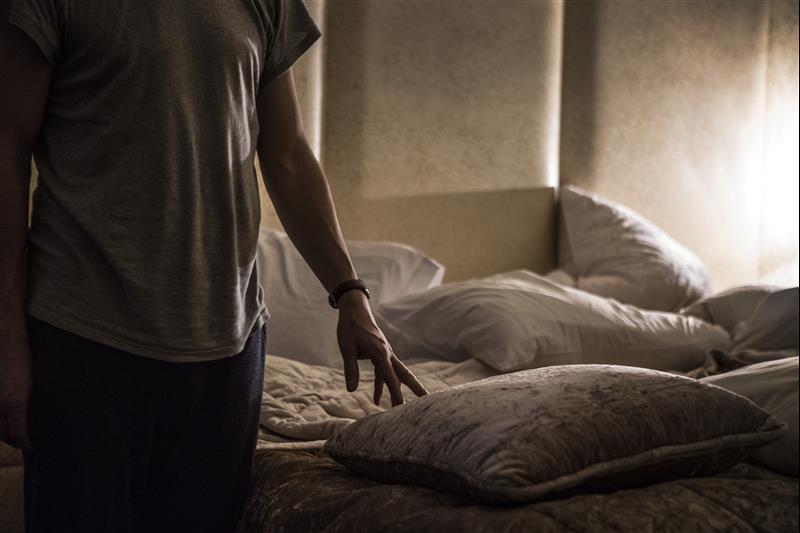
Fever 0242 - Tobias Menzies by PerouIt is perfectly chosen for a monologue that captures the global dynamic of modern wealth, the faceless hotel room culture of the high-flying worker from the developed world. Take a photo of it and you could never hope to guess what city it is located in. London to Mumbai, New York to Lagos, we have joined the hermetically sealed world of the international class.

Wallace Shawn wrote this tremendous piece back in the 1990’s. Even if some of the terms have dated – there is an almost charmingly old-fashioned bit on Das Capital and, of course, there is no mention of the threat posed from a resurgent Islam – it is sadly even more relevant than when it was written. Day after day we hear how yet more of the world’s global wealth has fallen under the control of the richest. In 15 years we haven’t turned this tanker around, and the terrifying aspect of Shawn’s play is the chilling realism of it not trying to suggest we will do so in the future.

Shawn wrote words that he felt needed to be said. Well, this production demonstrates we need to keep saying them. He brilliantly frames issues in a way that have an immediate resonance. His section on the fanaticism of the metropolitan class – how their brains refuse to even allow themselves to consider the inherent unfairness of the global capitalist set-up because if they did then they couldn’t function – is one of the most singularly incisive critiques I have heard on the issue.

<<Read full review here>>

LDN Theatre Bloggers Unite – Together We Are Unstoppable

In the spirit of full disclosure, this post skirts very close to the edge of an advertorial. The good people at Civilian Theatre will always strive to review fairly whether the tickets are press freebies or bought out of our hard-earned cash. However the line does blur when it comes to what to write about events that have been set up by companies that clearly have a vested interested in bloggers talking about their products and are happy to liberally apply free wine and food. So read the following in whatever spirit you wish and just remember – like any theatre – these views are my own, and I encourage everyone else to form their own opinions about things by following the links and finding out more about them.

It is always slightly strange going to press nights, sitting in the dark for ninety minutes and then rushing off home to write up some thoughts before crashing into sleep, waking up to go to the job that actually provides the money for you to do all of those cool (read expensive) London-y things, and starting the cycle all over again.

So last night provided a rather fun change of pace as I was invited – as part of the #LDNTheatreBloggers community – to a little soiree organised by the Duracell-bunny made flesh, one-woman human dynamo, @rebeccafelgate, to meet, mingle, natter and mix with other members of the online theatre blogging world.

The lovely Rebecca has been grafting away trying to get us nameless, faceless people to be that little bit more sociable – so that when we see familiar faces out and about we might actually go and say hello. I know it all sounds terribly un-British but there you go.

The good people at Official Theatre (www.officialtheatre.com or @theatreofficial) are the brains trust behind a lot of this loveliness. They have already done a fine job in hooking up bloggers with shows to review, and have crafted a nifty line in video reviews (see link below for a rather amazing Lord of the Dance video response).

http://www.officialtheatre.com/dominion-theatre/lord-of-the-dance-dangerous-games-2015/

Regular readers of this blog will probably notice there is something of a disconnect between what they offer and what we review. However if you do like West End shows then it is a pretty useful one-stop shop for getting the low-down on what’s on and buying tickets. Plus it turns out that not everyone wants to see miserabilist 3-hour plays performed in a mixture of mime, interpretative dance and Latvian folk song. Well who knew?

Also worthy of a mention is Seat Plan (www.seatplan.com or @seat_plan) who are a service that I really don’t mind doing a little schilling for. Basically if you have ever sat in the gods then you will probably recognise the experience of wondering whether the cheaper (but still not that cheap) ticket price is really worth the two and a half hours you are going to spend with you knees forced up to your chin and half the stage obscured by the edge of the balcony. Basically it is a user-led seat review service. People can upload photos of the view from their seat and give it star ratings (because everyone loves turning things into 5 star metrics).

My only beef is really with the fact that a lot of the theatres I go to are not currently on the site. So a plea to the guys at Seat Plan – we don’t all go to the West End. Have words with the National, Donmar, Young Vic, Old Vic and Barbican. I want to tell you what they are like.

But anyways I must rush to get a train to Cardiff (the fun literally *not literally* never stops), so just a final mention that if you are here and you want to read other people’s reviews then check out #LDNTheatreBloggers and #Stagey on Twitter to find more like-minded people than you can shake a stick at.

Toodles


IMG_4060 These are courtesy of Rocco Redondo.

The play where everybody is somebody and anybody is nobody.

The Diary of a Nobody – Rough Haired Pointer @ King’s Head Theatre, until 14 February (Tickets)

It feels appropriate that The Diary of a Nobody should kick off the new King’s Head Theatre season in January. For how many nibs have been sharpened, fresh pages turned and inner-most thoughts committed to paper since the start of the year? And how many, begun with the best of intentions, are already gathering an unholy combination of dust and regret?

That so many are abandoned is hardly surprising, for it takes a rare blend of solipsism and dedication to commit to the task of capturing your thoughts for posterity. The jeu d’esprit of the professional raconteur is a rare talent, and even celebrated diarists of the stature of Alan Clarke or Christopher Isherwood can be heavy going if read cover to cover.

Literary triumphs recognise the average diary writer is nothing like these people; rather they prick, with considerable acuity, the pomposity of the English middle classes. In modern times we have the brilliance of Sue Townsend’s Adrian Mole, whose sense of his own self-importance is drolly sent-up in his teenage obsession with Malcolm Muggeridge. The Victorians, who certainly knew a thing or two about pomposity, had one Charles Pooter of the The Laurels, Brickfield Terrace, Holloway.

The creation of George and Weedon Grossmith, Pooter is a character that grew larger than the book that contained him (a fact that would have pleased him greatly if he didn’t stop to find out why). To be ‘Pooterish’ is to have a vastly inflated sense of one’s own importance and to take oneself far too seriously. In today’s world of internet blogs, Twitter feeds and Facebook sharing, it is a word that has more relevance than ever before (and yes, Civilian Theatre recognises that ‘glass houses’ and ‘stones’ comes to mind here).

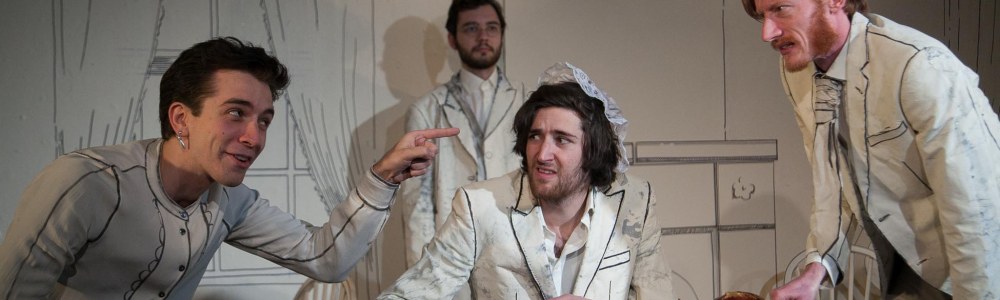
Rough Haired Pointer has taken on the difficult task of adapting the wonderful comic novel, The Diary of a Nobody – the lasting chronicle of Charles Pooter, his family, friends and servants. They do so with energetic vigour and considerable panache, as four actors take it upon themselves to play 45 characters across 100 minutes in a space with nowhere near enough room to swing a cat.

<<Read full review>>

Out of darkness comes Light

Light – Theatre Ad Infinitum @ The Pit, Barbican Centre (Touring until 16 February 2015)

Performed as part of the London International Mime Festival

Light is proof, as if any were needed by now, that Theatre Ad Infinitum are staggeringly good. Just staggeringly, staggeringly good. They are a theatre company that completely and utterly Theatre-Ad-Infinitum-Light-c-Alex-Brenner-photoconfound expectations, and produce plays make you leave the auditorium wanting to tell everyone you know that the absolutely most important thing they could be doing is going to see one of their productions.

Hence the gushing opening paragraph.

Slowly but surely people are waking up to their talents. Light, performed as part of the London International Mime Festival, sold out months ago. They clearly have a devoted fan base and have won a number of fringe awards but it feels like they are currently on the cusp, like 1927 with Golem, of producing a show that takes them out of the Barbican’s rather tiny Pit theatre and onto the main stages.

Theatre Ad Infinitum are not a company that like to sit still. They came to my attention at the London International Mime Festival in 2012 with Translunar Paradise – a work of quiet, tragic brilliance. It demonstrated in its simple, understated way the art of puppetry and despite the alienating effects of the mime it felt more human than any other play produced that year.

Theatre-Ad-Infinitum-Light-c-Alex-Brenner-please-credit-_DSC4592-dimmer-dressesThey followed it up with something completely different; the hyper-verbal, bundle of energy that was Ballad of the Burning Star. If not as technically refined as Translunar Paradise, it was a fabulously entertaining take on the most contentious issue in world politics. It was a forceful piece of theatre that refused to allow itself to be pigeonholed and gave very few easy answers.

And now they are back with Light. This time we are in genre sci-fi territory with a dystopian piece of futurism, imagining what might be as twin developments in technology and neuroscience allow for an ever greater entwining of individual and social consciousness.

<<Read full review>>

Dante: Re-Brand-ed

Dante’s Inferno: A Modern Telling – Craft Theatre @ The Rag Factory, until 01 February (Tickets)

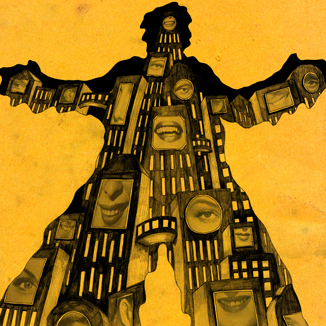
On sitting down to enjoy a post-show drink the friend I invited to this intense interpretation of the first part of Dante Aligherei’s Divine Comedy, the dante 114th century epic allegory of a man’s descent through the nine circles of hell, sheepishly admitted they may have told colleagues they were going to see Dante’s Peak.
Well, one can but try.

Full disclosure leads me to sadly announce that at The Rag Factory there was little sign of either active volcanoes or renowned vulcanologist Pierce Brosnan.

Instead audiences had better buckle up and prepare themselves for 80 minutes of earnestly performed theatre that attempts to blend the meditations of an early renaissance literary masterpiece with the post-1970’s politico-spiritual philosophies recently given a new lease of life through the ever enthusiastic talking head that has become Russell the Brand.

luke eyeThere is something thrilling about watching a young company work through the process of creating a form of confrontational theatre of their own.

And Craft Theatre certainly know how to talk a good game. Their website is full of intriguing statements about how they have “a practice that allows the actor to understand and become master of their body, emotional reservoirs, and internal mechanism. Our unique way of working keeps the actor present, authentic, grounded, and always searching for development”. And some of the rest is perhaps best left to Private Eye’s Pseuds Corner.

The working techniques reference the incorporation of physical exhaustion and identity deconstruction, which on the surface doesn’t seem entirely pleasant but at least sounds more appropriate for Dante’s Inferno than for, say, The Importance of Being Earnest.

It contains several lovely moments that suggest a level of trust between performers not always evident on stage. In particular the bedroom scenes between Dante (Lucas John Mahoney) and his partner (Maria Swisher) display a naturalistic intimacy more often associated with US indie filmmaking, and it provides a realism that grounds Mahoney’s Dante in the world we recognise.

<<Read full review>>

Annie (played by Esme Appleton), Robert (Shamira Turner), Golem and Granny (Rose Robinson) Photo Will Sanders

Challenging uniformity in life and on stage.

Golem1927 @ Young Vic Theatre, until 31 January (Tickets)

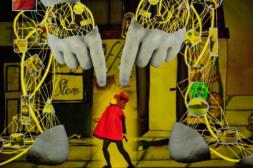
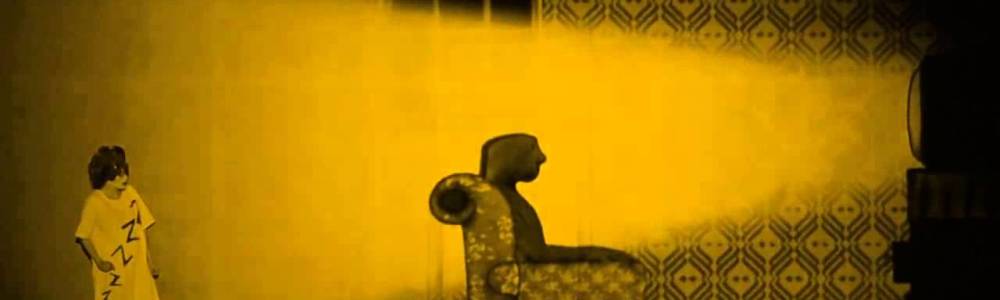
At its heart 1927’s Golem is a modern reworking of Gustav Meyrink’s 1914 novel, Der Golem, which itself was a retelling of the Prague Golem stories. The legend is a classic piece of Jewish folklore and the oldest narratives date to the Talmud and the very beginnings of Judaism. It is a story that has always held an instinctive appeal. In its most basic form it is about creating life out of golem_new_326x326inanimate matter something that can be identified in most of mankind’s origin myths but as society advanced something about the golem has meant the stories have retained their relevance. Golem’s stories became intertwined with its purpose as he unstoppable, implacable slave of its instruction. It can be seen in the mechanisation of the modern army and again in the prism of the Industrial Revolution that saw the skilled worker become expendable in the face of technological improvements.

The golem, in its nether-changing silence, seems always to reflect the images that a new generation projects upon it. 1927 are just the latest company to breathe life into the clay man and they do so with an extraordinary visual flair and breath-taking inventiveness. Whilst their central conceit, that modern society is a troublingly homogenous mass of cultural identity and branding, is not particularly original and also rather debatable, what cannot be denied is the originality Esme.Appleton.in_.1927.s.Golem_.at_.the_.Young_.Vic_.9.Dec_.2014..17.Jan_.2015..Photo_.by_.Bernhard.M.ller_.2of the company themselves and that they have, with Golem enjoying a sold-out residency at the Young Vic, announced their arrival as a major player on the UK theatre scene.

So what makes 1927 so impressive? Simply put they are leading the vanguard of companies that are using visual effects to question the limitations of the traditional theatrical space. VFX have been a game changer in challenging assumptions about what stories can and can’t be told on stage, and with Golem we are seeing theory turned into practice. Whilst it is not the perfect production – the quality of design, costume and musicianship does outweigh the quality of acting and writing – as a statement of intent it certainly leaves its mark.

VFX are used throughout the West End to provide the ‘value added’ – that extra little bit that makes you feel you haven’t wasted your money and time on a show. However if it is seen in these terms then it is little surprise that VFX rarely do more than add pizazz, it is far rarer to see VFX used to deepen the narrative or to have been carefully considered for its use in producing more complex sets.

The first time I was really aware of the power of VFX was in 2005 with the Menier Chocolate Factory’s wonderful production of Sondheim’s Sunday in the Park with George. It used technology to move the audience between the Art Institute of Chicago and the banks of the Seine. Watching Daniel Evan’s Seurat ‘paint’ the pointillist masterpiece onto a virtual backdrop was to see for the first time the possibilities that VFX brings to the theatre, and to see a narrative that was immeasurably strengthened by being integrated with the technology.

<<Continue to full review>>


Watch the trailer: