More Shakespeare than you can shake a spear at

Ok, while I may have just been put myself in the running for most laboured pun of 2011, it has been done with the best of intentions. As the Olympics loom into view, it finally appears that the country is kicking into gear and putting together an impressive programme that will deliver on some of things that we undoubtedly do best (and no, sadly it isn’t the 100m).

It may be somewhat predictable but it certainly looks like the UK are planning to cash in one of their most lasting assets – Shakespeare. And in a fine display of collaboration, venues as dispirate as the Globe, the Barbican, the Roundhouse and the Hammersmith Riverside Studios are embarking on a truly Olympean programming schedule. The Globe alone will be performing every single one of the agreed Shakespeare canon (and on a sidenote for Mr Emmerich, please note that it is the World Shakespeare Festival, not the World Earl of Oxford Festival).

And in keeping with the Olympian spirit, the programmers have scoured the world to bring a truly international flavour to the festival. Whether it is a Tunisian Macbeth, an Afghan Comedy of Errors or a Zimbabwean Two Gentleman of Verona, there is something to suit any palette and demonstrates just how important Shakespeare is to the world of theatre. It underscores that Shakespeare, a playwright occasionally derided my philistines as being too complex for modern audiences, can operate in any language, subject to incredibly varied styles and still emerge as the single most important dramatist in history. And the philistines? To quote the great man himself “More of your conversation will infect my brain”, and if a country in as much turmoil as Afghanistan can stage a complex identity-swapping play like the Comedy of Errors, I think it is surely not to much to expect an audience to watch it.

5 to watch this summer

1) Timon of Athens – National Theatre, Dates to be confirmed
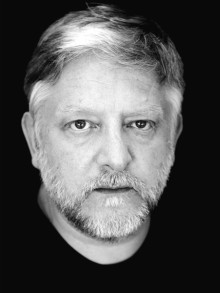
It is generally regarded as one of Shakespeare’s most difficult plays. After a first half that generally cracks alone and builds to a crescendo with Timon turning on those he had previously regarded as his friends and retreating to be a hermit on the outskirts of the city, the second half really does present a problem for a director – it consisting mainly of scene after scene of visitors and a more and more unpleasant Timon. However it is this challenge which means it makes the list – Simon Russell Beale is one our finest current Shakespearian actors and if he can’t do justice to the part then it may go down as one of Shakespeare’s very few missteps.
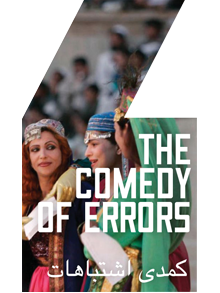
2) The Comedy of Errors – The Globe, 30 – 31 May

A chance to catch something really special. This Afghanistan company performed Love’s Labour’s Lost in 2005; the groundbreaking nature of this shouldn’t be overstated. In a country that was ruled a few years previously by the Taliban and drama completely forbidden, we had reached a point where men and women were able to act together. Along the way many taboos were broken; women did not always wear headscarves and lovers held hands. The Globe has managed to get their first performances outside of Kabul and they will be putting on The Comedy of Errors, a play of mistaken identifies and farcical situations.  The results could be as spectacular as they are interesting.

3) Hamlet – The Globe, 02 – 03 June
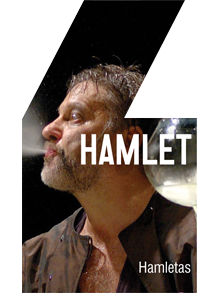
Now if anything deserves the title unmissable it is probably this production from the legendary Lithuanian director Eimuntas Nekrosius. His Hamlet is regarded as one of the most celebrated Shakespearean productions of our age and for the first time, after substantial world tours, it comes to London for the first time. Yes, it is Hamlet and it will be 3 hours and it will be in Lithuanian and it is the Globe and you may have to stand up. But there are times when you must suffer for your art and, due to the rather Anglo-american focus of most British theatre, this offers a rare chance to see one of  the true greats of European theatre. Simply: go, see.
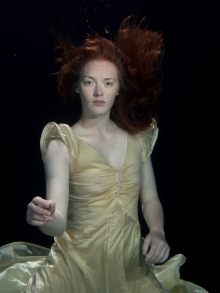
 4) The Rest is Silence – Hammersmith Riverside Studios, 13 – 23 June

Yes, I know there are two Hamlet’s in the list and many people think that one is more than enough for one year. However given   that it is a dreamthinkspeak production, it is quite likely that this will be Hamlet only in so far Kate Bush’s Wuthering Heights is  an accurate depiction of Bronte’s novel. We are promised a textual and visual deconstruction of the play, which will utilise performance, film and installation to cut through the textual certainties that we may be used to. For some this may already sound hideously prententious and, given their reviews of Ian Rickson’s latest Hamlet at the Young Vic, it is unlikely Messirs Billington and Spencer will be rushing to see it. For those who remain alive to the possibilities that modern multimedia presents to a playwright of Shakespeare’s calibre, it also can be seen as an exciting opportunity.

5) Romeo and Juliet – The Globe, 19 – 20 June 
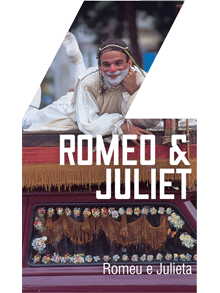
And deservedly back to the Globe for no. 5. Providing the spine for the festival and dedicating their versatile space to companies from around the world across May and June, hopefully they will get the audience and publicity they deserve for this ambitious and difficult project. An almost guaranteed sell-out – a Brazilian Romeo & Juliet at the height of summer should be a winner. The production is regarded as one of the most famous productions coming out of the Americas’. Grupo Galpão’s brings a carnival atmosphere to the Globe; mixing circus, dance and musicc with traditional Brazilian folk culture to produce something incredibly special. We are talking passion with a capital P.

You can find out far, far more about the World Shakespeare Festival here: http://www.worldshakespearefestival.org.uk/

You can find out more about the World Cities Festival here: http://www.worldstageslondon.com/

And my own earlier witterings on the World Cities Festival is here: http://civiliansguidetothetheatre.com/2011/10/04/the-cultural-olympiad-better-late-then-never/

You don’t have to be mad to extemporise here but it helps

Hamlet – Young Vic, Running until 21 January 2012

Ian Rickson’s production of Hamlet at the Young Vic begins with an elaborate entrance through the backstage area, which has been transformed into a passage through a mental hospital. As you wind through narrow corridors, you catch glimpses of action through windows and the pervading sense from the TV screens and telephones on display that we are entering the 1970s.

To be honest all this effort feels a little laboured although it does help to immediately ground the play in its overarching theme: is Hamlet mad?  It is a question that has been raked over many times, be it in productions, literary criticism or psychological analysis. However through Ian Rickson’s radical interpretative staging, it is a question that delivers a revelatory redefinition of how the play can be understood.

The play begins with a striking image; Michael Sheen’s Hamlet appears out of nowhere in long shot, trapped in a solitary light shining upstage. Rickson’s exquisite framing is a feature that runs throughout the play but this first image, with a clear allusion to Carol Reed’s The Third Man is particularly notable. It is a potent reference point, immediately conjuring up thoughts of Vienna; the spiritual home of Freud and the psychology movement. The Third Man itself is indebted to German expressionists of early cinema, such as  Fritz Lang and FW Murnau, who were fascinated by madness and its effect on the human condition.

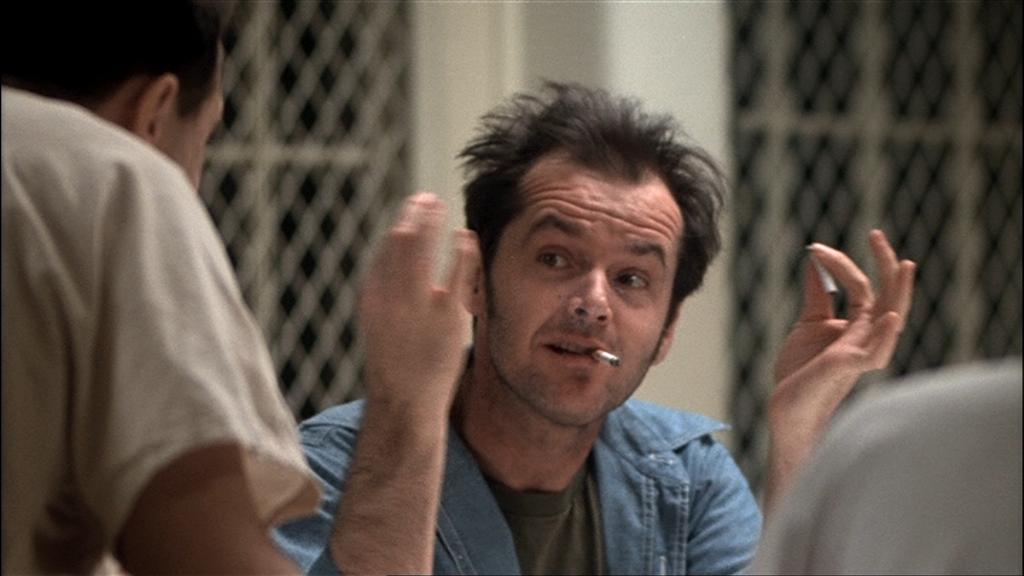
References abound in this play; the 1970’s institutional setting brings to mind One Flew Over the Cuckoo’s Nest and, compared to the recent Hamlets of David Tennant and John Simm, Sheen has an alpha-male muscularity that is redolent of Jack Nicholson without, thankfully, adopting any more of Nicholson’s mannerisms.

The other crucial reference point is the work of RD Laing. In a play that has at its heart the discussion and understanding of madness, Laing’s work has a relevance that underpins the perspective that Rickson takes to the play. At the centre of Laing’s theories is the idea that psychosis is not a biological or psychic response but something that can develop out of socio-cultural situations. This has a direct relevance to the understanding of Hamlet. Hamlet is not ‘mad’ per se but he may have become mad due to the conditions that he has found himself within and the drama of the play may be an attempt to break him of that psychosis.

This reading is reinforced through Laing’s idea that ‘going crazy’ can be the sane response to an insane situation. In this, as in so many other cases, we can infer that Shakespeare touched on the principle a few hundred years before the development of psychology as a science. This may be a stretch but it does appear to reflect Hamlet’s understanding of himself; he wishes to assert his own identity, ‘to thine own self be true’, through his understanding and response to his father’s death. However Hamlet’s ideas conflicts with the response demanded by his ‘uncle-father’ Claudius; Laing would argue that Hamlet is stuck between the persona he has created, the avenger of his father, and the one demanded by parental authority and it is in this bind that the context for Hamlet’s ‘madness’ should be understood.

Click here to read full review

London Riots: Theatre Special

So with the world, his wife  and their media entourage encamped in Edinburgh for the next few weeks, it asks the question of how those cosmopolitan metrosexuals of the capital can keep themselves entertained.

Well having asked the question, this week we got our answers… And our survey said that out of 100 participants the top two responses were:

 1) Looting

                               2) Appearing in court for looting

However for those who believe that life may have more to offer than G-Star Jeans, shiny new Nikes and £3000 of Rothman Superkings then there  is still the vibrant London theatre-scene…or not, an unfortunate consequence of the rioting meant that much of theatreland closed early to avoid the less than desirable impact of having your audience flambéed during the climax to Love Never Dies (the relief at being put of your misery twenty minutes early notwithstanding).

Having said that, every good rioter deserves favour now and again. And doing my bit to save London’s theatre, I suggest the following West End plays that are suitable for both rioters and vigilantes alike:

1) Hamlet – Young Vic

Shakespeare’s masterpiece about an emotionally troubled young man with an absent father. Watch as Hamlet slowly goes off the rails without the existence of strong familial discipline. Attempts from wise elders, young friends and even his own mother are unable to reign him in and the end, when it comes, is as tragic as it is sadly predictable.

2) Aladdin – Lyric Hammersmith

Experience the thrills and spills of Aladdin’s adventure to steal a magic lamp from a hardworking small business owner. Gasp in awe and laugh with delight as you watch Aladdin’s hilarious mishaps as he attempts to escape the local fuzz while holding on to a bin-liner stuffed with swag. And don’t worry folks, its just a pantomime so we can rest assured that Aladdin will get away with it and get the girl in the end.

3) Jerusalem – Apollo Theatre

A vision of life in our green and pleasant land. Follow Johnny Byron, spokesman for the everyday man as he faces eviction by the Council and hostility from the local community.

4) Les Miserables – Queen’s Theatre

Follow Jean Valjean,our hero and a former prisoner, who is pursuedrelentlessly by his nemesis, the policeman, Javert. Featuring the most convincing portrayals of civil disorder ever captured on the London stage and stuffed full of famous songs that you will have heard at riots up and down the land, you too can sing along with popular classics such as ‘Do you hear the people sing?’ and ‘At the barricades’
5) Accomplice – Menier Chocolate Factory

Described as part-tour, part-game, part-theatre, this innovative production takes people on a tour of Southwark. Constantly evolving, what started as a rather staid interactive mystery on the streets of London has turned into the capital’s hot ticket with new attractions including a burned out cornershop and a ransacked Lush. In this uniquely immersive productions, participants are able to throw bricks at police and indulge in a spot of light GBH in full-view of the much-loved London CCTV network. Smile for the camera guys!

Honorable Mention

Betty Blue Eyes – Novello Theatre

10% discount for English Defence League members.


Rosenstern and Guildenctanz are dead (with apologies to Mr Stoppard)

Rosencrantz and Guildenstern Are Dead

Theatre Royal Haymarket

Booking until 20 August


(Lights Up)
ROSENSTERN: (Tosses a coin, checks the result and repeats) Heads…Heads…Heads…Heads…
GUILDENCRANTZ: (Interrupting) Does it ever feel to you like we’ve done all this before?
ROSENSTERN: How do you mean?
GUILDENCRANTZ: That we’re stuck in a rut. Going through the same things day after day.
ROSENSTERN: (Considering this) We were someone else before.
GUILDENCRANTZ: Yes but that’s history. We were boys back then.
ROSENSTERN: True. (Pause) And now we’re here?
GUILDENCRANTZ: (looking around) Alone…but at least we’re the centre of attention. It’s all about us.
ROSENSTERN:  I thought the play’s the thing?
GUILDENCRANTZ: Oh you can do anything with a play, words are flexible. Anyway people know us now; we’re stars in own right.
ROSENSTERN: We’re recognisable
GUILDENCRANTZ: Familiar
ROSENSTERN: Similar?
GUILDENCRANTZ: indistinguishable. You’ve seen us once, you’ve seen us anywhere.
ROSENSTERN: Or everywhere.
GUILDENCRANTZ: See, we’ll fit right in, like we’ve always been there. (Pause) Are you sure we haven’t done this before.
ROSENSTERN: (Tossing a coin) Heads…
GUILDENCRANTZ: This all seems very familiar. (Enter the reviewer). Who are you? We were expecting someone else.
REVIEWER: Tim
ROSENSTERN: Tim?
GUILDENCRANTZ: Curry?
REVIEWER: I think there’s been a misunderstanding, I’m not an actor; I’m supposed to be reviewing the play.
GUILDENCRANTZ: No, no. This does not make any sense at all. You’re not in the script. The audience won’t stand for it.
ROSENSTERN: We don’t have to tell them do we? (Indicating to the reviewer) He can try his best.
GUILDENCRANTZ: It will be a surprise but audiences get used to anything.
REVIEWER: If it remains relevant.
GUILDENCRANTZ: (aghast) relevant. Outrageous
ROSENSTERN: Scandalous
GUILDENCRANTZ: Preposterous. Creations like this are timeless.
ROSENSTERN: Ageless.
GUILDENCRANTZ: We are an exegesis on existentialism.
ROSENSTERN A deconstruction of determinism.
GUILDENCRANTZ: The product of a precocious talent.
ROSENSTERN: (Firmly) Two precocious talents.
REVIEWER: (Frustrated) Yes but do you have anything new to add. Is there a purpose to all this wordplay? Does it go anywhere or is it all, well, just a little bit pretentious.
GUILDENCRANTZ: Pretention? Purpose? (To Rosenstern) Have you ever felt so offended? (To read more click here)

A thoroughly modern monarchy

Hamlet – National Theatre, 23 April 2011

Approaching a play with as much weight and complexity as Hamlet there are numerous decisions that have to be made. It is too big, too vast in subject matter and character to tackle every angle in one production. Recent productions of Hamlet in London, as good as they were, have been driven in part by the celebrity of the actors and as a result we have had productions that are unashamedly an “actor’s” Hamlet. We have had David Tennant; quick-witted and verbally nimble, playfully engaging with the comedic nature of Hamlet’s flurries of stage-managed madness (pushed on by an excellent rapport with Oliver Ford Davies’ masterful Polonius). Hot on his heels was Jude Law; here Hamlet is emotionally angry, powerful yet filled with an engaging vulnerability. There is clearly nothing wrong with productions where Hamlet is front and centre but watching Patrick Stewart as Claudius in the RSC version, it felt a little unfortunate that such a versatile actor was left playing such a complex and interesting part in the shadows of Tennant’s performance. It seemed as if an instruction had been given to rein in the performance to allow Tennant the room to perform.

From the off Nicholas Hytner’s Hamlet steps back and places the play in context. As the house lights fade to black, the audience are met with the sound of an aeroplane cutting through the stillness as it flies by overhead. The soldiers actually look like they are patrolling and the entrance of the ghost is met with an alertness that suggests infiltrators and enemies hovering in the shadows. The spectre of Fortinbras and war loom larger over this version of Hamlet than any other I have seen. As a result this is a play about paranoia, fear and surveillance. We are reminded continually that, whether or not something is rotten in the state of Denmark, this is a Claudius unwilling to anything to chance. Outside every door are ear-piece wearing security guards, however as the play continues it becomes increasingly evident that their presence is less to protect and more to provide Claudius with additional eyes and ears. Hamlet, Ophelia and Rosencrantz & Guildenstern are monitored throughout and each entrance and exit is swiftly followed by their ‘security’. This gives Hamlet’s ‘Now I am alone’ (ii.ii) a sense of real power as the audience realises that, for the first time in the play, Hamlet can talk freely, and in doing so can give full attention to his plan to use the play to trap Claudius…Continue Reading Here