Five plays for the day

Theatre Uncut 2014 – Soho Theatre

Theatre Uncut will be in Brighton, Bristol, Canterbury and Liverpool in December 2014. For more details and to book tickets check outTheatre Uncut’s website

The Theatre Uncut project is now four years old. That is four years of coalition cuts, four years of the retrenchment of public services and four years where the quiet desperation of those without a voice has remained largely unheard. In that time Theatre Uncut has expanded so that it has now been performed in 17 countries across 4 continents. It has also started its first national tour and this year, through online polling and through a workshop process, writers chose to focus on the topic; ‘Knowledge is power, knowledge is change’.
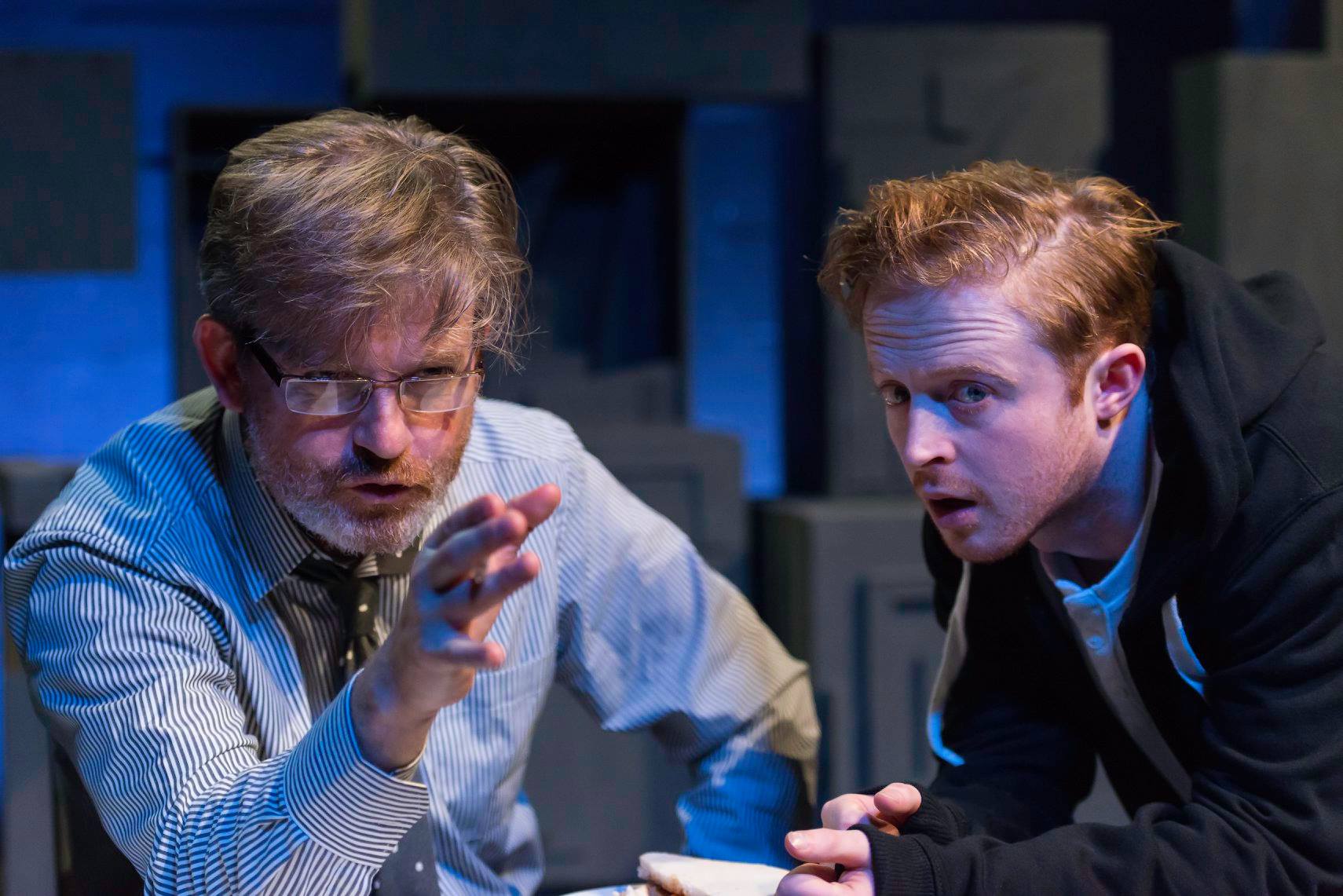
10495065_755198004552857_8325607810536121571_oOne of the most interesting aspects of the process is finding out how five different writers decided to interpret the statement and how they decided to engage with the overtly political process of writing under these conditions.

Perhaps most surprisingly, and most refreshingly, is that a number of the plays focus on the personal more than the political. There was a balance that helped stop the gnawing sense that the whole programme was little more of an anguished wail of the liberal left against a coalition government that (like it or not) had every right to govern and who had been tasked with reducing a sky-rocketing debit burden following the global economic meltdown.

The variety on display meant it avoided the sense of lecture and the evening was leavened by a remarkable versatility in the well-judged humour throughout. It starts off in a blackly comic tone with ‘The Finger Of God’, which could easily have slid out of Charlie Brooker’s Black Mirror-inflected fevered imagination. It takes a classically dystopian near-future world where the lottery is seeking to ramp up interest in its games due to falling public demand. On one hand we get a rather obvious satire of the powerful slowly ramping up the consequences of playing but on the other we get a more nuanced look at those who continue to play the game even when it is so clearly rigged.
<<Continue to full review>>

Marion Deprez Is Gorgeous – Mimetic Festival

Marion Deprez Is Gorgeous – Marion Deprez

Showing as part of Mimetic Festival 2014 (17 – 29 November 2014)GORGE1.McHUGH

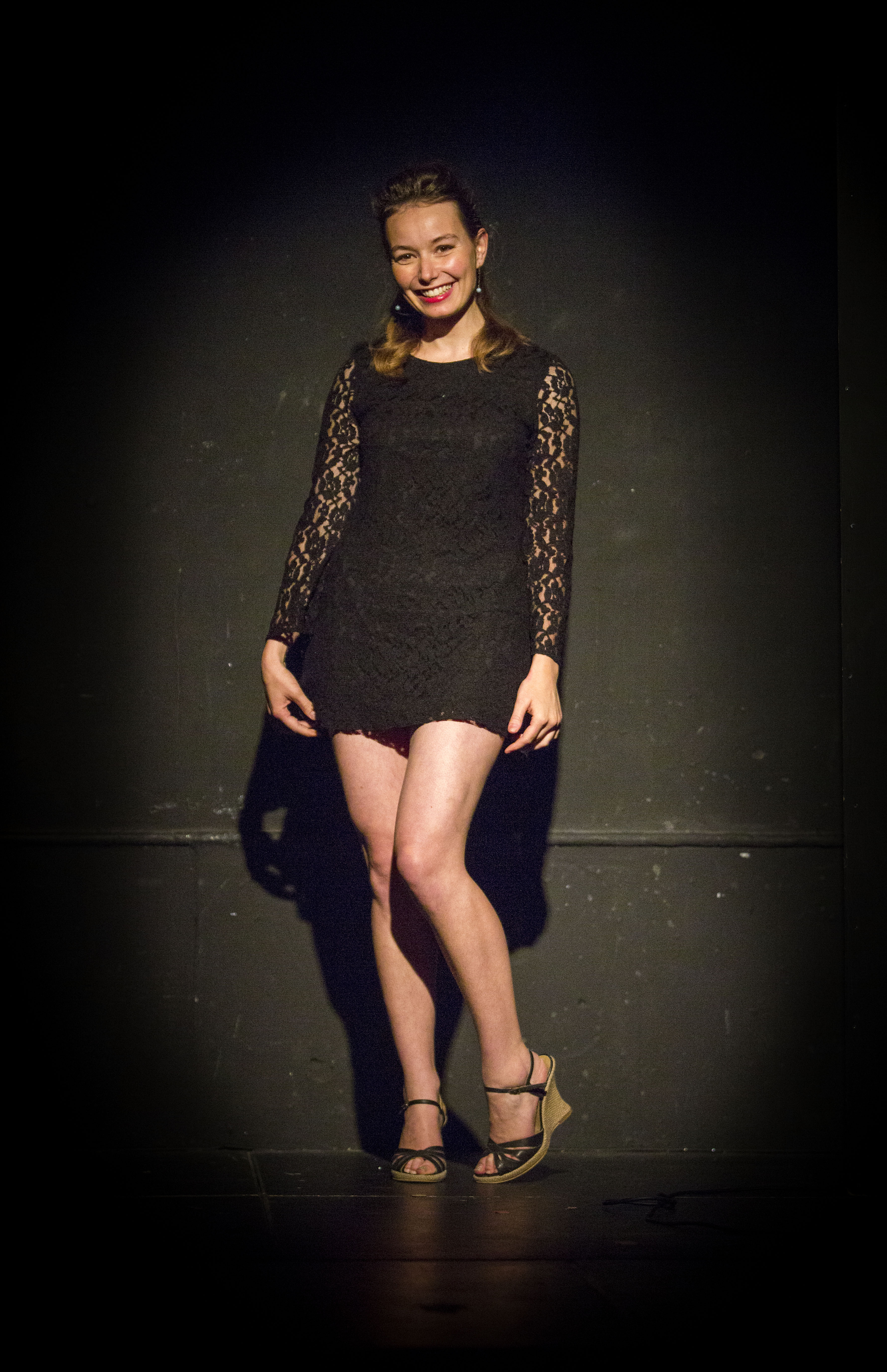
In reviewing ‘Marion Deprez Is Gorgeous’ there is a rather large elephant in the room. Can one seriously review the show without addressing the matter of the title? It has been written as a preposition rather than a question – which is a bold gesture and leaves no rooms for dissenting opinion – and the result is that Ms Deprez’ act must rest on the implicit assumption that she is, by objective measures, ‘gorgeous’.

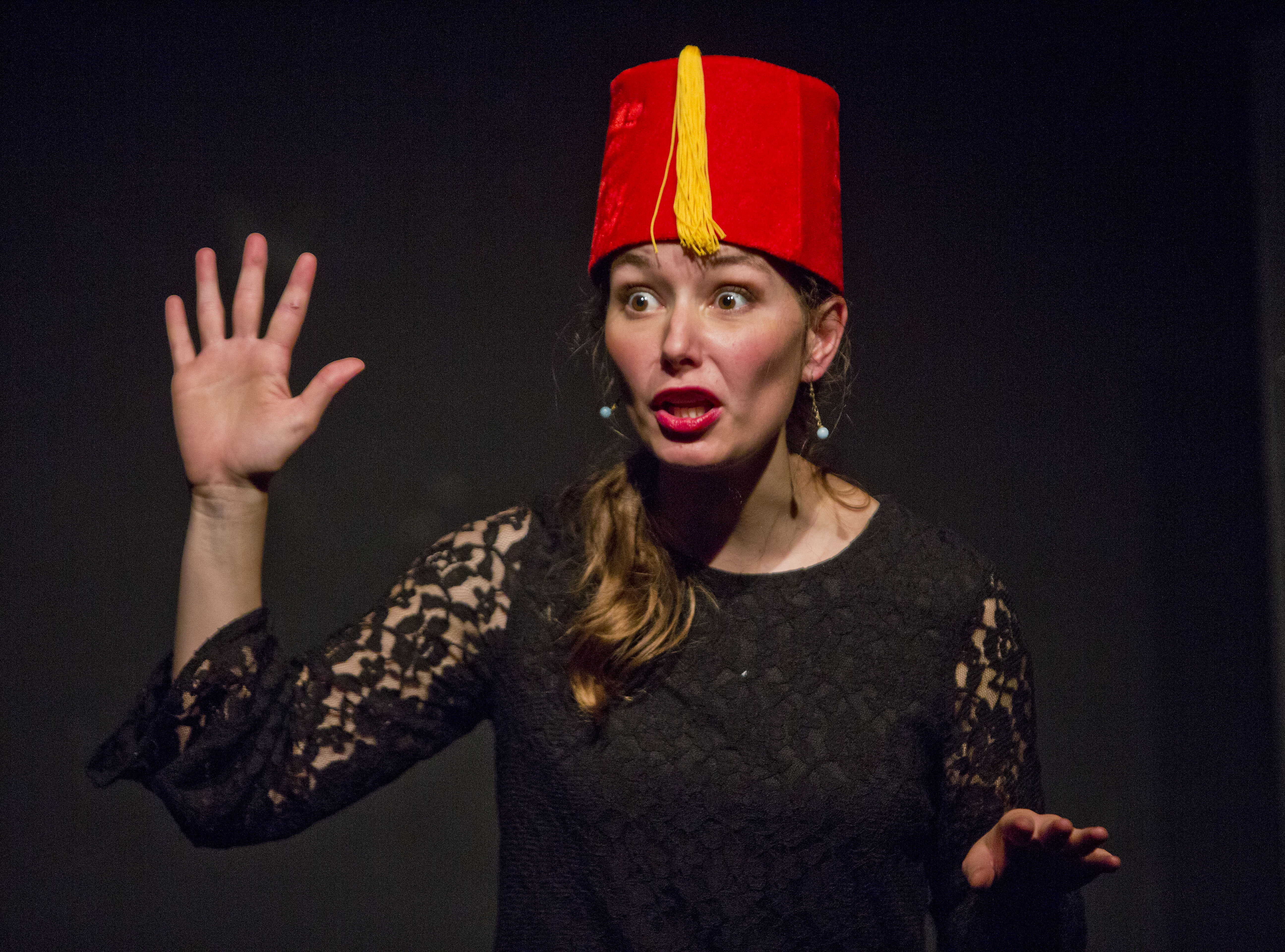
GORGE15.McHUGHThe photos that accompany this review mean readers can form their own judgement about Ms Deprez’s looks whilst this reviewer will cloak his opinions behind the very British trait of discretion (which seems entirely appropriate given the extended Gallic riffs that undercut the performance) and look to review the show on its own merits.

The show is an examination of our stereotypical ideas of beauty – we have swans, butterflies and princesses – and how far someone can get on looks rather than talent. The act can appear that it is about to spiral into disaster and we are constantly assured by Ms Deprez that she isn’t actually funny, which – unsurprisingly – doesn’t do much to reassure those in the audience of a comedy show.

This is a high-risk manoeuvre and can lead to an increasingly antagonistic relationship between performer and audience. However it is a seam that has been mined for great riches by comics as varied as Tommy Cooper (Deprez’ acknowledged idol) and Stewart Lee. There is clearly plenty of comic potential to be had from working the unease that people feel when they are not entirely sure whether a show is going off the rails.

However it is important to understand this work in the context of clowning (although I suspect that there is a closer relationship to the Italian buffo and the figures from comic operas than traditional British notions of the clown) and that the comedy derives from pushing against the expectations of the audience

<<Continue to full review>>


The Libertine Has Left The Building – Mimetic Festival

Seven years ago Michael Twaites burst onto the drag scene with his breakthrough show, Confessions of a Dancewhore. Now long established as a mainstay in the cabaret world, Twaites’ latest show, The Libertine Has Left The Building, finds our star in a reflective mood as he examines his feelings about drag culture and more generally about gay identity in modern Britain.

Read the review for The Libertine Has Left The Building at Everything Theatre

The Boy Who Kicked Pigs – Mimetic Festival

The Boy Who Kicked PigsKill The Beast

Showing as part of Mimetic Festival 2014 (17 – 29 November 2014)

Watching Kill The Beast’s The Boy Who Kicked Pigs unfold it becomes increasingly difficult to reconcile the narrator of this gothic horror show with the lovable, scarf-wearing time-traveller who regularly tops polls looking for the best Doctor Who. Yet Wikipedia tells me it is the very same Tom Baker who is responsible for this remarkably grotesque comic tale.

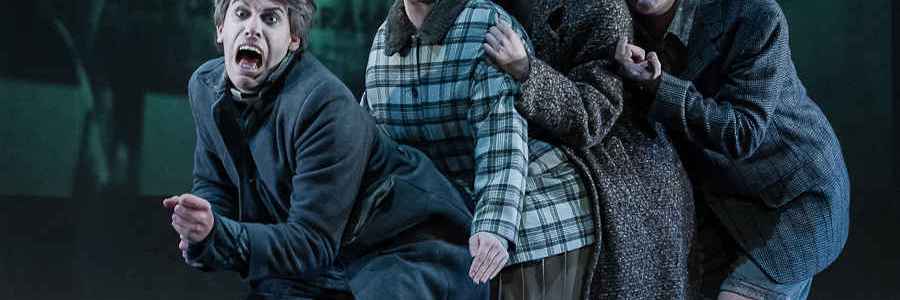
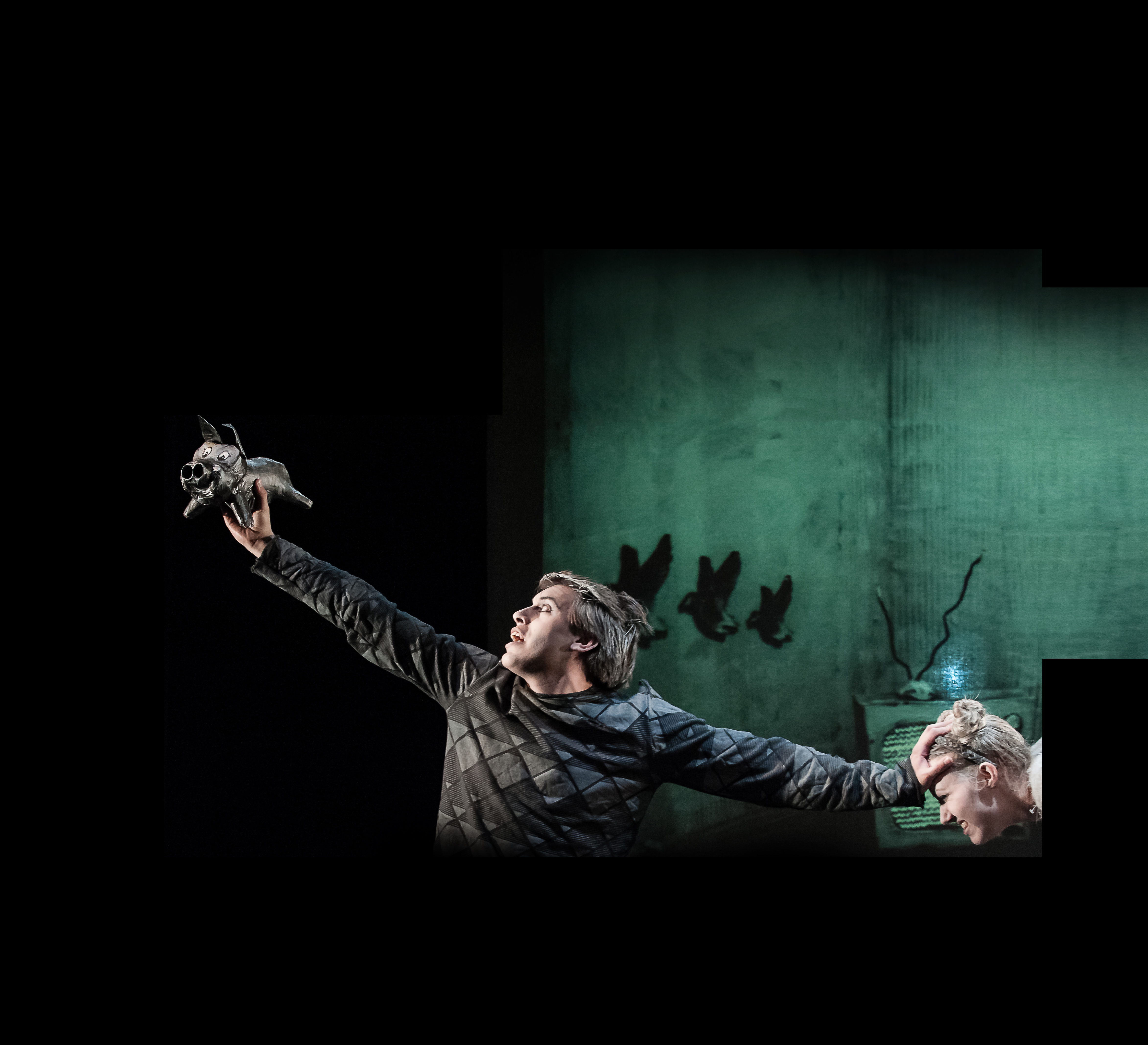
20120620-3020Underneath the story of Robert Caligari – the eponymous boy of our title – and his deviant pig-kicking ways lies the remnants of abandoned Roald Dahl tales, discarded Edward Gorey drawings Boy who kicked pigsand the bottled essence of Hilaire Belloc and his masterful ‘Cautionary Tales for Children’. It is a marvellously entertaining story that confounds expectations all the way through to its frenzied, horrific conclusion.

Kill The Beast should be applauded for seeing the potential in the book. It immediately feels like the story has found its natural home on stage and is perfected suited to be retold in a fashion that wholeheartedly embraces the visual medium. It is initially hard to ignore the now rather clichéd Tim Burton aesthetic that dominates proceedings yet as the play continues other, more theatrical, influences makes themselves known. One senses that the best bits of 1927 ‘The Children and Animals Took to the Streets’ and, going further back, Shockheaded Peter and The Tiger Lillies have been absorbed and turned into something new and exciting here.

At its centre is David Cumming’s extraordinary performance as Robert Caligari. Put simply it is a terrifyingly intense display of cartoon insanity; rather as if The Joker had taken teenage form. His face is contorted into an almost rictus grimace throughout and his body attuned to the need to make every gesture and movement as extravagant as possible to fully play up his grotesquery.

<<Continue to full review>>

The Greatest Liar In All The World – Mimetic Festival

The Greatest Liar In All The WorldFamilia De La Noche

Showing as part of Mimetic Festival 2014 (17 – 29 November 2014)

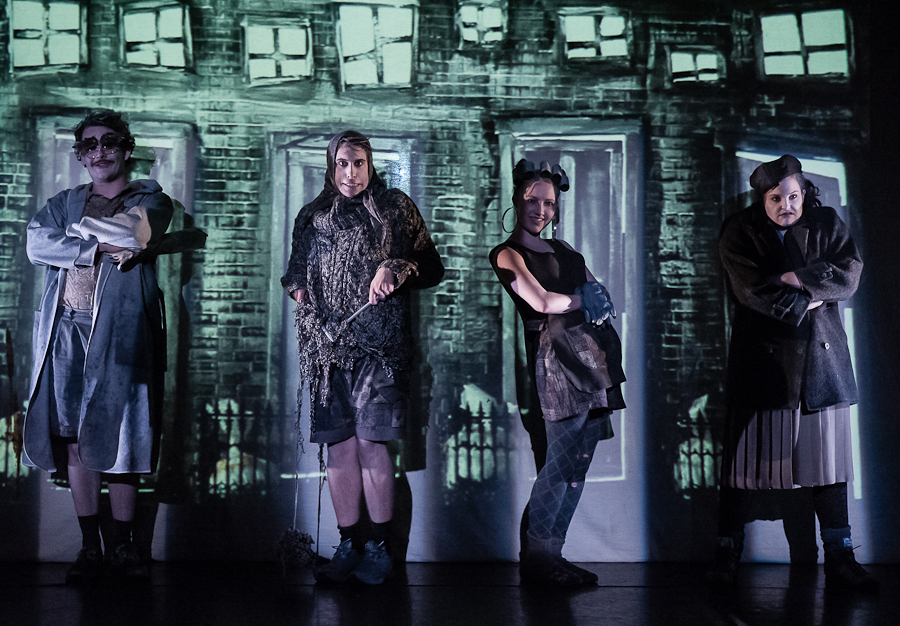
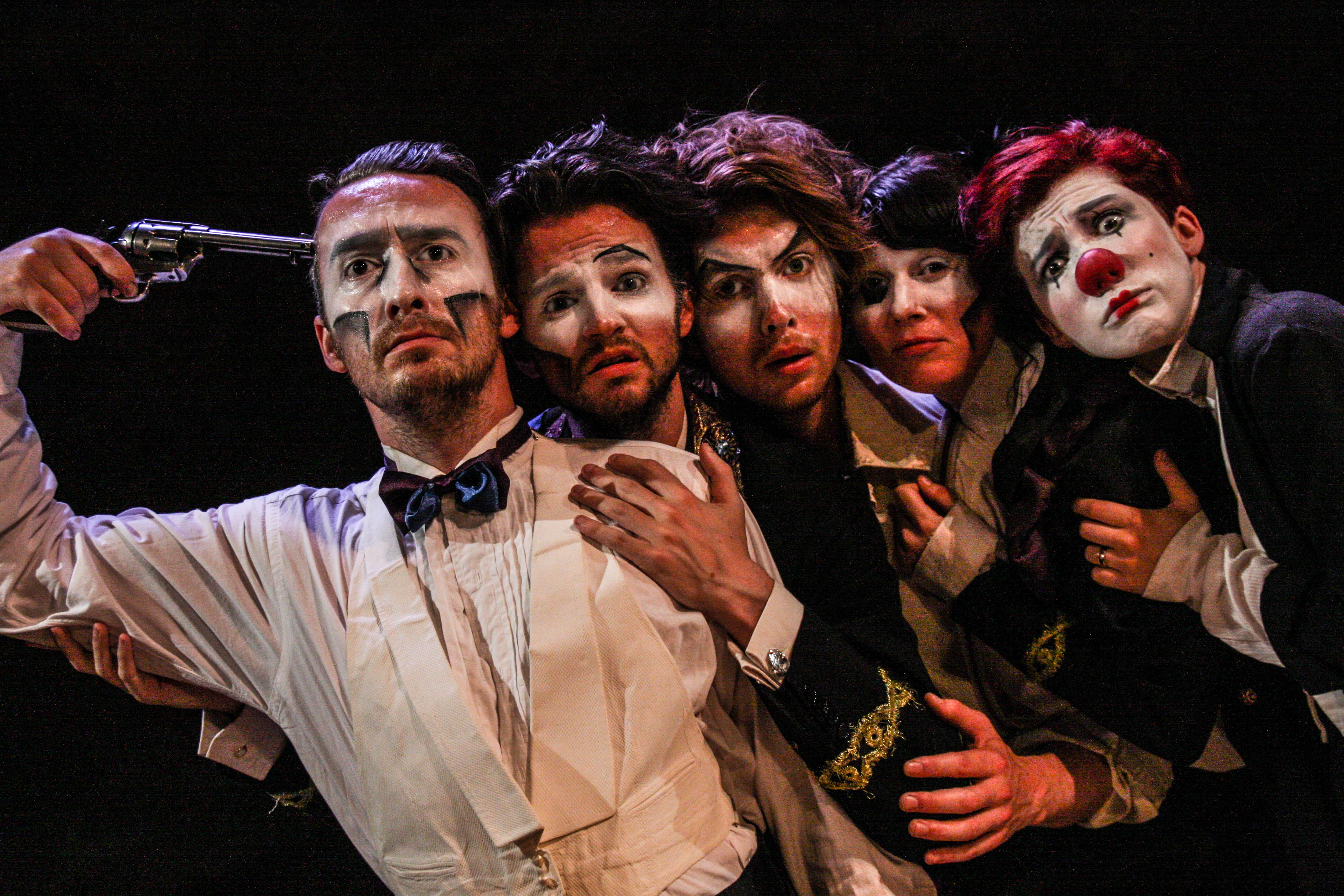
At times during Familia De La Noche’s re-imagining of Pinocchio you wonder if there can be any tricks left un-deployed by this multi-talented motley crew. Well as it turns out they leave one ace up their sleeve and in the final moments what had hitherto been a highly raucous and entertaining series of set-pieces reveals itself to be something that has every right to consider itself Heads in a rowto be theatre. It is an unexpected moment of stillness that is ridden with pathos which breaks through the frenzy and displays the potent emotional heart that had beaten below its glossy surface all along.

The Greatest Liar In All The World manages to cram in acting, clowning, physical theatre, mime, musicianship, puppetry – shadow and actual, into sixty minutes. Amongst all of this they tell two stories; of the last show by the world’s greatest liar and, as a story-within-a-story, his own origins tale (that is perhaps best known by his more familiar name – Pinocchio).

Dott and the MoonIt is a heady mix and one can sense the impetuousness of youth in their desire to cram all their undoubted skills into a single production. There is a resulting unevenness in tone and quality, with some parts inevitably working more strongly than others. The first half is the stronger of the two and as Pinocchio loses sight of his objectives when on Booby Island so, unfortunately, does the production. However the frenetic pace means this is soon followed by a wonderful display of shadow puppetry, that tells of our hero’s journey across the world in search of his love and saviour; the blue-haired girl.
It is a mark of the production that it often works best when making use of the specialist skills of its cast and its weaknesses are in tying it together with more traditional theatre ideas. This is further evidenced by the excellent puppetry on display. In Pinocchio they have built a simple but powerfully effective wooden boy. His face, whilst static, is able to convey a huge range of emotions and that is credit to both his operators and to the cast that perform with him.

It is not easy to act against a block of wood but when we see the puppet’s interact with the blue-haired mime we can believe, if only for a moment, in the power of theatre to transform the unreal into the real before our eyes; for a wooden boy with a spoon for a leg to be something that can truly exist.

<<Continue to full review>>

How A Man Crumbled – Mimetic Festival

How A Man CrumbledClout Theatre

Showing as part of Mimetic Festival 2014 (17 – 29 November 2014)

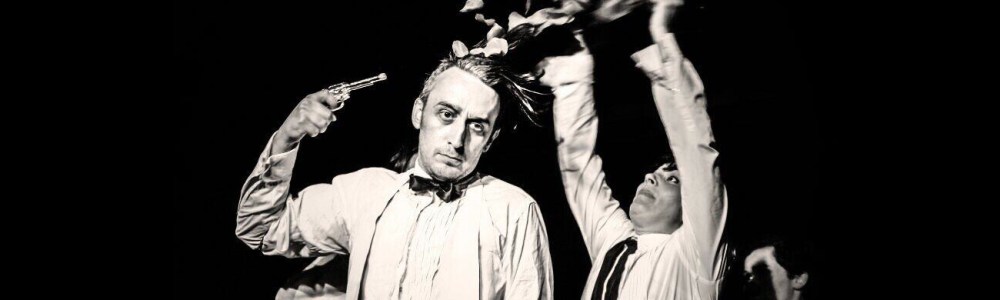
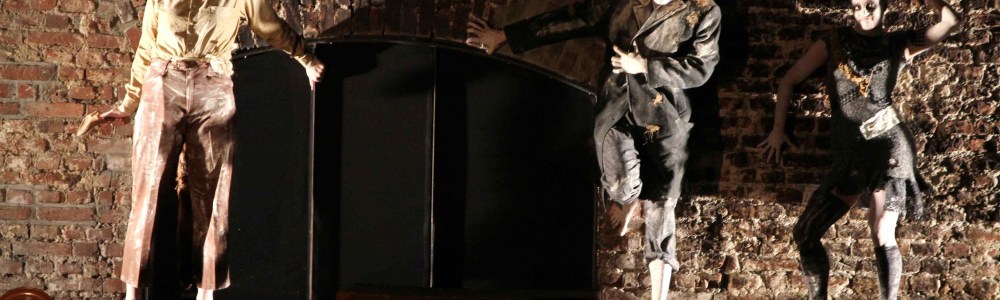
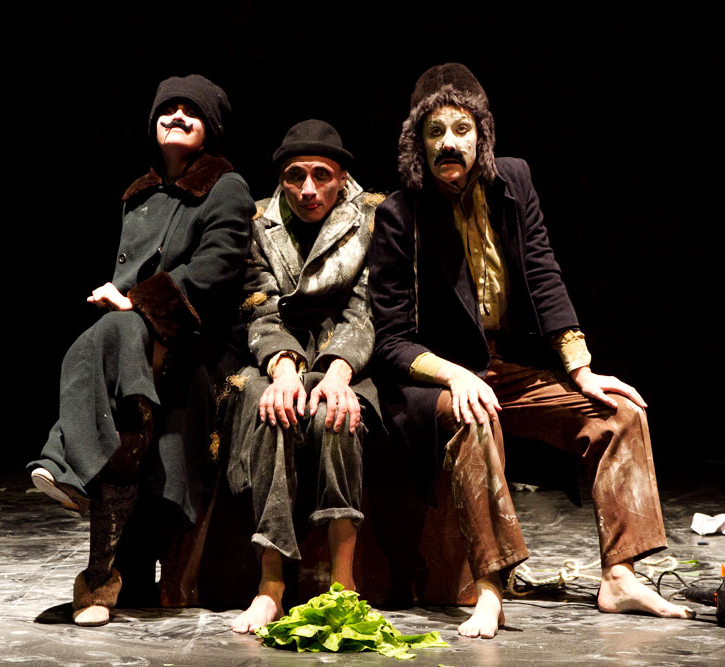
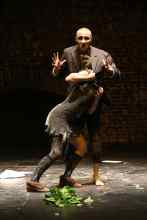
In writing this review I discovered that Daniil Kharms’ 1939 novella, The Old Woman, is available to read online. However I urge anyone to hold back until they have seen Clout Theatre’s wonderful re-invention of Kharms’ surrealist story, as half the fun is putting yourself in their hands and watching how the inspired, frenetic lunacy eventually yields results and tells a very understandable moustachemenweb editedstory in a most absurd way.

Clout delivers a highly stylised piece of physical theatre which draws as much of its inspiration from the innovators of early European cinema as it does from theatrical tradition. We see the expressionism of F.W. Murneau in the careful and controlled use of spotlights to create a sense of dramatic tension through the interplay between light, dark and the spaces in between. Alongside this there runs, in the writer’s relationship with the world, the slightly off-kilter, unreal societal pressure that works to 120707-ptfestival-Tag3-198create the crushing paranoia of Fritz Lang’s M.

It is how this keen cinematic understanding is set against a clear understanding of the demands of physical theatre that is most impressive. It is one of the hardest styles of theatre to get right, and when it goes wrong it is highly noticeable. The credit that can be given to practitioners, like Stephen Berkoff, who did so much to popularise the style in the UK is to point to all the terrible productions that followed in their wake that clearly assumed it was just a case of slapping on some greasepaint and a black polo-neck.

The three actors, Sacha Plaige, Jennifer Swingler and George Ramsa, directed by Mine Cerci, stretch themselves to their physical limits. They understand that to perform grotesques they must reach extremes. Each gesture is exaggerated and each movement is set down with an absolute sense of its purpose and meaning. As a result every action has a function and a reason for existing, no matter how absurd it appears.

One could apply this to any example but particular credit must go to Sacha Paige’s portrayal of the old woman. The intensity with which the clock face is presented and the mugging expressions that accompany her every action are a true masterclass in the art of the physical. I never thought that a dreamed creation would be quite as surreally unsettling as the dwarf in Twin Peaks but Paige’s old woman is a terrifying creation; a deathless force that acts as a constant reminder of the writer’s mortality.

For the full review and much more on Mimetic Festival, please click here