First Draft – Mimetic Festival

First Draft – Open Heart Surgery

Showing as part of Mimetic Festival 2014 (17 – 29 November 2014)

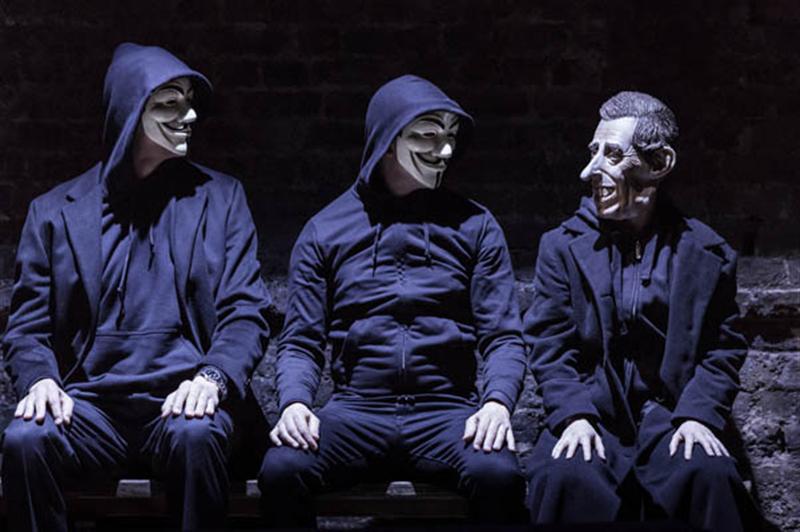
At the centre of First Draft, a fast-paced and fluid meditation on contemporary issues by the new London-based theatre company, Open Heart Surgery, is a loose adaptation of E.M Forster’s The Machine Stops. It is an interesting choice of subject and one that provides a neat shell in which to house the ideas that freely flow out of writer Coleen MacPherson’s pen.First draft

It is often unclear where or when we are but slowly fragmentary images coalesce into more defined scenes, and eventually the action settles on a future world where a character (Vashti in Forster’s original) collects memories; seemingly fascinated by the experiences of others but with no real interest in experiencing those of her own.

It is in these future world scenes that the performers seem most at home. MacPherson’s dialogue is well worked to create a landscape we want to know more about, while Charlotte Baseley and Louise Callaghan have a tender dynamic as they build a fragile relationship amongst the wreckage.

Basely and Callaghan are required to showcase their impressively versatile range over the course of this hour long production. They play all twelve of the characters and do a fine job moving slickly between different roles and gamely try to give each one their own personality.

For the full review and much more on Mimetic Festival, please click here

An absurd tale of love and puppets

A Midsummer Night’s Dream (As You Like It) – Dmitry Krymov Lab @ Barbican Theatre, 14 November 2014

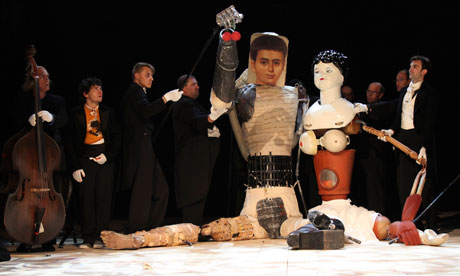
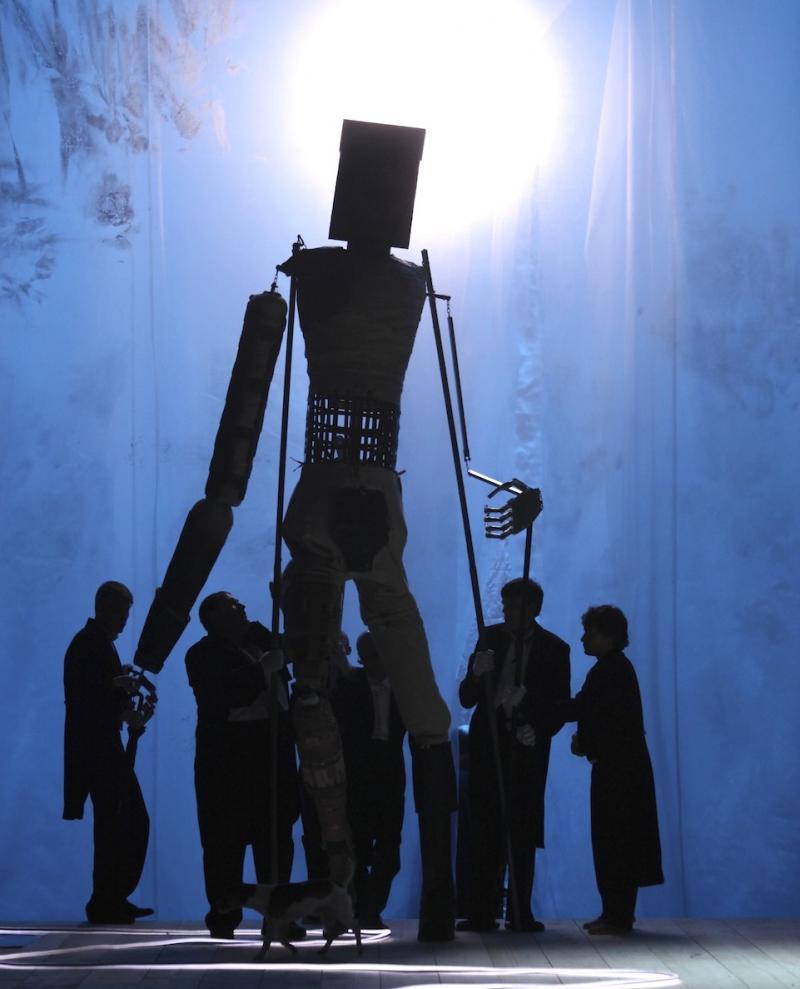
First seen in the UK as part of the 2012 Shakespeare Festival in Stratford, the Dmitry Krymov Lab return to the Barbican with their very loose adaptation of A Midsummer Night’s Dream. The title, a cheekily knowing pun, hints that audiences shouldn’t arrive expecting a traditional approach to Shakespeare and, good as their word, the production bares only a faint resemblance to the original. Stripped away are all elements of the lovers’ escape to the forest and the night’s fantastical adventures; the focus instead is entirely on the rude mechanicals performance of Pyramus and Thisbe to the Court in the play’s final scene.MSND Barbican

Yet one cannot dare to perform this play without a sense of the fantastical and this wonderfully imaginative company have inserted a puckish spirit that runs through the production – witness the fountain that unexpectedly soaks most of those in the front of the stalls as the company bumble onto the stage, or the inept ballerinas that close the show and positively dare the audience to laugh at Dream-4-2012-360x541children; these are the kind of mischievous pranks laced with faintest tincture of actual malevolence that Robin Goodfellow would certainly have approved of.

It is also a truly fantastical production thanks to the skillfulness of the performers. Hidden amongst the apparently dishevelled cast are talents that incorporate sublime circus skills, puppetry and singing that brings life and emotional register to a production that always seems one step from disaster. Often in productions the performance of Pyramus and Thisbe is little more than a parody of amateur acting troupes and we see actors playing at being bad actors; here we see actors who genuinely resemble craftsmen putting on a show to their best of their ability. We are drawn in by their passion for their craft and as a result within all the comic effects we begin to care for these absurd puppet caricatures of the lovers.

For all their talents what stops the Lab becoming another Cirque De Soleil is that there is always a purpose underpinning the action. They come up with wonderful ways to express ideas but they are nearly always tied to a clear purpose. With companies like Cirque De Soleil everything is delivered with such a ponderous self-importance that it fatally weighs down anything of substance but here their exists a joyously absurd spirit to the production that means it is impossible not to be swept along.

<<Continue to full review>>

Revisiting…King Charles III

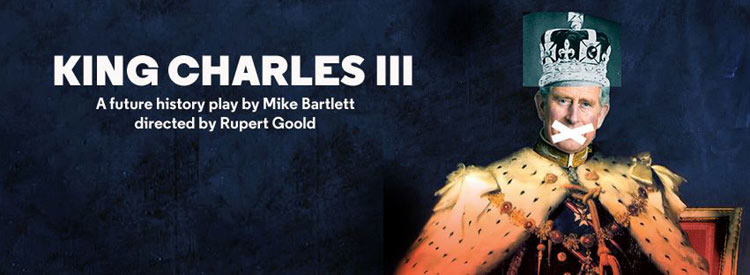
King Charles III – Wyndham’s Theatre, booking until 31 January 2015 (tickets)

Following on from my post revisiting The Scottsboro Boys, Civilian Theatre continues his trip down memory lane (via helpful West End transfers that kind-of legitimises the whole exercise and makes it look rather less like a pointless and desperate act of content generation) by going back to Mike Bartlett’s Shakespeare-inspired take on what might happen when our future monarch finally faces his destiny…  

(This review is for a production that took place at the Almeida Theatre in May 2014)


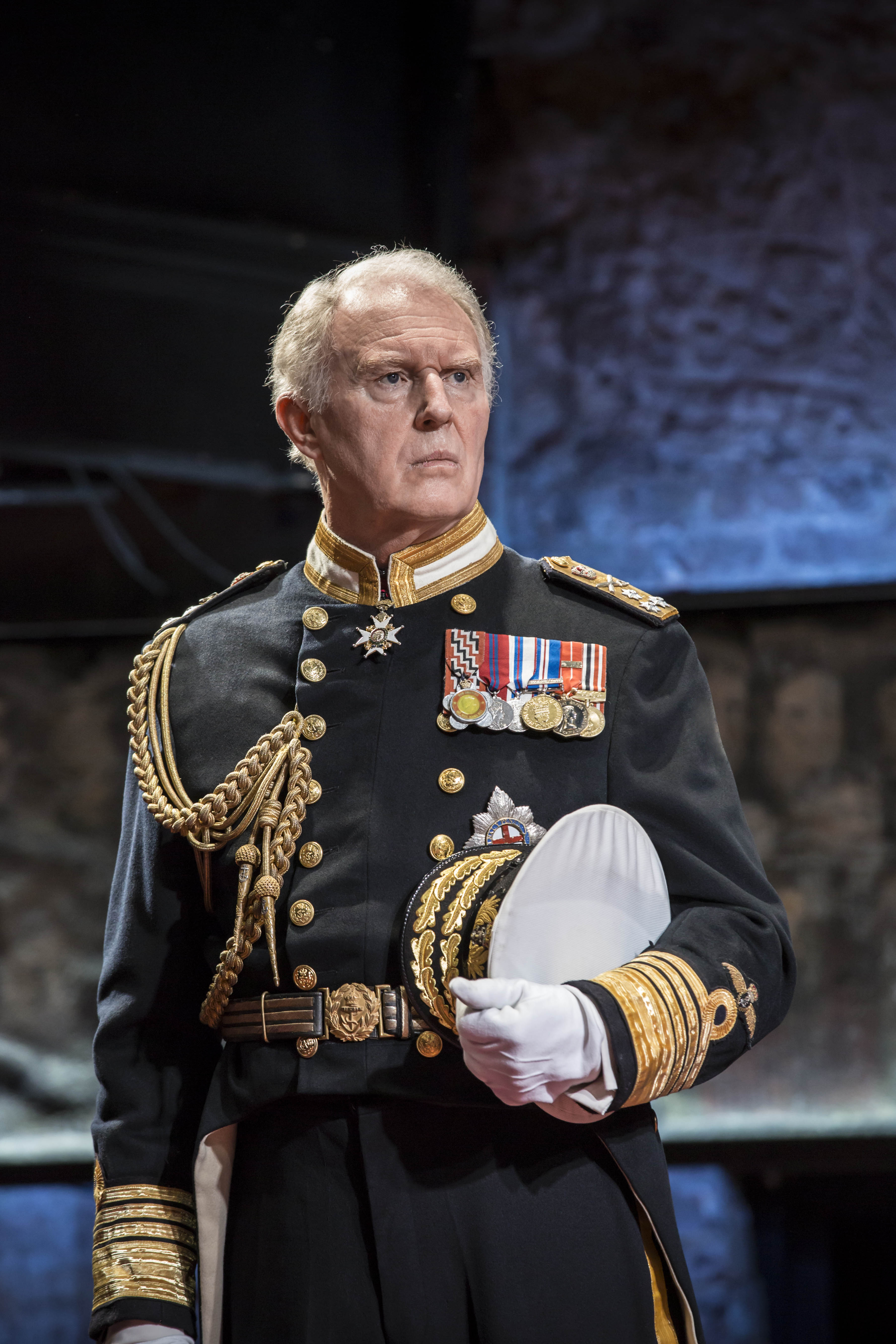
Civilian Theatre was one of many celebrating when Rupert Goold snagged the job of Artistic Director at the Almeida and given the unenviable task of continuing the success of Michael Attenborough’s 11-year tenure. Based on his opening salvo; the intentionally eye-catching American Psycho: The Musical before bringing in his former company with the Headlong-produced 1984, it appears Goold has a canny sense of how to blur the KING CHARLES III by Bartlett,        , Writer - Mike Bartlett, Director -  Rupert Goold, Design - Tom Scutt, Composor - Jocelyn Pook, Lighting - Jon Clark, Almeida Theatre, London, UK, 2014, Credit: Johan Persson - www.perssonphotography.comboundaries between popular and elitist theatre.
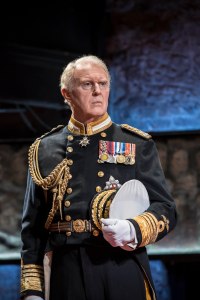
Appropriately enough the issue of succession is at the heart of the first play Goold has personally directed at the venue; Mike Bartlett’s King Charles III. Another well-judged choice, Bartlett’s play cannot fail to appeal to all audiences. Much has been made of the Shakespearian overtones but the true success of the play is that it is a hugely enjoyable piece of, what Bartlett calls, ‘future history’, which also raises questions that Britain as a country will need to confront in time.

Like Jerusalem this is proper state of the nation theatre and it is heartening to see a playwright unapologetically examine ‘big issues’ on such a grand scale. Bartlett demonstrates that verse has its place in modern drama and that audiences needn’t be turned off by the use of heightened language. The use of iambic pentameter isn’t purely to demonstrate Bartlett’s skill as a poet but because he is dealing with characters that are simultaneously entirely real and, to the majority of us, entirely unknowable.

The greatest PR trick that royalty has ever pulled off was to create this public image and then to strenuously avoid revealing their true face. Our current Queen has studiously kept to this template and it is notable that it is only when the mask slips that the public begins to question their value. As we enter a new era, the age of Will and Kate and of smartphones and public accessibility, this model is in a state of flux and Bartlett has pitched Charles’ succession as the moment that the new and old world will collide.

The use of verse is a way into this private world. How can prose be placed into the mouths of people who are so recognisable but so unknown? We cannot know how they really speak behind closed doors and so creating a state of unreality through artifice is a way to reach some kind of truth. It also allows Bartlett pre-existing conventions to slip seamlessly between conversation and monologue. We are permitted into an inner-realm, not just the closed world of the monarchy but the private consciousness of its key figures.
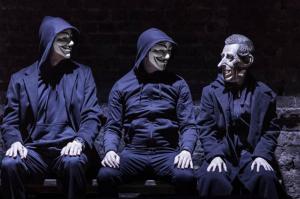
King-Charles-III-Almeida-LondonThe allusions come thick and fast and for those who know Shakespeare there is much fun to be had in spotting the references. However Bartlett ensures that this is not to the detriment of those who haven’t been schooled in all the History plays and a fair portion of the tragedies. The characters he draws are fascinating in their own right and capture the essence of who they are. It is perhaps Prince Harry who is closest to caricature but how could one resist when he is built to be modelled on the classic arc of Hal in Henry IV Part I and II.

His entrance to the nightclub and his night of revelry is a clear echo of The Boars-Head Tavern in Eastcheap and whilst Jess is a far cry from Falstaff, one senses that it is only a matter of time before there will be a rejection. In a play of many highlights, it is Harry accepting the duty that has been placed upon him and thus leading to the final abandonment of Jess that is the true tragedy of the play. Jess is the one innocent, drawn unwillingly into Harry’s world and the one target that press can attack. It is a superb and understated performance by Tafline Steen; she gives Jess a stoic dignity in her humiliation and the image of her standing alone before the coronation tears at the heart. It is a brutal reminder, if any was needed, that above all this is a club whose very survival depends on its exclusivity.

The play is a tragicomedy, with a comedic start slowly giving way to the grand tragedy as the crisis develops. Like so many tragedies it is one action that sets the direction on its course and it inexorably rolls towards its conclusion due to man’s frailty. It starts with a funeral, amidst a wonderfully staged requiem scene, and inevitably ends with a coronation. It also features the great dramatic device of signing a document, and it is here that for all the idiocy of Charles we find sympathy for him; he does not fall as far as Lear but the moment that he realises that he must sign is reminiscent of Lear (‘reason not the need’) pleading Goneril and Regan for his knightly retinue.

We know Lear has brought himself to the pass but we sympathise because of, rather than despite, his foolishness. It is the same with Charles that with one rash act, to challenge Parliament, he has like Lear, to split his Kingdom, condemned himself with an unworldly pride and a fatal inability to distinguish between power and authority.

Misunderstanding of royal power leading to constitutional crisis and abdication cannot help but remind of Richard II. However there is less to be drawn into this than in other Shakesperian characters. Tim Pigott-Smith’s Charles may share Richard’s naivety but he does not share his cruelty. There is no moment in the play that Charles echoes Richard’s splendidly cold moment when, on hearing the illness of John of Gaunt, he states ‘pray God we may make haste, and come too late!’, instead he is more a kindred spirit with Shakespeare’s less-performed tragic heroes, Coriolanus and Timon of Athens.

The tragedy of Charles is his unwavering sense of moral principle. He does not recognise flexibility to be an option and even making a gesture towards reconciliation cannot be achieved. Like Coriolanus and Timon he see himself as a good man in a bad world, and that if he does not have his virtue then he will have nothing of himself. People desperately present solutions that require compromise on all sides but they are rejected because there is principle at stake. It is foolish but it is not evil. In many way Pigott-Smith presents a very warm, and almost lovable, Charles and the frustration one feels with him is not with his cause but with his approach to the solution.

<<Continue to full review>>

Revisiting…The Scottsboro Boys

The Scottsboro Boys – Garrick Theatre, booking util 21 December 2014 (tickets)

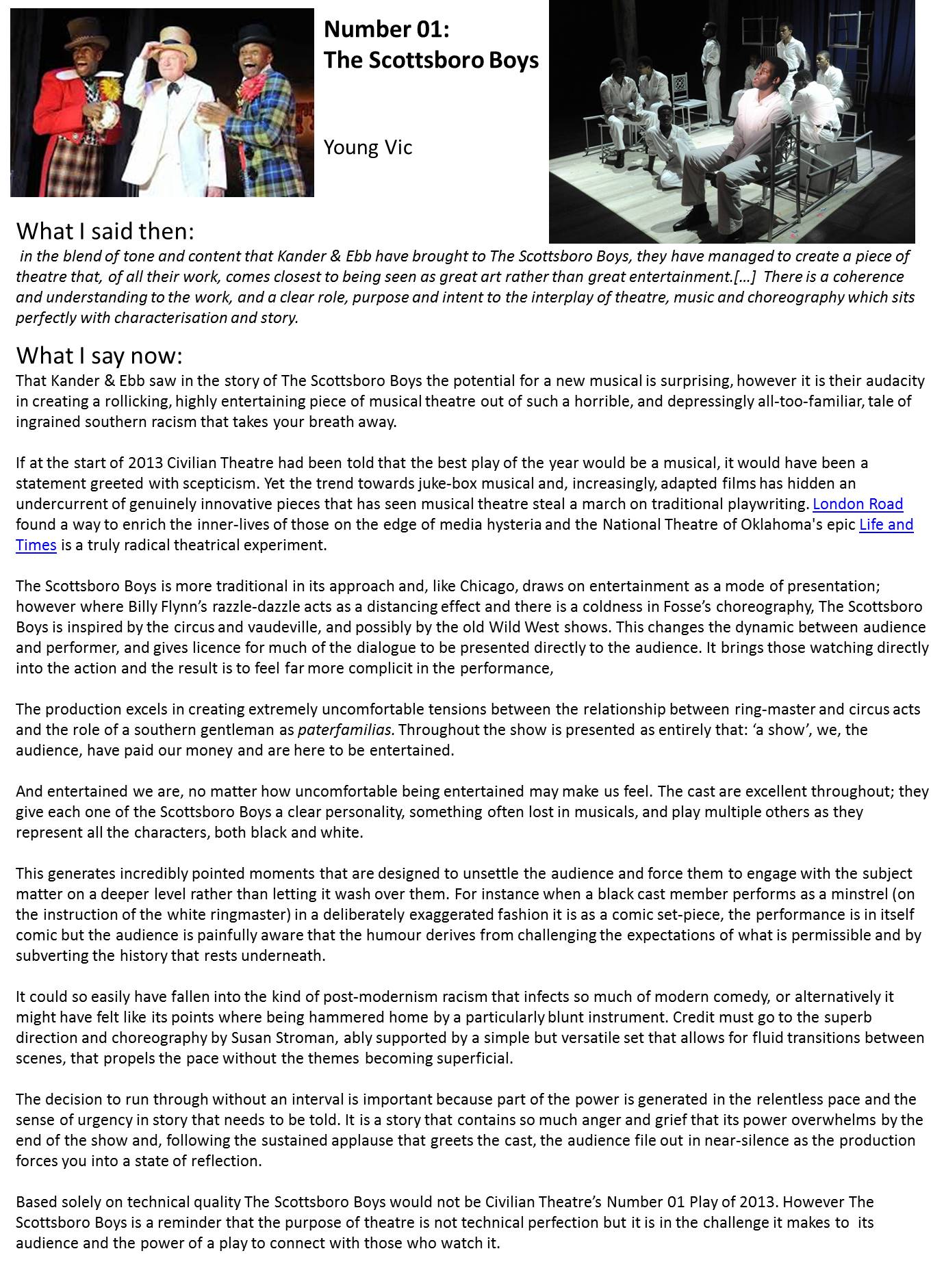
Almost a year ago Civilian Theatre went to see a Kander and Ebb musical at the Young Vic. Going in with no expectations and a complete lack of awareness about anything regarding this unknown musical, I was absolutely blown away by a production that balanced the real-life emotional power of the story with an entertaining book, vaudeville repartee and stunning performances. It was a rare show that managed to entertain whilst delivering a devastating story that can resonates today. Of all the West End transfers from smaller venues in 2014 , it is seeing The Scottsboro Boys’ name in lights at the Garrick Theatre which most lifts my spirits and leads my to retain some faith in the high and mighty who control the content of the West End. Below I revisit my end of year review, which saw The Scottsboro Boys awarded my No.1 show of 2013. 

No 01 The Scottsboro Boys

For more of my thoughts have a read of Spotlight On: The Scottsboro Boys 


Visceral thrills and society’s ills

This is how we die – Battersea Arts Centre, until 14 November 2014 (tickets – returns only)

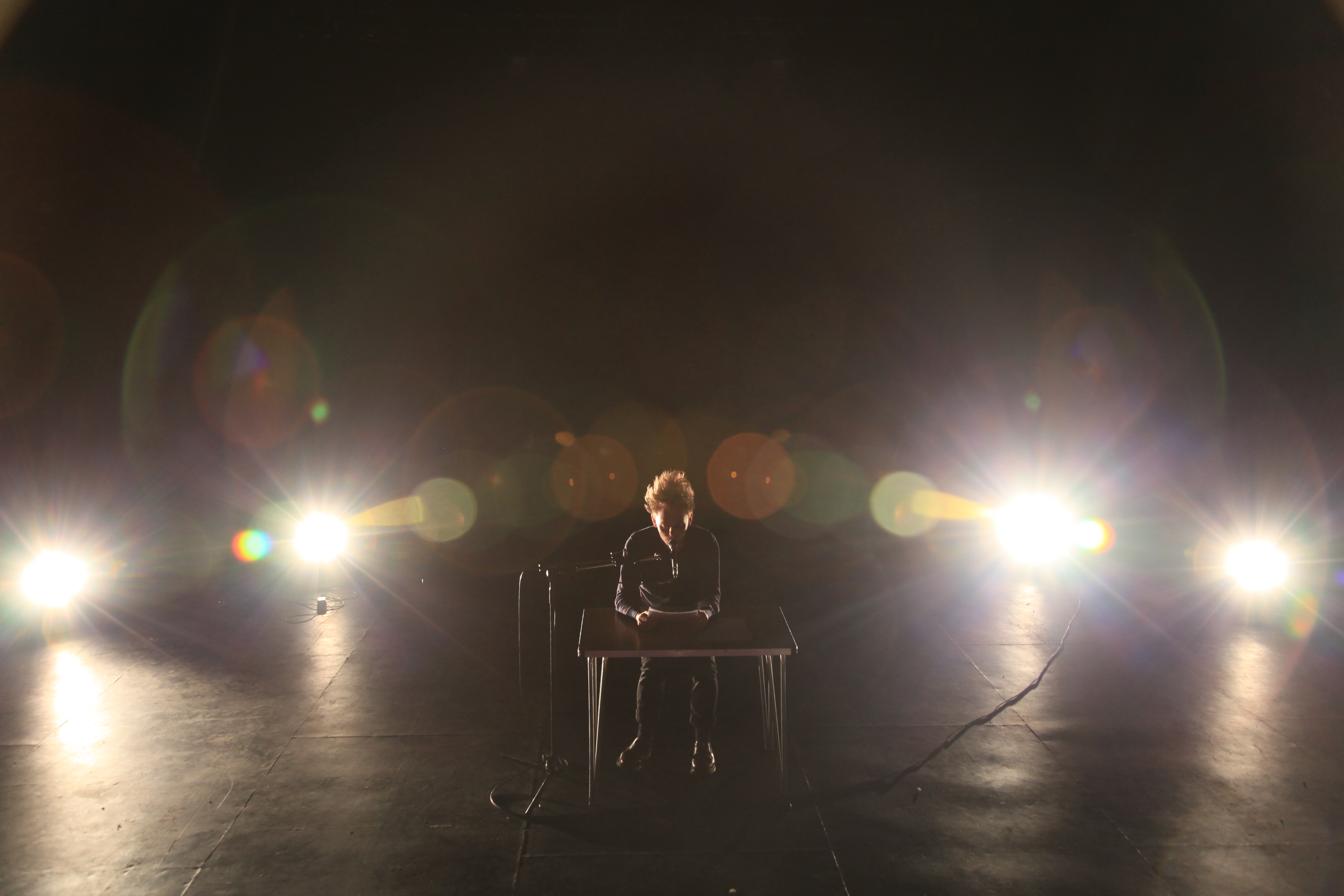
At the end of Christopher Brett Bailey’s performance of This is how we die the audience are subjected to – and it is a case of being subjected to rather than being passive observers of – a sonic assault that is best imagined as the sound of an imploding, decaying universe and the tentative hope that something new and beautiful can rise from the fading flickering light. The stage lights turn their impassive bulbs on the audience, bathing the Christopher Brett Bailey_THIS IS HOW WE DIE_Credit Jemima Yongobservers in a harsh, unforgiving light whilst ear-shattering, fuzzy rhythms rise and fall, roll and repeat, looping and overlaying motifs amongst discordant sounds. It is the white-noise of paranoia and of an overwhelmingly claustrophobic hopelessness. And then suddenly, within this kaleidoscope of fear, emerges the purity of higher-pitched strings, cutting through the chaos and providing the possibility of escape.

This antagonistic ending, this attritional warfare waged between performer and observer is only eight minutes long but it could easily have been eighty. It is a wonderfully considered reflection and response to the sixty minutes that come before, and adds to the impression that Christopher Brett Bailey has talents and intelligence far beyond being a highly articulate performer blessed with startling verbal dexterity.

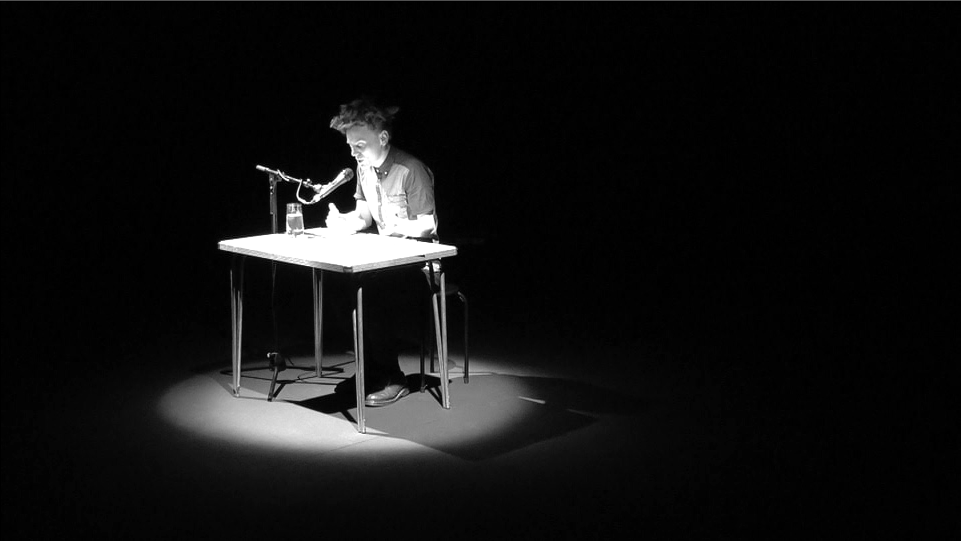
Video Doc Still 2014-07-09 at 17.27.44Having not previously heard of Bailey, and without looking at the show’s synopsis, I hadn’t really considered what to expect. Whatever I might have expected wouldn’t have come close to the reality. This is a performance that is felt rather than seen. The audience are almost immaterial; nothing has been created for our benefit. The stagecraft is defiantly un-staged. It is a man at a desk, talking, talking and continuing to talk, from notes, for sixty minutes, without stopping, almost without breathing, he continues to talk, to himself, to the walls, to the room, whether the audience is in the room or not, it feels as if he would continue to talk, possibly until all words had become exhausted.

It leaves you in a state of mental and physical exhaustion. Listening to the dialogue, focusing on the words is mentally draining, but there is also palpable tension, as a result of a deliberately abrasive delivery style, that creates an adrenalin rush so intense that by the end of performance you leave the auditorium woozy, unsteady and in need of air.

Bailey arrives as an unassuming, almost diffident presence – perhaps the only hint of what is to come is the resemblance to a young David Lynch – but as soon as he begins he exerts a magnetism that pulls in whatever direction the flight of fancy will take him. He is a remarkably assured performer and is blessed with a lyrical nimbleness that allows what, are assumed to be, tightly crafted pieces the air of stream-of-consciousness dialogue.

<<Continue to full review>>

Entering The Aztec Zone

Las Maravillas – Rose Lipman Building, until 01 November 2014

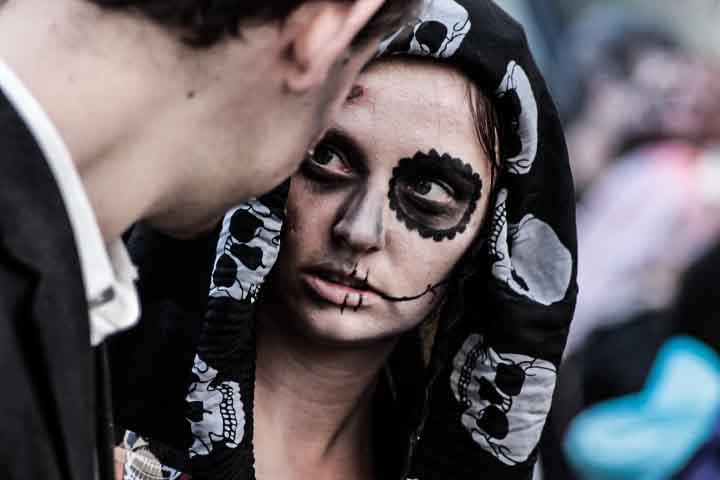
The last time I was at the Rose Lipman Building was to watch Toby Jones and Imelda Staunton in Circle.Mirror.Transformation. I didn’t investigate the basement at the time but I am pretty sure it didn’t act as a portal to the Aztec underworld. Naturally I could be wrong; I hadn’t expected to see Toby Jones in the building either.WZD-2332

The Dreamery call themselves a ‘horror and fantasy art experience production company conjuring magical and mysterious performance art and installations’. That is a hugely ambitious remit, particularly for a fledgling company still looking to establish themselves. Genre fans of any ilk are a pernickety bunch and are notoriously quick to point out any perceived flaws – often volubly and with extreme irritation.

Still, the transformation of the Rose Lipman basement was an impressive achievement. Despite clearly operating with a tight budget the space had been neatly compartmentalised to form a number of small rooms, each with its own clear sense of space and purpose. The overall effect was to create a number of different sensory environments to unsettle the audience. Some areas had clearly suffered from financial limitations, where the money clearly hadn’t stretched as far as needed. It could be a sign of a rookie company that this was most apparent in the opening room and the transition back to reality, as what it meant was that the good bits in the middle were bookended by less impressive memories and often this can be what the audience will remember.

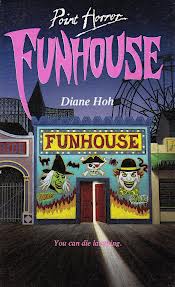
funhouseIn a small, merry (there were a few stifled giggles to be heard) band of companions, it appears that we are to escape Mitclan and return to the questionably more pleasant surroundings of the De Beauvoir estate. Except, like most ‘immersive’ experiences, this wasn’t really the case; the reality of the fantasy is always more prosaic than can be conceived in fevered imaginings. It is actually a linear journey through a series of classic horror scenarios. There is little in the way of interaction and a number of the scenes feel as if they have no obvious connection to the concept of the Aztec underworld. Instead the feeling was much closer to that of a journey through that icon of Americana – the local funfair’s haunted house (and anyone who spent their teenage years reading Point Horror knows exactly how scarifying that can be).

The unevenness was undeniable and, without giving away too much of the shocks, there is your classically creepy psychotic, ghostly girl and some disturbingly alluring savages but then the next room MIctlan3_pixlr3 banner#would be a new scene and you’d be presented with a half-formed idea that reminded you this a young company still learning to refine its product.

It was the lack of narrative thread that gave the production this disjointed quality. We were ushered from one frame to another, and whilst each individual experience was interesting it never really had the opportunity to come together as something greater than the sum of its parts.

However it never tries to be pretentious and there are few moments where the cast seem to be tipping the audience a knowing wink to the comical element that underlies most horror. The production demonstrates you can be committed to interactive theatre without being incredibly po-faced about it, something that both Punchdrunk and dreamthinkspeak would do well to remind themselves of occasionally.

No doubt The Dreamery will reflect on the successes (and it sounds like it has been a total sell-out) but I hope that, as a young company, they end-up taking more away from what didn’t go to plan than what did. They clearly have huge reserves of invention and are savvy enough to be working in one of theatre’s growth areas so learning to really focus on what they can deliver for the money and by spending more time building coherence into the audience’s experience then The Dreamery could find a very successful niche for themselves as purveyors of high-class interactive horror and fantasy.


Watch a video

And this is their far better video