Revisiting…The Scottsboro Boys

The Scottsboro Boys – Garrick Theatre, booking util 21 December 2014 (tickets)

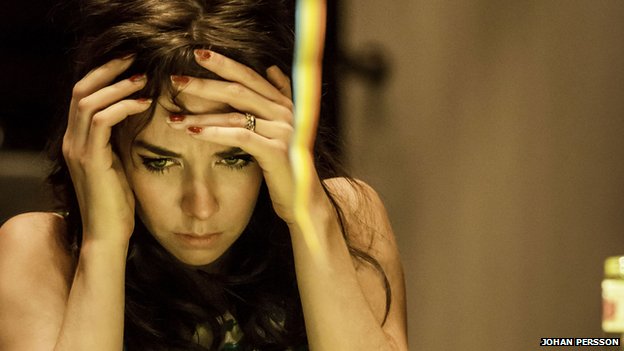
Almost a year ago Civilian Theatre went to see a Kander and Ebb musical at the Young Vic. Going in with no expectations and a complete lack of awareness about anything regarding this unknown musical, I was absolutely blown away by a production that balanced the real-life emotional power of the story with an entertaining book, vaudeville repartee and stunning performances. It was a rare show that managed to entertain whilst delivering a devastating story that can resonates today. Of all the West End transfers from smaller venues in 2014 , it is seeing The Scottsboro Boys’ name in lights at the Garrick Theatre which most lifts my spirits and leads my to retain some faith in the high and mighty who control the content of the West End. Below I revisit my end of year review, which saw The Scottsboro Boys awarded my No.1 show of 2013. 

No 01 The Scottsboro Boys

For more of my thoughts have a read of Spotlight On: The Scottsboro Boys 


Simon Stephens’ takes axe to Chekov’s orchard

The Cherry Orchard – Young Vic Theatre, Until 29 November (Tickets)

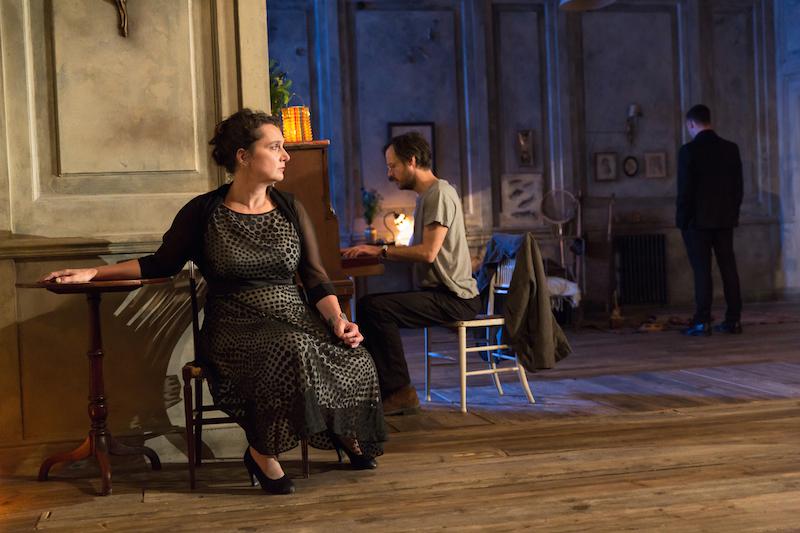
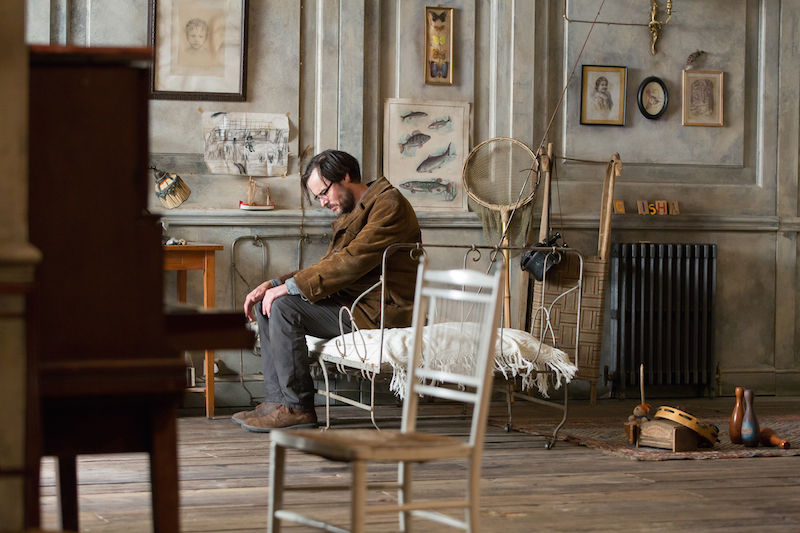
Every regular theatre goer has their blind spots, the playwrights that don’t just pass them by but they go out of their way to avoid. Civilian Theatre will happily spend an evening debating the merits of the musical or delivering a polemic against those who worship at the pedestal of Sarah Kane. However in the dark, locked away from public view, is a secret shame; a failure to comprehend, or even by interested in, the merits of turn of Kate Duchêne (Lyubov Ranevskaya) and Paul Hilton (Peter Trofimov) in The Cherry Orchard at the Young Vic Photo by Stephen Cummiskeythe century Russian naturalism.

Being aware that Chekov is, arguably, thought of as second-only to Shakespeare as a playwright and that the finest writers, dramatists and critics hold the likes of Tolstoy, Gorky and Dostoevsky in the highest regard only increases the sense of a personal failure. Add a disinterest in Dickens and Ibsen and the feeling there is a black hole in my cultural awareness grows.

This is not to deny the obvious talent on display; it is impossible, even if you don’t like them, not to respect Dickens’ sentences or Chekov’s details but appreciating the building blocks is a very different thing to admiring the final structure – take the ArelorMitttal Tower, it is certainly impressively constructed but that doesn’t stop it being a hideous eyesore that is nothing more than a well-captured Freudian representation of Boris Johnson’s ego.

YOUNG VIC THEATRE: THE CHERRY ORCHARD, 2014Sticking with Freud, I suspect the problems spring from childhood – an A-Level interrogation of A Doll’s House through the lens of Stanislavski is enough to break the spirit of anyone. Task, Objective, Super Objective; it may be true, it may be necessary, it certainly sucks the spirit of the unknown out of theatre. It went in hand-in-hand with experiencing a lifeless, long and boring production of Gorky’s Summerfolk at the National (although seeing the cast included Roger Allam, Patricia Hodge and Simon Russell-Beale, I am willing to concede the problem may have been with this particular reviewer).

Whether the production was good or not, it came at one of those moments you only later realise was ‘formative’. In the same year I saw Complicite’s Mnemonic and  a revival of Steven Berkoff’s East – how could a staid, hundred year old drama possibly compete with the vitality of Berkoff or a company showing an impressionable young mind all that theatre could be.

<<Continue to full review>>


A Streetcar Named Despair (Wait, hang on a second – ed.)

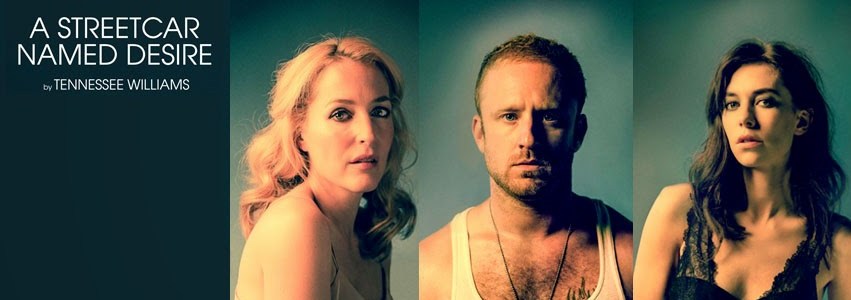
A Streetcar Named Desire – Young Vic, until 19 September 2014 (Tickets) (NT Live Performance Info)

It is only fair to begin with a disclaimer: this reviewer does not like Tennessee Williams. It is not for want of trying and it is also appreciated that Civilian Theatre is very much in the minority with Williams being held in the highest esteem by a great many people who know a great deal more about the theatre.

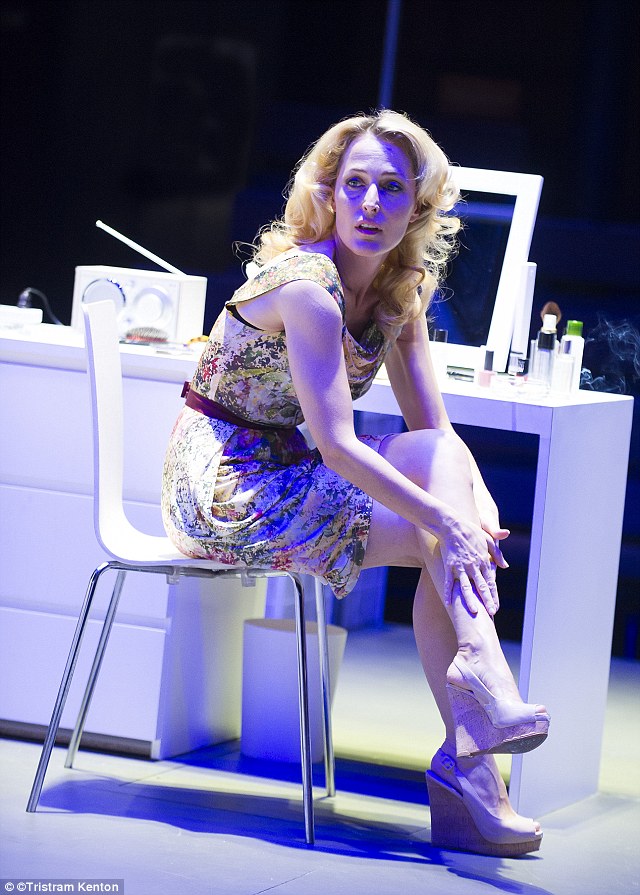
However the point stands and after spending close to three and a half hours watching the Young Vic’s current production of A Streetcar Named Desire, and quite a bit longer letting opinions slowly ferment in the darkest Gillian Anderson as Blanche DuBois in Streetcar at the Young Vicrecesses of the brain, it can only be concluded that we are faced with a conundrum – and that is how far a production can be even-handedly reviewed when the play itself is not personally held in particularly high regard.
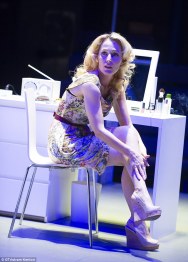
Benedict Andrews’ stunningly visual and sumptuously performed version of Tennessee Williams’ most famous (and possibly greatest) play wonderful demonstrates the edge that theatre has over other narrative mediums; for in general every piece of cinema is seen as a new piece of cinema, even when a character – such as Frankenstein – is returned to we do not recognise it as the same film produced differently.

Perhaps only, outside of films that began life as stage plays, Gus Van Sant’s almost shot-for-shot remake of Psycho could be considered a genuine replica, and a 37% Rotten Tomatoes rating tells a story all of its own. Literature, that other narrative medium, is tied to its form and could never bear complete repetition of language even as it continually retraces its steps over stories passed down across generations.

It is only theatre where audiences are satisfied by directors going back to the same well – to Shakespeare, to Euripides, to Chekhov, to Williams – and seeing what can be made from the same materials. This desire allows a director to try and breathe new life into familiar conceits and allows the audience to revisit their favourite plays or continually challenge themselves against work that doesn’t appeal to them.
76596630_vanessa-kirbyAnd so begins Civilian Theatre’s obsession with Tennessee Williams (and was there a more appropriate playwright to develop an obsession about?) Regarded as one of the great American dramatists, and with an undoubted flair for writing memorable characters, Williams’ stock is such that he is part of a very small band of playwrights that the commercial West End will take a chance on. As a result over the years this reviewer has watched (or perhaps endured) Night of the Iguana, Cat on a Hot Tin Roof, Baby Doll, The Glass Menagerie, The Fat Man’s Wife and now, finally, A Streetcar Named Desire. With the exception of The Glass Menagerie they have proved mainly dispiriting affairs where the southern melodrama successfully manages to match the ripeness of the language with equally ripe performances.

That production of The Glass Menagerie, at the Young Vic in 2010, was built on the back of an exciting new director in Joe Hill-Gibbins, two breakout performances from rising stars, Kyle Soller and Sinead Matthews (everything from Master and Margarita, The Changeling to Blurred Lines in the last couple of years) and a wonderful score. It demonstrated that no matter what you think of a playwright, or his style of writing, it is possible to extract excellence; for even the biggest critics of Tennessee Williams would never deny that the man could write (unfortunately he writes so well he sometimes seems to forget to know when to stop).As it happens A Streetcar Named Desire not only has an exciting director in Benedict Andrews, two breakout performances from Ben Foster and Vanessa Kirby (brilliantly taking more than she was given as Isabella in Edward II, and doing a similar job with Stella in Streetcar), and an interesting musical score. It also gives us an ingenious set design and a crackerjack lead performance from Gillian Anderson as Blanche DuBois.

<<Continue to full review>>
The descent into hell is easy but in the return a mighty labour lies

A View From The Bridge – Young Vic, until 07 June 2014

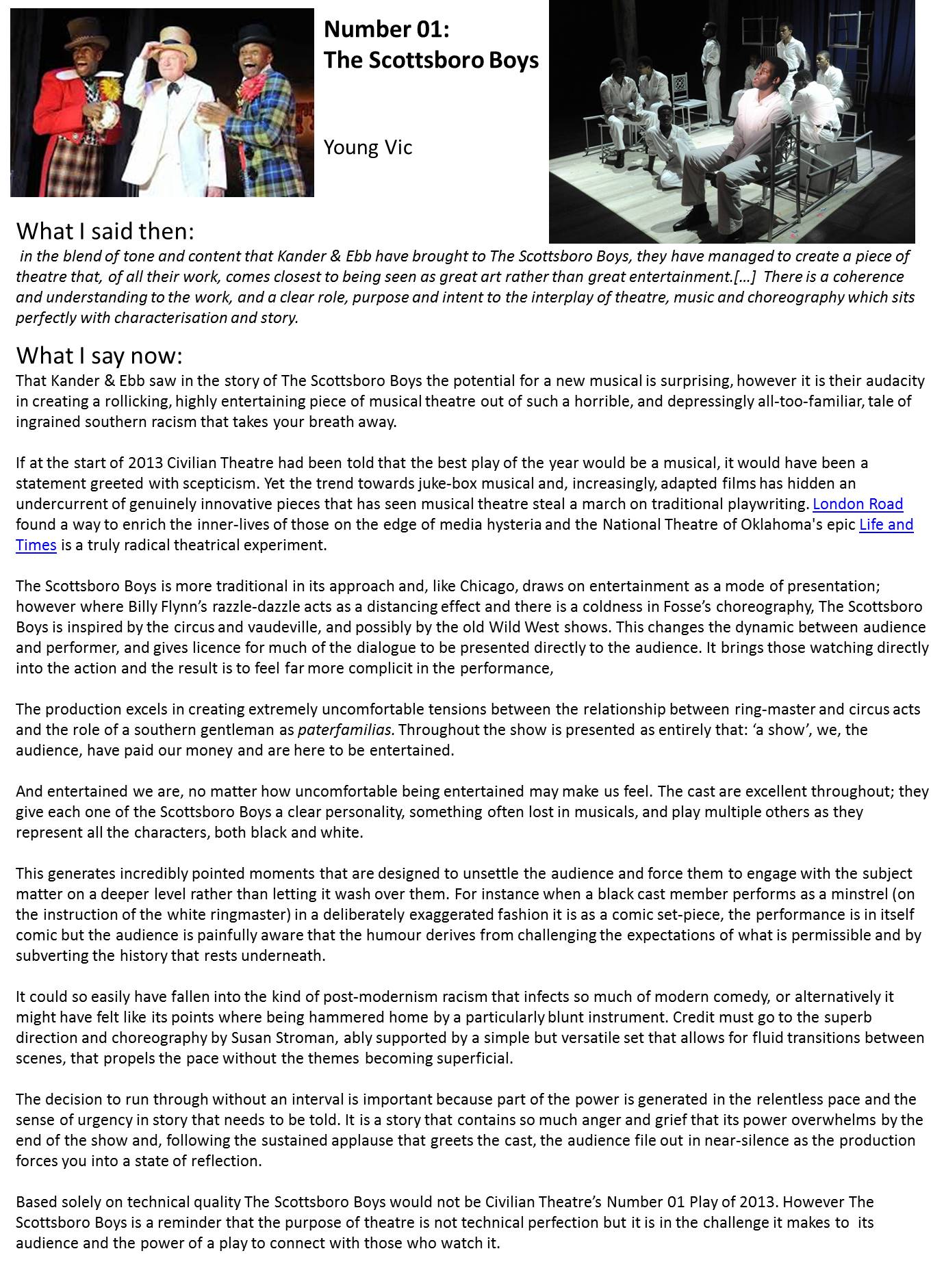
Considering the reputation that accompanies Ivo van Hove the first thing to be said about his production of Arthur Miller’s famous play is that it’s more restrained than might have been expected. This is not to suggest that it is performed in the shadows of the play’s reputation but rather that van Hove has created a singular work of such potency that despite stripping away external features and focusing View from the Bridge timesintently on the performances, it retains the power of the great naturalistic dramas.

Van Hove is a director that appears to relish the challenge of recasting great works in a new light; he is happy to cross cultural mediums and recent work includes the Antonioni Project, which re-enacted the Italian director’s films, and a highly-lauded adaptation of Strindberg’s Scenes from a Marriage. He has demonstrated a desire to bring new perspectives to classic works and this reached its peak with the hugely ambitious Roman Tragedies, which came to the Barbican in 2009. The production brought together Shakespeare’s roman plays and pulled them in to the modern era through an immersive multimedia spectacle that captured the increasingly symbiotic relationship between news and drama in the age of 24-hour reporting.

He is also happy working with the great American playwrights having previously staged Eugene O’Neill, Tennessee Williams in New York and now brings Arthur Miller to London. The influence of the director is clear from the moment the audience enters; Van Hove has used the flexibility of the Young Vic’s auditorium to physically conceal the entire set within a black box. Indeed the raising and eventual sealing of the stage suggests a symbolic entombing of the story and hints to its timeless nature.

The production strips away all hints of naturalism from the setting. It exists as a stark, white rectangle surrounded by a glass bench. The only prop being a wooden chair that forms the essential test of strength between Eddie and Marco; van Hove recognises its significance and frames Marco holding the chair aloft in a moment of absolute stillness. It is reminiscent of a classical sculpture and is one of a number of markers that draw out the links to Greek tragedy that Miller hinted at within the text.

A View From The BridgeThe lack of a setting inevitably directs greater attention towards the actors, and they are uniformly excellent. Van Hove has drawn highly stylised performances out of his cast without losing the grounding in naturalism that is essential for demonstrating the characters’ humanity and for capturing the emotionally draining tragedy that lurks in the background throughout.

There is an expressionistic quality to the performances that adds a strand of universalism to the highly specific nature of the plot. Whilst the story of Italian migrants and working-class longshoremen places it within a time and place, this production leaves the audience in no doubt that the deeper themes are those that have always been with us.

It is anchored by a performance of exceptional power by Mark Strong as Eddie Carbone. He brings a natural physicality to the role that tells a story of sinewy strength rather than bullish power; the famous description of ‘eyes like tunnels’ is entirely apt for his Eddie, this is no knuckle-headed docker, but a man of complexity and internal conflict. We sense that behind those eyes is a torrent of raging emotions that he is intelligent enough to recognise but too inarticulate to express.

<<Continue to full review>>
 

Watch the Trailer